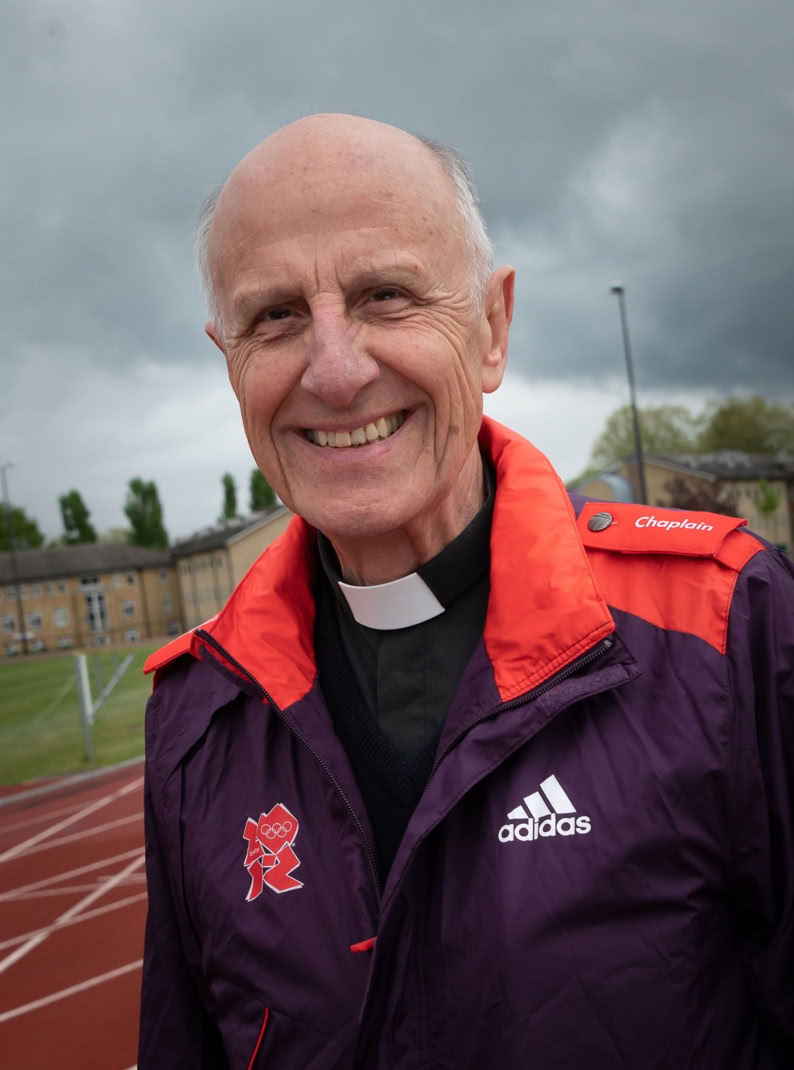
Prof. Msgr. Vladimir Felzmann aka Father Vlad
still working to help God make this World a better place
17/10/2025
Courage, the virtue which enables you to do something that frightens you, and gives you. strength in the face of pain or grief, is life-enhancing.
Why be afraid of fear? It does not kill you, just makes your life unpleasant, for a while. Once you have conquered it, you feel fine. Victorious.
The classical virtue of fortitude -andreia, (Greek), fortitudo (Latin) - is also translated as "courage", but includes the aspects of perseverance and patience. In the Western tradition, notable thoughts on courage have come from philosophers such as Socrates, Plato, Aristotle, St Thomas Aquinas, and Kierkegaard.
Socrates (died 399BCE), arguing that true courage is not merely a matter of physical bravery or endurance, but also involves knowledge and understanding of what is truly worth fearing and what is not.He ultimately suggests that courage is a form of wisdom, specifically wisdom about what is truly fearful and what is not.
Courage, according to Plato (428/423-348/347BCE), is not merely about facing danger without fear; it encompasses a deeper understanding of knowledge, virtue, and moral integrity.
Aristotle((384-322BCE) defines courage asa virtue that resides in the mean between two extremes: rashness (excessive confidence) and cowardice (excessive fear). It is not merely the absence of fear, but the ability to feel and act rightly in the face of fear, particularly in situations involving potential harm or death, especially in battle.Courage, for Aristotle, is not about being fearless, but about having the right amount of fear for the right reasons, in the right way, and at the right time.
St. Thomas Aquinas,(1225 -1274CE) drawing on Aristotle, viewed courage (fortitude) as a cardinal virtue that enables one to face adversity and persevere in the face of fear and difficulty, not just on the battlefield, but in all aspects of life.It's about holding firm to what is good and reasonable, even when faced with obstacles or potential harm. For Aquinas, courage also involves enduring suffering and maintaining a steadfast spirit in the face of challenges, including the trials of daily life.
Kierkegaard(1813-1855)viewed courage as a central virtue, particularly in the context of faith and the individual's existential journey.He saw it as the ability to confront the unknown, grapple with anxiety, and make passionate, authentic choices in the face of uncertainty, rather than succumbing to despair or the comfort of established norms.He distinguished between different types of courage, including the "humble courage" of faith, which involves embracing the paradoxical and absurd, and the "purely human courage" to renounce the temporal for eternity.
In the Tao Te Ching, courage is not about bravado or aggression, but rather about inner strength, self-awareness, and aligning with the natural way(Tao).It emphasizes the importance of mercy, frugality, and not being first as foundations for true courage and leadership.A brave person, in the Taoist sense, is one who can live authentically, facing challenges with resilience and inner peace, rather than being driven by fear or aggression.
In case you wondered, theTao Te Ching is a Chinese classic text and foundational work of Taoism traditionally credited to the sage Laozi, though the text's authorship and date of composition and compilation are debated.The oldest excavated portion dates to the late 4th centuryBCE
In the Hindu tradition, mythology has given many examples of courage; with examples of both physical and moral courage exemplified. In the Eastern tradition, the Chinese textTao Te Ching offers a great deal of thoughts on courage; both physical and moral.
The VC was introduced on 29 January 1856 by Queen Victoria to honour acts of valour during the Crimean War. Since then, the medal has been awarded 1,358 times to 1,355 individual recipients. Only 15 medals, of which 11 to members of the British Army and 4 to members of the Australian Army, have been awarded since the Second World War. The VC is highly prized and has been valued at over £400,000 at auctions.[
If you want to be free to delight in life, your courage can be there – often needs to be there - across all the PIES: the physical, intellectual, emotional, and spiritual dimensions of your life.
Physical courage may be underpinned by pride, or solidarity with your companions – as so many fighting in WW2 – and rest – admitted to me.
My social courage – which I acquired in 1946 when, having arrived in London from Prague, I was called a BF (bloody foreigner), has allowed me to be me; a priest, publicly dressed in clericals, in an organisation associated with child abuse.
My moral courage ‘doing the right thing even when it's uncomfortable or unpopular’ is nourished by Mt 25,40,”what you do to then least of mine, you do unto me, Yesh.”
Emotional courage: Feeling - and accepting - all my emotions (positive & negative) without guilt or attachment has enabled me to keep on keeping on for these past 86 years.
Intellectual courage became necessary as I moved on from Opus Dei and had to unlearn and relearn - with an open & flexible mind - to embrace my new grasp on reality, my new truth.
Opus Dei is theologically Tridentine, sociologically Edwardian, relationally Machiavellian (lying), ecclesiologically Pre-Vatican 2 and culturally monastic; out of touch with the real world. Thanks to my time in the Cardinal Vaughan Memorial School (1973-85), I discerned that God wanted me to live more in the real, current culture. It seems to have done the trick. I am enjoying life, which I live in close contact with Yesh, and, by all accounts-doing some good.
After all, ‘the experts’ change their opinions on much; such as eggs being bad for you then being good for you, the 75g small aspirin being good and then, as now, deemed dangerous, getting a suntan was great for health, now it’s seen as skin-cancer encouraging, dietary fat used to be vilified, now some fats – like those in nuts and fish – are seen as beneficial for health, etc..
Spiritual courage - in the light of “give and gifts will be yours”(Lk 6,38) - enables me to live with purpose and meaning for the benefit of others. I embrace the fact that everything I have is a gift – for me to use for the benefit of the world. Including myself.
While fear lurks in my E, I and P, will-power, or pride, vanity and duty in S, motivates me to move forward.
At times, in our society, to live a Christlike life takes guts.
1. It takes courage to admit when you are wrong. It’s a bold act to admit when you make a mistake. Saying sorry takes you out of your comfort zone and enhances your relationships. This has become easier as I have aged.
2. Have the guts to be yourself – with all your weaknesses. Gabrielle ("Coco") Chanel (1883-1971), said, "The most courageous act is still to think for yourself. Aloud," Her statement highlights the importance of independent thought and its expression.It suggests that true bravery lies not just in having original ideas, but in daring to voice them, even when they differ from popular opinion or societal norms.This act of speaking one's mind, of being authentic and unafraid to be different, reveals a powerful form of courage.
You need fortitude to say what you think about LGBTQIA+( acronym for Lesbian, Gay, Bisexual, Transgender, Queer or Questioning, Intersex, Asexual or Aromantic, and the + symbol, which represents other identities not included in the acronym, such as pansexual or gender fluid.The acronym signifies a diverse community of people whose sexual orientations and gender identities may differ from heterosexual or cisgender norms.)
3. To take responsibility and accountability – without blaming anyone else for your actions – is not always easy.
4. To help you keep your commitments and achieve your goals, it helps to write down everything you say you are going to do and want to achieve. Write down the promises you make to others and what you want to achieve in your life. Then keep tabs on your performance. When you keep your promises, you build respect from others and enhance your own self-respect.
5. Let go and forgive. Stop wallowing over the past. Forgive yourself. Forgive everyone. What happened is over unless you keep it alive by reliving it in your mind. When we know better, we do better. It takes courage to move on.
6.Listen and be present in synodal gatherings. Be brave enough to listen to people who disagree with you. Listen to family members who think you are wrong. Listen to the elderly person in the coffee shop. Listen even when you only want to speak and give advice. Listen and thank the other person for sharing.
Be brave enough to count your blessings. Tell the people in your life “thank you.” Be grateful to - and for - the people you love and for the people who love you. Focus on what you are grateful for. Be brave enough to admit that, as the hymn puts it, because, “‘Freely, freely, you have received, therefore you need to “Freely, freely give.”
Gratitude does you good across your PIES. It increases happiness and positive emotions, reduces anxiety and depression, improves physical health such as better sleep and lower blood pressure, and strengthens social relationships through increased empathy and compassion.
Developing a gratitude practice, which can involve keeping a journal or simply taking time to reflect on good experiences, helps you focus on the positive aspects of your life.
Prof. Msgr. Vladimir Felzmann aka Father Vlad
send Father Vlad a message
msgr.vladimir.felzmann@gmail.com
+44 (7810) 116 508
copyright Prof. Msgr. Vladimir Felzmann