|
|
|
|
|
The Liberator was a Jew, Comrade
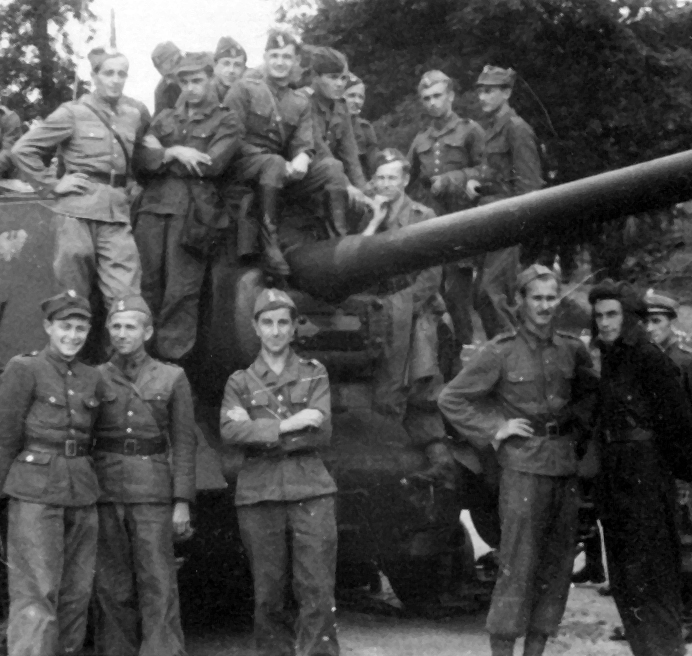
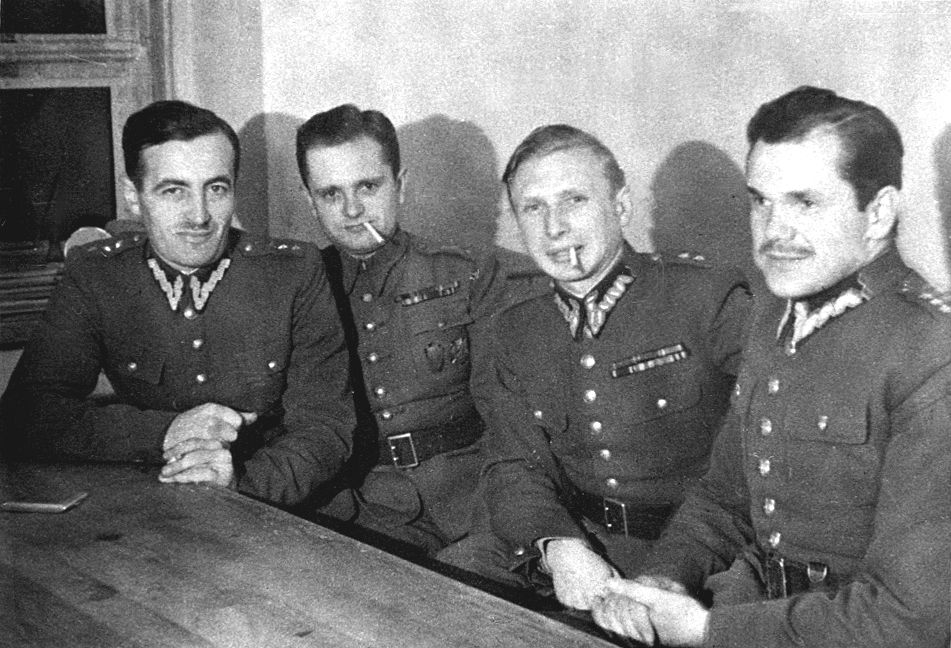
Slowly, the truth is leaking out. As Moscow became the world stage for the commemoration of the victory over Nazi Germany 60 years ago, the darker shadows of the Soviet participation in the war threatened to upstage the celebration. Sixty years ago, two men, both in their late 20s but unrecognizably aged beyond their years, stood face to face on desecrated Polish soil. They were inside the barbed wire of the Majdanek concentration camp, only minutes after the camp's liberation. Both men were Jewish. Both wore uniforms that silently attested to their suffering: one wore the ill-fitting, worn striped clothing of a concentration camp prisoner, the other, the tattered, but tailored uniform of an officer in Stalin's Communist Polish Army. The Jewish army officer was my uncle, Leon Ajces, a liberator of the Majdanek concentration camp, and one of the first among the Allies to witness the vile truth of Hitler's attempt to extinguish European Jewry. He was not unique: more than 500,000 Soviet and Polish Jews fought the Nazis as soldiers in Stalin's armies. Sixty years later, we have yet to fully comprehend the contribution of these Soviet Jewish soldiers. It is not difficult to understand why. Veiled by the secrecy of Communist rule, and distorted by the manipulated documentation of events of the war to fit Stalin's paranoid agenda, it was not until 1998 that the former Soviet Union officially acknowledged that Jews had participated in front-line fighting during World War II. The perception that Jews were cowards who skirted their duties to the "motherland" prevailed in the Soviet Union throughout the postwar Communist years, despite the fact that an astounding 20 % of the area’s total Jewish population served in the army. Moreover, Soviet Jewish soldiers received the highest percentage (based on population) of military decorations as compared to any other Soviet ethnic group, obviously countering any contention that the Jews stayed away from the front lines of combat. By the time the record was set straight, unceremoniously, in 1998, the large majority of the Jewish war veterans of the Red and Polish armies were not alive to tell their stories. The efforts of these Soviet and Polish Jewish soldiers, many of whom rose through the ranks to become generals and brigadiers, assuming key leadership positions that proved critical to the Allies ability to win the war, have yet to be acknowledged in a meaningful way. At the battle of Stalingrad, the first major defeat for the Germans and often considered the turning point in the war, the seemingly untouchable German Field Marshall von Paulus was forced to surrender his pistol to none other than a Soviet Jewish brigadier. My uncle, who eventually reached the rank of major and earned six medals for bravery during the course of the war, was among the Soviet troops who declared victory in Berlin. Dodging bullets right up to the end, he stood, sixty years ago this week, smoking a cigarette, dropping the ashes on the smoldering remnants of the heavily bombed Reichstag building. But these Soviet Jewish soldiers were very unlike their "greatest generation" counterparts. If they were among the lucky few who managed to survive both their enemy, the Nazis, and their leader, Stalin, they returned home--not to parades and celebrations--but to destroyed hometowns, exterminated families, and in some cases, stinging anti-Semitic sentiments from their non-Jewish neighbors. This was their reward for saving the world. It is time to make the contributions of the Jewish soldiers in Stalin's armies known, before history forgets them forever.
May 6, 2005
|