|
|
Use these navigation links to move between the Year 2024 pages. Specific pages can be accessed at the bottom of this page
August 2024 (Part 04) Ireland Trip (Day One): Dublin Amazing as it may be, our thirtieth anniversary is coming up next spring. With both kids graduating in the spring, we decided we clearly needed to take a trip now to celebrate a bit early. We opted to head to Ireland on a trip with Adventures by Disney. We arrived a day early, departing Dulles on a direct flight which left at 10 pm and arrived a but after 10 AM. We met the driver Disney had arranged to get us to the hotel and were pleased to discover the hotel had a room ready, even if it meant taking a bit smaller room. After a couple hour much needed nap, we headed out to meet up with a walking tour. The tour began only a couple blocks from the hotel in the Temple Bar area. Turns out this referred to something much different than expected, as the Temple family had build a sand bar in the River Liffey in the early 1600s allowing merchants to load and unload ships there. At least that was the tale from our Irish guide. Wikipedia claims it came from the Temple Bar area in London, home of one of the main city gates and adjacent to the same street names there and in Dublin. Steve had guessed it was named after a Jewish bar or court. Either way, it was a fun area with a lot of pubs and an outdoor market that day. We learned it was also the home to the first performance of Handel's Messiah in 1742. There were a surprising number of people waiting on the tour,
so they split us into two groups. We soon talked a bit with a woman near
our age who appeared to be alone. We soon discovered she was actually on
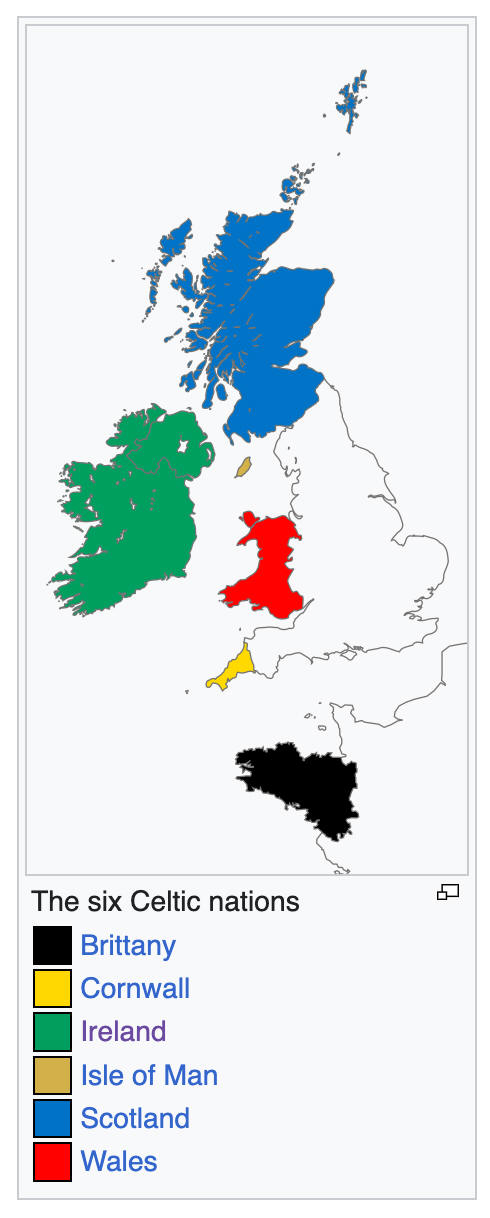
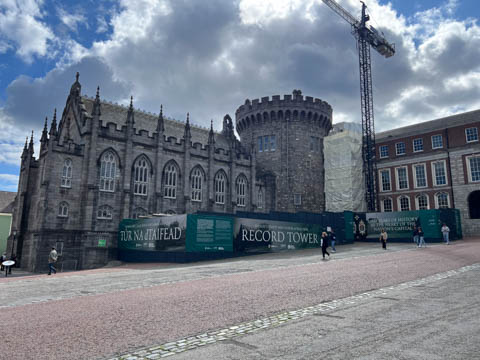
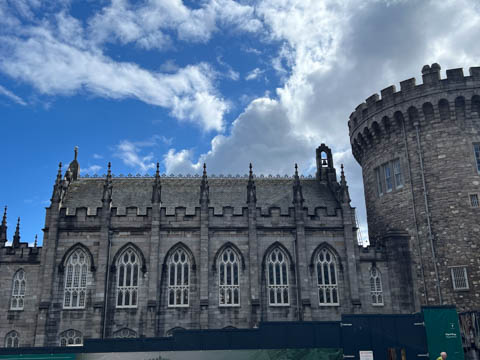
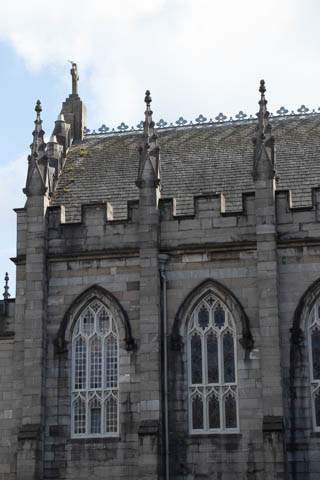
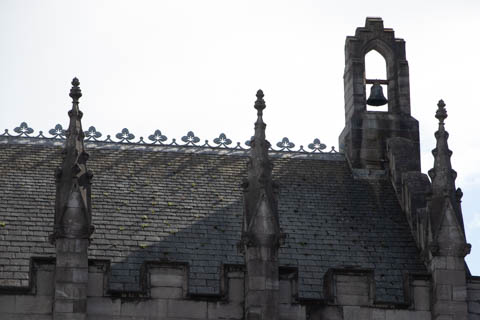
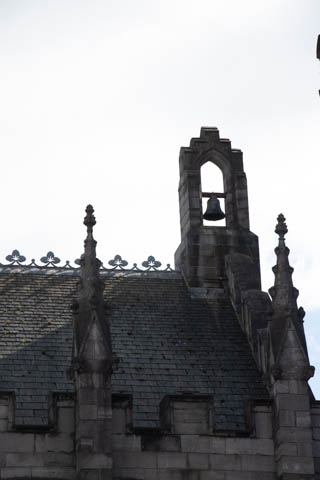
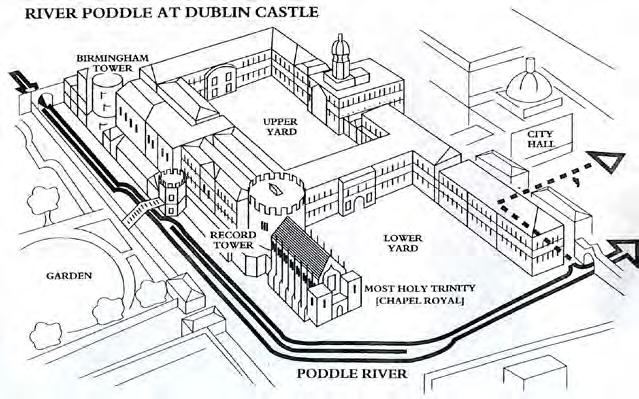
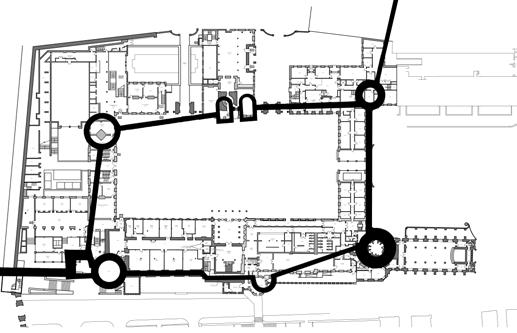
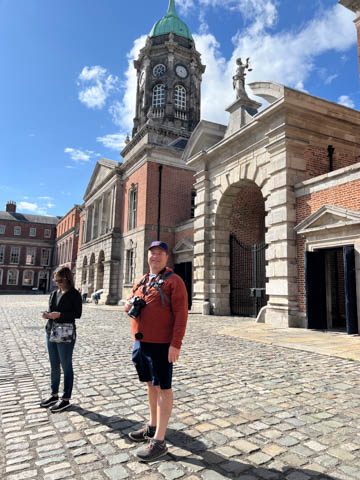
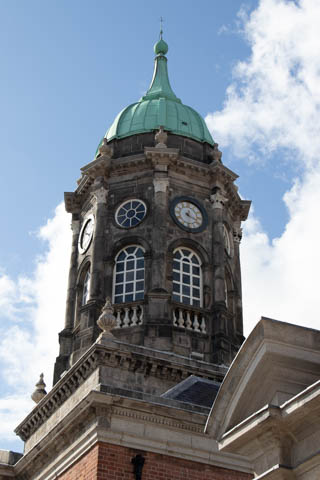
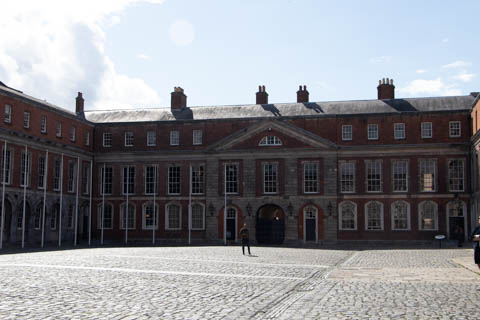
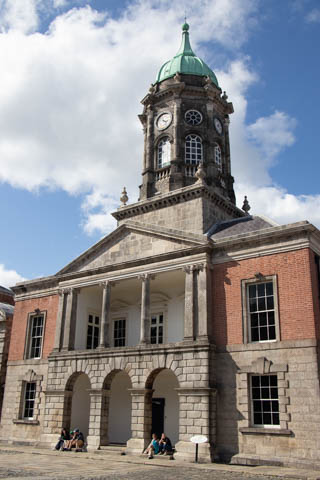
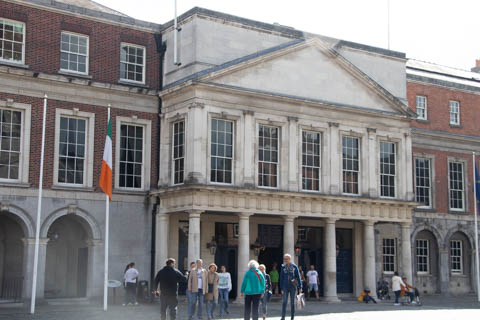
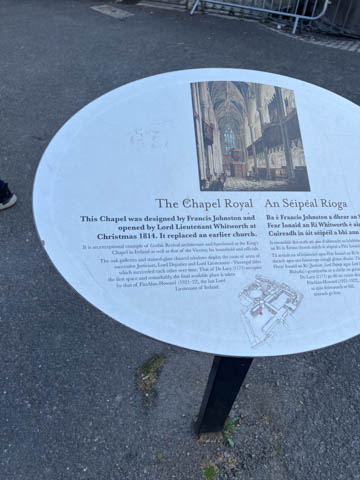
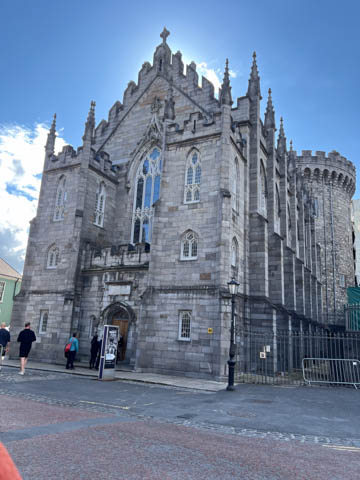
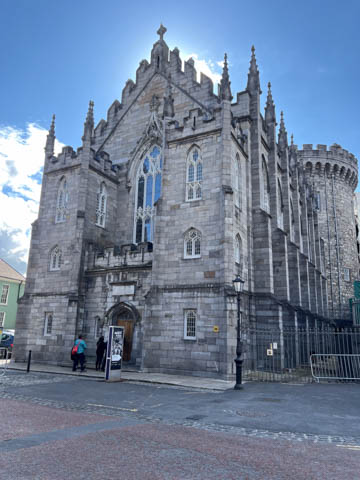
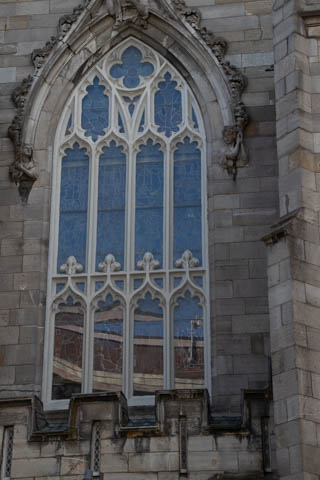
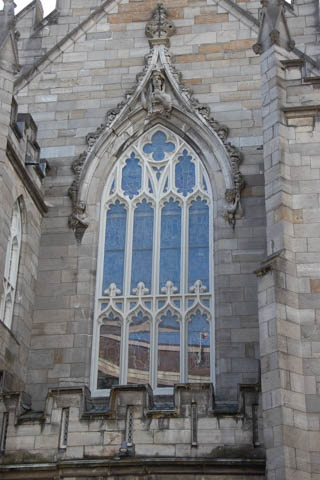
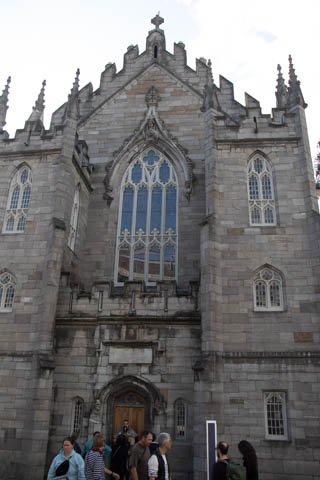
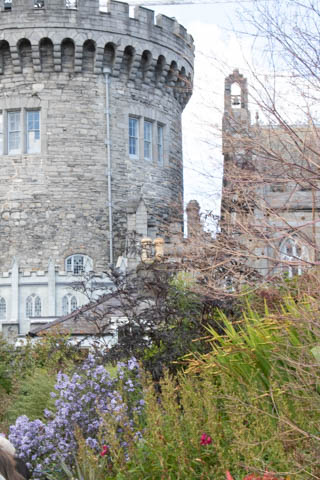
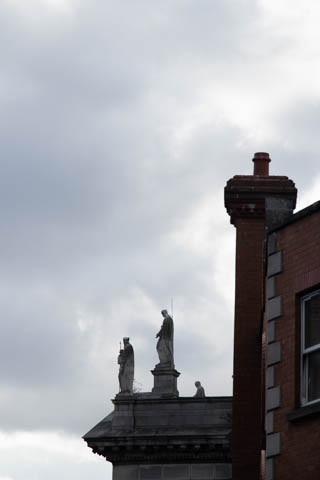
the Disney adventure with us, and worked for Disney HR in California. Our guide first discussed some basic Irish history. There is archeological evidence of permanent human residence in Ireland around 10,500 BC (although there is evidence of human presence as early as 31,000 BC). The historical record doesn't really begin until interaction with the Roman Empire allowed records. As Rome didn't invade Ireland, this start of the historical record begins much later than other parts of Europe with the coming of Christianity in the fifth century. Prior to that, and after the 1st Century AD, the island was considered Gaelic Ireland. The Gaels were an ethno-linguistic group native to Ireland, Scotland, and the Isle of Man. Gaelic language and culture originated in Ireland and extended to western Scotland and the Isle of Man, becoming the dominant culture in the Middle Ages. They were considered Celts as was much of Europe at the time. Ireland represents one of the modern regions considered Celtic where a Celtic language and culture still thrives: Brittany (Breizh), Cornwall (Kernow), Ireland (Éire), the Isle of Man (Mannin, or Ellan Vannin), Scotland (Alba), and Wales (Cymru). Celtic society was organized into clans and several kingdoms each with a king (or chief) with heirs determine through election, with a High King often claiming lordship over the entire island. he Irish were previously pagans who had many gods, venerated the ancestors, believed in an Otherworld, and held four yearly festivals or gatherings. They relied on a strong oral tradition, but did have a primitive alphabet used in stone carvings beginning in the 4th century. Conversion to Christianity began in the 5th century, a time which also included introduction of the Roman alphabet and record keeping. The Gaelic Irish monasteries were renowned centers of learning and recorded and preserved Irish mythology and Brehon law. Viking raids occurred regularly between the 8th and 11th century, with several Viking settlements established and the cultures becoming mixed (the guide commented the Vikings essentially became Irish). The Battle of Clontarf on 23 April 1014 led to the end of Viking power in Ireland. The next invaders were the Anglo-Normans from England and Wales beginning in 1169, who initially came at the invitation of a deposed Irish King. They were led by a night Strongbow under English King Henry II. However, English rule did not extend over the whole island until the 16th–17th century Tudor conquest under Queen Elizabeth, which led to colonization by settlers from Britain, mostly in the northern counties around Belfast. In the 1690s, a system of Protestant English rule was designed to materially disadvantage and disenfranchise the Catholic majority and Protestant dissenters, and was extended during the 18th century. With the Acts of Union in 1801, Ireland became a part of the United Kingdom. A war of independence in the early 20th century was followed by the partition of the island, leading to the creation of the Irish Free State, which became increasingly sovereign over the following decades until it declared a republic in 1948 ( Republic of Ireland Act, 1948) and Northern Ireland, which remained a part of the United Kingdom. Northern Ireland saw much civil unrest called the Troubles from the late 1960s until the 1990s. This subsided following the Good Friday Agreement in 1998. In 1973, both the Republic of Ireland and the United Kingdom, with Northern Ireland as part of it, joined the European Economic Community. Following a referendum vote in 2016, the United Kingdom, Northern Ireland included, left the European Union (EU) in 2020. Northern Ireland was granted a limited special status and allowed to operate within the EU single market for goods without being in the European Union. Our guide next explained that Dublin was country's capital and largest city, with settlement dating back to the BCE era and it was mentioned in Ptolemy's map in 140 AD. The area got it's name from the Middle Irish word Du(i)blind (literally "Blackpool"), which referred to an area where a small stream joined with the Liffey, but which is now filled-in and part of a park. While there was a small pre-existing Christian settlement, the city grew dramatically with the arrival of the Vikings in 841 AD when they invaded and established a small fort in the area. We had several people comment that the Vikings really adopted Irish customs and that almost 90% of Irish people had Scandinavian and Viking lineage now. The next invaders were the Normans, arriving in 1169 via Wales. They came at the request of a deposed Irish king, who wanted English help to restore his crown (and lands), which ultimately led to English King Henry II claiming sovereignty and establishing Dublin Castle in 1204 as his seat of power on the island. The English controlled a strip along the eastern coast called the Pale. The English finally conquered the entire island in the early 1600s with an invasion under the Tudor dynasty and Queen Elizabeth I who sought to remake the island as Protestant and under the Church of England. She established Trinity College in 1592 as a Protestant college and converted St Patrick's cathedral to the Church of England. The city was the site of the Easter Uprising which led to the dissolution of the Irish Parliament and the fleeing of much of the upper class to London when the government was merged with the English Parliament. It is now the capital of the Irish Republic. At one point in the early 1700s, it was the second largest city in Great Britain and the fifth largest in Europe, but was soon overtaken in size. It is now home to just over 2 million people, almost a third of the total Irish population of 6 million people. The first stop on the walking tour was Dublin Castle. This was built by the English under King Henry II (completed in 1230) along the (now underground) River Poddle which flooded a moat along two sides. It was a Norman design with a wall connecting six towers around a rectangular courtyard with no keep and as part of the city walls. While modifications were made throughout the middle ages, none of those structures remain other than ruins below ground with the exception of the Record Tower, the only remaining tower from the original fortification (the battlements on the top were added in the early 1800s). As we turned to enter the castle from the east side, the stunning building in front of us to the south and outside the castle walls was the Chapel Royal, built in the 1800s in the Gothic Revival style. The only remaining original tower, the Record Tower, stands next to the chapel
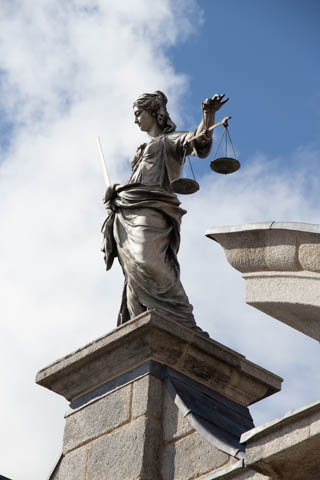
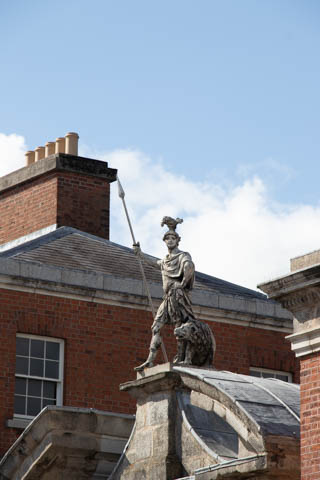
Once inside, our guide told us of several fires which changed the nature of the building and the theft of the Irish Crown Jewels in 1907. The castle is now the ceremonial seat of government, hosting several offices and with statues of Justice to add to the impression. It was the site of the inauguration of the first Irish President in 1938.
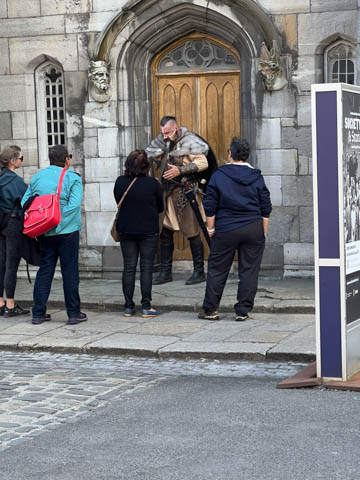
We departed through the same entrance, passing in front of the Chapel Royal. Had to laugh at the get-up of another tour guide offering Viking focused tours.
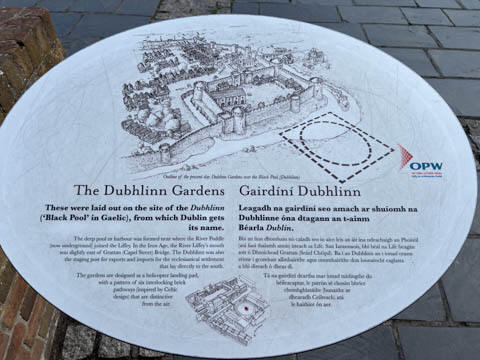
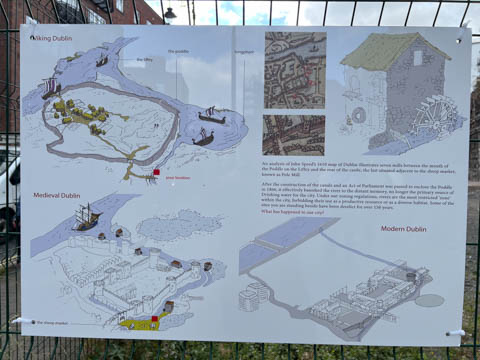
We next went to a nearby park just south of the castle, Dubh Linn Gardens, the ancient site of the Blackpool at the confluence of the Poddle and Liffey from which Dublin derives its name.
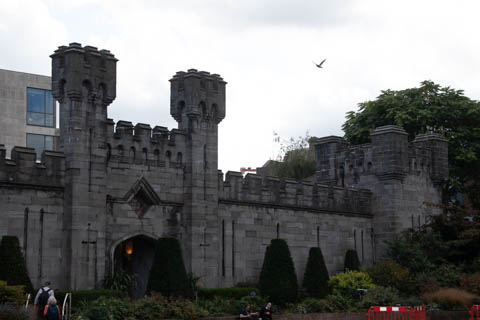
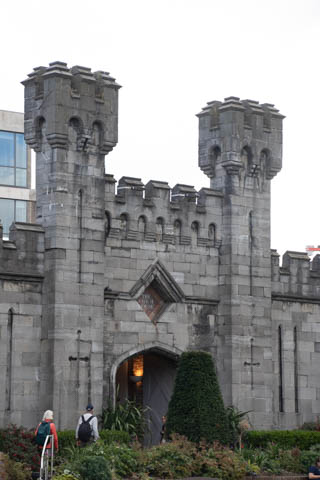
Here are some images looking back at the castle and of the Couch House on the south side of the garden.
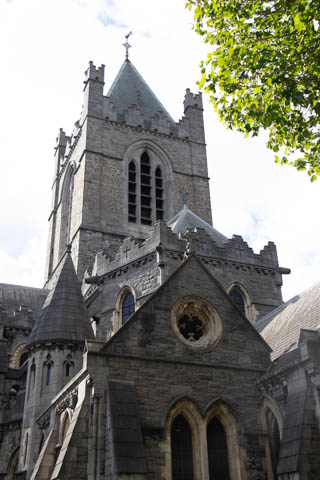
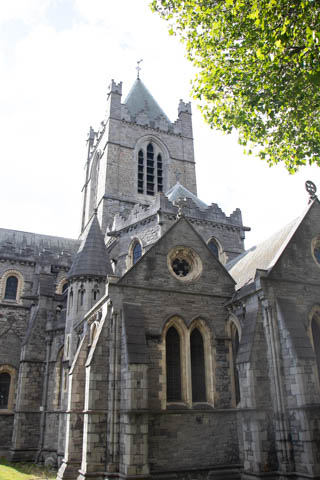
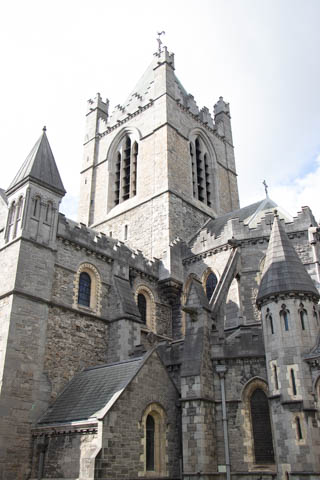
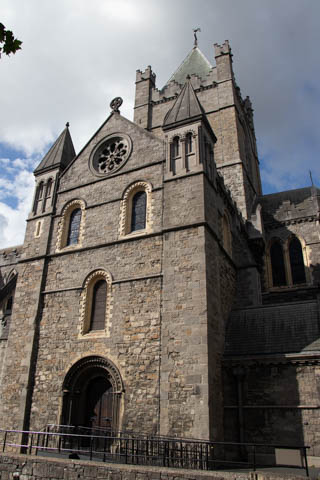
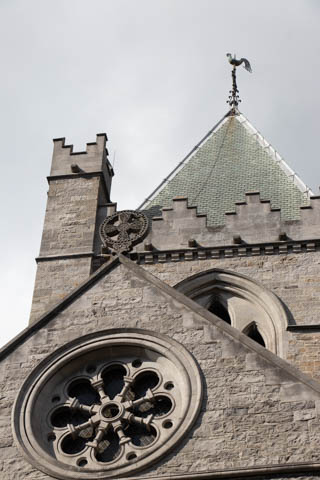
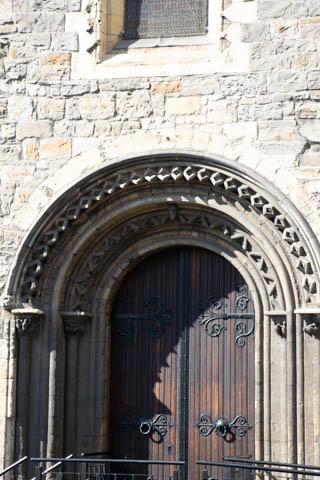
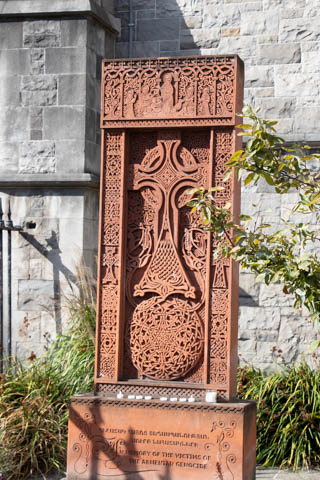
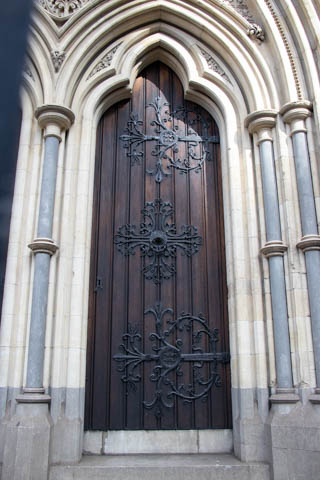
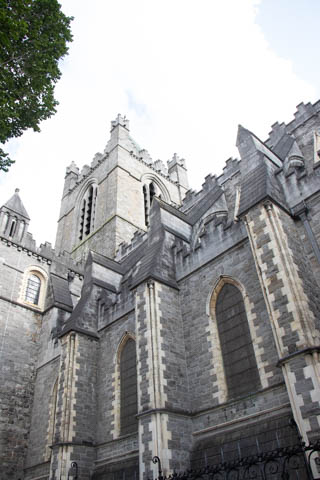
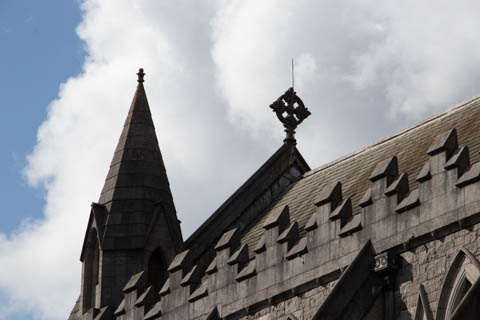
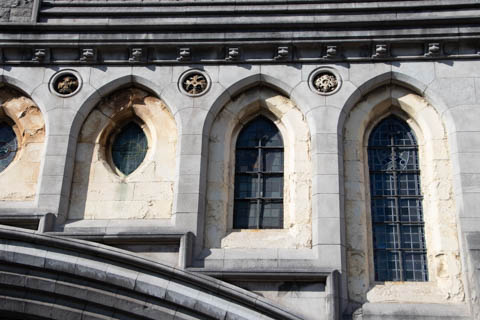
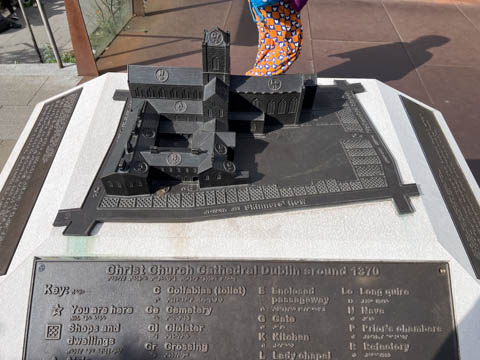
We made our way from there a couple blocks northwest to Christ Church Cathedral, formerly named the The Cathedral of the Holy Trinity. The cathedral was founded probably sometime after 1028 after King Sitric Silkenbeard, the Hiberno-Norse king of Dublin, returned from a pilgrimage to Rome. The church was built on the high ground overlooking the Viking settlement at Wood Quay, just off the River Liffey, and was actually within a much larger Catholic diocese. It was then a wooden structure. In the 1180s, Strongbow (the Anglo-Norman potentate) and other Norman magnates helped to fund a complete rebuilding in stone of the cathedral, showing off Norman skills in stonework and masonry. The church continued to be expanded throughout the middle ages. As part of his dissolution of the Catholic Church, King Henry VIII abolished the Priory of the Holy Trinity in 1539 changing it to a secular church. A partial collapse in the 16th century left it in poor shape and the building was extensively renovated and rebuilt in the late 19th century under an incredibly generous donation from the Henry Roe distillery family (who ran the largest distillery in Ireland at the time), giving it the form it has today, including the tower, flying buttresses, and distinctive covered footbridge
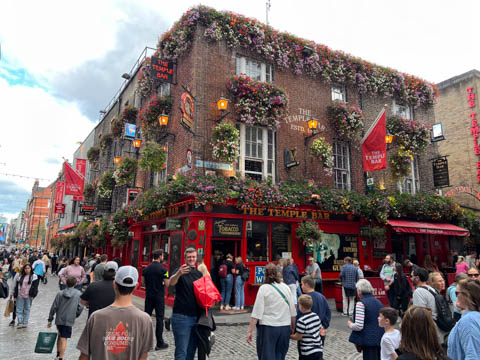
Just behind the church toward the river was a rather ugly building to house Government offices. During the construction they discovered the remains of a Viking settlement. Back in Temple Bar we took an obligatory picture of the Temple Bar Pub, which our tour guide (and another later) both bemoaned as a tourist trap, which raises the price for a pint as the evening progresses, taking advantage of the unsuspecting tourists.
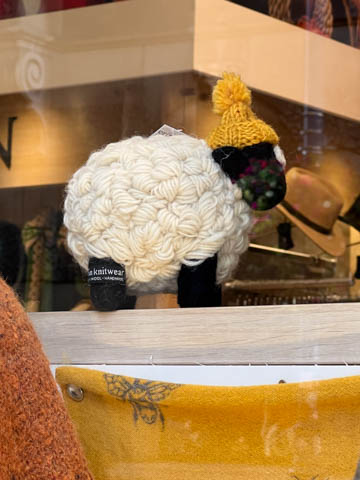
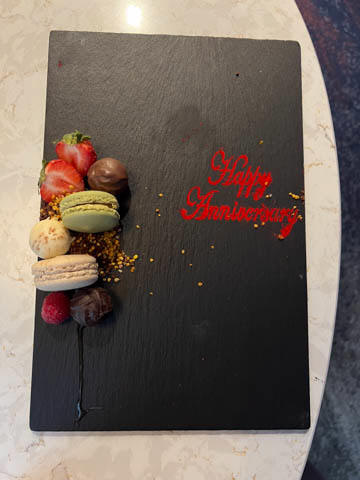
We did some window shopping and wandered a bit more. With our guides recommendation, we enjoyed a great dinner at Gallaghers Boxty House, which served a traditional potato pancake called a boxty. Upon returning to our room, we discovered Disney had provided a welcome present.
|
|
|