
|
|
Use these navigation links to move between the Year 2025 pages. Specific pages can be accessed at the bottom of this page
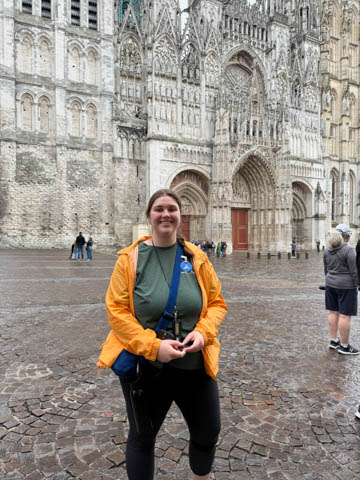
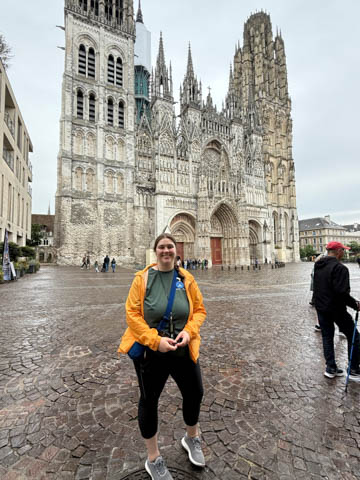
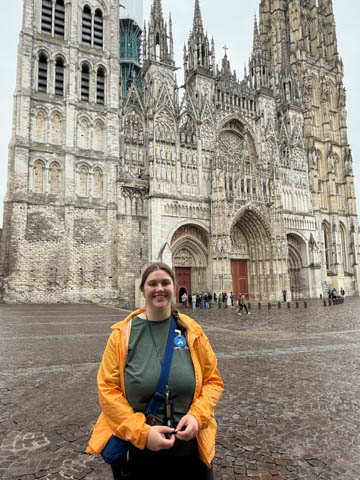
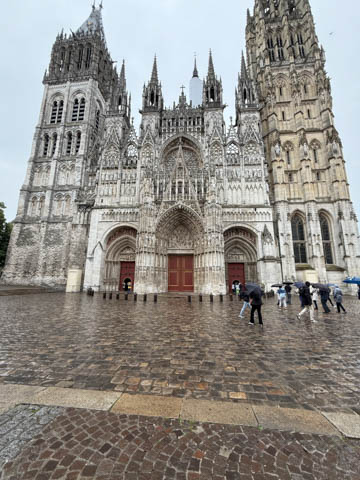
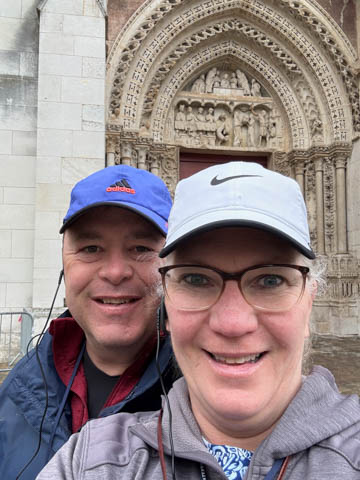
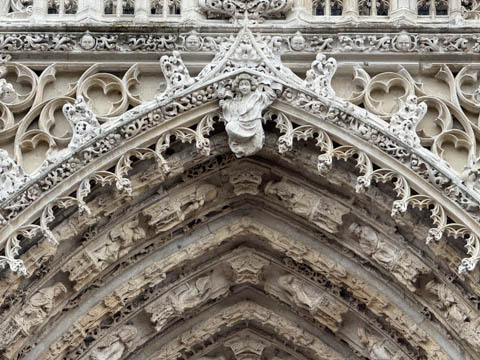
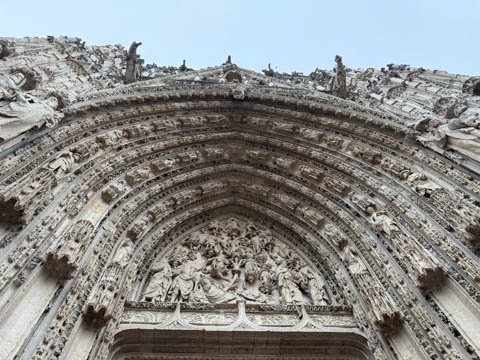
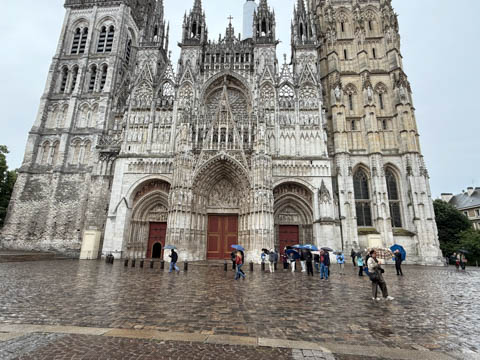
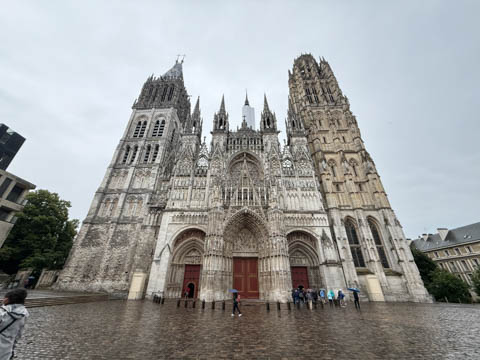
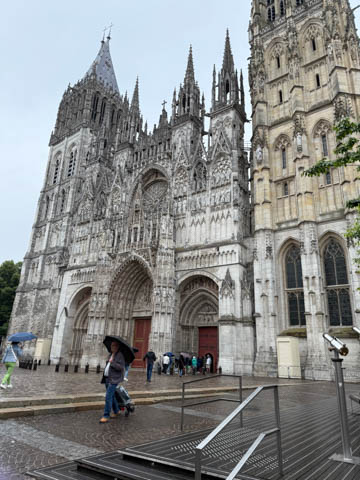
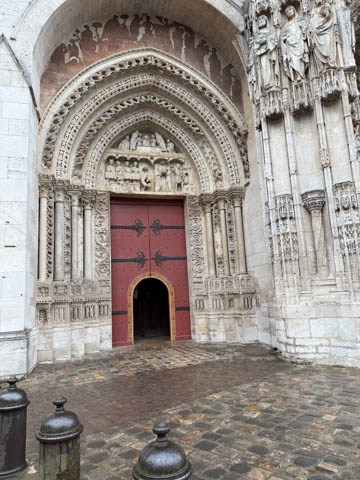
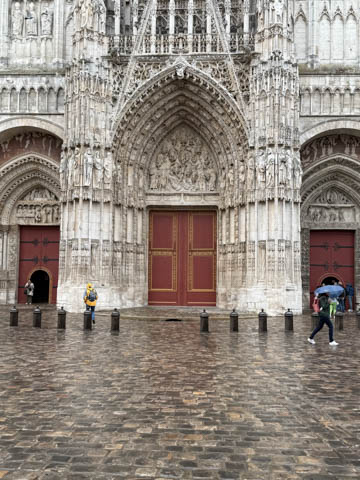
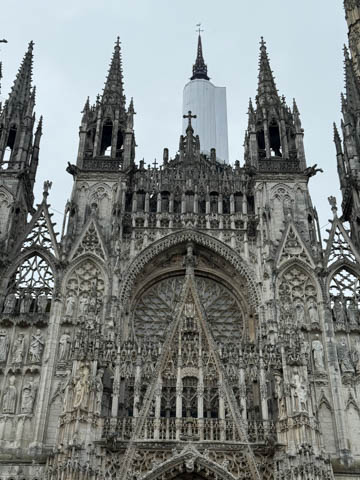
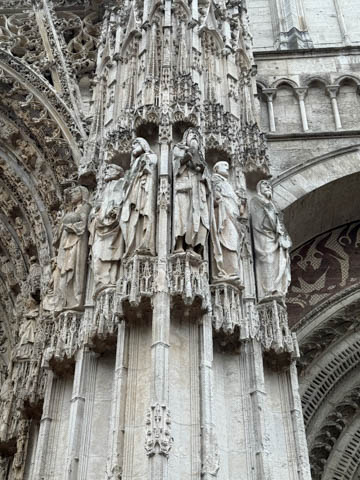
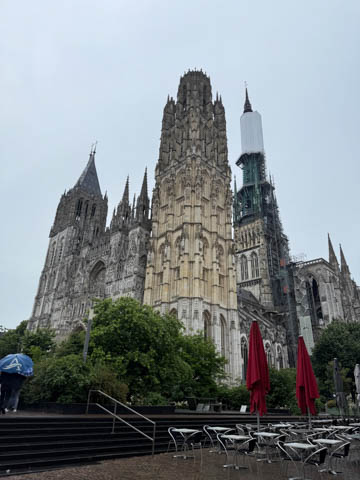
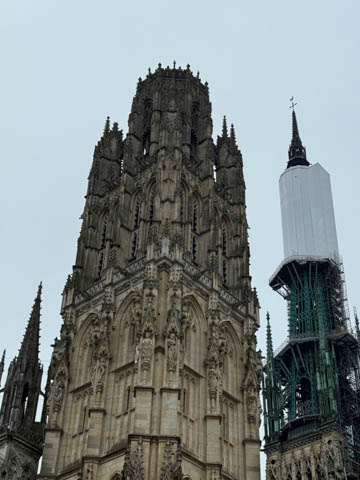
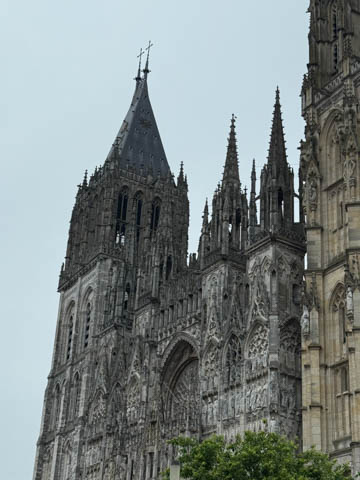
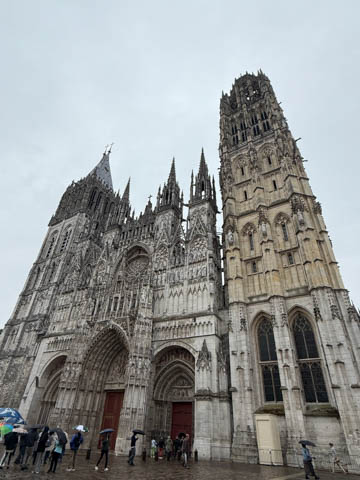
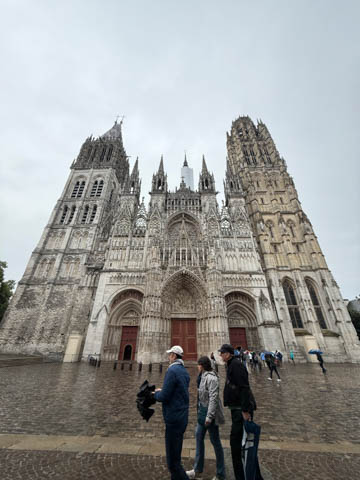
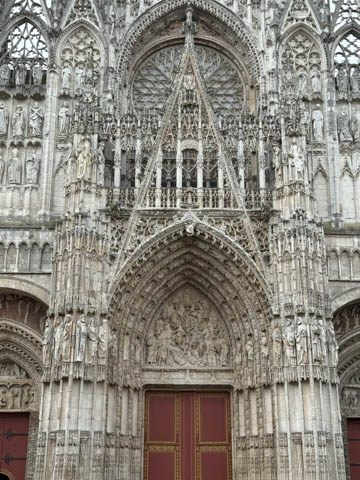
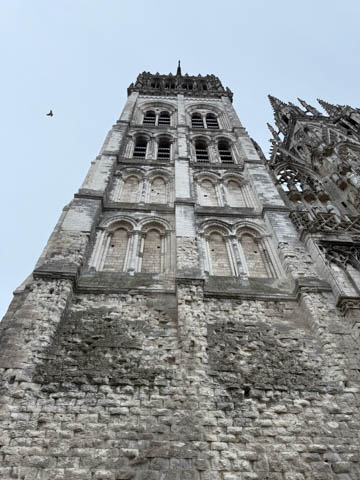
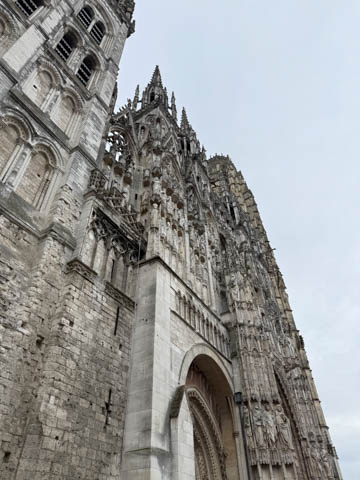
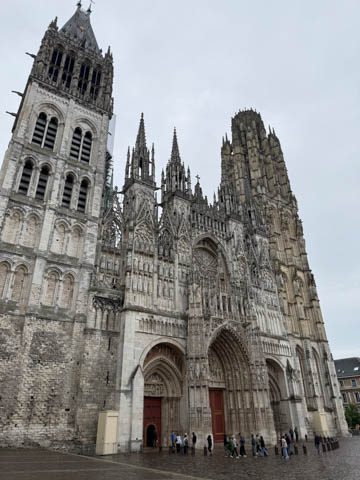
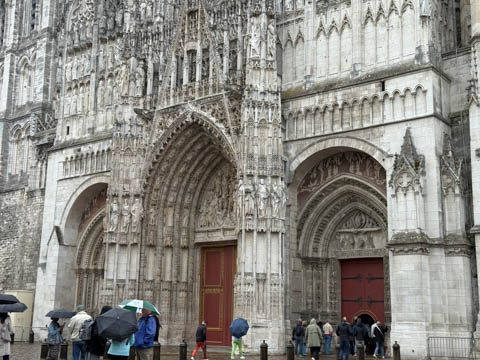
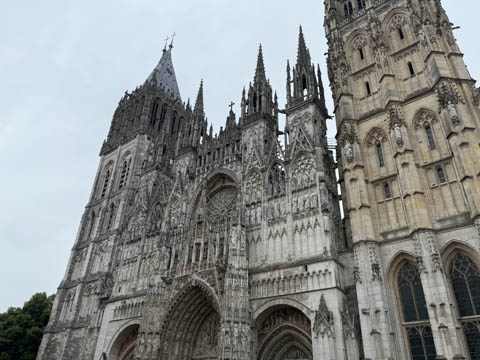
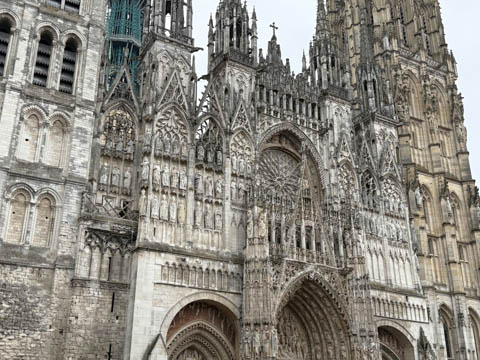
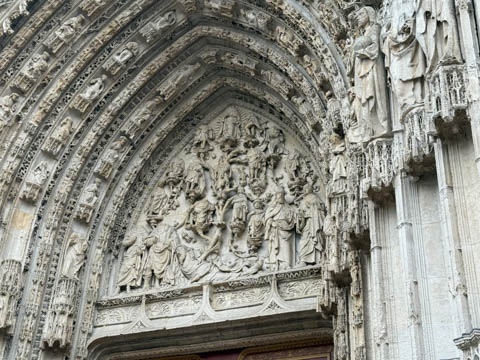
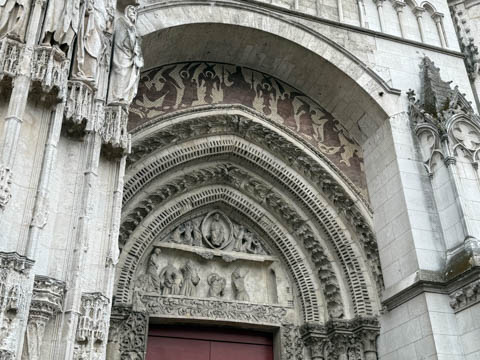
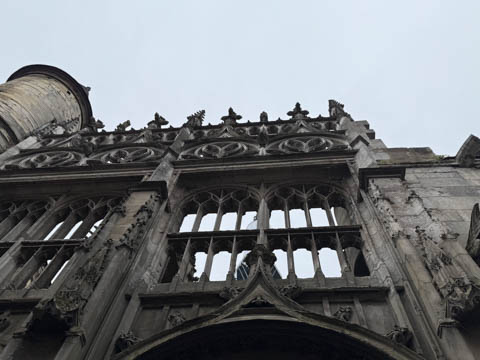
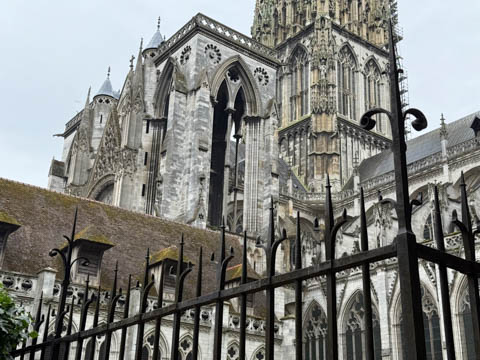
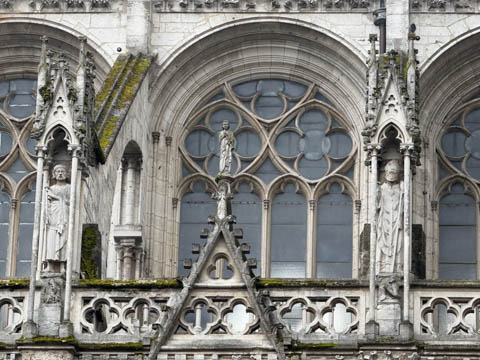
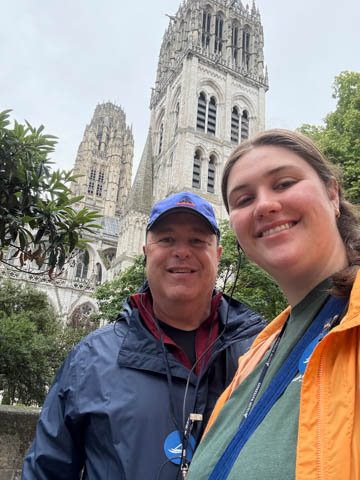
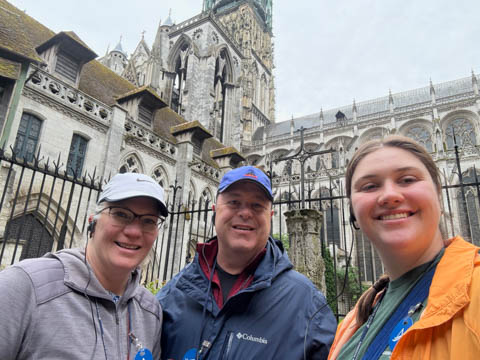
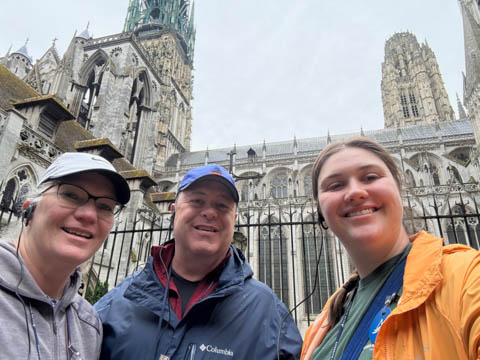
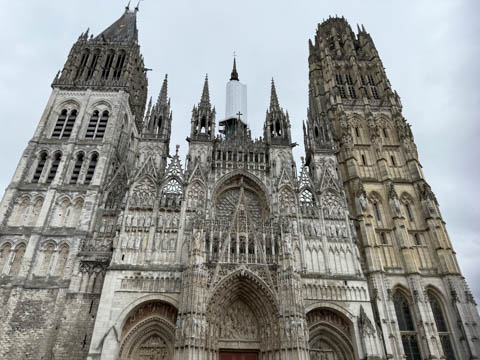
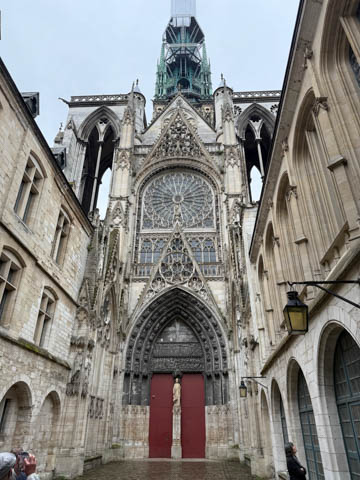
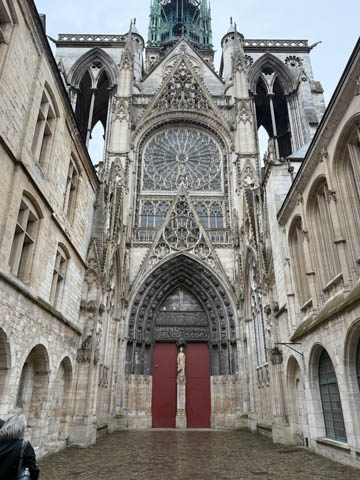
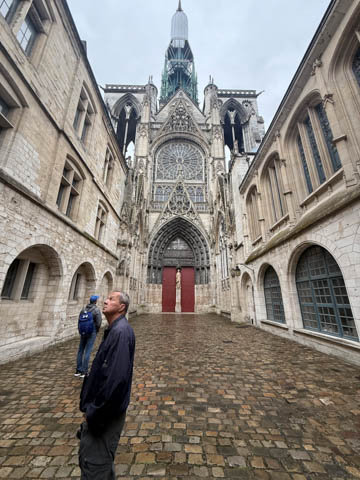
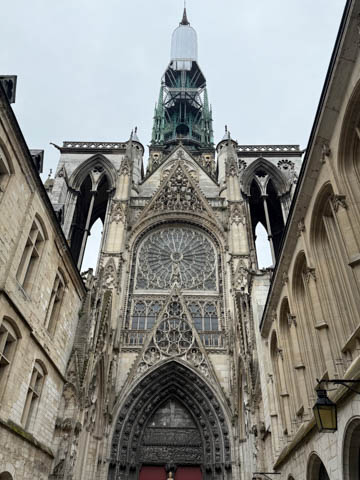
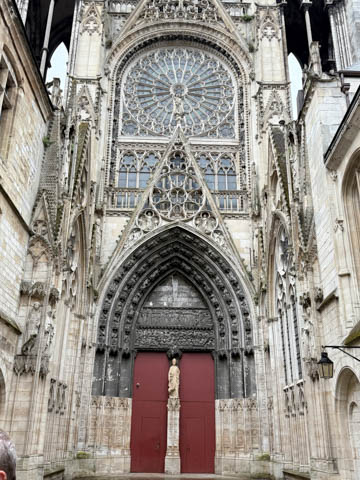
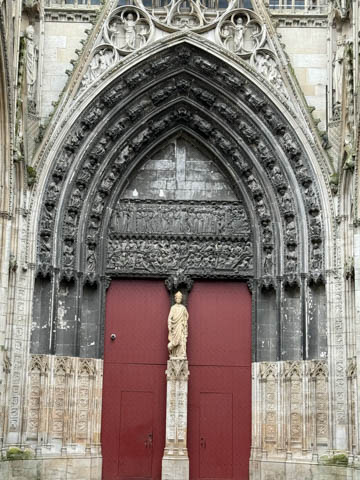
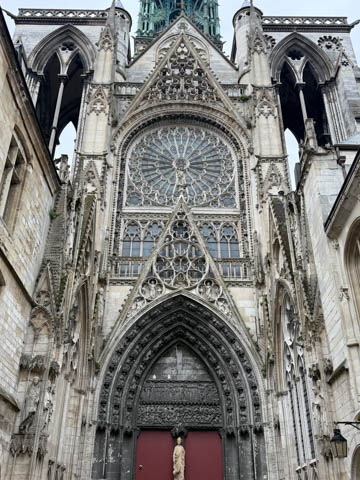
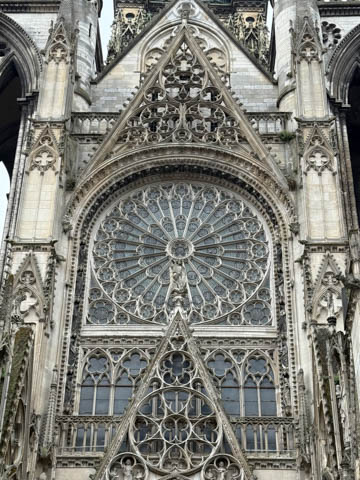
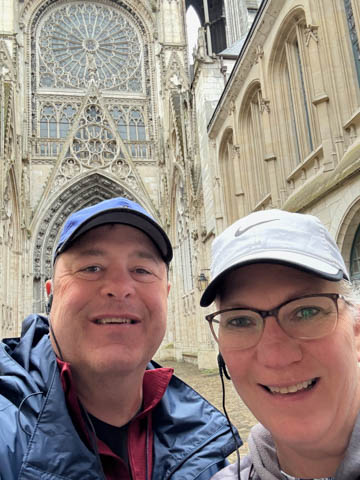
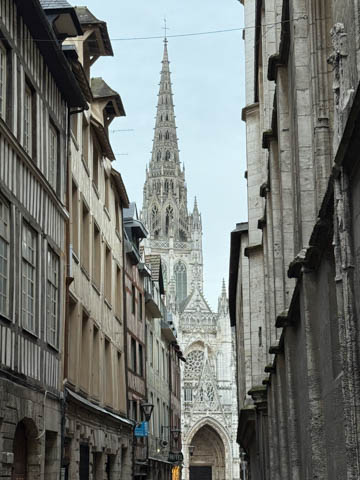
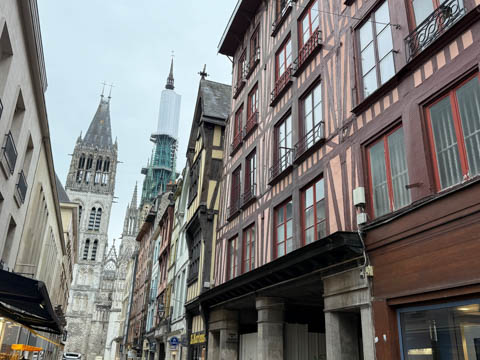
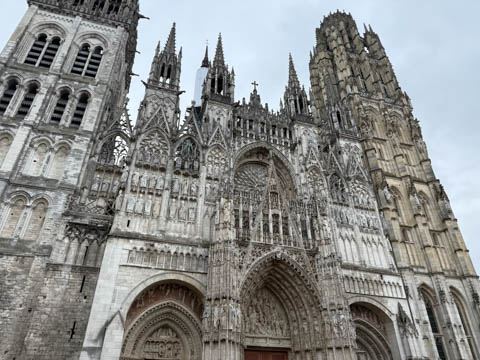
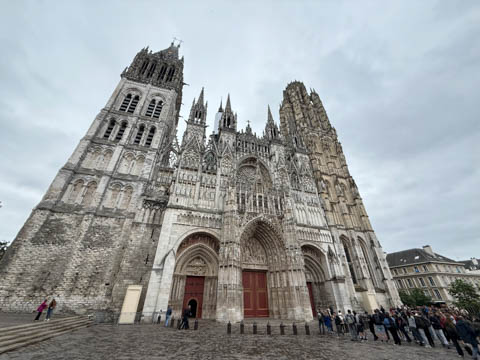
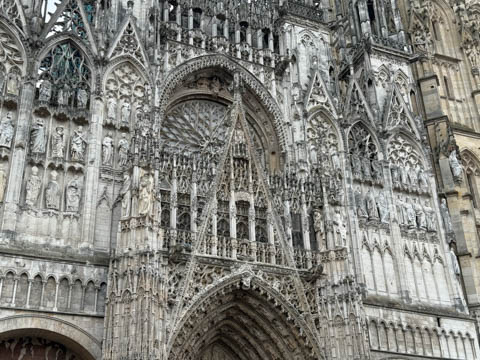
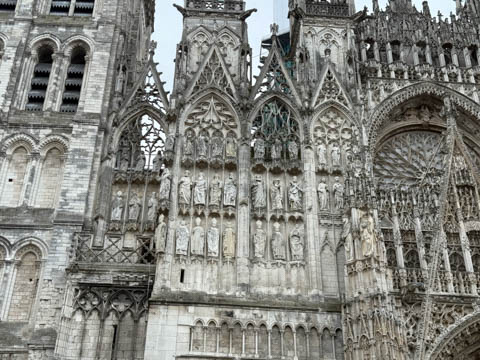
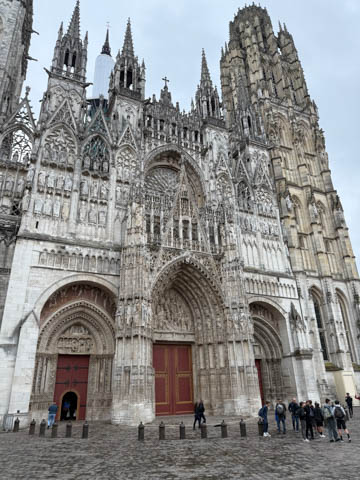
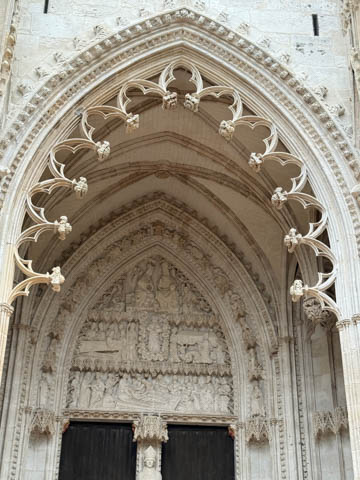
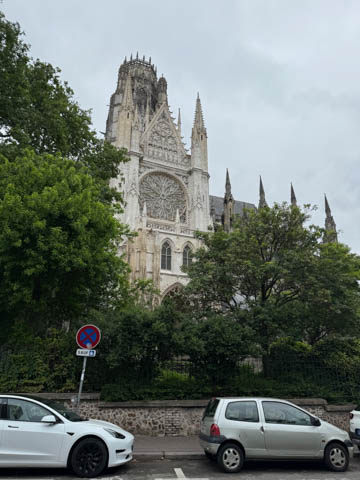
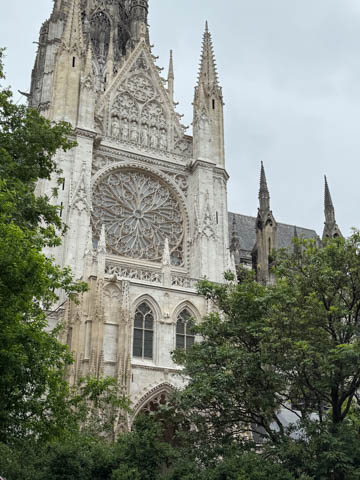
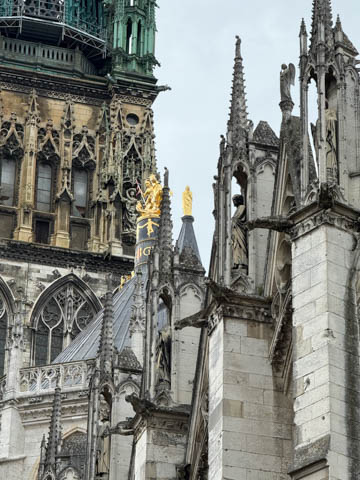
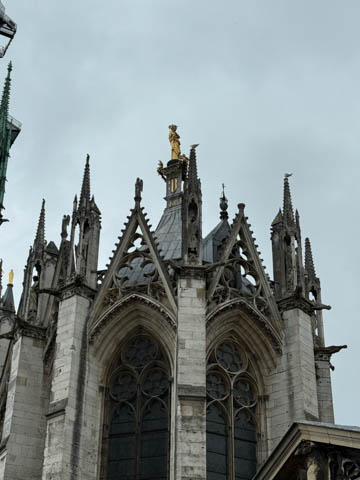
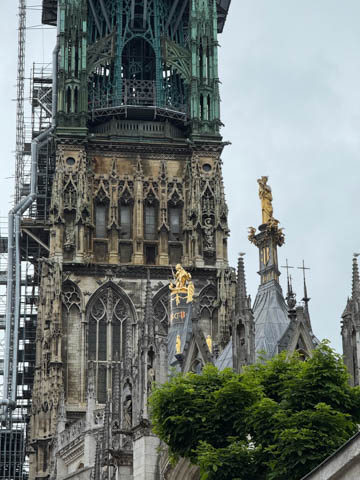
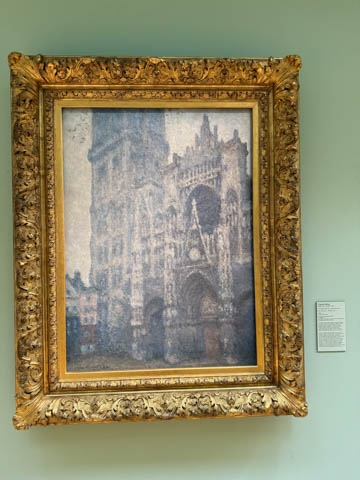
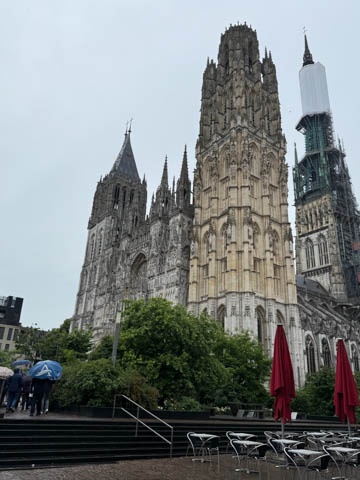
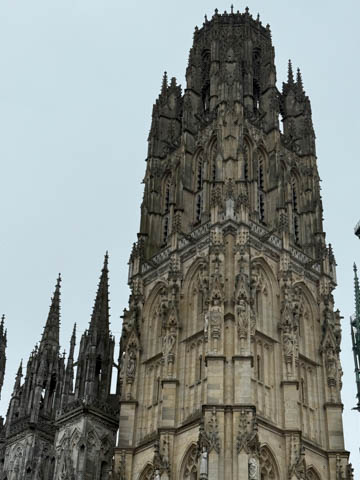
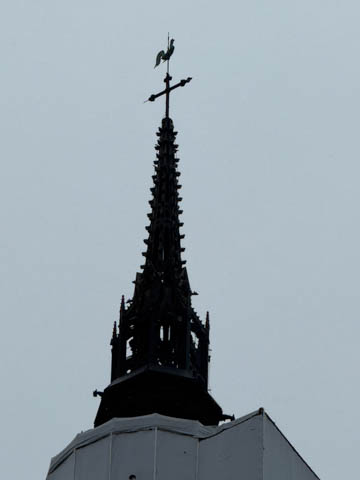
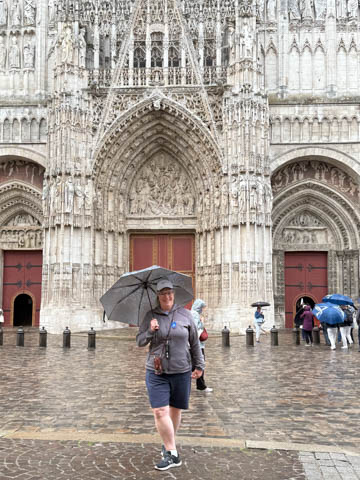
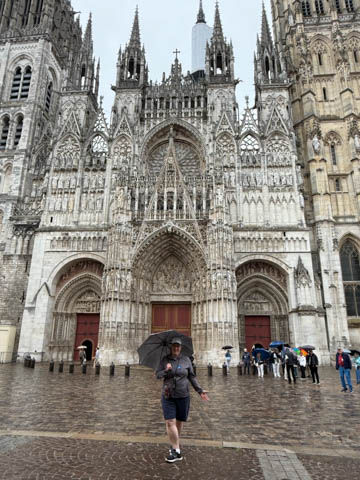
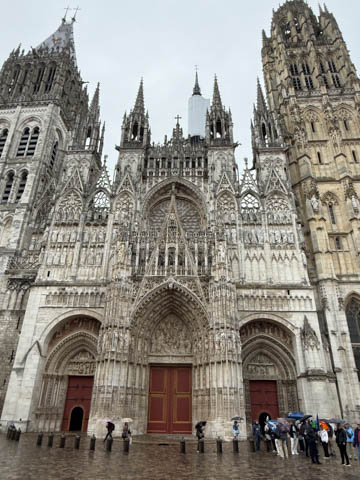
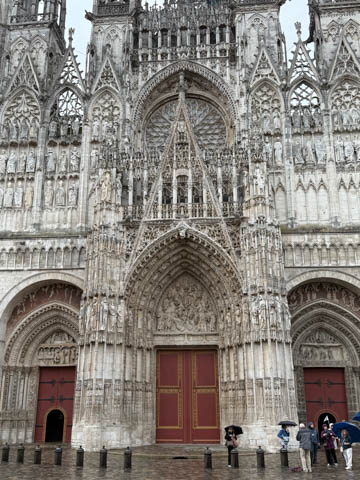
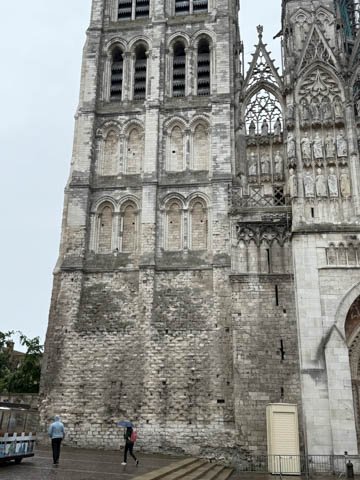
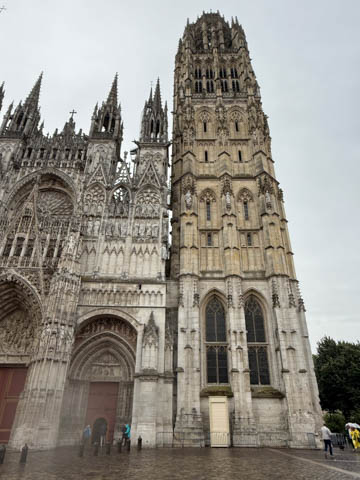
May 2025 (Part 20) France Trip: Day 9: Rouen The next day was spent exploring Rouen. This was one of the largest and most prosperous cities of medieval Europe, now known as the City of a Hundred Spires (so named by Victor Hugo). The city was founded by the Gauls and has some old Roman ruins of an amphitheater and bath house (thermae). It was overrun by the Normans in 841, and became the seat of the Exchequer of Normandy during the Middle Ages. It was one of the capitals of the Anglo-Norman and Angevin dynasties, which ruled both England and large parts of modern France from the 11th to the 15th centuries. From the 13th century onwards, the city experienced a remarkable economic boom, thanks in particular to the development of textile factories and river trade. During the Hundred Years' War, Rouen surrendered in 1419 after a long siege to Henry V of England, who annexed Normandy once again to the Plantagenet domains. Joan of Arc, who supported a return to French rule, was burned at the stake on 30 May 1431 in Rouen, where most inhabitants supported the duke of Burgundy, the French king's enemy. The king of France, Charles VII, recaptured the town in 1449. Rouen was staunchly Catholic during the French Wars of Religion, and underwent an unsuccessful five-month siege in 1591/2 by the Protestant Henry IV of France and an English force under Earl of Essex. During the German occupation in World War II, the Kriegsmarine had its headquarters located in a chateau on what is now the Rouen Business School. The city was heavily damaged during the same war on D-Day, and its famed cathedral was almost destroyed by Allied bombs. We joined a walking tour in the morning, which headed first to the Cathedrale Notre Dame de Rouen. Surprisingly, this had a small square in front and was hemmed in on all other sides. The first cathedral at the site dates back to 260 when Christianity reached Rouen with Saint Mellonius, who became the first bishop. After many changes and several buildings, a complete reconstruction was begun in 1145 beginning with a new facade and the Tower Saint-Roman, both in the new Gothic style. Over a period of over 800 years, it was built and rebuilt with features from Early Gothic to late Flamboyant and Renaissance architecture. The late Gothic Flamboyant style was added to the tower of Saint-Romaine in 1468. In the mid-1500s, Tour de Beurre (butter tower) was added, partially financed by the sale of indulgences for the consumption of butter during Lent. As the new tower was being built, the west front of the Cathedral showed weaknesses and began to tilt, and was completely reconstructed in a lavishly ornate Flamboyant style. The structure is now famous for its three towers, each in a different style. The cathedral, built and rebuilt over a period of more than eight hundred years, has features from Early Gothic to late Flamboyant and Renaissance architecture. It also has a place in art history as the subject of a series of impressionist paintings by Claude Monet, and in architecture history as from 1876 to 1880, it was the tallest building in the world (until the completion of the Cologne Cathedral).
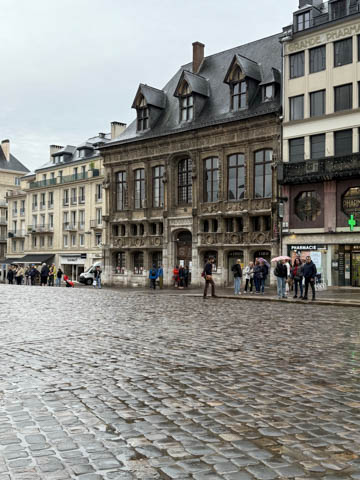
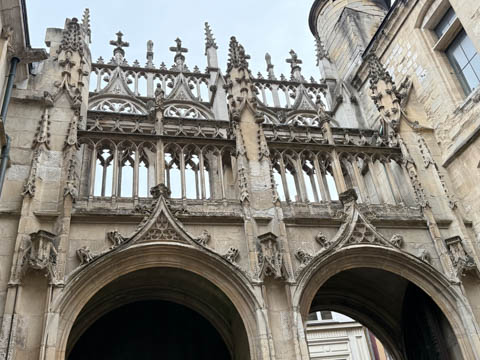
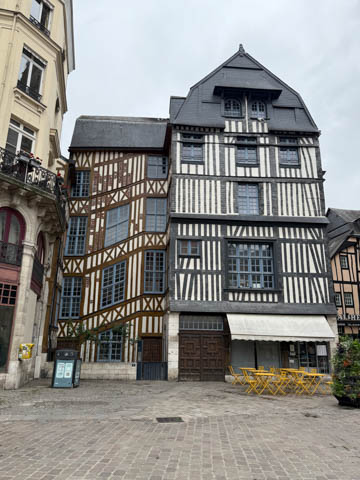
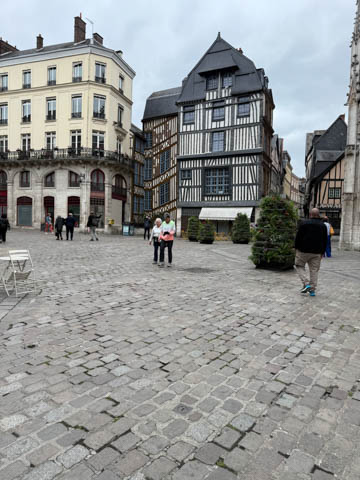
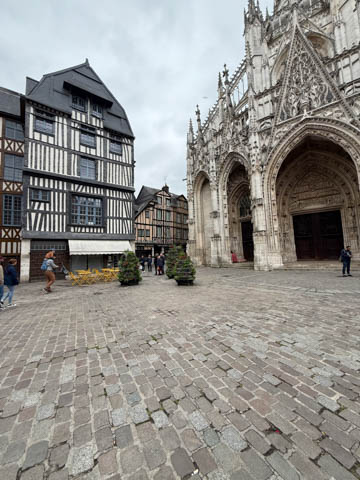
While small, the square in front was all cobblestone and had several interesting buildings.
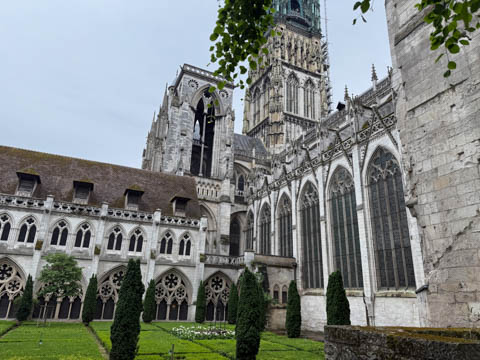
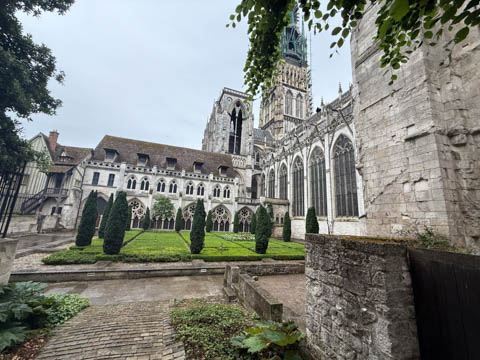
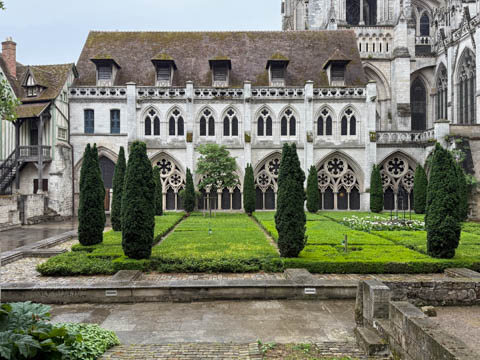
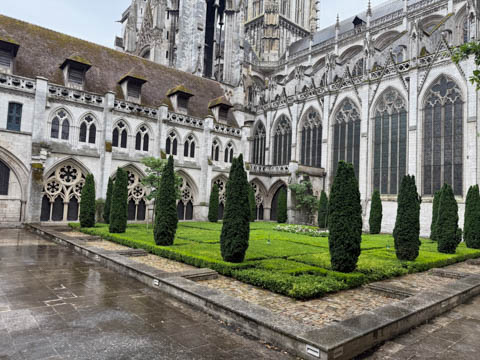
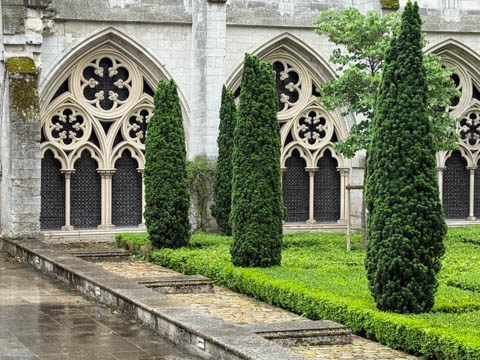
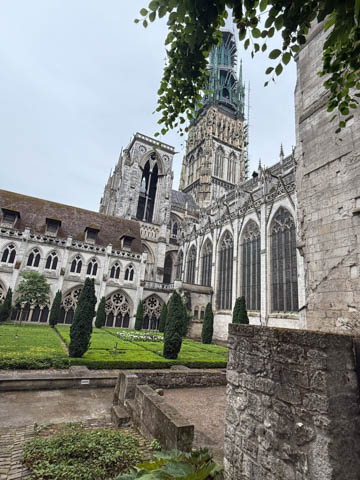
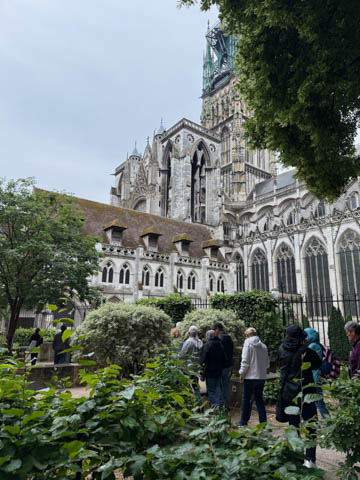
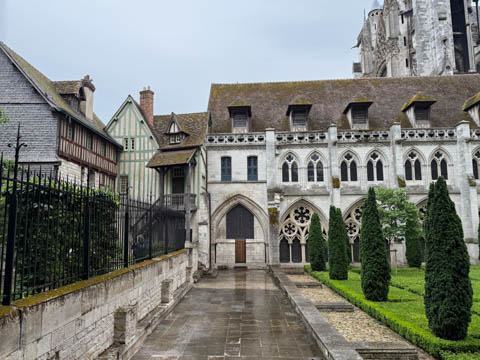
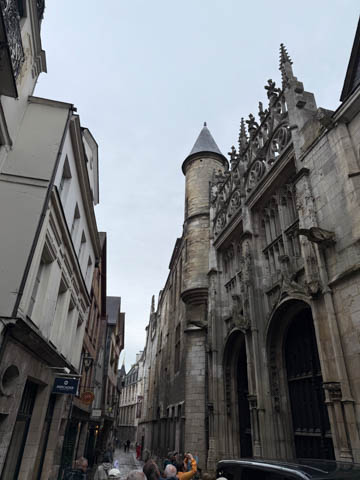
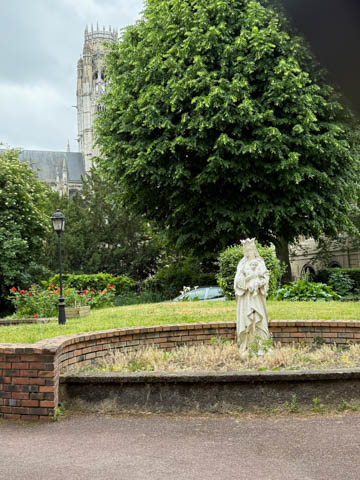
Our tour took us around the cathedral, where there was a small cloister and buildings for the archdiocese.
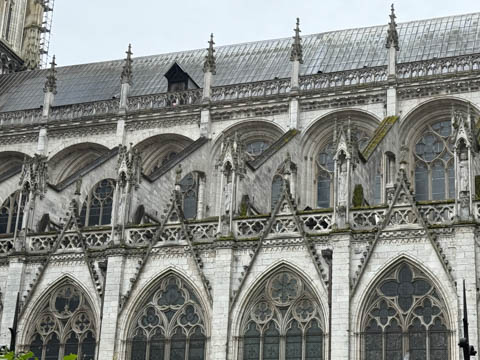
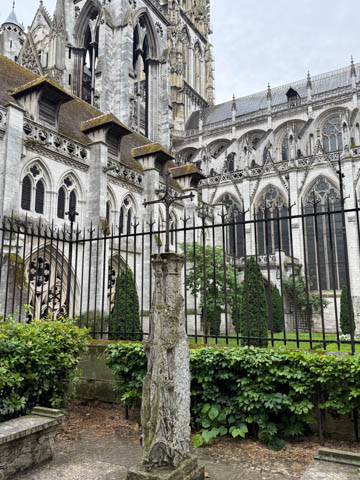
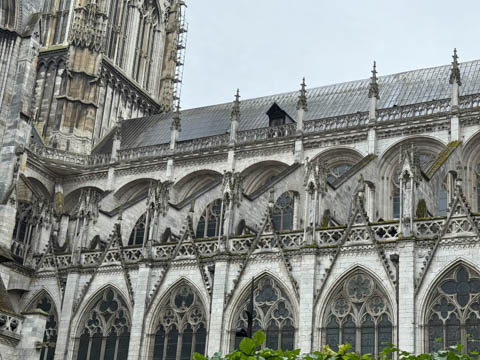
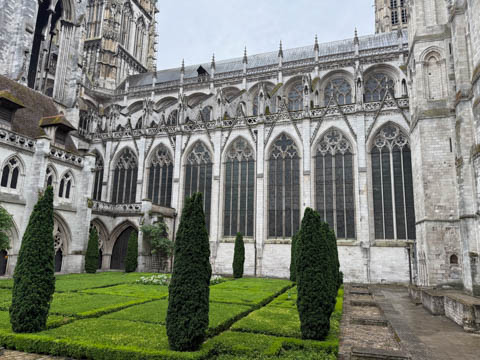
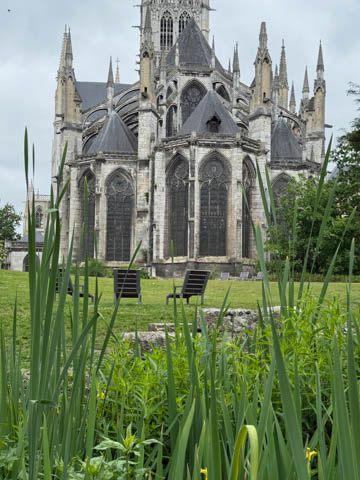
We kept going and arrived back at the side of the cathedral.
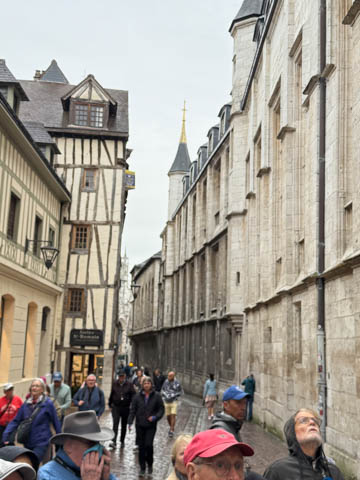
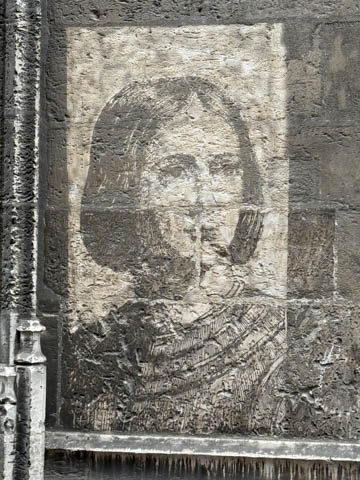
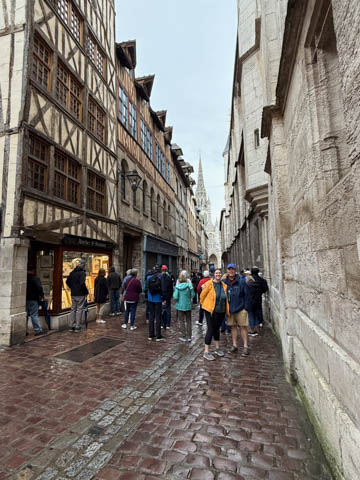
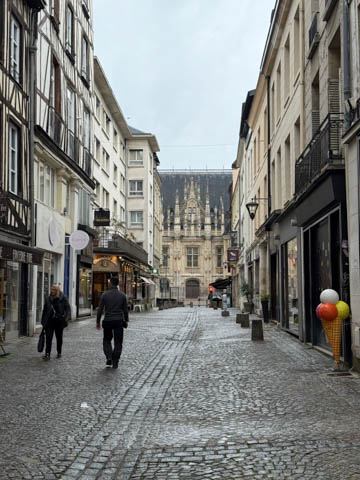
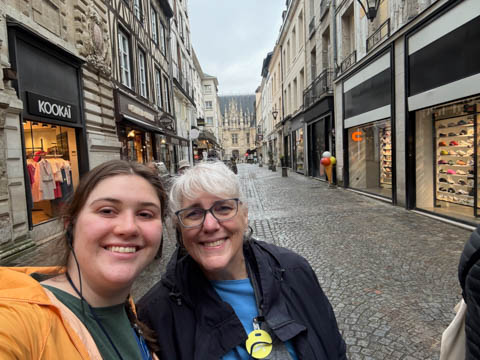
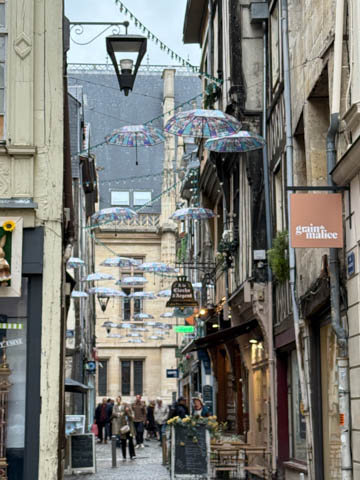
We next headed west into a series of narrow streets, winding up on a pedestrian shopping district. Liked this image of Joan of Arc created by cleaning the wall to create the white space.
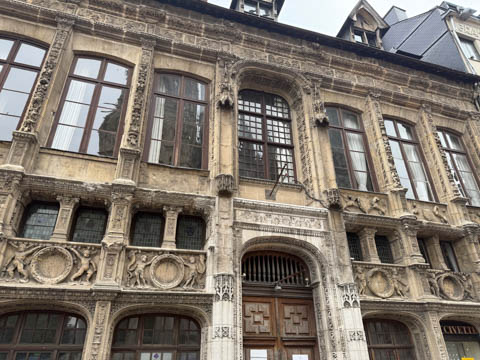
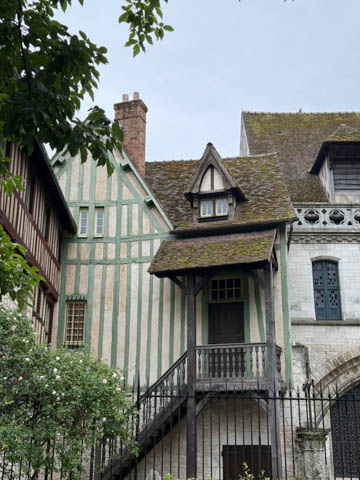
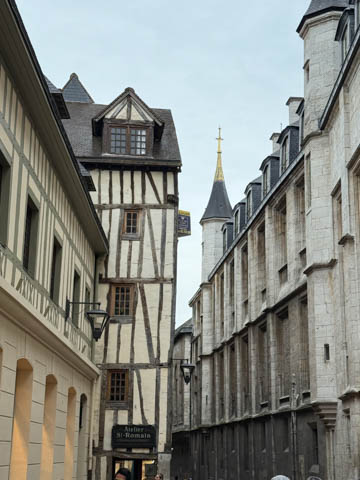
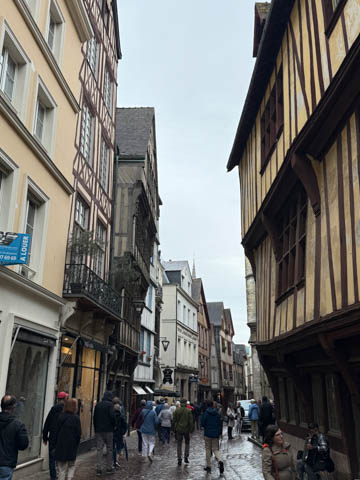
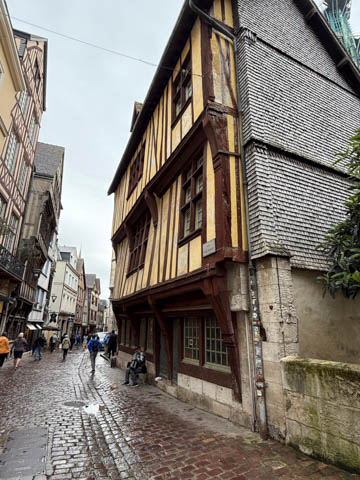
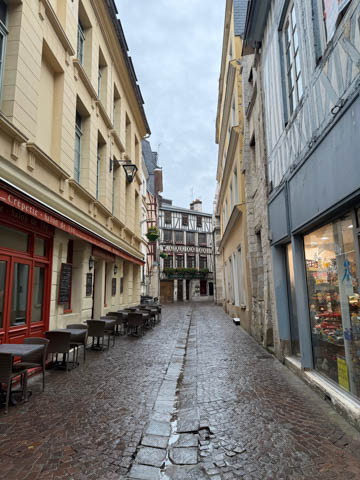
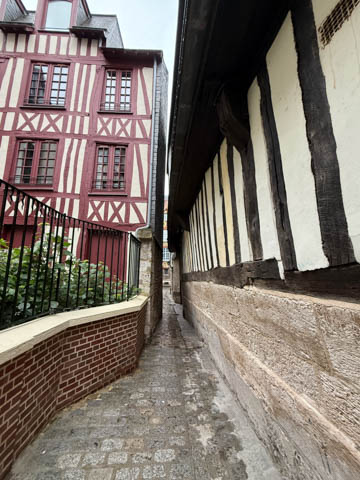
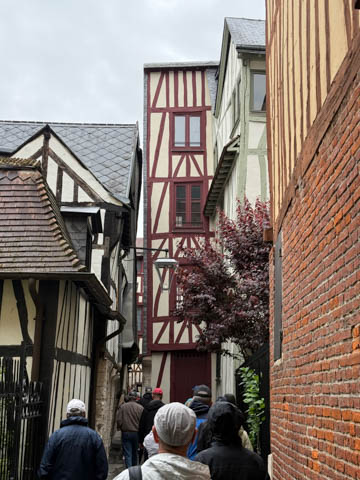
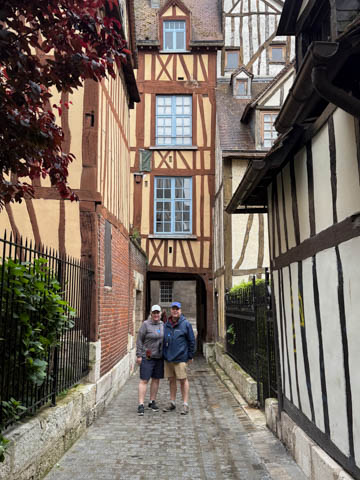
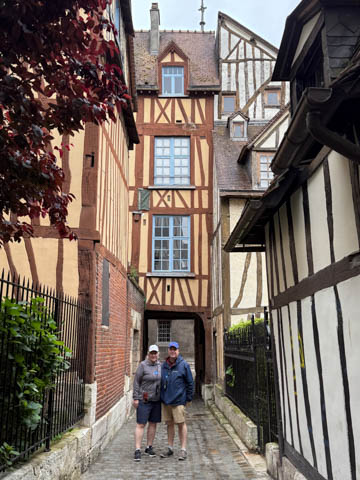
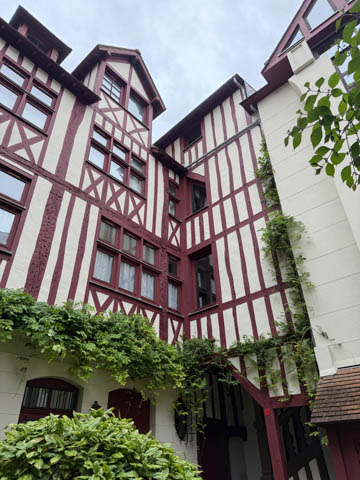
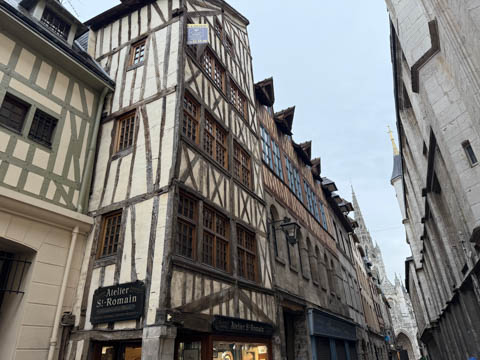
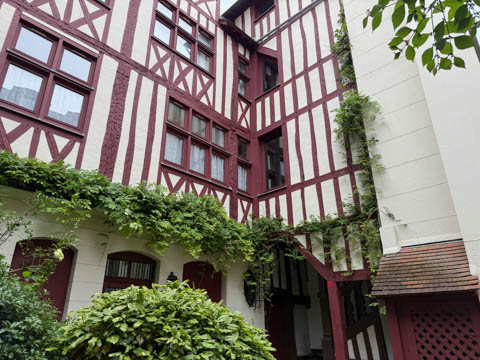
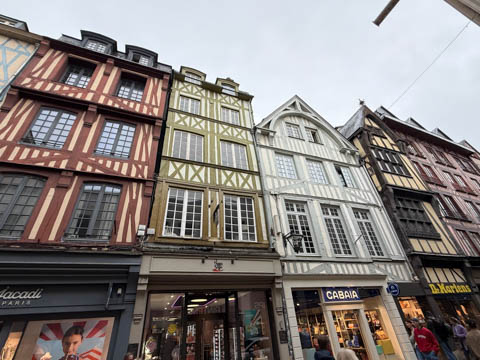
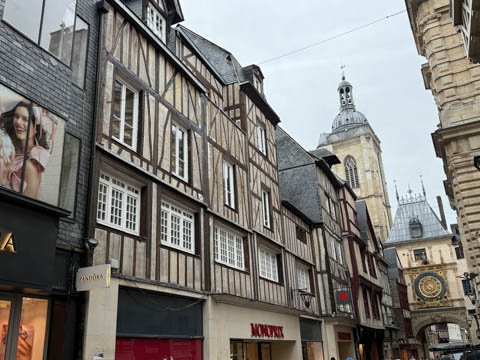
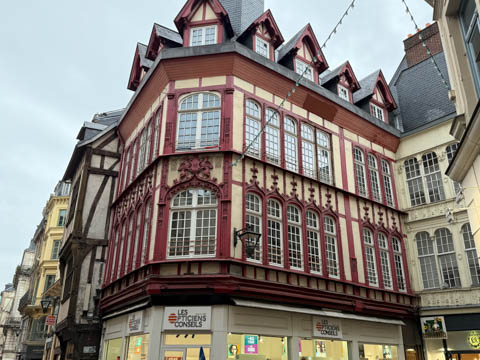
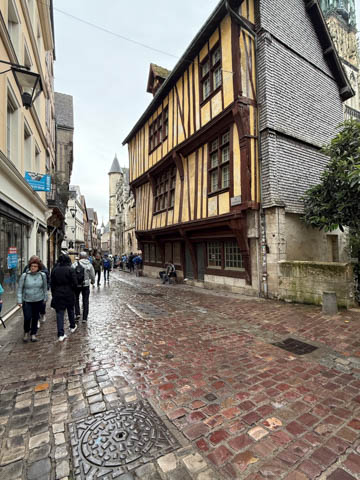
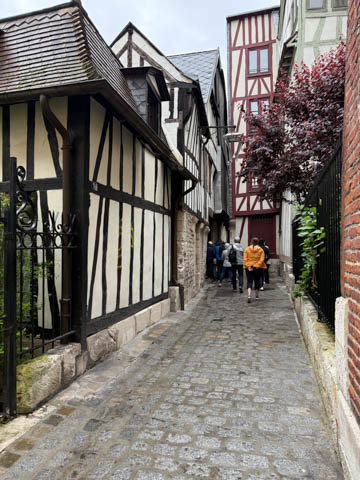
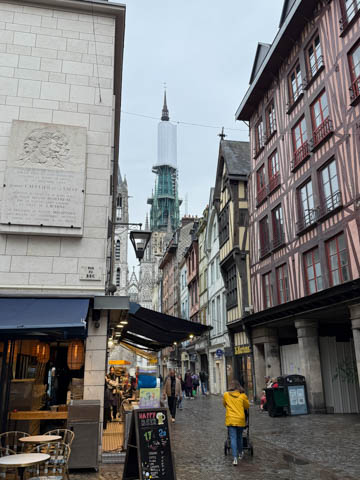
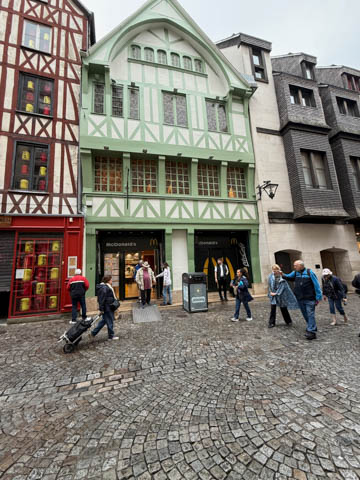
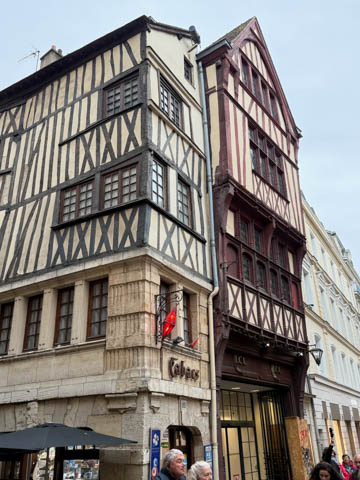
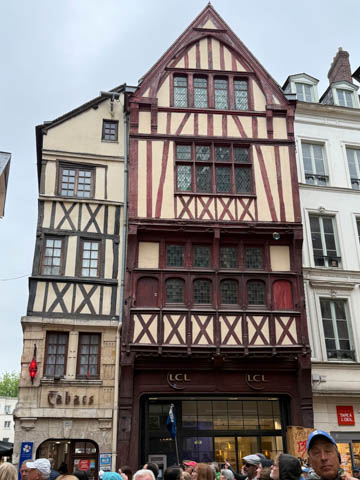
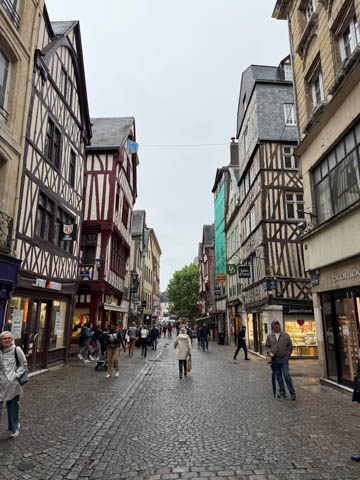
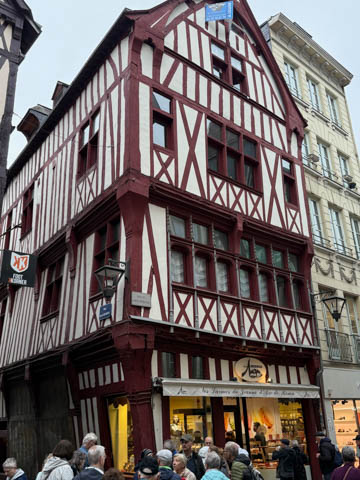
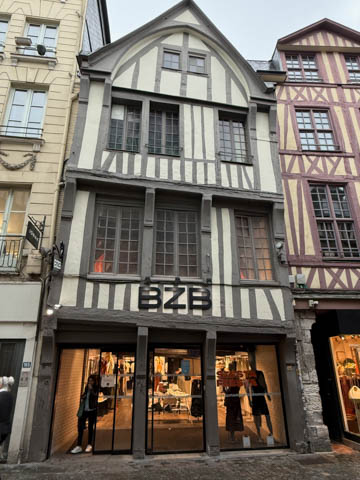
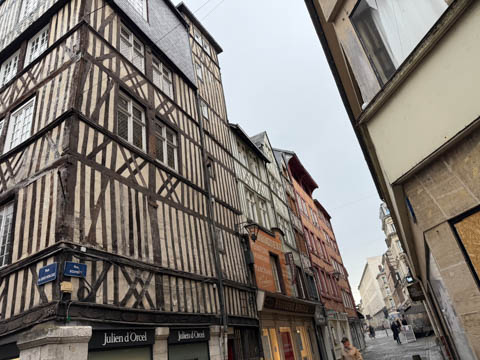
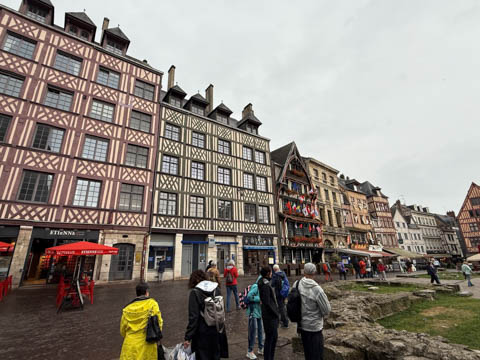
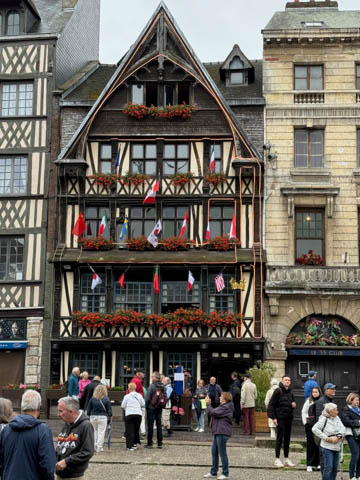
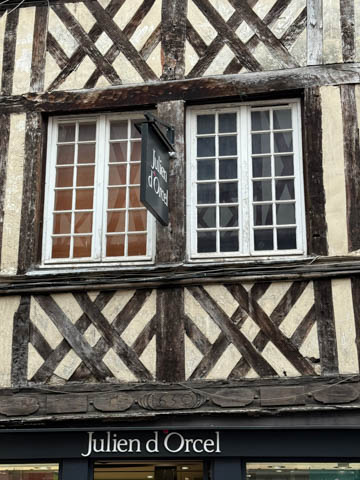
Rouen is famous for its timbered buildings.
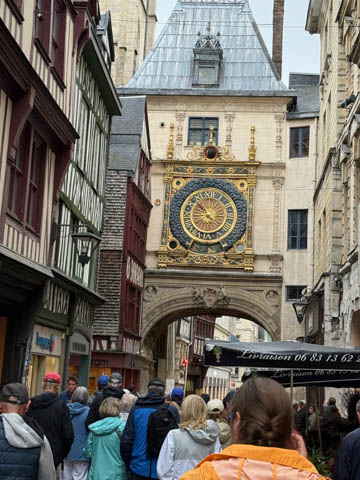
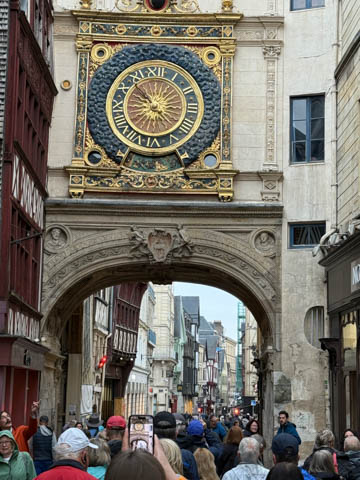
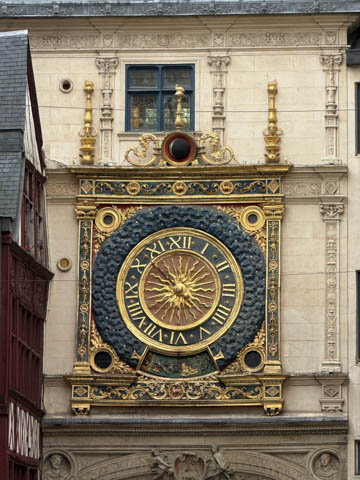
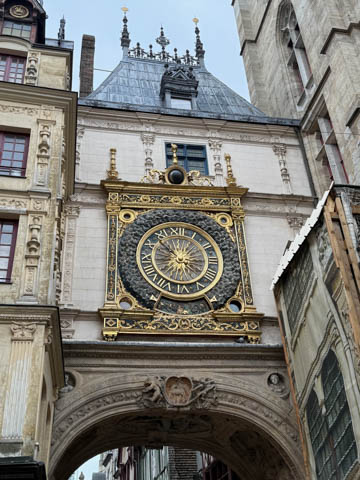
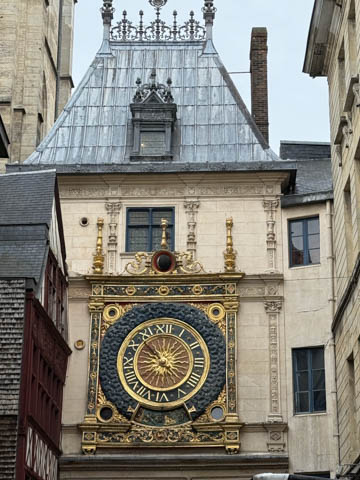
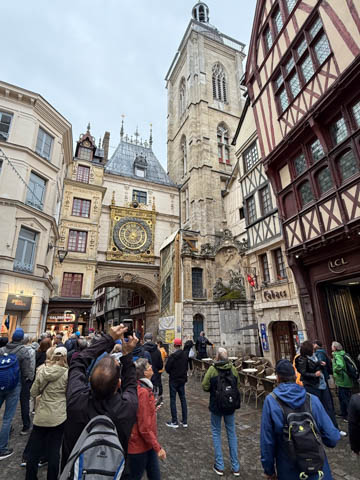
Here is the Gros Horloge, an astronomical clock dating back to the 14th century. It is located in the Gros Horloge street.
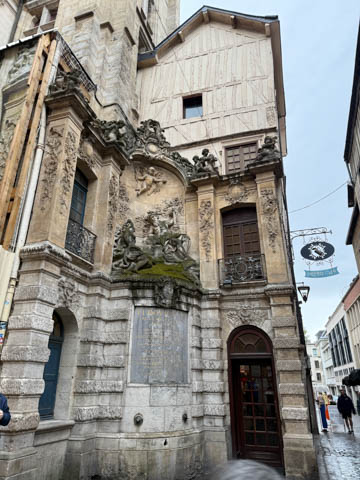
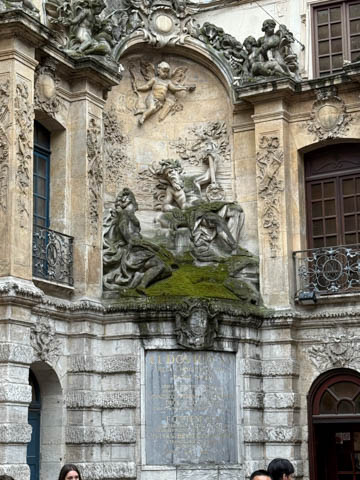
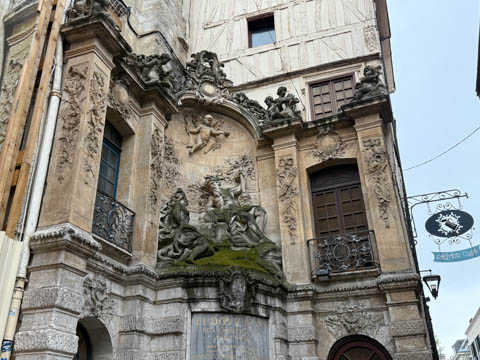
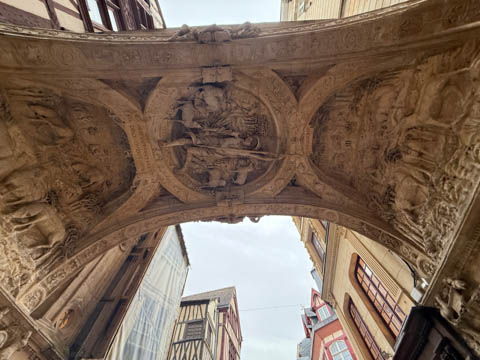
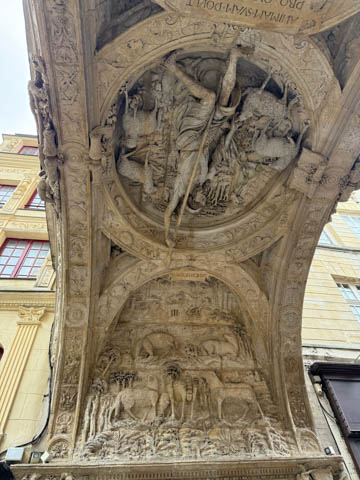
There was a fountain next to the bridge with the clock, which was intricately carved underneath.
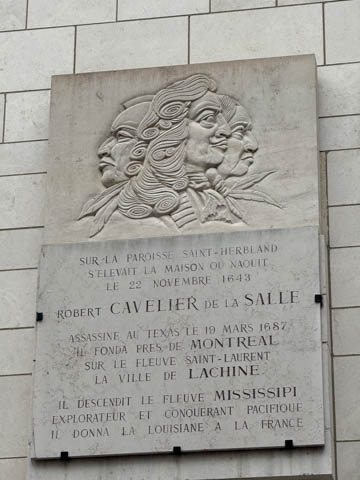
This plaque on a wall noted the birthplace of Robert de la Salle, who founded the town of Lachine on the Saint Lawrence River near Montreal. He sailed down the Mississippi River and was murdered in Texas in 1687. Explorer and Conqueror of the Pacific, he gave Louisiana to France.
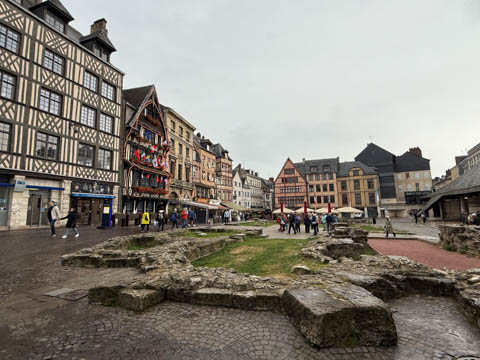
In this square were the ruins of the old Saint Vincent church, literally blown up during the war when it was struck in its heart (and its choir!) by a bomb. Unsure of the restaurant name, but this was supposedly one of the oldest restaurants in France.
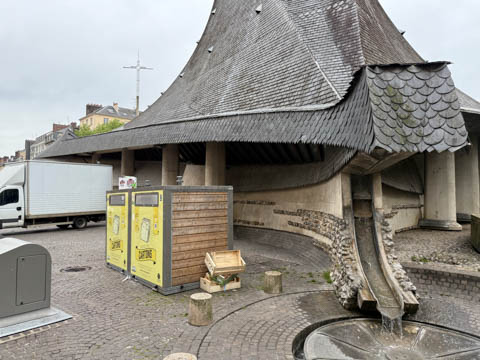
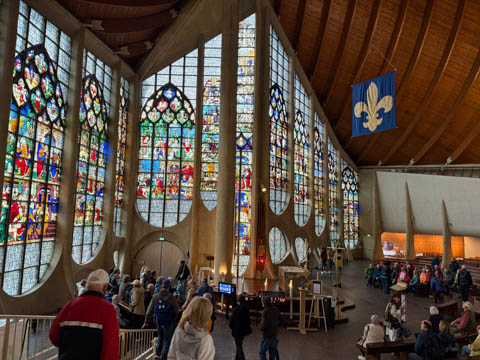
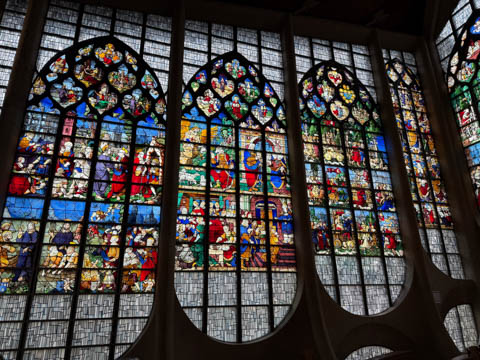
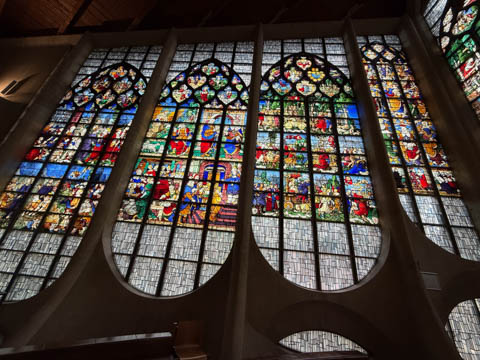
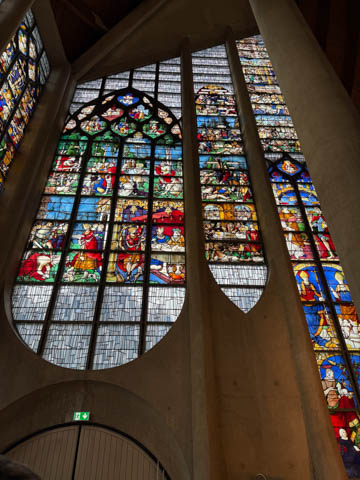
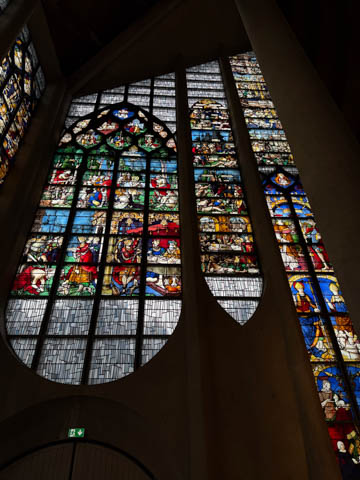
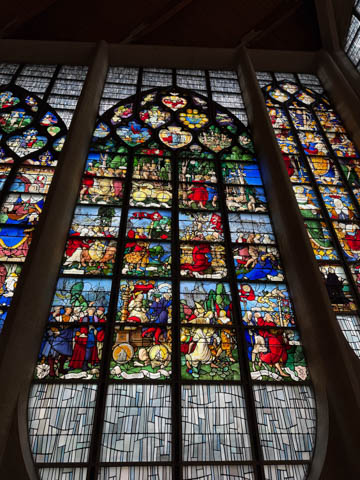
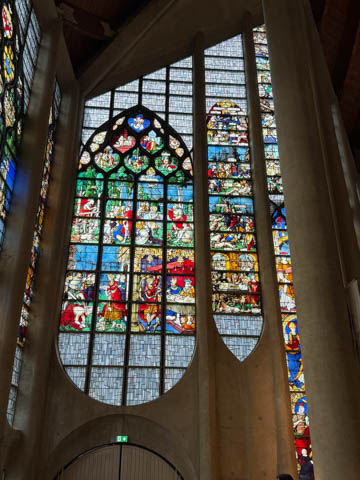
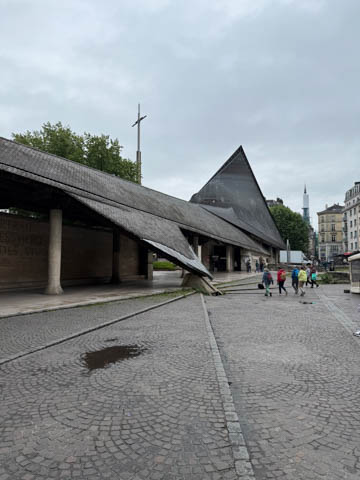
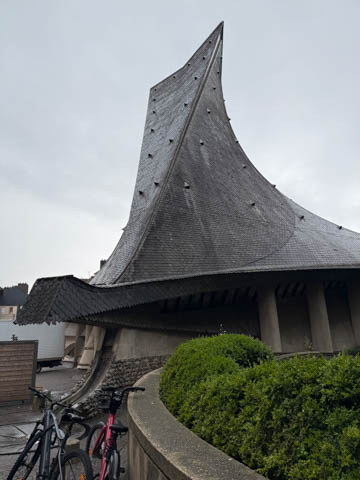
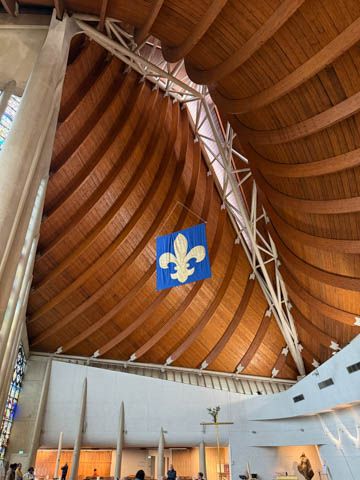
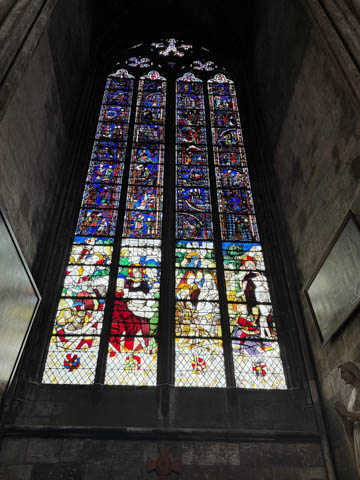
Here is the Église catholique Sainte-Jeanne-d'Arc (Catholic Church of St Joan of Arc) which was built in 1979. The outside resembles a dragon as well as an upturned Viking boat. The inside holds the Renaissance windows of the old St Vincent church, which had been removed for protection before the church was destroyed.
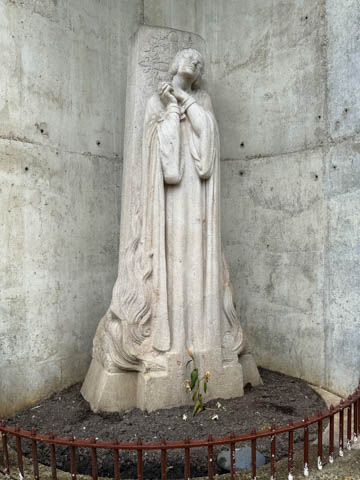
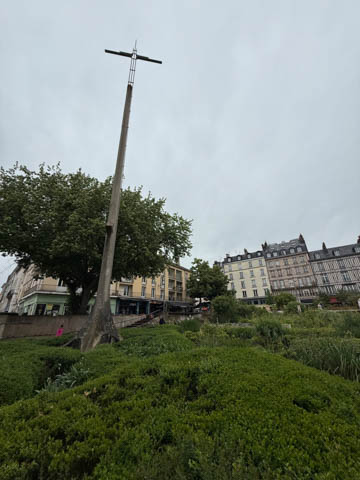
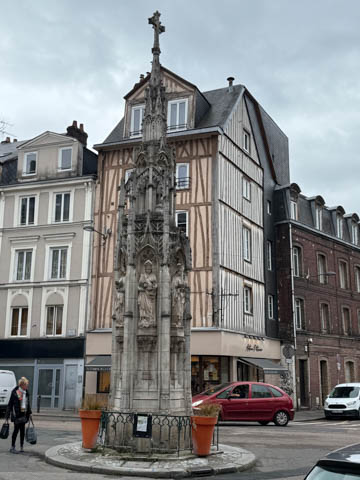
There was a memorial status to St Joan of Arc outside, along with a tall cross to mark the spot where she was executed by being burned at the stake,
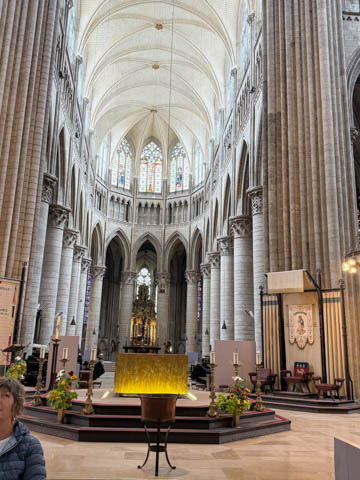
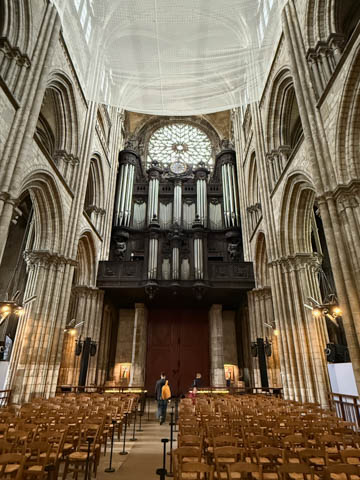
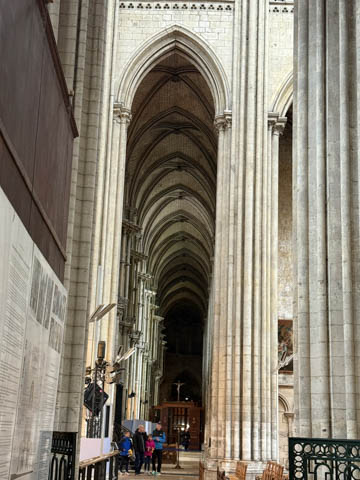
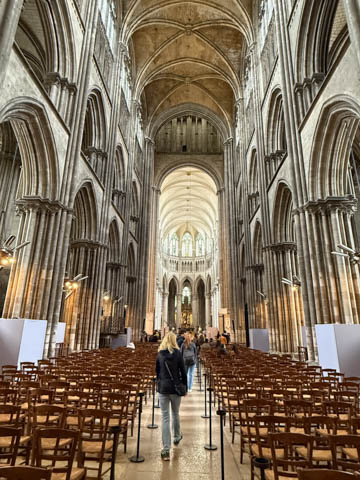
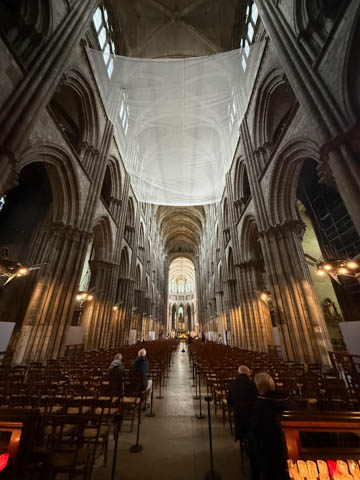
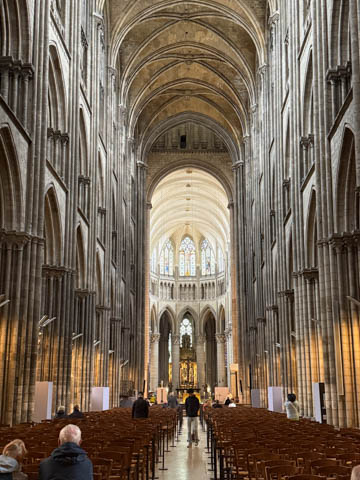
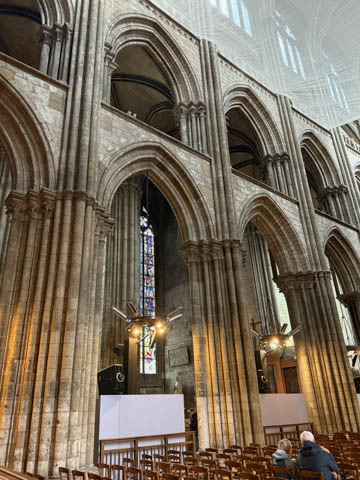
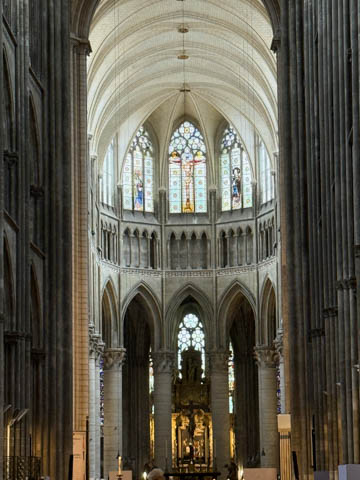
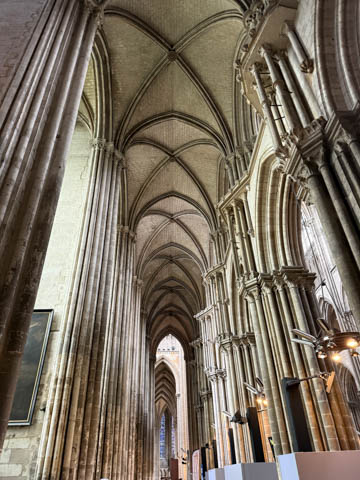
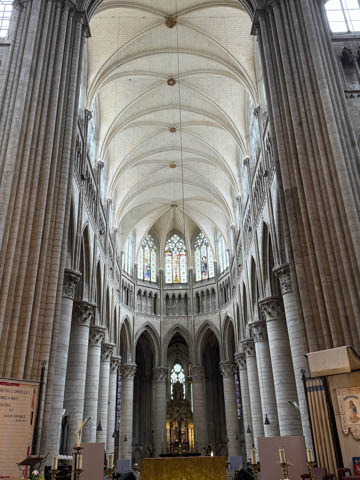
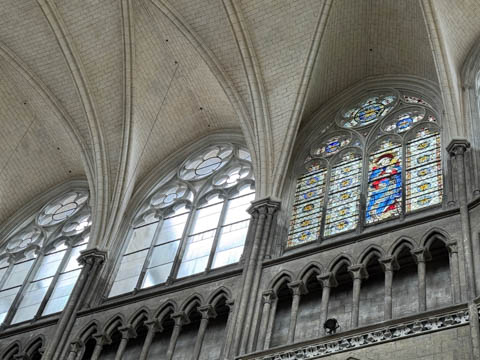
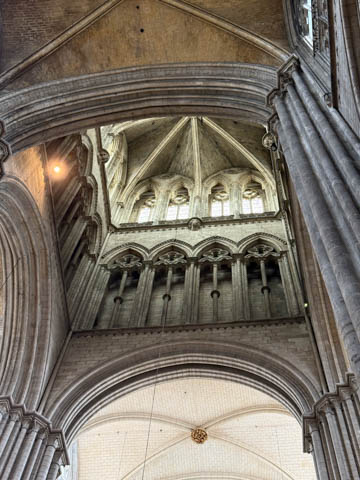
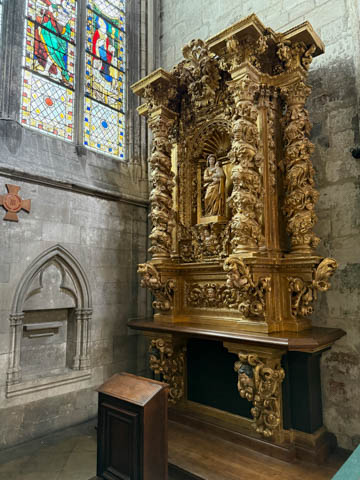
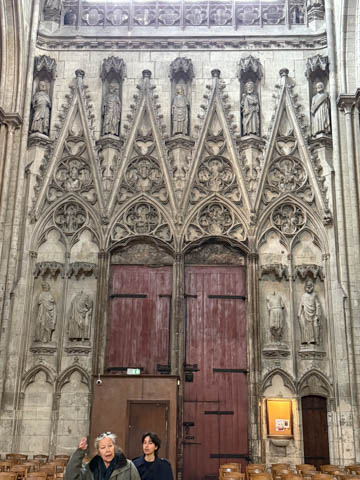
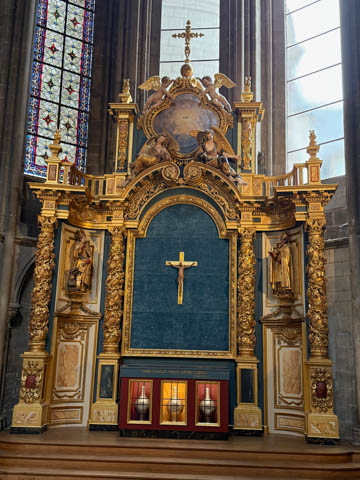
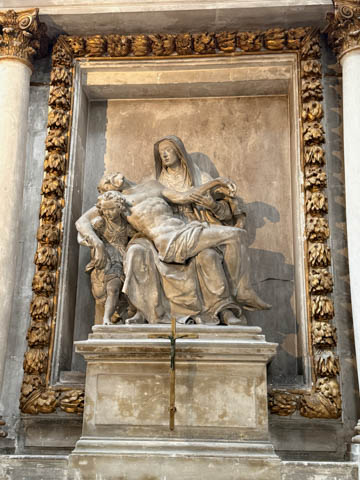
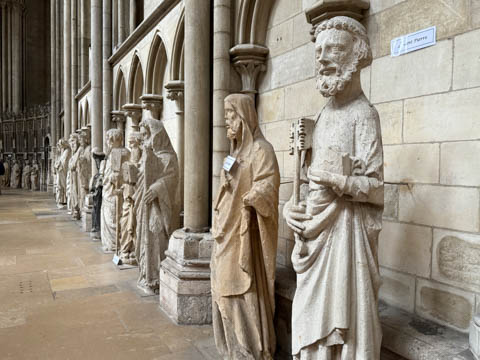
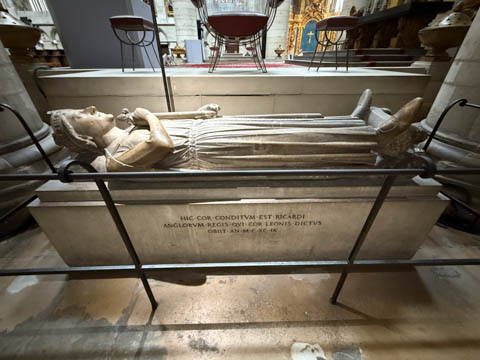
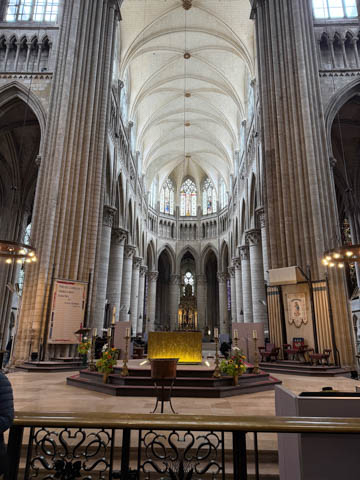
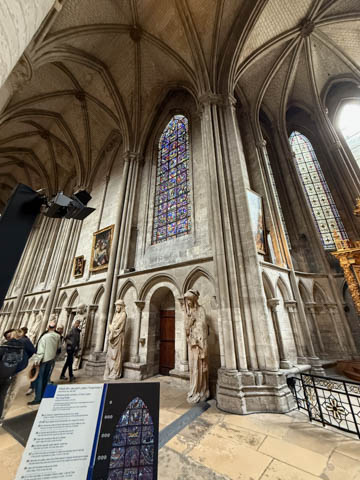
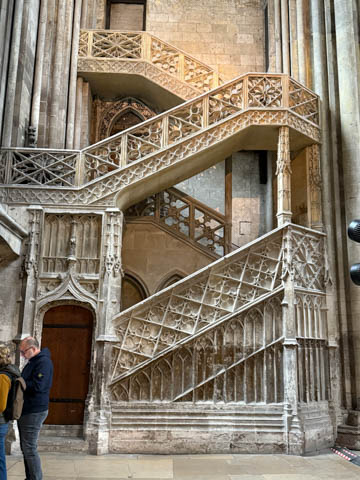
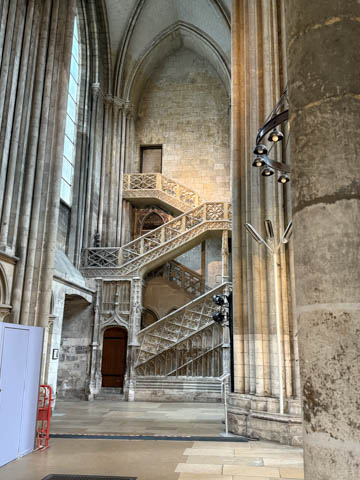
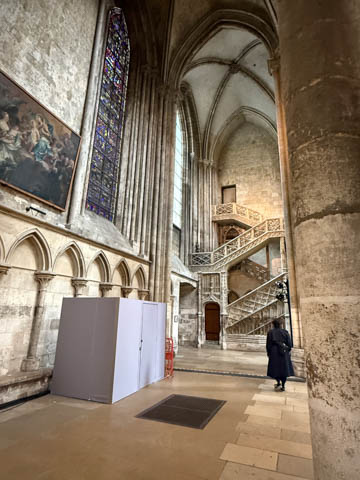
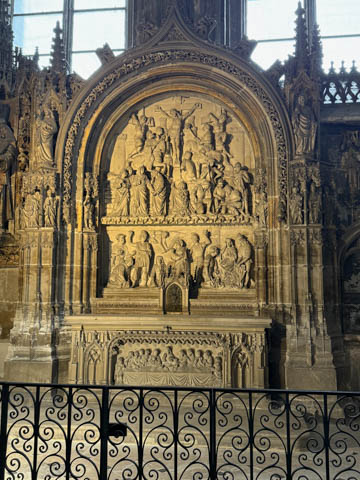
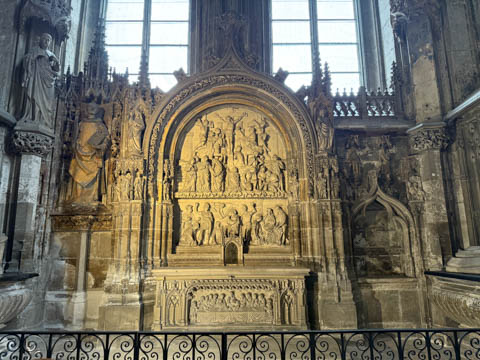
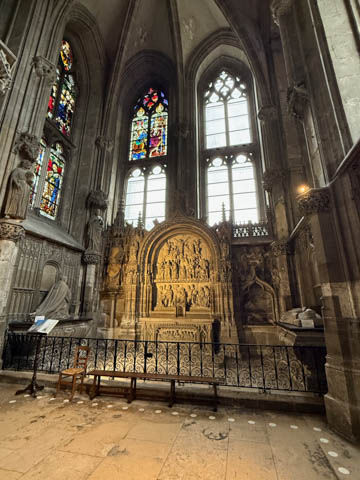
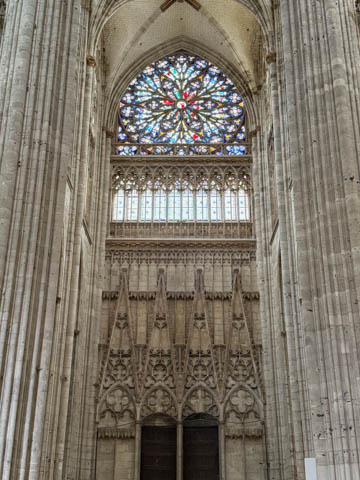
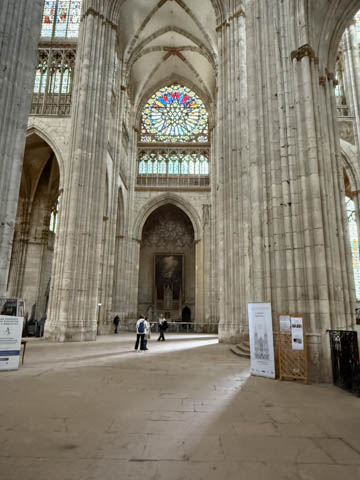
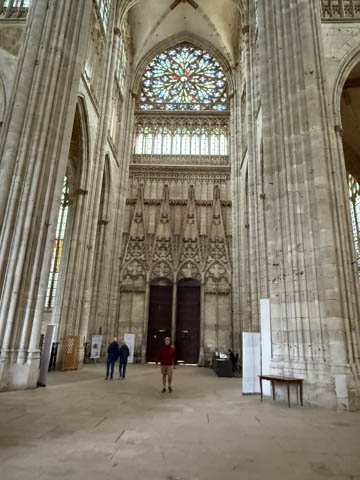
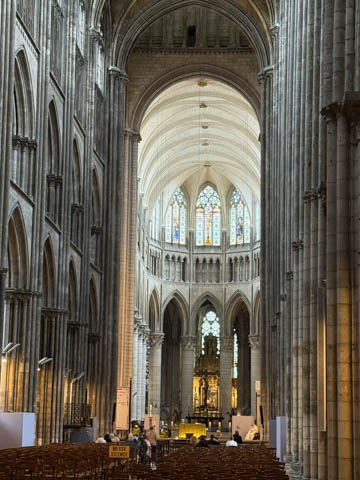
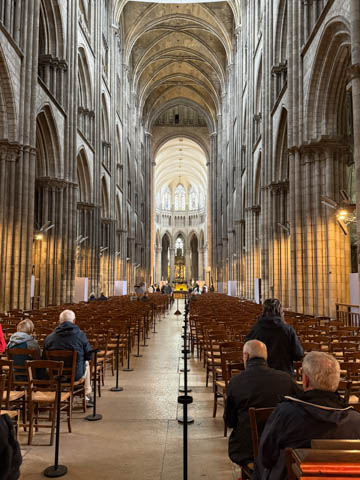
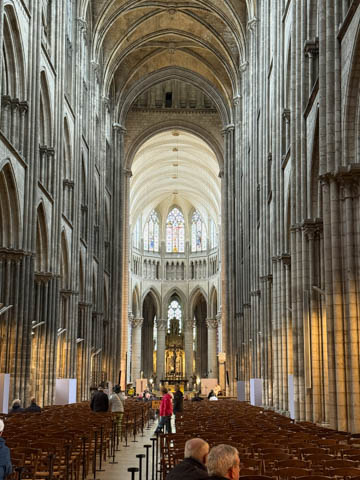
With the walking tour over, we made our way back down the pedestrian shopping mall and were able to go inside the cathedral.
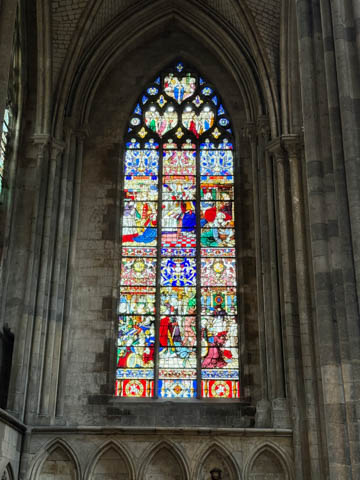
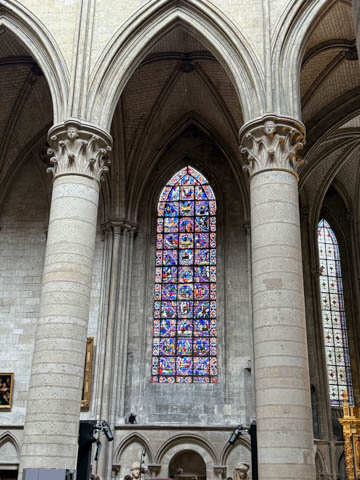
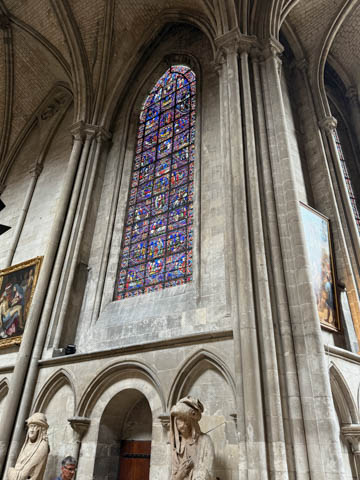
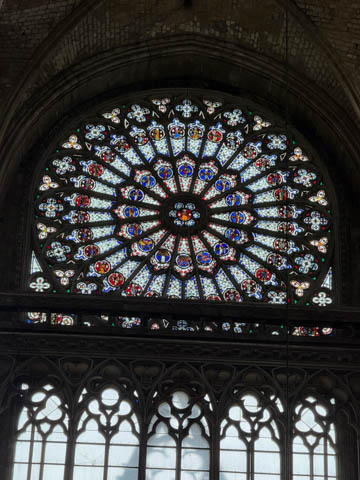
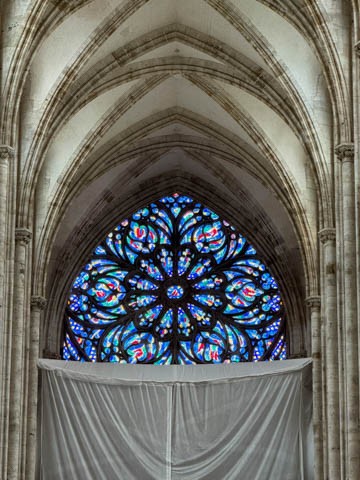
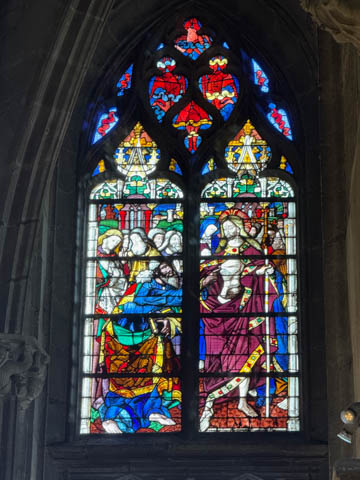
This large stained glass window depicts scenes from the life of Saint Julian the Hospitaller.
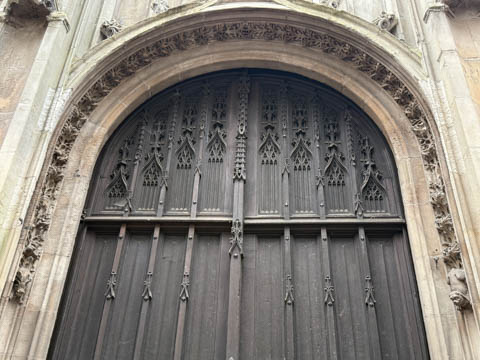
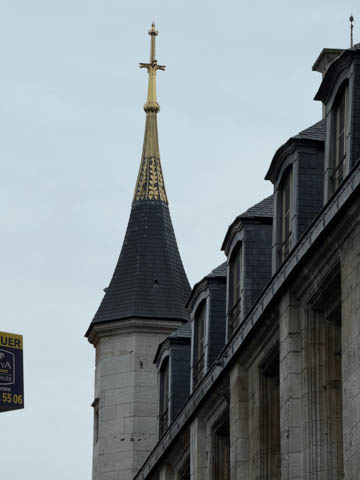
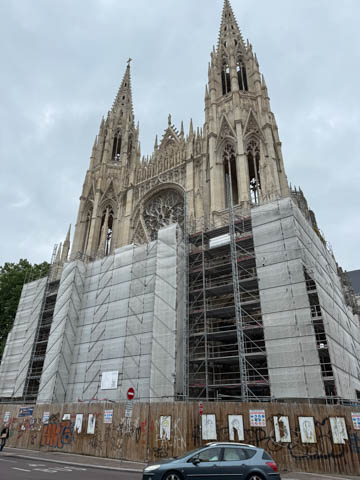
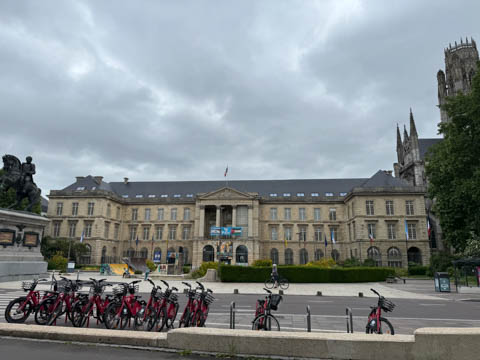
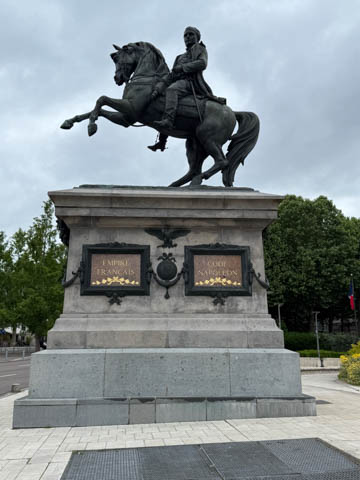
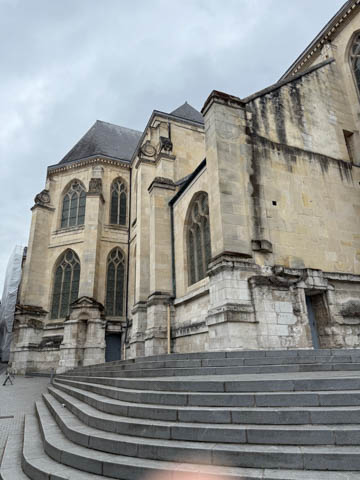
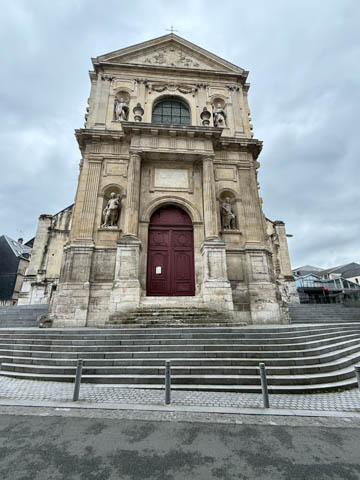
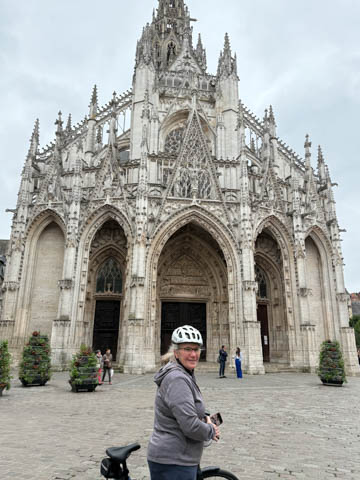
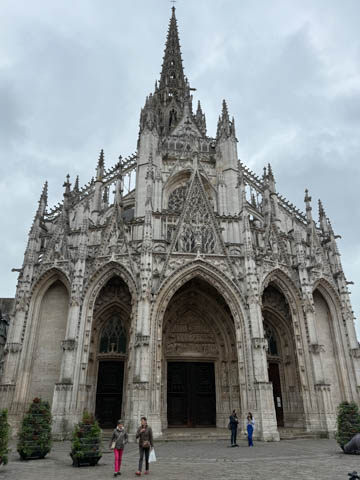
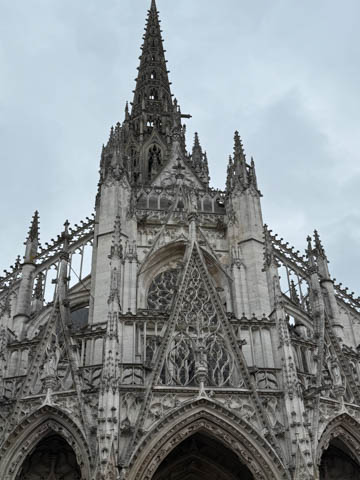
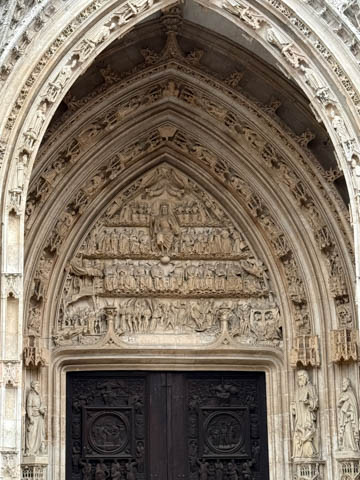
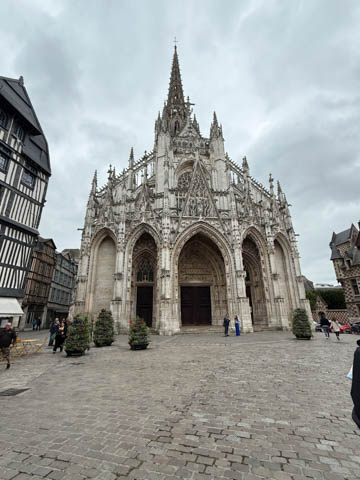
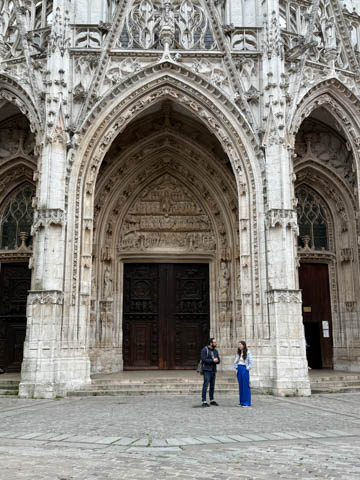
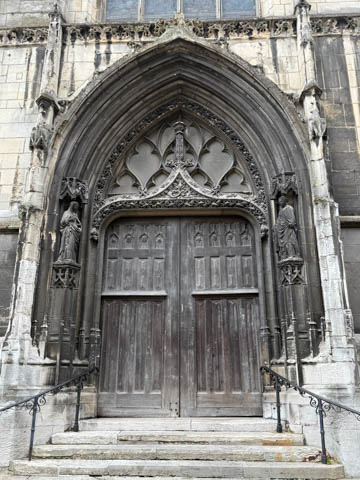
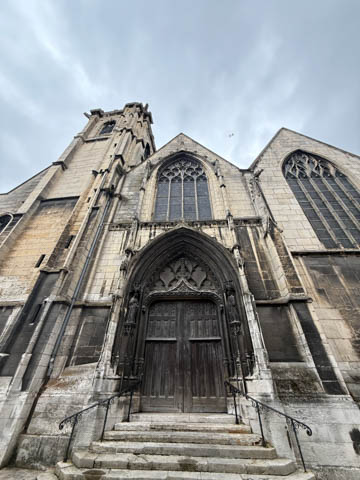
In the afternoon, Steve and Nancy checked-out some bikes and explored the city further. We started by going by the Cathedral Notre Dame de Rouen, then headed to the nearby St. Maclou Catholic Church, a flamboyant Gothic Catholic church featuring sculpted wooden doors dating to the Renaissance, but which was under construction. We kept going up Rue de la Republique and stopped in front of an exquisite hotel, the Hotel de Ville de Rouen and the statue of Napoleon on a horse which dominated the square.
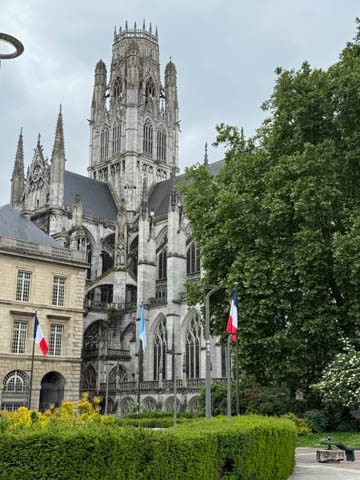
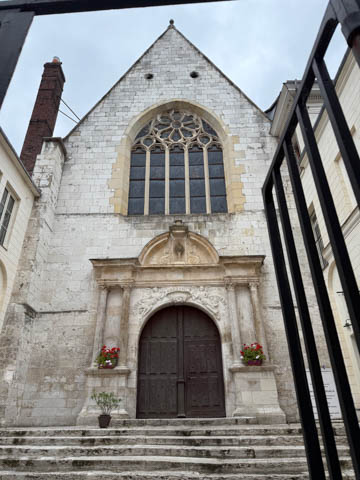
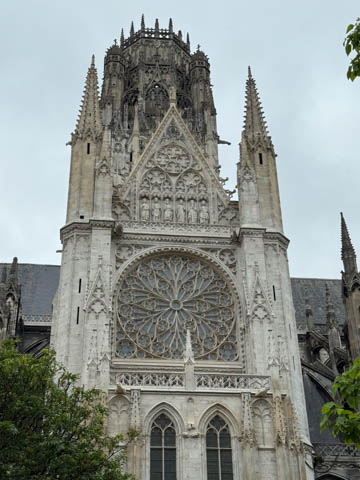
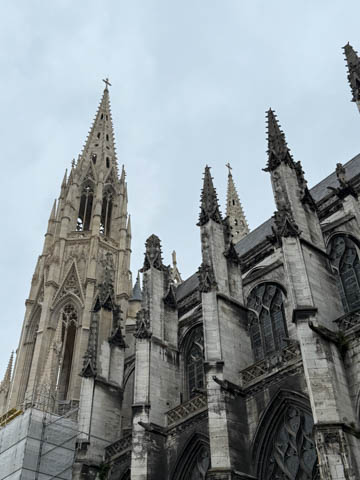
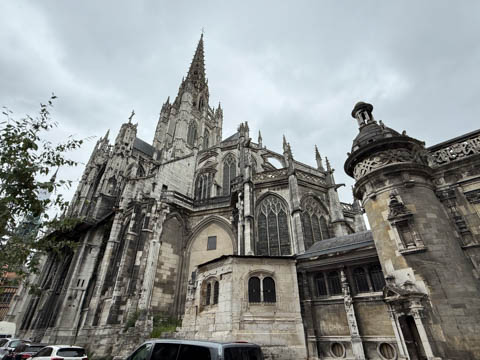
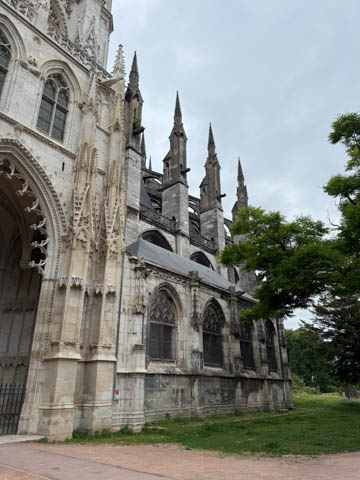
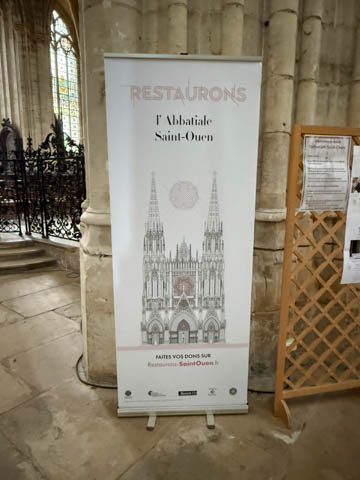
From there, we tried to go around the block to get to the backside of the Saint-Ouen Abbey Church, which was to the right of the hotel. Yes, that meant about 15 turns and a good uphill ride later. One of the first diversions, was the Corneille Chapel - Auditorium of Normandy. We also found a small chapel belonging to a Benedictine Monastery.
Here is the Church of Saint-Nicaise, followed by the Church of Saint Vivian a-Rouen.
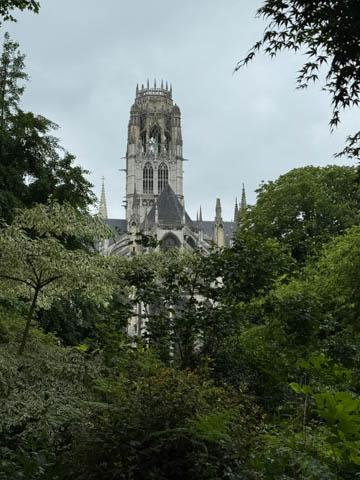
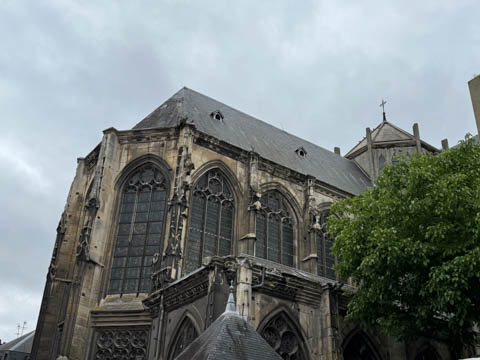
We finally made it to the other side of the massive Saint-Ouen Abbey Church
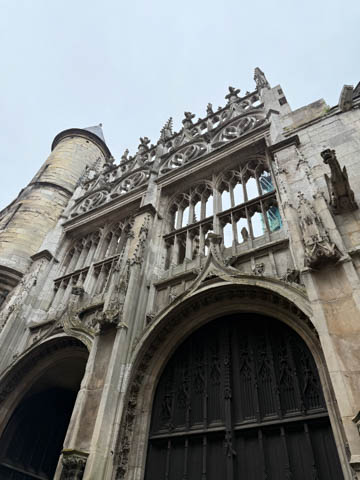
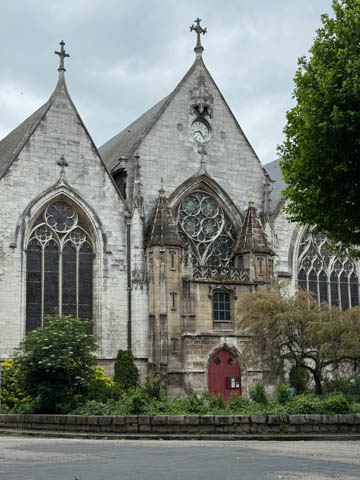
Here is the Catholic Church of Saint Maclou a'Rouen.
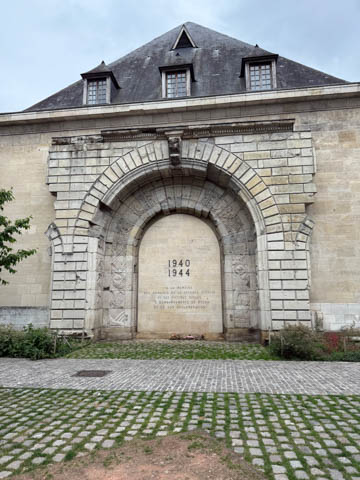
This is looking back at the cathedral with the archdiocese buildings which are behind it, as we had finally made a circuit back to it. This was a Memorial to the Passive Defense and Bombing Victims, 1940-1944.
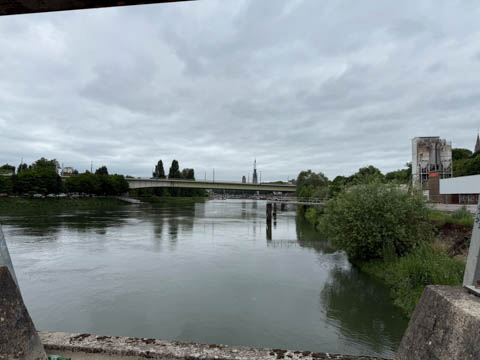
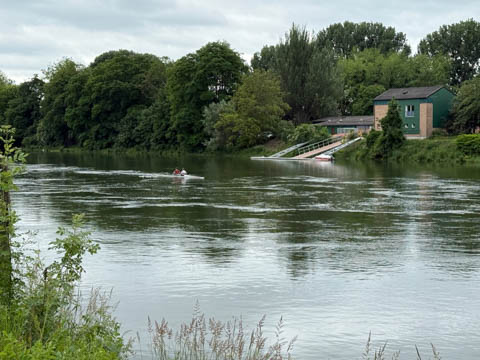
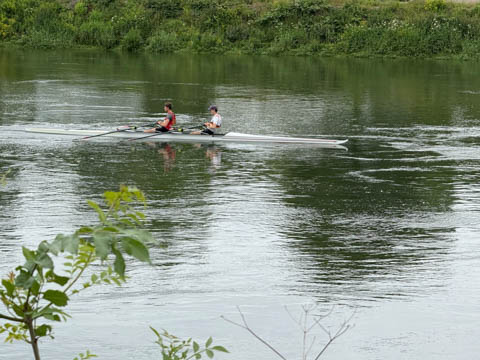
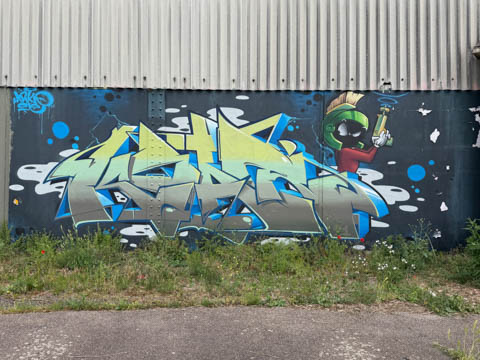
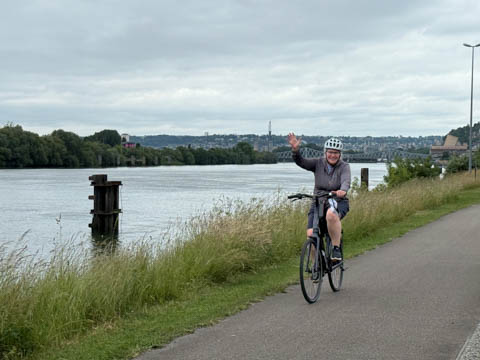
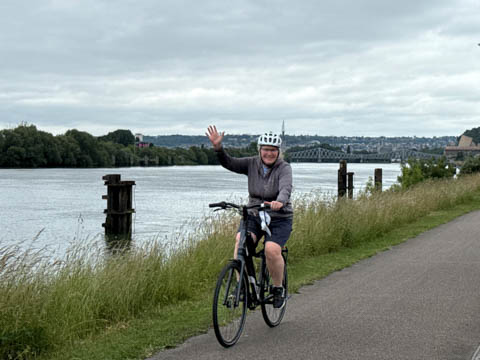
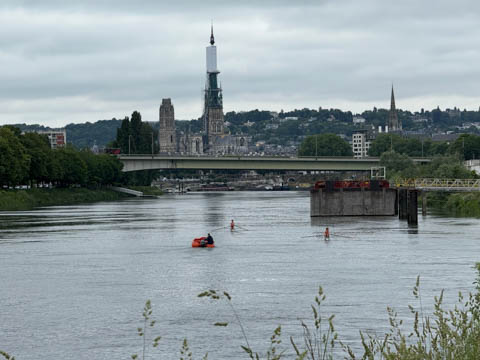
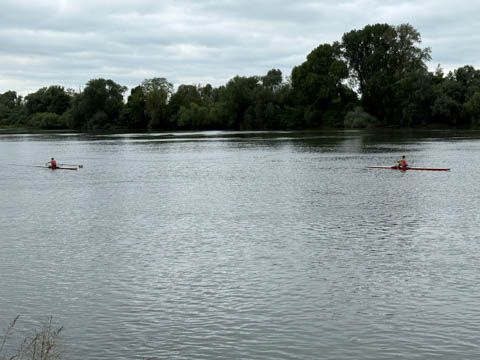
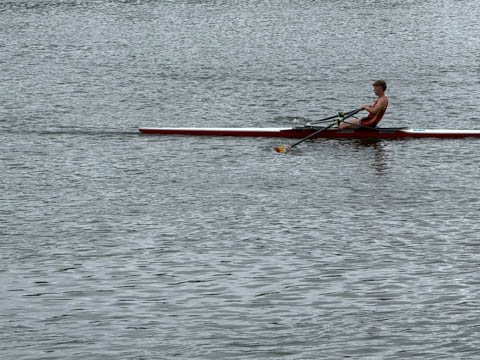
Back at the Seine, we headed up river along a bike path. Saw several people out rowing. There were also a long span of well done graffiti covering several dedicated spaces, had to take a picture of Marvin the Martian.
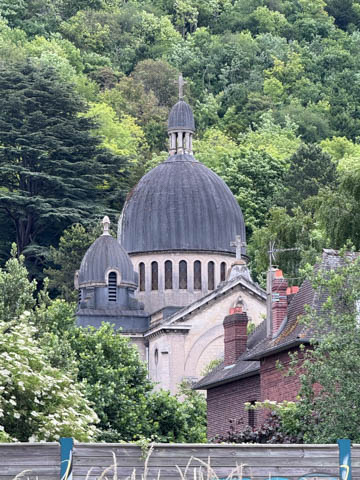
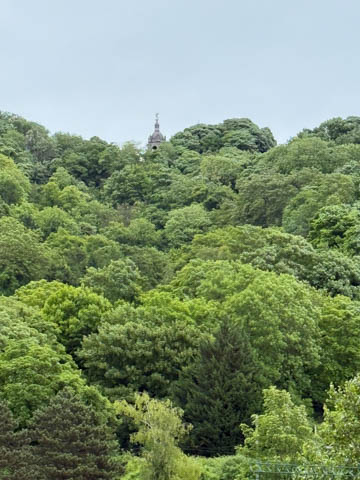
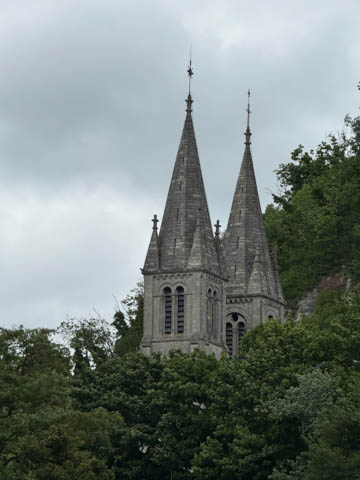
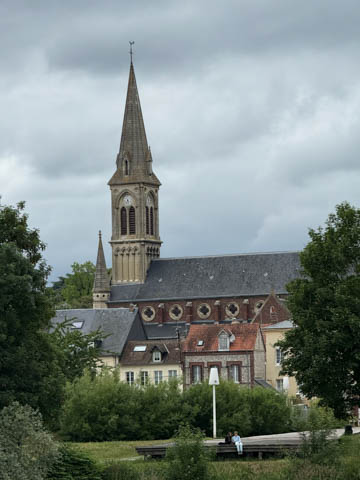
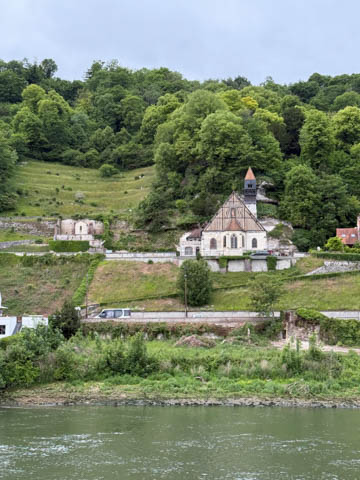
First below is the Saint-Rémy Catholic Church in Amfreville-la-Mi-Voie, followed by a monument to Joan of Arc up on the bluff, then the spires of the Saint-Paul Church.
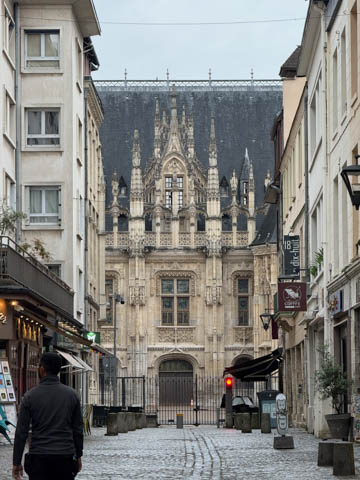
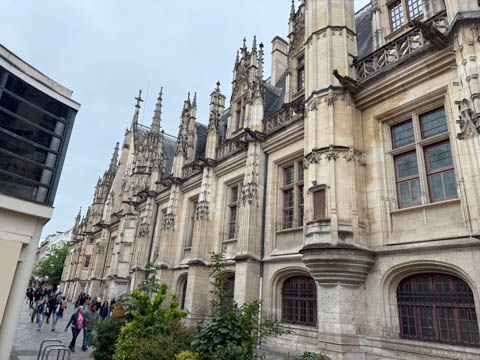
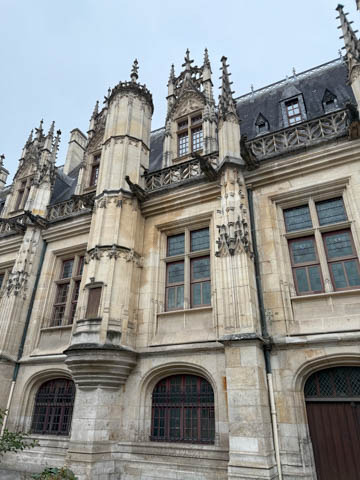
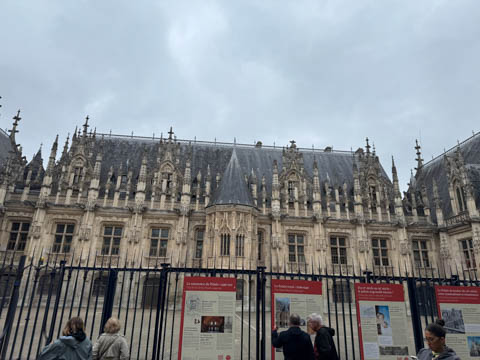
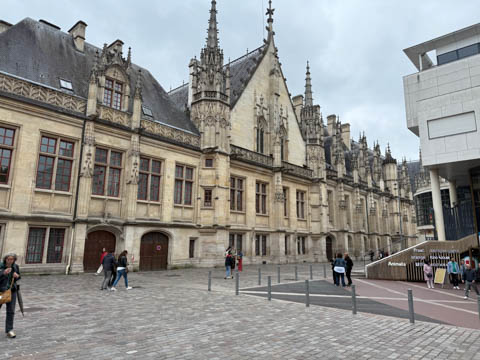
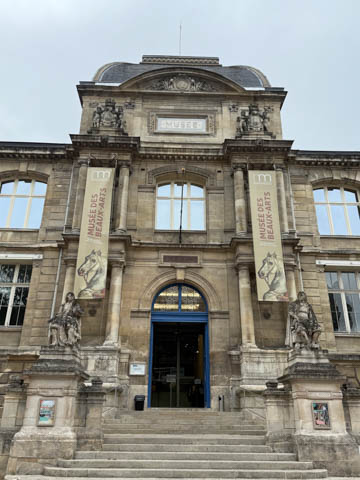
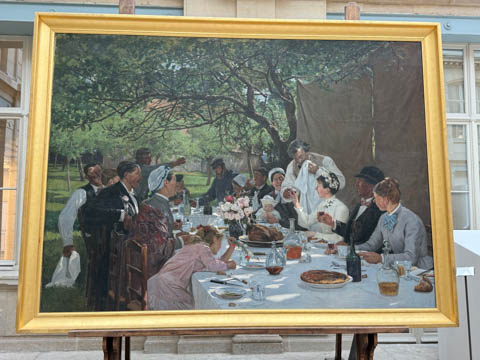
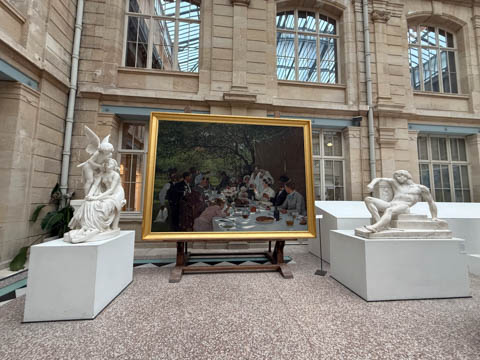
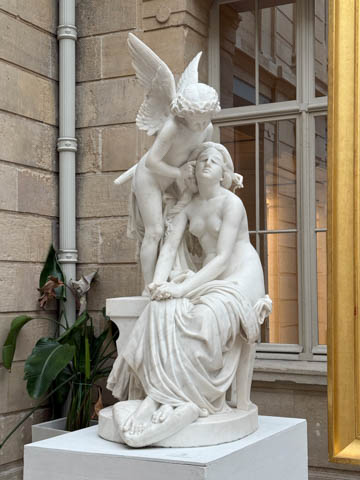
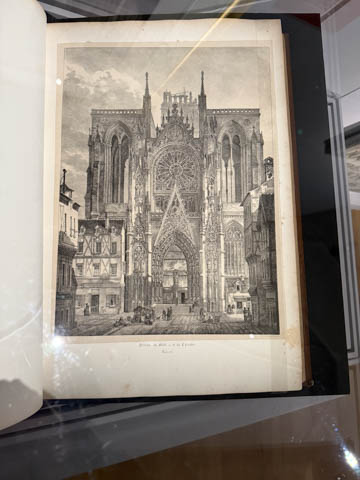
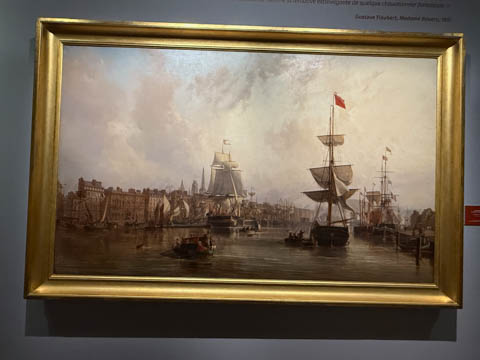
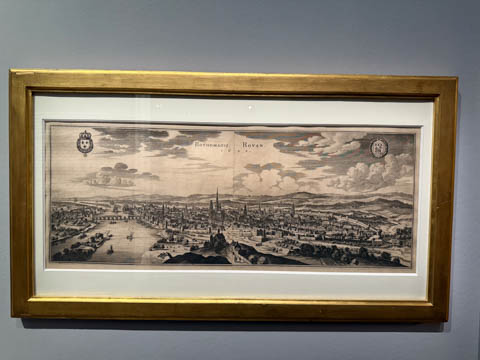
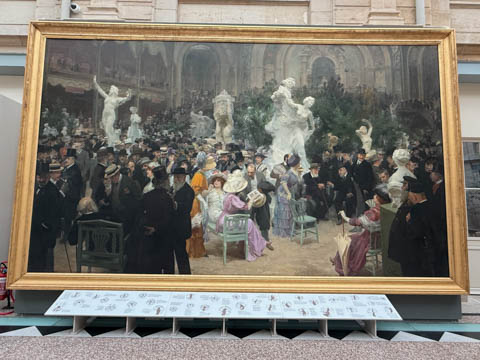
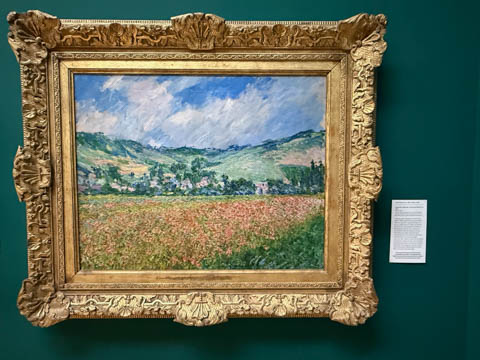
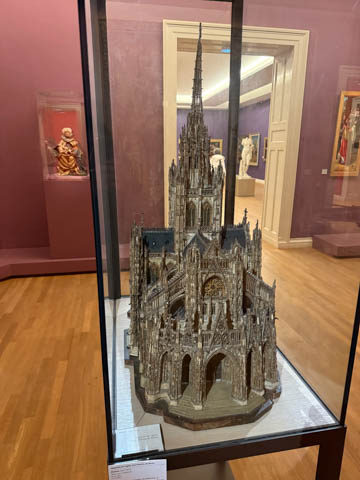
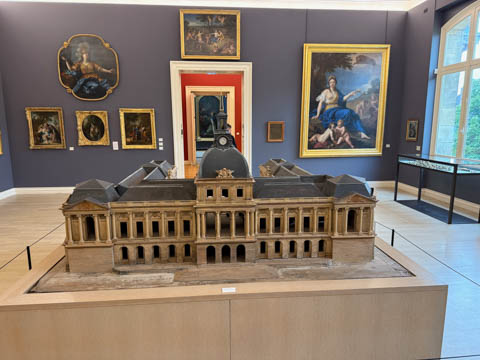
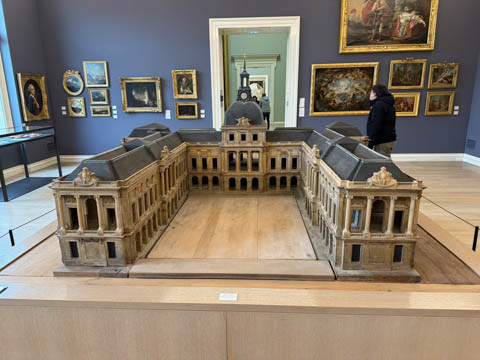
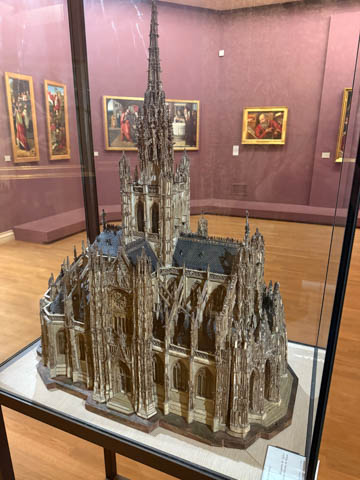
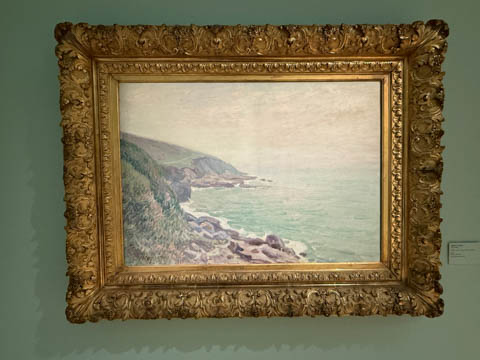
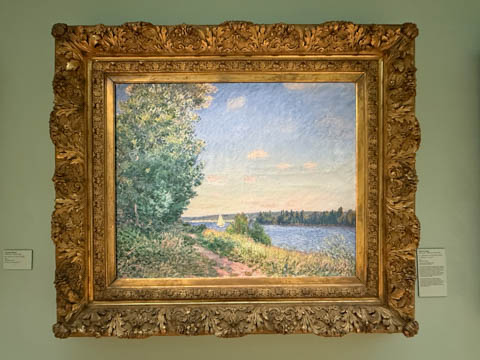
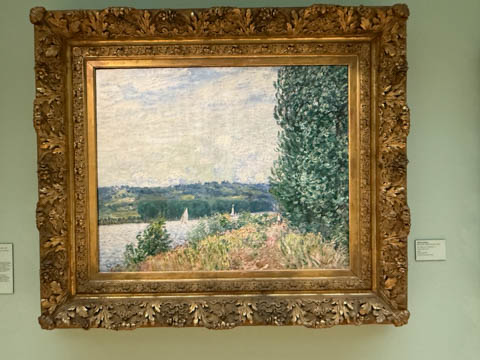
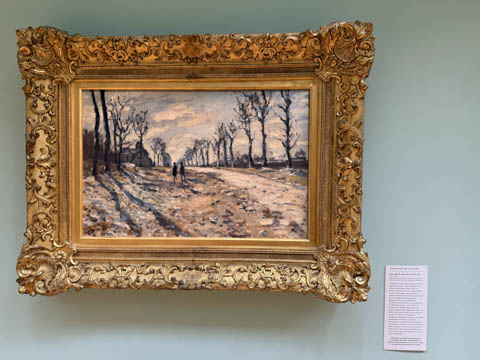
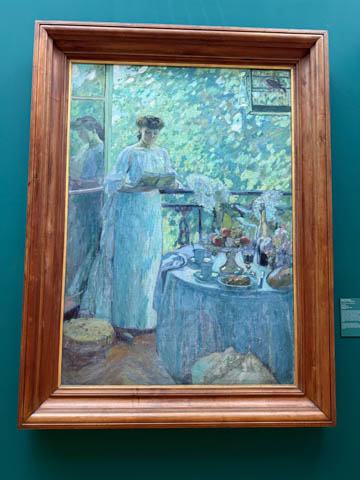
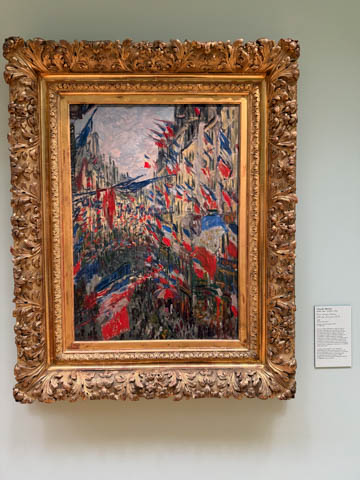
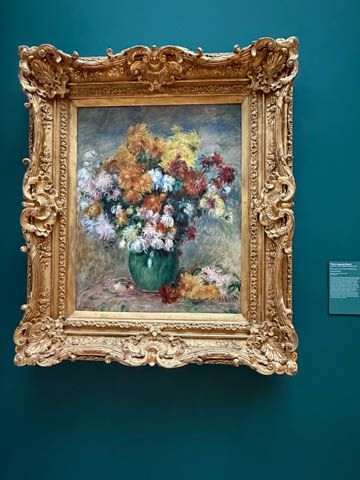
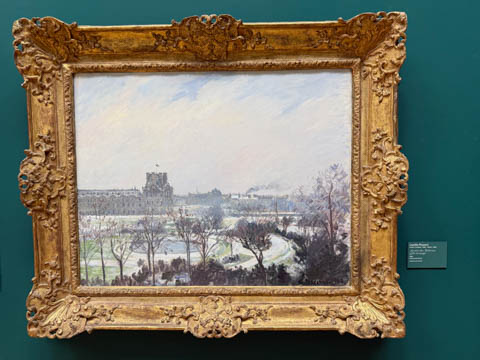
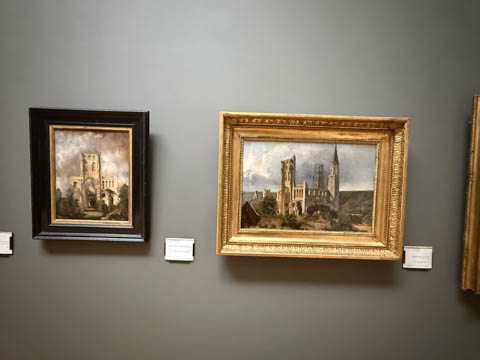
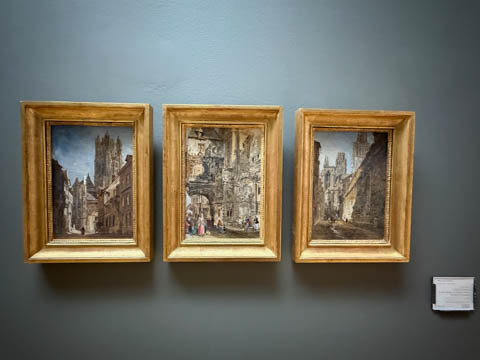
While we went on our bike ride, Alexa set off for the Musée des Beaux-Arts de Rouen (Rouen Museum of Fine Arts), an art museum with paintings by well-known artists such as Claude Monet and Géricault. Here is the Rouen Court of Appeals.
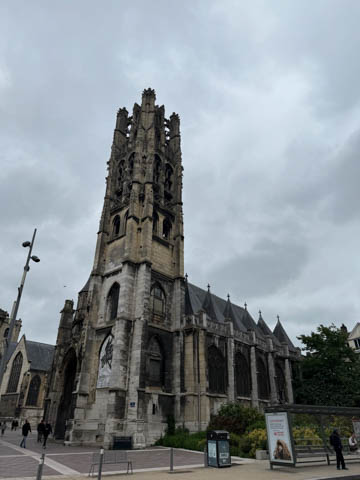
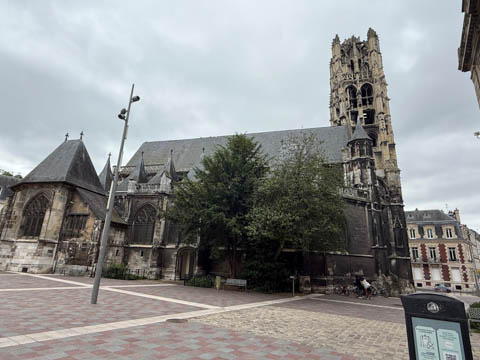
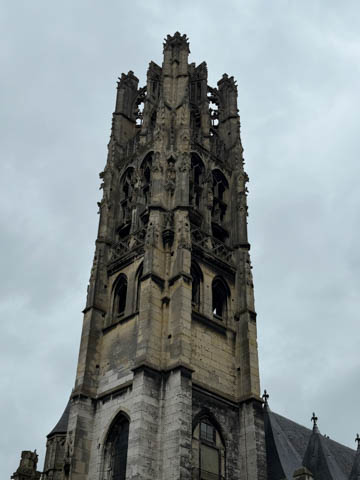
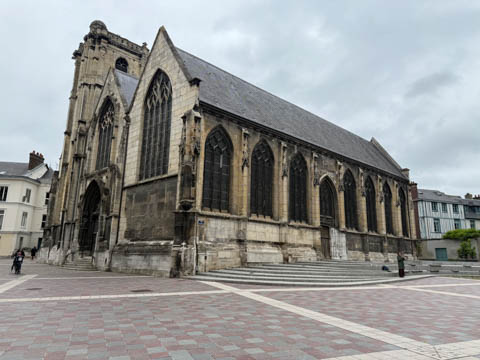
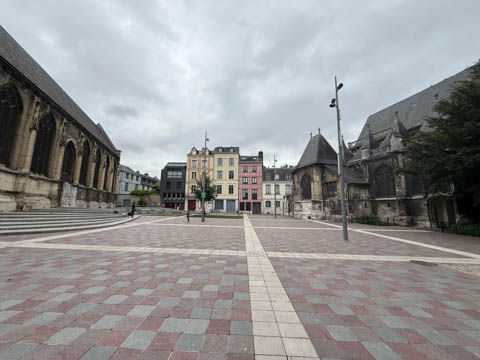
To the east of the museum in the same square were two churches, one of which was now a museum. First is a 16th century church which was now the Musée Le Secq des Tournelles
Next to it was the Église catholique Saint-Godard à Rouen (Catholic Church of Saint-Godard of Rouen).
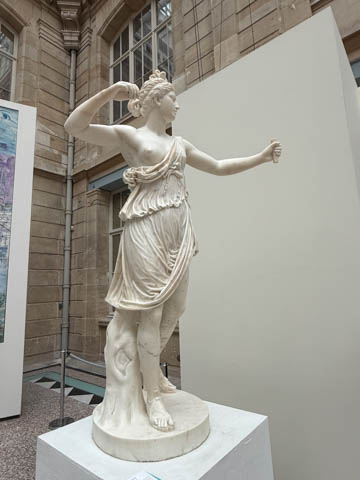
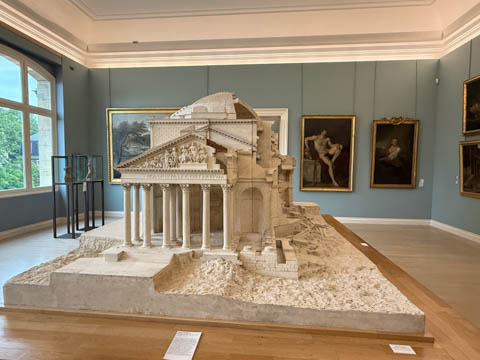
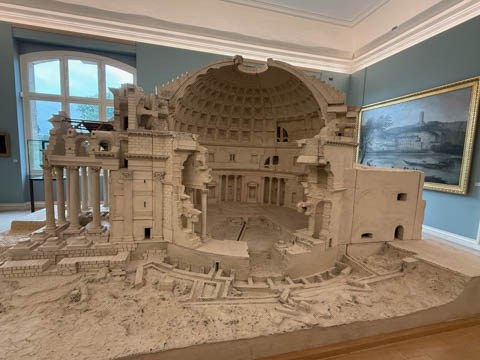
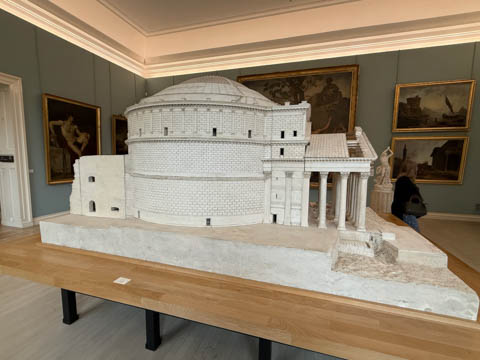
There was a fascinating model of the Pantheon.
After getting back to the boat from our bike ride, went back into town and met up with Alexa.
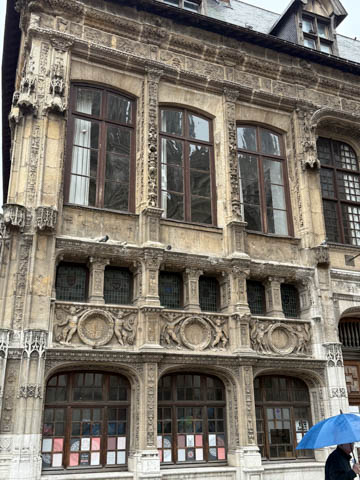
The building across the street is where Monet set up a studio so he could paint the cathedral out the window.
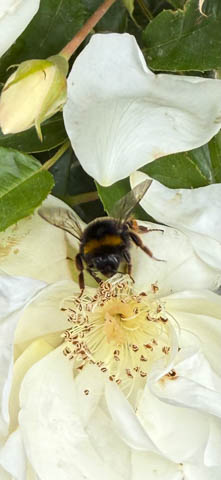
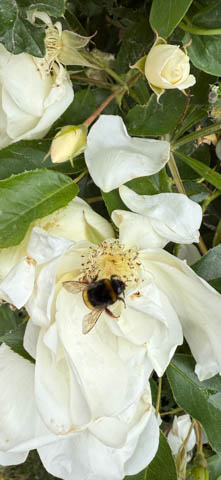
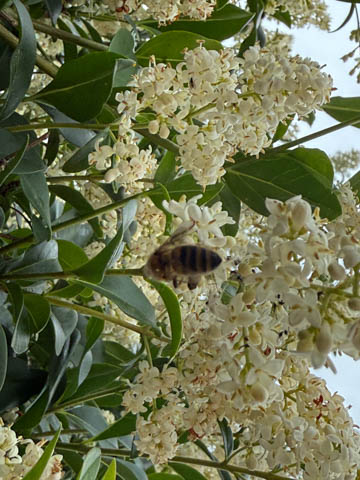
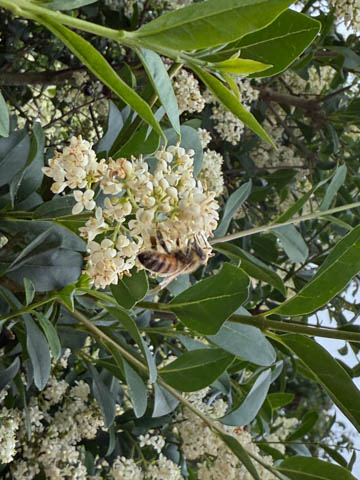
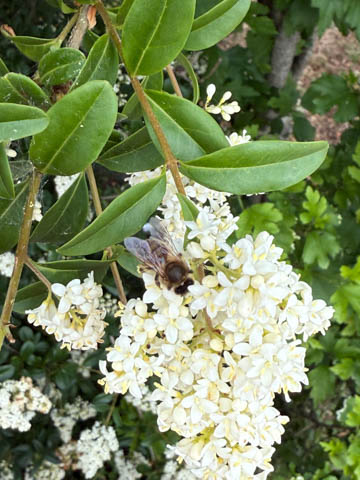
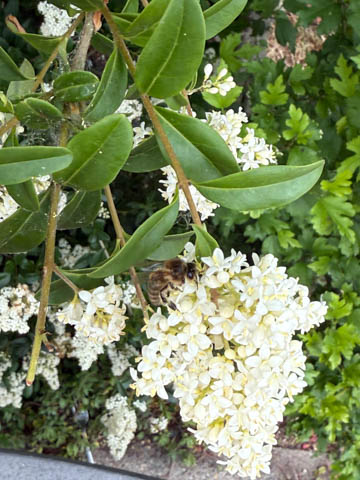
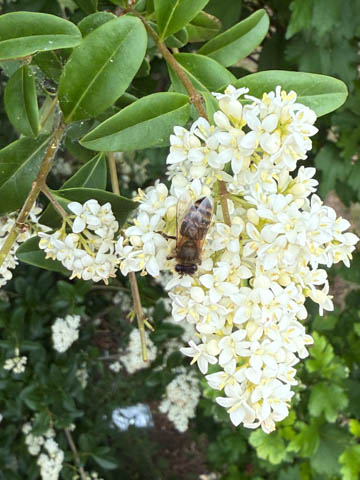
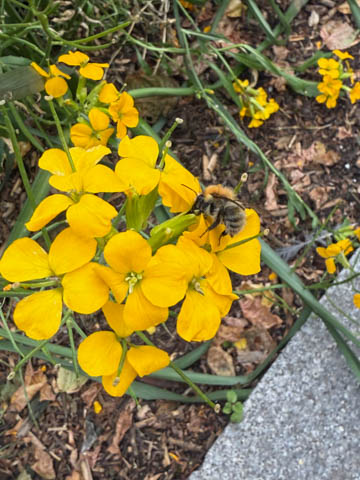
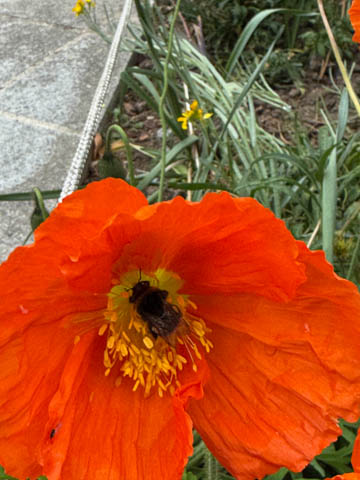
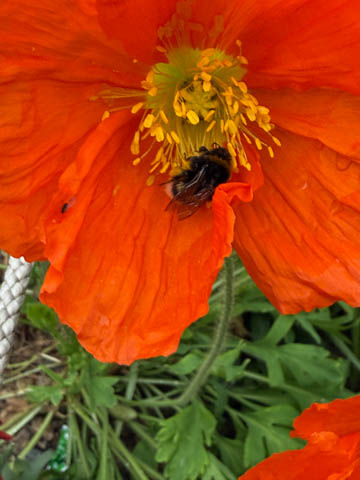
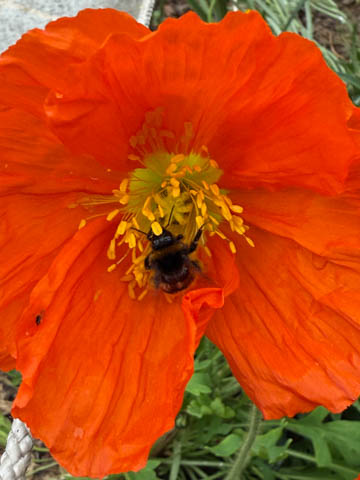
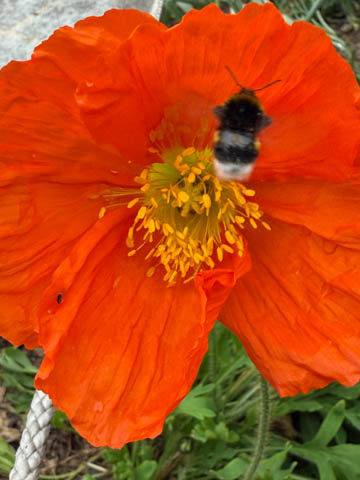
Naturally, Lexi managed to take some more pictures of bees in flowers somewhere along her walk.
|
|
|