
|
|
Use these navigation links to move between the Year 2025 pages. Specific pages can be accessed at the bottom of this page
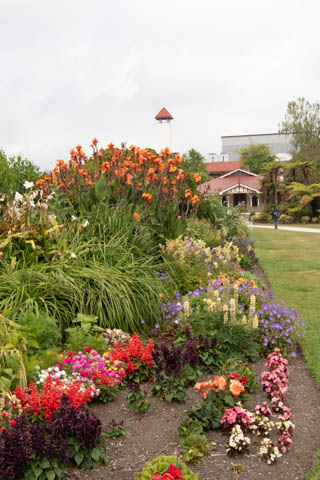
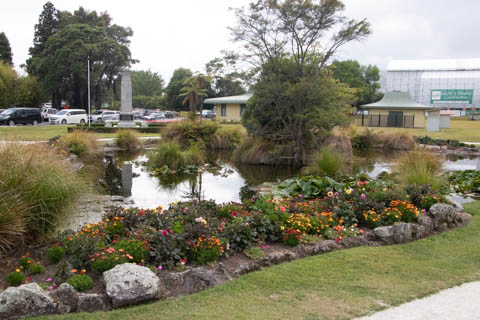
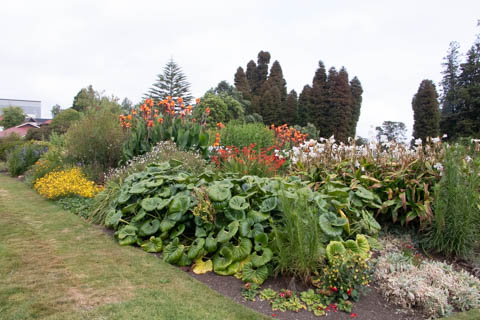
January 2025 (Part 07) New Zealand Trip - Day Six: Rotorua and Christchurch Adventures By Disney - Day Five: Island Hopping We headed out of Rotorua that morning, stopping first at a nearby local park.
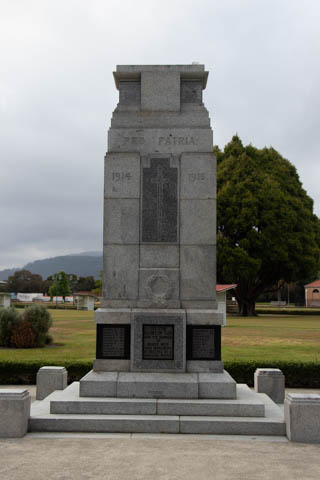
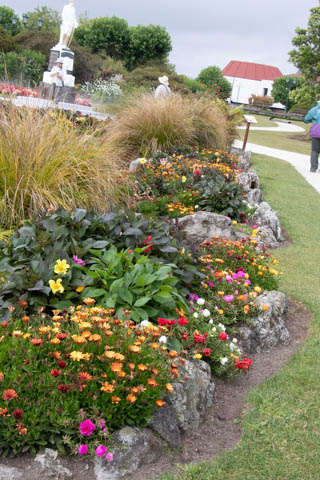
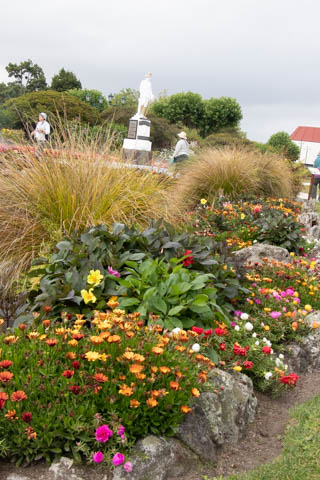
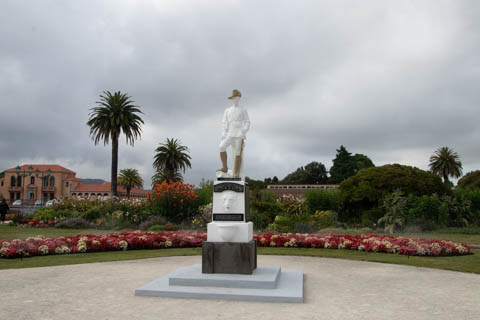
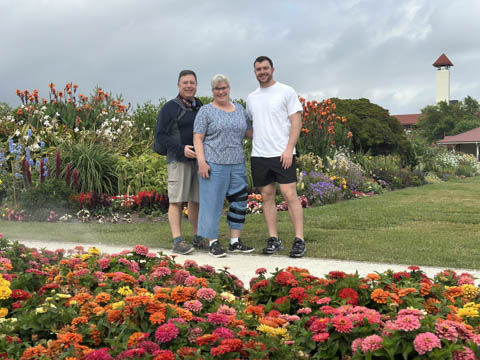
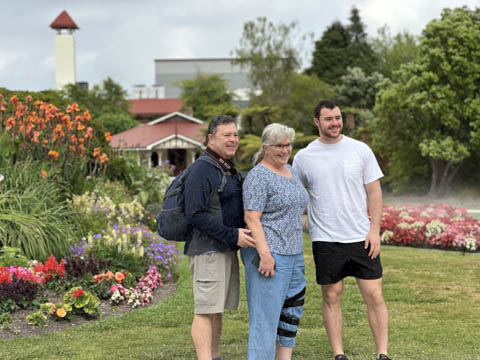
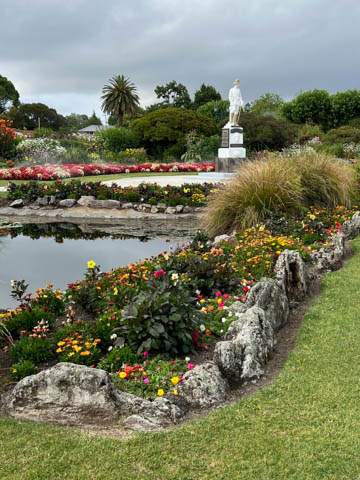
Another World War I memorial - we saw one in almost every town we visited. This one also had a statue commemorating a local hero, Fred Wylie, who fought in the Boer Wars.
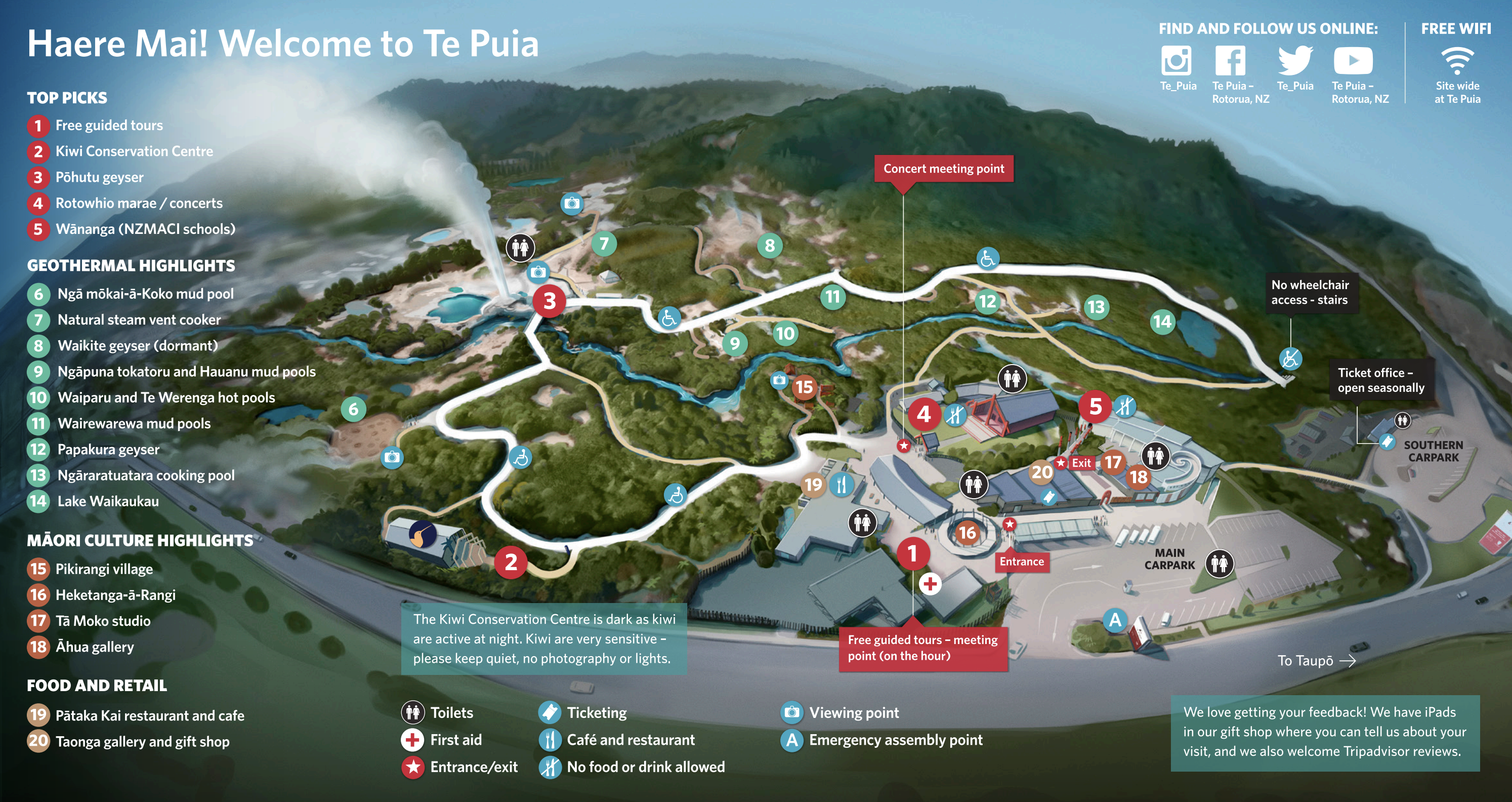
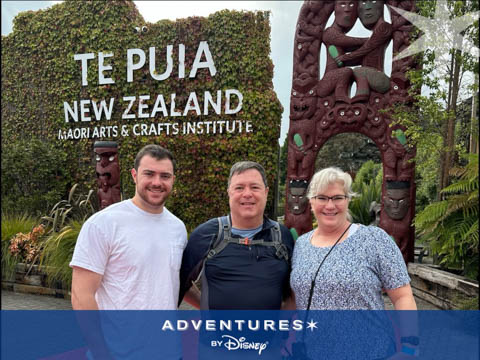
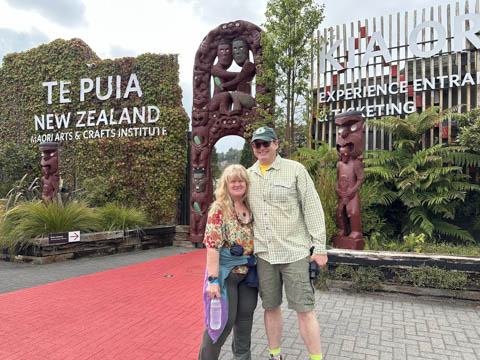
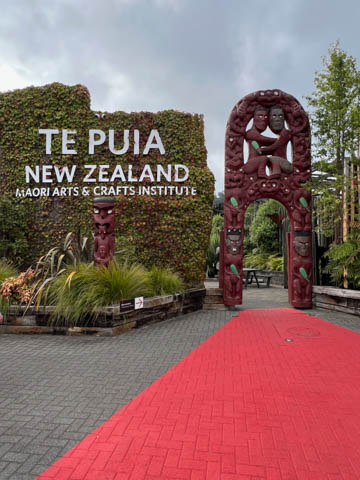
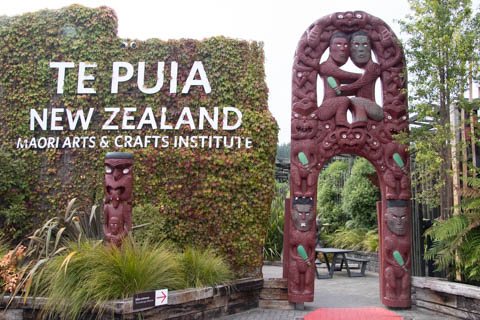
Our next stop for the day was at Te Puia, home to both some fascinating geothermal pools and geysers along with the Maori Arts and Crafts Institute.
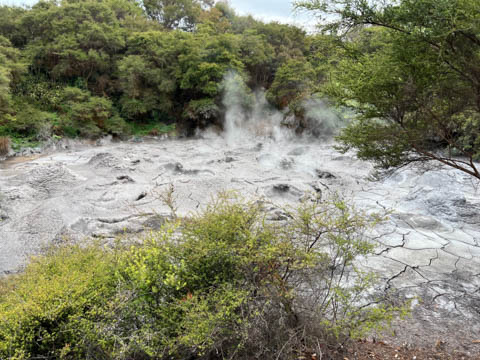
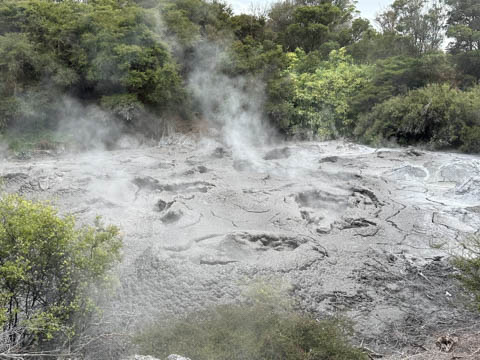
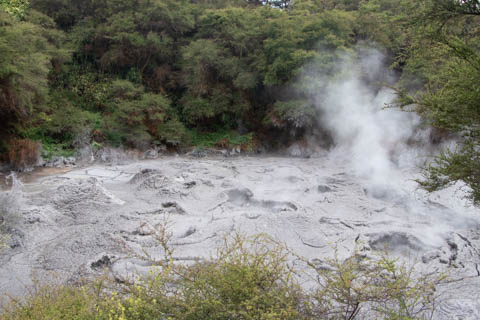
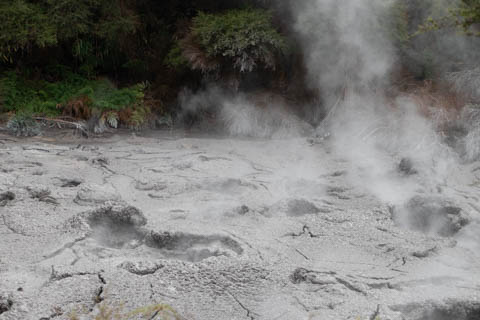
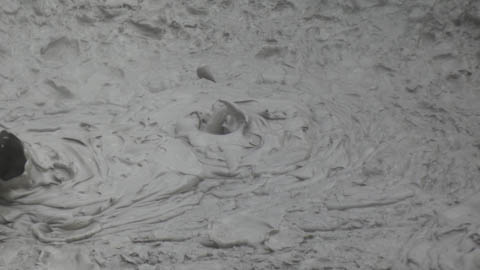
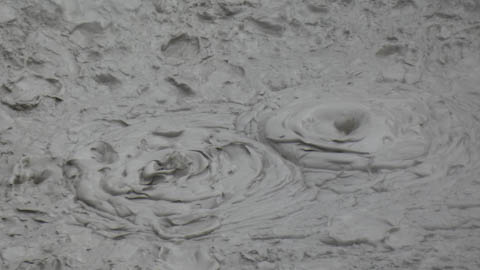
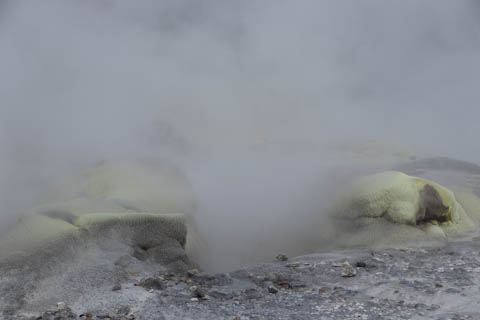
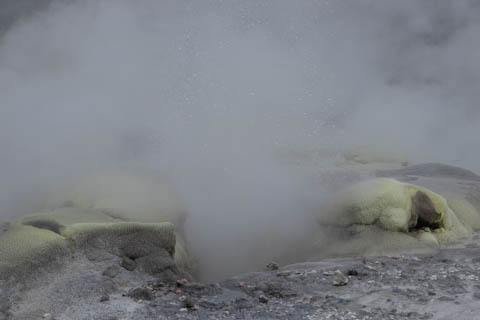
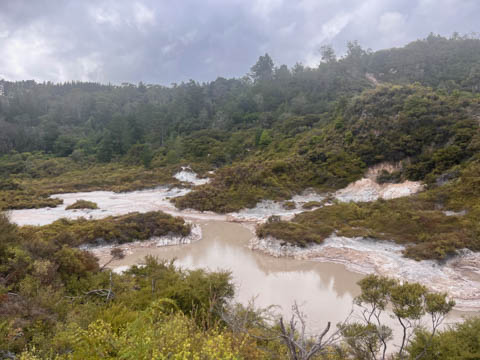
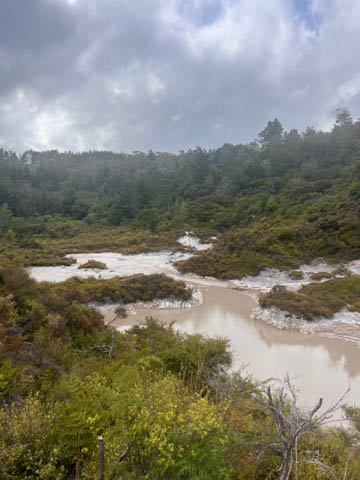
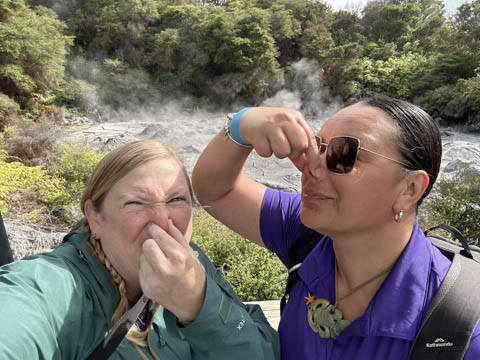
Our guide led us into the preserve, stopping first at a number of mud pools/pits.
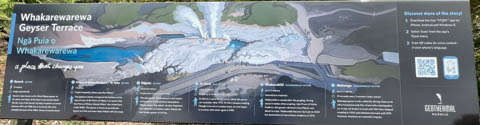
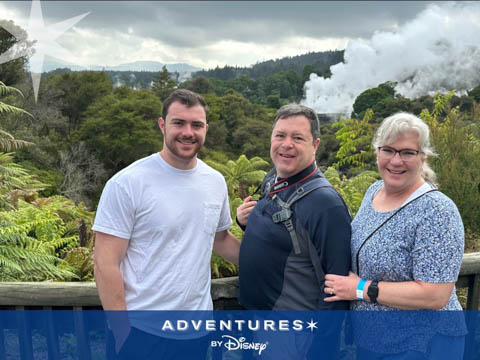
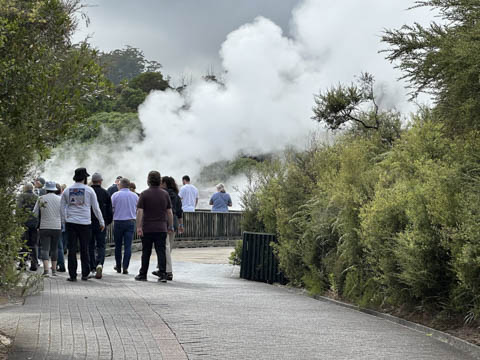
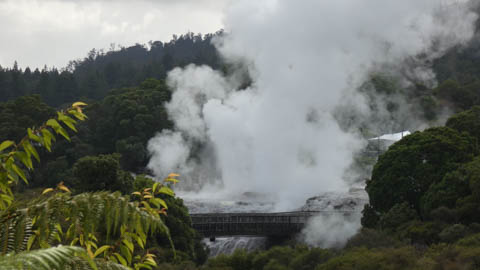
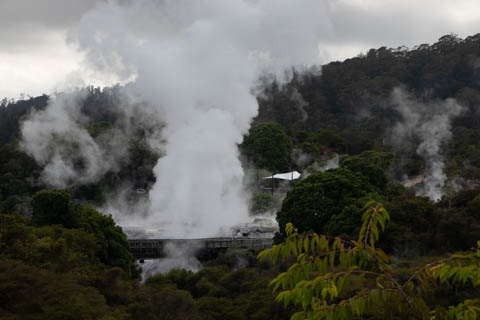
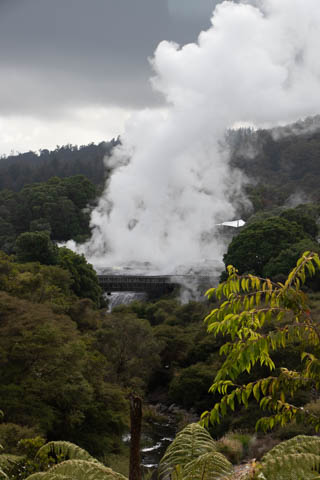
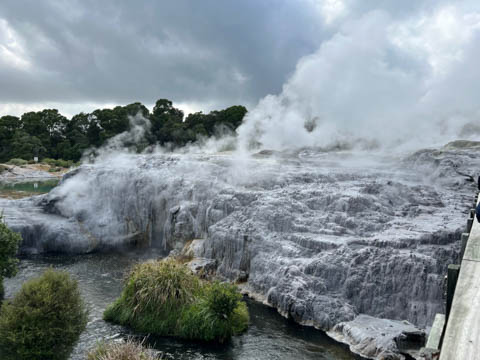
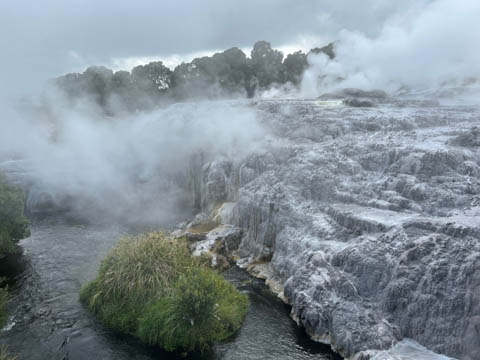
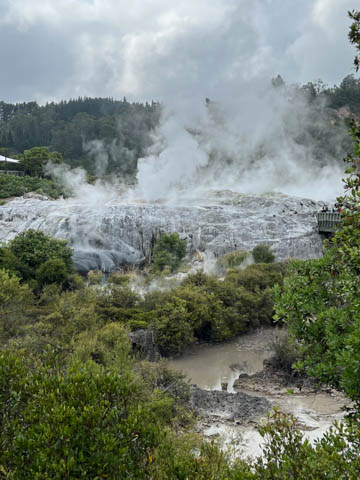
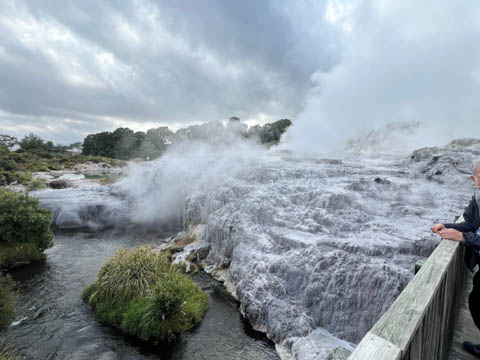
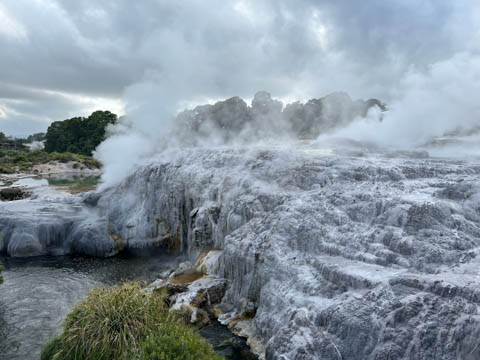
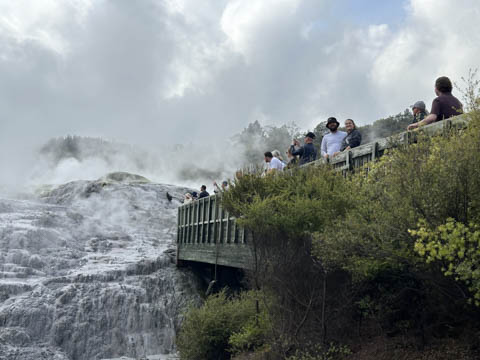
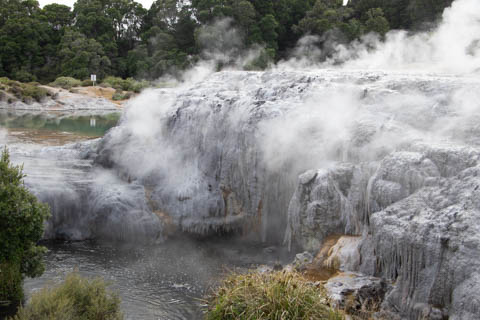
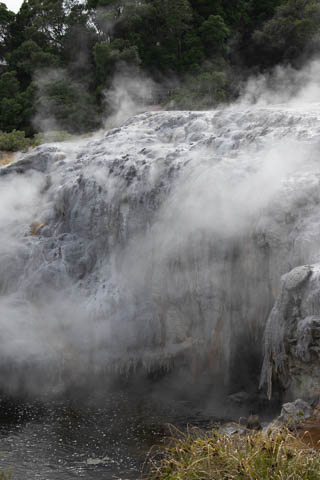
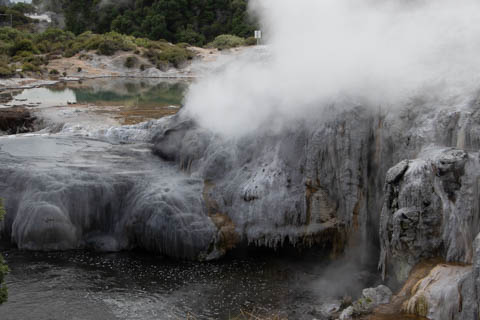
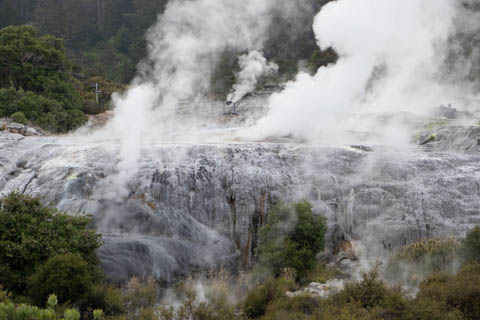
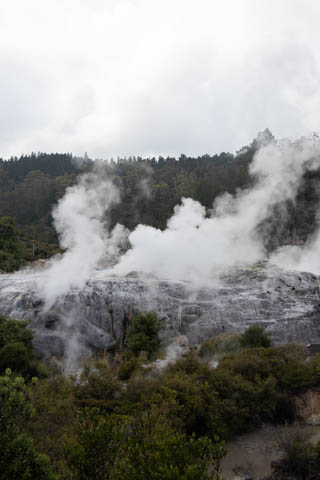
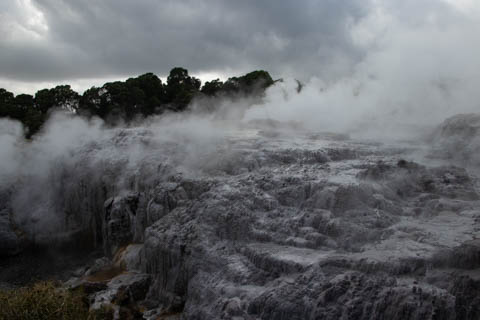
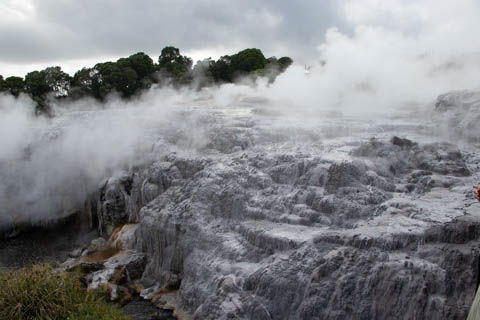
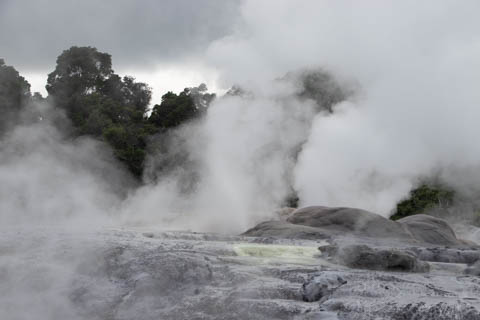
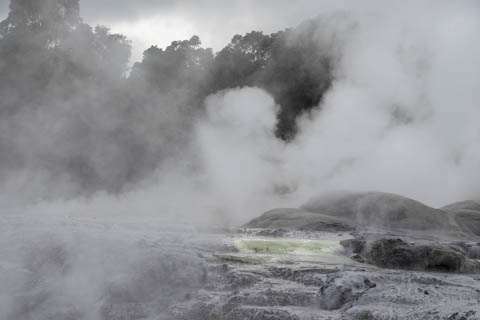
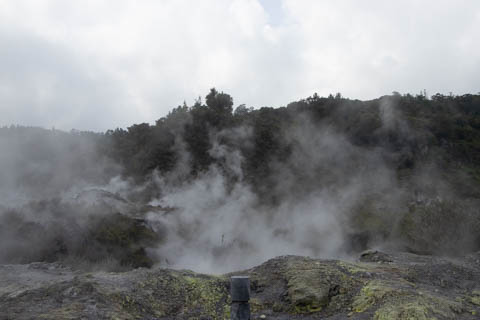
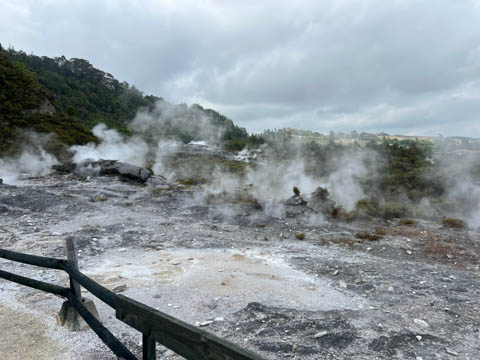
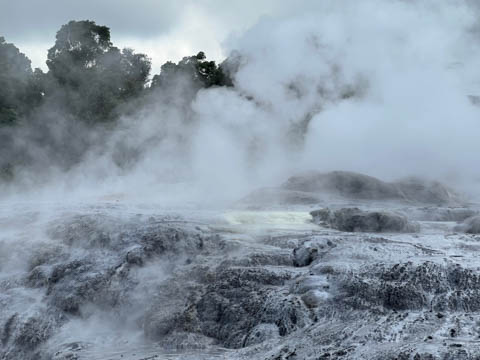
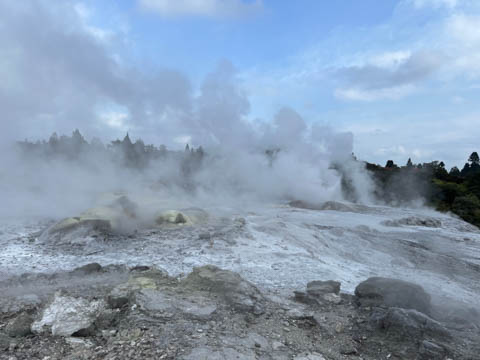
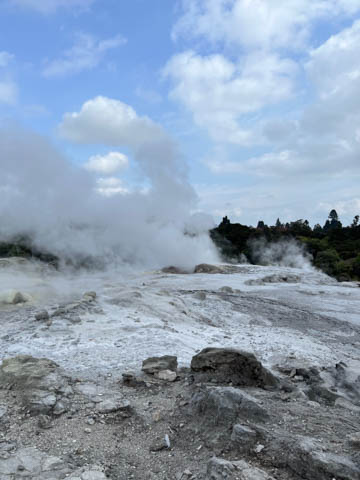
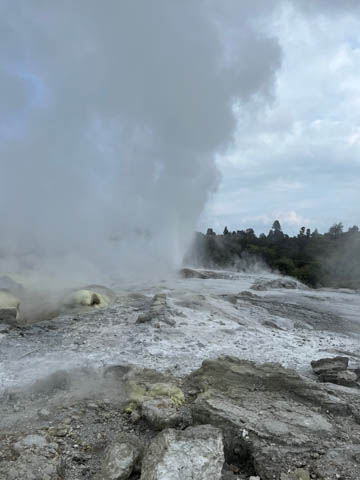
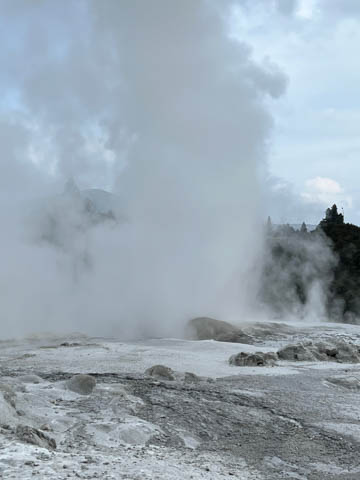
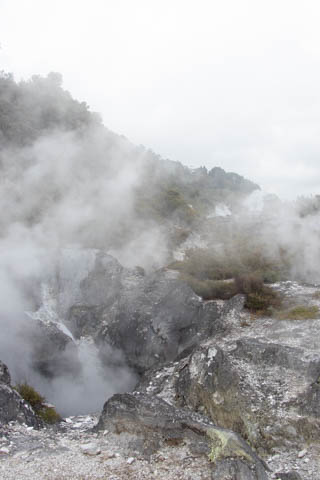
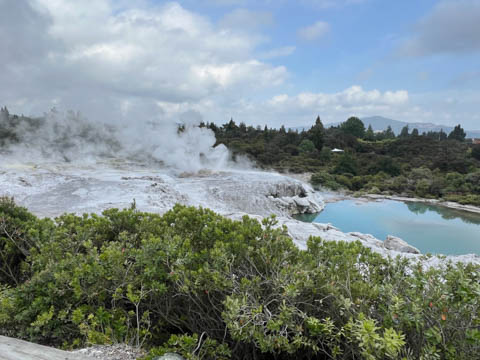
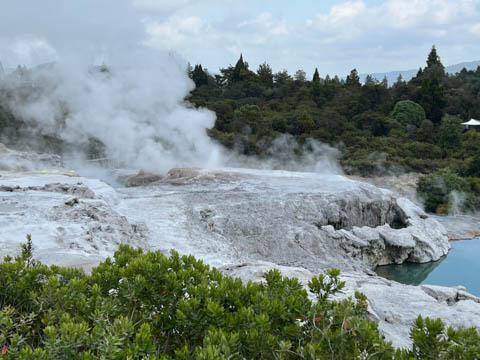
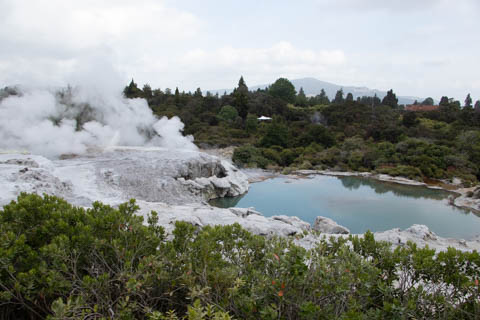
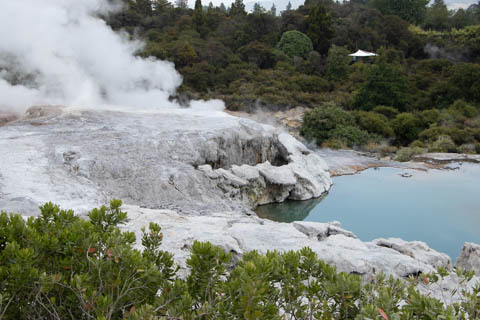
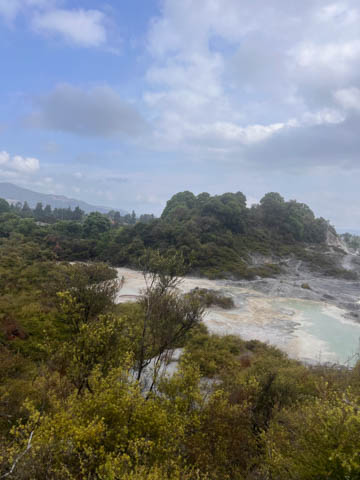
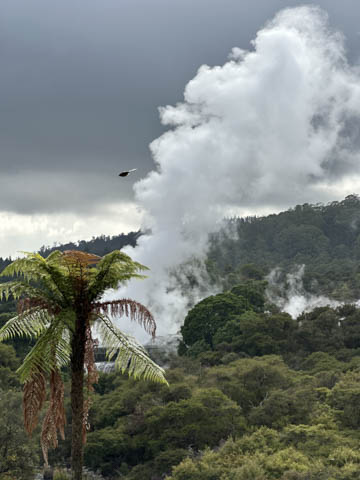
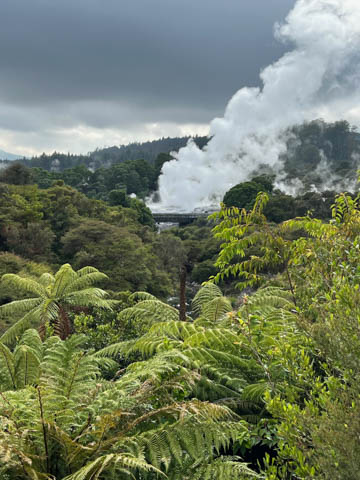
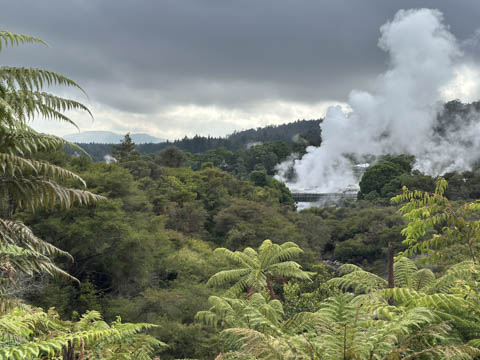
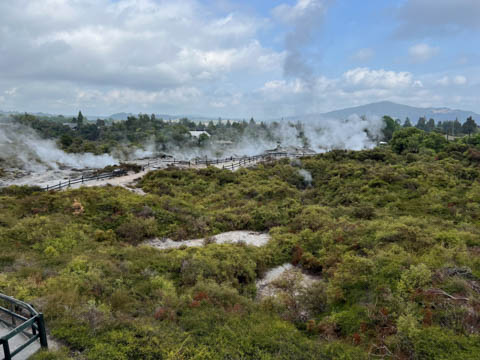
Our guide then led us around a small trail leading to some overlooks of the geyser terrace area. There are six geysers in a small area. On the lower, left side of the terrace is the Kereru geyser, also known as the Wood Pigeon geyser. The small river empties into a blue pool, which is naturally heated and a place the local Maori still enjoy.
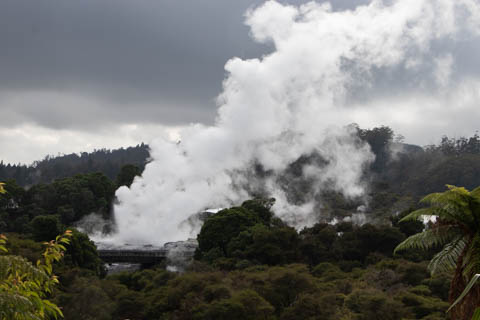
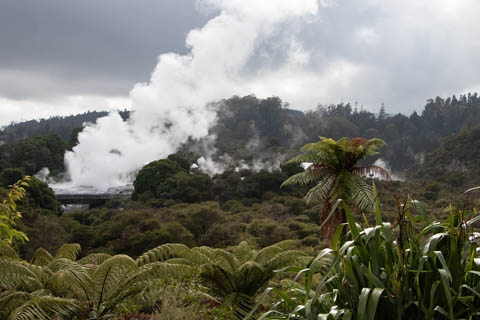
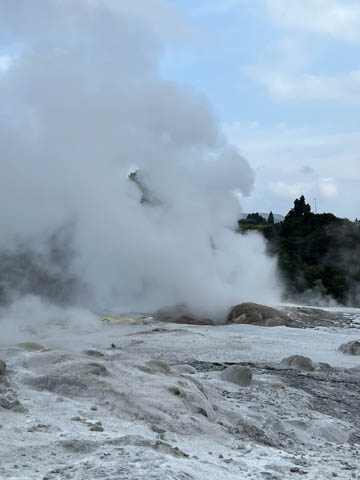
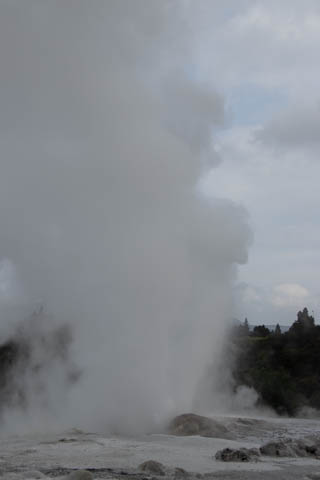
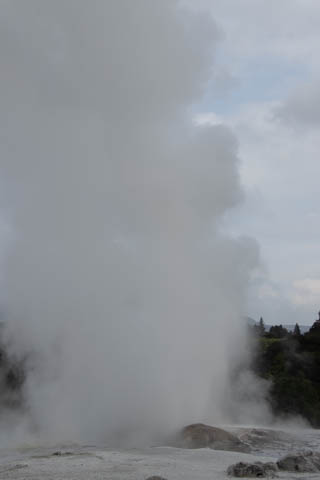
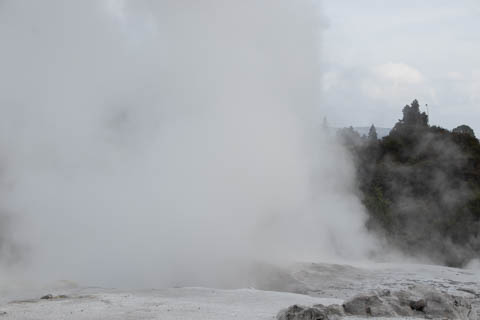
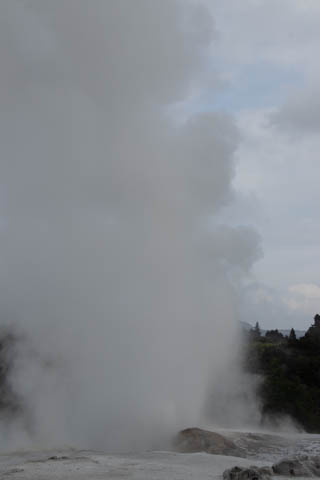
Up top, the most active geyser is the Prince of Wales Feathers / Te Tohu, which erupts frequently. The 7 m tall geyser is similar in shape to the Price of Wales coat of arms, and was named after the visit of Prince of Wales Albert in the early 1900s. It erupts as an indicator of the eruption of Pohutu, which erupts to 30 m high, making it the largest geyser in the Southern Hemisphere and earning its name which means "big splash."
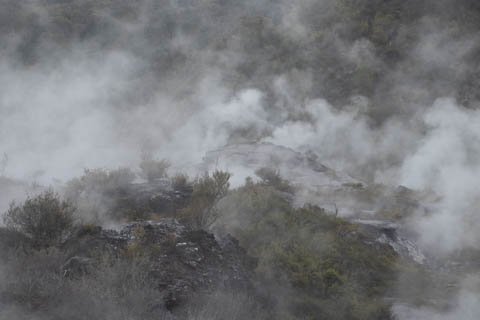
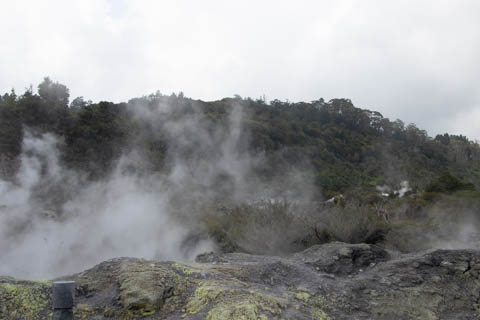
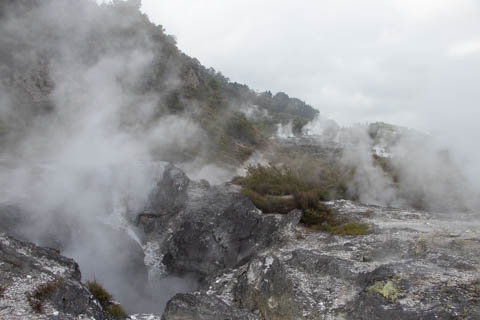
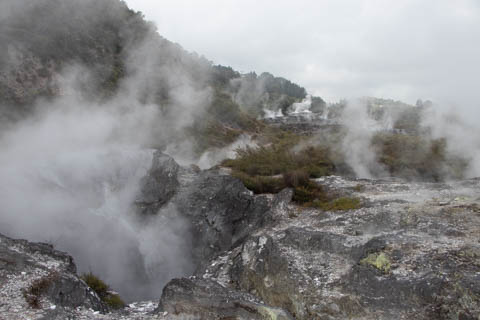
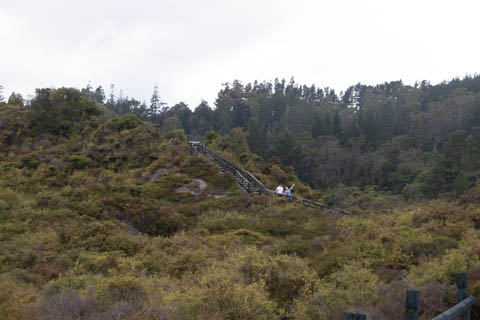
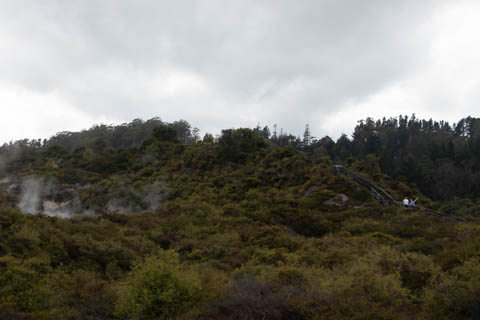
Behind the area was another small pool, and a path leading back toward a hill with several obvious additional geysers.
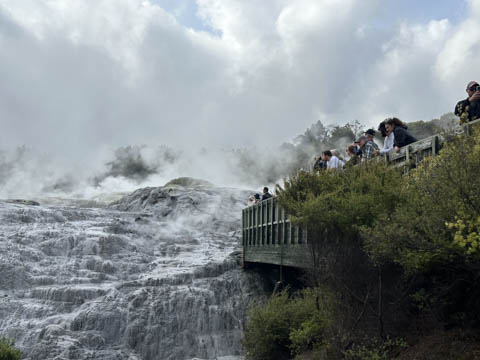
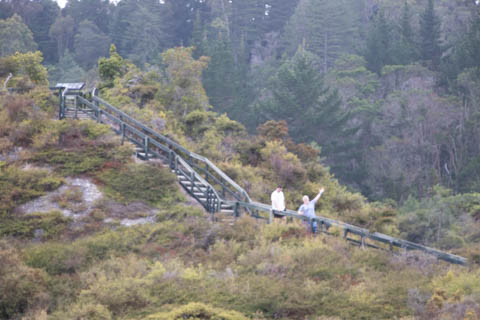
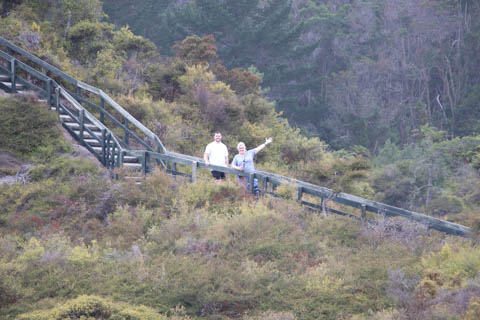
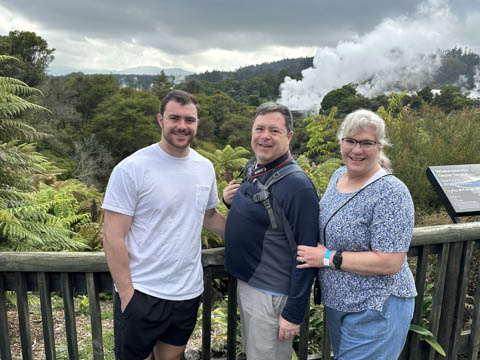
Nancy and Andy made it to a small overlook.
The whole area was fascinating and we had a bit of time to explore.
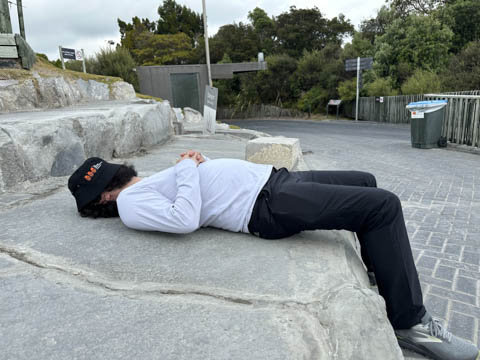
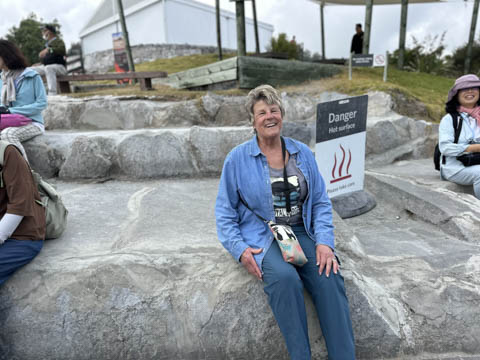
There were several heated rock areas to enjoy. Apparently our ABD guides were ready to move on though.
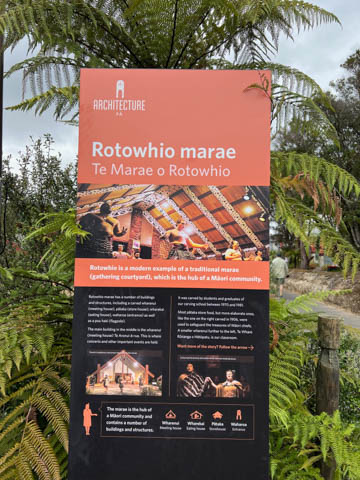
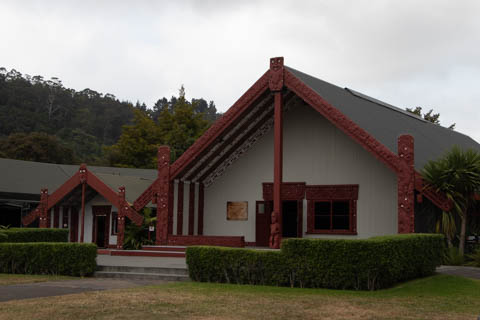
After watching several eruptions, we took a shuttle back up hill to other areas which included a Maori Marea, which looked very similar to the one we visited last evening.
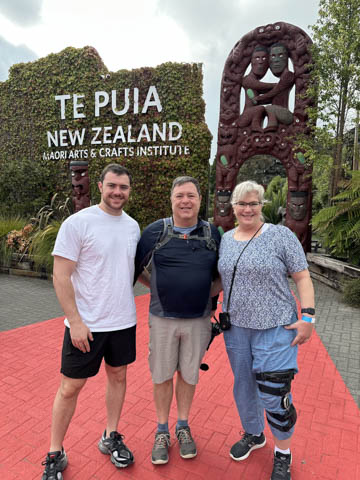
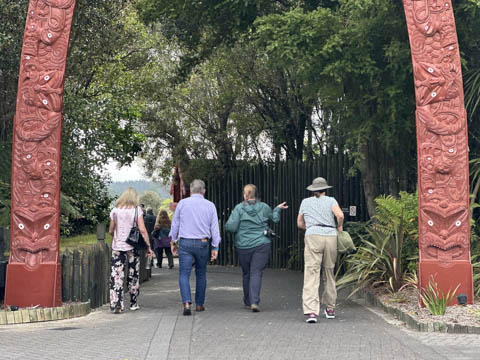
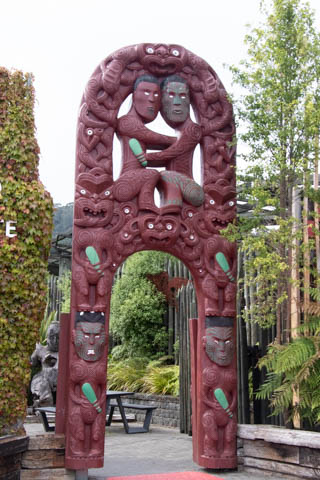
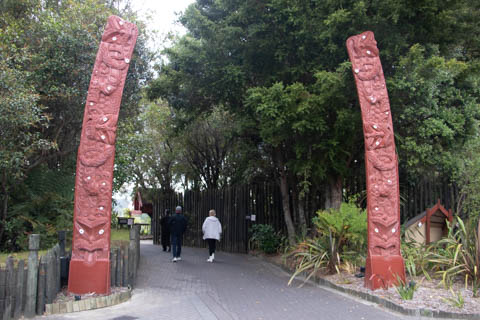
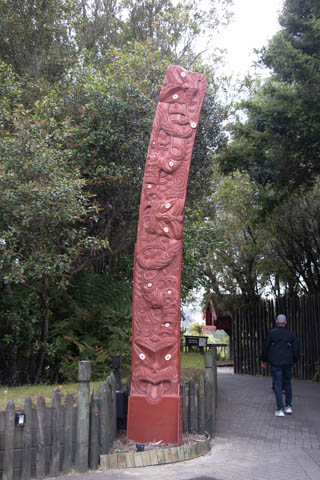
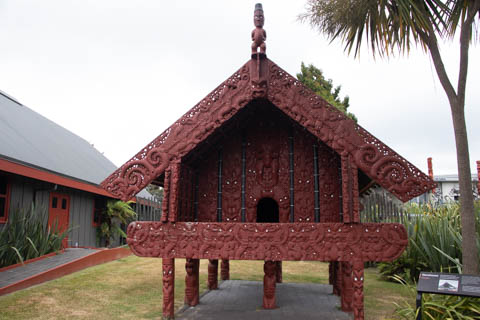
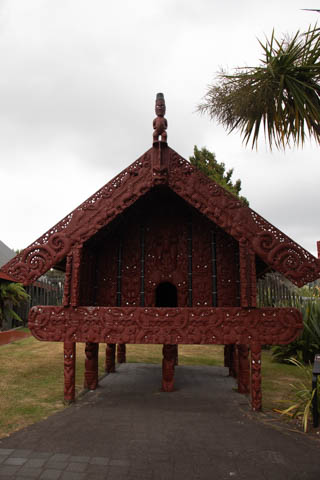
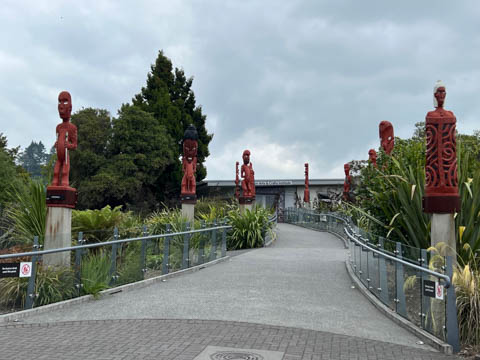
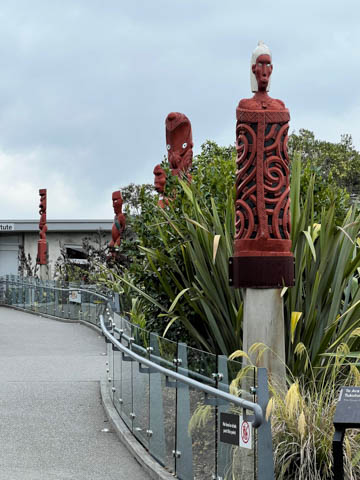
Really appreciated the entrance walk to the campus of the Maori Arts and Craft Institute.
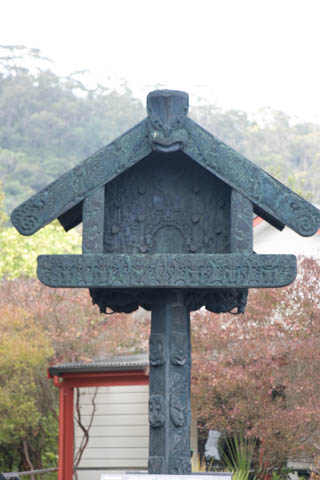
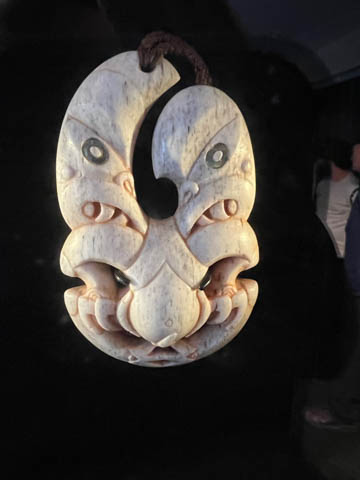
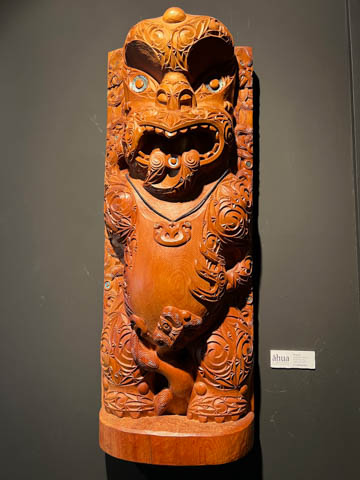
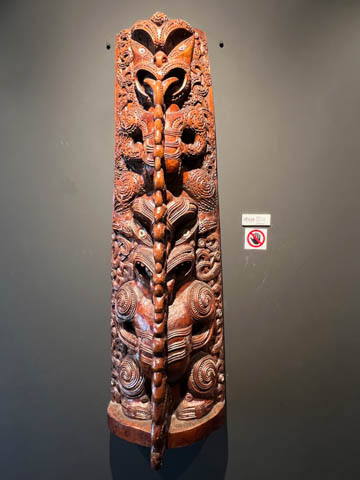
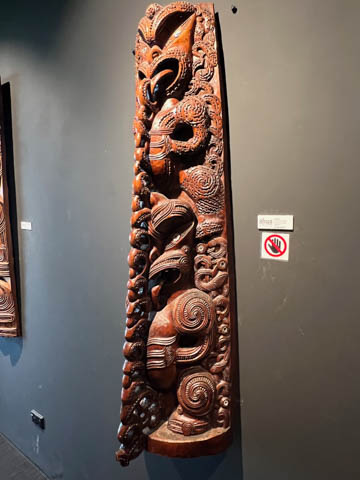
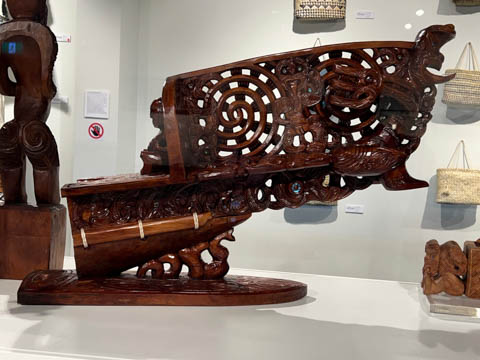
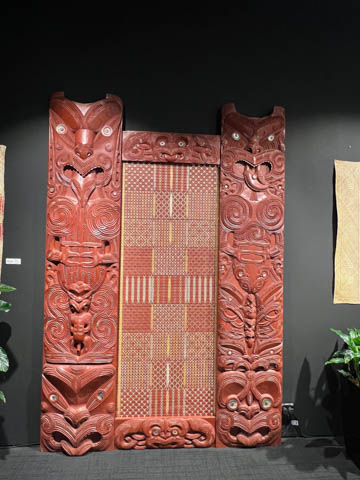
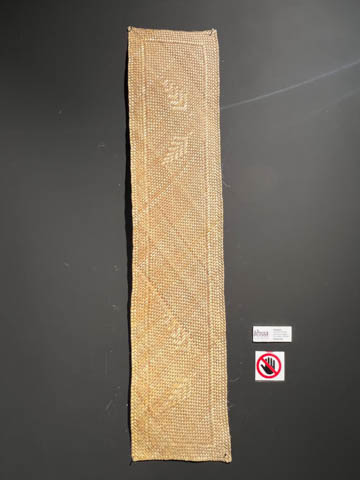
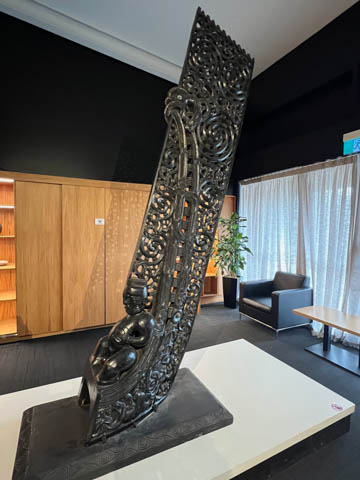
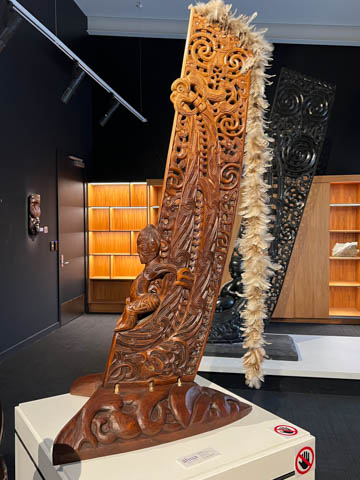
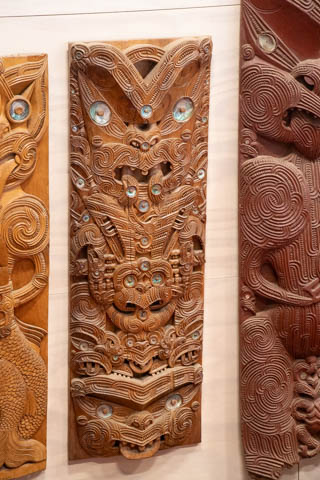
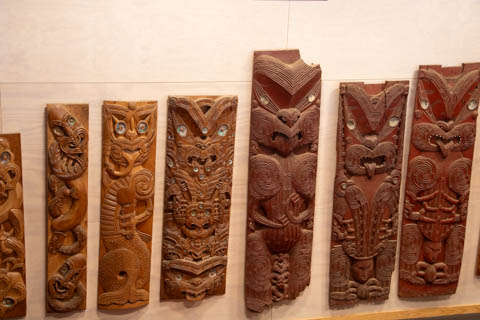
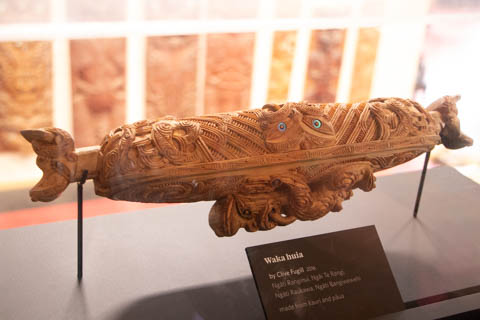
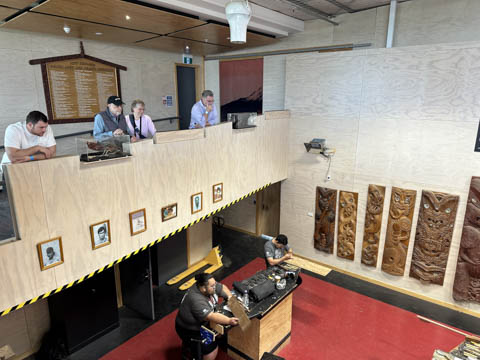
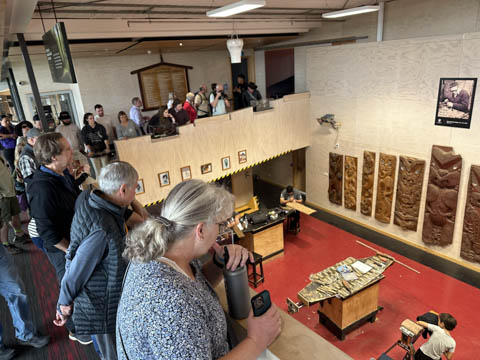
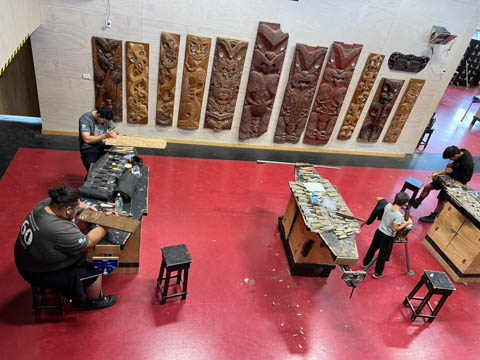
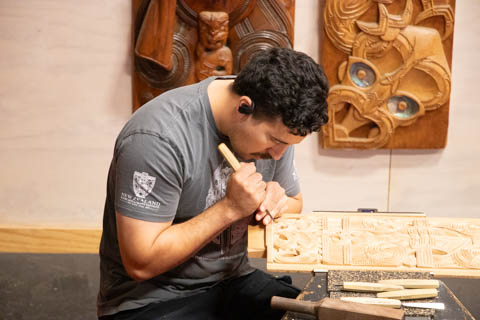
The Arts and Crafts Institute taught students in several Maori traditional arts, including carving and weaving, ensuring the crafts were kept alive. There were some stunning artworks in the small museum with both wood and stone carvings along with textiles. The institute is over 60-years old. There were several wonderful examples of Maori pounamu (greenstone) and bone carvings. Pounamu plays an important role in Maori culture and is a taonga (sacred treasure). It played an important role in trade across both islands. It was used for adze blades highly desired as weapons and to carve wood. The adze or smaller pieces of pounamu were also carved into hei tiki (stylized human figures worn as pendants) and other taonga. Pounamu taonga increase in mana (spiritual power or prestige) as they pass from one generation to another, as the pounamu is believed to absorb the mana of its past owners. Some heirloom pieces are named after a former owner in memory of their position and authority. The most prized taonga are those with known histories going back many generations. Pounamu refers to two types of green stone: nephrite jade known as kawakawa and translucent bowenite (a type of serpentine) known as tangiwai to the Maori.
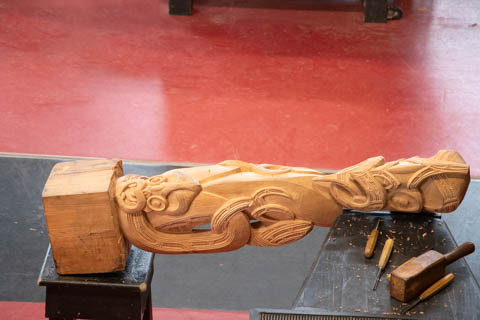
We could also look over the artisans while they were working.
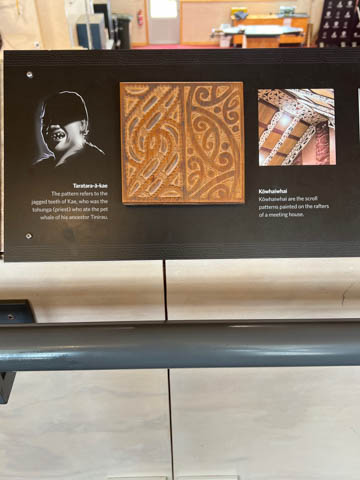
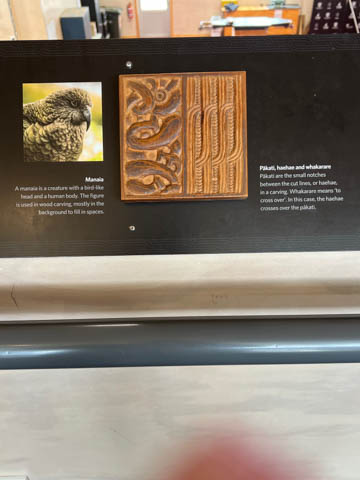
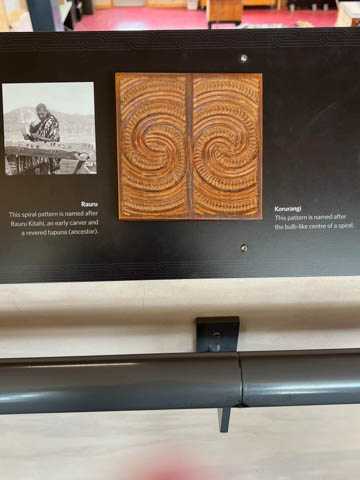
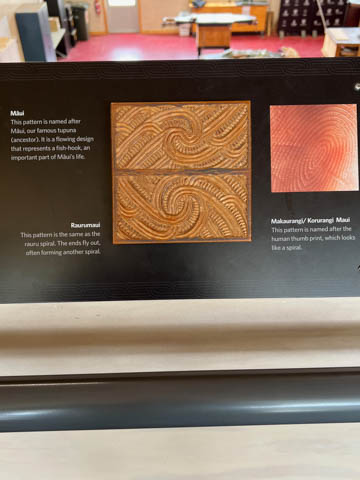
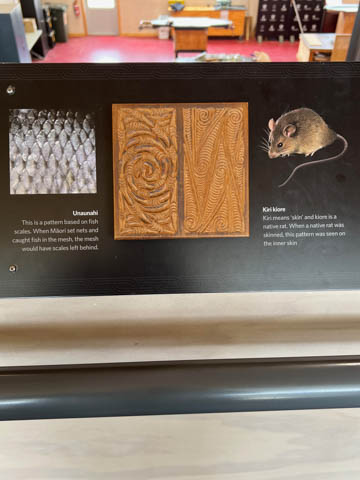
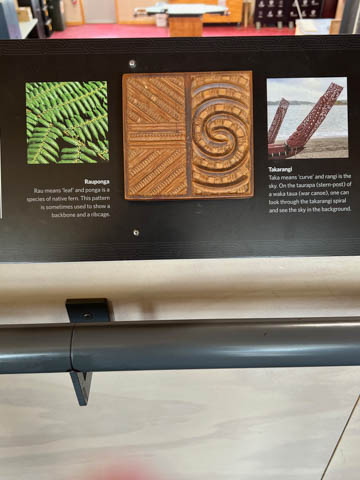
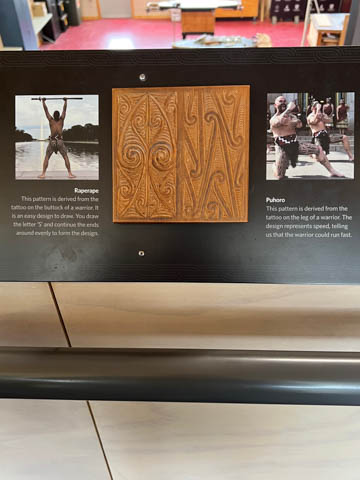
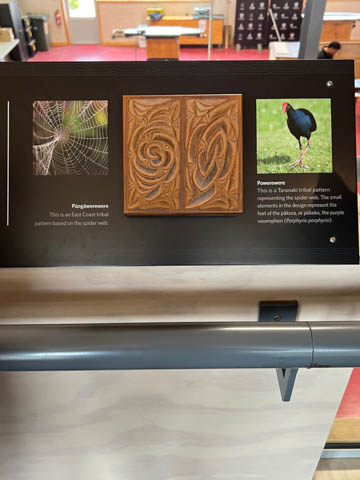
There was an exhibit showing the different types of scroll work used, as each had a different meaning and was used by different groups and regions.
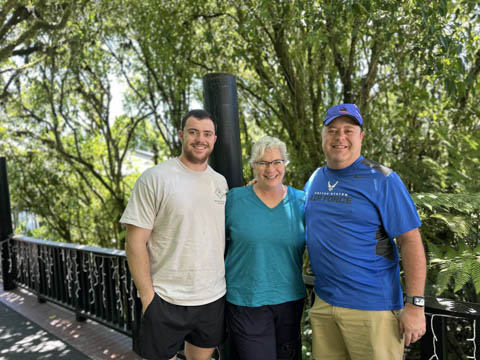
I think this is the only picture of our bus driver in this area, Orm. He was ex-Navy and gave Steve a New Zealand Navy hat when we said goodbye at the airport. Once Steve showed it to Nancy, she gave him her Air Force bandana which he ran back to give to Orm.
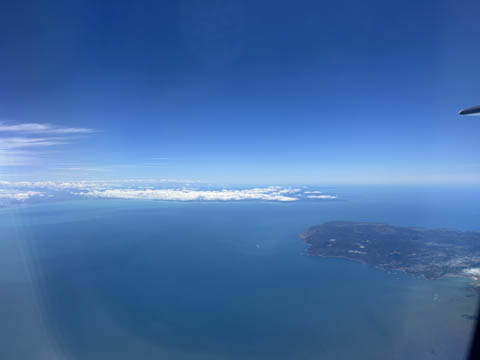
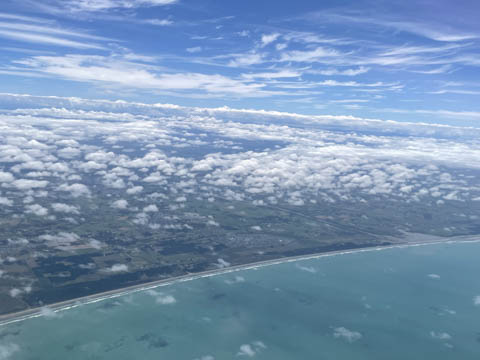
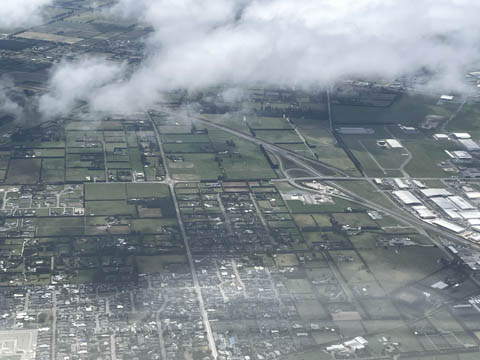
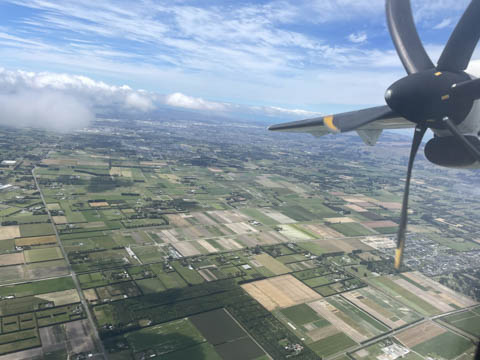
We said goodbye to the North Island and boarded a plan to Christchurch on the east coast of the South Island. It is the second largest city in New Zealand with a population of a bit over 500,000 people, smaller than only Aukland. It is located near the end of a big bay, providing a good harbor where the Avon River emptied into the bay. This location makes it a relatively flat city, with an average elevation around 20 m (66 ft) above sea level. Christchurch has a reputation for being an English city, with its architectural identity and nickname the 'Garden City' due to similarities with garden cities in England, but also has a historic Māori heritage, as it was a regional gathering and trading area.
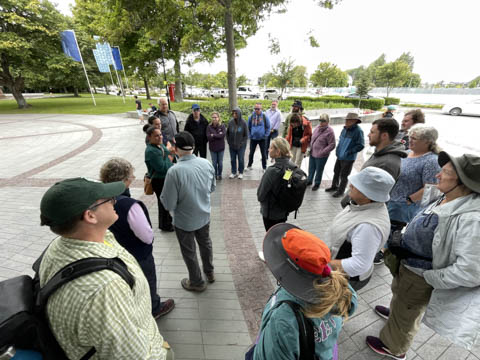
After arriving at our hotel, the Crown Plaza in downtown Christchurch, we headed out of the lobby for a walking tour of the surrounding area beginning in Victoria Square which was right across the street. The two guides both had mixed Maori and European ancestry, and talked about the history of the area. One of the big discussions involved a series of earthquakes which occurred over several months in 2010 and 2011, beginning in September 2010 with the most destructive shocks occurring on 22 February 2011, in which 185 people were killed and thousands of buildings across the city suffered severe damage, with many central city buildings collapsing, leading to ongoing recovery and rebuilding projects.
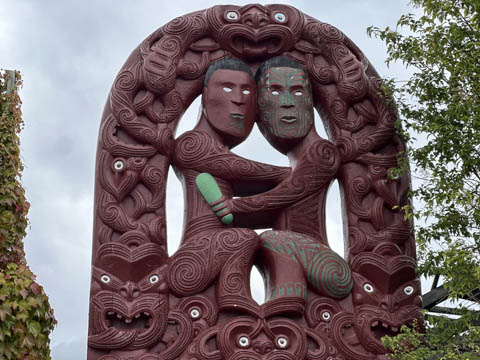
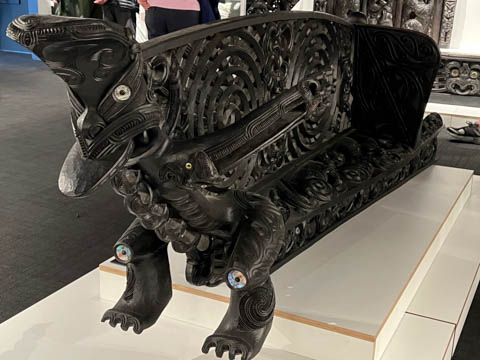
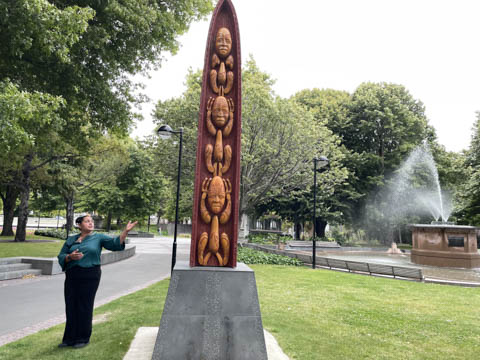
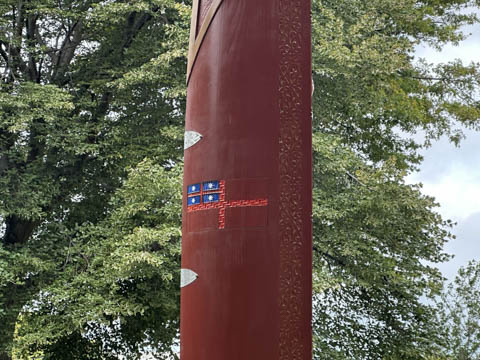
Here is the Mana Motuhake statue. This Maori phrase means self-determination, independence, sovereignty, authority. The sculpture represents a waka, or Maori canoe, and took around 2500 hours to create, using a blend of modern and traditional techniques. The waka provides a direct reference to Victoria Square once being a canoe landing site for the purpose of trading food and a Maori gathering place. The six figures inside the waka pay tribute to Te Tiriti o Waitangi (The Treaty of Waitangi) signatories for Ngāi Tahu. “The carved forms reflect the moko worn by signatories of the Treaty. This artwork portrays the mana of the signatories and supports the Treaty relationship between Ngāi Tūāhuriri/ Ngāi Tahu and the Crown."
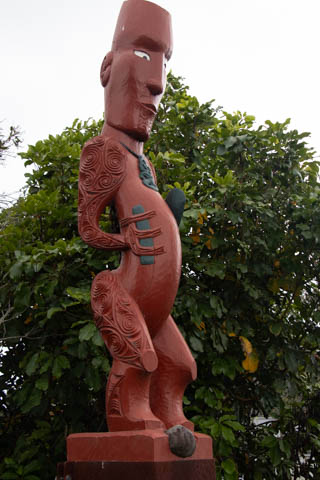
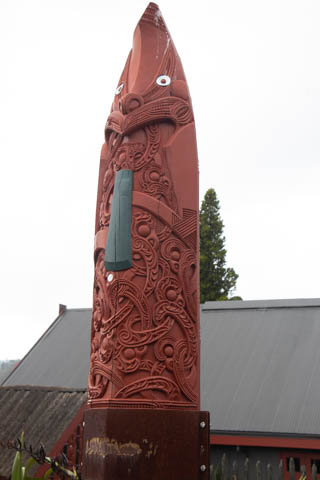
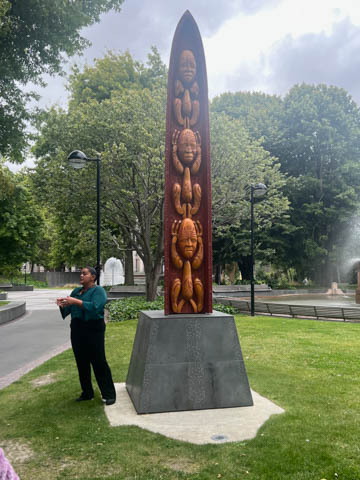
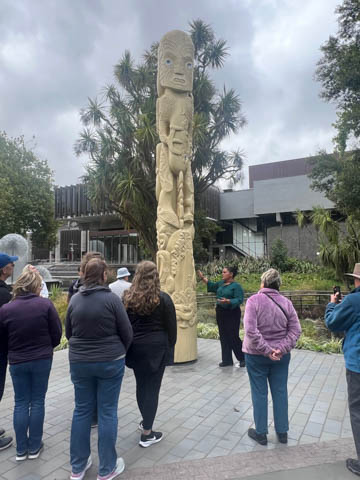
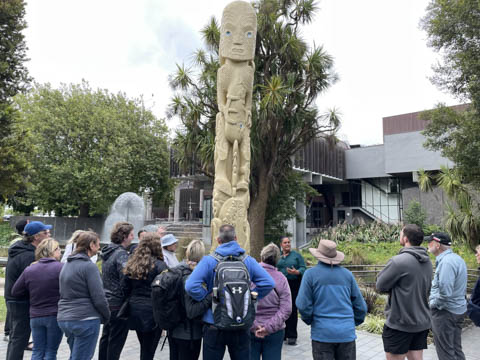
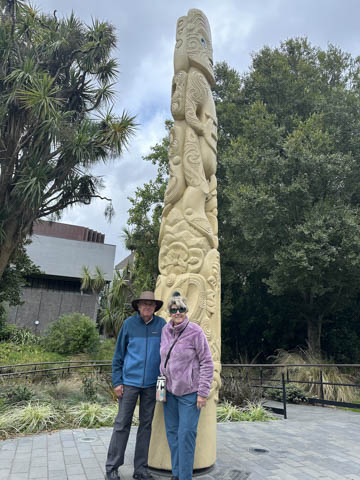
Here is the Poo Pou Monument which was erected in 1994. This is a six-meter tall decoratively carved statue that commemorates the 19th century signing of the Tready of Waitangi between the Crown and local Maori chefs. The carving is a decorative piece of work representing Mahinga Kai (food source) and Tipuna (ancestors) of the Ngāi Tahu-Waitaha people.
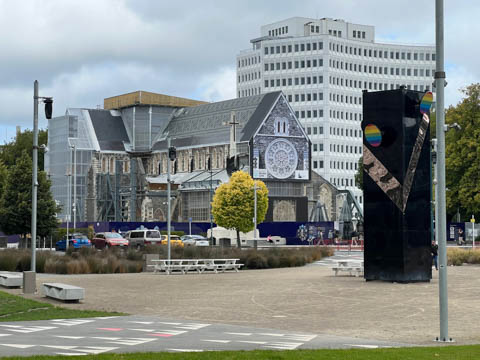
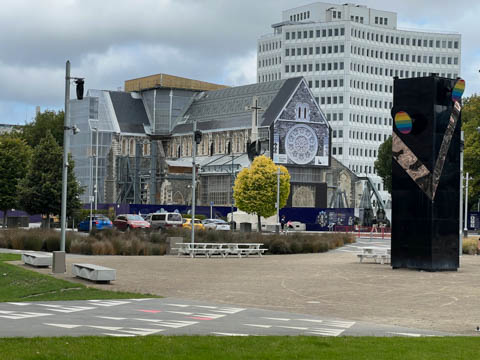
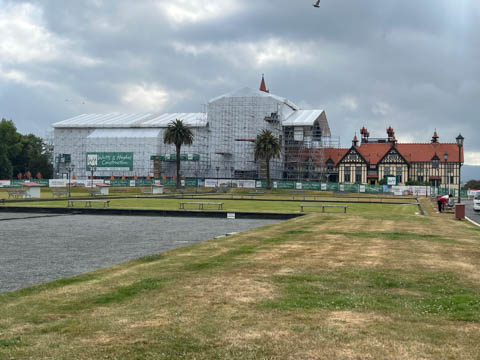
This is Christchurch cathedral, which is still undergoing extensive renovations after the earthquake with renovation beginning in 2020. The bell tower and stained glass main window both collapsed, with the building suffering extensive structural damage.
Uncle David lives just outside the downtown area, and came to see us for dinner. He had moved to New Zealand eight years ago, and we had only seen him a couple times since then, with the most recent being for Dee's funeral. What we hadn't realized was that Andy hadn't seen him over that time. He'd grown considerably taller and was no longer a young boy, now looking David in the eye as they're both over six feet tall.
|
|
|




.jpg)