

|
|
Use these navigation links to move between the Year 2025 pages. Specific pages can be accessed at the bottom of this page
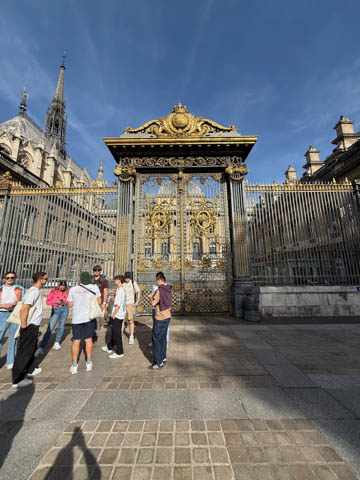
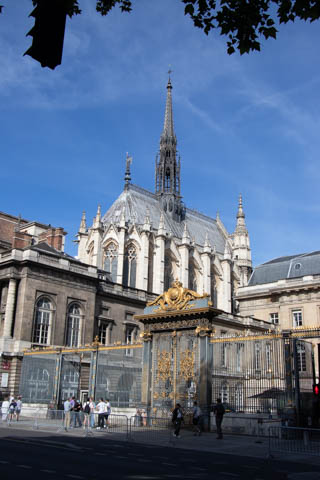
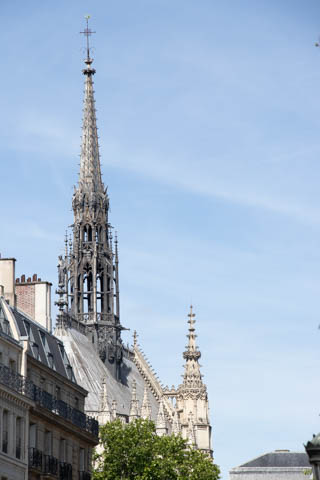
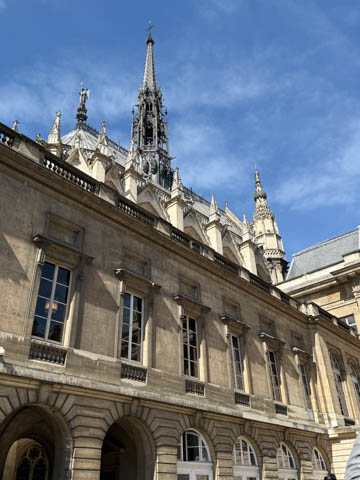
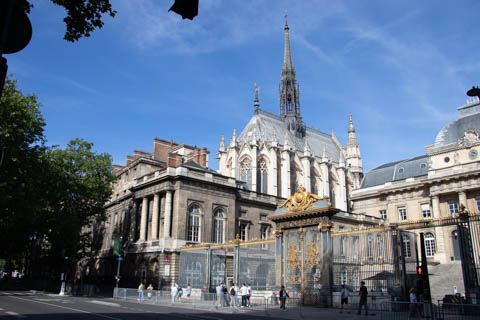
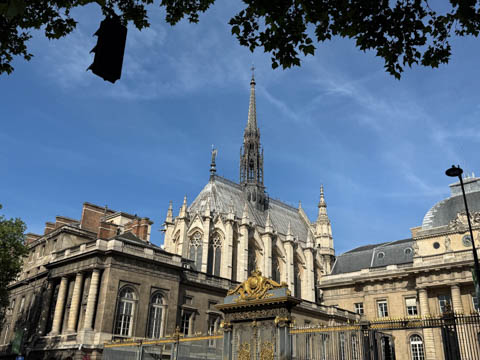
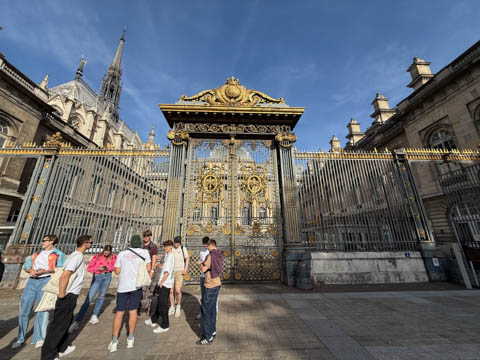
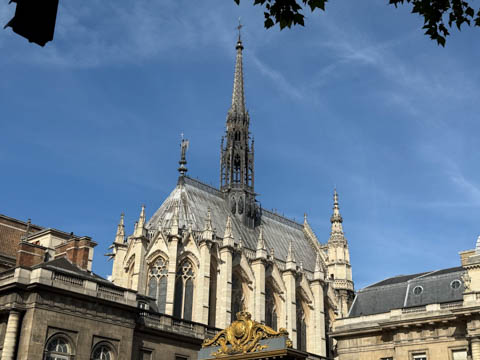
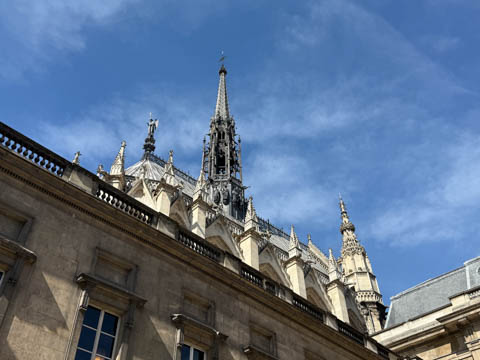
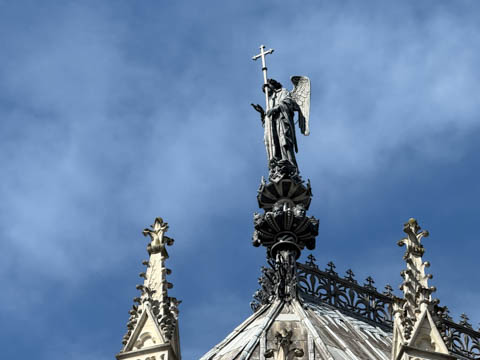
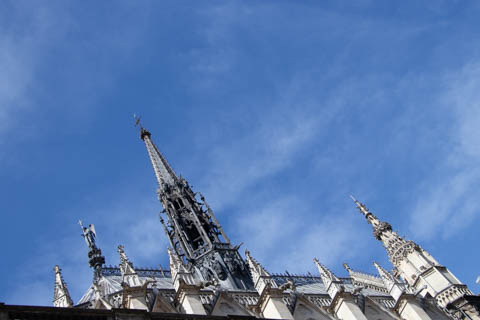
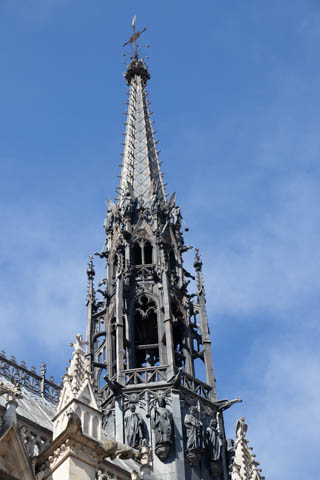
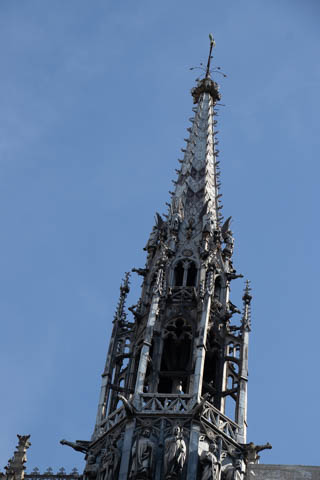
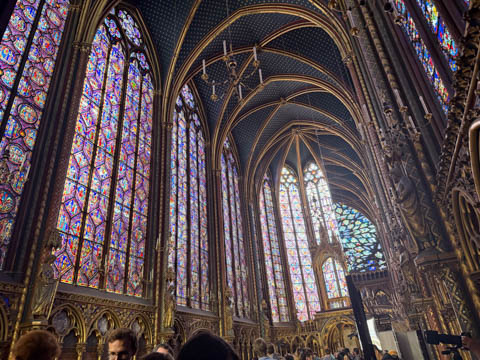
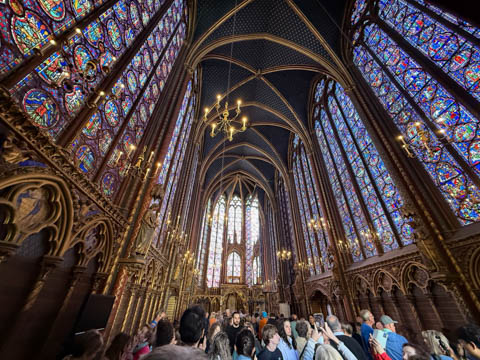
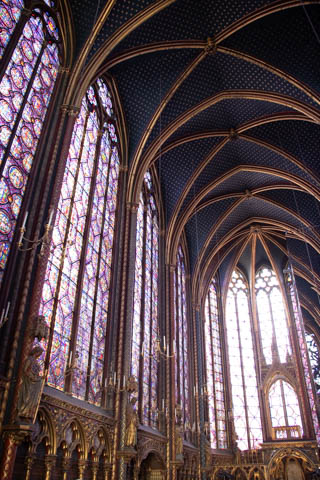
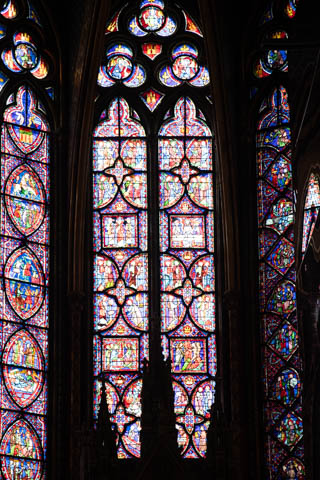
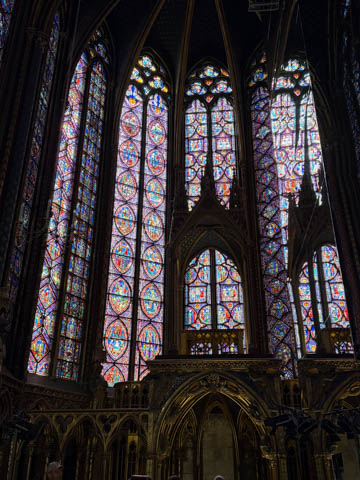
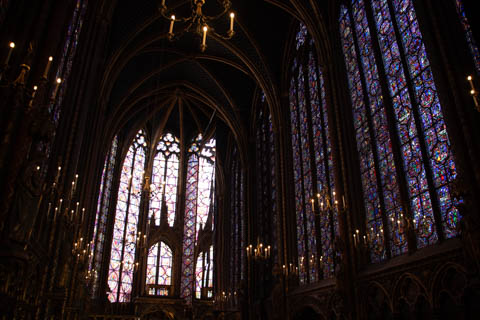
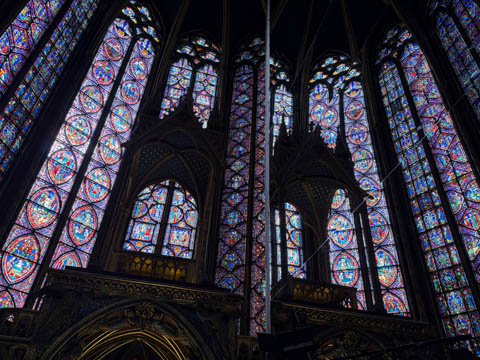
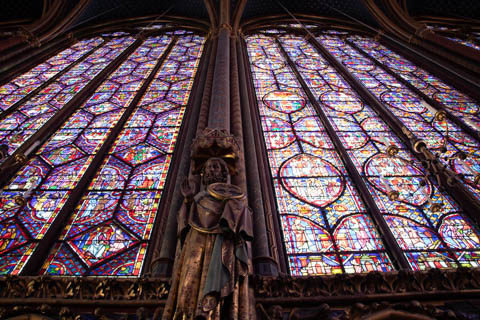
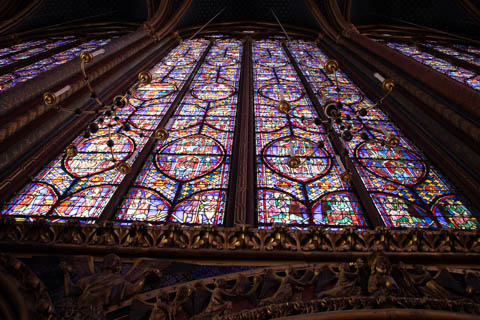
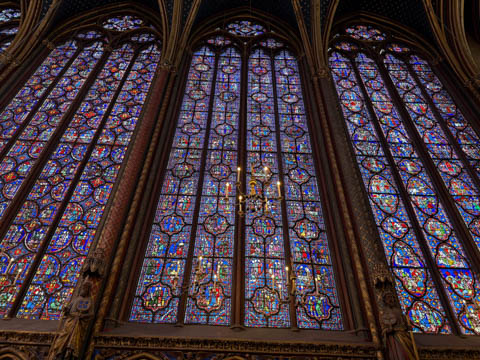
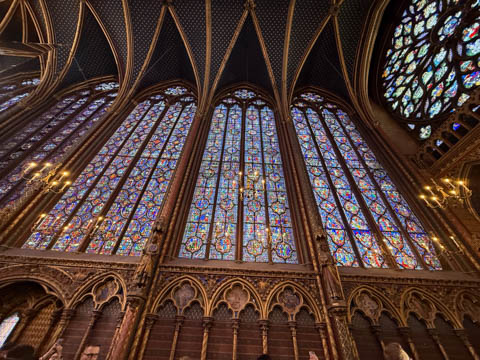
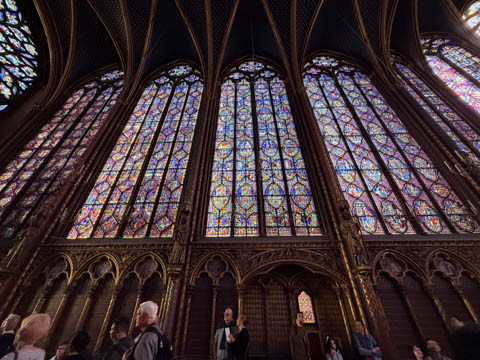
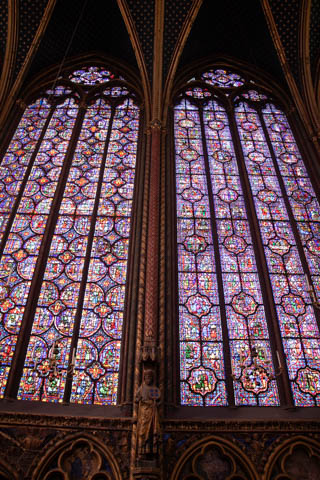
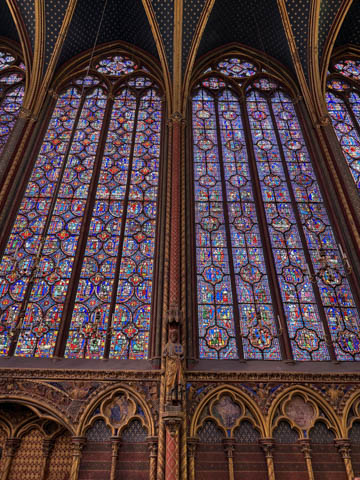
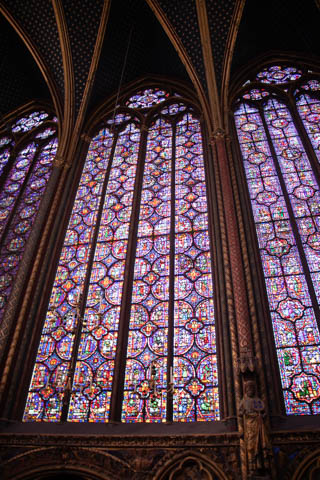
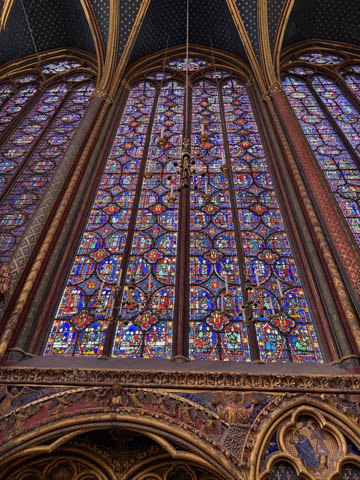
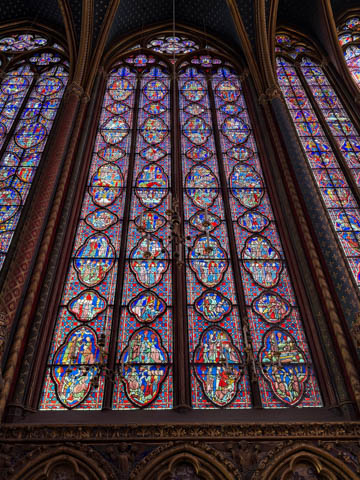
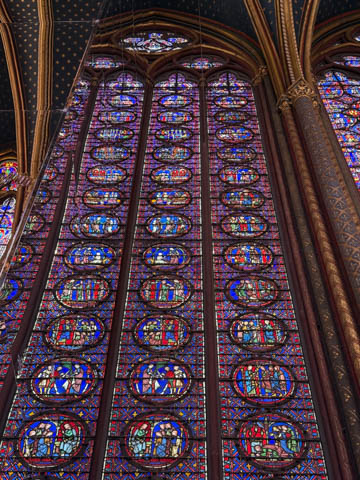
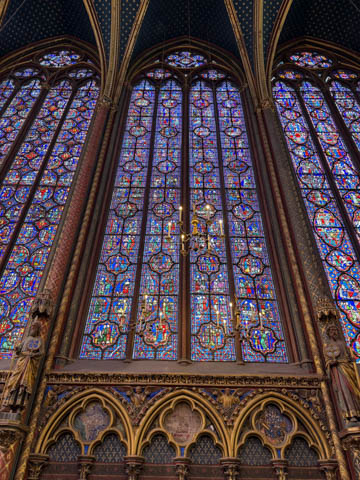
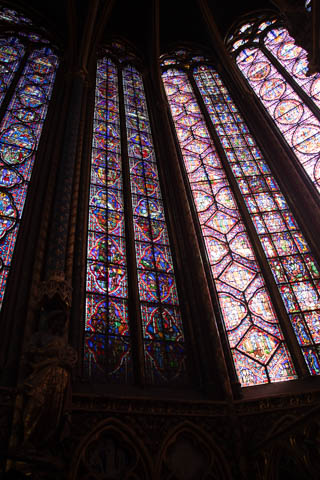
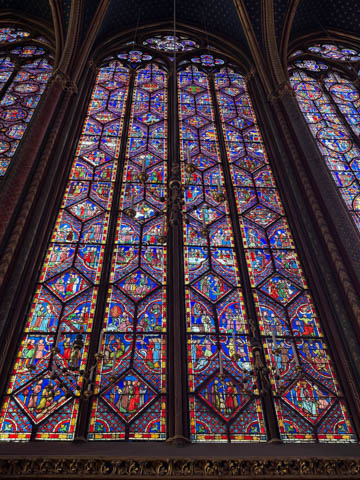
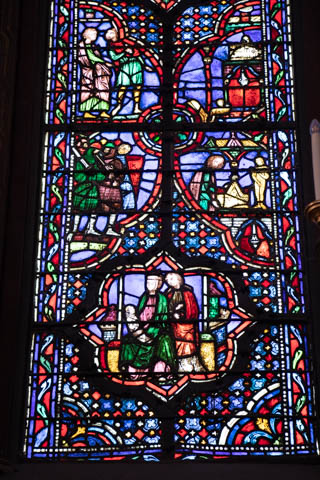
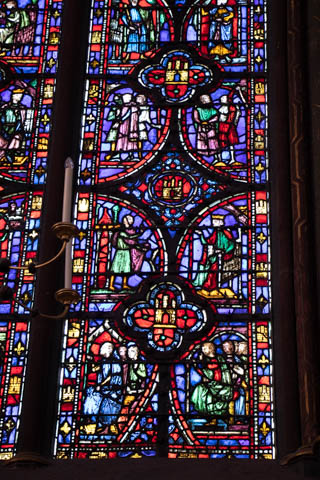
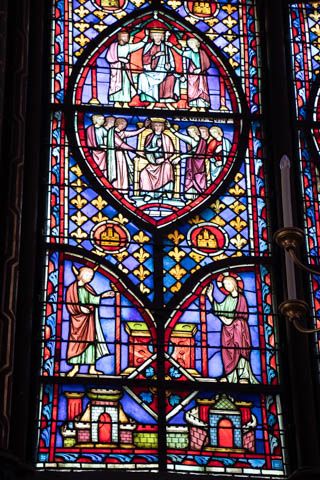
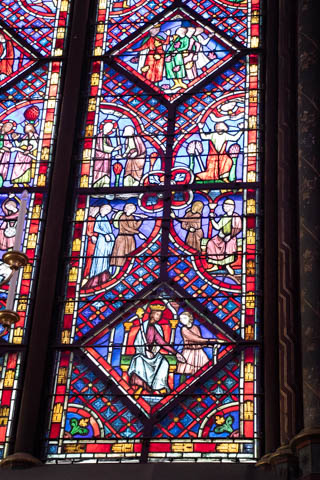
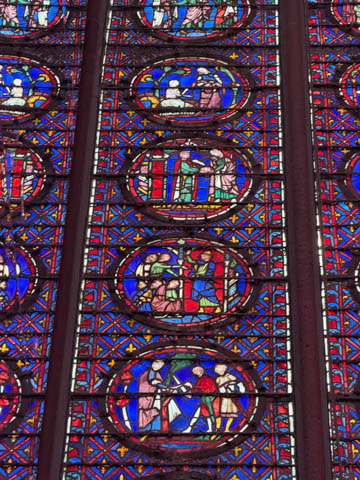
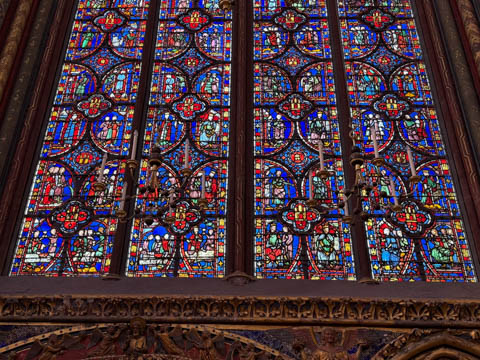
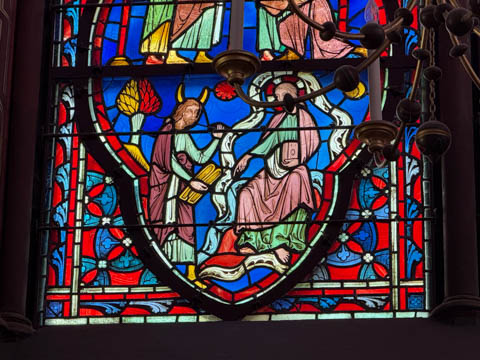
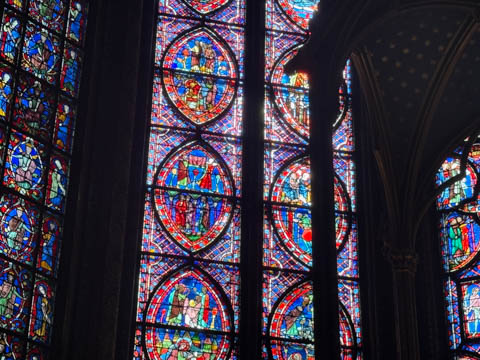
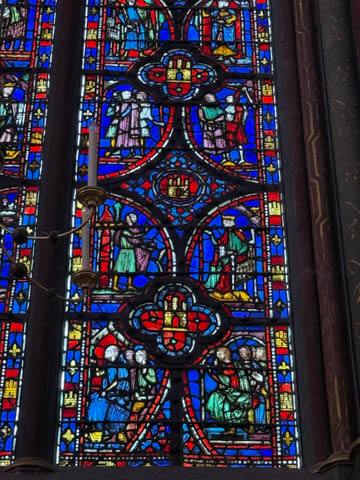
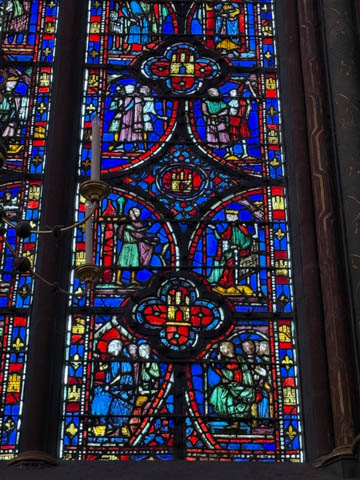
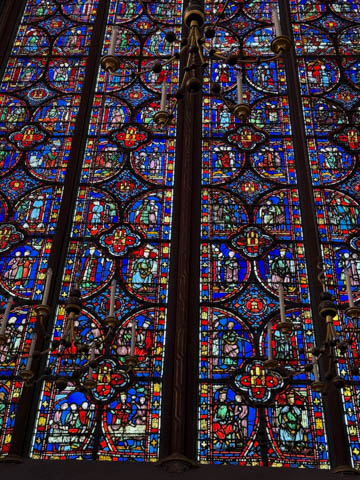
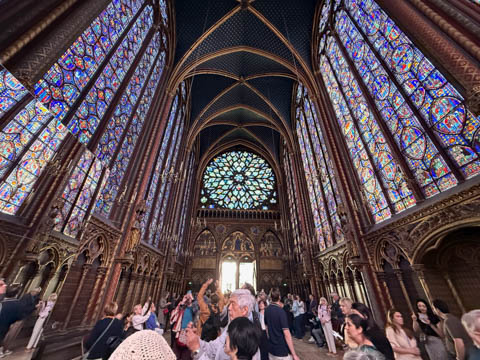
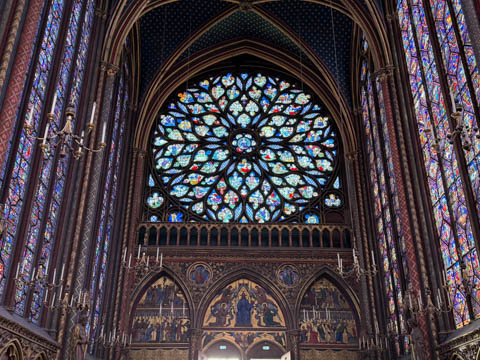
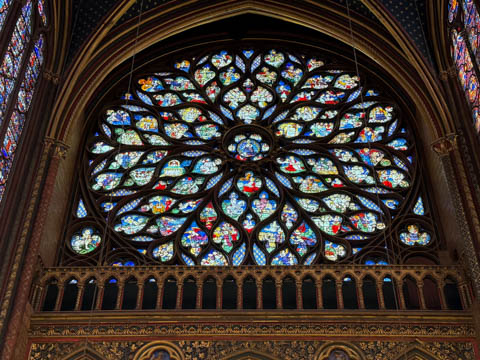
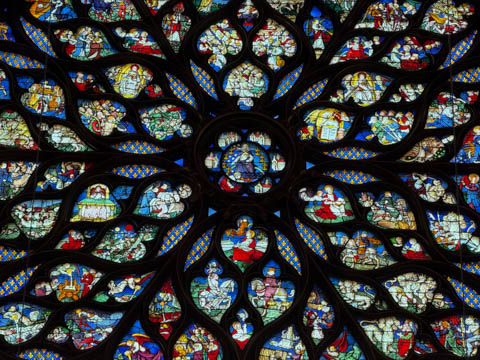
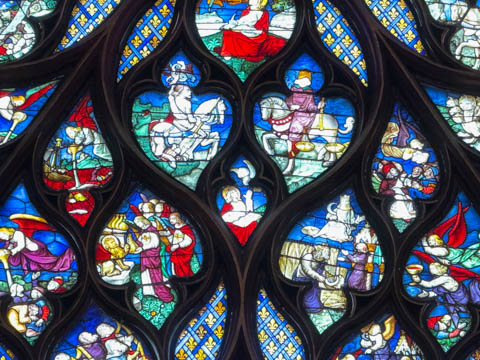
May 2025 (Part 33) France Trip: Day 14: Sainte-Chapelle On our last morning, we made our way to Sainte-Chapelle (English: Holy Chapel), the French royal chapel built in the Gothic style, within the courtyard of the medieval Palais de la Cité, the royal palace and residence of the Kings of France until the 14th century, on the Île de la Cité in the River Seine in Paris, France (now part of a later administrative complex known as La Conciergerie). Construction began sometime after 1238 and the chapel was consecrated on 26 April 1248. The Sainte-Chapelle is considered among the highest achievements of the Rayonnant period of Gothic architecture. It was commissioned by King Louis IX of France to house his collection of Passion relics which included the crown of thorns, the Image of Edessa, and some thirty other items. Louis purchased his Passion relics from Baldwin II, the Latin emperor at Constantinople, for the sum of 135,000 livres. This money was paid to the Venetians to whom the relics had been pawned. The relics arrived in Paris in August 1239, carried from Venice by two Dominican friars. Christ's claimed Crown of Thorns was one of the most important relics in medieval Christendom. This was later held in the nearby Notre-Dame Cathedral until the 2019 fire, which it survived. Along with the Conciergerie, Sainte-Chapelle is one of the earliest surviving buildings of the Capetian royal palace on the Île de la Cité. In addition to serving as a place of worship, the Sainte-Chapelle played an important role in the political and cultural ambitions of King Louis and his successors. Louis could pass directly from his palace into the Sainte-Chapelle. More importantly, the two-story palace chapel had obvious similarities to Charlemagne's palatine chapel at Aachen (built 782–805)—a parallel that Louis was keen to exploit in presenting himself as a worthy successor to the first Holy Roman Emperor. The presence of the fragment of the True Cross and crown of thorns gave enormous prestige to Louis IX. Pope Innocent IV proclaimed that it meant that Christ had symbolically crowned Louis with his own crown Sainte-Chapelle, as both a symbol of religion and royalty, was a prime target for vandalism during the French Revolution. The chapel was turned into a storehouse for grain, and the sculpture and royal emblems on the exterior were smashed. Some of the stained glass was broken or dispersed, but nearly two-thirds of the glass today is original; some of the original glass was relocated in other windows, The sacred relics were dispersed although some survive as the "relics of Sainte-Chapelle" in the treasury of Notre-Dame de Paris. Various reliquaries, including the grande châsse, were melted down for their precious metal. Between 1803 and 1837, the upper chapel was turned into a depository for the archives of the Palace of Justice next door. The spire was pulled down. The current spire, thirty-three meters (108 ft) high, is the fifth to be built at Sainte-Chapelle since the 13th century. Although damaged during the French Revolution and restored in the 19th century, it has one of the most extensive 13th-century stained glass collections anywhere in the world. The two levels of the new chapel, equal in size, had entirely different purposes. The upper level, where the sacred relics were kept, was reserved exclusively for the royal family and their guests. The lower level was used by the courtiers, servants, and soldiers of the palace. The most famous features of the chapel, among the finest of their type in the world, are the fifteen great stained-glass windows in the nave and apse of the upper chapel, which date from the mid-13th century, as well as the later rose window (put in place in the 15th century). The stone wall surface is reduced to little more than a delicate framework. The thousands of small pieces of glass turn the walls into great screens of colored light, largely deep blues and reds, which gradually change in intensity from hour to hour. Most of the windows were put into place between 1242 and 1248. Despite some damage the windows display a clear iconographical program. The three windows of the eastern apse illustrate the New Testament, featuring scenes of The Passion (centre) with the Infancy of Christ (left) and the Life of John the Evangelist (right). By contrast, the windows of the nave are dominated by Old Testament exemplars of ideal kingship/queenship in an obvious nod to their royal patrons. You can only see a bit of the church from outside the palace, as it rises above the rest of the structures.
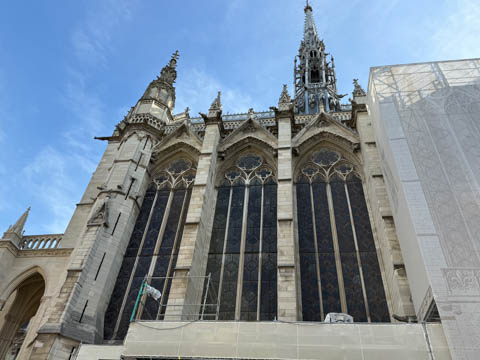
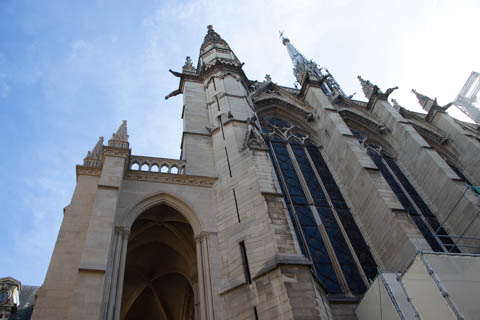
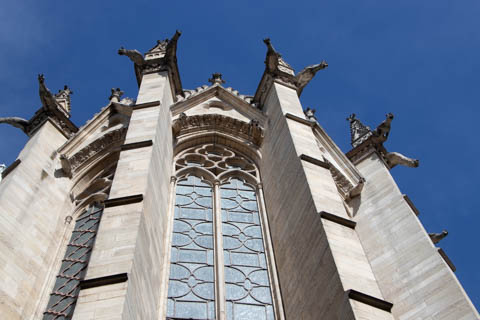
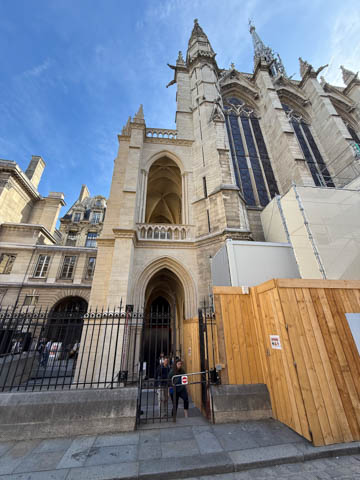
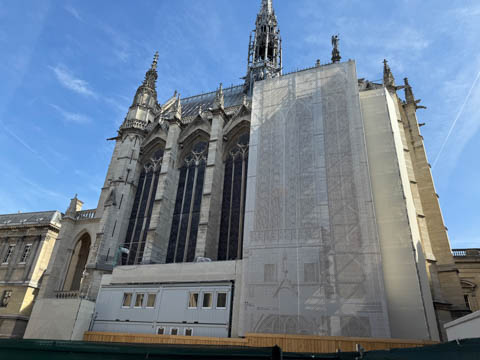
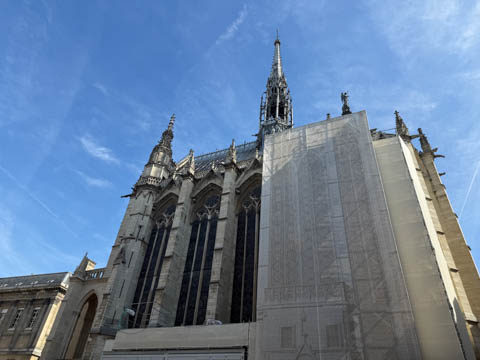
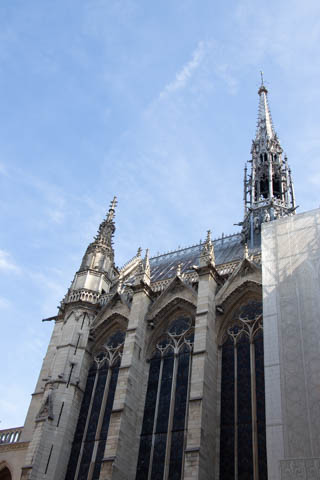
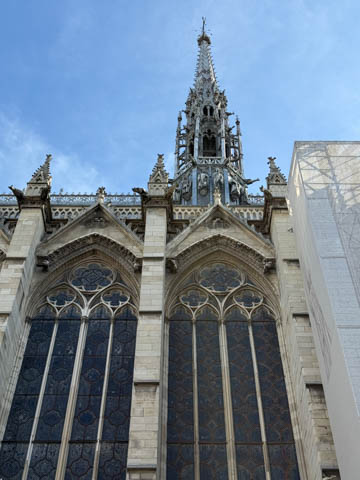
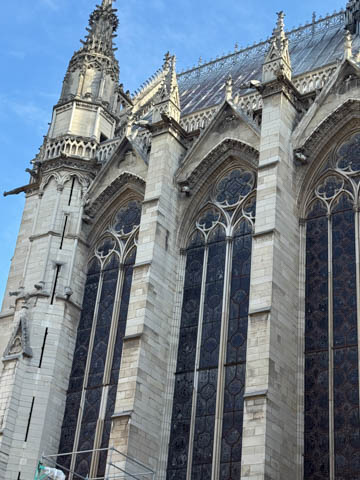
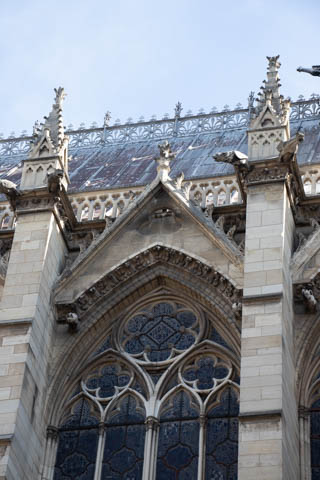
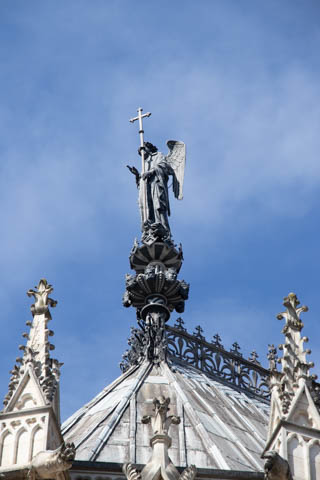
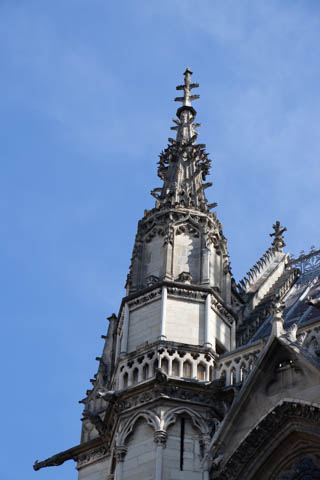
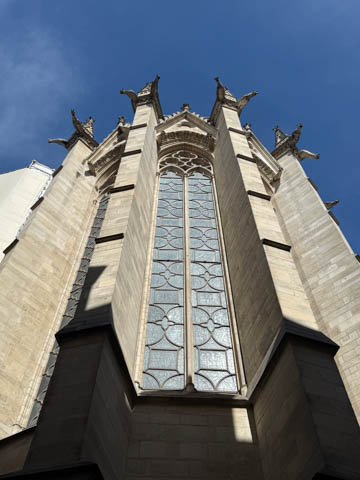
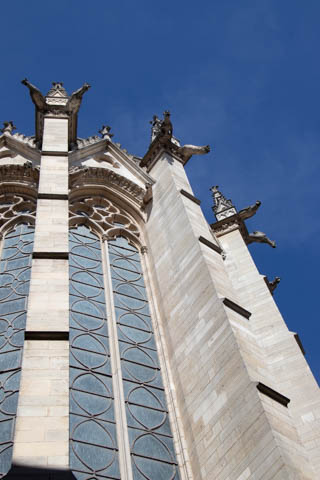
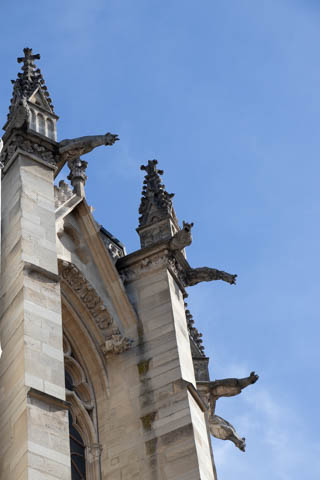
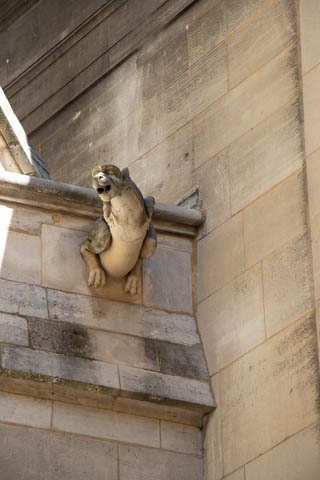
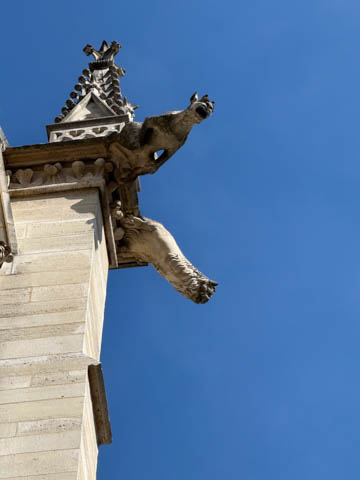
Our tickets brought us to an inner courtyard and the church, which was being refurbished on one side (and reinforced, as the flying buttresses are too narrow to fully carry the load). The courtyard was pretty small and we could only get images from pretty close to the church, which didn't offer a real nice perspective of much except the gargoyles.
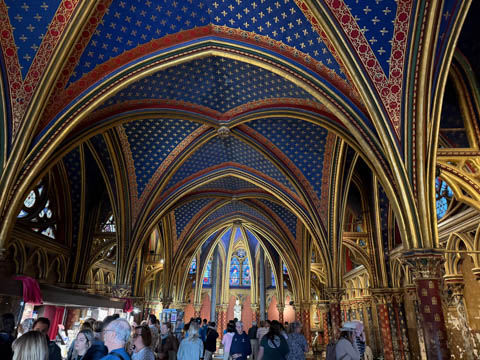
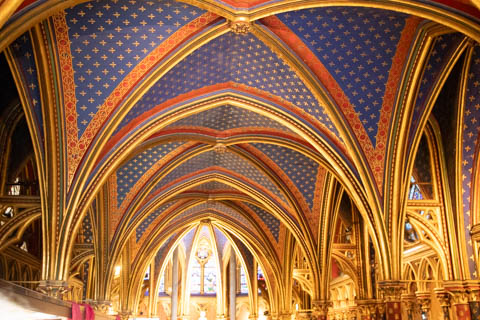
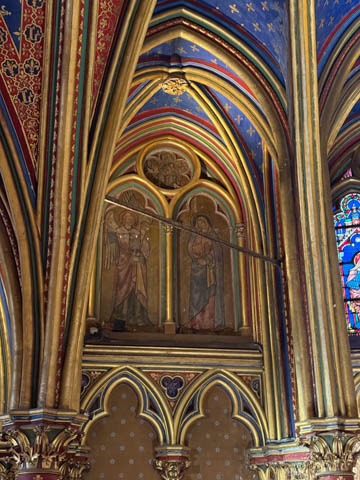
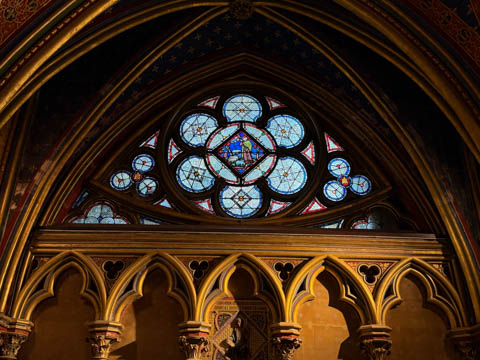
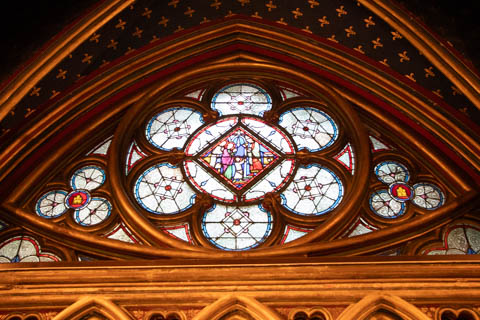
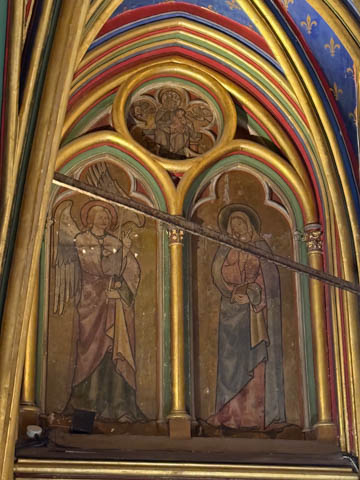
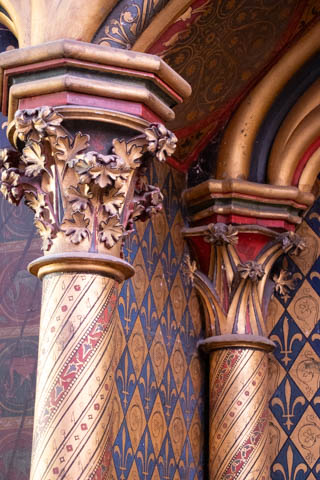
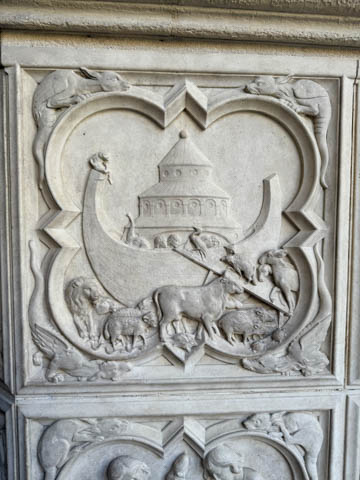
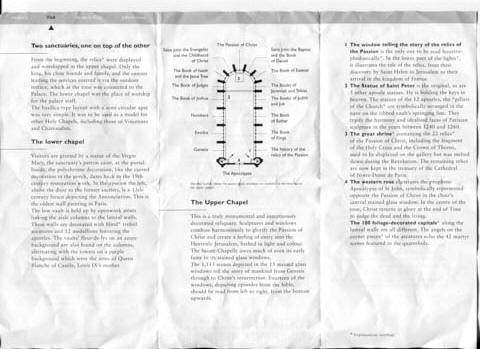
You enter the lower chapel first, which had a vaulted but lower ceiling (only 22 feet high) and was used by the non-royal members of the court. It was a bit dark inside. The decorations were created between 1854-58, and primarily feature the fleur-de-lys emblems of Louis IX along with a stylized casters, which was the coat of arms of his mother, Blanche of Castle. The one-hundred forty capitals of the columns are an important decorative feature; they are from the mid-13th century, and predate the columns of the upper chapel. They have floral decoration of acanthus leaves typical of the period. Each of the gilded leaves corresponds with a slender colonette above, which rises upward to support the vaults in the Upper Chapel. The columns are painted with alternating floral designs and the castle emblem of Castile. The red, gold and blue painting dates to the 19th century restoration. The original stained glass of the lower chapel was destroyed by a flood in 1690; it was replaced by colorless glass. The present glass depicts scenes from the life of the Virgin Mary, surrounded by grisaille glass, while the apse has more elaborate and colorful scenes from the Virgin's life. All the windows were designed by Steinheil during the 19th century restoration.
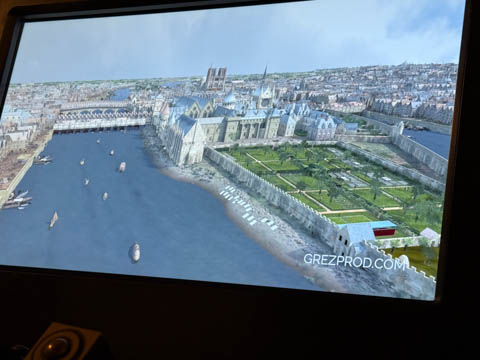
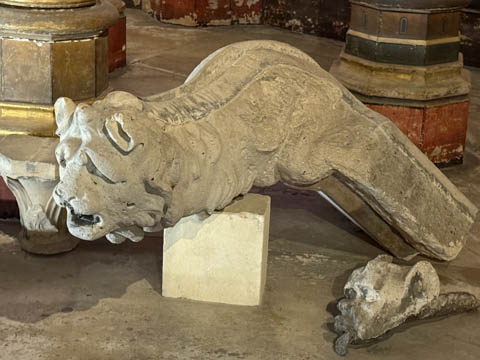
There was a short movie showing the progression of how the Ile de la Cite looked through history, along with a collection of some of the decorations which were removed for preservation.
We made our way up a very tight interior circular stairway to the Upper Chapel.
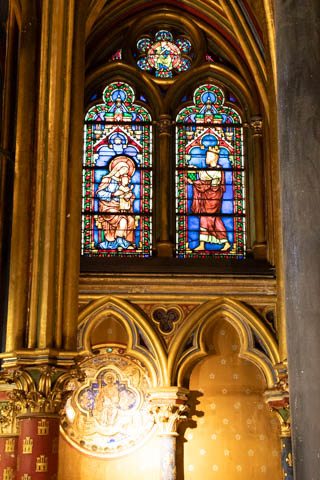
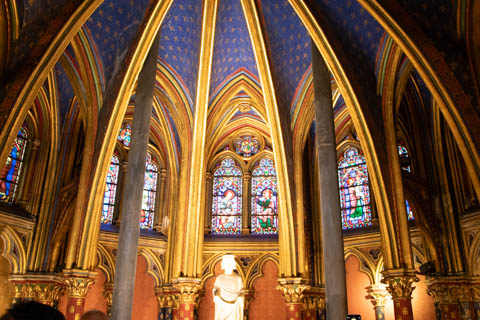
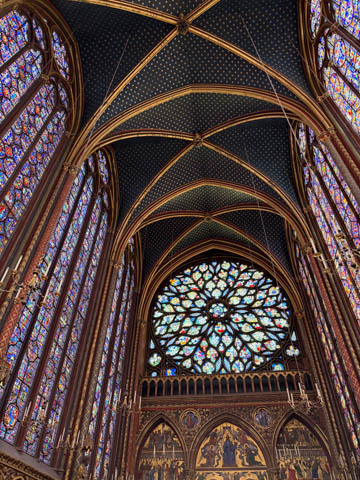
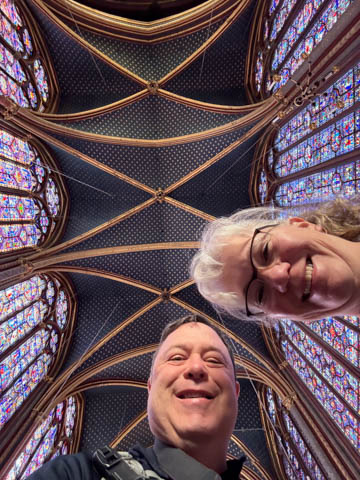
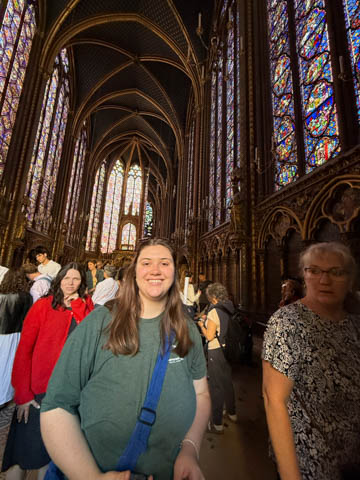
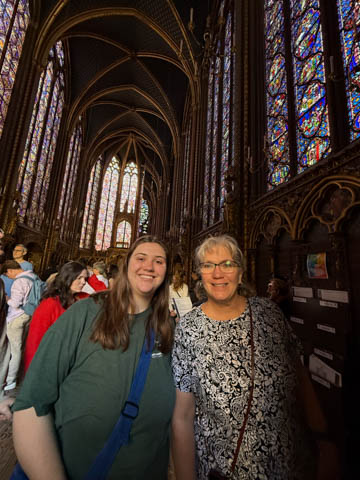
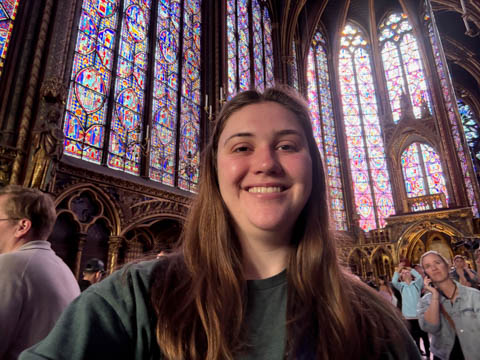
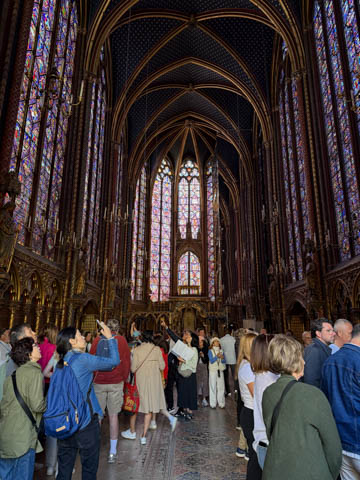
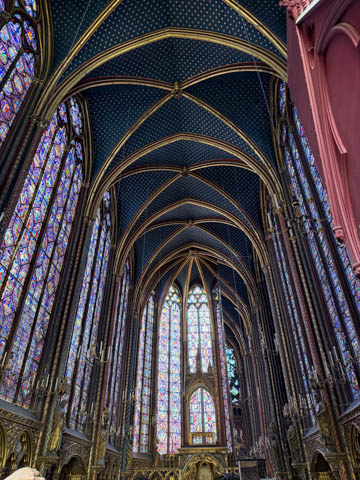
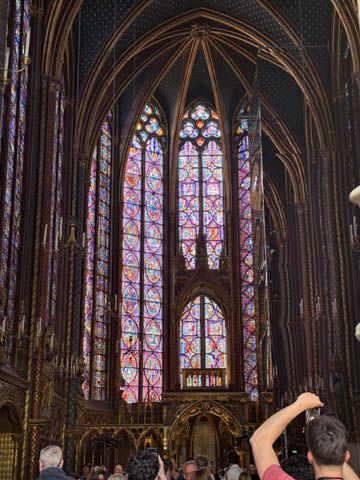
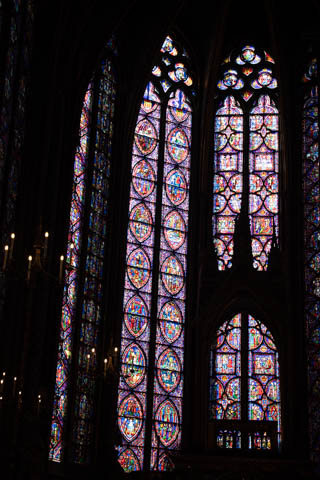
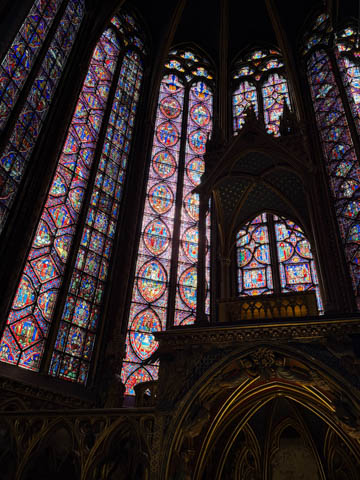
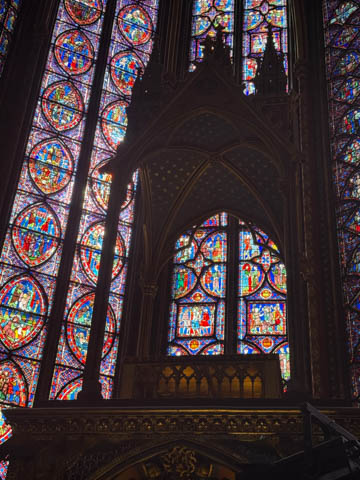
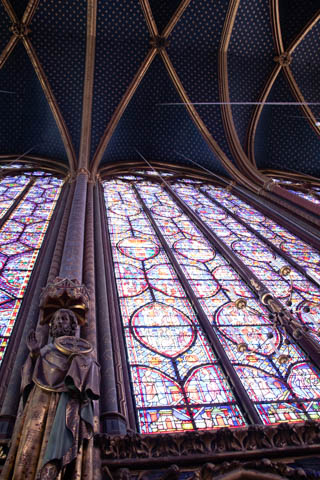
As advertised, the windows were simply stunning and instantly dominated all aspects of the view.
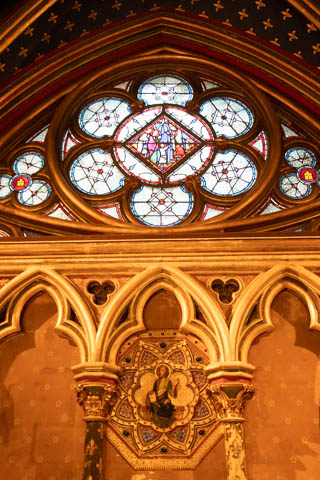
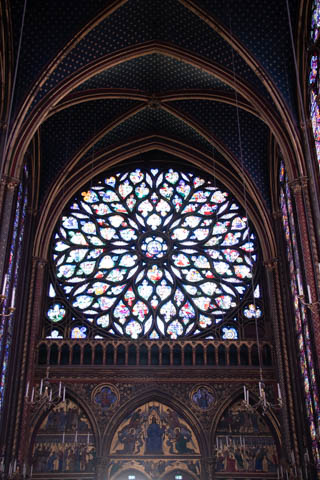
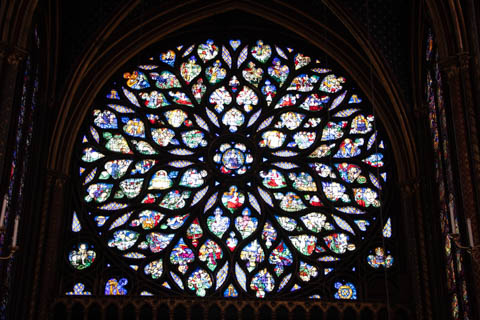
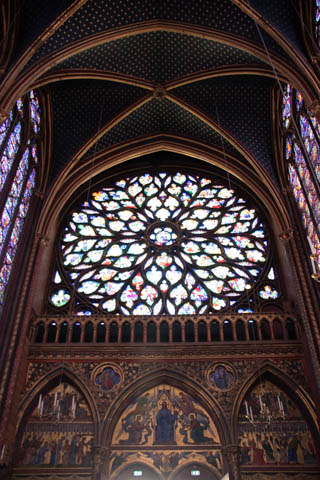
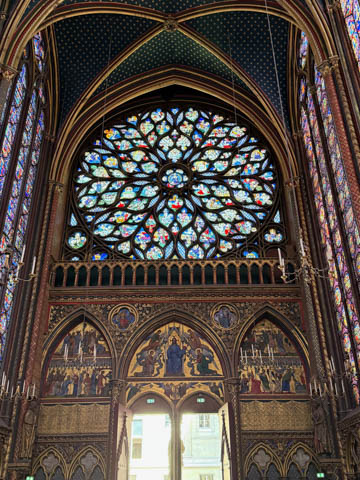
At the west end behind us was an immense and amazing rose window.
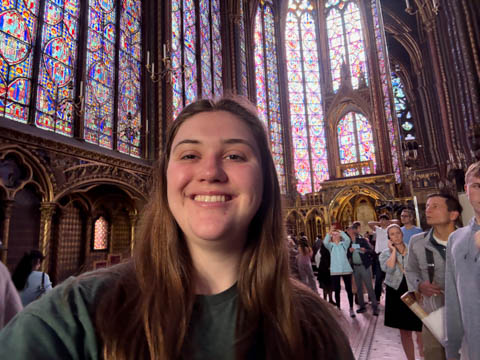
On the far east end was the Chasse, which held the sacred relics
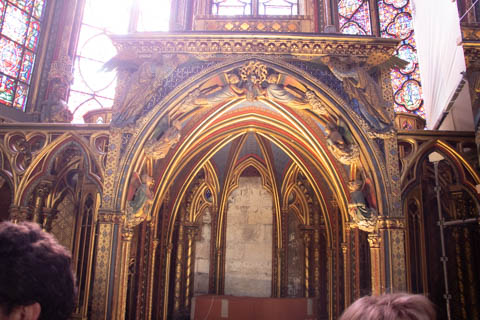
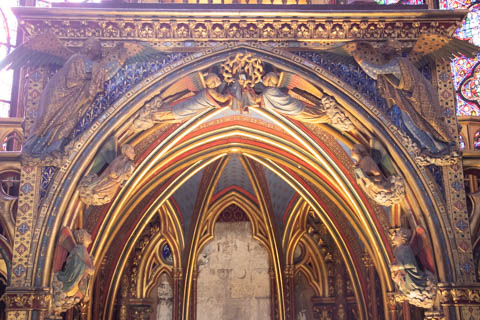
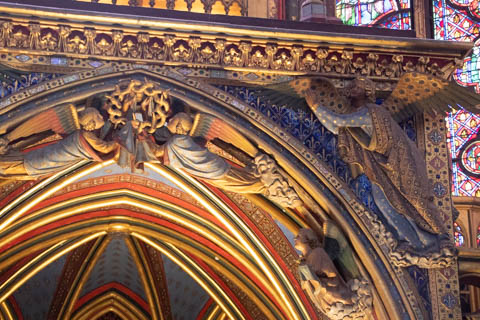
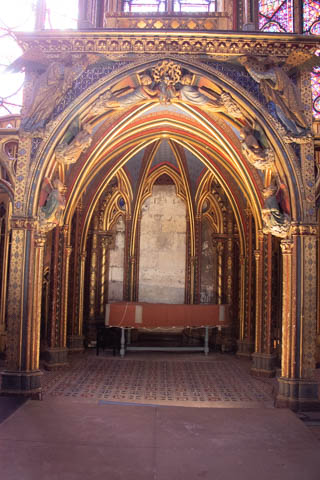
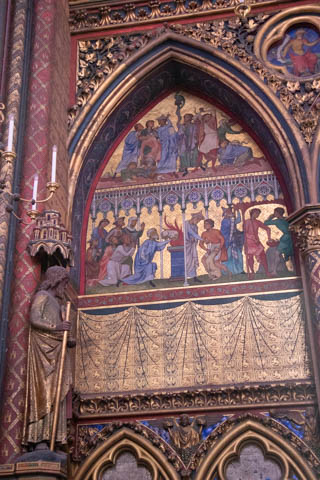
There was a neat side chapel
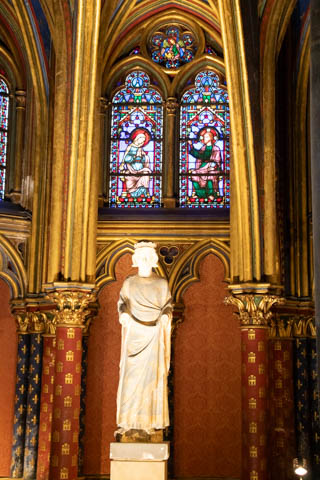
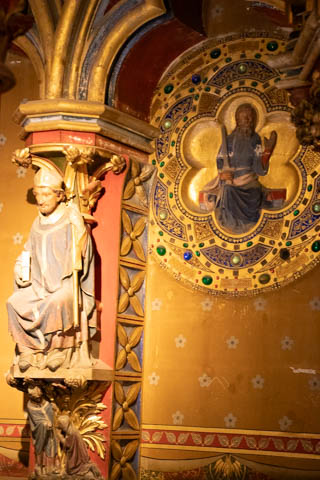
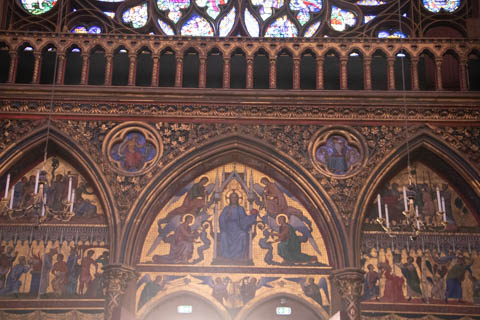
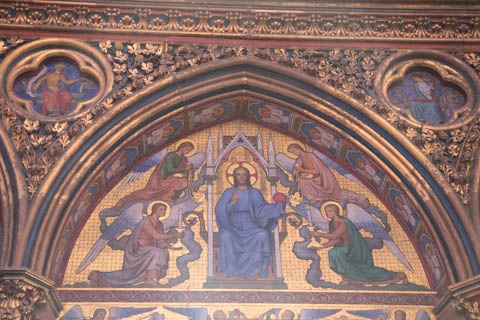
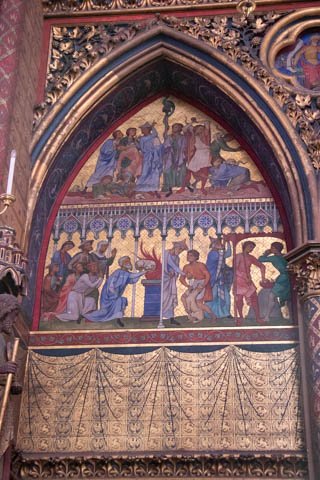
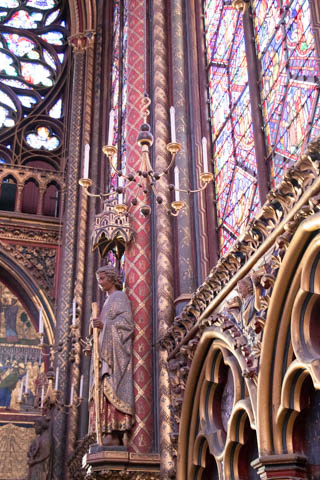
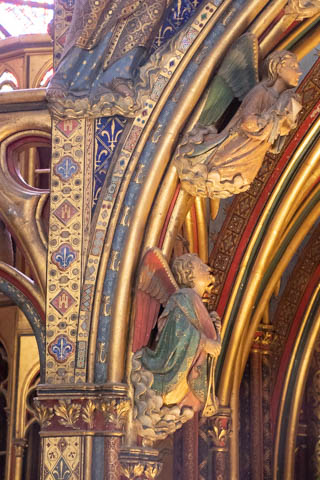
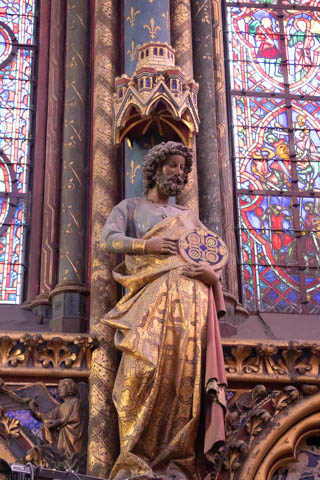
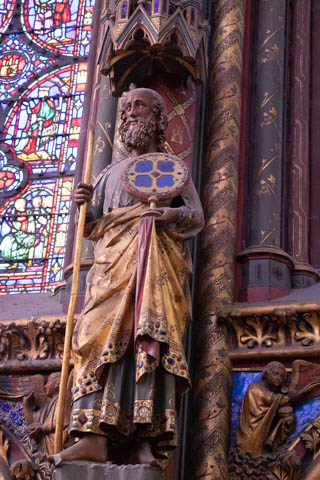
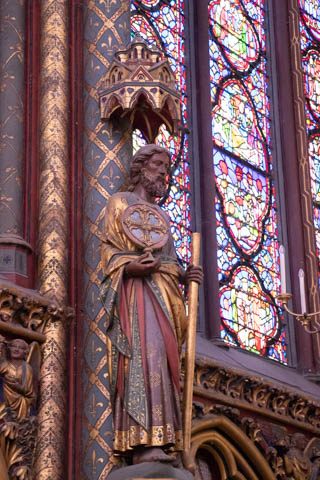
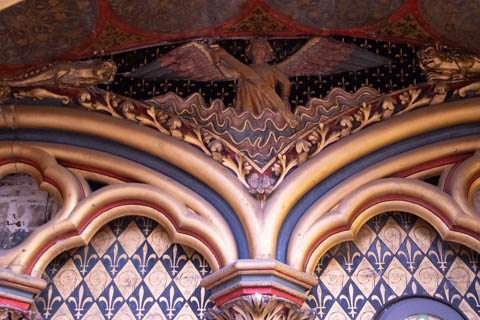
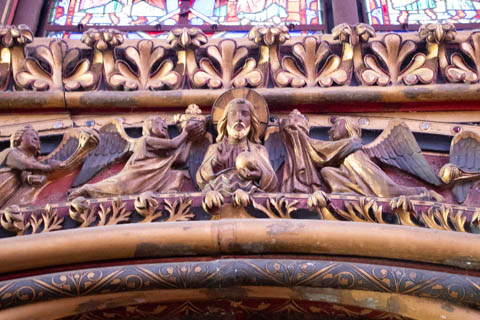
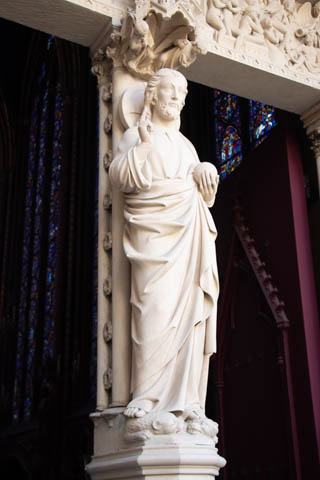
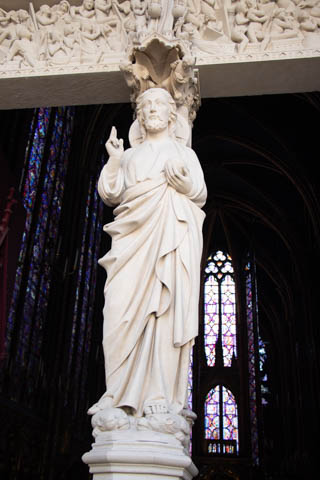
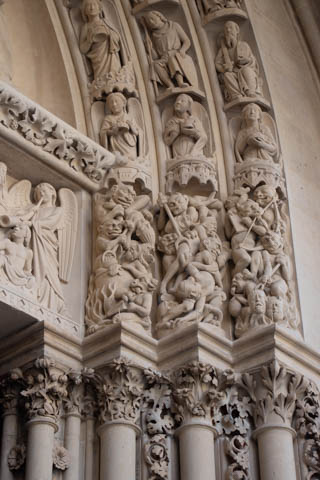
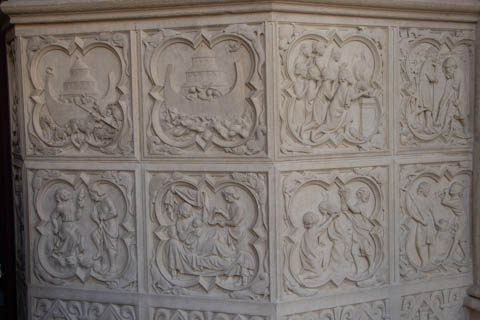
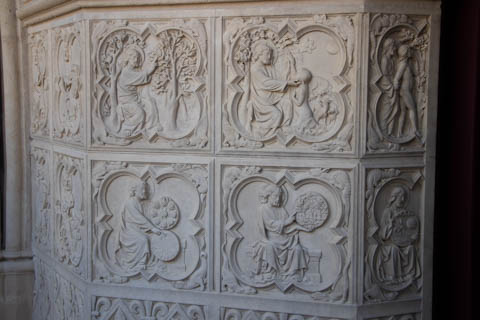
The decorations, especially the statues on the columns, we fascinating.
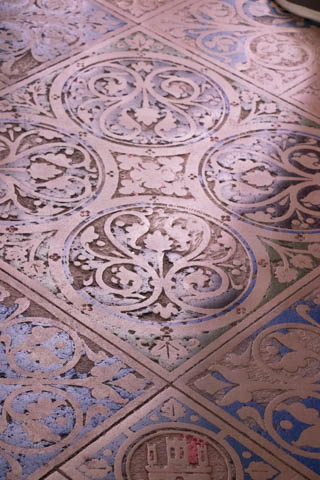
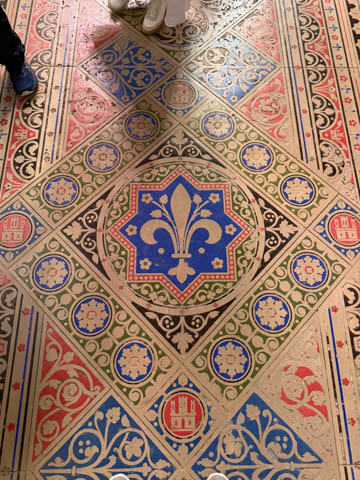
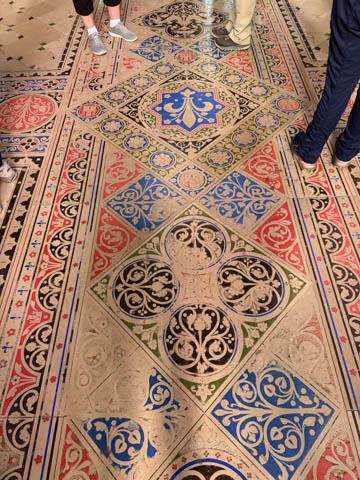
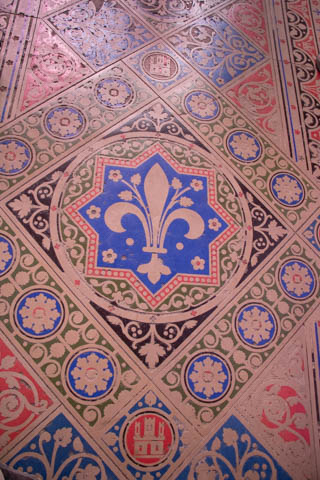
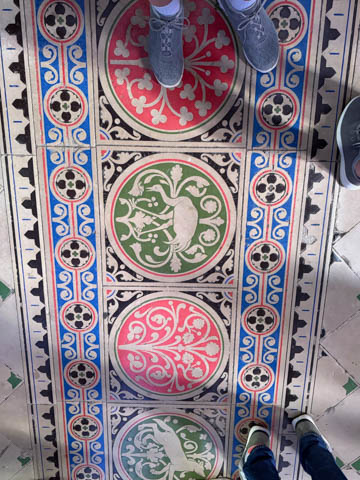
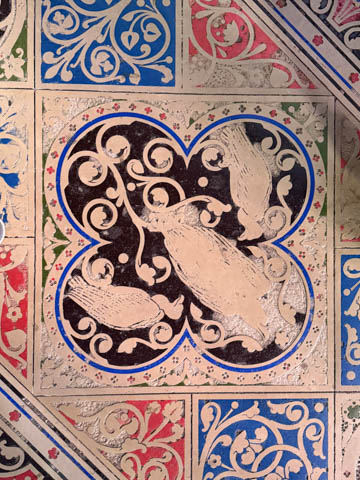
The inlaid floor was even fun with the fleur-de-lys symbol in each square.
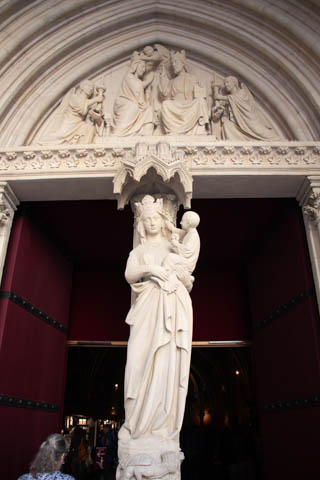
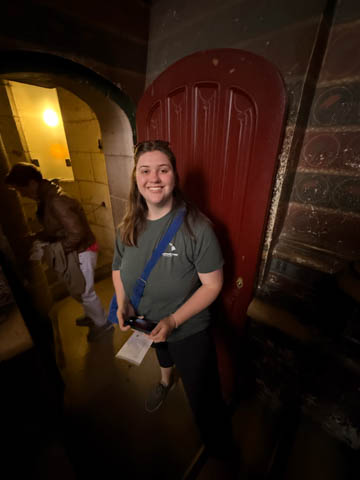
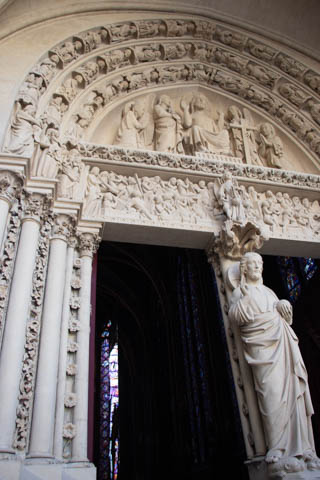
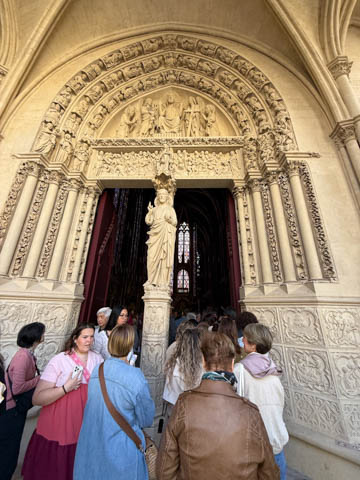
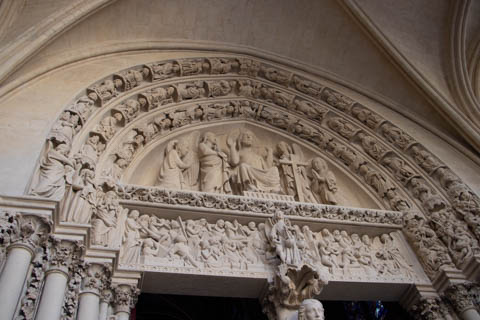
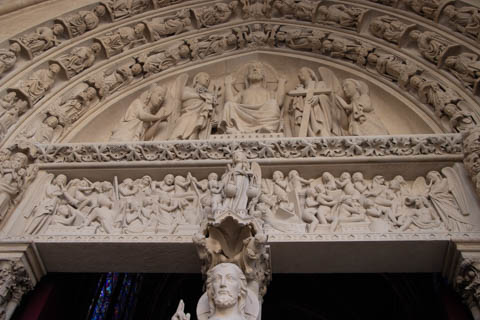
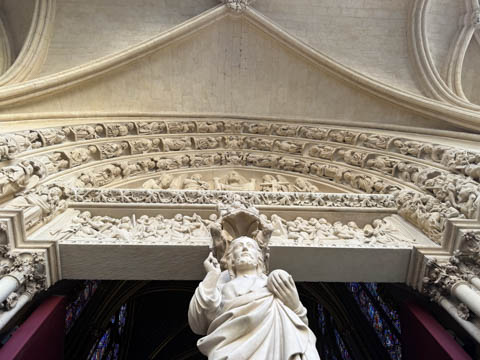
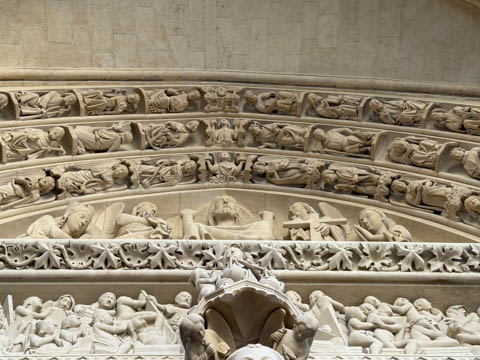
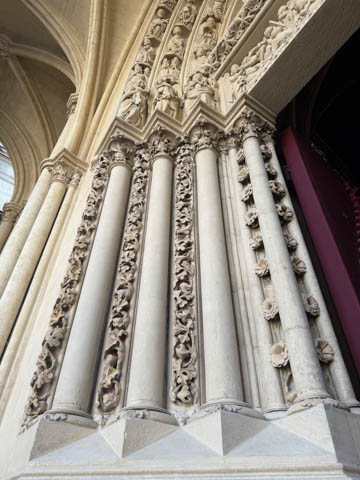
This was the entrance to the Upper Chappel, which provided direct access for the king from the royal residence.
We exited into the courtyard of La Conciergerie
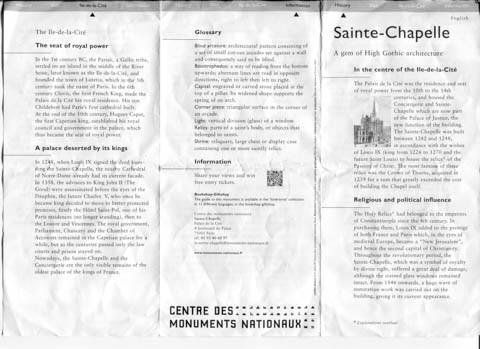
Here is the pamphlet
|
|
|