

|
|
Use these navigation links to move between the Year 2025 pages. Specific pages can be accessed at the bottom of this page
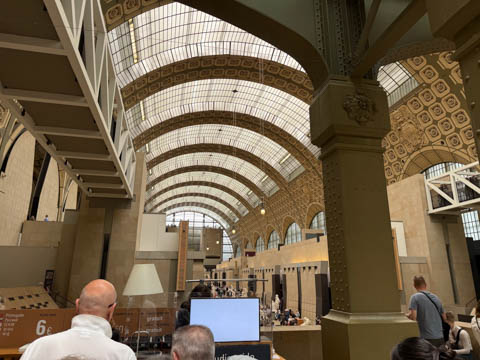
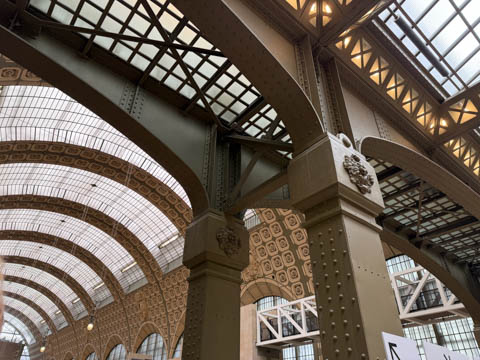
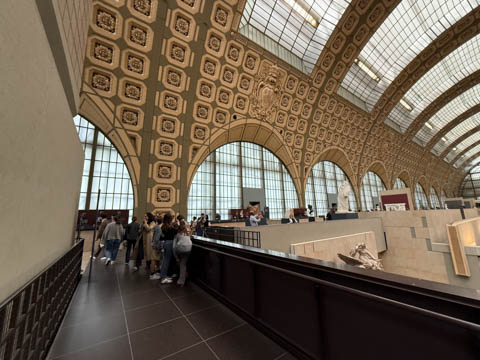
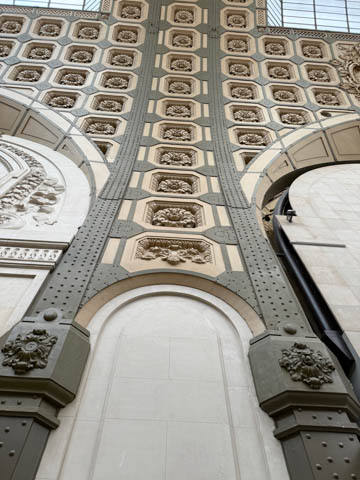
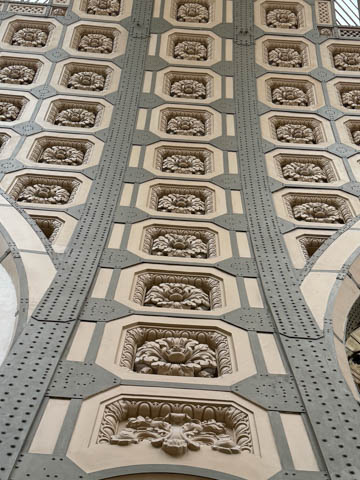
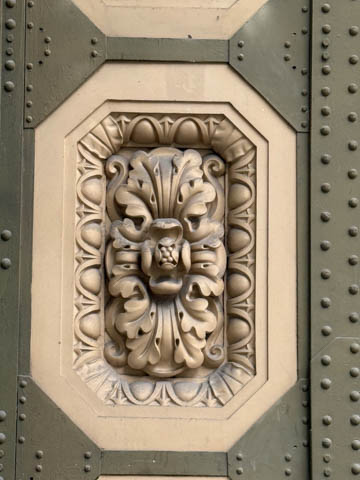
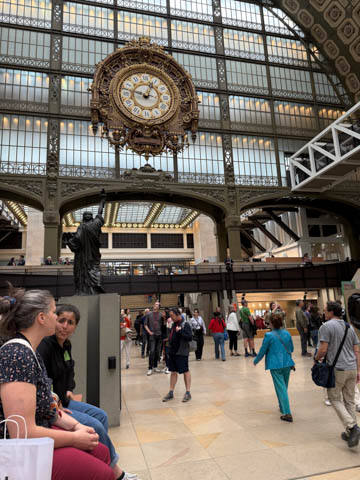
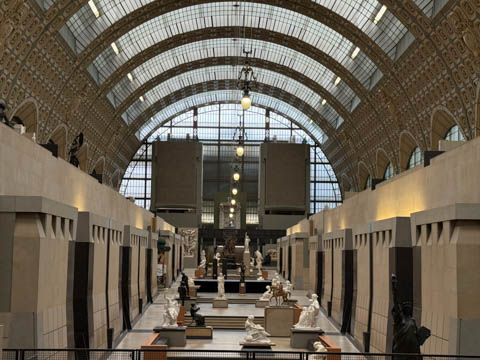
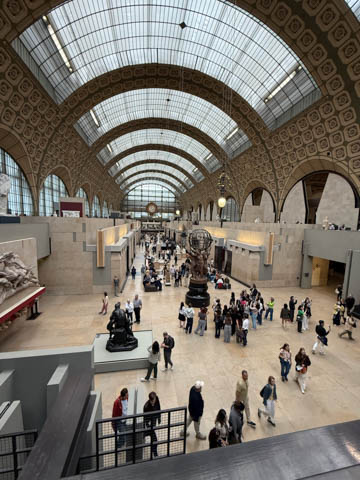
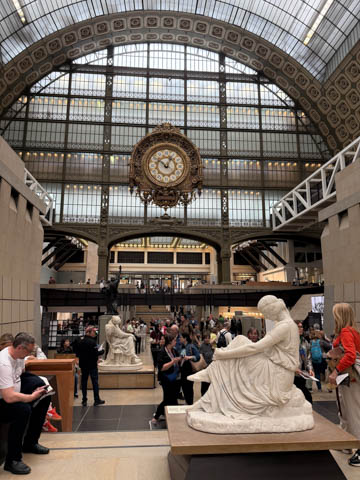
May 2025 (Part 26) France Trip: Day 12: Musee d'Orsay The Musee d'Orsay is housed in the former Gare d'Orsay, a Beaux-Arts railway station built from 1898 to 1900. The building itself was very interesting, wide open with glass ceilings and great light everywhere. The museum holds mainly French art dating from 1848 to 1914, including paintings, sculptures, furniture, and photography. It houses the largest collection of Impressionist and post-Impressionist masterpieces in the world, by painters including Berthe Morisot, Claude Monet, Édouard Manet, Degas, Renoir, Cézanne, Seurat, Sisley, Gauguin, and van Gogh. Many of these works were held at other museums prior to the museum's opening in 1986, as the Louvre collection only includes pieces prior to 1848. The d'Orsay is one of the largest art museums in Europe, and holds the largest collection of Impressionist paintings in the world. This may have become one of our favorite museums we've ever visited.
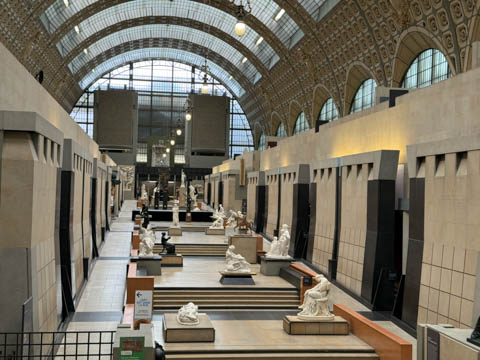
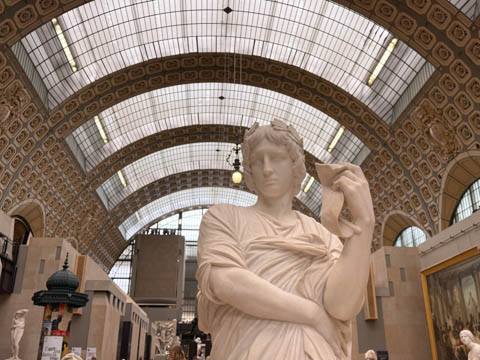
As we left essentially after closing, we managed to get a couple pictures of the nearly empty main space.
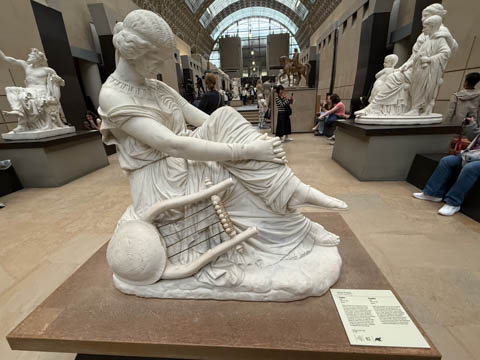
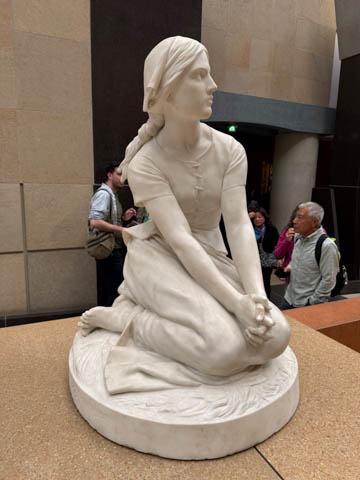
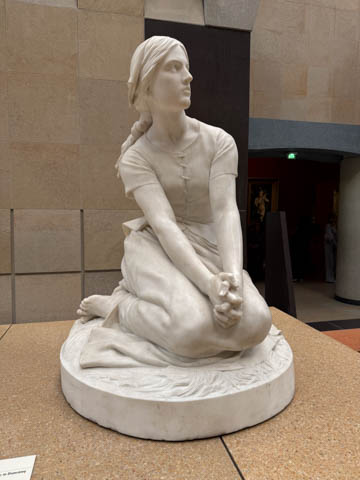
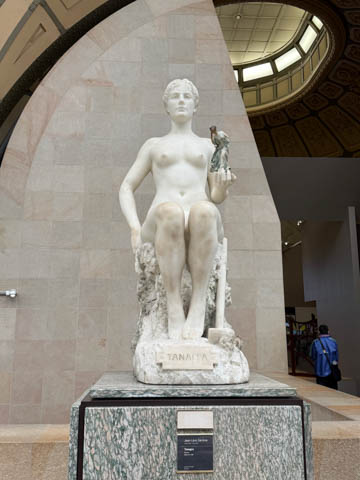
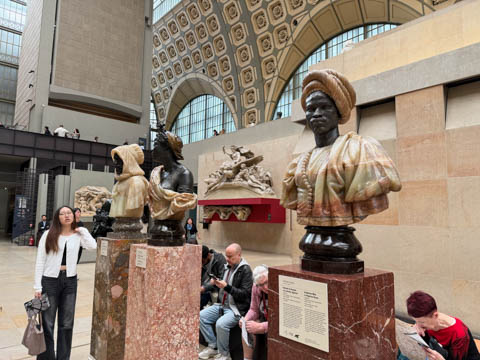
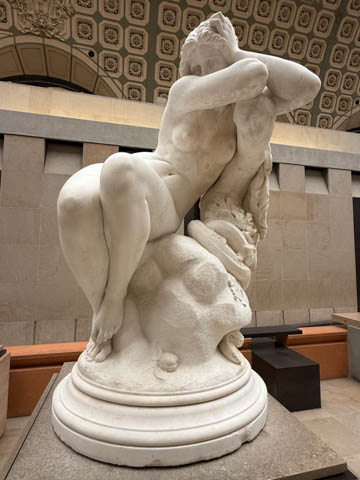
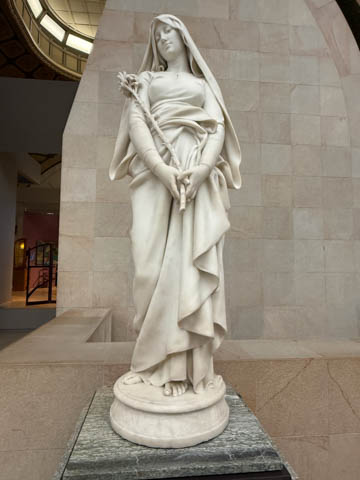
There is an impressive sculpture garden in the center of the main floor dividing the galleries with mostly marble statues, but some impressive bronzed and other medium. Here is Sapho (Sophie) by James Pradier (1852).
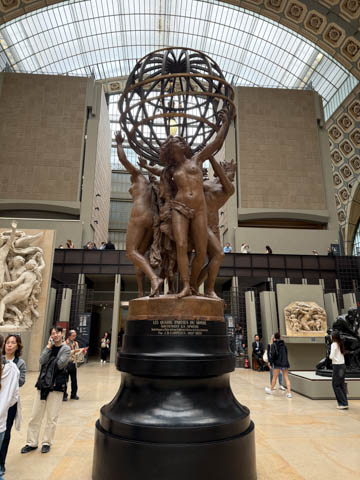
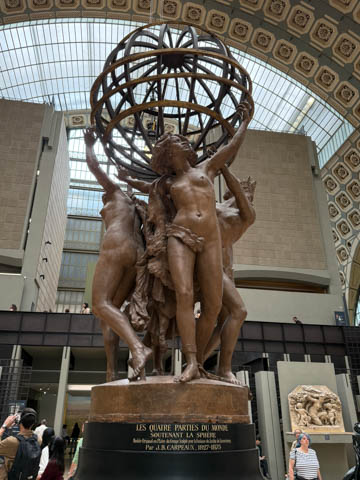
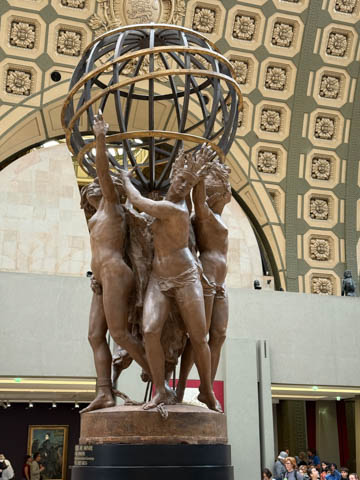
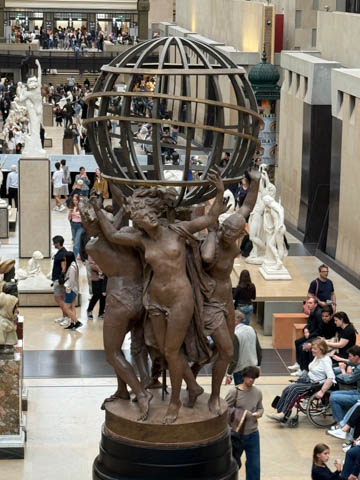
Les Quarte Parties du Monde Soutentant la Sphere (The Four Parts of the World
Supporting the Celestial Sphere) by Jean-Baptiste Carpeaux. This was
commissioned in 1867 as a fountain for the Observatory Garden. The four parts of
the world revolve around the celestial sphere, dancing a circle and spinning
around themselves showing movement. Europe barely sets foot on the ground;
Asia, with her long braid, is almost seen from behind; Africa is seen in
three-quarter view; America, wearing a feathered headdress, has her body in
profile and her face full-frontal.
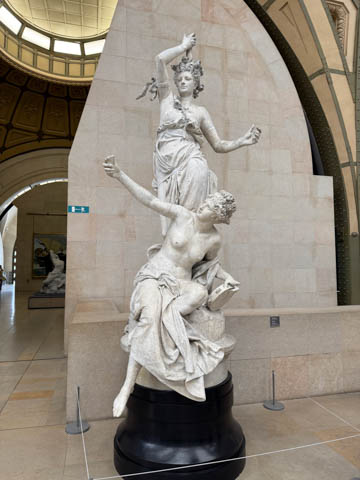
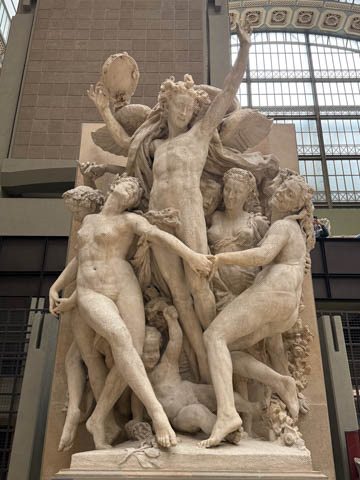
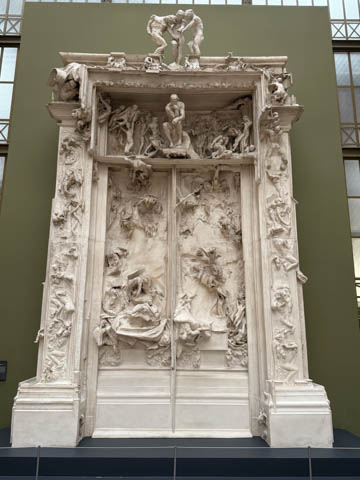
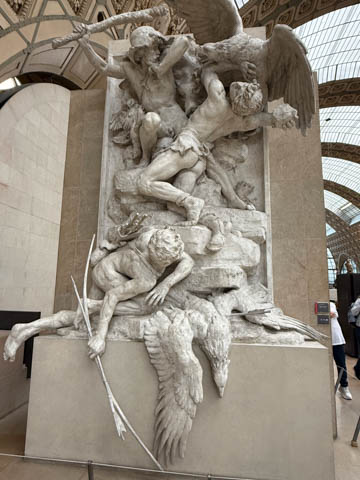
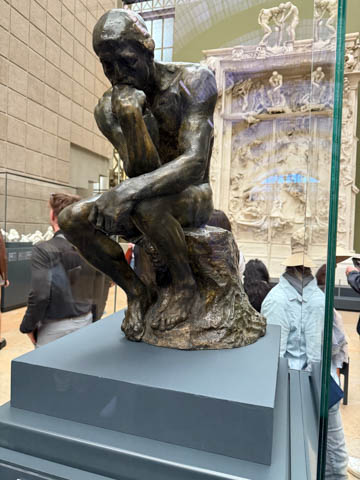
On the left below is Dance (1875) also by Jean-Baptiste Carpeaux. The sculptor's main concern was to convey the feeling of movement, and this he achieved through a dual momentum of circular and vertical motion. The leaping spirit dominates the group, urging on the circle of bacchantes, in unbalanced postures. The public was shocked by the realism of the female nudes, which they judged unseemly; indeed, a bottle of ink was thrown against the sculpture and its removal was requested. However, the war of 1870, followed by the death of Carpeaux, put an end to the controversy. The next sculpture below is The Gates of Hell by Auguste Rodin (1880 - 1917). In 1888, the State commissioned Rodin to design monumental doors for the entrance to the museum. They were to be decorated with eleven low relief's representing Dante's Divine Comedy. Rodin took his inspiration from the famous doors that Ghiberti had made for the baptistery in Florence in the fifteenth century. Three years later, he was satisfied with his initial model, but the plans for the museum were abandoned. The discarded doors became a creative reservoir for Rodin, providing many groups of figures which were finally detached from the whole, such as The Thinker and The Kiss. The Gates of Hell, which only a few privileged critics had been allowed to see, then took on symbolic value: of Rodin's boundless creative genius for some, of his inability to finish anything, for others. It was not exhibited until the Great Exhibition of 1900 and even then in an unfinished state. On the pier, The Thinker (Dante himself) is on the brink of the abyss. The plaster model in the Musée d'Orsay dates from 1917. The Gates of Hell finally stand on the site for which they were commissioned although of course they do not function as doors.
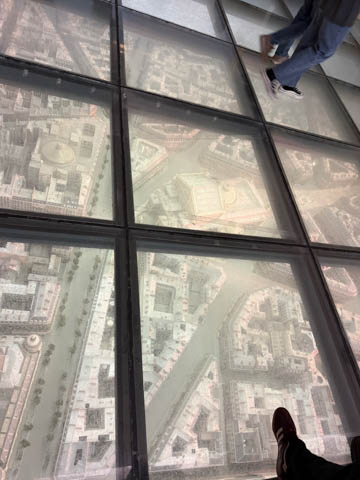
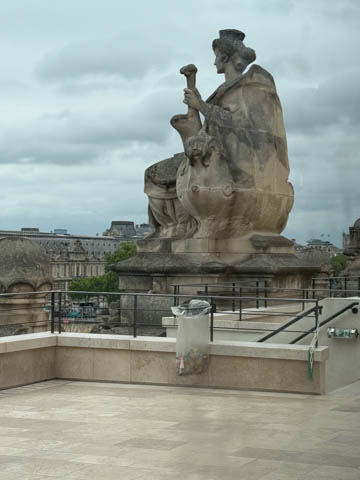
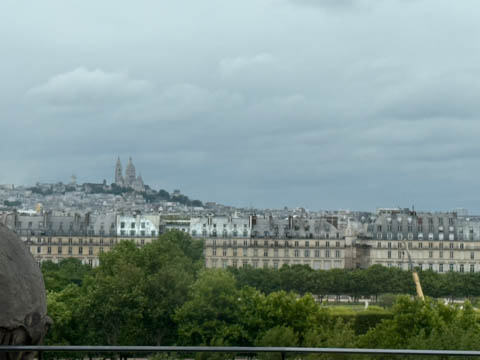
Fun view from the roof, looking north across the Seine to the Louvre and Montmarte.
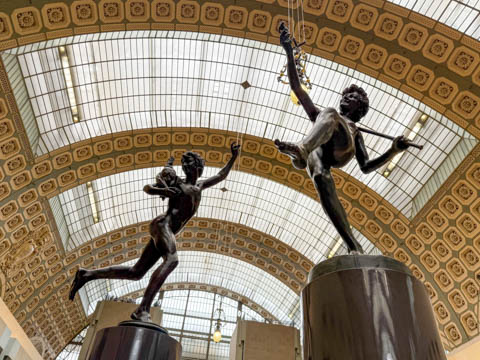
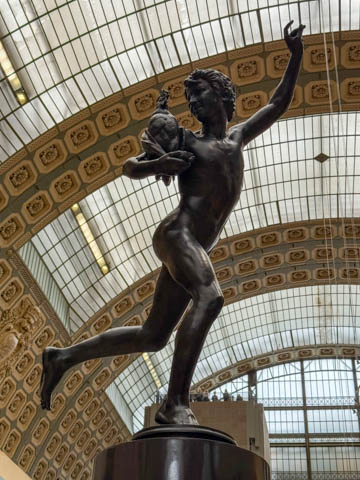
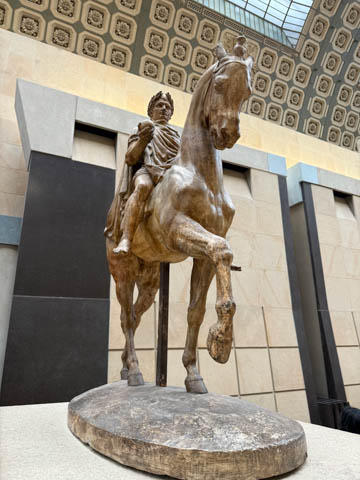
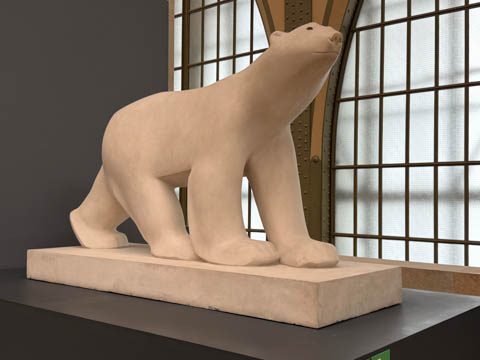
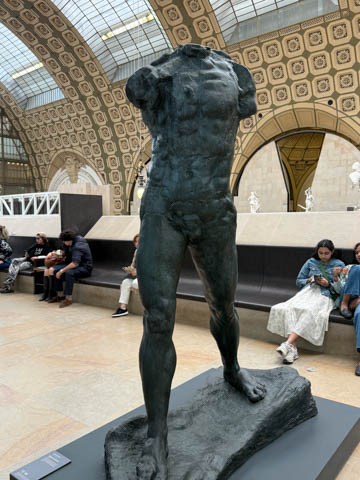
In addition to the Gates of Hell, they had The Thinker (1904) and The Walking Man (1905) by Rodin. In the middle is Ours Blanc (white bear) by François Pompon. In the white bear, he stripped away the trappings and details, abandoning any realistic rendering and focused on "the very essence of the animal".
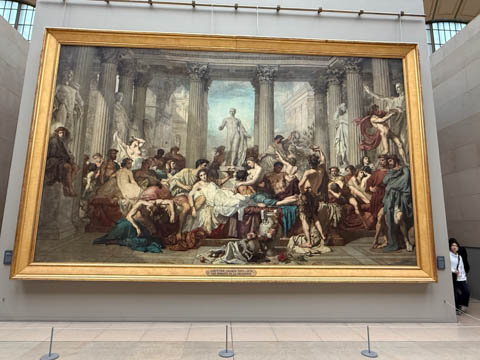
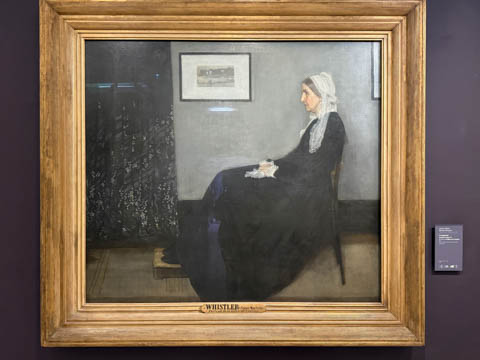
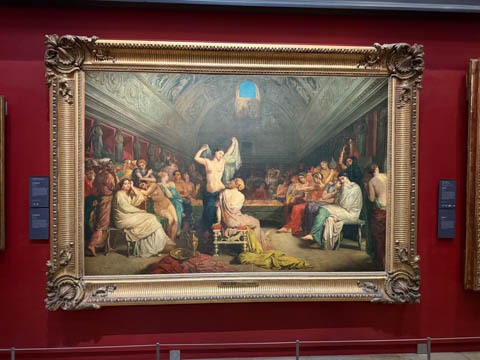
This painting by Thomas Couture, titled Les Romains de la Decadence (1847) (Romans in their Decadence), was painted just before the Revolution of 1848). The enormous painting took three years to complete. The work is a history painting, regarded as the noblest genre during the 19th century: it therefore had to represent human behavior and convey a moral message. This was explained by Couture himself, who quoted two lines from the Roman poet Juvenal, (c. 55-c.140 AD) in the catalogue for the 1847 Salon where the painting was exhibited: "Crueller than war, vice fell upon Rome and avenged the conquered world". Couture was alluding to French society of his time. A Jacobin, Republican and anticlerical, he criticized the moral decadence of France under the July monarchy, the ruling class of which had been discredited by a series of scandals. This painting is therefore a "realist allegory", and the art critics of 1847 were quick to see in these Romans "The French of the Decadence". It depicts the inebriated and exhausted aftermath of a large orgy, contrasting the weakness and degeneracy of its participants against the statues of gods or emperors proudly displayed around the classical Roman architecture of the painting's setting. It was one of the most critically successful works to be exhibited at the salon that year. However, Napoleon III considered the painting's message an attack on the republic and brutally condemned the work. The the right is James Whistler's Arrangement in Grey and Black No. 1, also called Portrait of the Artist's Mother or simply Whistler's Mother (1871). The painting, bought by the French state in 1891, is now one of the most famous works by an American artist outside the United States. The deliberately sparse composition and coloring helps emphasize the subjects mood and portrayal. The work, in its linear austerity and chromatic rigor dominated by neutral tones, was a continuation of Whistler's experimentation with prints, to which View of the Thames hanging on the wall is an allusion.
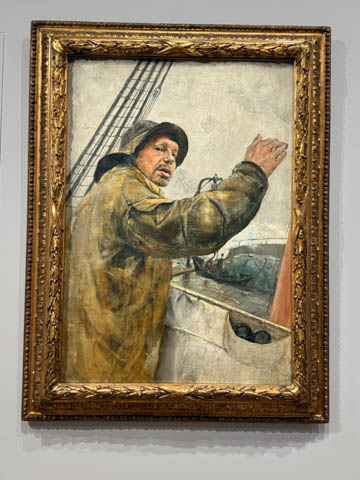
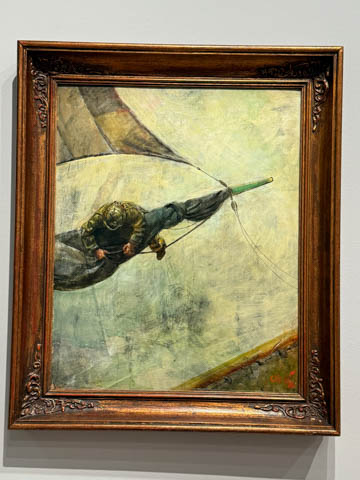
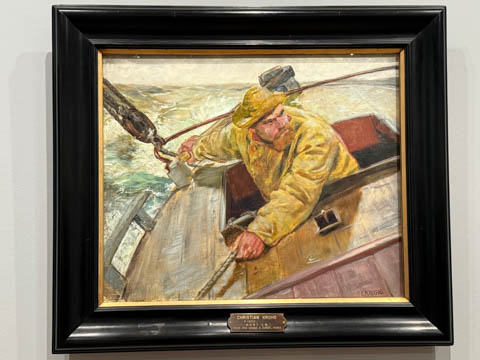
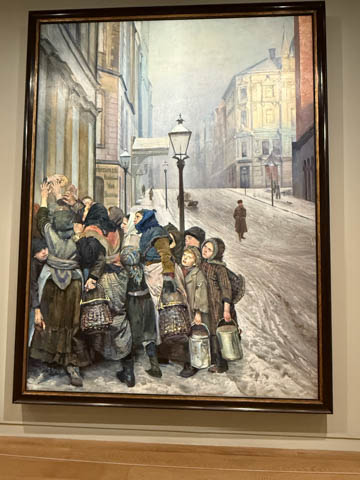
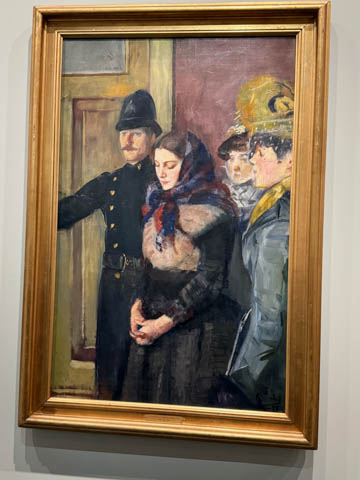
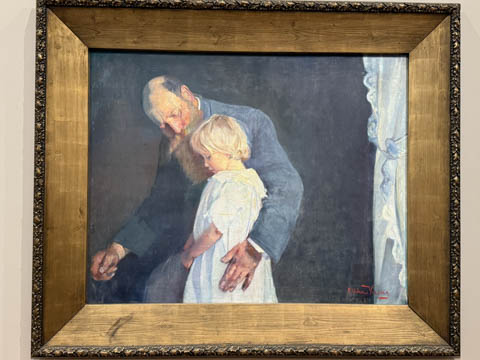
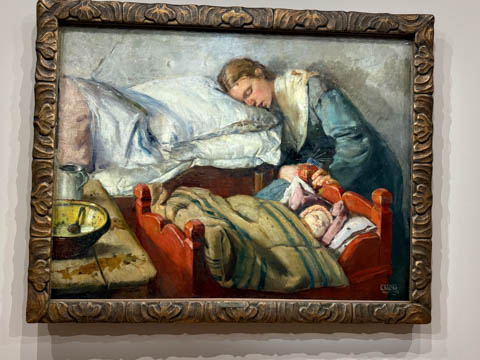
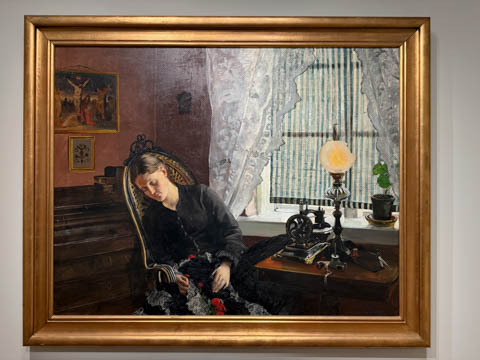
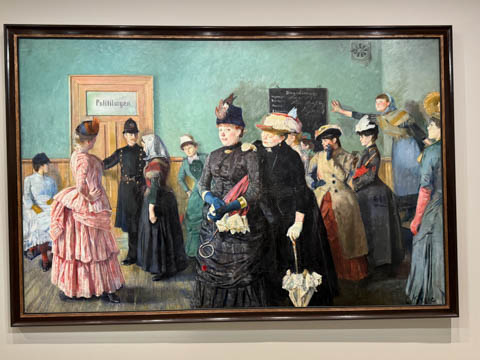
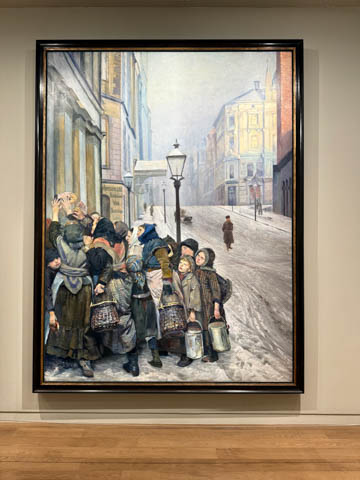
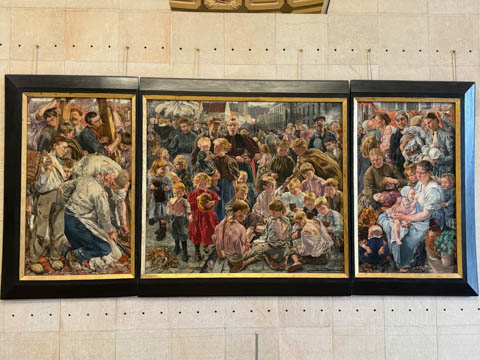
They were hosting an exhibition of Christian Krohg (1852-1925) works called The People of the North. Krohg was a Norwegian painter who sought to transposed the major social debates of his time into his works. His paintings pay homage to the most vulnerable: from fishermen struggling against the elements to the wretched folk and the prostitutes of the big cities. It was to the latter that he dedicated his masterpiece Albertine, an unprecedented fusion of art and literature. An admirer of the realists, the impressionists and Manet, and teacher to Edvard Munch, he fully embodied the pictorial trends of his time, making his paintings a good fit for the d'Orsay.
The last painting below by Krohg is Albertine in the Police Doctor's Waiting Room (1887), which is regarded as Krohg's principal work as a social painter. The painting touched upon the taboo subject of sexual life, and led to a heated debate among his contemporaries. The format of the painting is unusually large, the figures in it being portrayed at full scale. The painting depicts a scene in a police doctor's waiting-room. "Albertine" is the next person who will enter the examination room. She is dressed in a simple costume, in contrast to the other women in the room, who are dolled up in colorful dresses, typical of the prostitutes of the period.
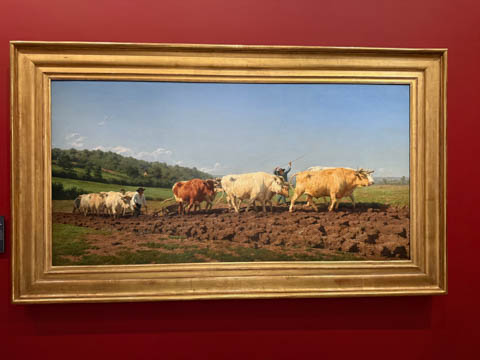
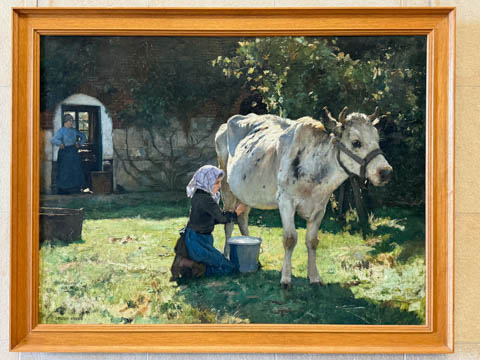
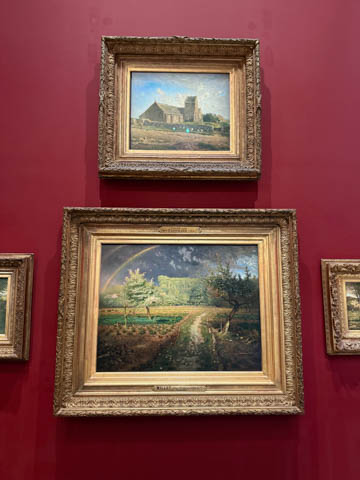
The early 1830s saw increasingly diverse art movements, with one being a renewed interest in landscape painting, and several paintings entered the state collection. Rosa Bonheur, for example, who exploded prejudices about women artists, received a state commission in 1848 to paint Labourage nivernais [Ploughing in the Nivernais] (on the left below).
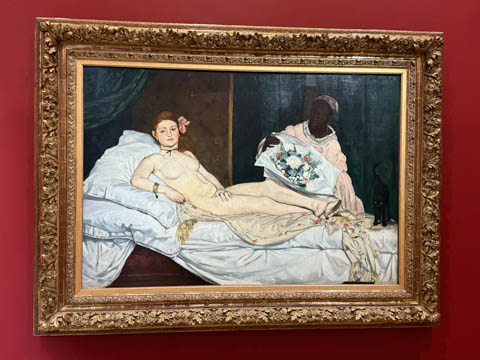
When Édouard Manet died, in 1889, his Olympia (left below), which had caused considerable controversy when shown at the 1865 Salon, remained in the artist’s studio, unsold. At this point, some rich Americans decided to buy some of Manet’s works, including Olympia. With the help of the American artist John Sargent, Monet launched a public subscription scheme to buy the painting from Manet’s widow. In 1890, this resulted in Olympia being gifted to the state. For Monet, it was about finally getting recognition for the considerable place held by the artist in “the history of our century.” An intervention by Monet’s friend George Clemenceau led to the picture being exhibited in the Louvre in 1907. In Olympia, Manet reinvents the traditional theme of the female nude through the play of frank and uncompromising painting. The subject as much as the pictorial language explain the scandal that the work provoked at the Salon of 1865. Even if Manet multiplies the formal and iconographic references: Titian's Venus of Urbino , Goya's Maja desnuda and the theme of the odalisque with the black slave treated by Ingres in particular, he translates pictorially above all the coldness and the prosaism of a very contemporary subject. The Venus has become a prostitute who challenges the spectator with her gaze.
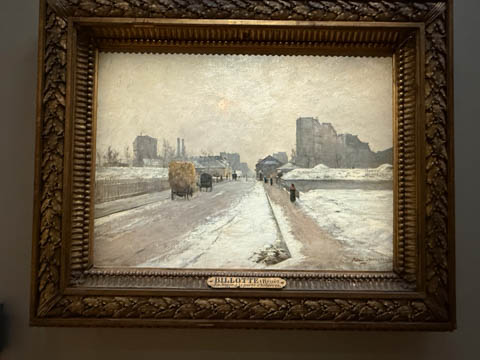
Some winter scenes. To the left is Paysage; neige à la porte d'Asnières by Rene Billotte (Landscape; snow at the Porte d'Asnières).
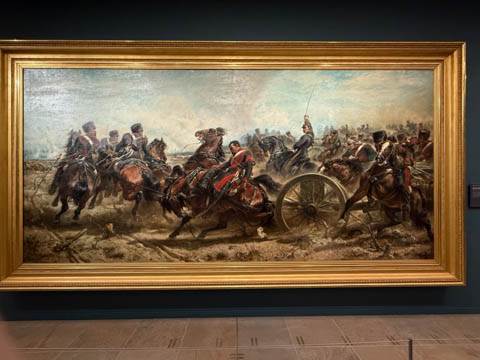
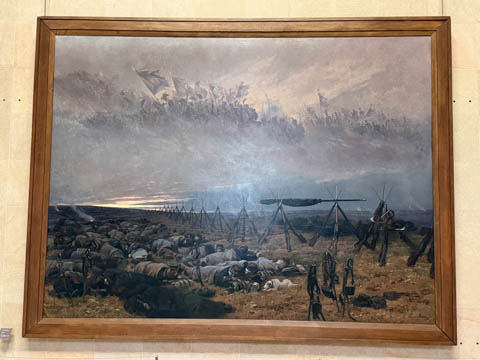
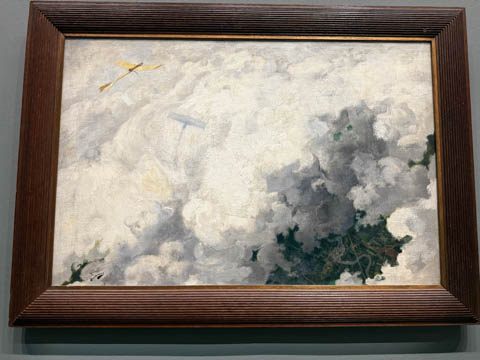
Some subjects of war. Found this image of an old airplane with a shadow on the clouds fun, certainly a lighter them than the row of dead soldiers in the middle image.
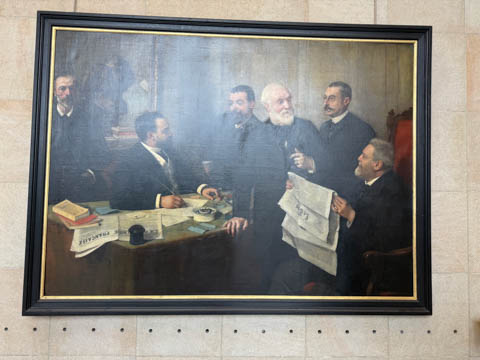
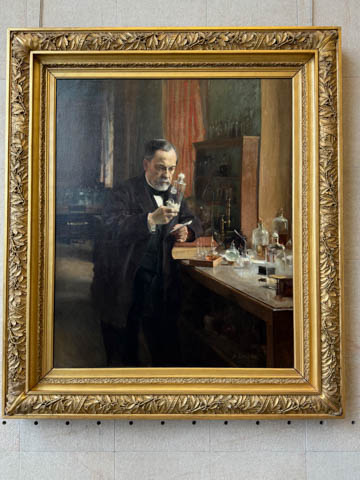
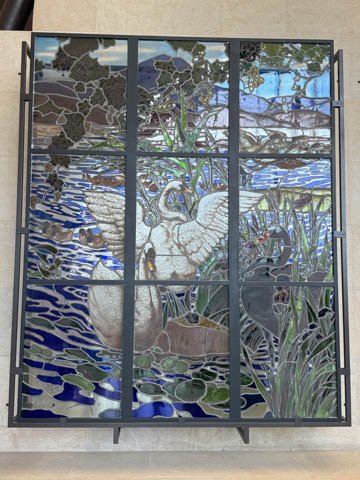
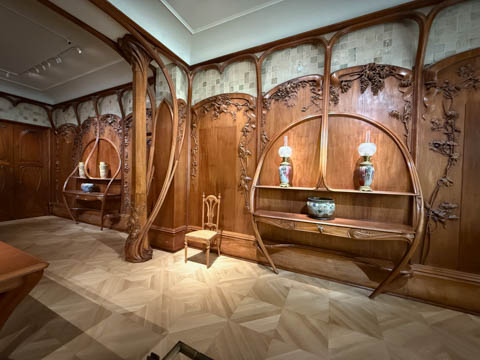
To the right is a portrait of Louis Pasteur (1885) by Albert Edelfelt. This portrait of one of the most famous scientists of the time was very popular. Pasteur is shown in his laboratory in the rue d'Ulm, in the midst of his experimental apparatus. He is holding a jar containing the spinal cord of a rabbit infected with rabies which he used to develop a vaccine against rabies. As a result of this discovery, he was hailed as a benefactor of mankind. Loved this intricate stained glass window along with the amazing wooden dining room.
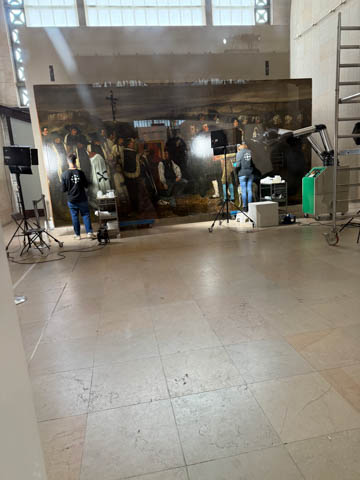
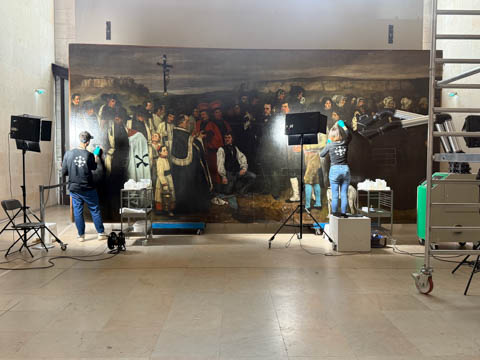
There was a large piece being restored
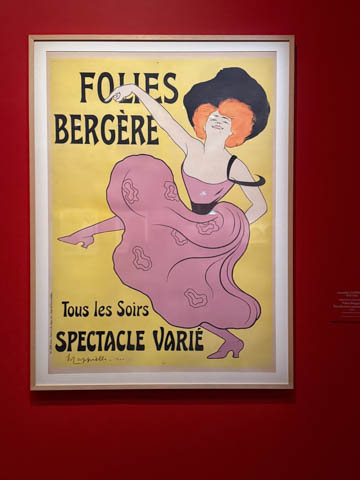
Some more popular art.
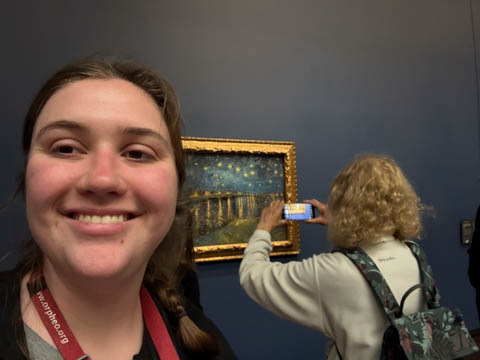
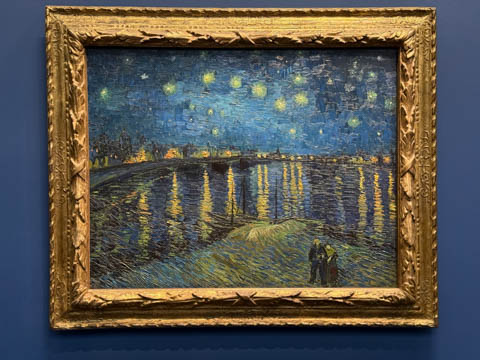
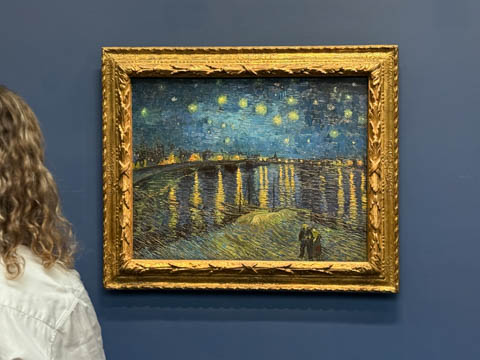
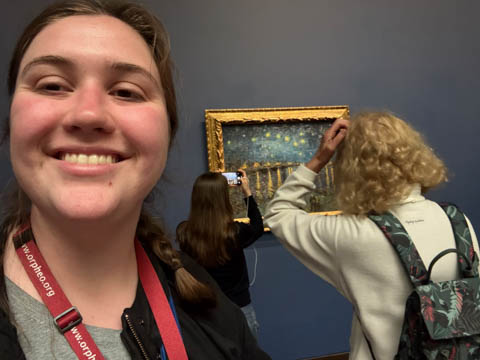
The Impressionist galleries were upstairs on the fifth floor. Wish we had made our way upstairs earlier, as we were rushed for time a bit (and pressed by the crowds that materialized in these galleries as many groups headed only here) The first gallery was filled with Van Gogh's, including Starry Night (1889), which depicts the view from the east-facing window of his asylum room at Saint-Rémy-de-Provence, just before sunrise, with the addition of an imaginary village.
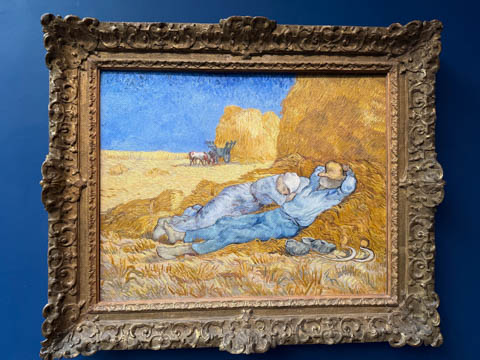
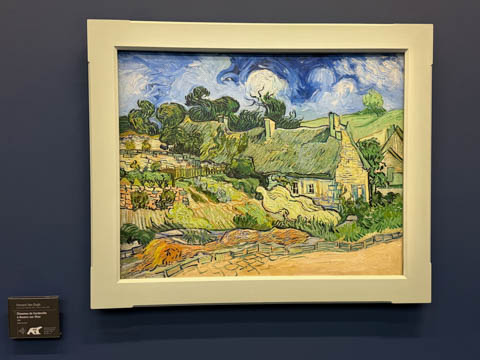
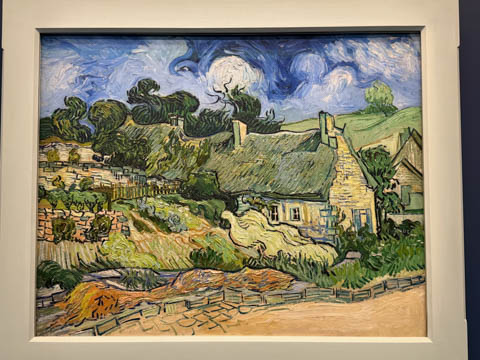
Here is The siesta (after Millet) (1890) and Thatched Cottages at Cordeville (1890)
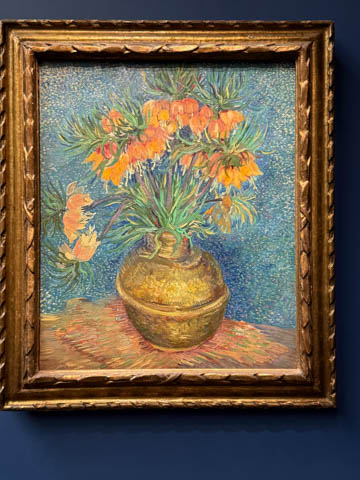
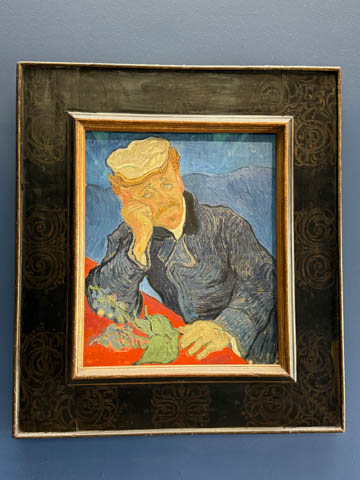
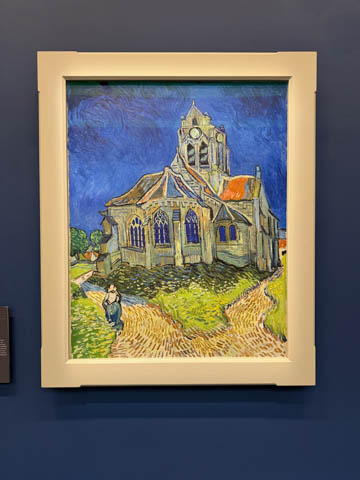
Below are Imperial Fritillaries in a Copper Vase (1887), a portrait of Dr Paul Gachet (1890), and The Church in Auvers-sur-Oise, View from the Chevet (1890). The last two were painted in the frenzy of painting made in Auvers sur Oise before he died.
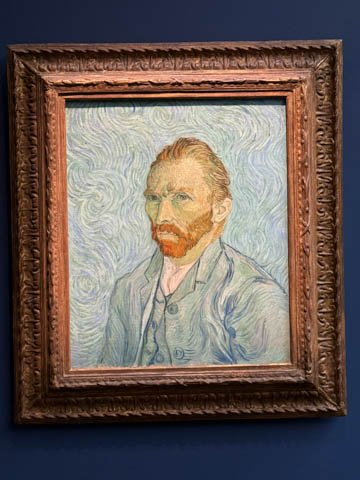
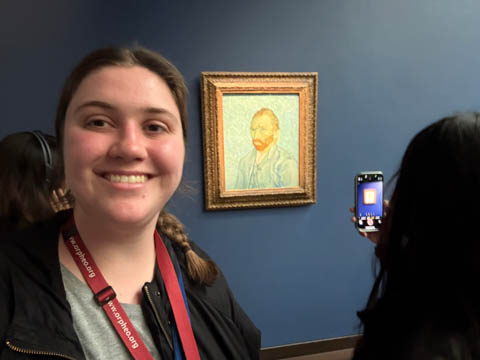
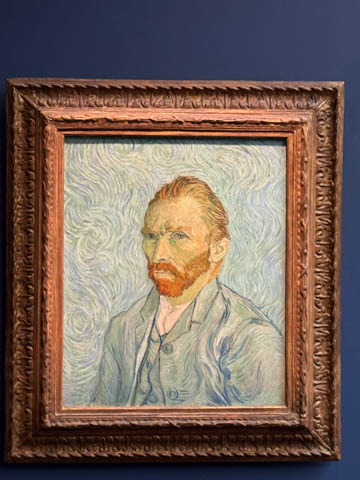
and finally Self-Portrait (1889).
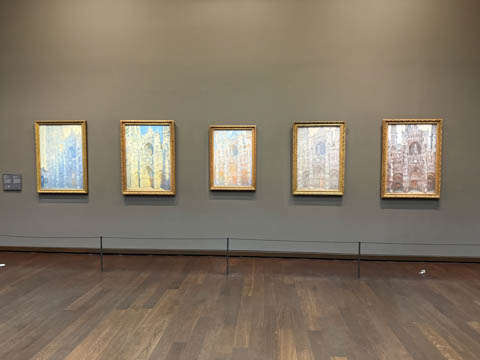
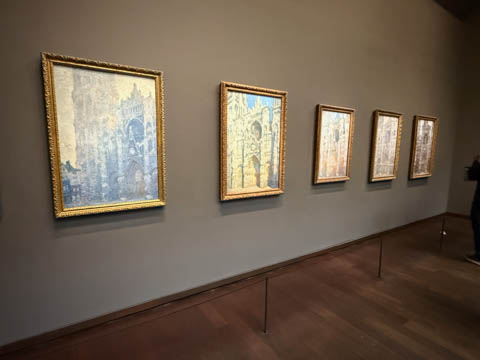
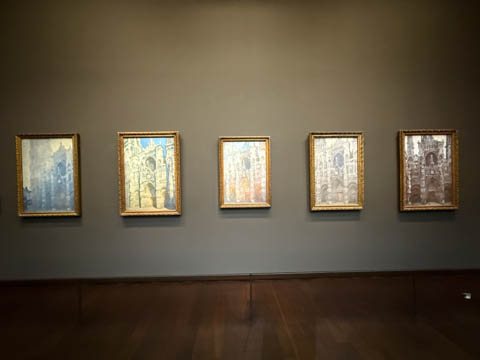
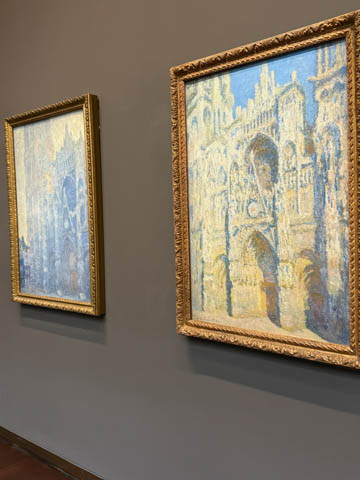
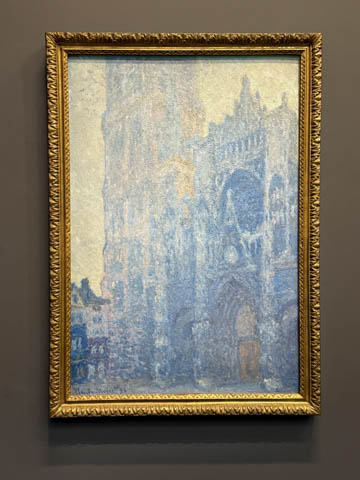
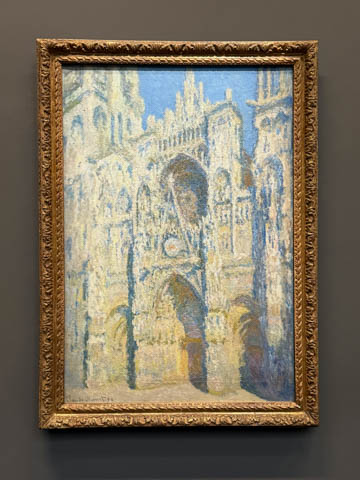
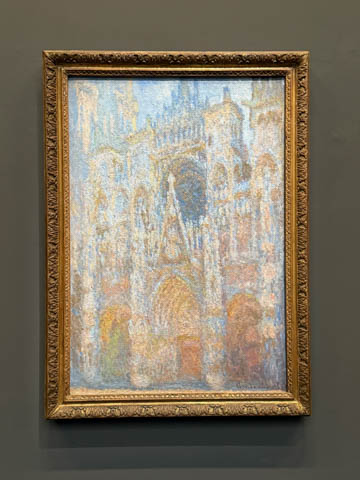
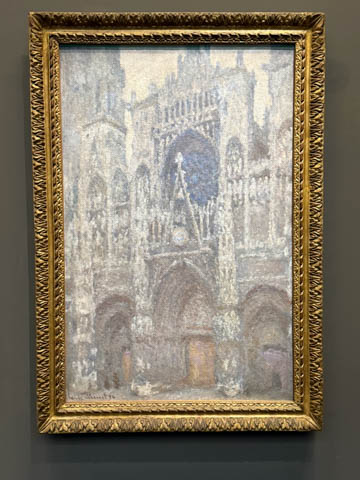
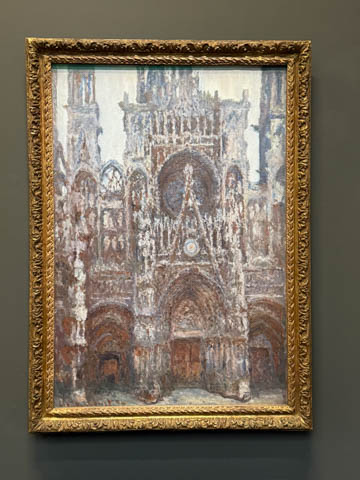
There was a large collection of Monet's, including a series of the images of the cathedral at Rouen.
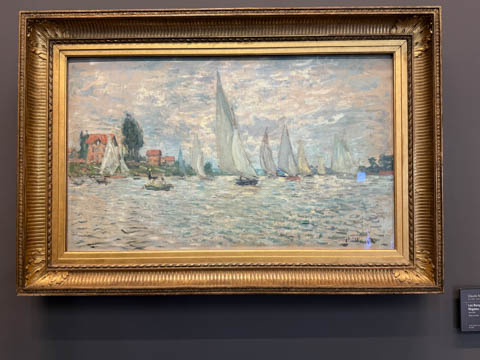
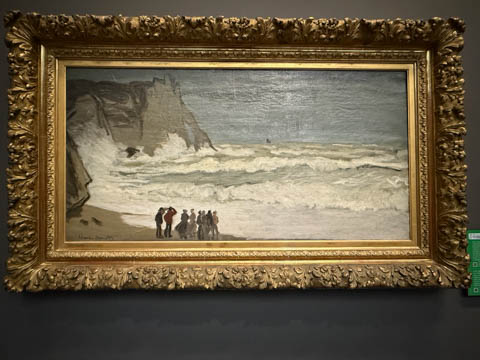
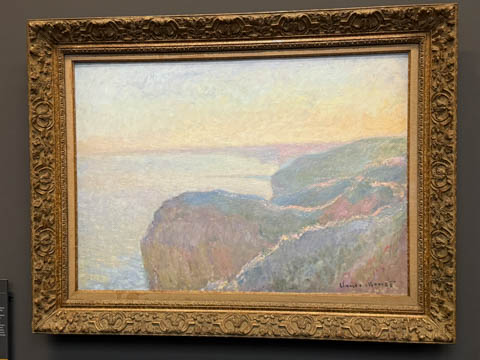
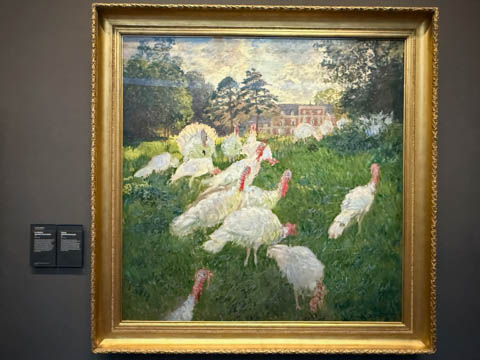
On the left is The Boats Regatta at Argenteuil (1874), next is Grosse mer à Etretat (1868) (Rough seas in Etretat), next is Sur la falaise de Dieppe (1897) (On the cliff of Dieppe), while to the right is The Turkeys (1876)
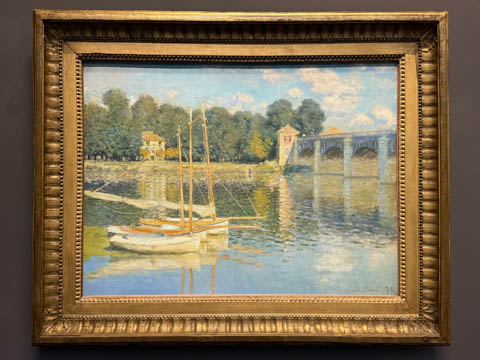
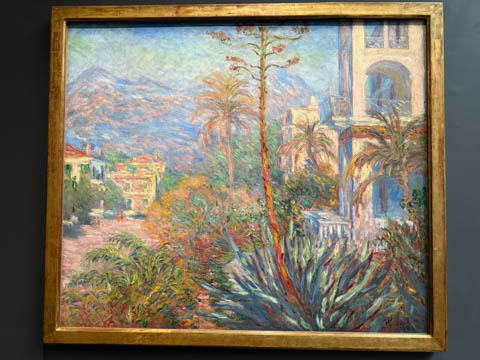
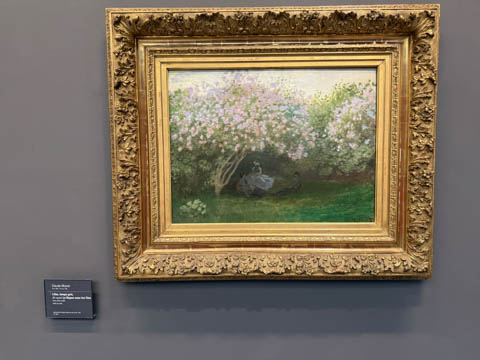
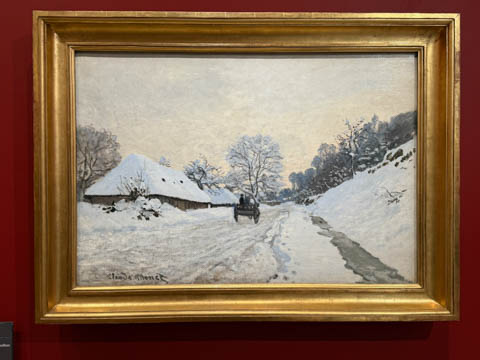
On the left is The Argenteuil Bridge (1874); next is Villas at Bordighera (1884), then Lilas, temps gris dit aussi Le Repos sous les lilas (1872) (Lilac, gray weather or Rest Under the Lilacs), and to the right is Route sous la neige à Honfleur (1867) (Road under the snow in Honfleur).
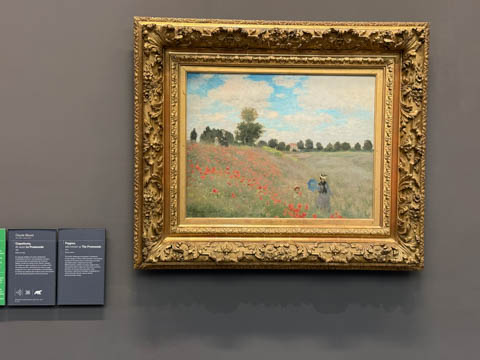
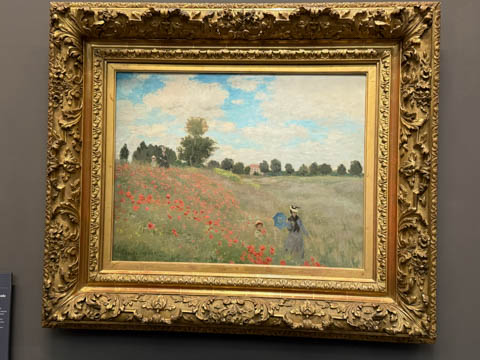
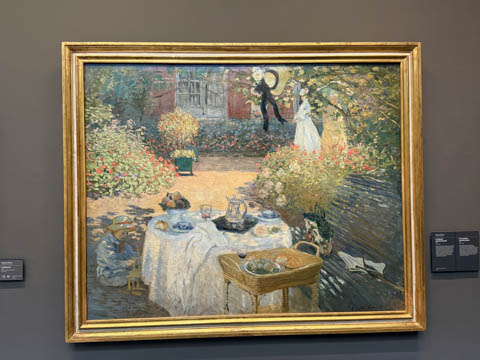
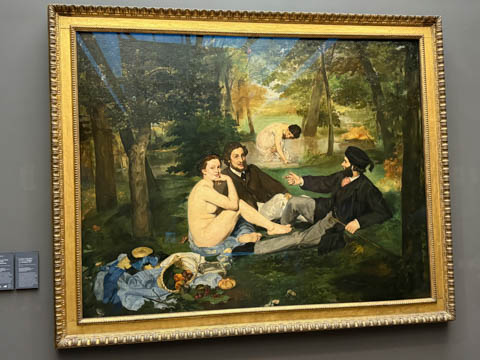
The rich collector and art historian, Étienne Moreau-Nélaton, a recognized expert on the paintings of Corot, Daubigny, Millet and Manet, acquired works by these artists and other Impressionist masterpieces, and in 1906 he gave the Louvre some hundred pictures, including works from the Romantic movement, Barbizon landscapes and the first foundations of “La Nouvelle Peinture”, or The New Painting, and Impressionism. He is to thank, for example, for the presence of Edouard Manet’s Déjeuner sur l’herbe [The Luncheon on the Grass] (left below), a work that he had bought from Durand-Ruel in 1900, after it had been rejected by the Salon jury in 1863, and that of Coquelicots [Poppy Field] (left below) by Claude Monet (1873), one of the gems of the group's first exhibition in 1874. To the right is The Luncheon (1878) by Monet
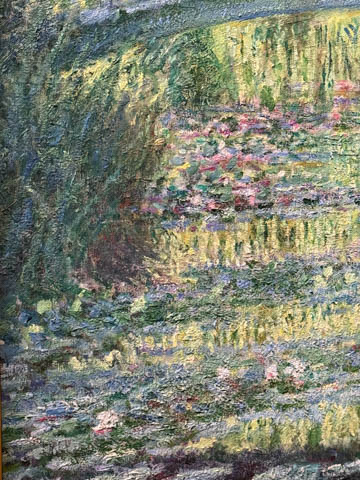
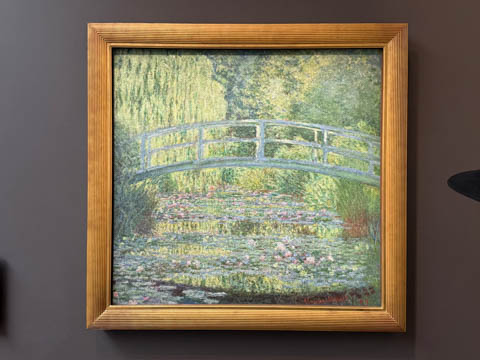
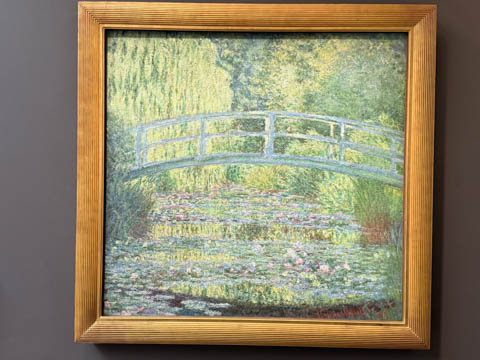
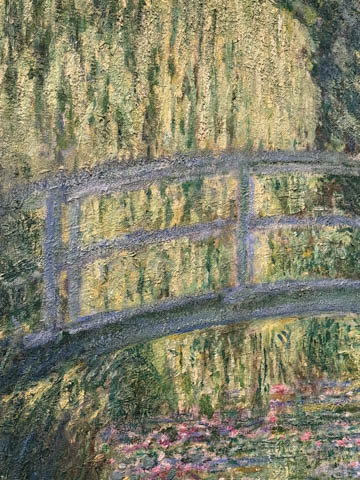
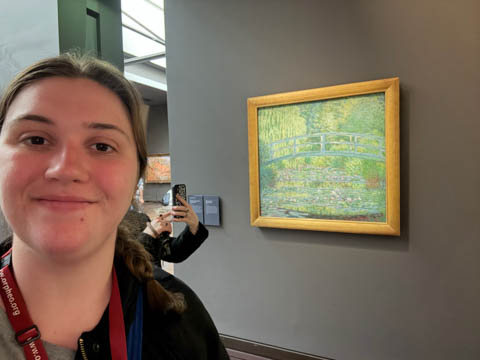
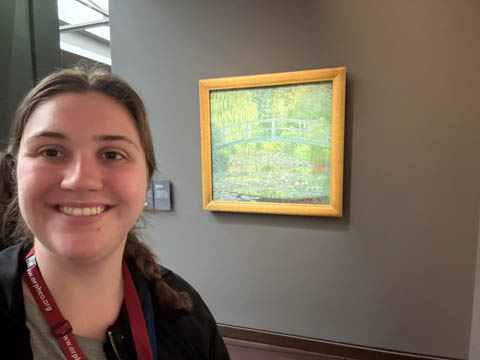
Here is The Japanese Footbridge and the Water Lily Pool, Giverny (1899)
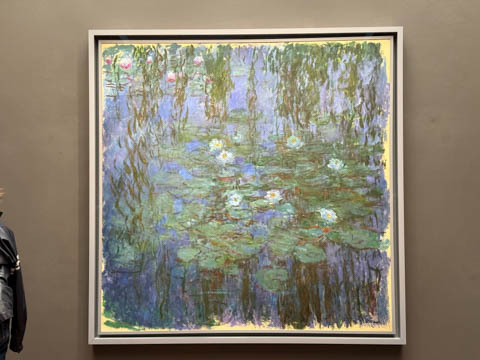
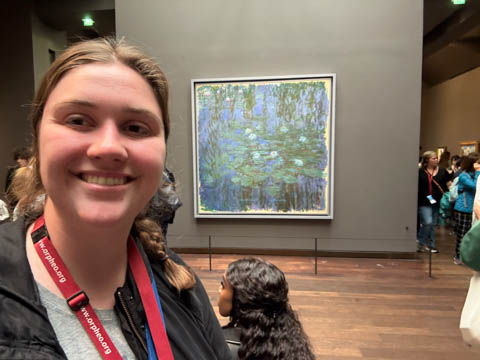
Blue Water Lilies (1919)
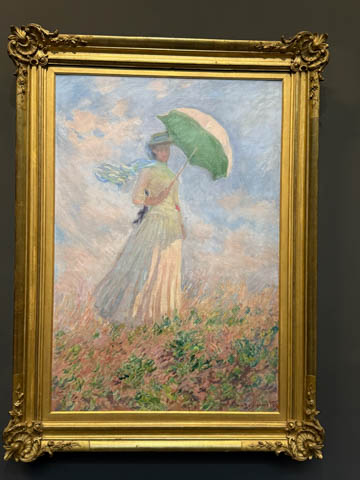
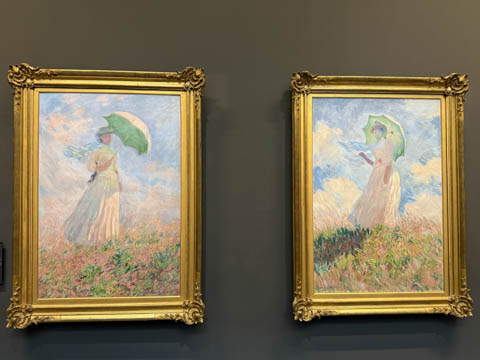
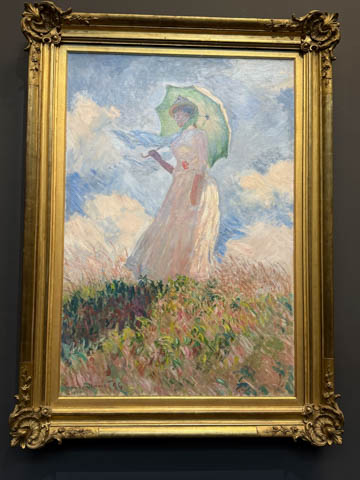
The images in the first three are Claude Monet's Preparatory Sketches for Plein (full) air figures aka Woman with Parasol Umbrella Facing Right and Left (1886).
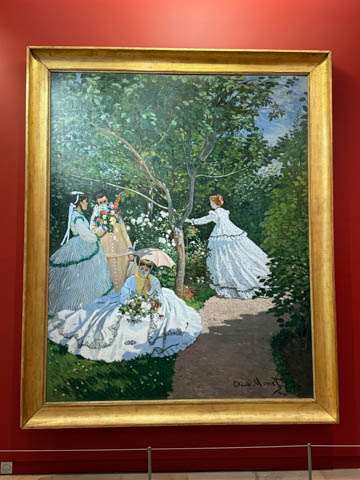
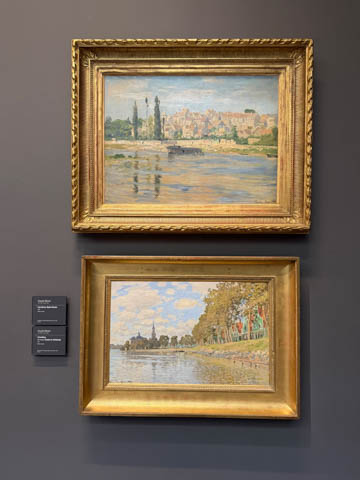
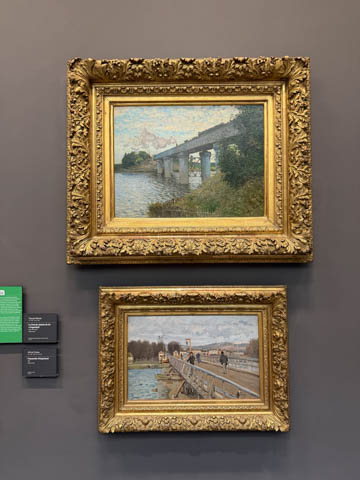
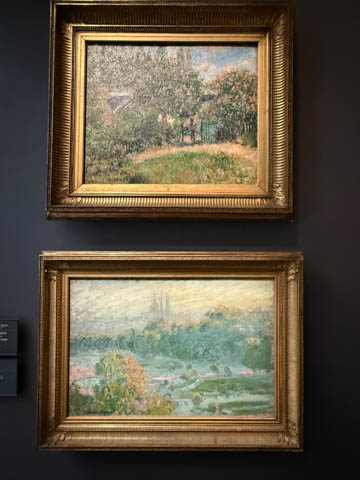
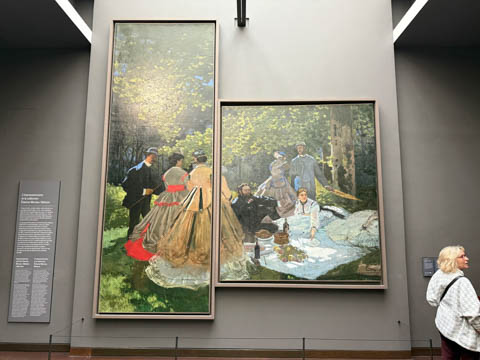
To the left, on top is Monet's Carrieres-Saint-Denis (1872), while the bottom piece is Monet's Zaandam, dit aussi Canal en Hollande (1871). Next on the top is Monet's Le Pont du chemin de fer a Argenteuil (1873) (The Railway Bridge at Argenteuil), which is above Alfred Sisley's Passerelle d'Argenteuil (1872) (Argenteuil Footbridge). Next is Pierre Auguste Renoir's Pont du Chemin de fer a Chatou, dit aussi, Les Marronniers roses (1881) above Claude Monet's Les Tuileries (1876). To the right are two fragments of Monet's monumental Le Déjeuner sur l'herbe (1865) (The Luncheon in the Grass). The work was started in the spring of 1865 and measured over four metres by six. It was intended to be both a tribute and a challenge to Manet whose painting of the same title had been the subject of much sarcasm from the public as well as the critics when it was exhibited in the Salon des Refusés in 1863. But the project was abandoned in 1866, just before the Salon where Monet intended to show it, opened. In 1920, the painter himself recounted what had happened to the picture: "I had to pay my rent, I gave it to the landlord as security and he rolled it up and put in the cellar. When I finally had enough money to get it back, as you can see, it had gone mouldy." Monet got the painting back in1884, cut it up, and kept only three fragments. The third has now disappeared.
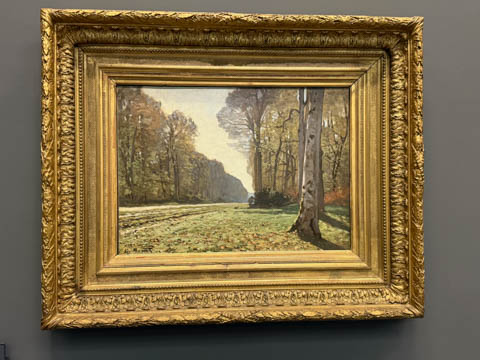
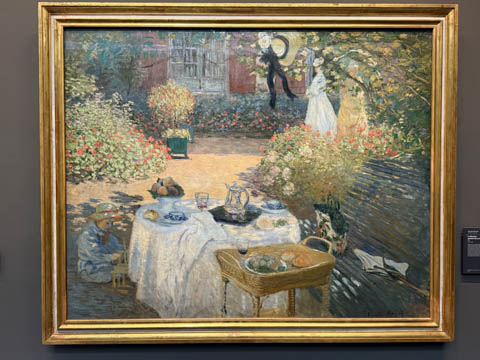
First below is Monet's Le Pave de Chailly (1865), while to the left is Monet's Le Dejuner Panneau décoratif (1874). After 1870, Monet gave up the large-scale paintings of his early days. However there were some exceptions: these are The Lunch exhibited in the second Impressionist exhibition of 1876 as a "decorative panel" and the paintings he produced in 1876-1877 for Ernest Hoschedé as decorations for the château de Rottenbourg in Montgeron. Possibly it was this Lunch, seen in Monet's studio or at the 1876 exhibition, which prompted Hoschedé to commission the panels for his own estate. The charm of the subject lies above all in the impression of spontaneity, in the simple evocation of a family life, some traces of which remain. The table has not been cleared at the end of a meal. A hat, hanging on the branch of a tree, a bag and a parasol left on the bench seem to have been forgotten there. In the cool shade of the green foliage, little Jean Monet quietly plays with a few pieces of wood. As in other paintings, Monet here seems to come close to Vuillard and Bonnard who would treat these same subjects a few years later. The "close up" of the top half of the wicker tea trolley, contrasting with the female figure in the background on the right, also recalls certain techniques favoured by the Nabis.
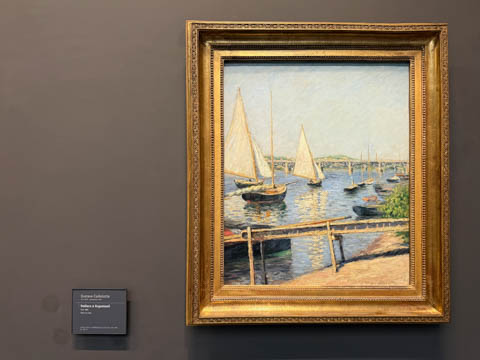
Unsure what the next painting is, but no surprise why Alexa liked it. In the middle is Voiliers a Argenteuil (Sailboats in Argenteuil) by Gustave Caillebotte (1888). Last is Manet's Luncheon on the Grass (1863), his painting of the same title as the Monet above.
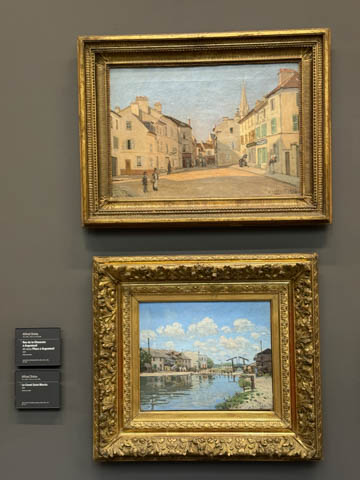
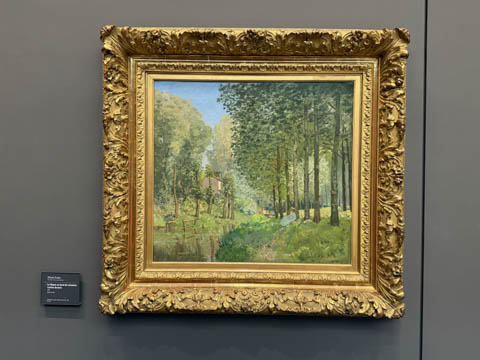
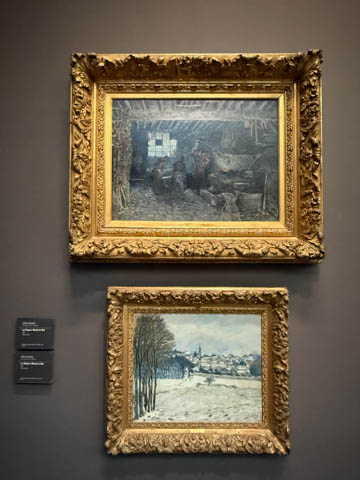
First are two more from Sisley: on top is Rue de la Chaussee a Argenteuil (1870), on the bottom is La Canal Saint Martin (1872). Next is Sisley's Le Repos au bord du ruisseau. Lisière de bois (1878) (Rest by the stream. Edge of the woods). Last are Sisley's La Forge à Marly-le-Roi (1875) (The Forge in Marly-le-Roi) on top and La Neige à Marly-le-Roi (1875) (Snow in Marly-le-Roi) on the bottom.
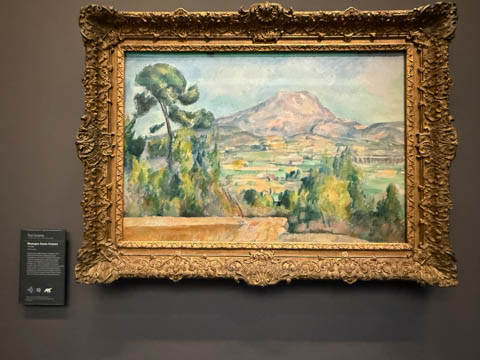
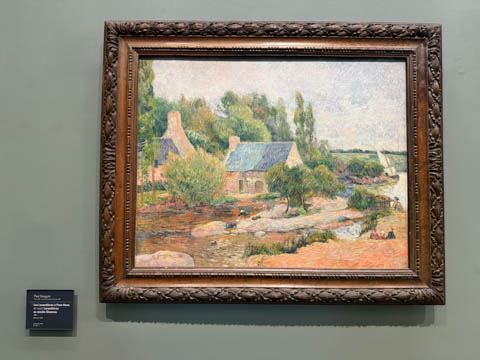
This is Paul Cezanne's Montagne Saint-Victoire on the left. To the right is Paul Gauguin's Les Lavendieres a Pont-Aven: dit aussi Lavendieres au moulin Simonou (1896) (The Washerwomen at Pont-Aven: also called Washerwomen at the Simonou mill).
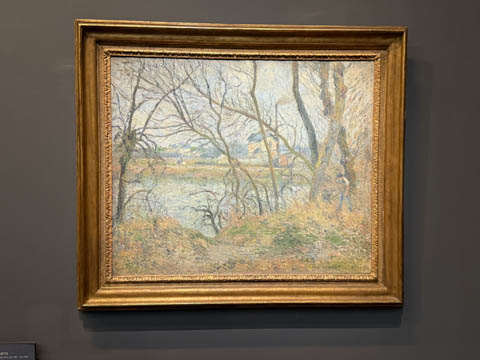
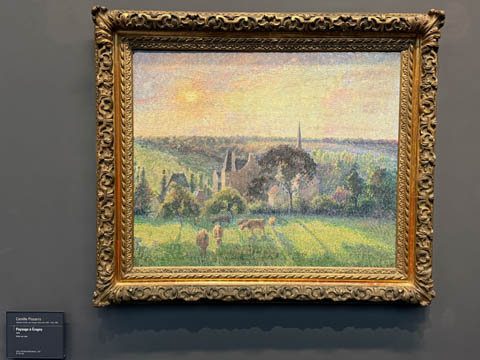
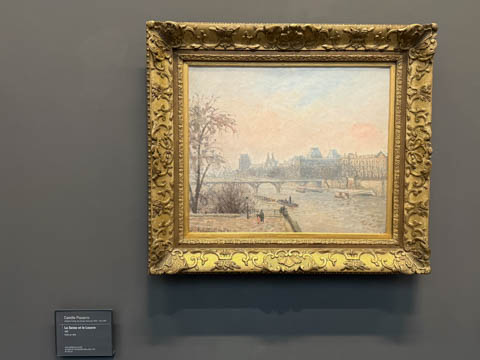
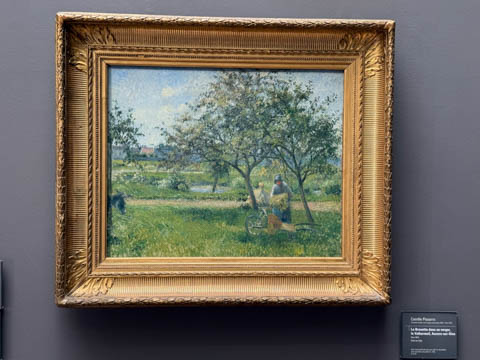
Here is Camille Pissarro's Bords de l'Oise, pres de Pontoise, temps gris (1878) (Banks of the Oise, near Pontoise, gray weather), Paysage a Erangy (1870) (Landscape in Eragny), La Seine et le Louvre (1903), and La Brouette dans un verger, la Valhermeil, Auvers sur Oise (1879) (The Wheelbarrow in an Orchard).
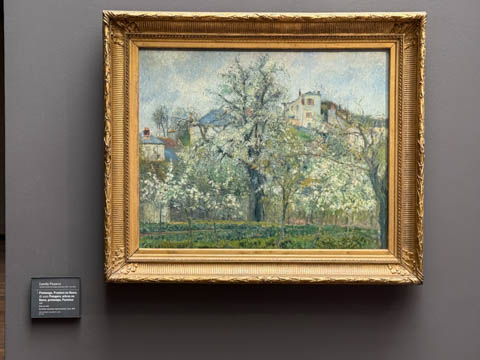
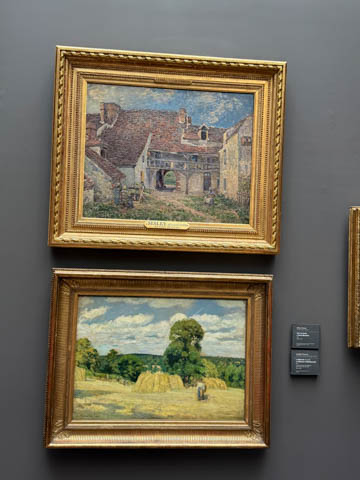
Pissarro's Printemps. Pruniers en fleurs, dit aussi Potagers, arbres en fleurs, printemps, Pontoise (1879). On the bottom in the next image is Pissarro's La Moisson dit aussi La Moisson a Montfoucvault (1876) (The Harvest at Montfoucault). On the top is Alfred Sisley's Cour de ferme a Saint-Mammes (1884) (Farmyard in Saint-Mammes).
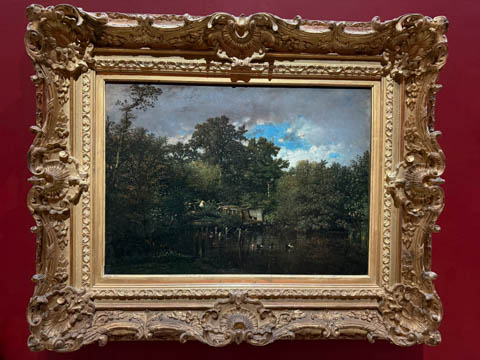
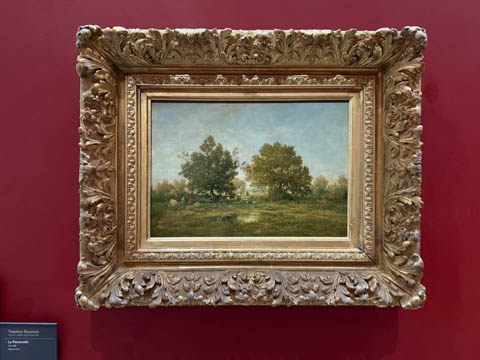
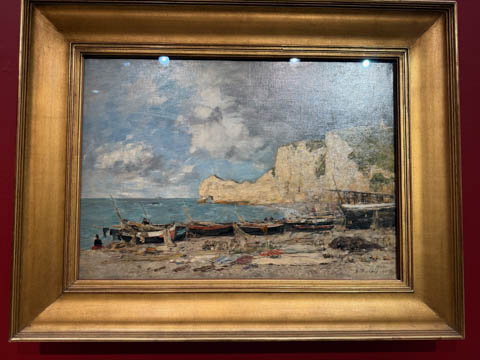
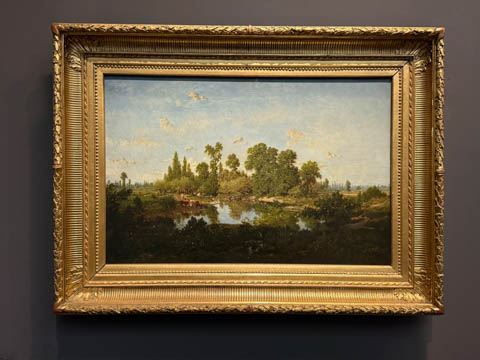
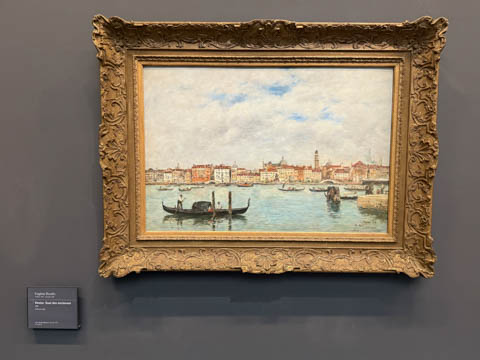
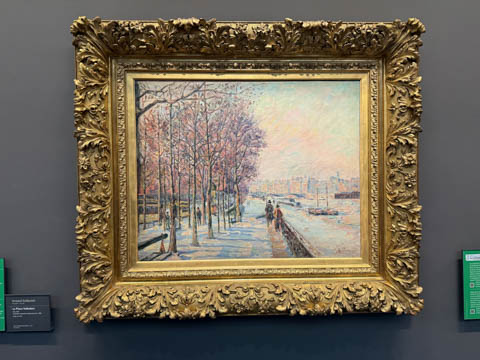
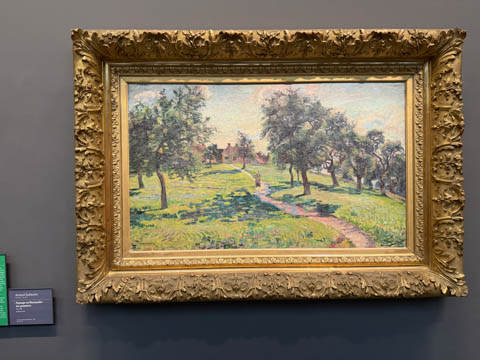
Theodore Rousseau's Le Matin (1867) (The Morning), Eugene Boudin's Venise, quai des esclavons (1895) (Venice, Slavonian Quays), and Armand Guillaumin's La Place Valhubert (1875) and Paysage en Normandie: les pommiers (1887) (Landscape in Normandy: apple trees).
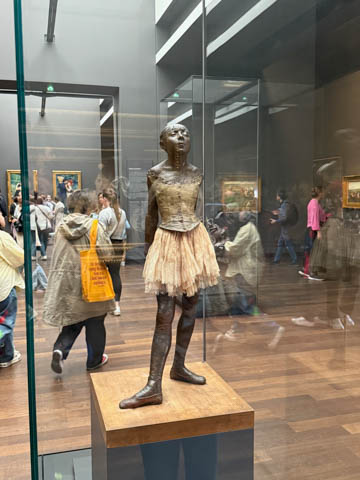
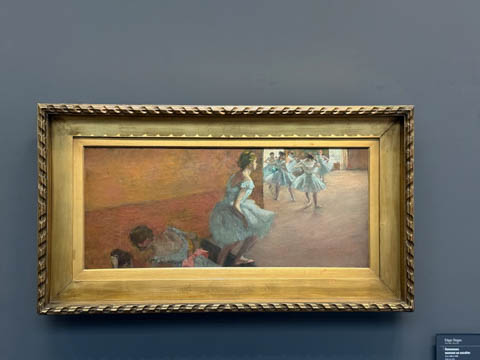
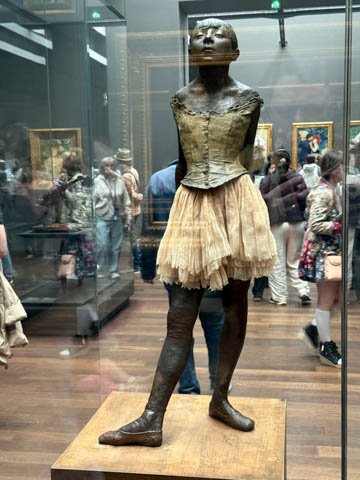
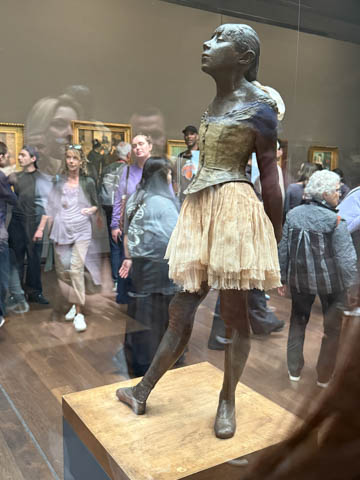
The statue is Edgar Degas' Small Dancer, Aged 14, while the painting in the middle is his Danseuses: montant un escalier (1896) (Dancers: climbing a staircase)
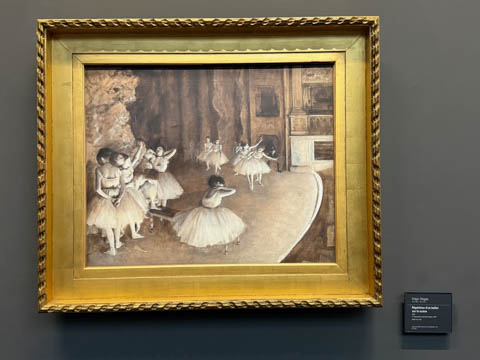
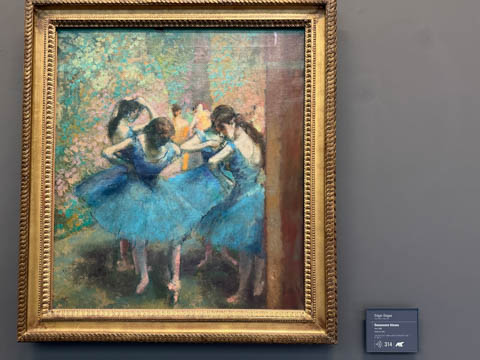
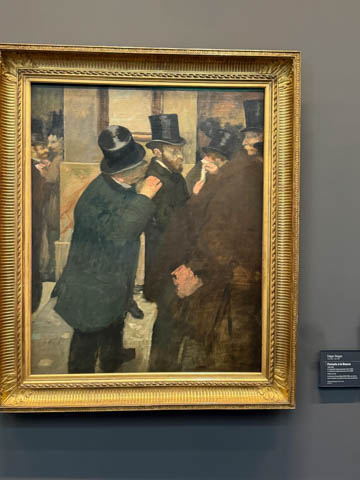
To the left is Ballet Rehearsal on Stage (1874), in the middle is Dansueses Bleues (1893), while to the right is Portraits a la Bourse (1879), all by Degas.
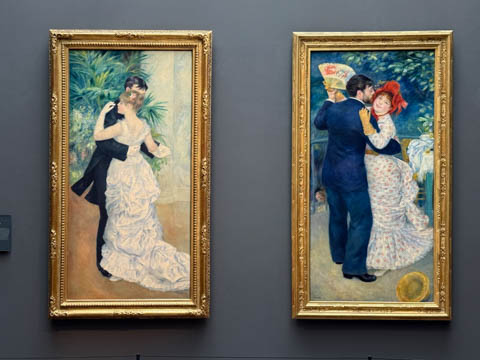
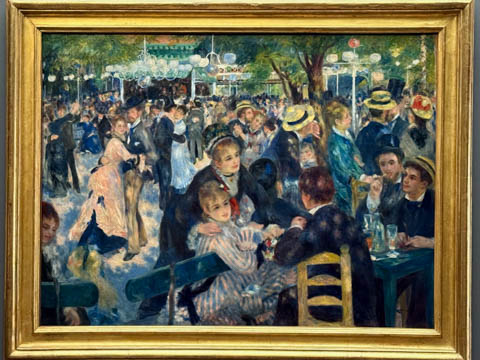
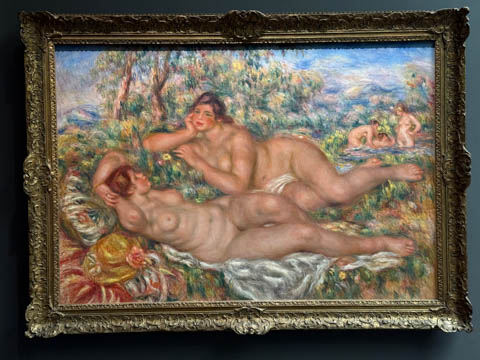
Here are three by Pierre-Auguste Renoir: On the right of the left image is Country Dance (1883), while next is Bal du Moulin de la Galette (1876) (Dance at the Moulin de la Galette). To the right is Renoir's The Bathers (1919).
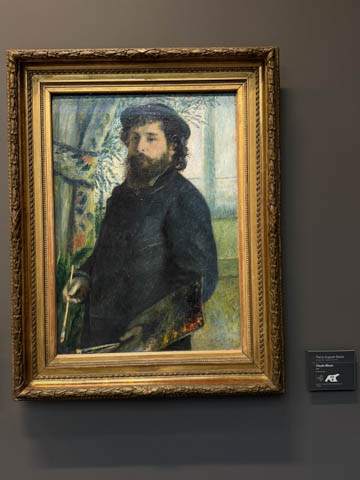
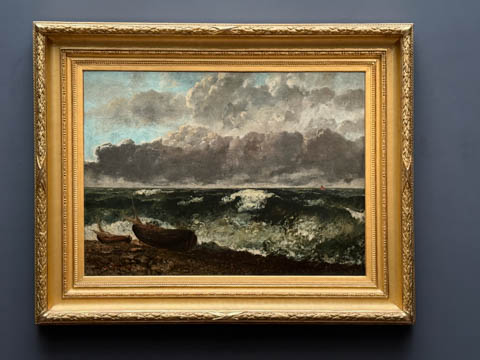
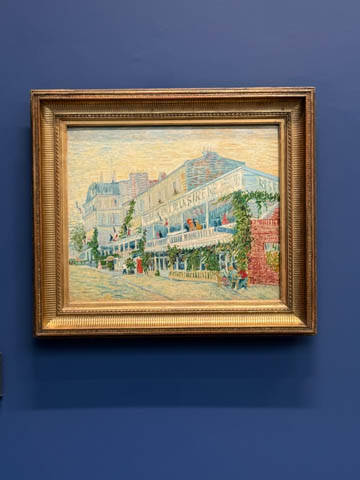
Here is Renoir's portrait of Claude Monet (1875), followed by two other pieces from the Impressionist galleries that I couldn't identify
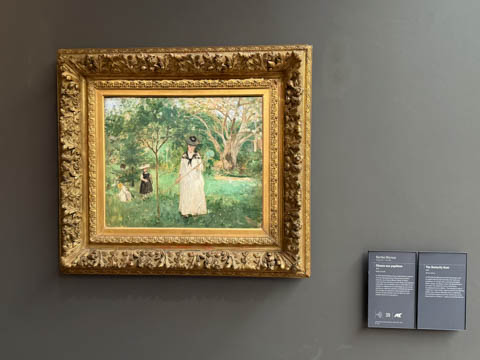
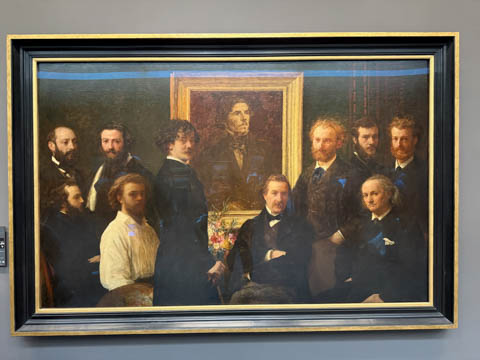
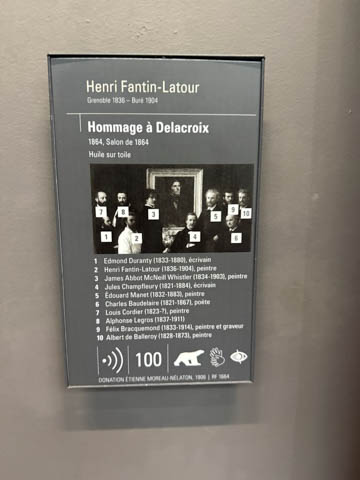
Finally, to the left is Berthe Morisot's Chasse aux papillons (Butterfly Chase) (1874). Next is a work by Henri Fantin-Latour titled "Hommage a Delacroix" (1864) which features portraits himself along with Whistler, Manet, and other notable artists.
|
|
|