Use these navigation links to move between the Year 2025 pages. Specific
pages can be accessed at the bottom of this page



May 2025
(Part 22)
France Trip:
Day 10: Chateau de Versailles
We had an excursion to the Palace of Versailles in the
afternoon, which is only about 11 miles west of Paris.
In 1623, Louis XIII, king of France, built a hunting lodge on
a hill in a favorite hunting ground, 19 km (12 mi) west of Paris,
and 16 km (10 mi) from his primary residence, the Château de Saint-Germain-en-Laye.
The site, near a village named Versailles, was a wooded wetland that Louis
XIII's court scorned as being generally unworthy of a king. From 1631 to
1634, Louis XIII had the lodge replaced with a château, which became his
favorite residence. Louis XIII forbade his queen, Anne of Austria, from
staying there overnight, even when an outbreak of smallpox at Saint-Germain-en-Laye in
1641 forced Louis XIII to relocate to Versailles with his three-year-old heir,
the future Louis XIV.
The Sun King's spare-no-expense Palace reflects King Louis's
belief in his god-like status, his divine right to rule, and his absolute
power. He enjoyed the term "Sun King" because he believed that France revolved
around him like the earth revolves around the sun. He expanded the Palace
of Versailles to be large enough to house his entire royal court of 5,000 and to
provide office space for up to another 5,000 more people: by keeping
the potentially treacherous nobility confined in one place right under his nose,
so to speak, he could control them far better than if they lived in Paris.
When Louis XIII died in 1643, Anne became Louis XIV's regent,
abandoning the château for Paris over the next decade. The palace
subsequently went through several expansions in phases from 1661 to 1715.
Louis XIV moved the seat of his court and government to Versailles, making the
palace the de facto capital of France. This state of affairs was continued
by Kings Louis XV and Louis XVI, who primarily made interior alterations to the
palace.
King Louis XVI and Queen Marie Antoinette learned of
the Storming of the Bastille in Paris on 14 July 1789, while they were at the
palace, and remained isolated there as the Revolution in Paris spread. The
growing anger in Paris led to the Women's March on Versailles on 5 October 1789.
A crowd of several thousand men and women, protesting the high price and
scarcity of bread, marched from the markets of Paris to Versailles. They took
weapons from the city armory, besieged the palace, and compelled the King and
royal family and the members of the National Constituent Assembly to return with
them to Paris the following day, ending royal occupation at the palace.
Three years later in 1792 but before the executions of the King and Queen in
1793 and the end of a thousand years of continuous French monarchy, the National
Convention, the new revolutionary government, ordered the transfer of all the
paintings and sculptures from the palace to the Louvre. In 1793, the Convention
declared the abolition of the monarchy and ordered all of the royal property in
the palace to be sold at auction. The auction took place between 25 August 1793
and 11 August 1794. The furnishings and art of the palace, including the
furniture, mirrors, baths, and kitchen equipment, were sold in seventeen
thousand lots. All fleurs-de-lys and royal emblems on the buildings were
chambered or chiseled off. The empty buildings were turned into a storehouse for
furnishings, art and libraries confiscated from the nobility. The empty grand
apartments were opened for tours beginning in 1793, and a small museum of French
paintings and art school was opened in some of the empty rooms. With the
palace empty and unused, the population of the surrounding city plummeted.
Napoleon, following his coronation as Emperor, used the
subsidiary palace, Grand Trianon, as a summer residence from 1810 to 1814, but
did not use the main palace. Following the Bourbon Restoration, when the
king was returned to the throne, he resided in Paris and it was not until the
1830s that meaningful repairs were made to the palace. A museum of French
history was installed within it, replacing the courtiers apartments of the
southern wing.
The palace and park were designated a World Heritage
Site by UNESCO in 1979 for its importance as the centre of power, art, and
science in France during the 17th and 18th centuries. The palace is now
owned by the government of France and managed by the Public Establishment of the
Palace, Museum and National Estate of Versailles, part of the French Ministry of
Culture. About 15,000,000 people visit the palace, park, or gardens of
Versailles every year, making it one of the most popular tourist attractions in
the world.
The Palace of Versailles is a visual history of French
architecture from the 1630s to the 1780s. Its earliest portion, the corps de
logis, was built for Louis XIII in the style of his reign with brick, marble,
and slate, which was surrounded in the 1660s with Envelope, an edifice that was
inspired by Renaissance-era Italian villas. Neoclassical additions were
made to the palace with the remodeling of the Ministers' Wings in the 1770s, and
after the Bourbon Restoration. The palace was largely completed by the
death of Louis XIV in 1715. The eastern facing palace has a U-shaped
layout, with the corps de logis and symmetrical advancing secondary wings
terminating with the Dufour Pavilion on the south and the Gabriel Pavilion to
the north, creating an expansive cour d'honneur known as the Royal Court (Cour
Royale). Flanking the Royal Court are two enormous asymmetrical wings that
result in a façade of 402 metres (1,319 ft) in length. Covered by around
10 hectares (1.1 million square feet) of roof, the palace has 2,143 windows,
1,252 chimneys, and 67 staircases.
The Estate contains about 6,000 paintings and 3,000
sculptures. But if you also count frescoes, furnishings, tapestries, and
other decorative items, the total swells to approximately 60,000 pieces of art
.jpg/2880px-Plans_du_rez-de-chaussée_et_du_premier_étage_du_palais_de_Versailles,_Éditeur_Gavard,_premier_étage_-_Gallica_2011_(detail,_color-coded).jpg)
.jpg/1920px-Versailles_-_Plan_du_premier_étage_de_l'avant_corps_-_Architecture_Françoise_Tome4_Livre7_Pl8_(apts_colored).jpg)
Here is a plan of the main floor (c. 1837, with north to
the right), showing the Hall of Mirrors in red, the Hall of Battles in green,
the Royal Chapel in yellow, and the Royal Opera in blue.
Plan of the main floor in the central part of the palace (c.
1742), showing the grand appartement du roi (king's grand apartment) in dark
blue, the apartment du roi in medium blue, the petit apartment du roi in light
blue, the grand apartment de la reine (queen's grand apartment) in yellow, and
the petit apartment de la reine (queen's small apartment) in red. The
King's Grand Apartments were the state apartments, while the King's Apartment's
were considered his Private Apartments.
The grand apartments (Grand Apartments, also referred to as
the State Apartments include the grand apartment du roi and the grand apartment
de la reine. They occupied the main or principal floor of the château neuf, with
three rooms in each apartment facing the garden to the west and four facing the
garden parterres to the north and south, respectively. The private apartments of
the king (the apartment du roi and the petit apartment du roi) and those of the
queen (the petit apartment de la reine) remained in the château vieux (old
château). Le Vau's design for the state apartments closely followed Italian
models of the day, including the placement of the apartments on the main floor
(the piano nobile, the next floor up from the ground level), a convention the
architect borrowed from Italian palace design. The king's State Apartment
consisted of an enfilade of seven rooms (suite of rooms in line), each dedicated
to one of the known planets and their associated titular Roman deity. The
queen's apartment formed a parallel enfilade with that of the grand apartment du
roi. After the addition of the Hall of Mirrors (1678–1684) the king's apartment
was reduced to five rooms (until the reign of Louis XV, when two more rooms were
added) and the queen's to four.
The queen's apartments served as the residence of three queens
of France – Maria Theresa of Spain, wife of Louis XIV, Maria Leszczyńska, wife
of Louis XV, and Marie Antoinette, wife of Louis XVI.
The State Apartments (Grands Appartements) are the official,
ceremonial rooms where the King and Queen conducted official business and
received important guests. They were characterized by lavish Italian-style
decoration, including marble paneling and painted ceilings. The King's
State Apartment included rooms like the Hercules Room (originally a chapel) and
the Salon of Mars, used as a guard room. The Queen's Apartments had a
layout identical to the King's State Apartments. Each opulent chamber in
the State Apartments practically drips with crimson and gold Italianate
furnishings, priceless paintings, and crystal chandeliers, all designed to
impress.
The Private Apartments (Petits Appartements) were the more
personal and intimate spaces for the King and Queen's private use. Louis
XIV began remodeling and enlarging his private apartments, making them less
ostentatious and easier to heat than the Grand Apartment. Louis XV
expanded these apartments, adding new rooms like work cabinets, dining rooms,
and libraries. Marie Leszczyńska and Marie Antoinette also had private
chambers beyond their State Apartments for reading, painting, and receiving
private visit.
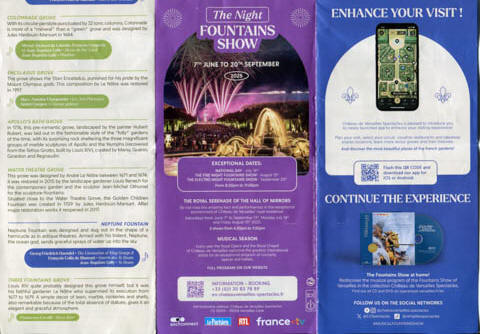
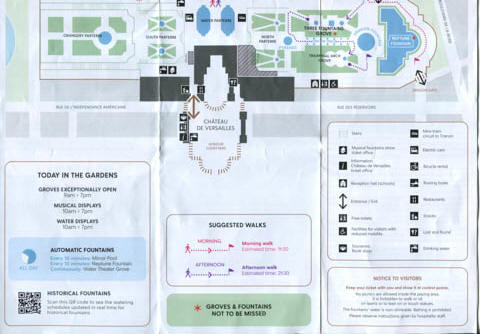
Here is the pamphlet for the gardens.
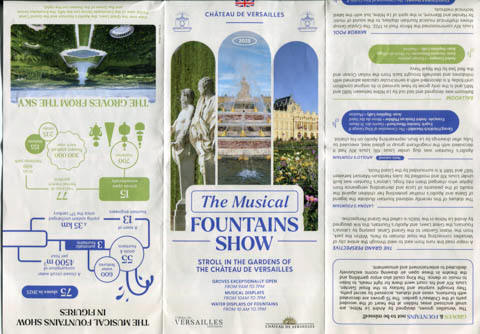
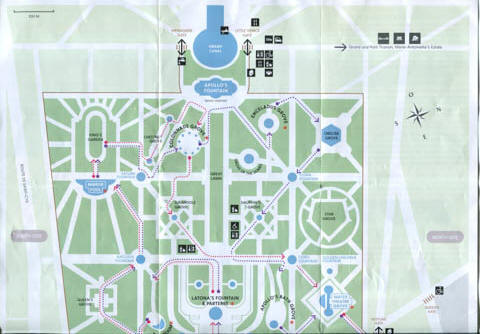
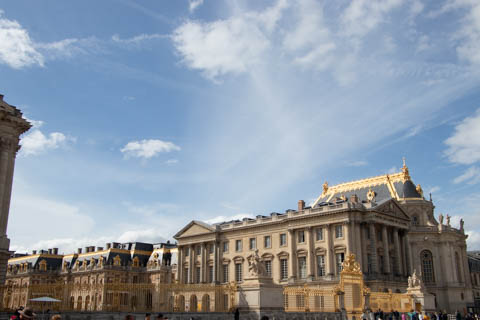
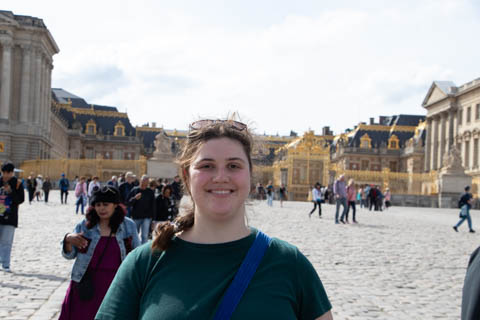
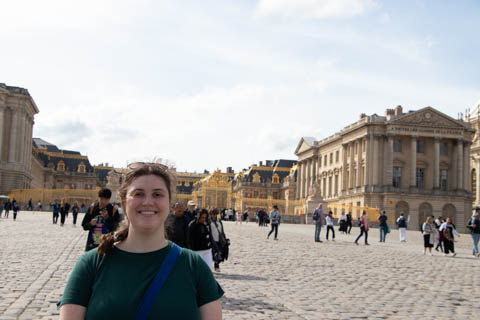
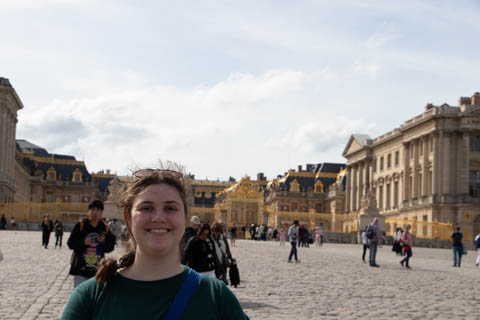
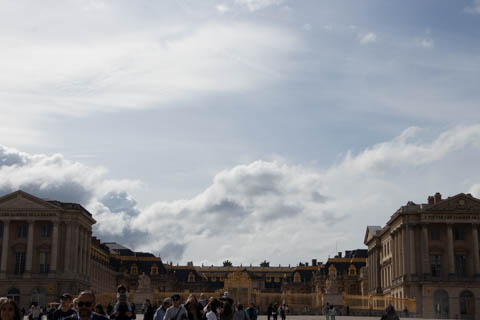
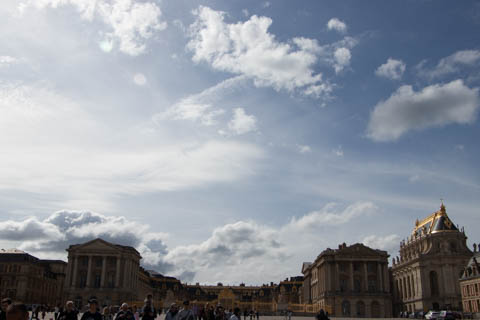
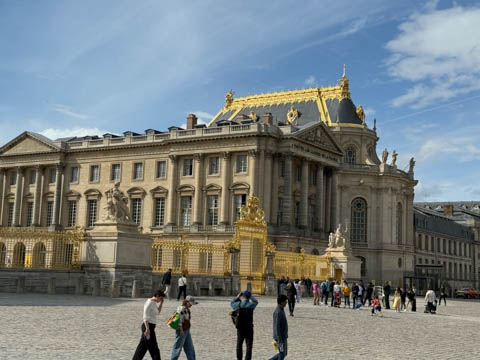
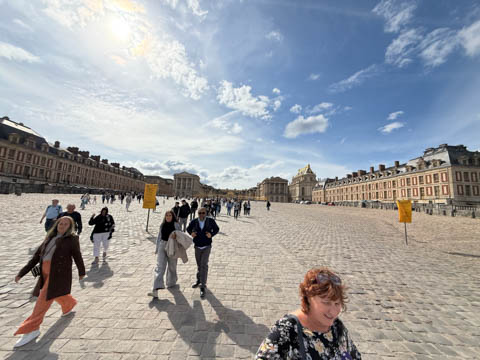
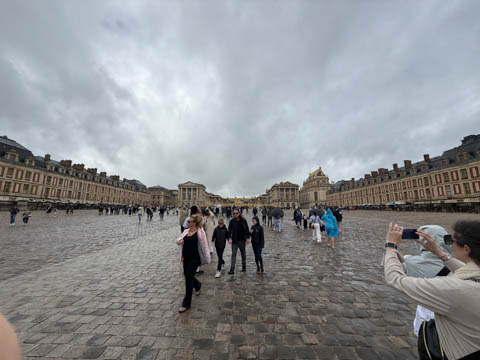
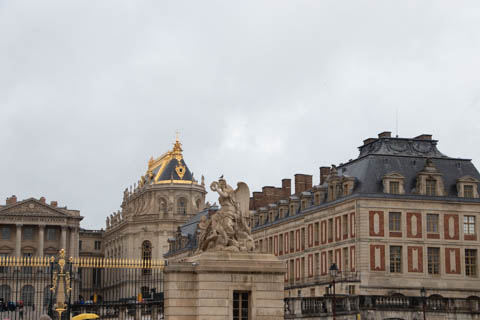
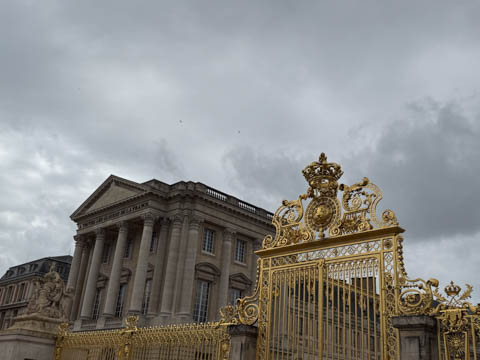
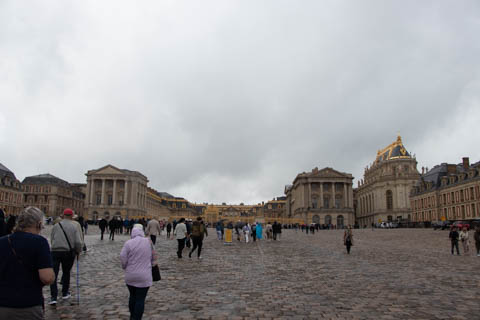
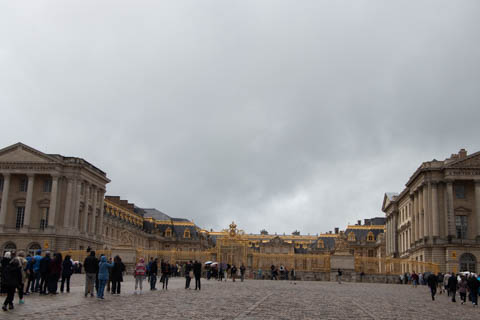
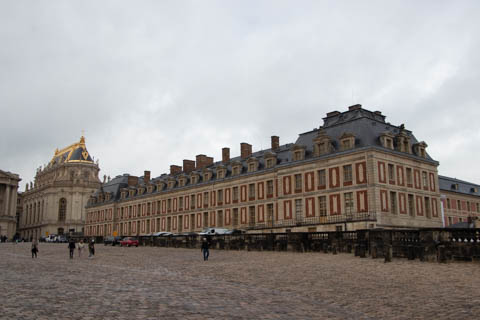
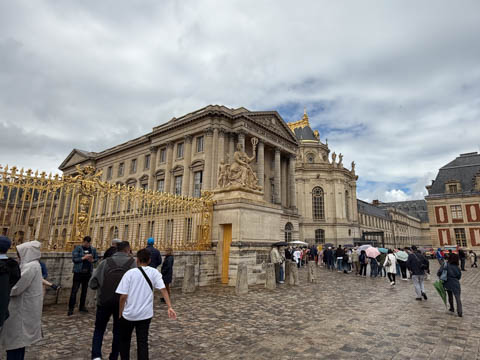
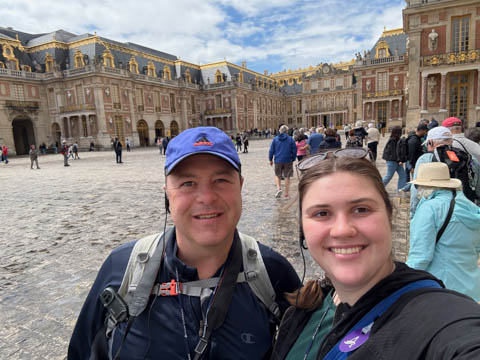
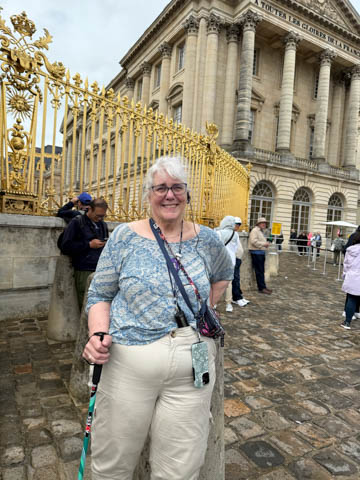
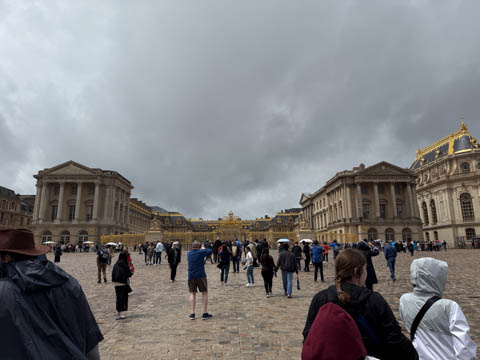
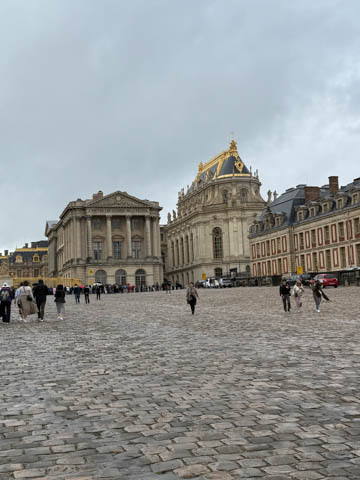
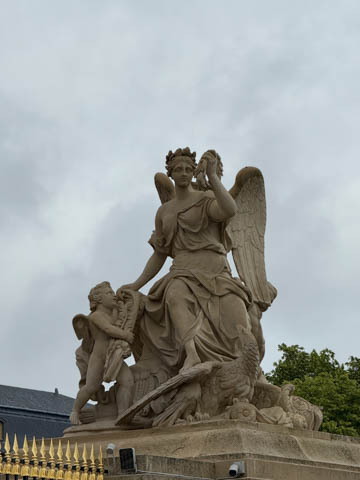
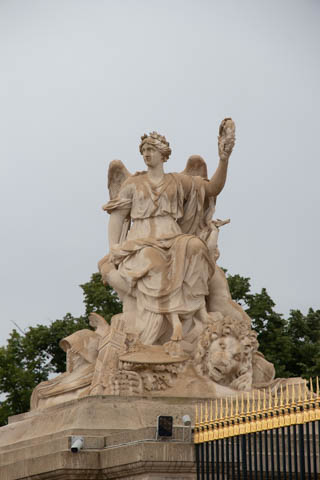
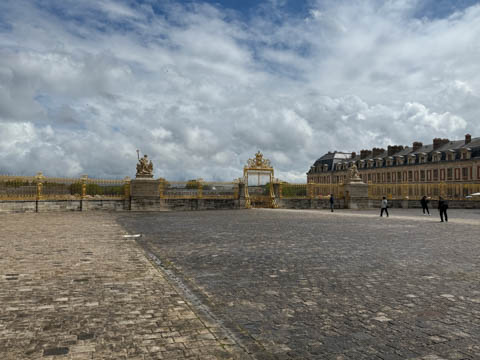
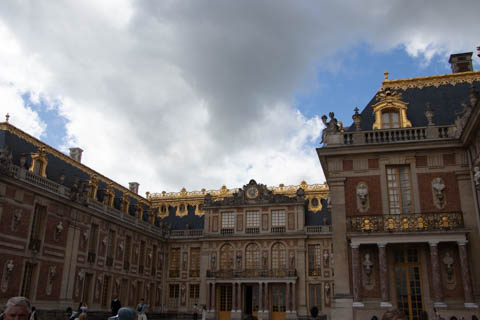
We arrive at the palace from the city side on the east, facing
the Royal Court.
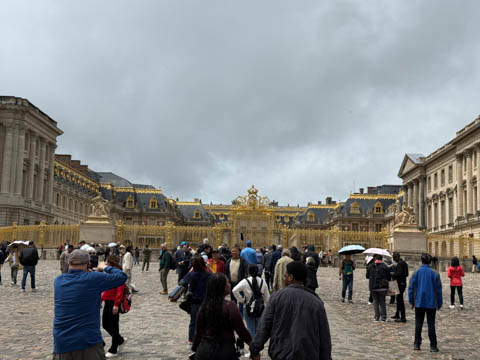
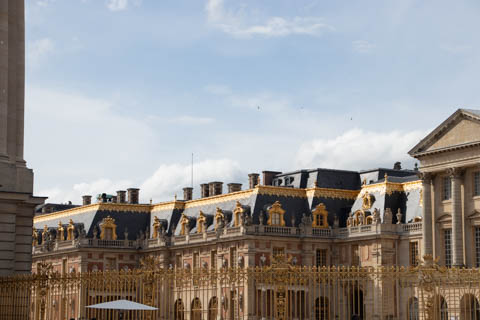
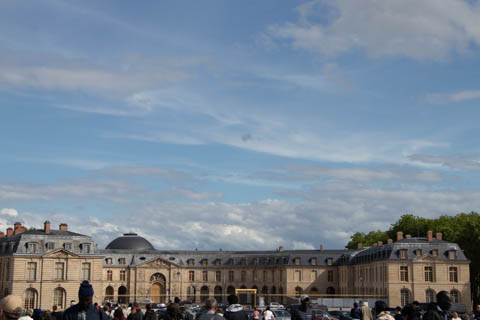
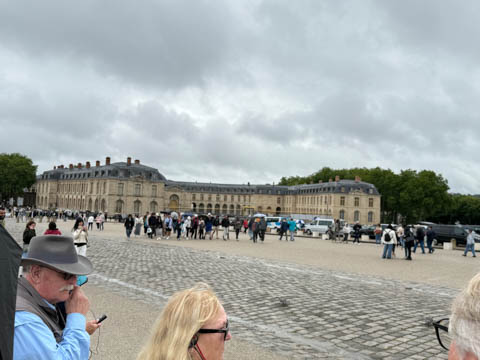
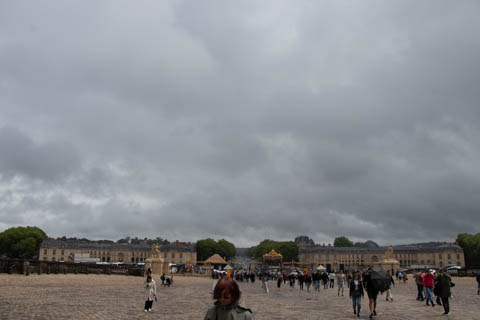
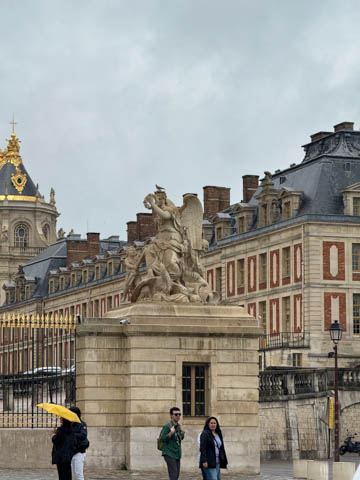
Behind us were two huge building which we learned were the
royal stables.
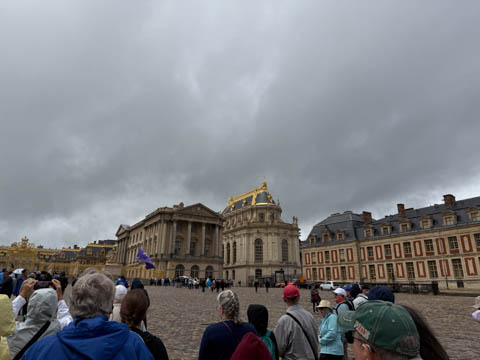
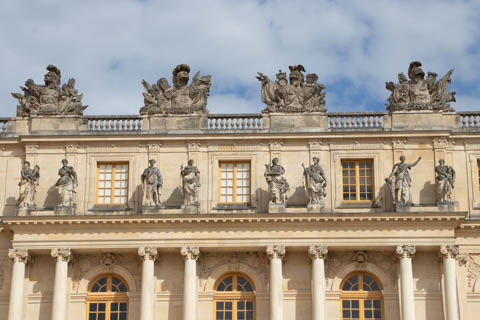
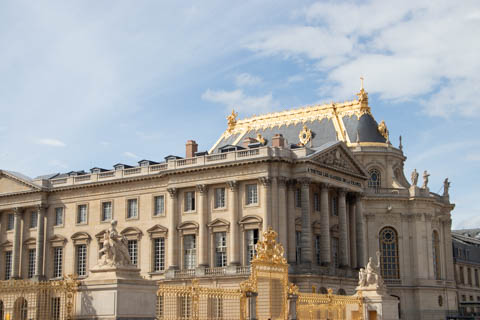
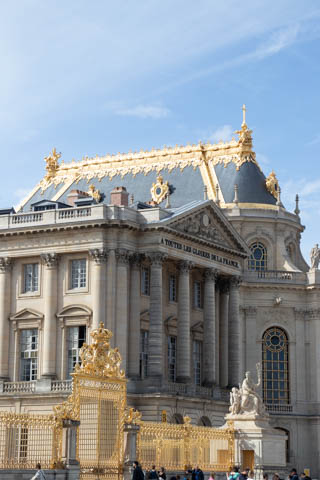
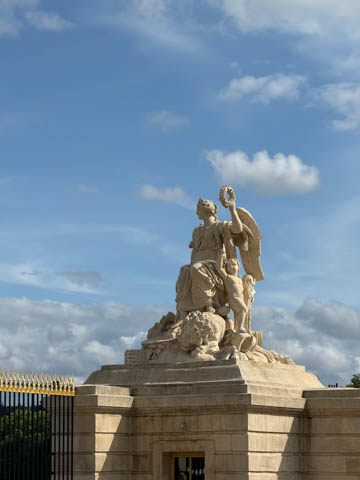
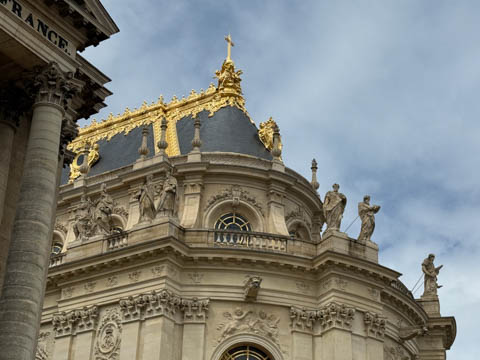
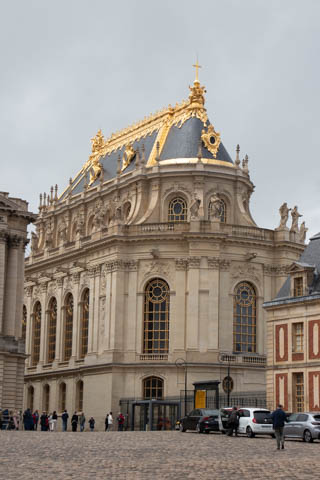
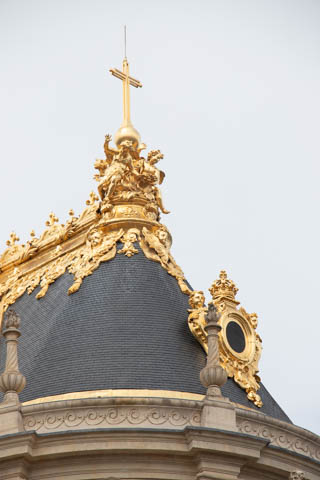
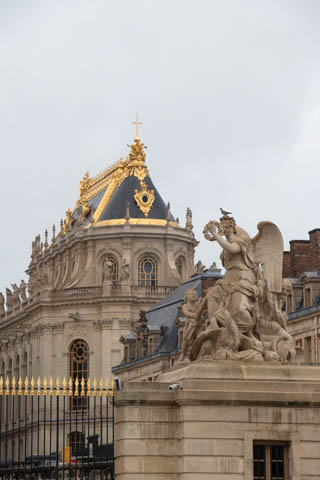
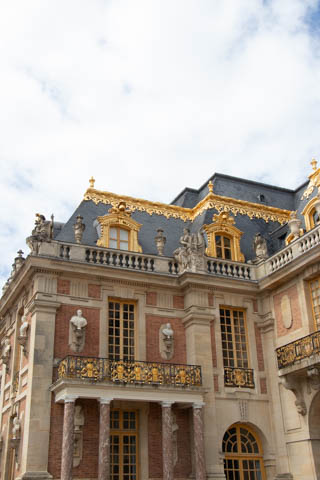
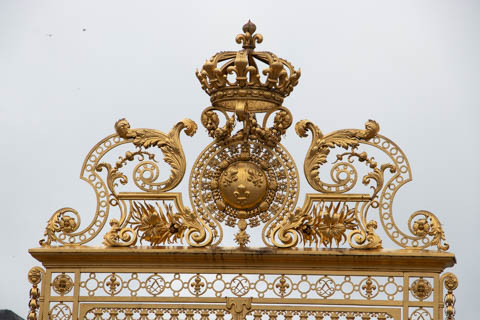
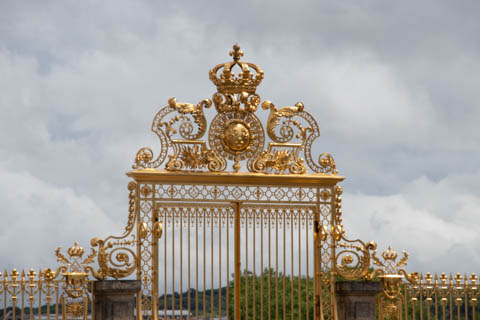
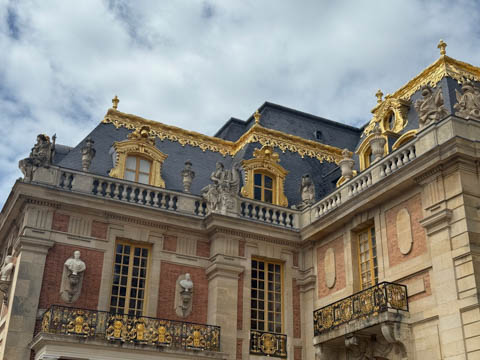
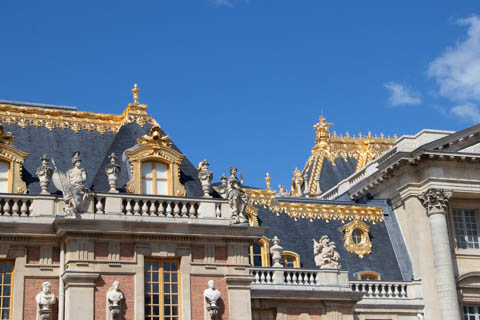
The gilded building in the right wing is the Royal Chapel.
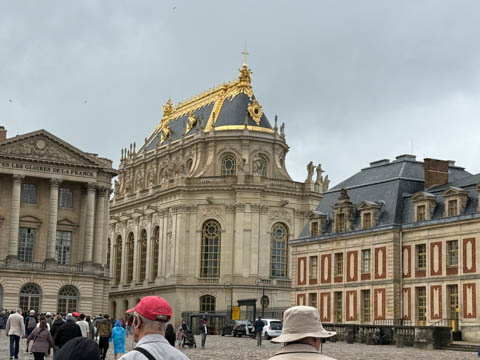
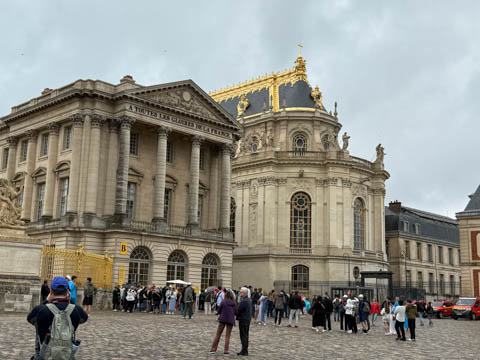
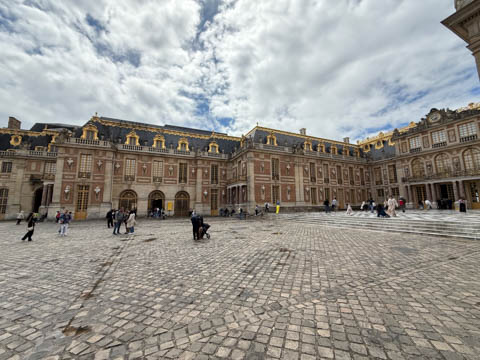
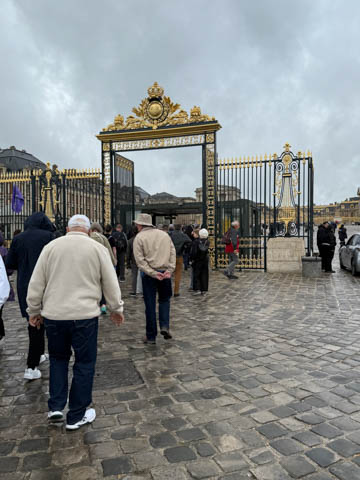
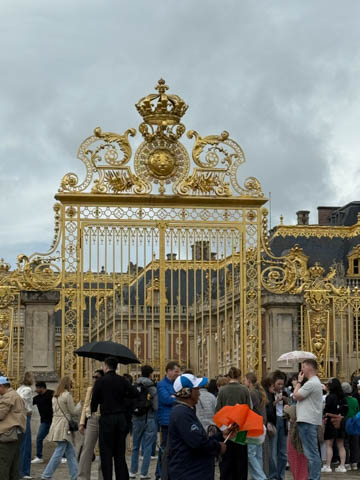
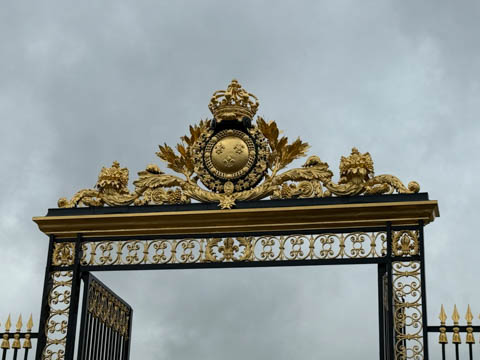
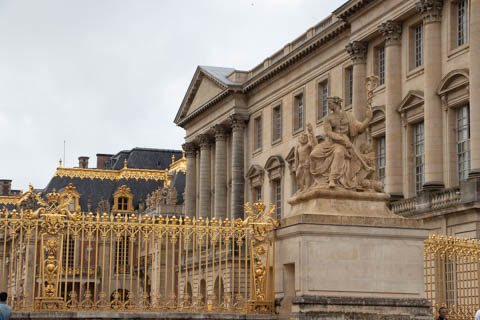
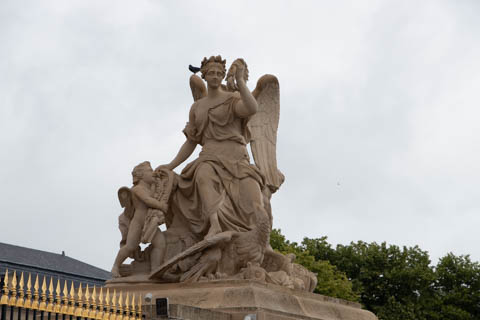
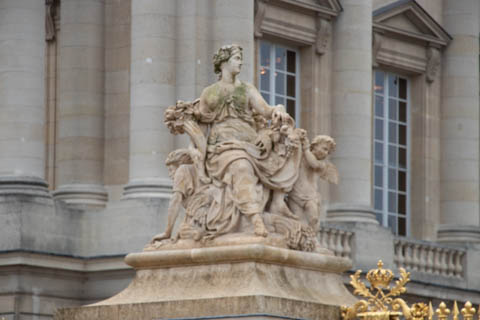
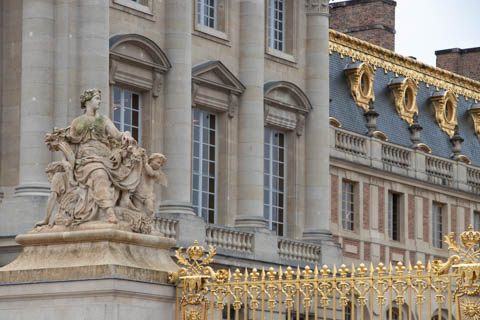
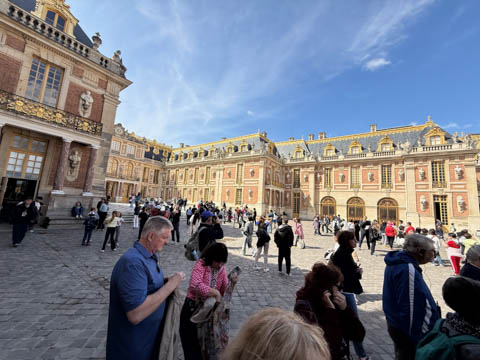
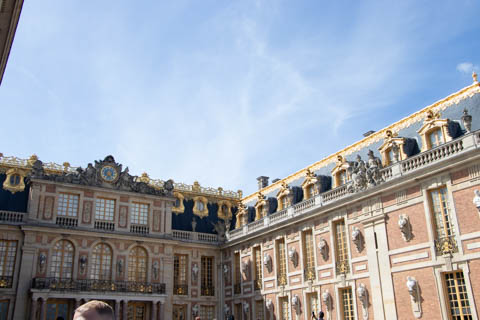
Our guide led us around the crowd and into the courtyard,
allowing us to see the marble courtyard in front of the main entrance.
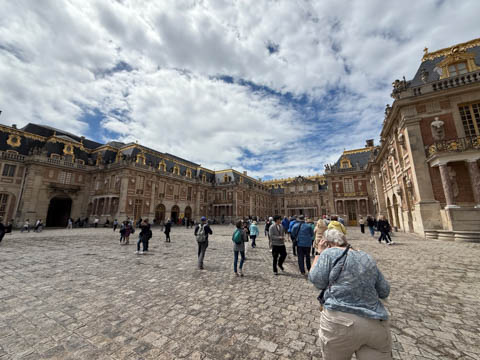
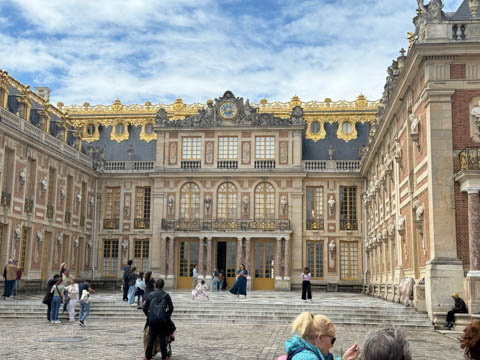
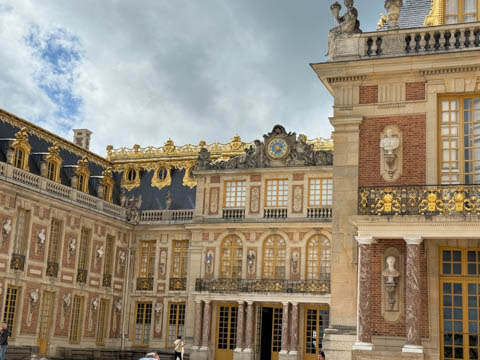
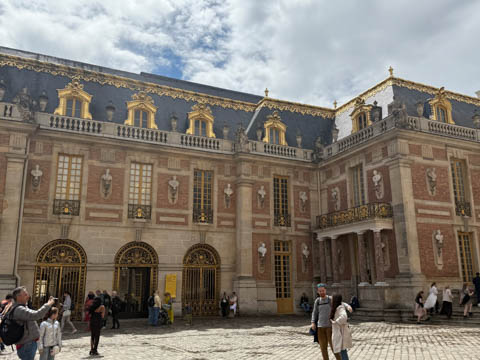
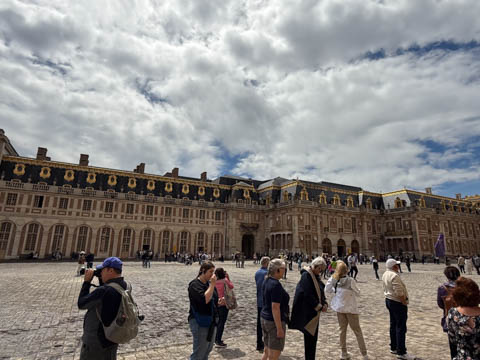
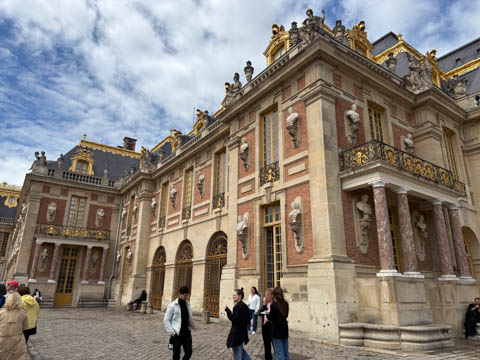
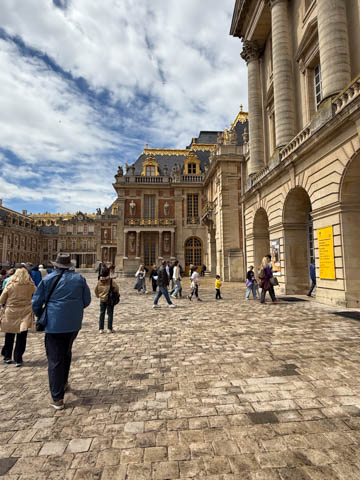
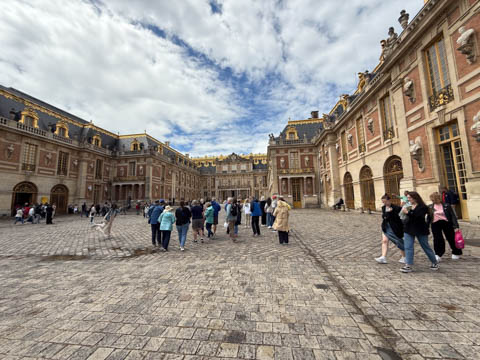
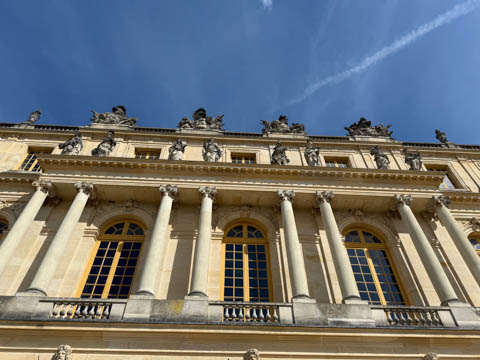
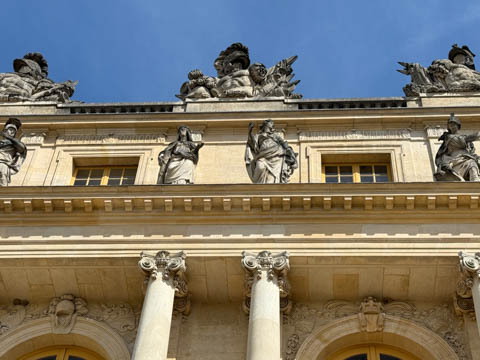
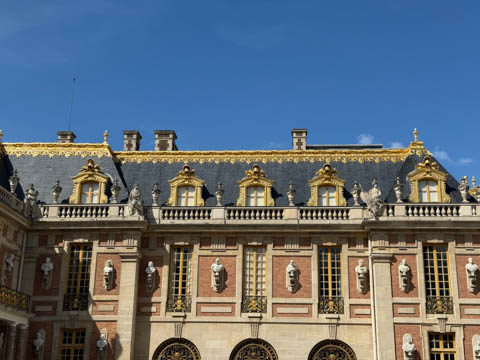
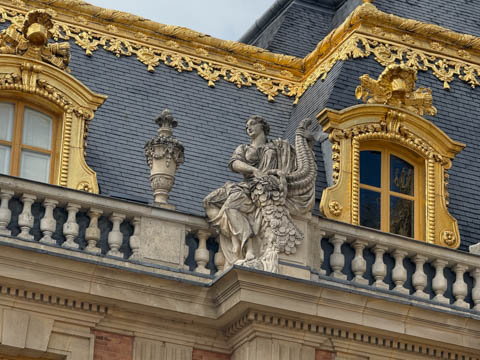
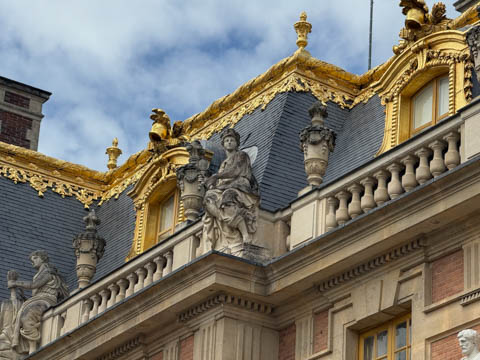
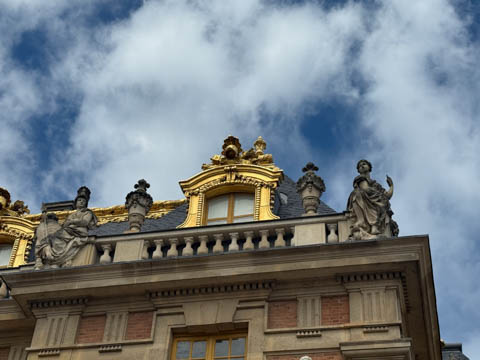
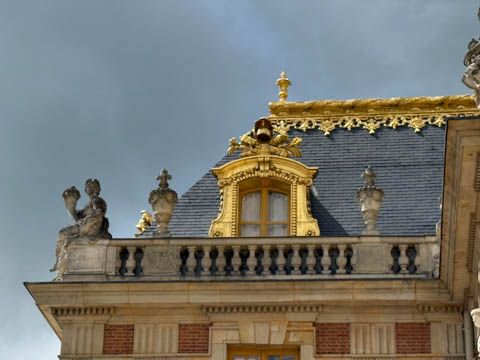
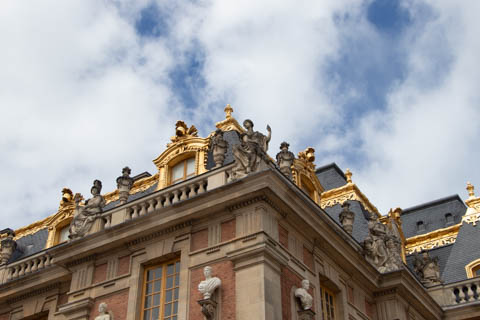
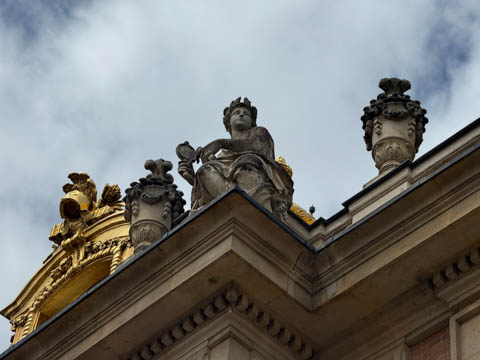
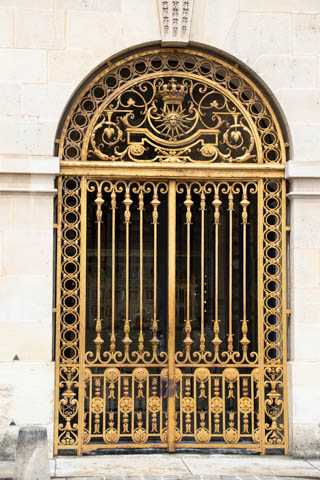
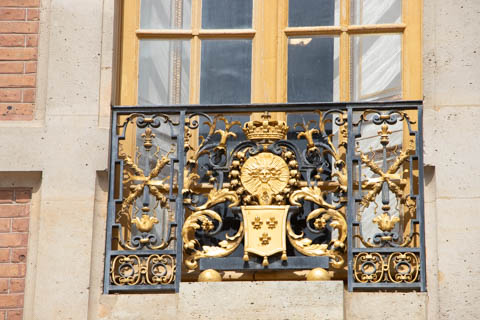
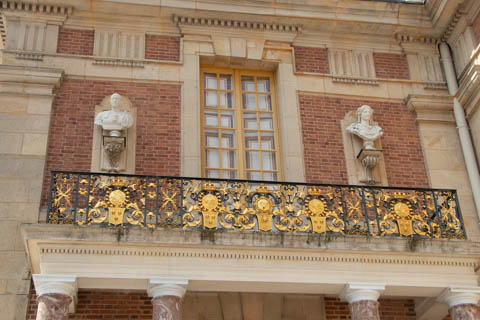
The ornamentation and gilding outside was amazing, inside it
was even more ostentatious.
Our guide led us through an entrance to the right
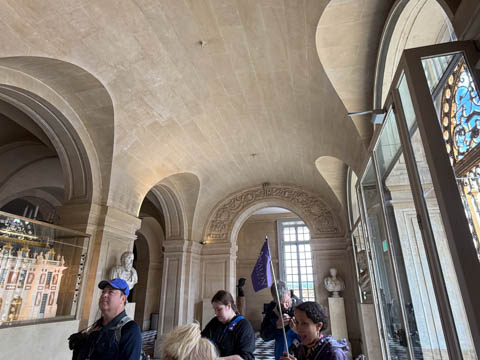
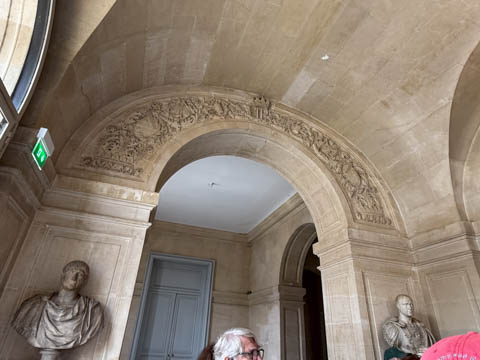
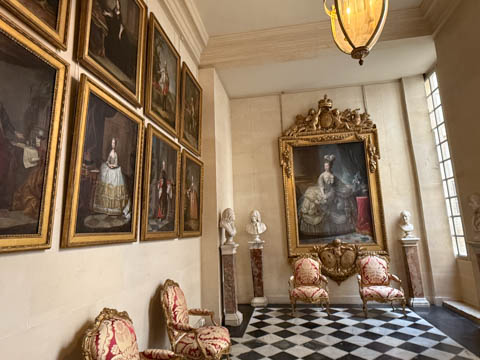
The tour included the King's Private Apartments, which are
only accessible with a private tour, whereas the State Apartments are available
with a general public ticket.
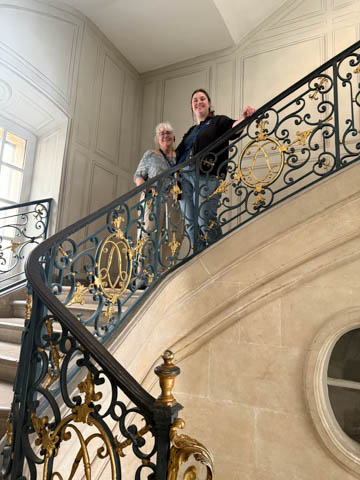
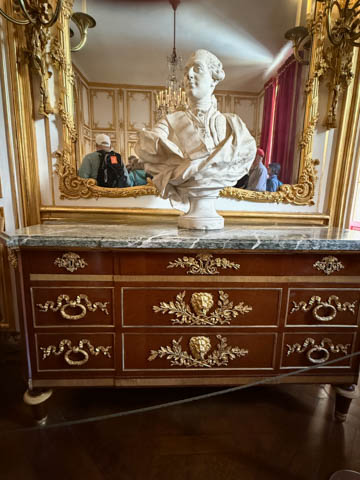
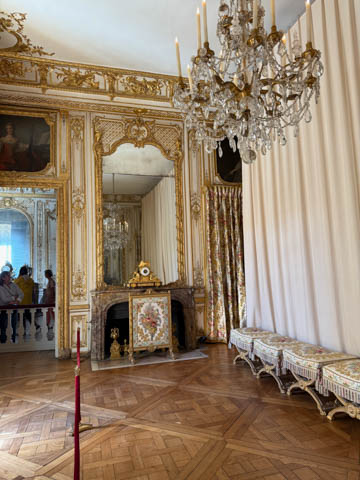
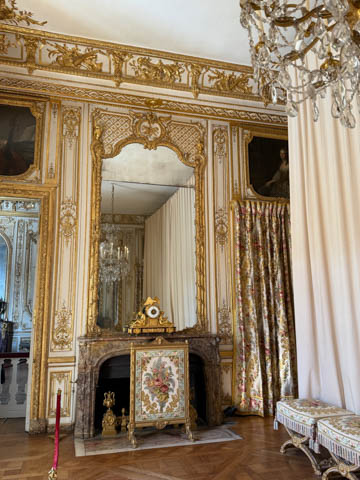
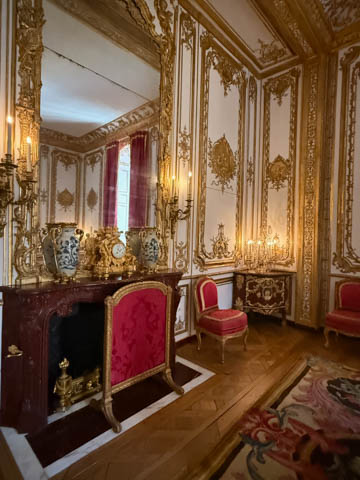
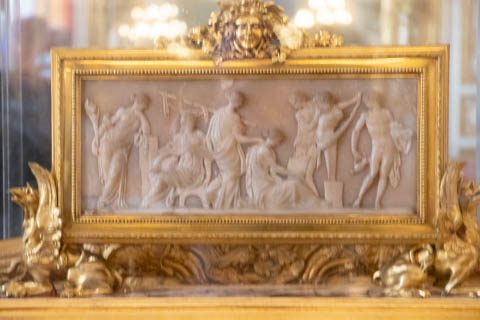
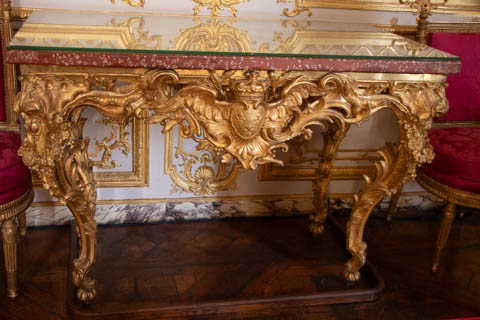
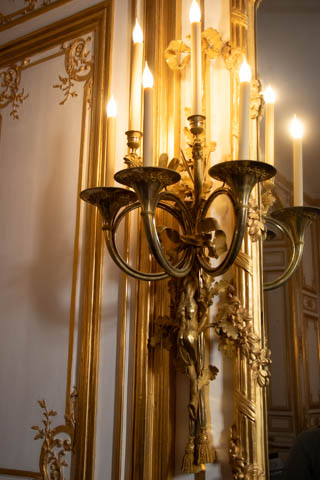
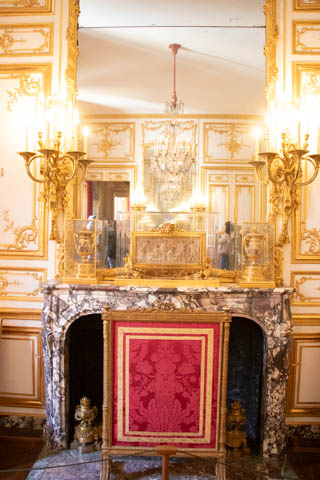
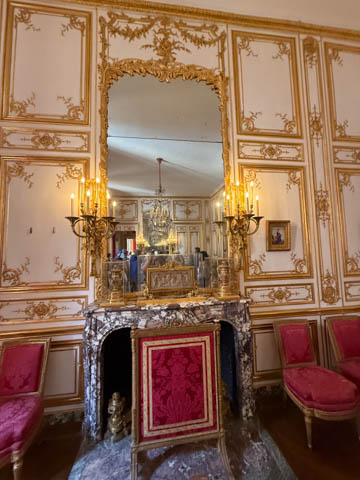
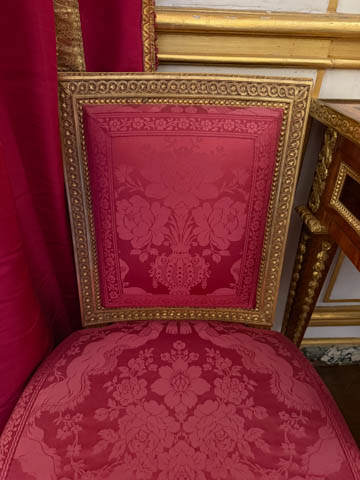
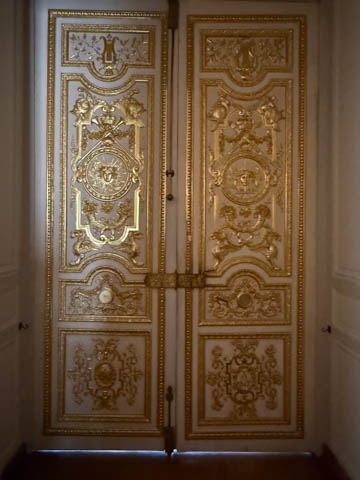
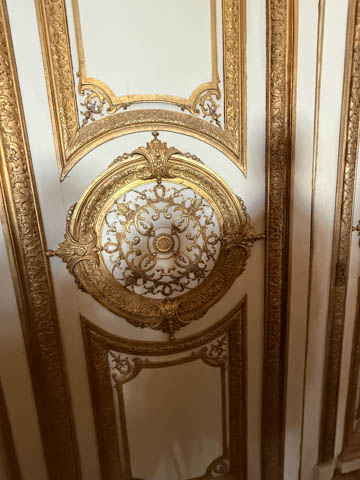
The rooms had gilded decorations everywhere.
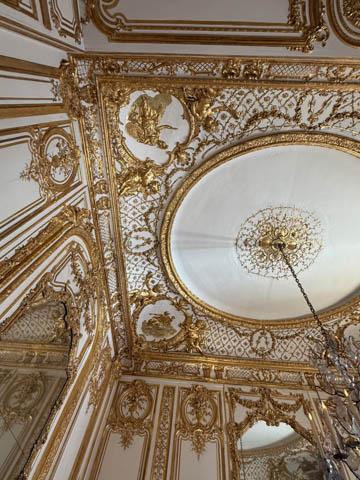
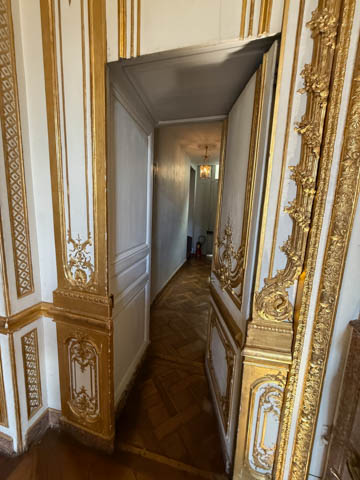
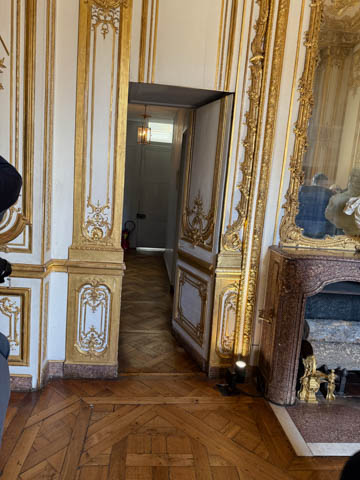
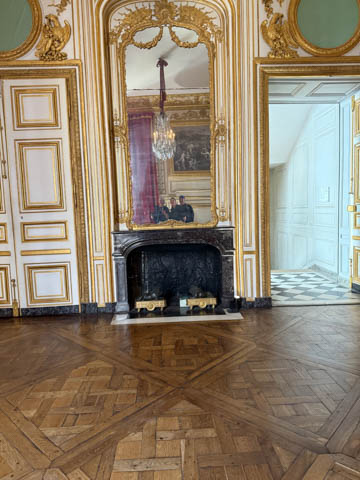
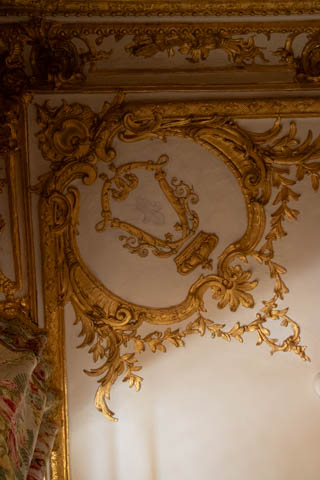
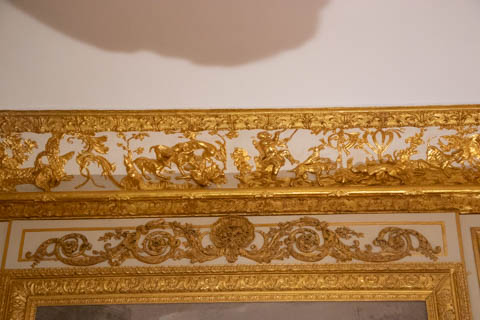
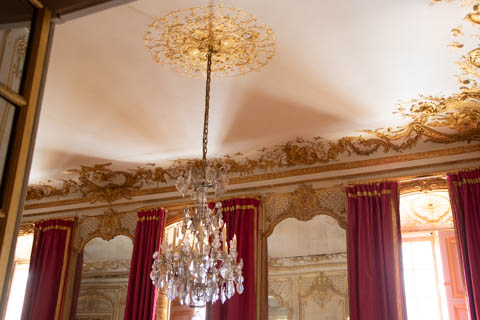
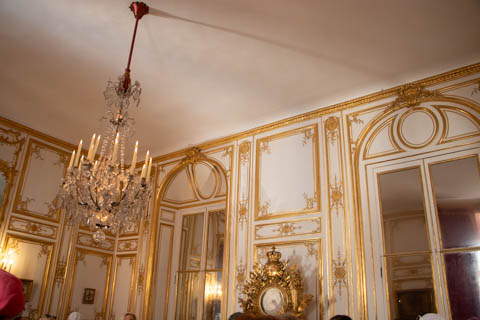
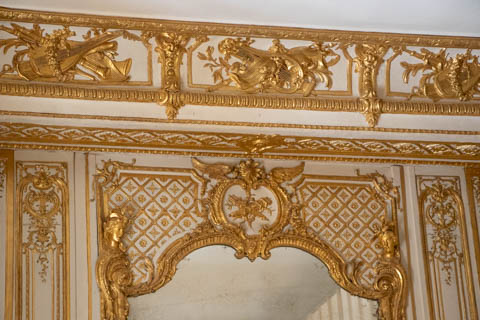
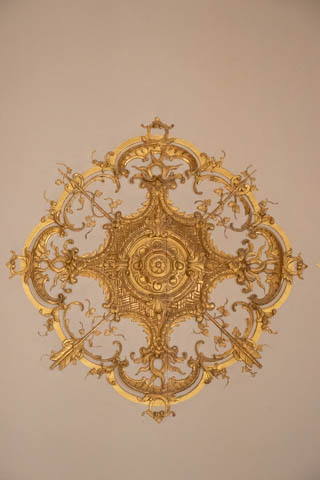
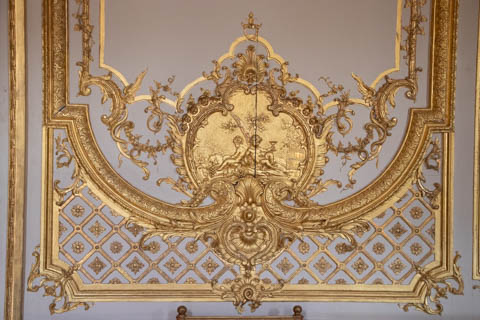
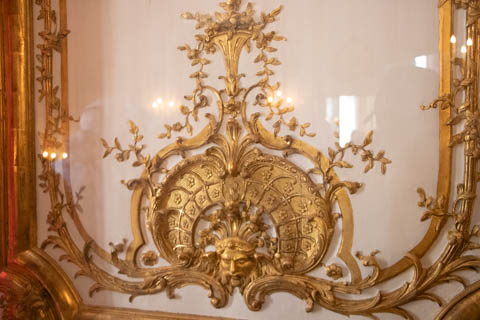
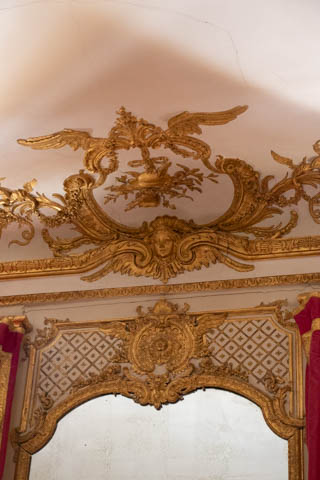
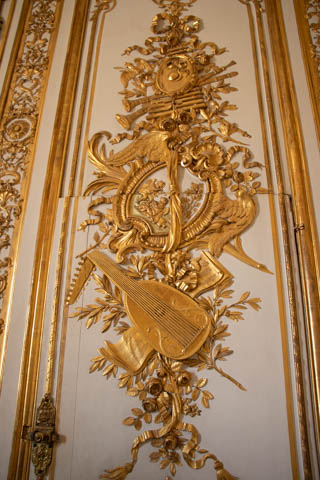
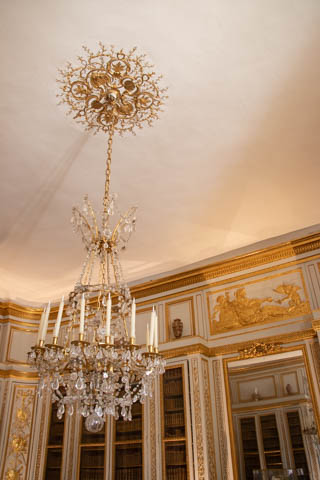
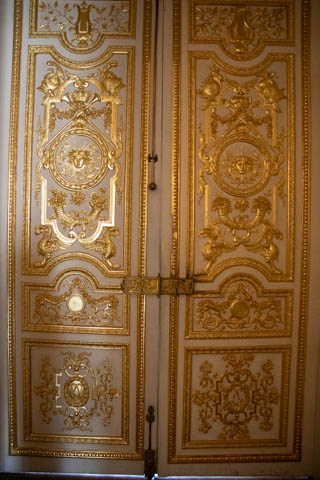
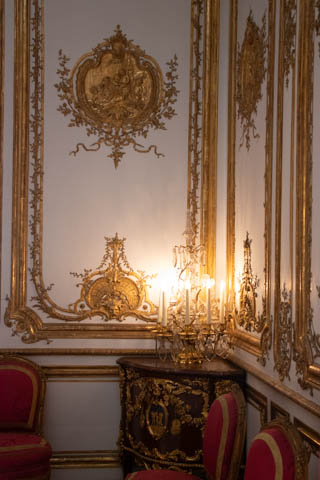
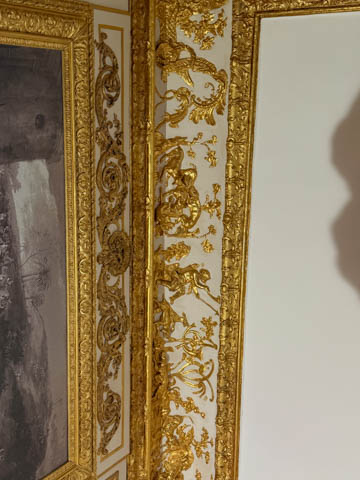
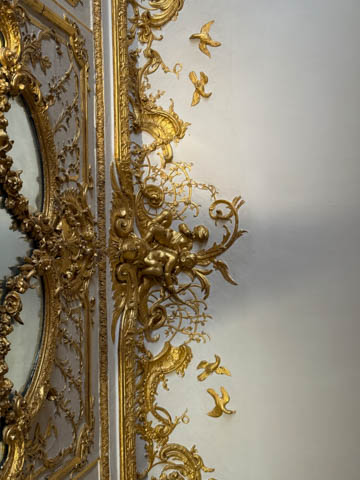
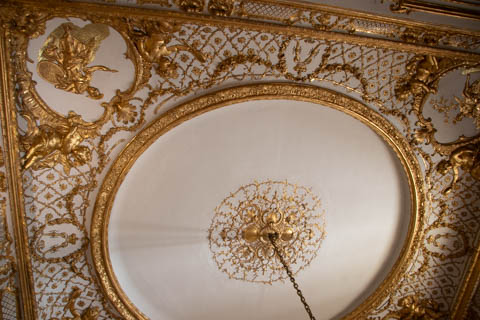
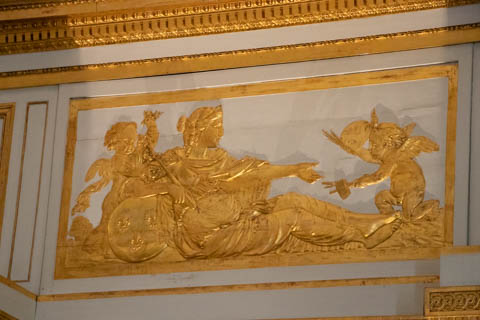
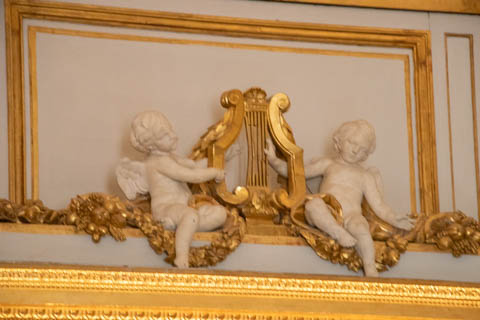
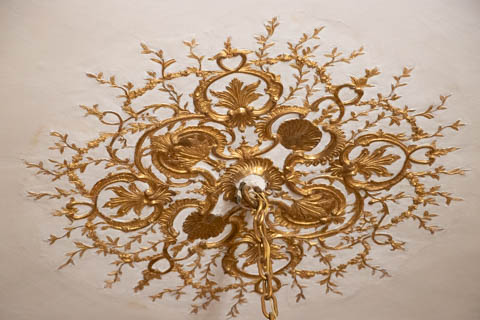
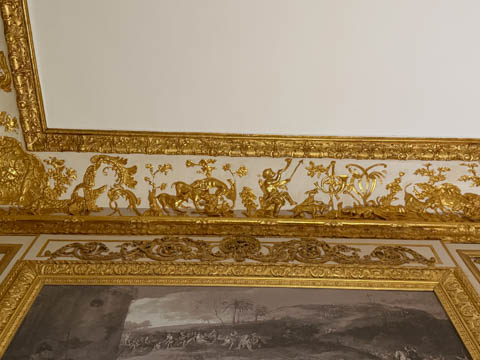
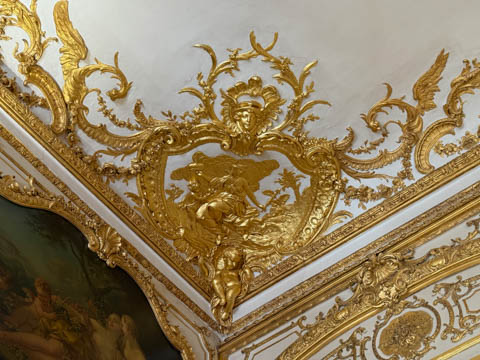
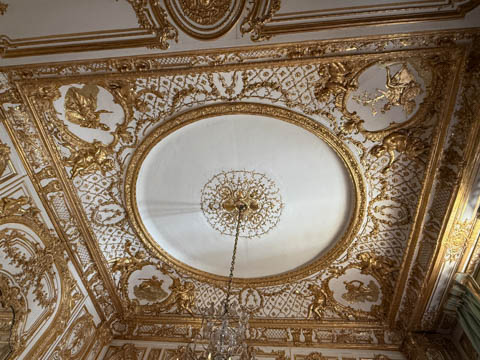
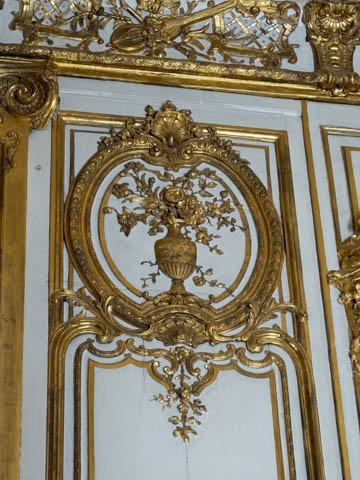
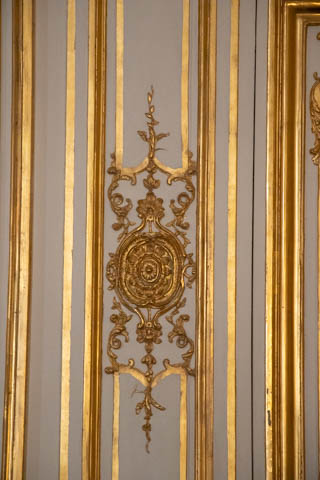
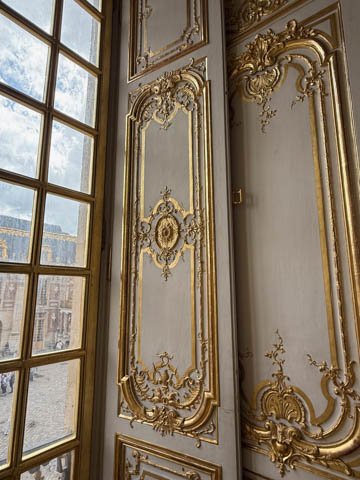
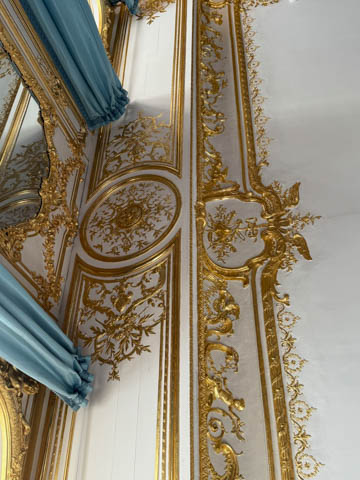
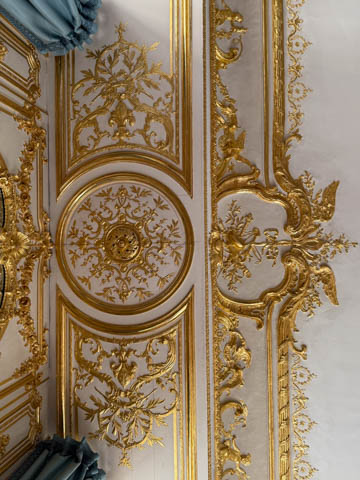
Along with artwork on almost every wall. With all of the painting hung in
exquisite and intricate frames in gold.
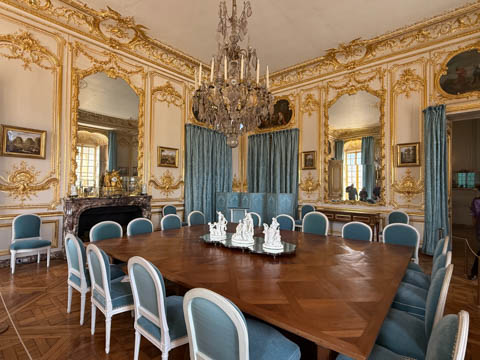
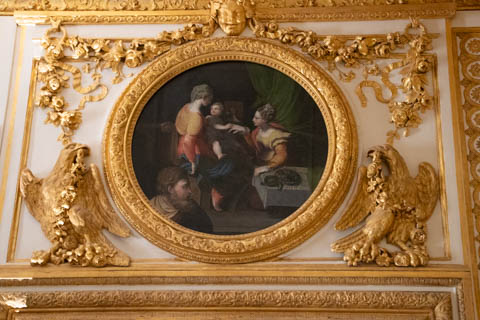
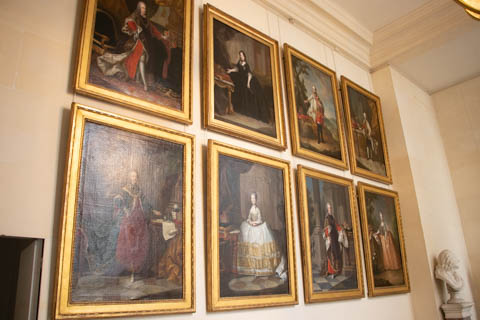
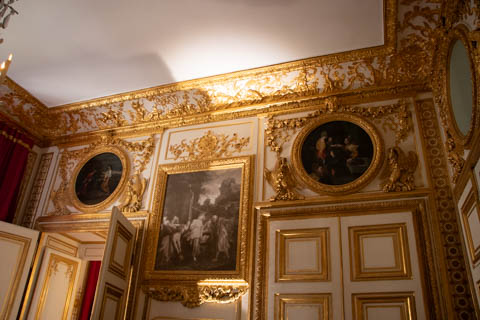
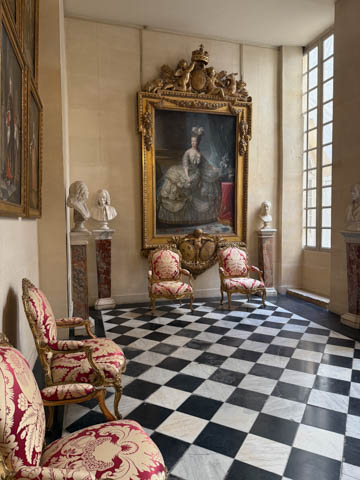
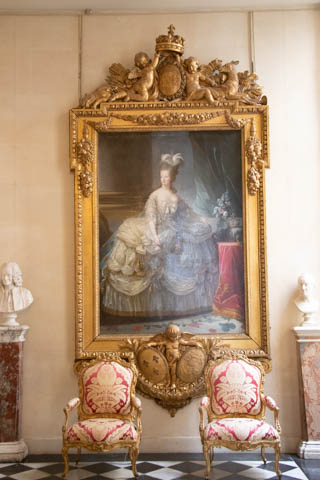
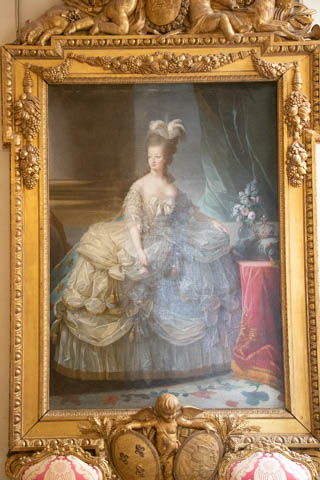
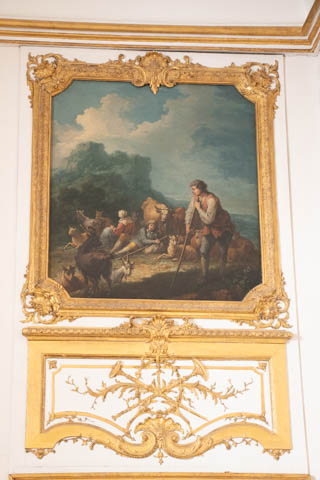
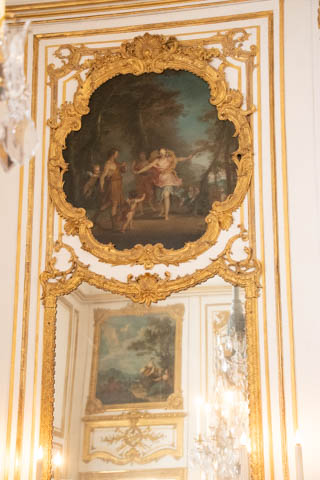
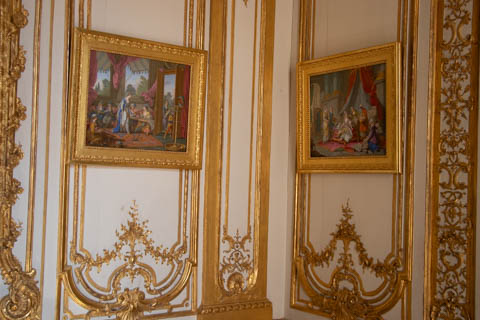
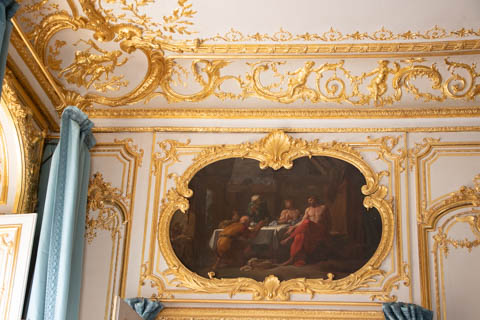
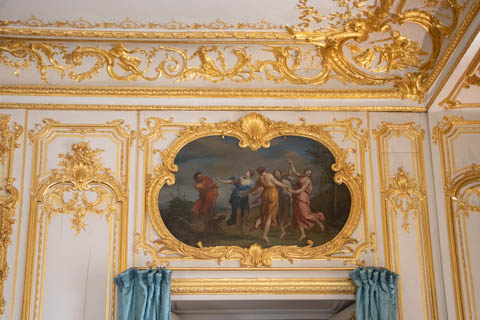
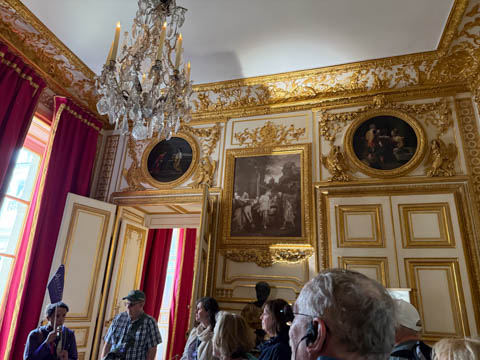
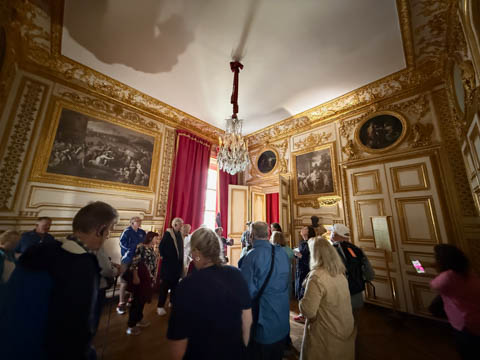
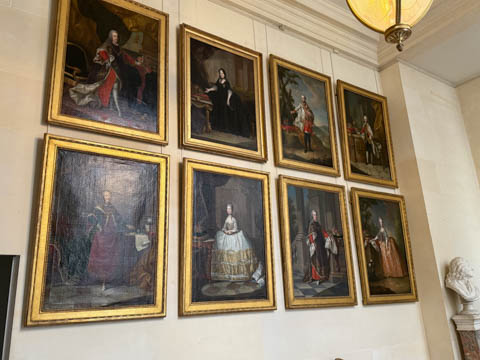
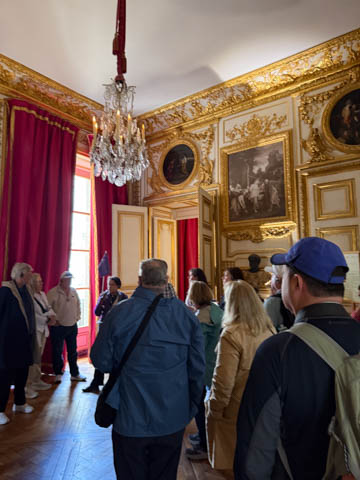
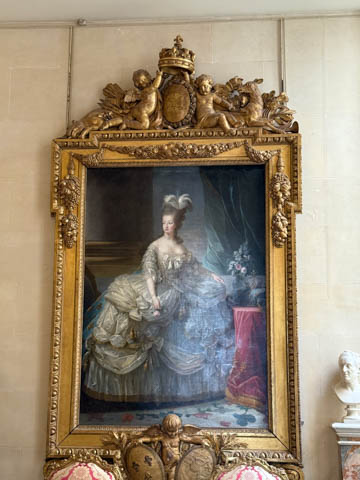
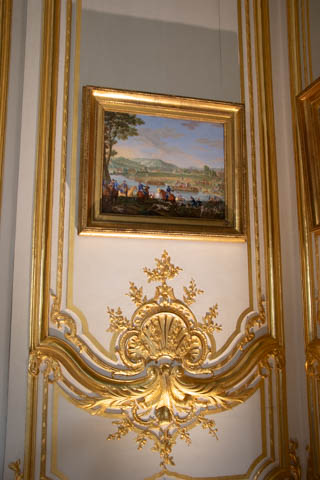
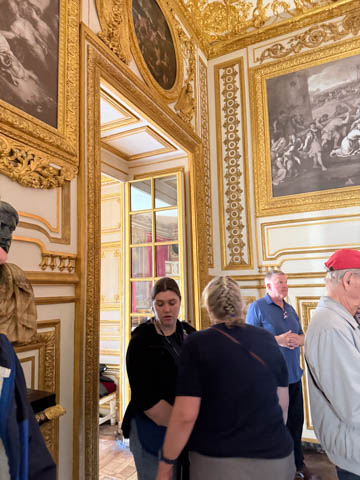
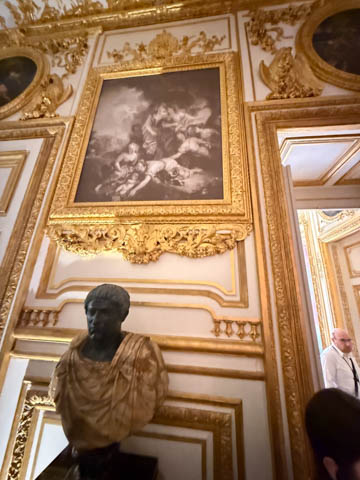
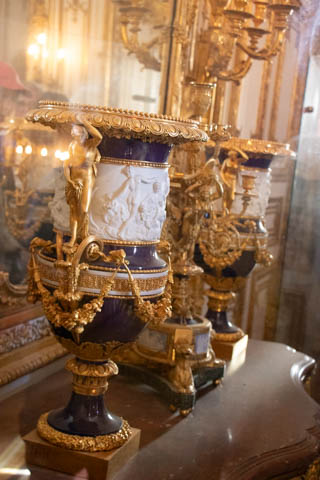
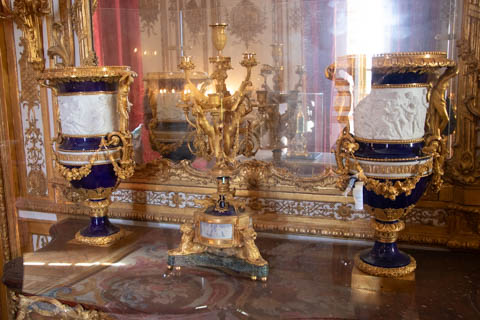
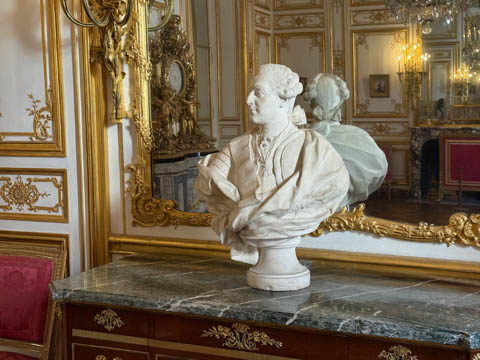
So many other amazing pieces of art
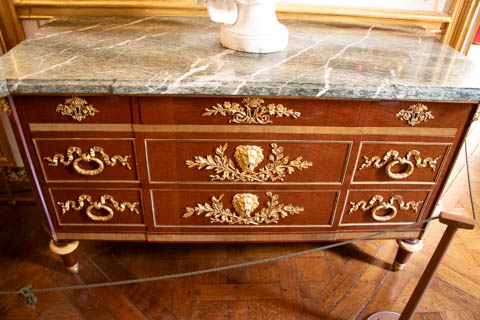
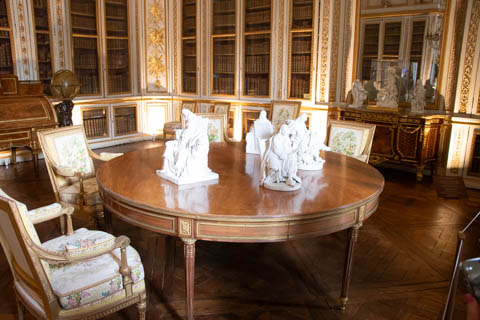
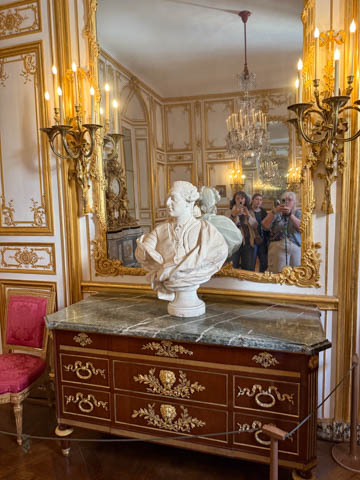
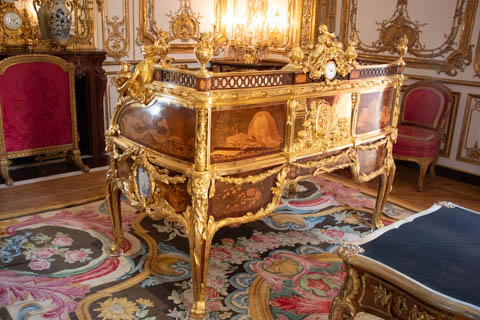
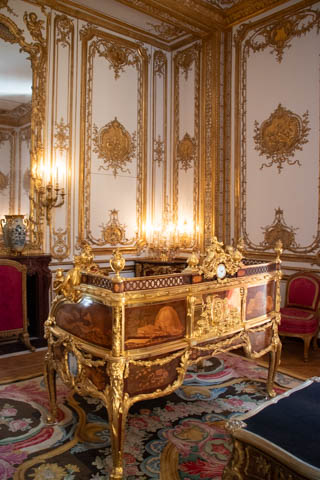
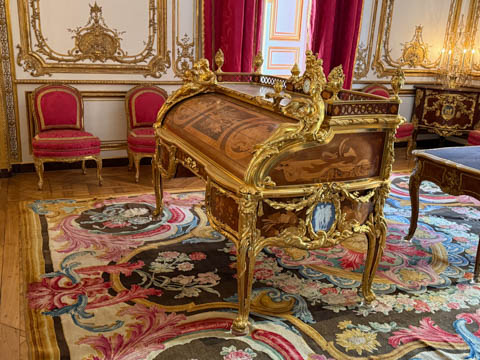
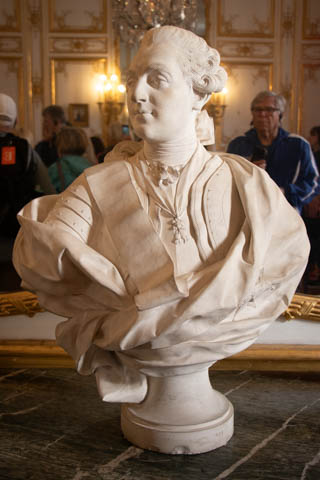
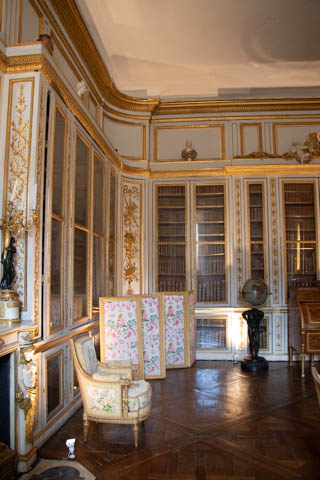
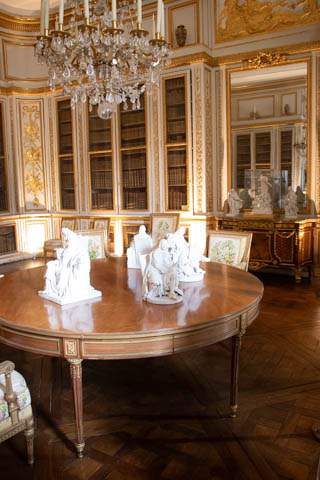
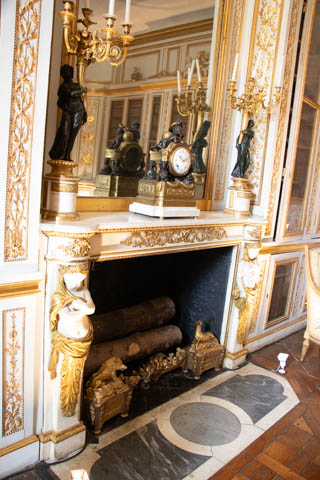
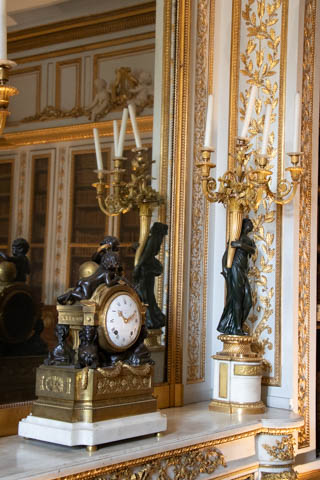
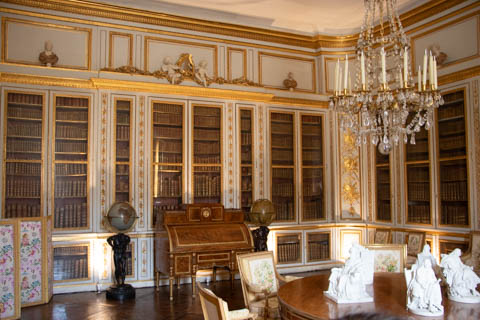
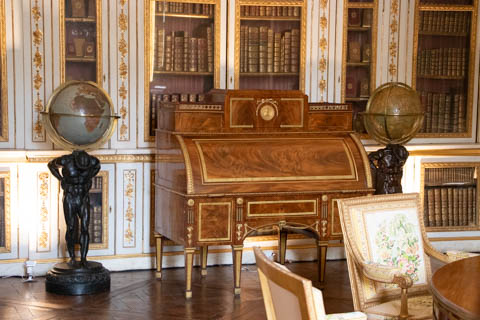
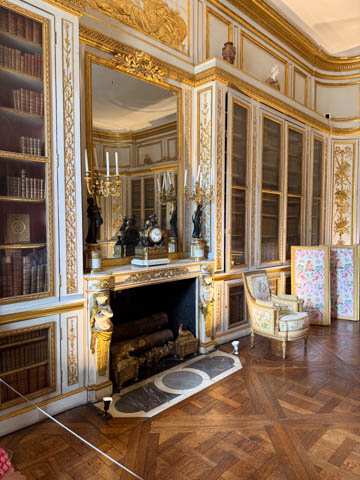
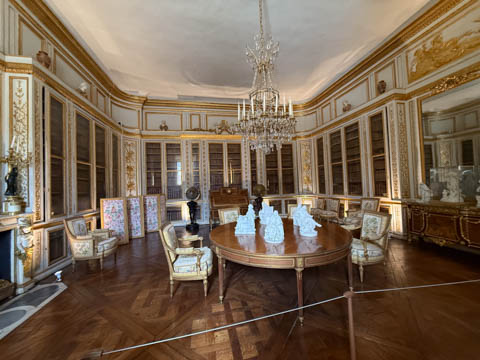
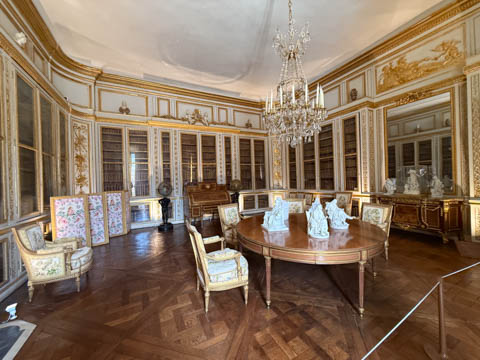
The white walled room with bookshelves is Louis XVI’s Library
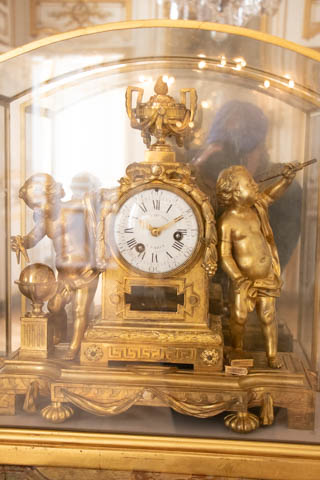
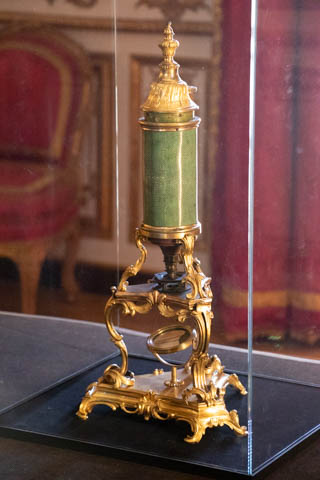
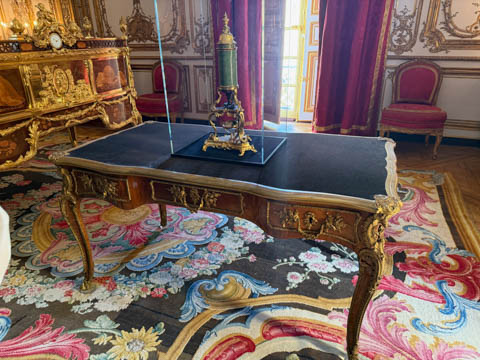
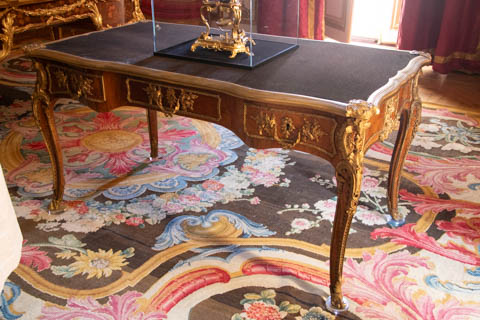
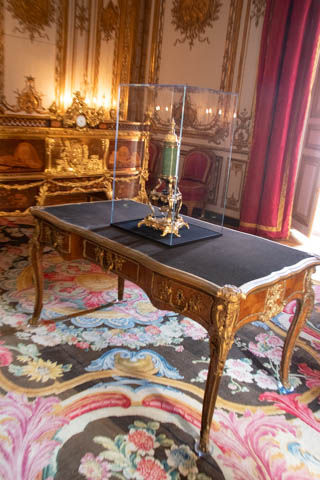
Here is the table where the Treaty of Versailles was signed ending World War I
(and setting the stage for World War II).
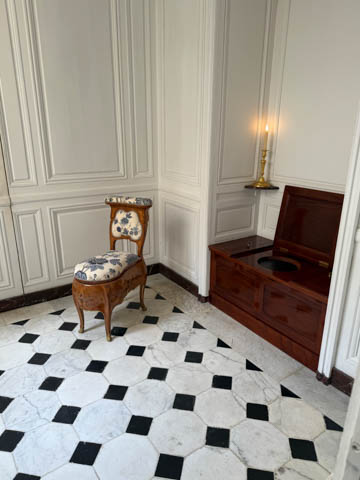
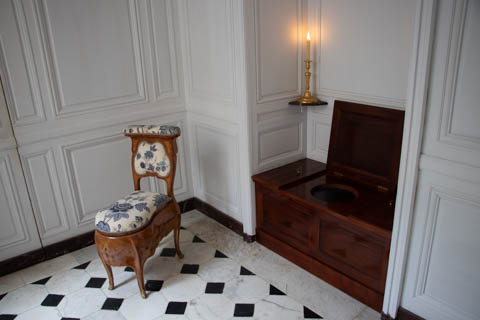
Here was one of the bathrooms.
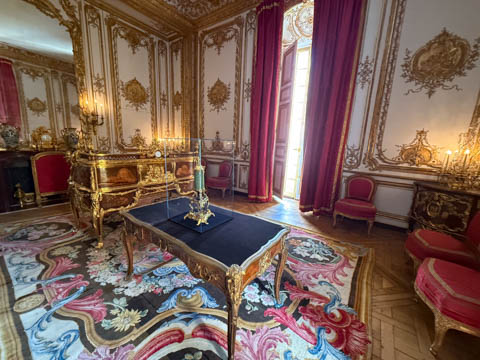
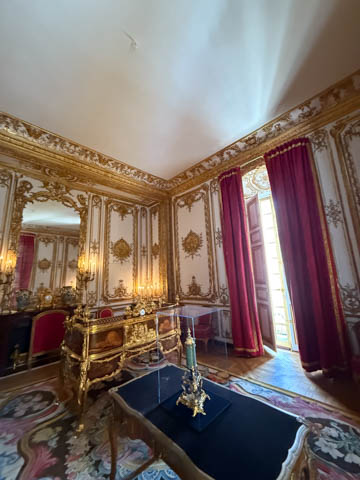
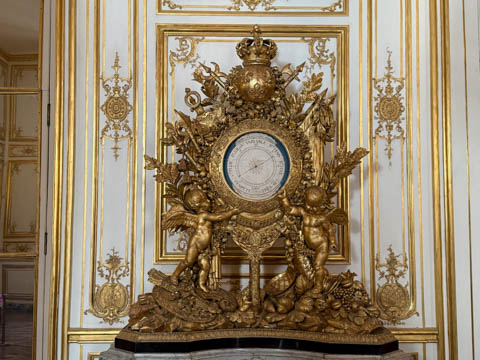
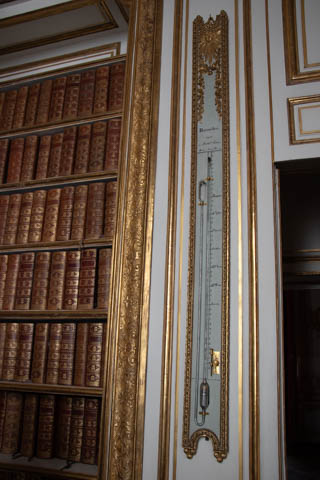
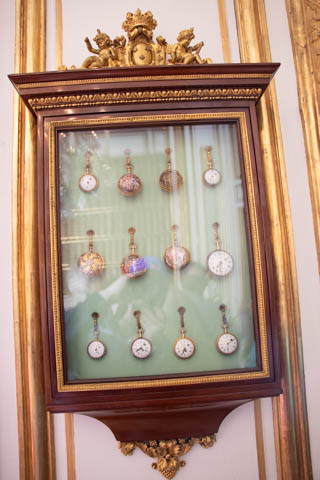
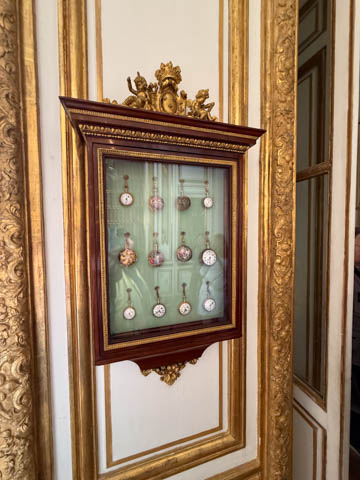
Also found a barometer and a collection of watches. These were in the
Dispatch Room, named because Louis XV used to retire here to examine the reports
from the secret agents he employed abroad, and to write instructions for them.
It is also where he kept some of his most valuable manuscripts.
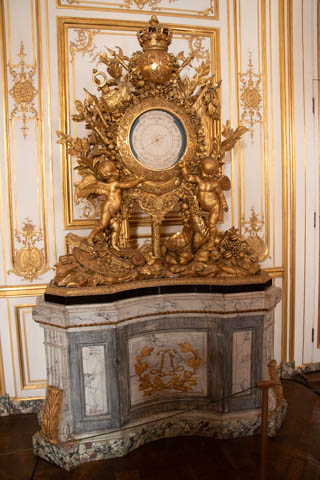
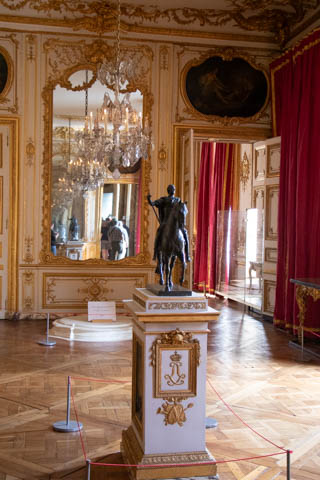
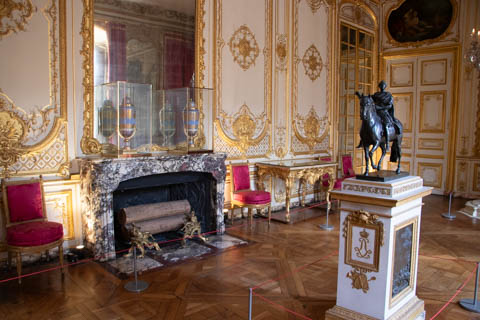
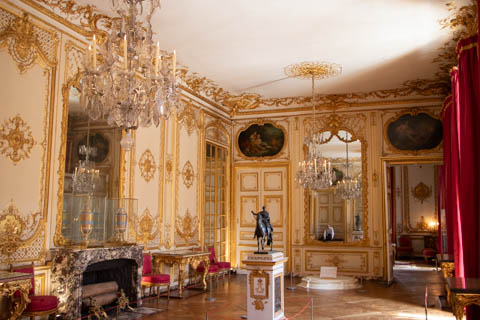
So many amazing rooms. Here is the Clock Room. On
the floor of this room there is a copper strip marking the Versailles
meridian. The extraordinary clock, which gave the room its name when it was
brought to Versailles in 1754 was unfortunately off exhibit. The clock
displays the time, day of the week, month, year and lunar quarter, and in the
crystal sphere the planets can be seen rotating around the sun. It was
used to set the official time for the whole kingdom for the first time. In
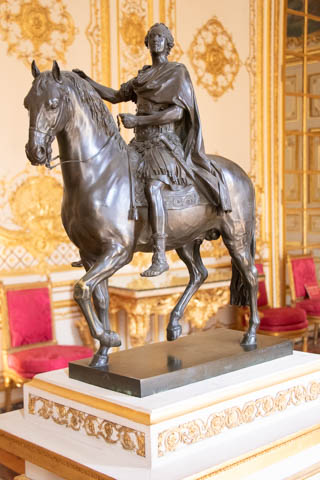
the center of the room, King Louis-Philippe placed a small-scale version of the
equestrian statue of Louis XV, also known as Louis the Beloved, which was made
for Place Louis XV, today Place de la Concorde, in Paris. The full size statue
was destroyed during the Revolution.
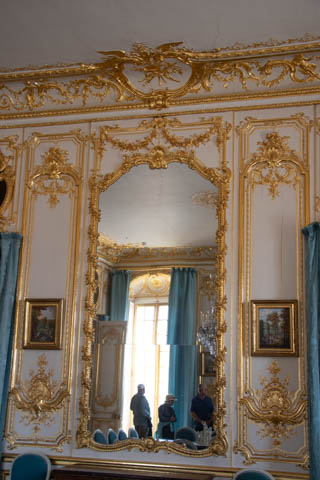
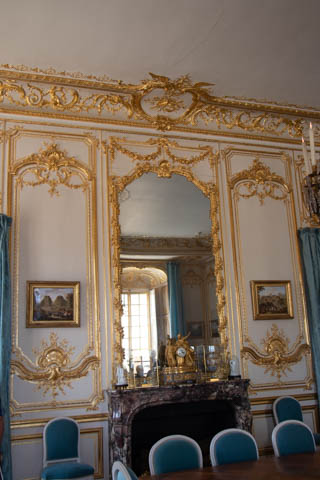
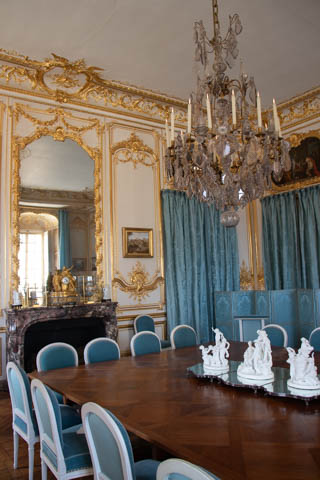
The room with the dining table and blue chairs is the
Porcelain Dining Room, created in 1769 during the reign of Louis XV for his
post-hunt dinners. The room was most used by Louis
XVI and Marie-Antoinette. Over a period of 20 years, 40 or so guests were
invited to sit around an extendible table for “society” meals. This new style of
dinner was halfway between the official Royal Table and “private” meals. If the
number of dinner guests exceeded the number of seats, the men went to the room
next door where there was a buffet laid out on the billiards table. This dining
room was also known as the Porcelain Room because Louis XVI used to present his
latest pieces from the Sèvres manufacture here every year at Christmas.
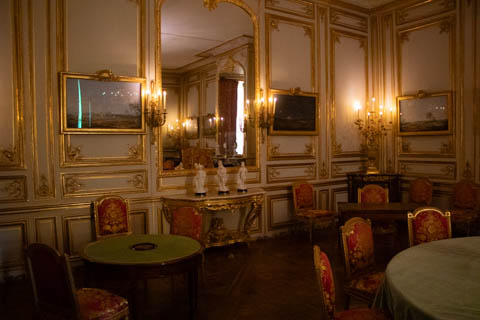
To the right is Louis XVI’s Games Room. Although the
furniture was sold off during the French Revolution, most of it has been bought
back and restored to its original place
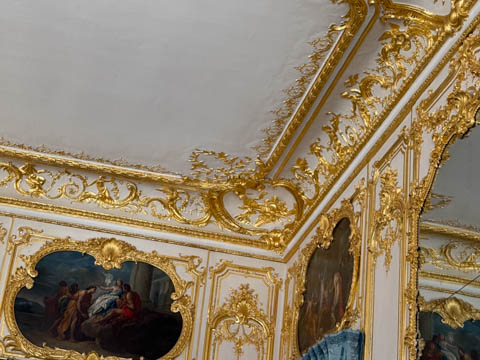
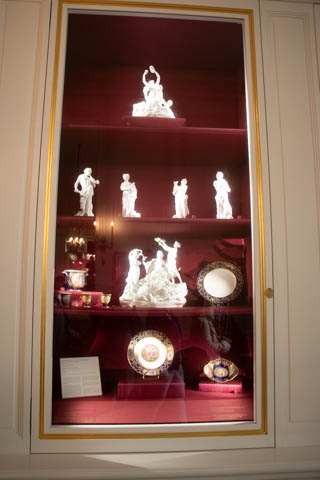
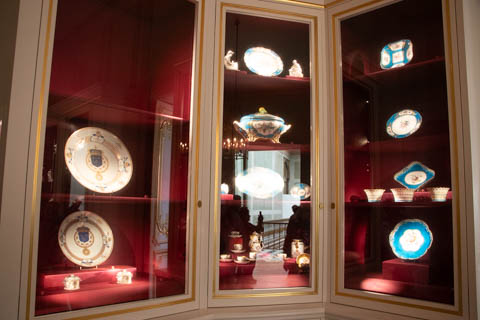
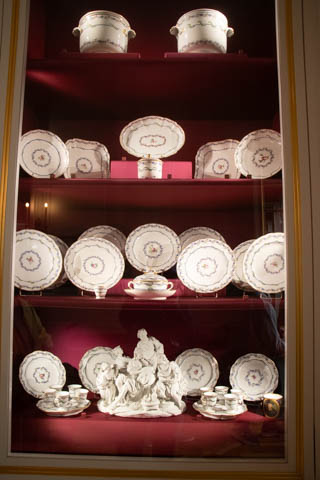
There was a room dedicated to porcelain.
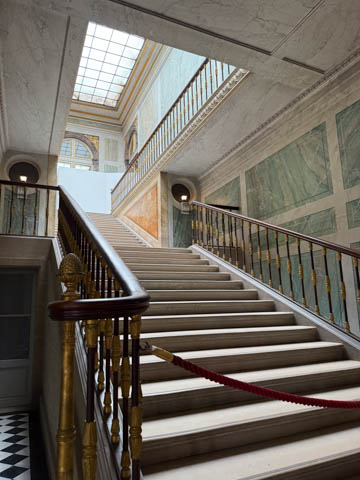
After leaving the King's Private Apartments, we made our way back downstairs to
the ground floor. There were a couple elaborate miniature rooms in the
entryway.
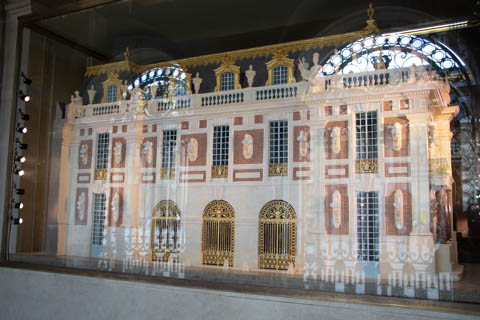
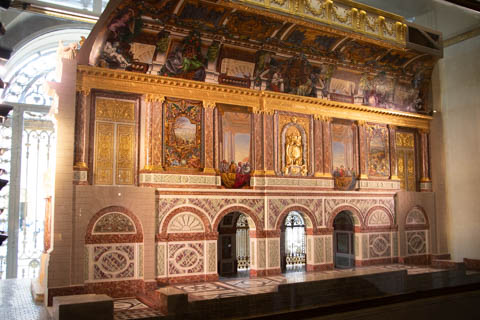
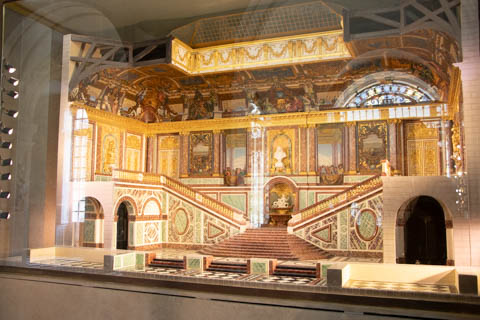
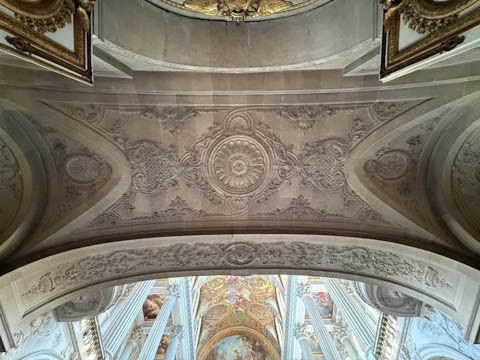
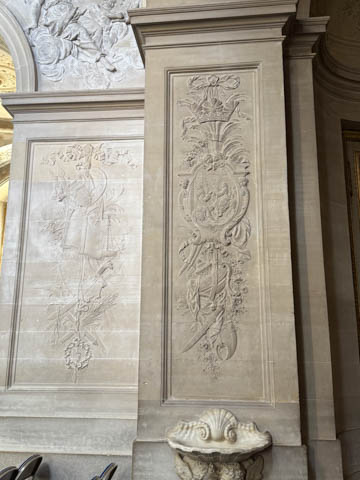
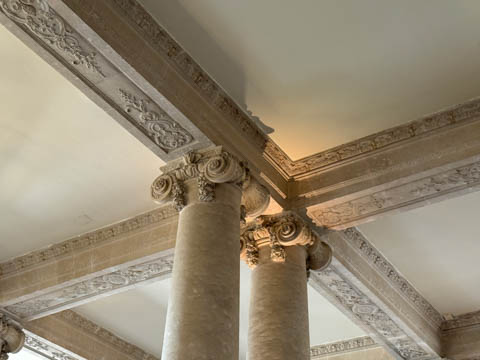
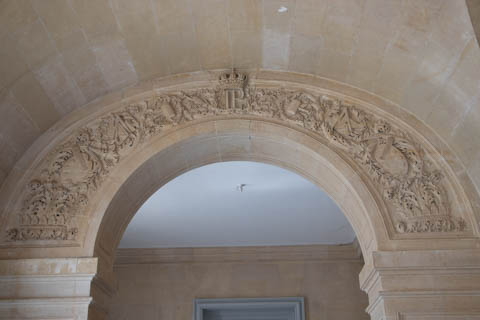
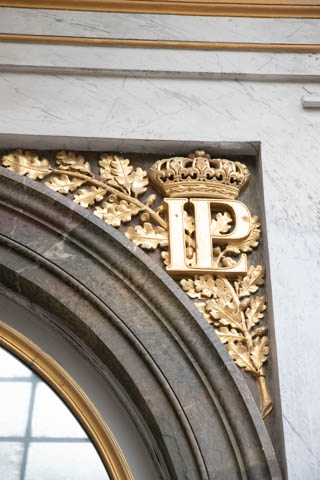
Saw several decorations with the initials "LP" for King Louis Phillipe I, who
was placed on the throne in 1830 after the French Revolution when the monarchy
was restored, before he was overthrown by another revolution in February 1848
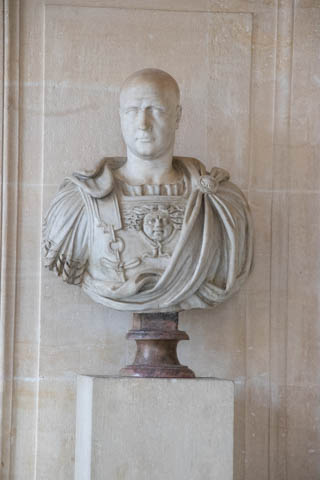
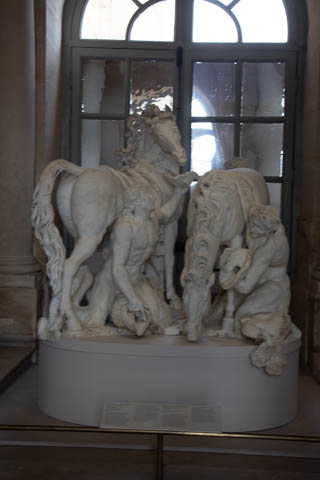
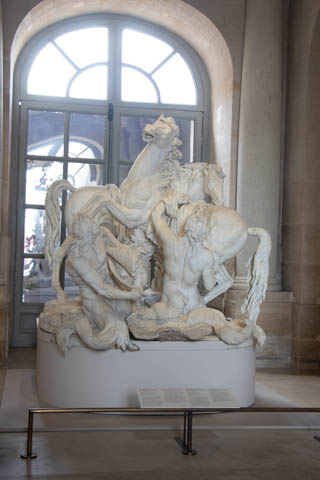
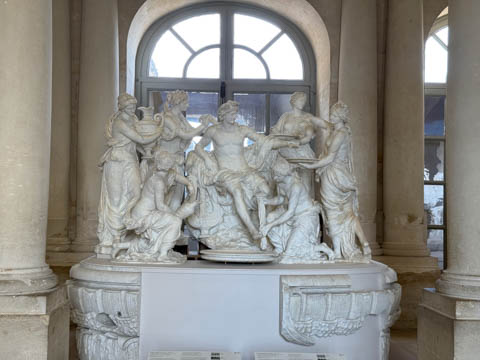
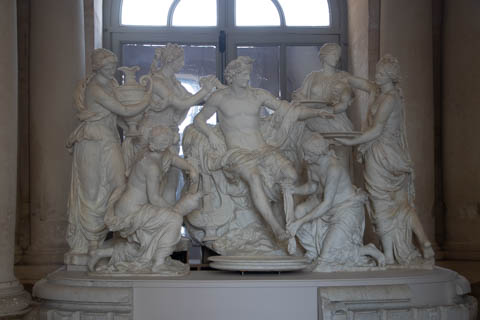
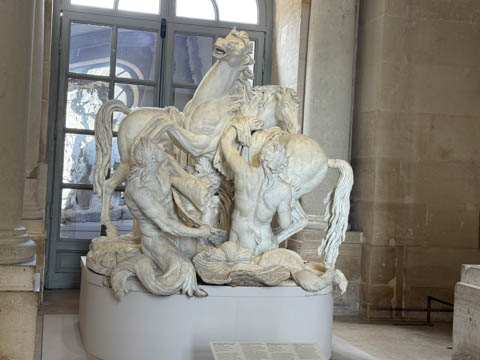
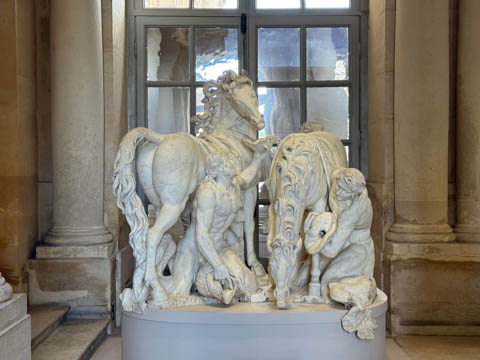
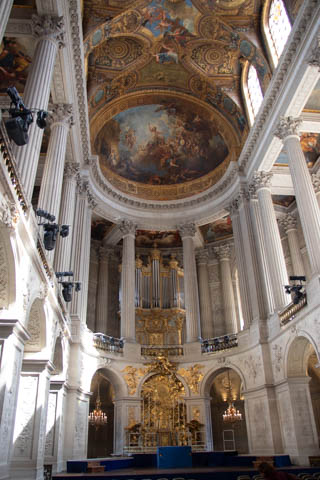
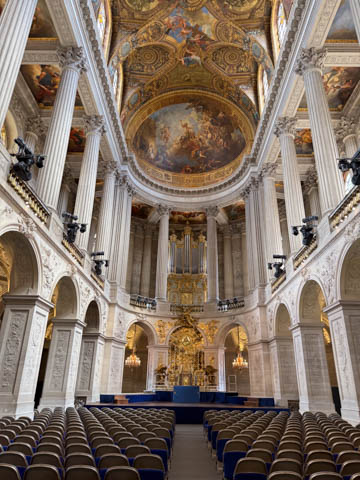
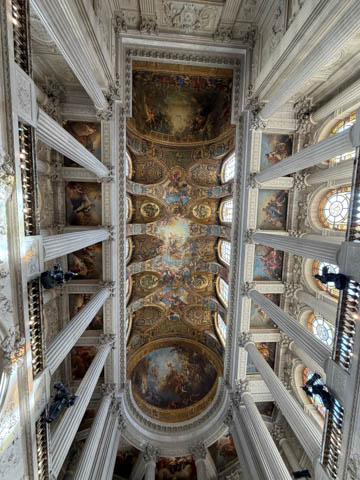
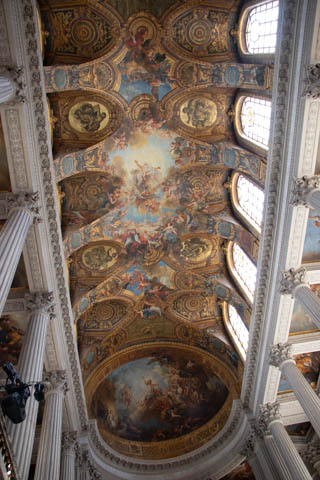
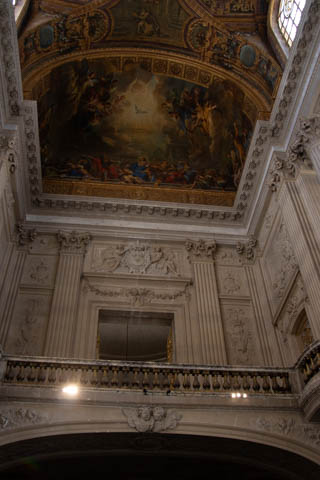
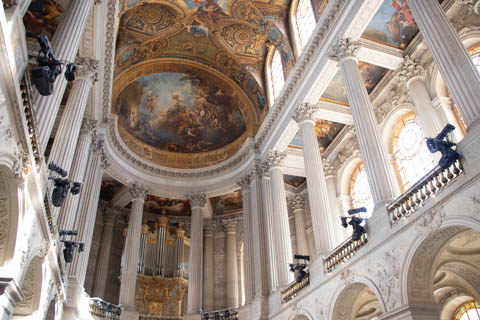
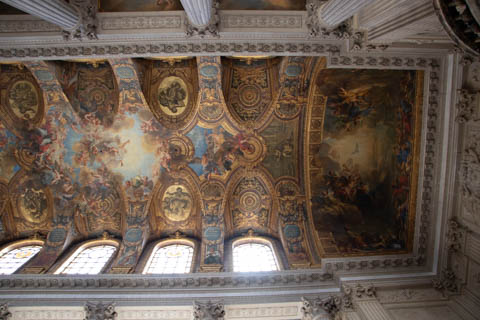
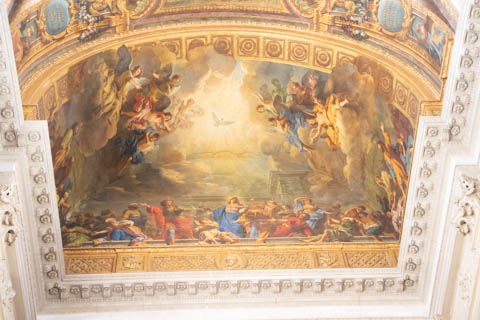
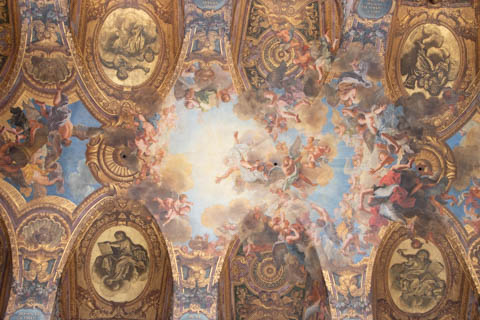
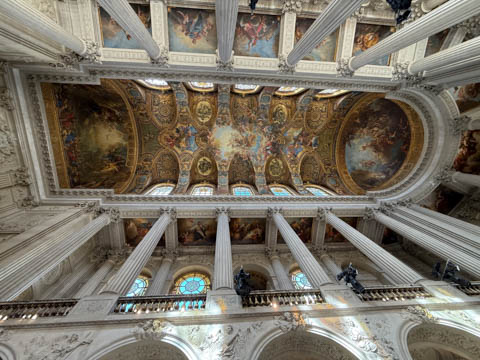
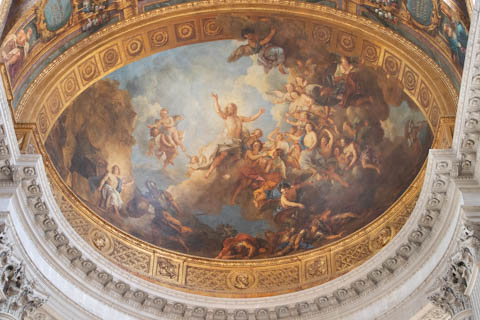
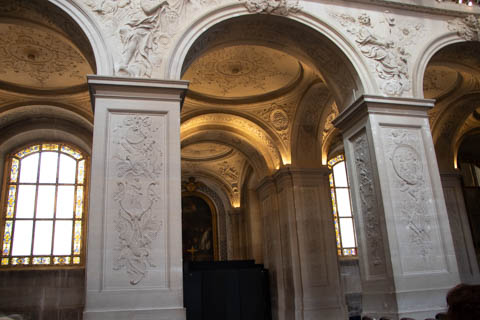
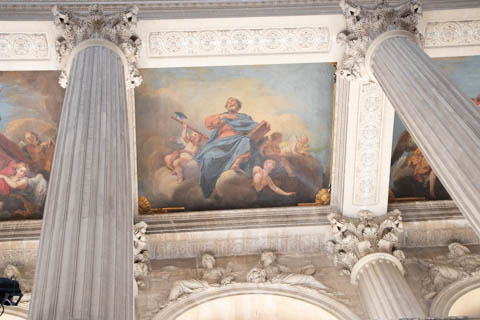
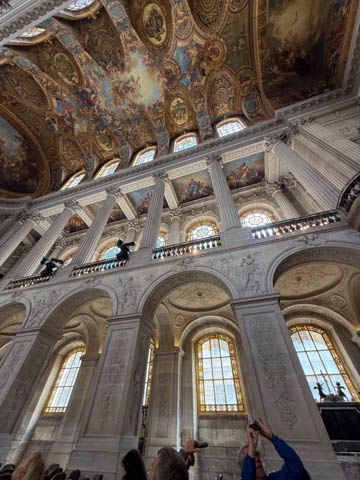
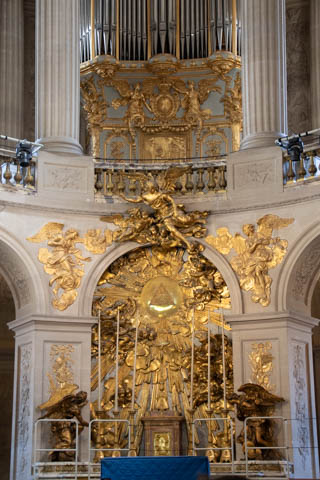
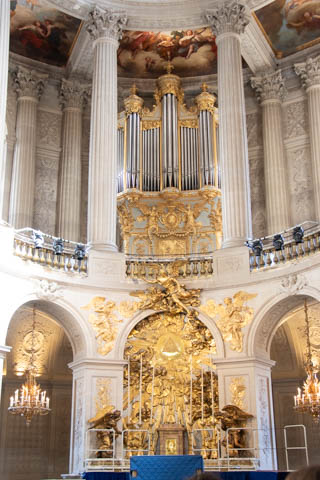
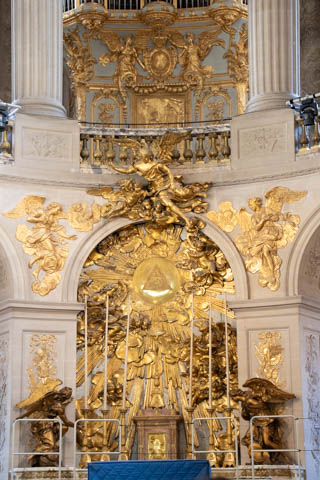
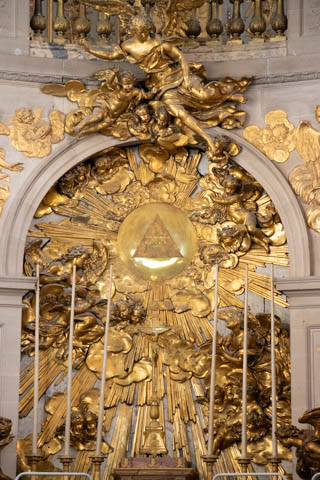
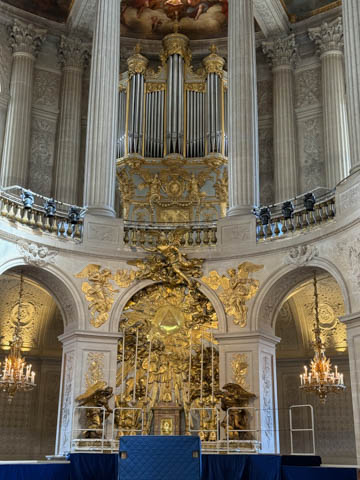
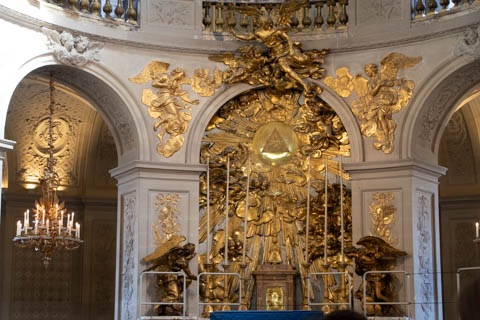
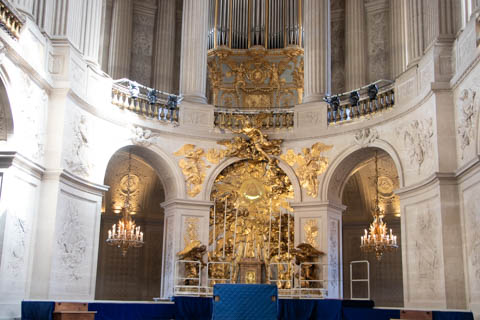
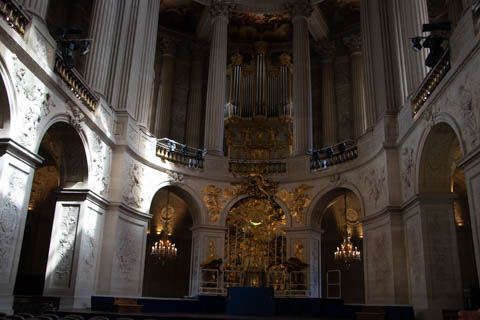
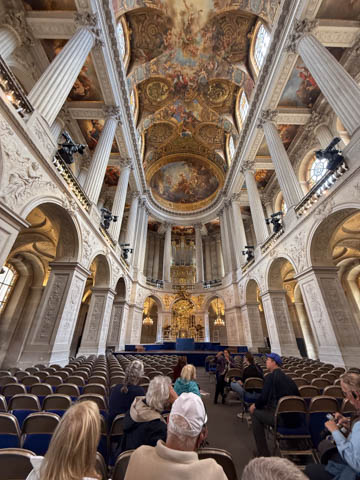
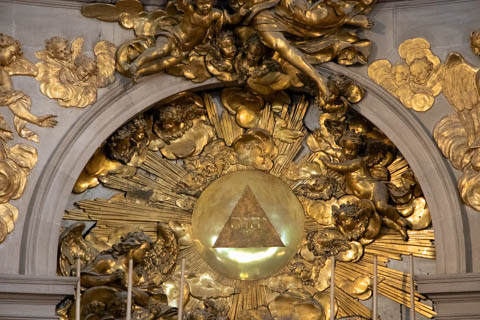
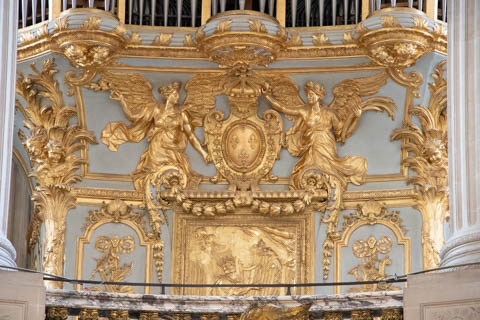
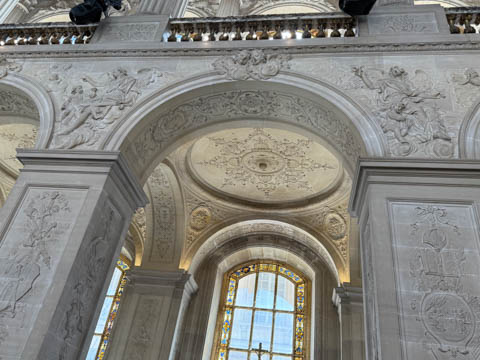
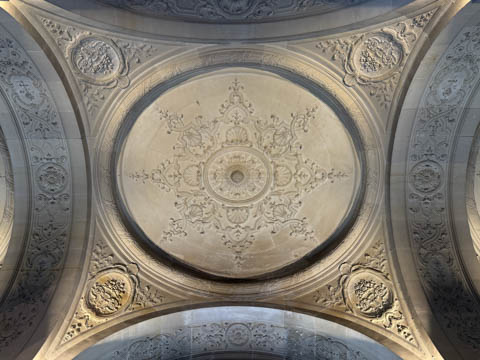
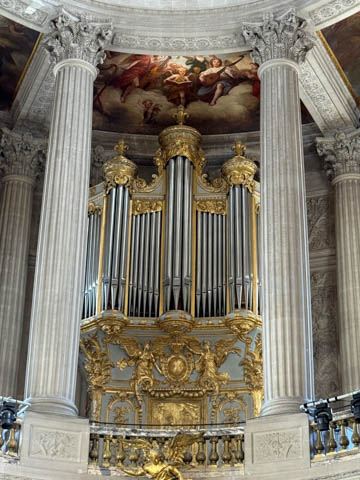
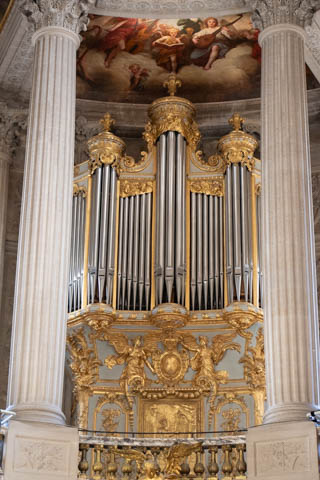
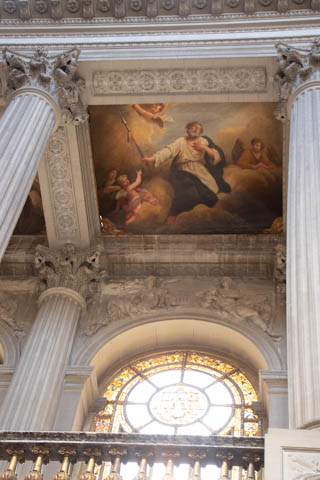
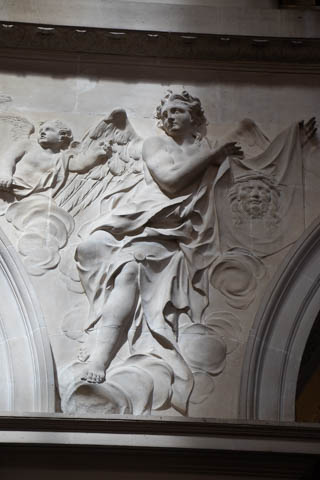
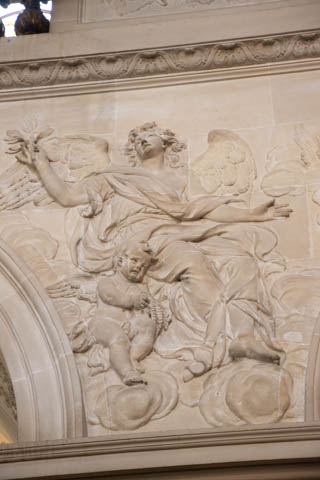
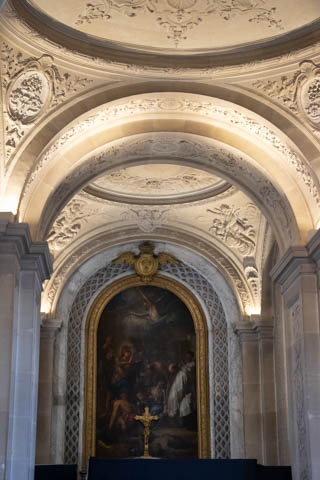
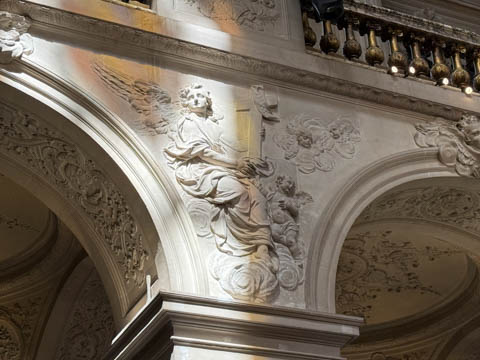
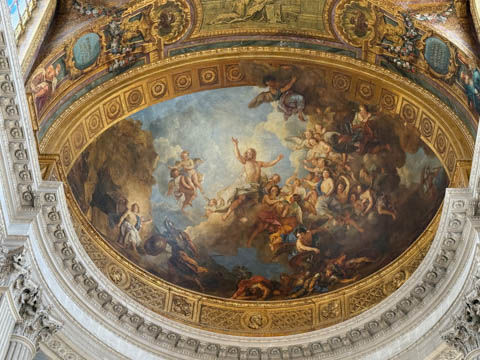
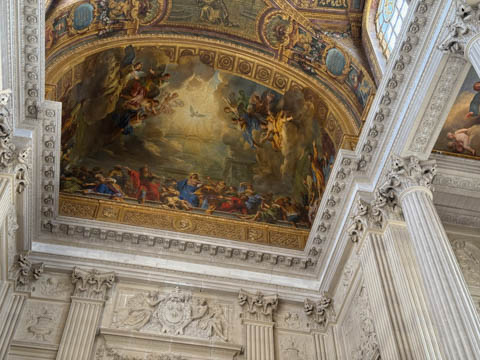
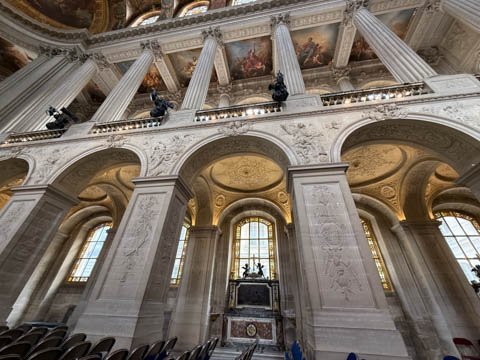
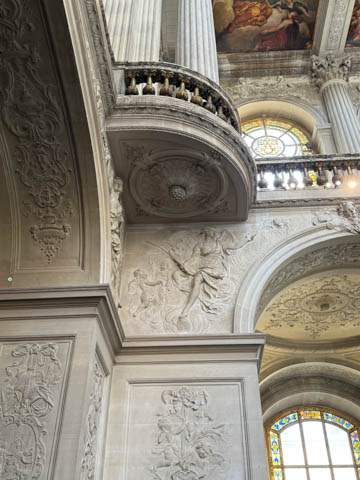
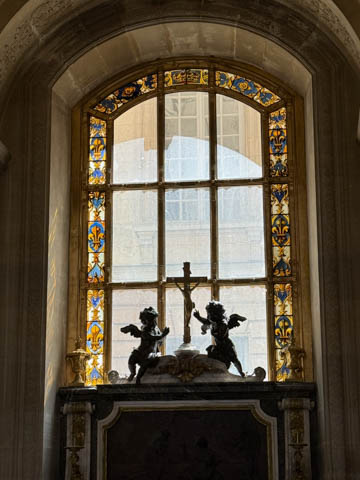
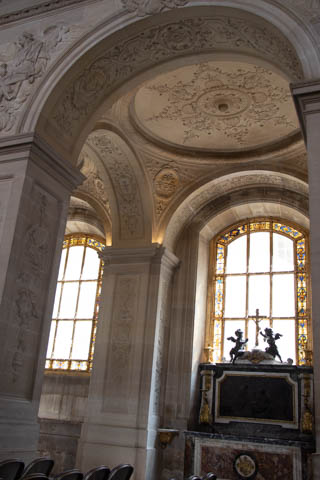
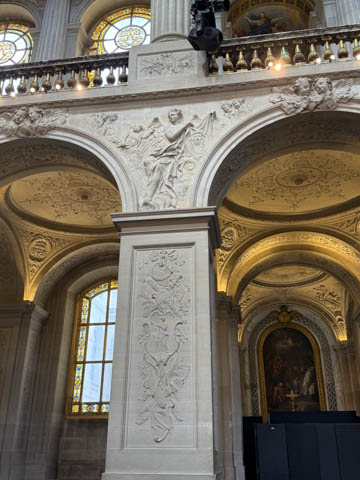
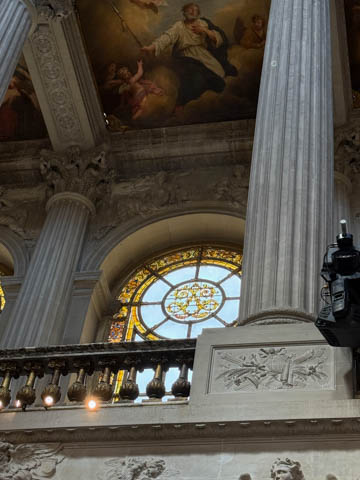
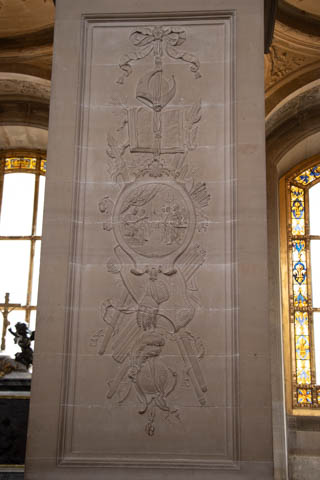
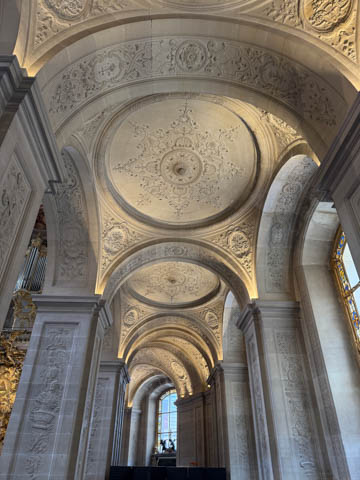
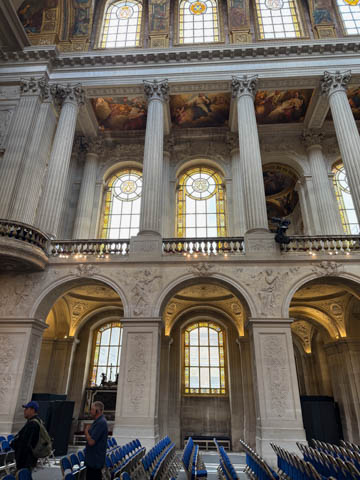
From there, we headed into the Royal Chapel, which we had to ourselves.
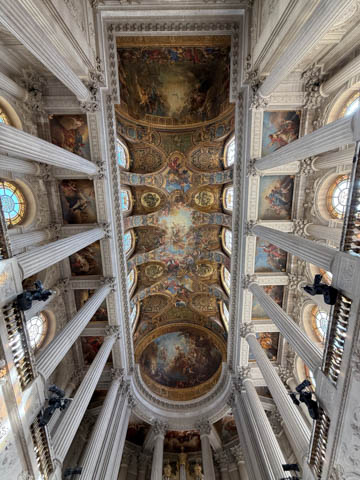
This was stunning.
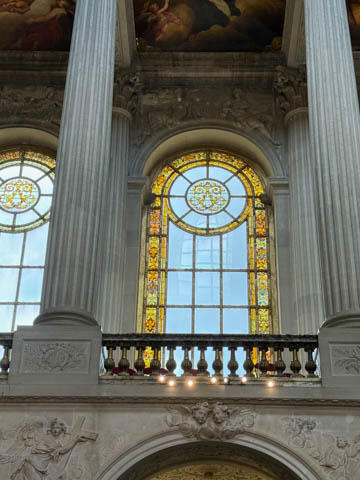
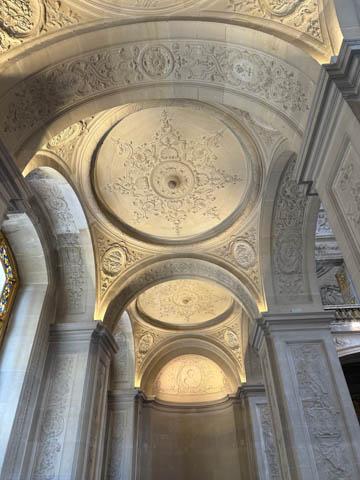
The Royal Chapel seen now is actually the fifth one to be
built at Chateau. Its construction took over two decades, with more than 110
sculptors and other artists working on the ornate sculptures, paintings, and
ornamentation, and completed in 1710. Master organ-maker Clicquot designed the
Chapel's renowned pipe organ. The Chapel soars to 144 feet in height,
making it the tallest part of the palace. Like Sainte-Chapelle and other French
palace chapels, it features two levels. The chapel combines the
traditional, Gothic royal French church architecture with the French Baroque
style of Versailles
The royal family attended mass on the upper level, which would
have given them excellent close-up views of the magnificent painted ceilings and
domes. However, according to the custom of those times, other court members and
the public watched from the somewhat less-grand ground floor. In
1770, 14-year old Marie-Antoinette married the 15-year old Dauphin (later known
as Louis XVI) here in front of over 5,000 guests. She wore a lavender dress
adorned with diamonds and pearls, and he sported a silver suit. After the
ceremony, a crowd of 200,000 watched fireworks on the Estate's grounds.
Back in the hallway, we made our way back upstairs.
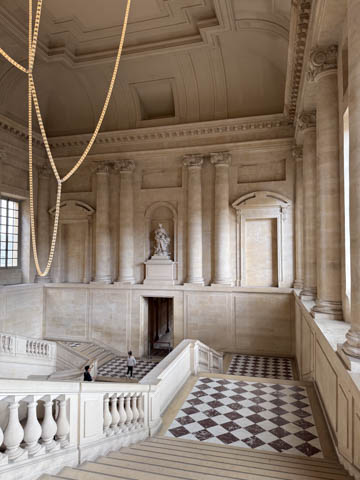
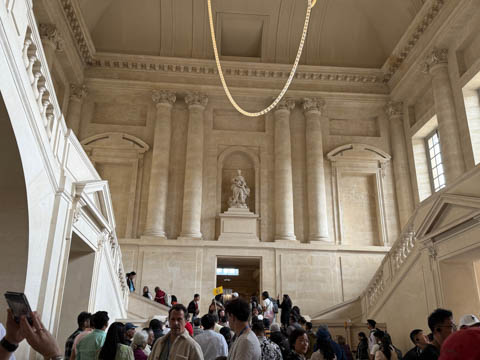
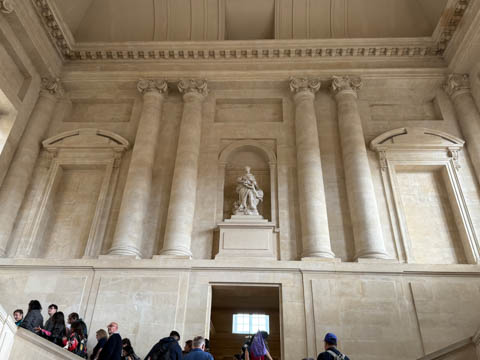
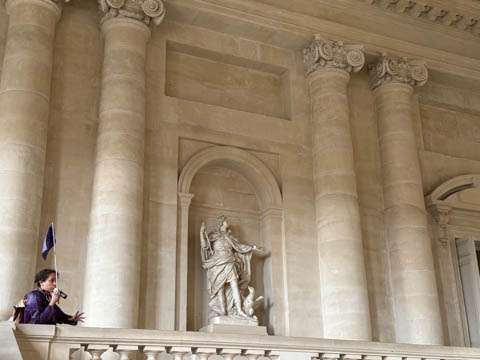
We made our way to the State Apartments, which were
ridiculously and uncomfortably crowded. Each of the seven rooms is
dedicated to one of the known planets and their associated titular Roman deity.
Complementing the rooms’ decors were pieces of massive silver furniture.
Regrettably, owing to the War of the League of Augsburg, in 1689 Louis XIV
ordered all of this silver furniture to be sent to the mint, to be melted down
to help defray the cost of the war.
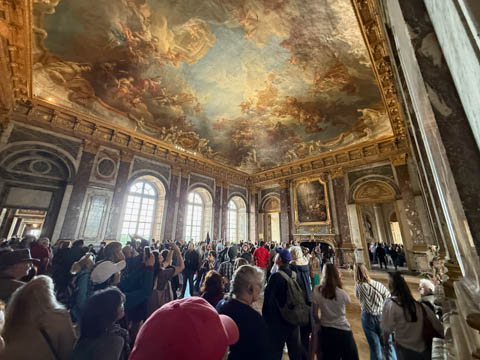
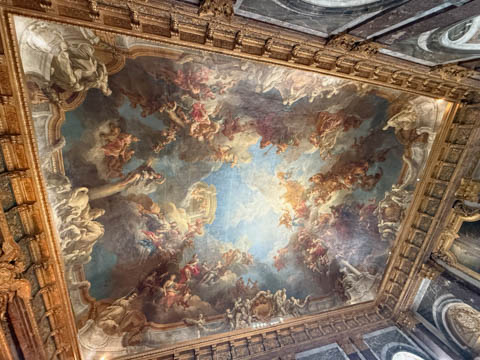
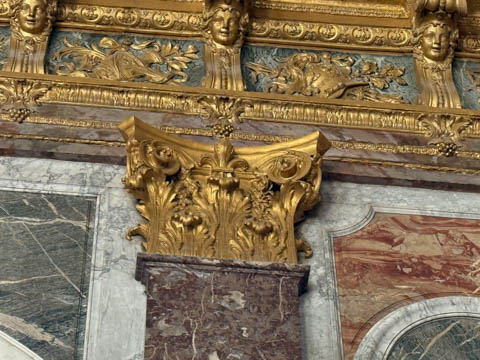
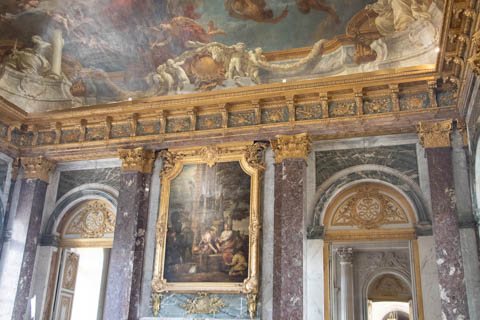
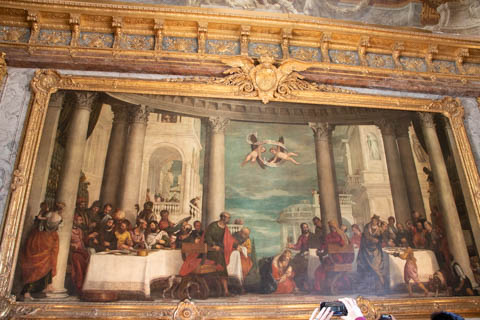
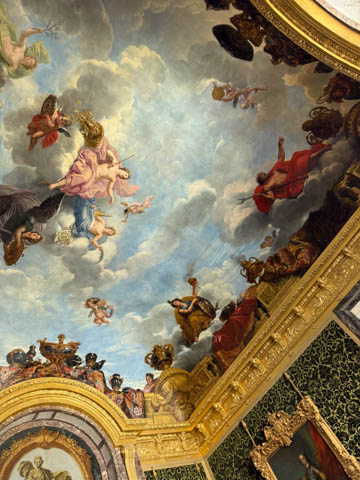
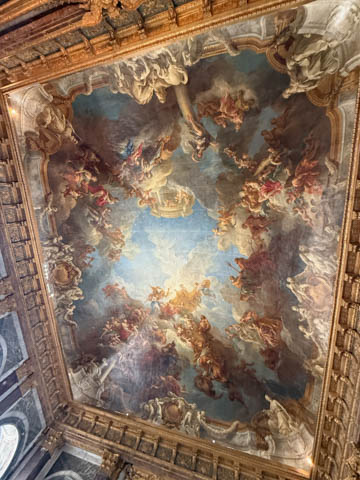
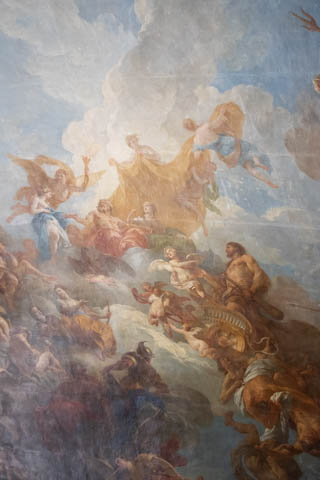
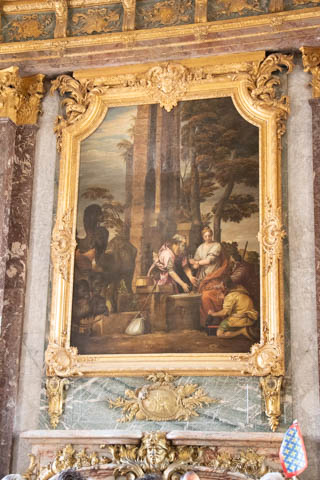
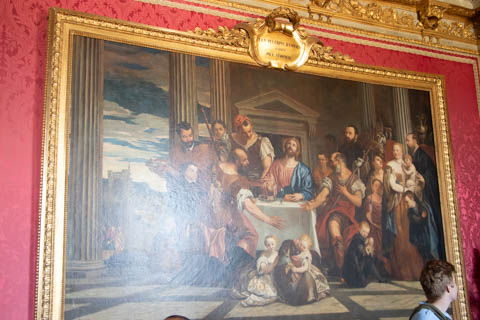
First up was the Salon of Hercules. This was originally
a chapel. It was rebuilt beginning in 1712 to showcase two paintings
by Paolo Veronese, Eleazar and Rebecca and Meal at the House of Simon the
Pharisee, which was a gift to Louis XIV from the Republic of Venice in 1664.
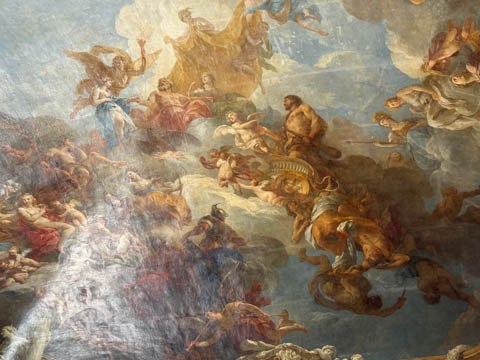
The painting on the ceiling, The Apotheosis of Hercules, by François Lemoyne,
was completed in 1736, and gave the room its name
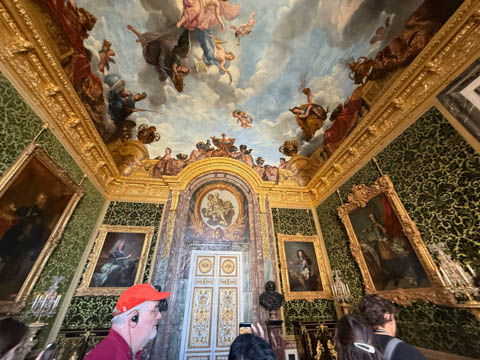
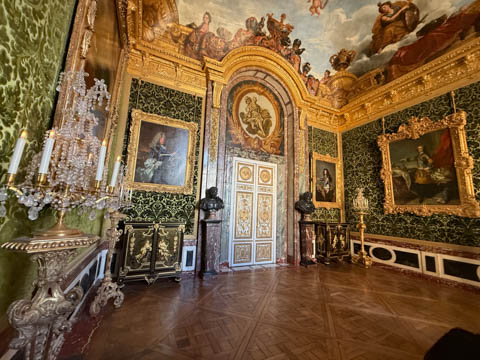
Here is the Salon of Abundance. The Salon of Abundance
was the antechamber to the Cabinet of Curios (now the Games Room), which
displayed Louis XIV's collection of precious jewels and rare objects. Some of
the objects in the collection are depicted in René-Antoine Houasse's
painting Abundance and Liberality (1683), located on the ceiling over the door
opposite the windows.
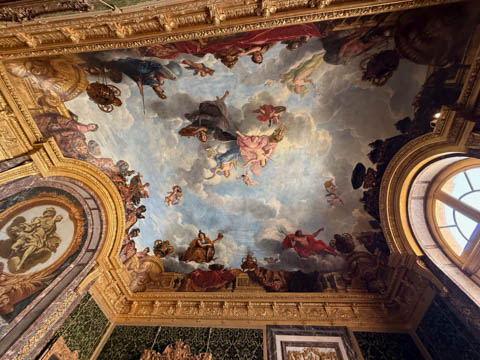
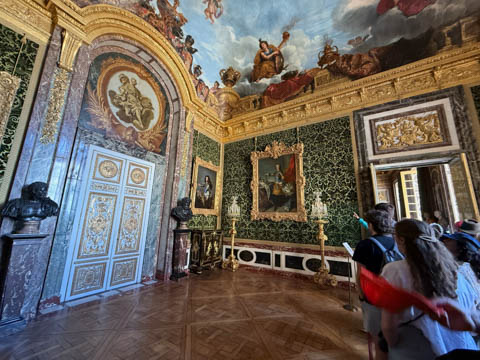
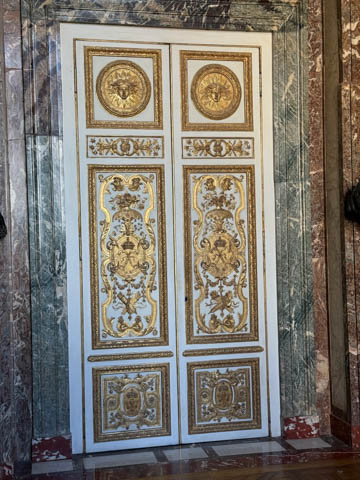
Next was the Salon of Venus (Roman goddess of love, associated with the planet
Venus). This salon was used for serving light meals during evening
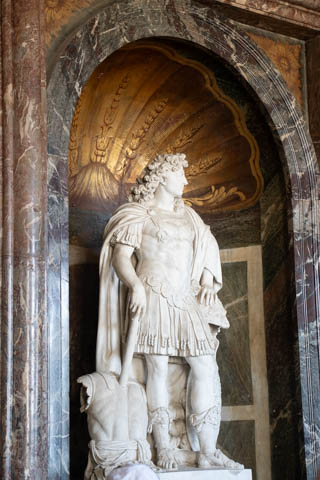
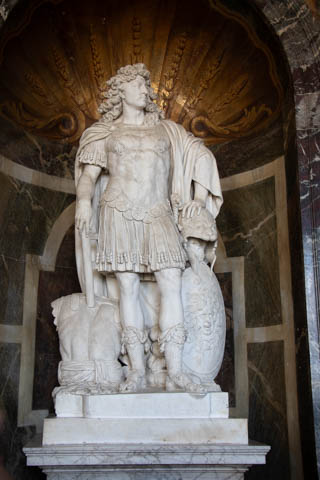
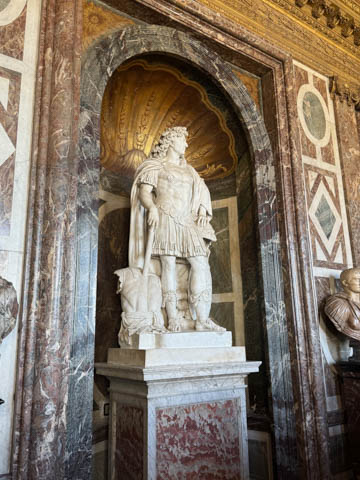
receptions. The principal feature in this room is Jean Warin's life-size statue
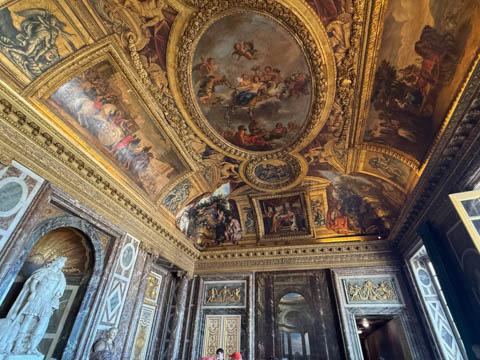
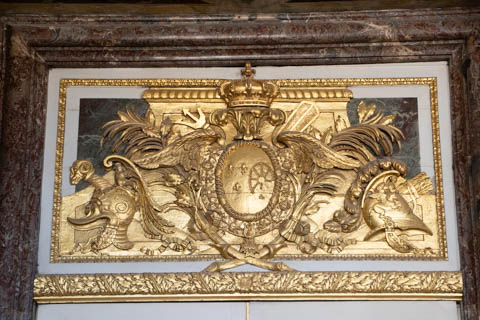
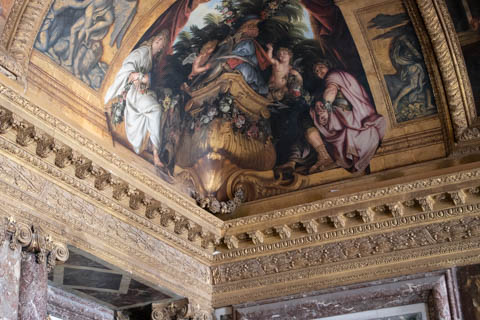
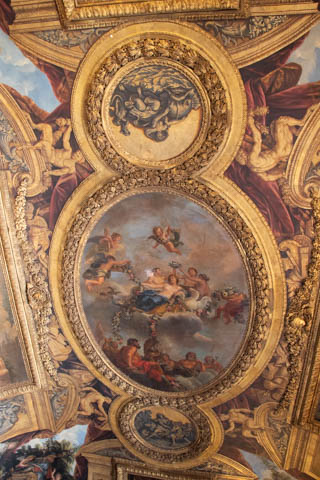
of Louis XIV in the costume of a Roman emperor. On the ceiling in a gilded oval
frame is another painting by Houasse, Venus subjugating the Gods and
Powers (1672–1681). Trompe-l'œil paintings and sculpture around the ceiling
illustrate mythological themes
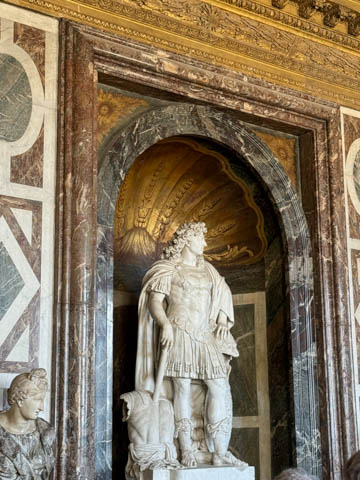
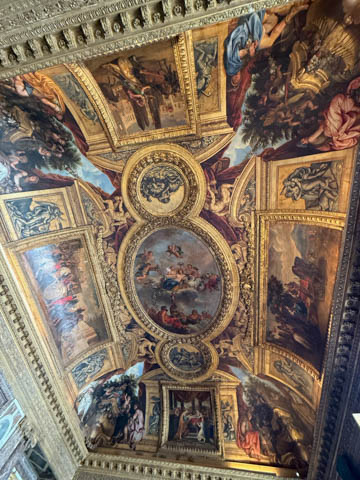
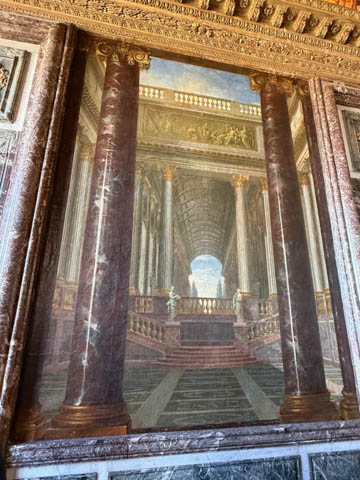
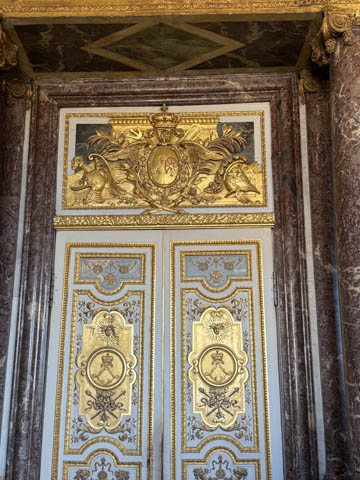
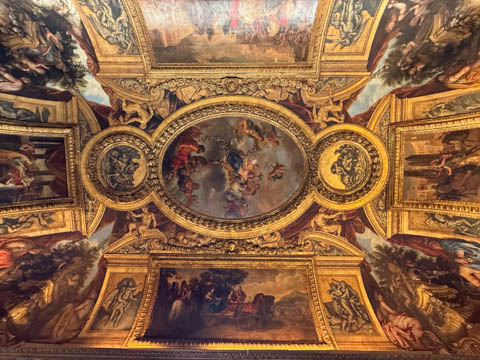
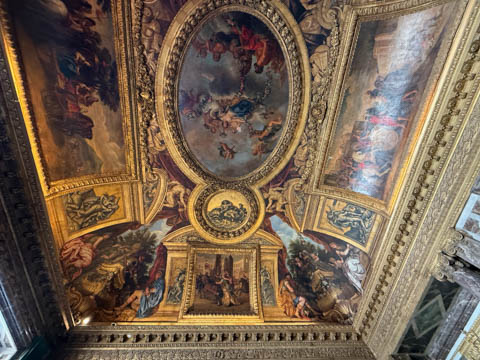
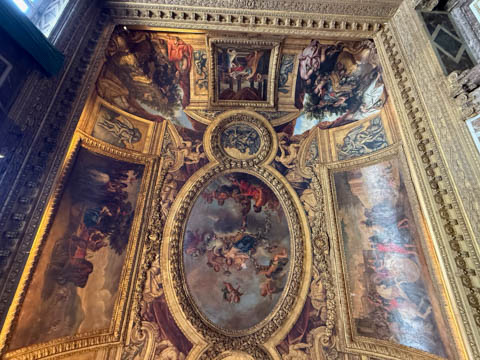
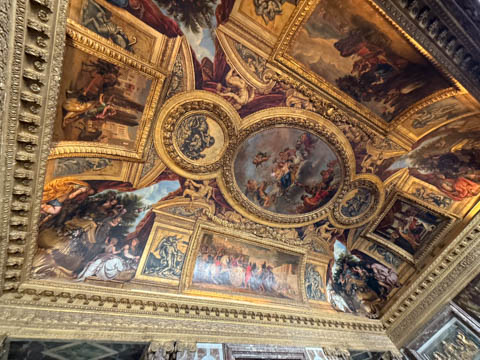
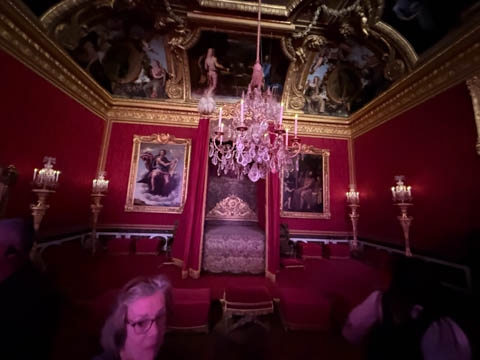
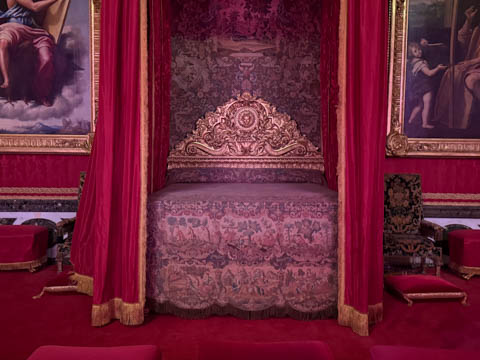
Next was the Salon of Mercury (Roman god of trade, commerce, and the Liberal
Arts; associated with the planet Mercury). The Salon of Mercury was the
original State Bedchamber when Louis XIV officially moved the court and
government to the palace in 1682. The bed is a replica of the original
commissioned by King Louis-Philippe in the 19th century when he turned the
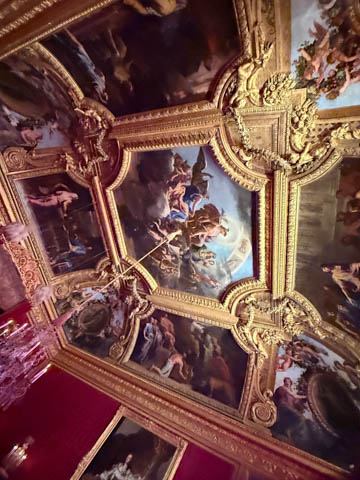
palace into a museum. The ceiling paintings by the Flemish artist Jean Baptiste
de Champaigne depict the god Mercury in his chariot, drawn by a rooster,
and Alexander the Great and Ptolemy surrounded by scholars and philosophers. The
Automaton Clock was made for the King by the royal clockmaker Antoine Morand in
1706. When it chimes the hour, figures of Louis XIV and Fame descend from a
cloud.
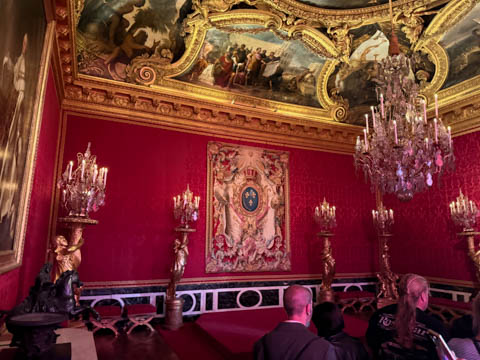
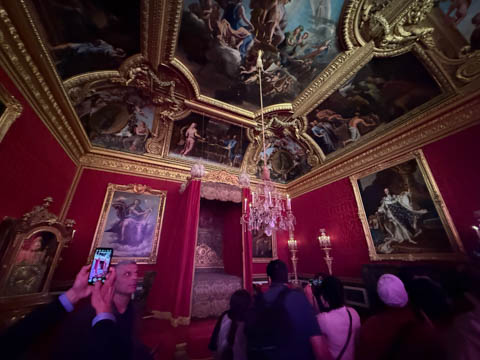
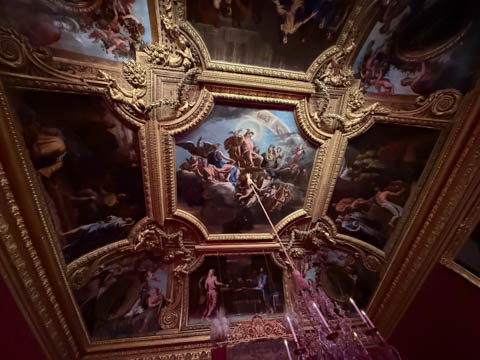
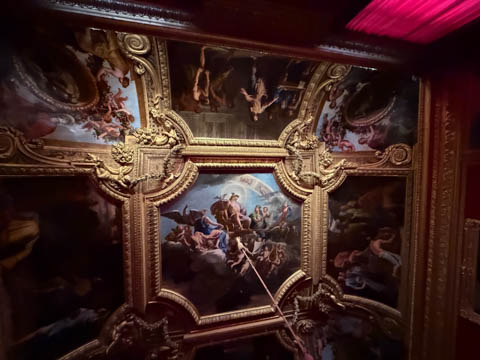
We literally had to elbow our way past an Asian tour group who were holding
hands and otherwise not letting anyone else move. About the only thing we
could get a decent picture of was the ceiling.
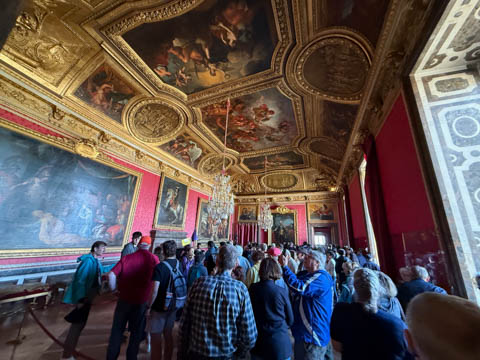
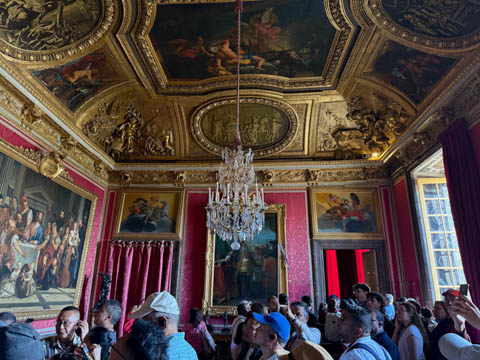
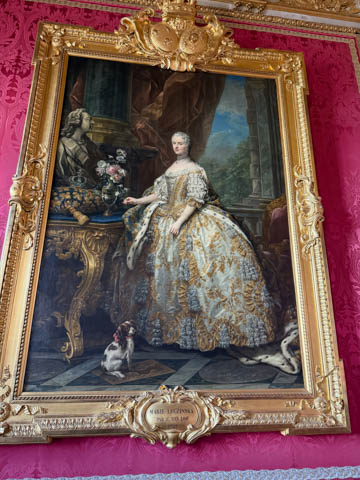
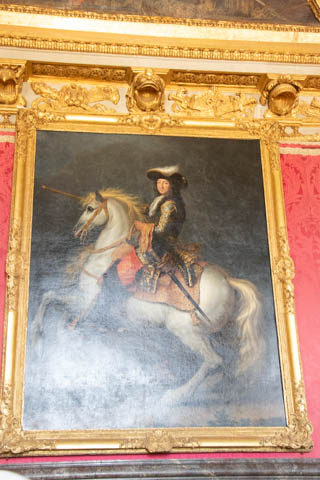
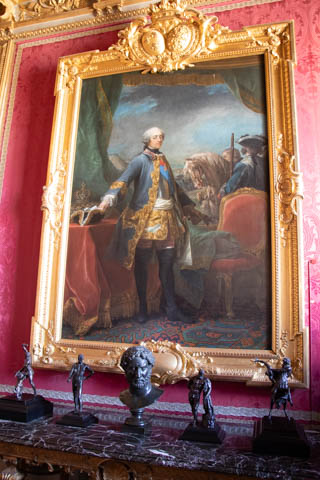
Next is the Salon of Mars (Roman god of war, associated with the planet Mars).
The Salon of Mars was used by the royal guards until 1782, and was decorated on
a military theme with helmets and trophies. It was turned into a concert room
between 1684 and 1750, with galleries for musicians on either side. Portraits
of Louis XV and his Queen, Marie Leszczyńska, by the Flemish artist Carle Van
Loo decorate the room today.
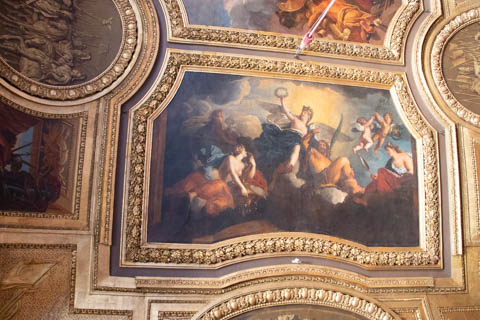
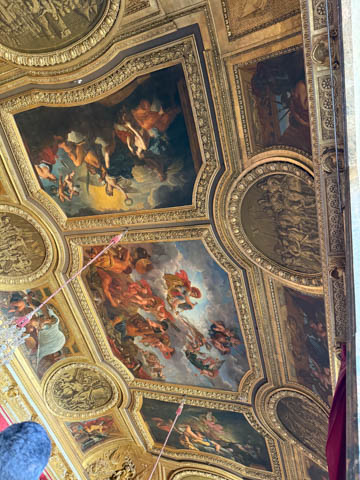
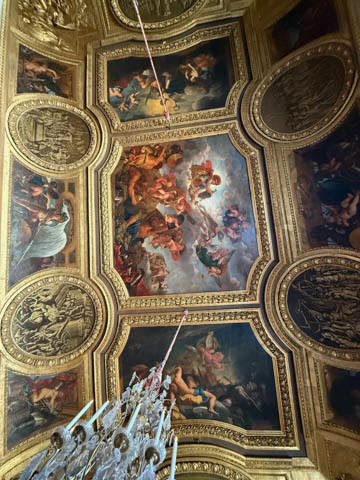
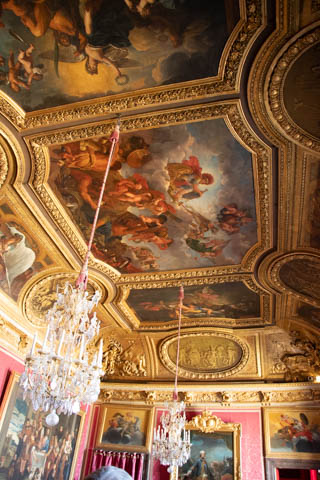
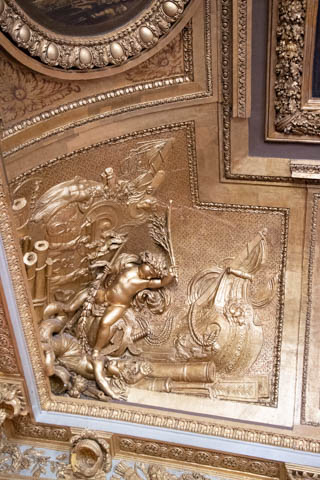
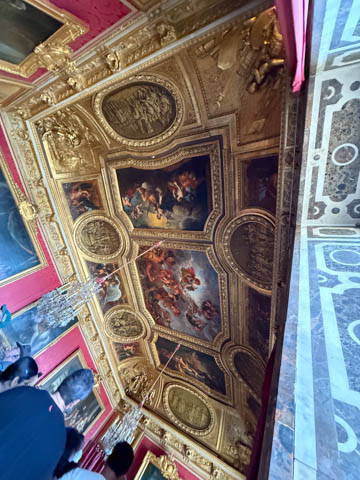
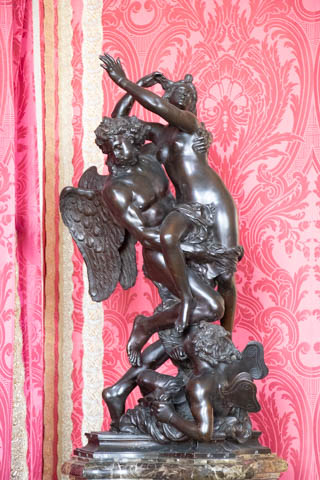
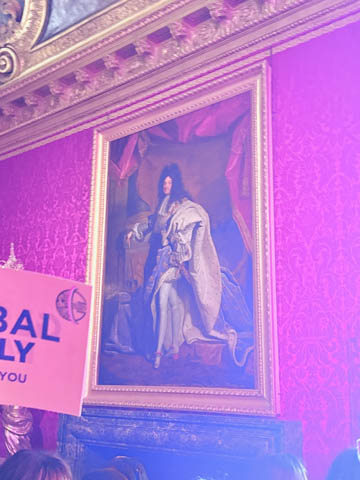
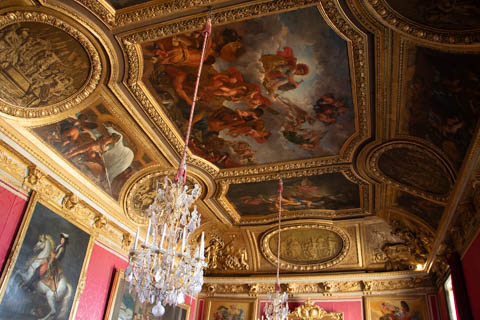
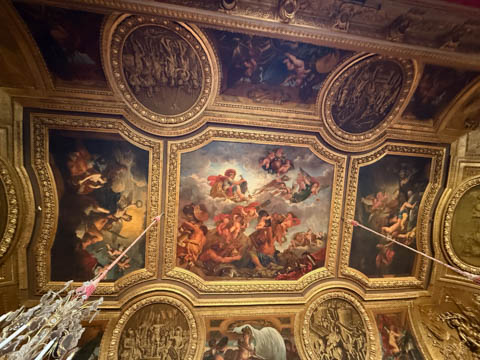
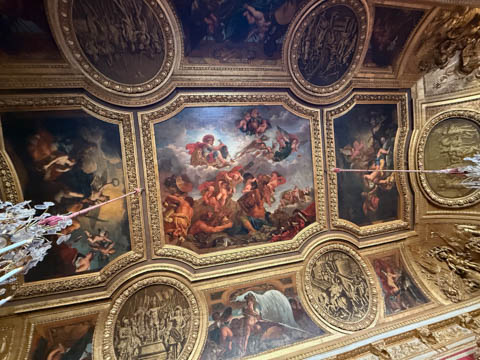
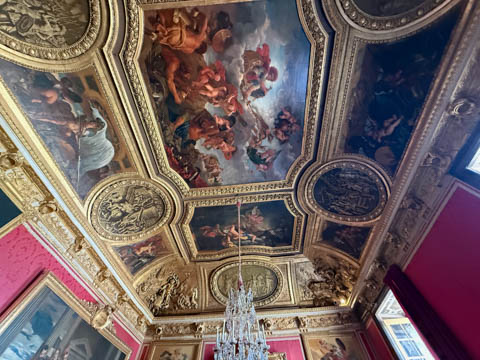
Here is the Salon of Apollo (Roman god of Fine Arts,
associated with the Sun). This was the royal throne room under Louis XIV,
and was the setting for formal audiences. The eight-foot-high silver throne was
melted down in 1689 to help pay the costs of an expensive war, and was replaced
by a more modest throne of gilded wood. The central painting on the ceiling,
by Charles de la Fosse, depicts the Sun Chariot of Apollo, the King's favorite
emblem, pulled by four horses and surrounded by the four seasons.
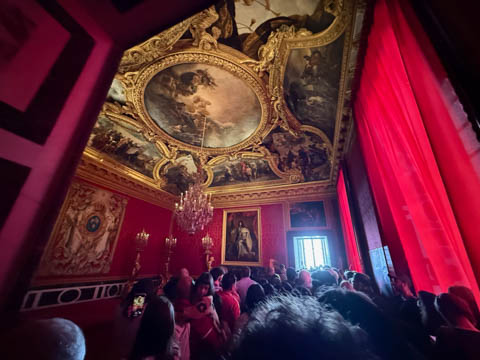
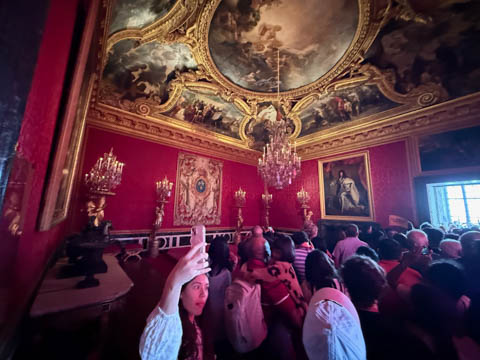
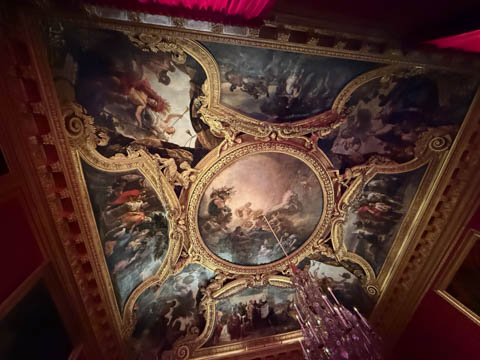
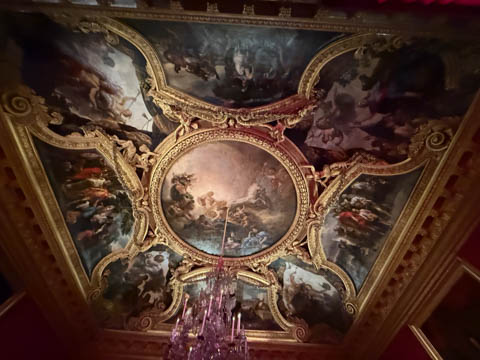
Somewhere was the Salon of Diana (Roman goddess of the hunt, associated with the
Moon). The Salon of Diana was used by Louis XIV as a billiards room, and
had galleries from which courtiers could watch him play. Looks like we
somehow didn't get any pictures here. These apartments were so
ridiculously crowded that we were more focused at some point on escaping the
crowd than on the rooms we were trying to make our way through.
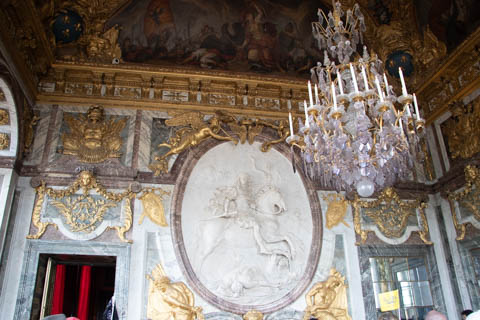
Upon exiting the King's Apartments, we arrived at a corner room, the Salon de
Guerre (Salon of War).
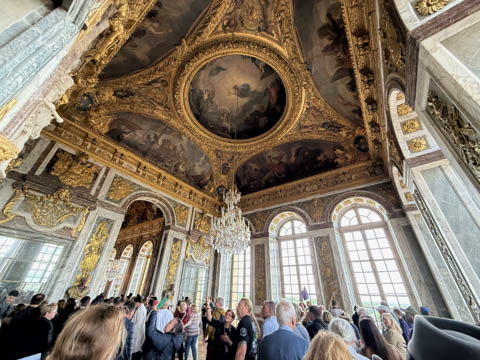
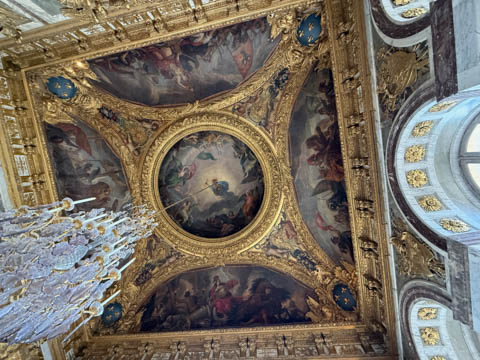
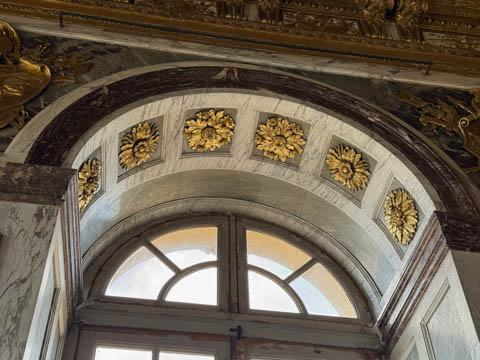
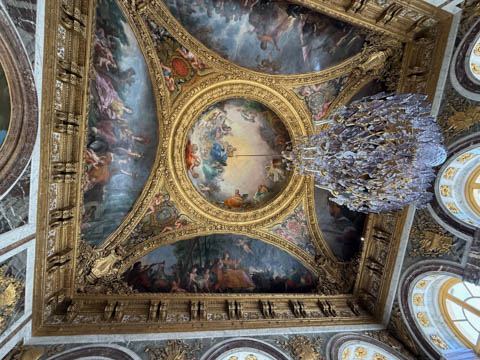
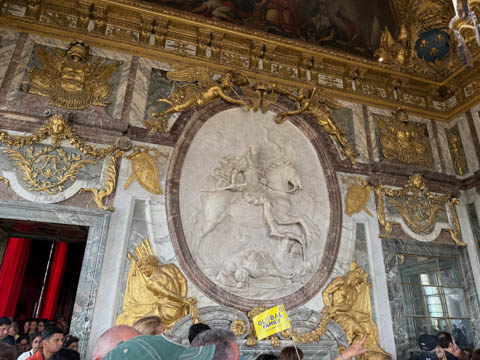
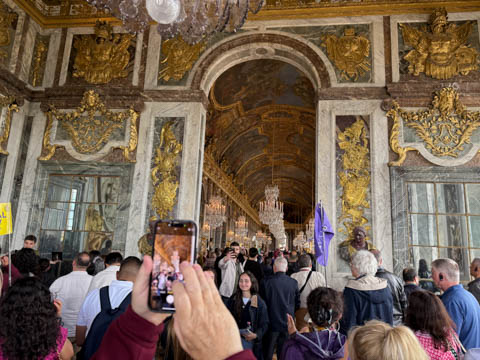
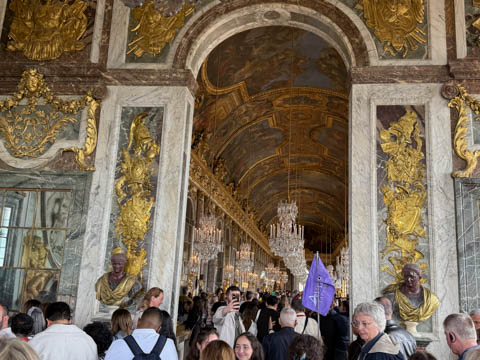
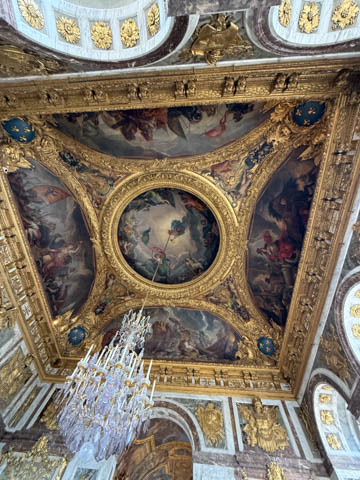
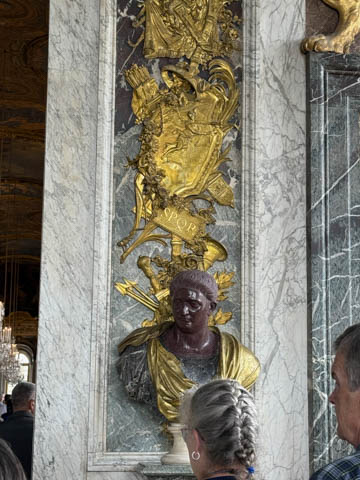
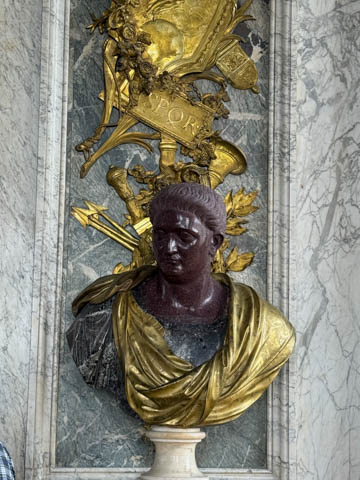
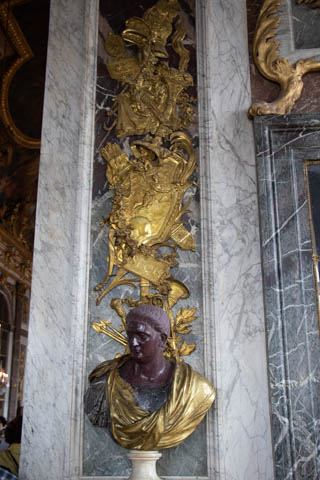
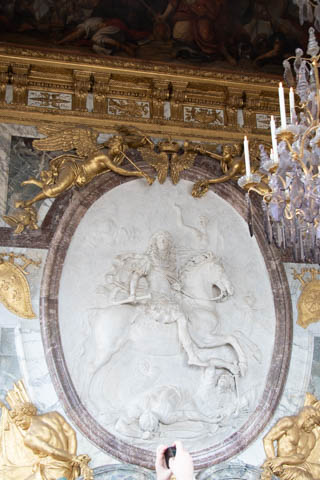
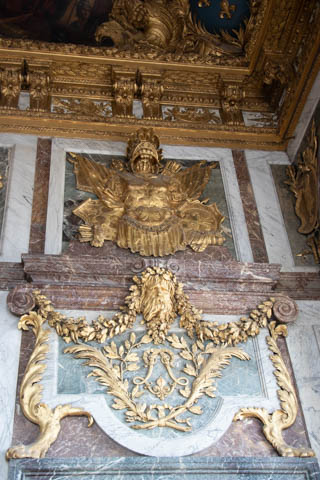
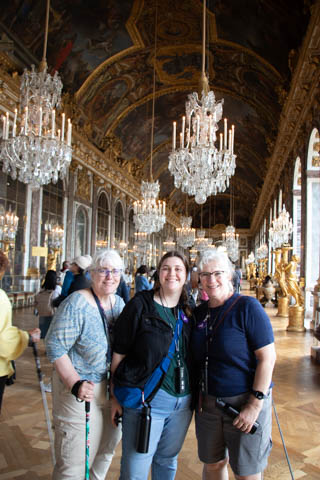
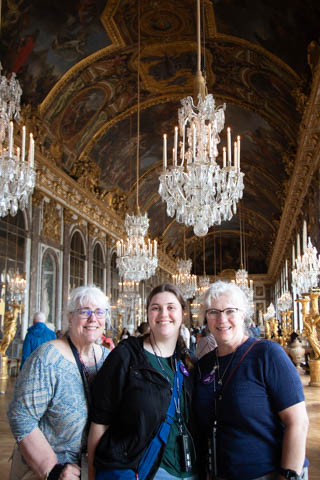
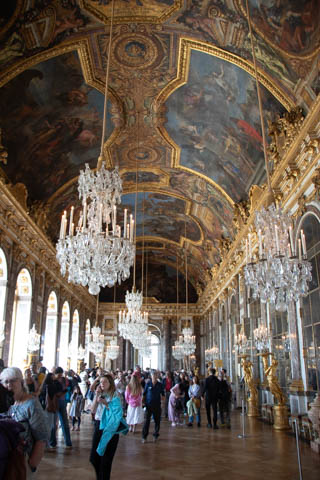
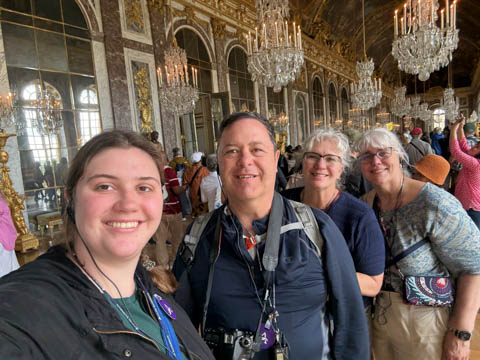
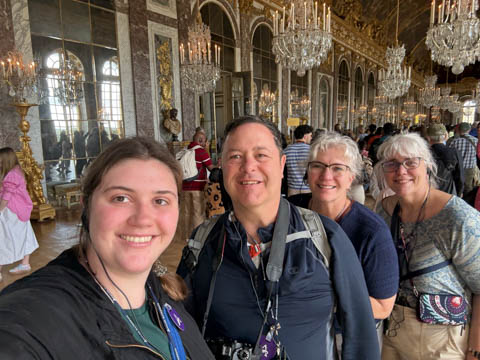
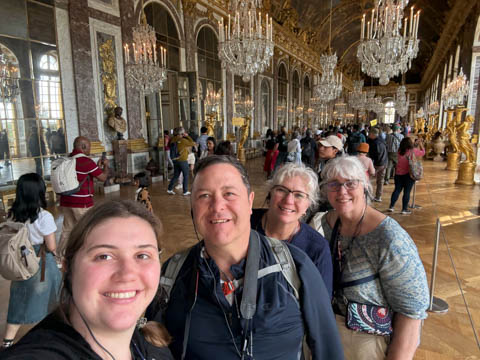
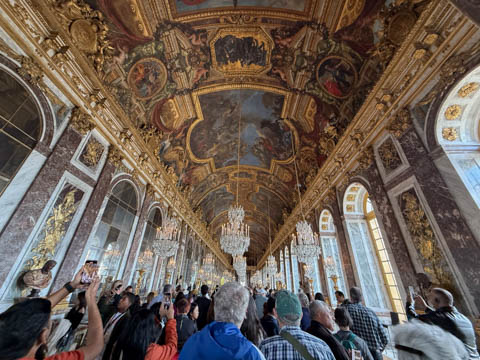
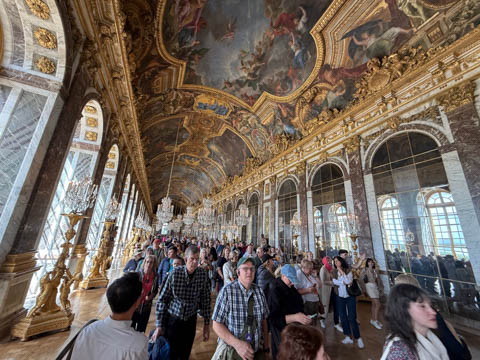
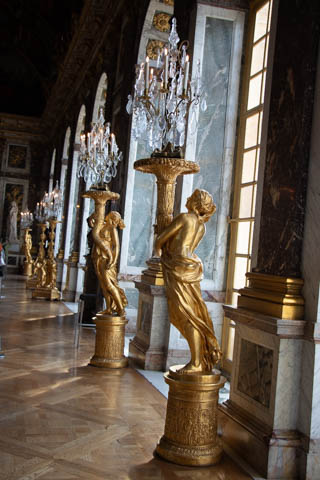
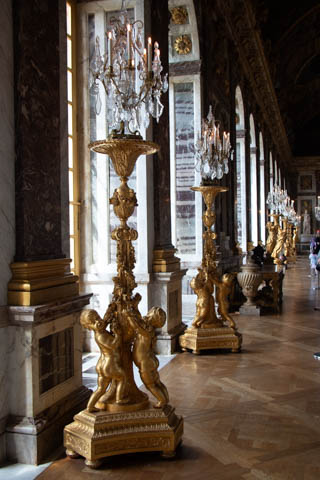
With that, we turned the corner and entered the fabled Hall of Mirrors. It
had 17 arches stretching across the wall opposite the windows contain a total
of 357 mirrors. The hall hosted lavish balls and special events. For
diplomatic functions, the king would often be seated at hone end, forcing a
foreign dignitary to cross the entire length to him. The significance
wasn't just in the grandeur, but simply in the price of the large number of
mirrors given the price charge by Venice for mercury glass mirrors from its
highly prized craftsmen. However, on a day-by-day basis, courtiers and
visitors mainly used it as a passageway. The most significant event in the
Hall of Mirrors happened long after the French had rid themselves of the
royalty. In 1919, German delegates came here and signed the Treaty of
Versailles before representatives from France, the U.S., Great Britain, Italy,
and 28 other nations to officially end World War I.
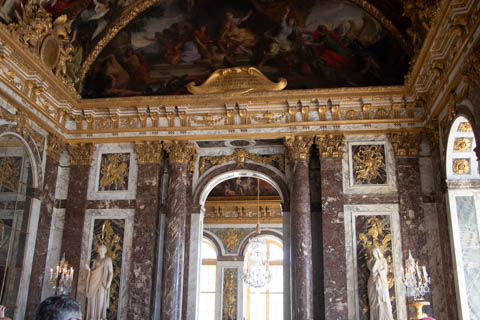
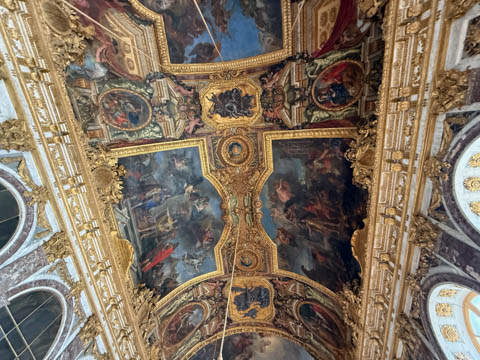
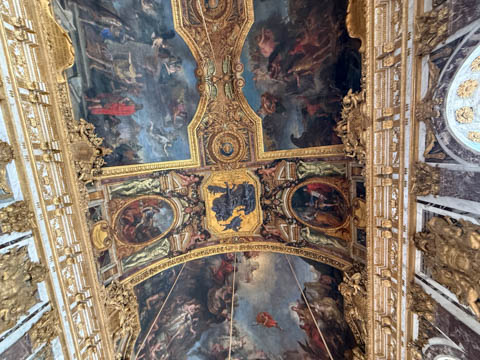
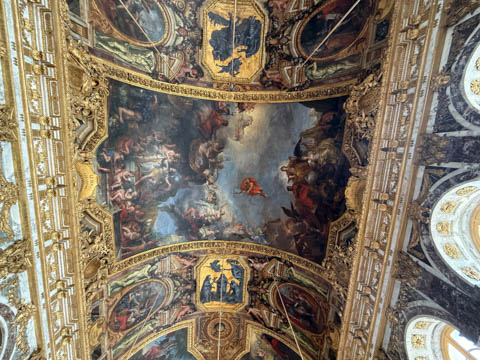
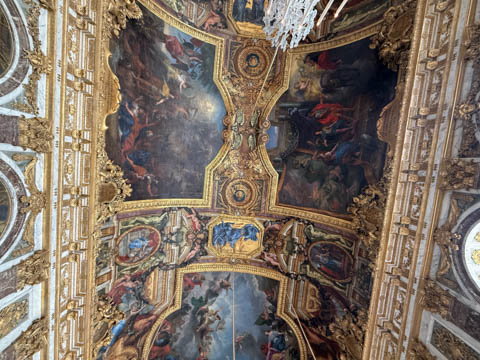
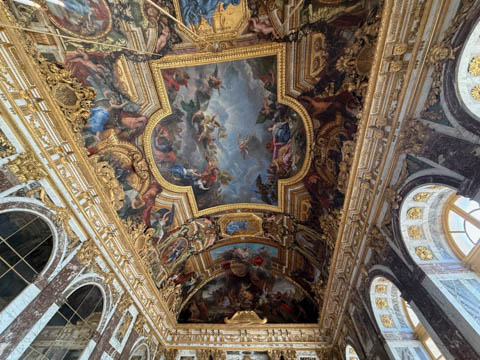
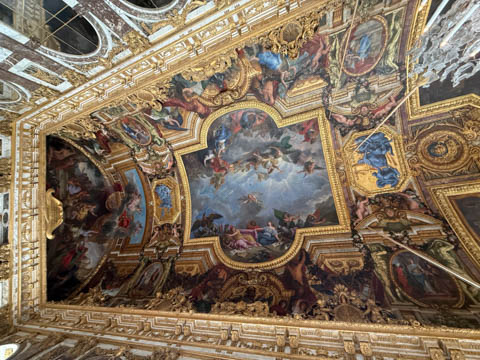
The hall was built from 1678 to 1681 on the site of a terrace
Le Vau built between the king and queen's suites. The hall is clad in
marble and decorated in a modified version of the Corinthian order, with 578
mirrors facing 17 windows and reflecting the light provided by them. The ceiling
fresco, painted by Le Brun over the next four years recall the first 18 years of
Louis XIV's reign in 30 scenes, 17 of which are military victories over the
Dutch. The fresco depicts Louis XIV himself alongside Classical figures in
the scenes celebrating moments in his reign such as the beginning of personal
rule in 1661, breaking from earlier frescoes at Versailles that used allegories
derived from Classical and mythological scenes.
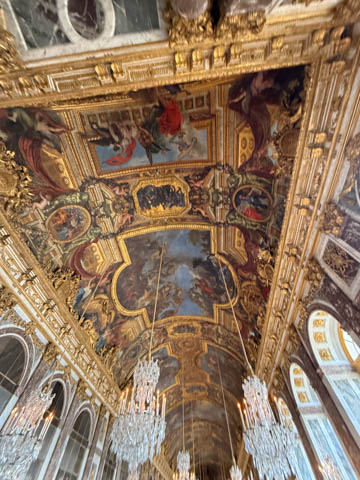
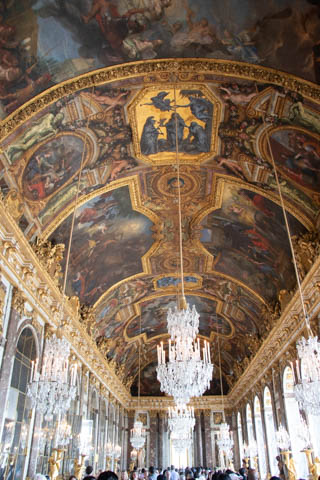
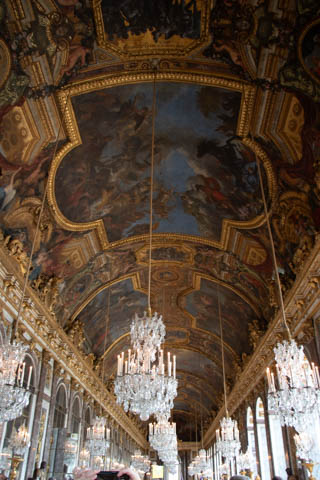
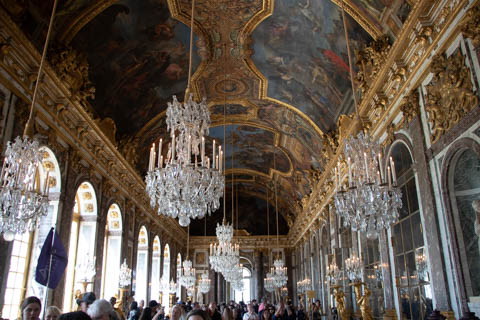
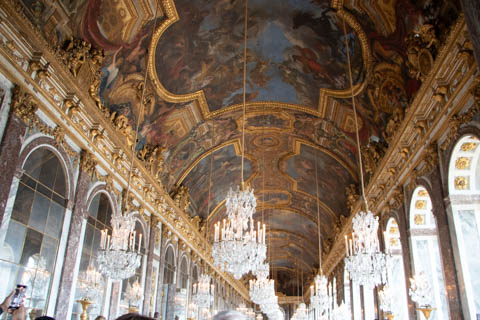
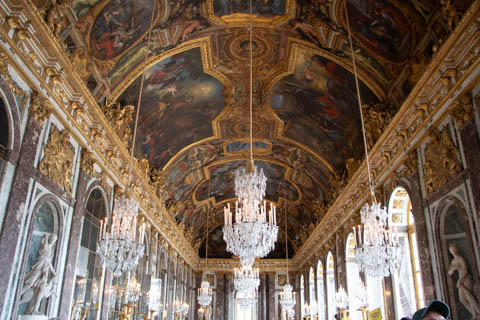
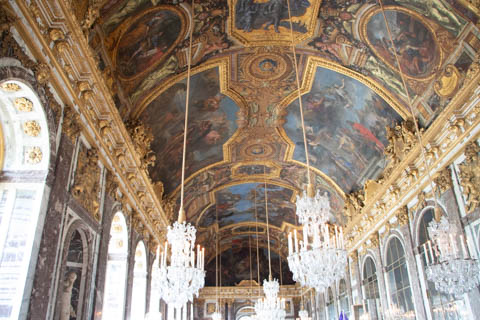
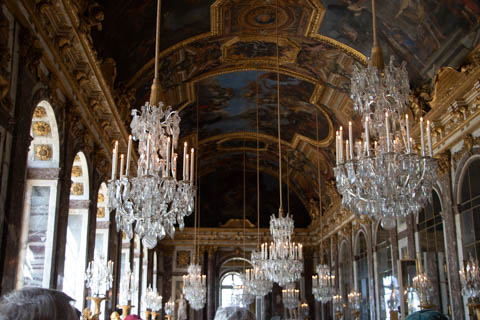
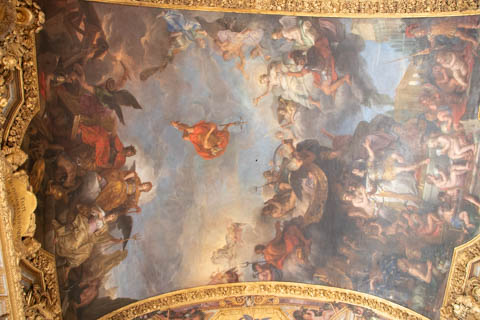
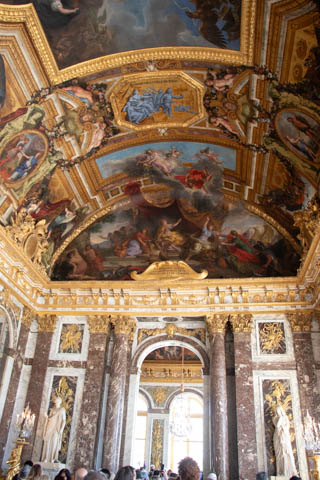
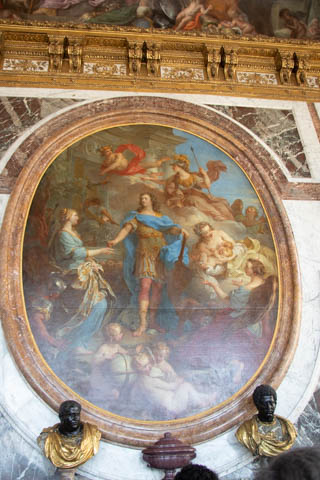
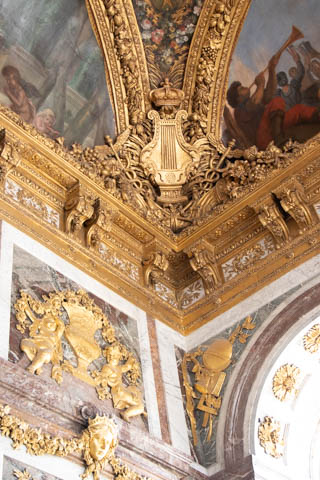
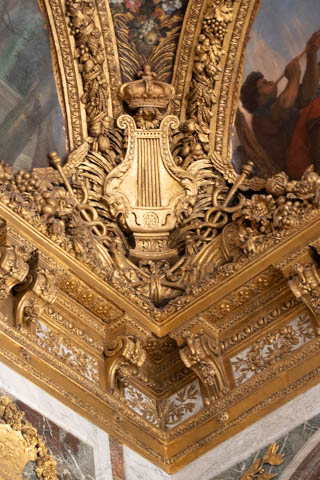
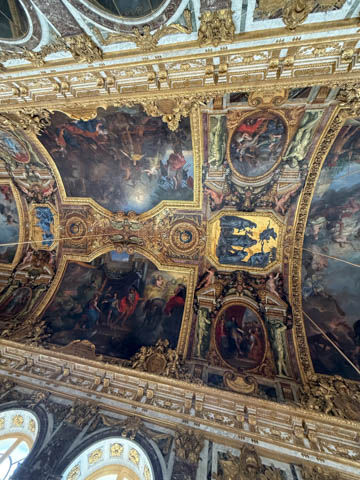
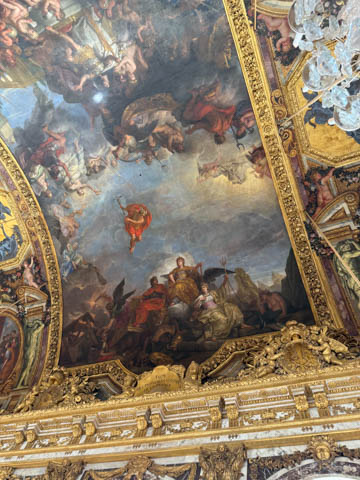
I think Alexa tried to capture every picture in the ceiling. There were 30
in total - spread across the room's vaulted ceilings. In the 21st century, their
meaning isn't readily apparent. But 17th century viewers would have instantly
understood their purpose: a celebration of Louis XIV's military and diplomatic
victories.
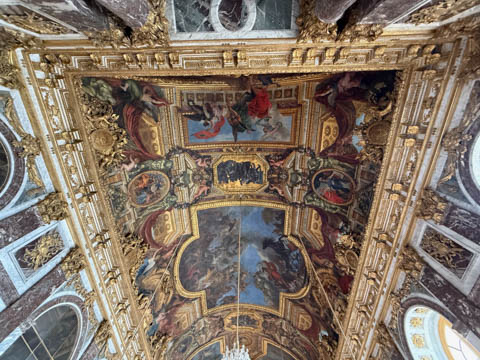
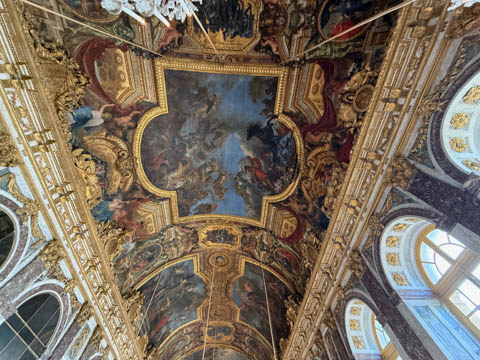
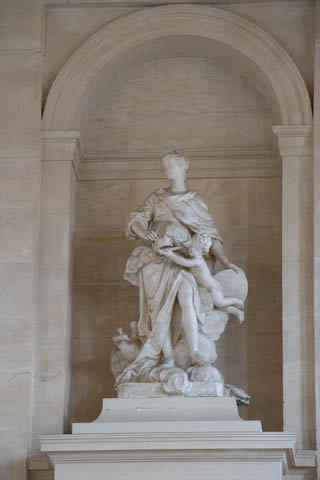
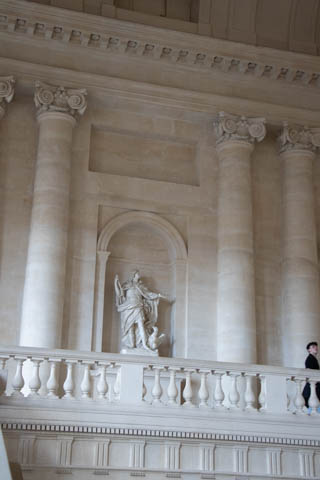
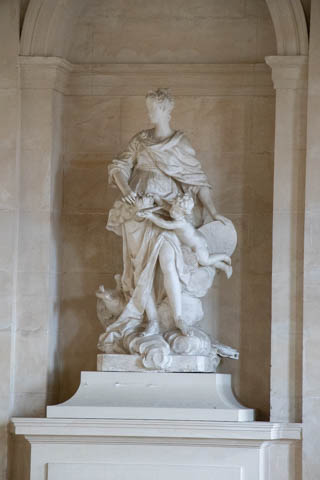
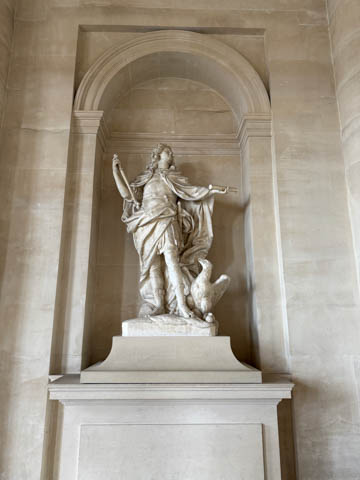
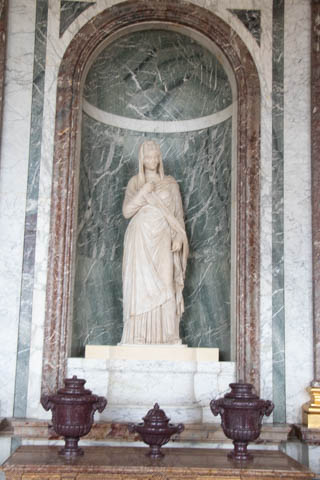
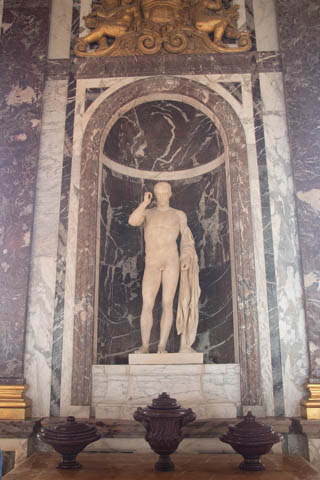
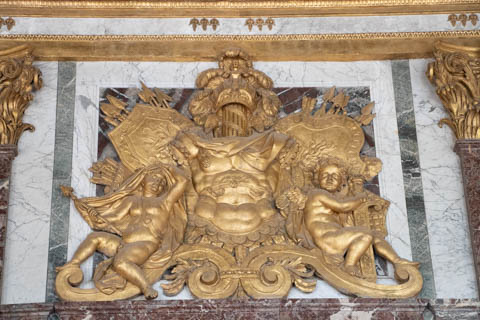
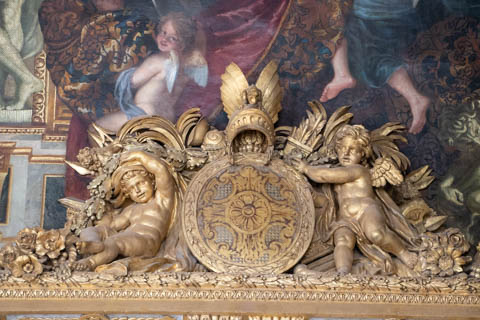
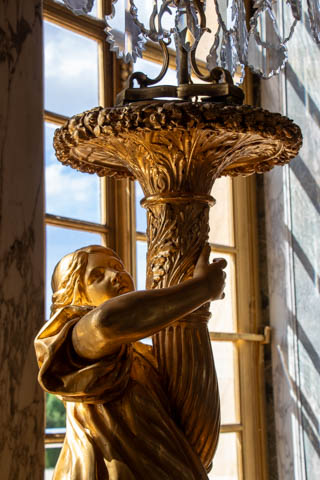
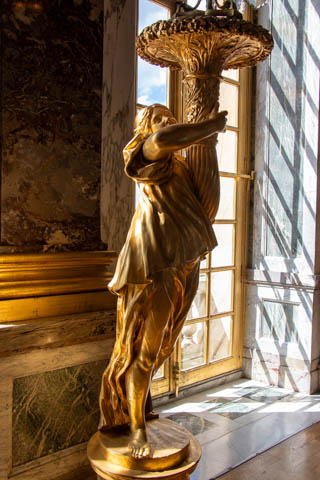
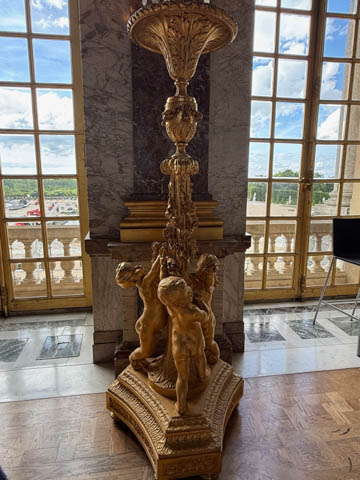
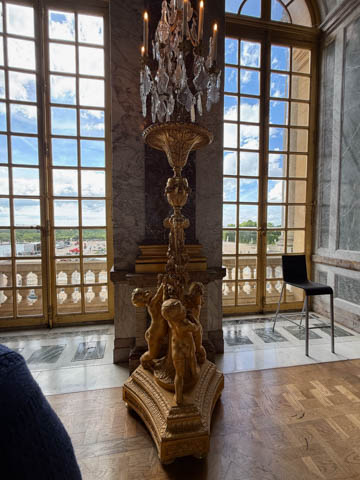
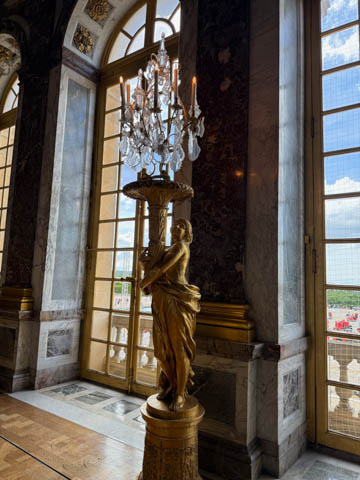
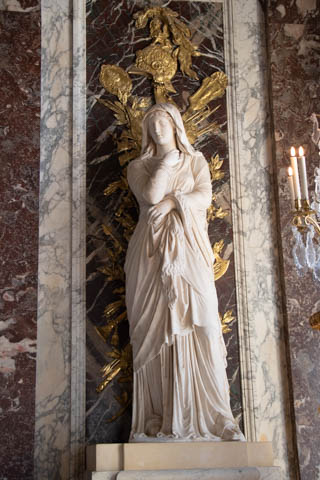
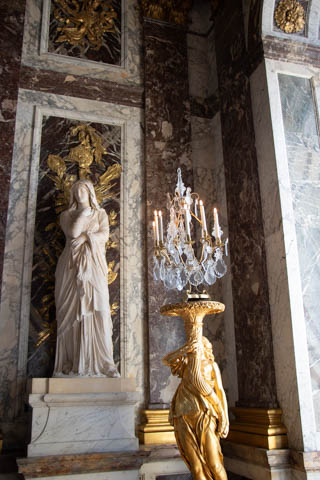
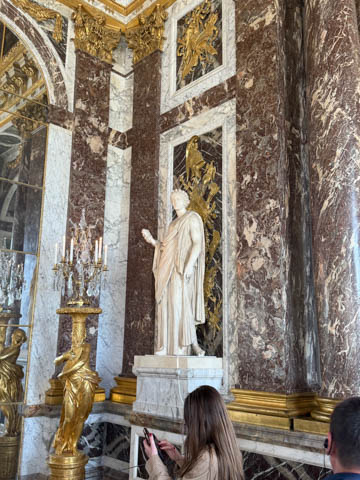
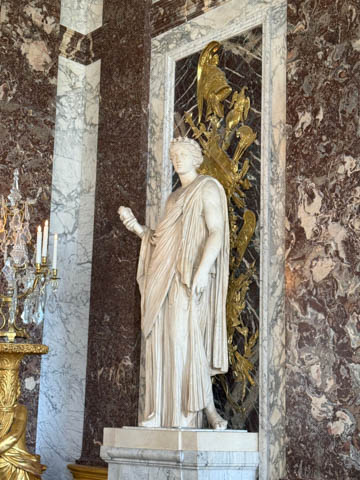
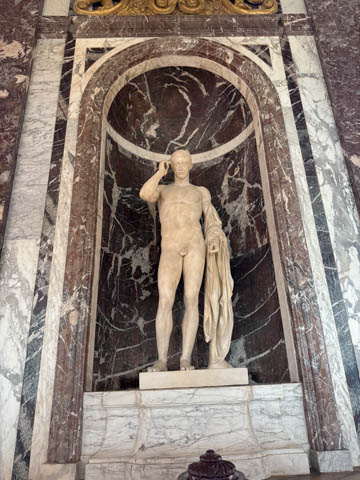
There were sculptures in every alcove.
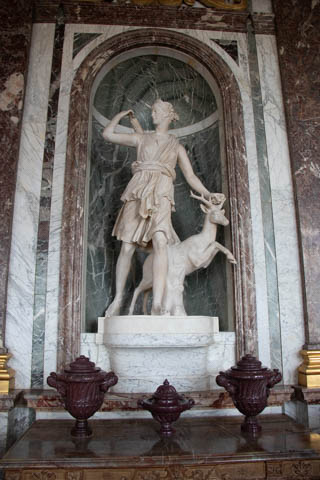
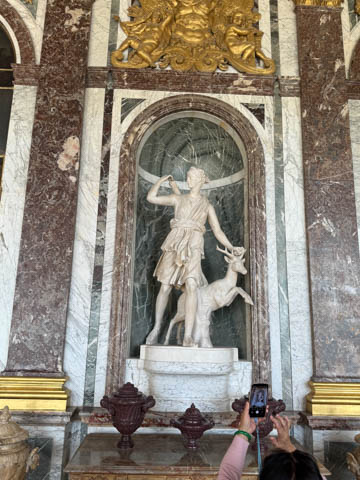
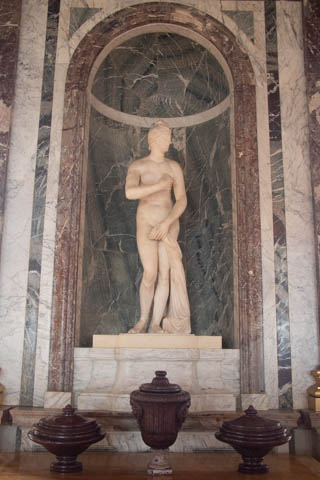
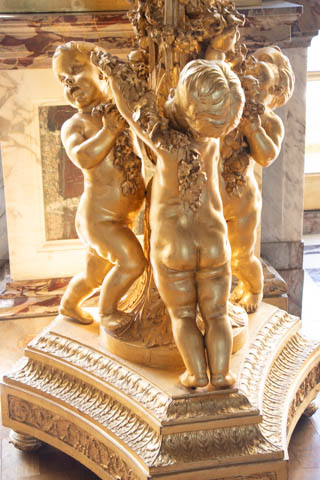
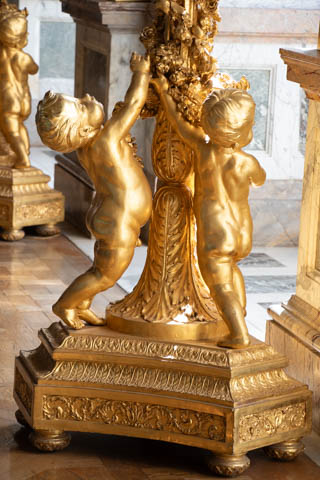
And amazing gilded decorations, furniture, and candelabras everywhere.
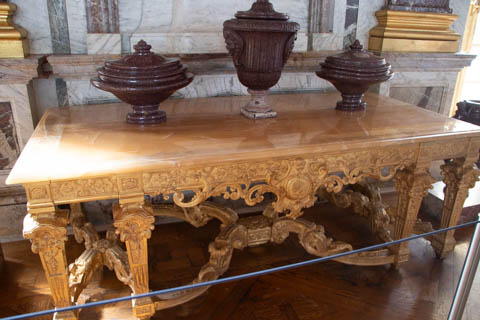
Here is the alcove at the other end, the Salon de la Paice (Salon of Peace).
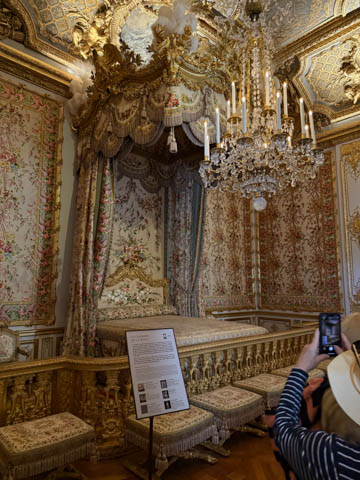
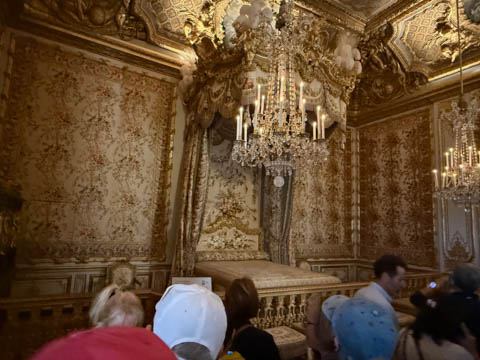
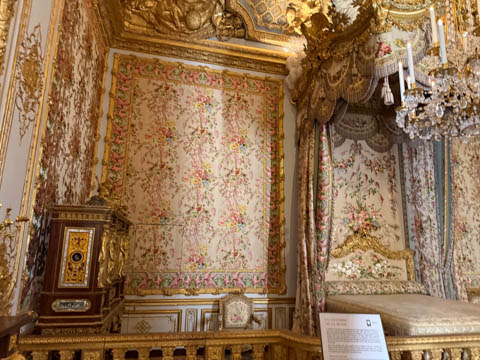
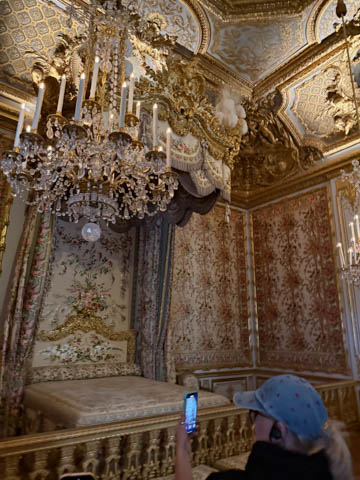
Although the Queen's Apartment once mirrored the layout of the King's State
Apartment, it now consists of only four splendid rooms. The feature a
striking difference in decor from the King's chambers, which featured rich dark
tones and ornate paneling in vogue during Louis XIV's reign in the 17th century.
In contrast, this area practically glows from the light floral prints and pale
tones favored by Queen Marie-Antoinette when she redecorated her apartment
nearly 100 years later. What is remarkable is the room's authenticity. The
fabrics used for wall and bed hangings are exact copies of the original,
re-woven in Lyon. The jewelry cabinet belonged to Marie-Antoinette. You can
still gaze at the family portraits she put up of her mom, Empress Maria-Theresa
of the Holy Roman Empire, and her brother, Emperor Joseph II.
Marie-Antoinette spent most of her time in the spacious bedroom when she was at
the Chateau. This is where she slept, received guests, and even gave birth on a
temporary bed brought in for that specific purpose.
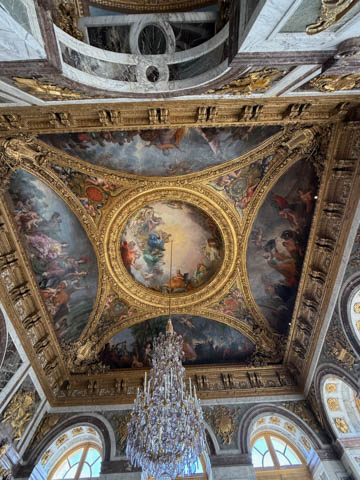
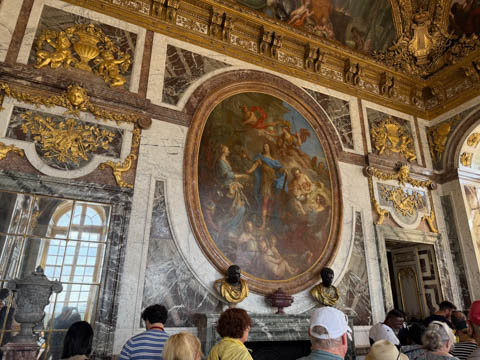
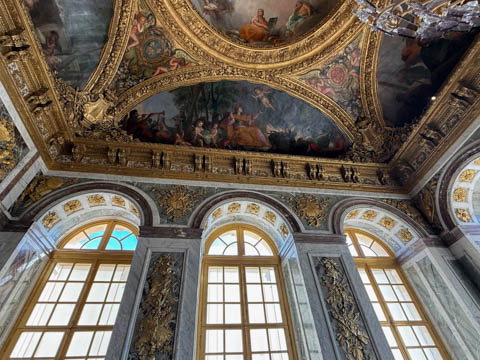
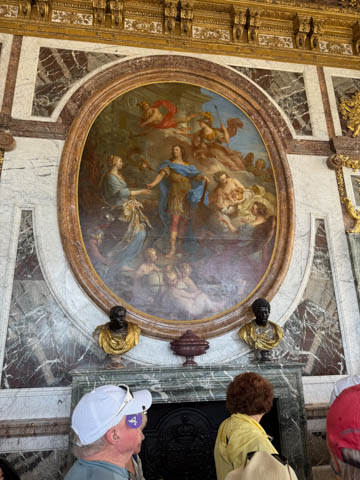
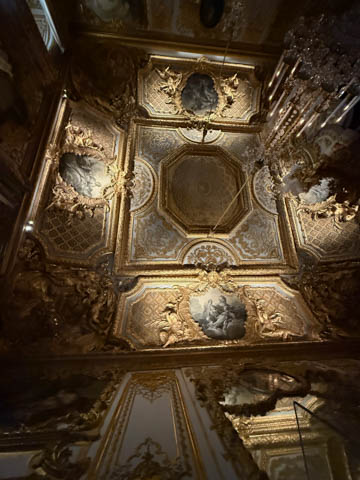
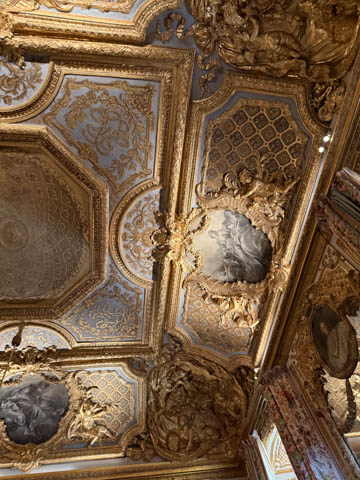
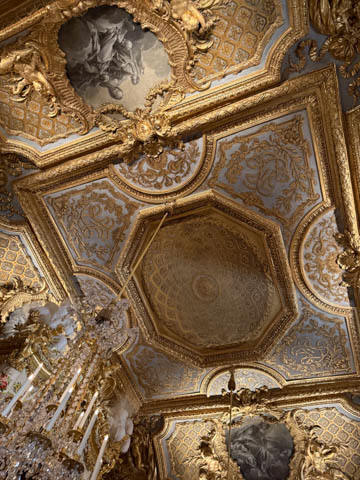
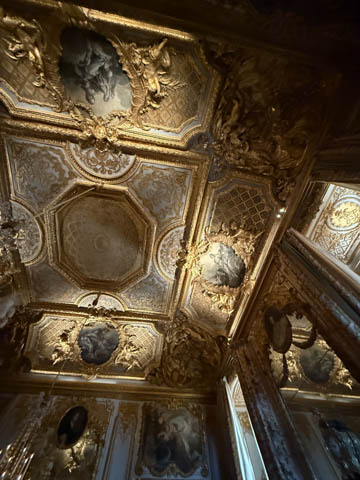
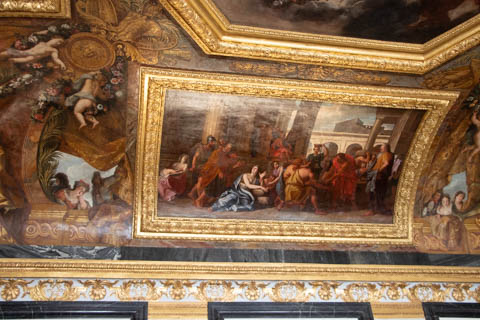
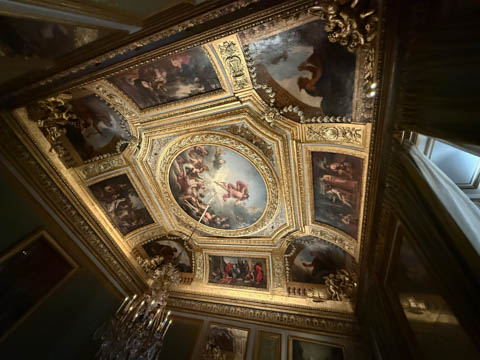
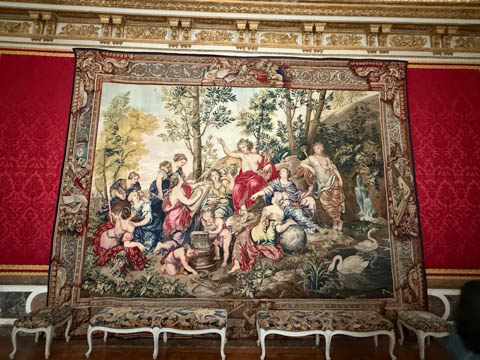
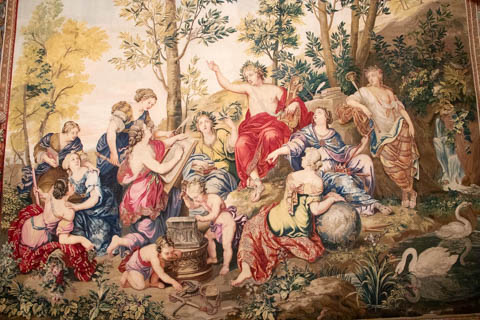
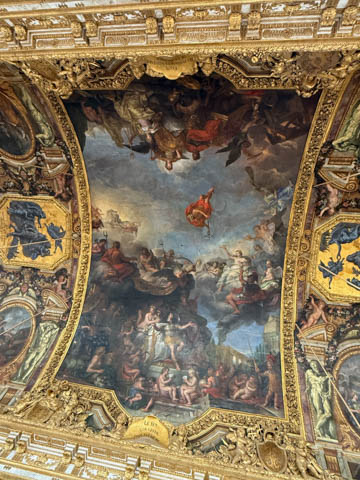
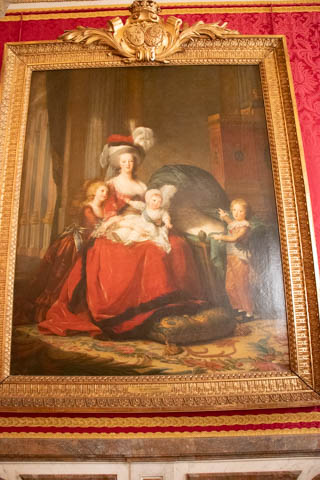
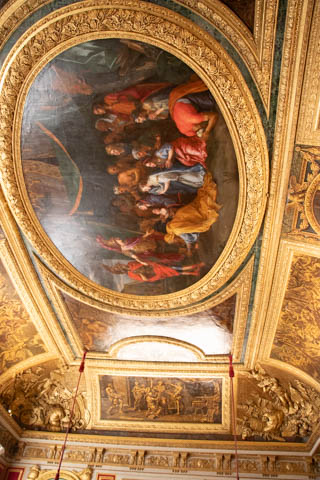
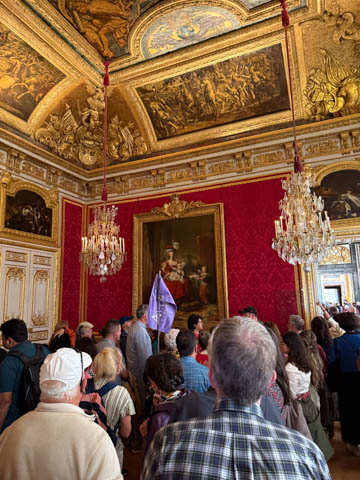
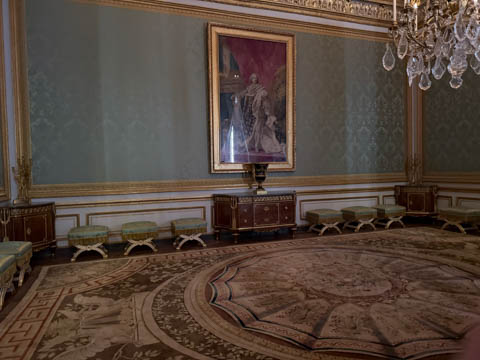
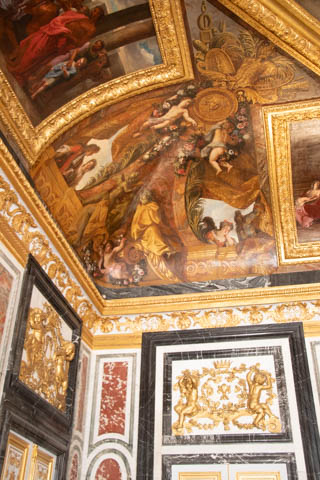
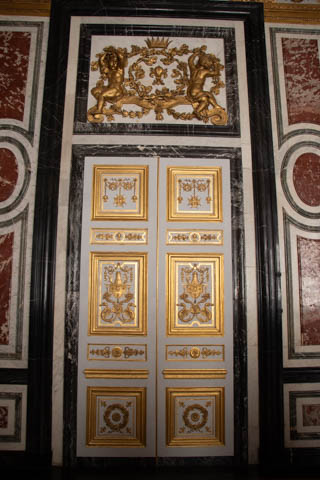
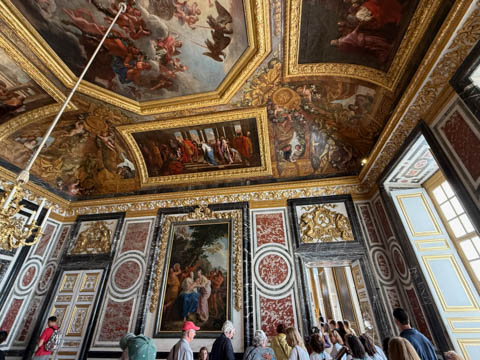
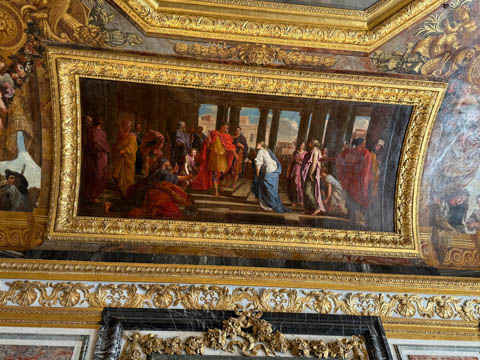
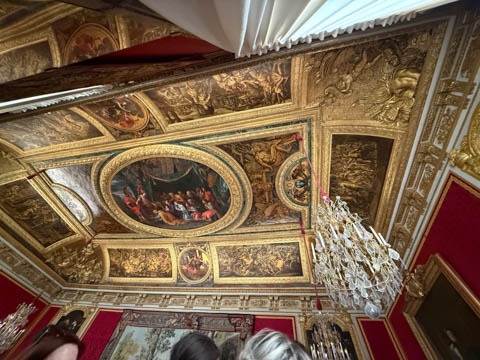
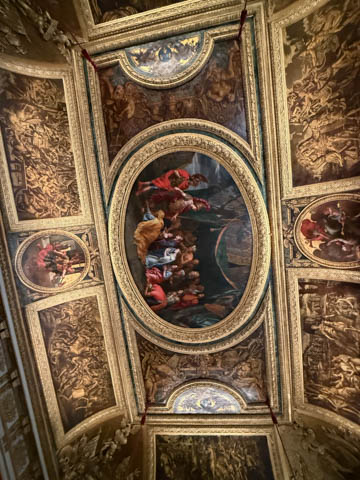
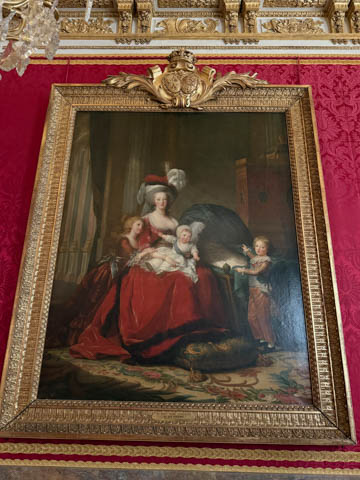
Afterward we went through the Queen's Public Apartments (grand
apartment de la reine).
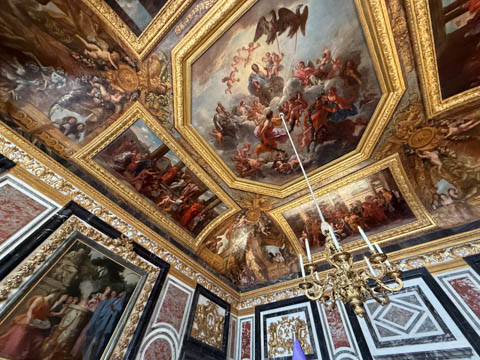
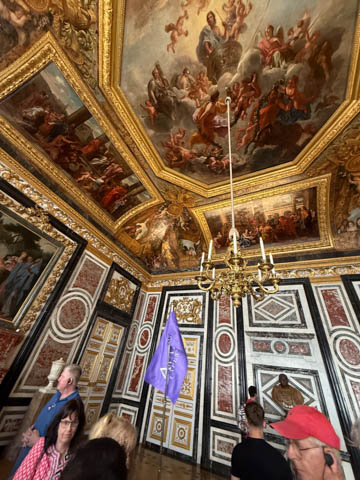
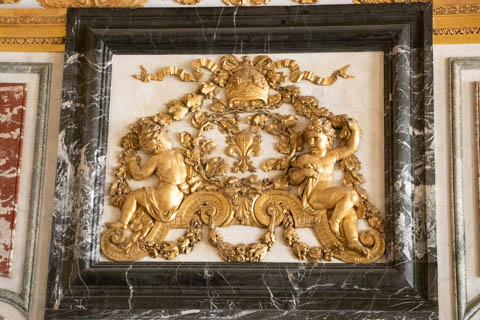
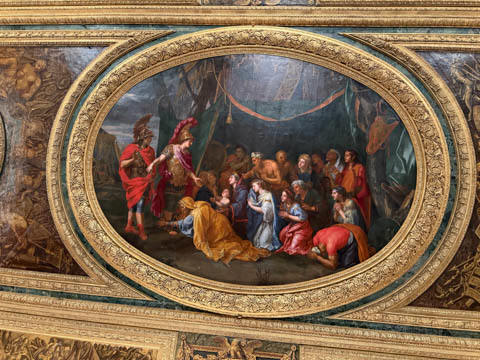
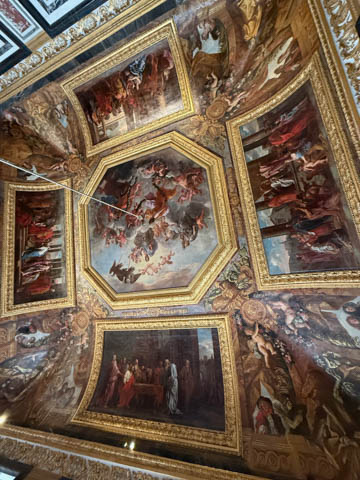
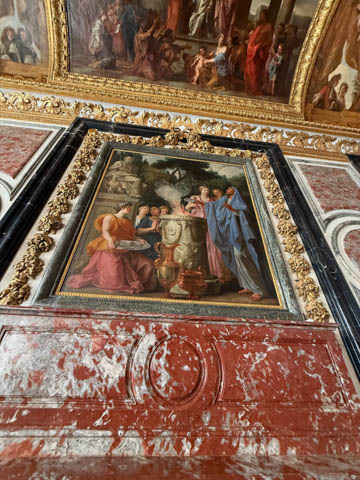
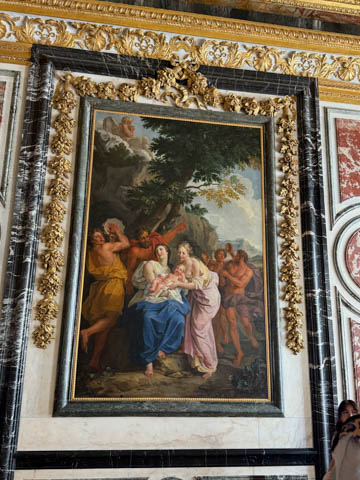
We made it out!
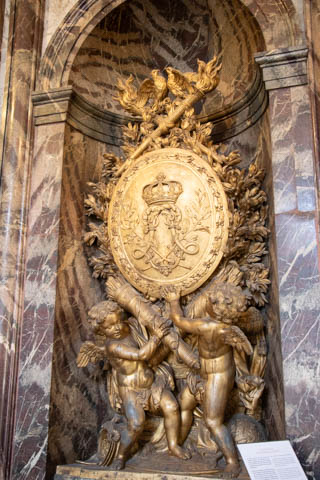
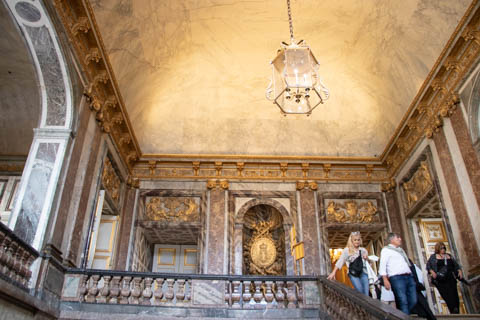
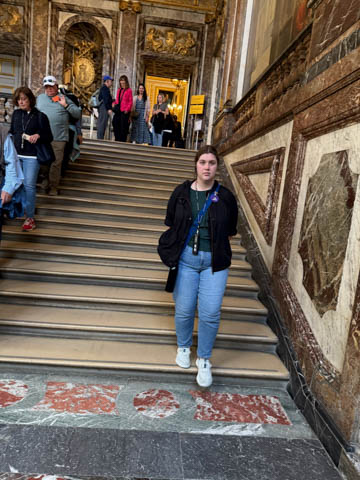
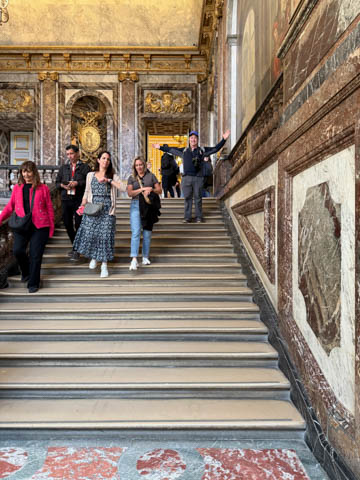
Time to head outside. We headed around the side to the
gardens in the back. So wish we had more time to explore these.
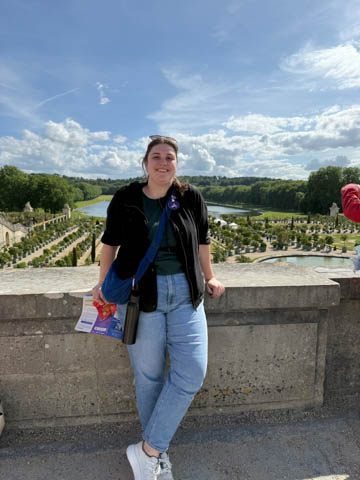
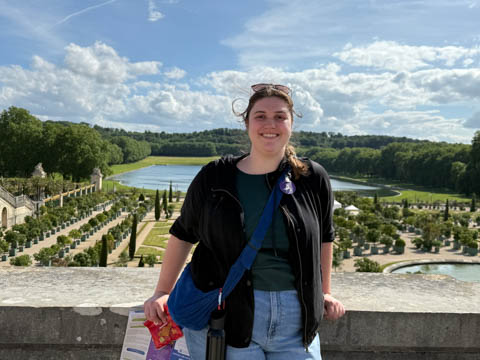
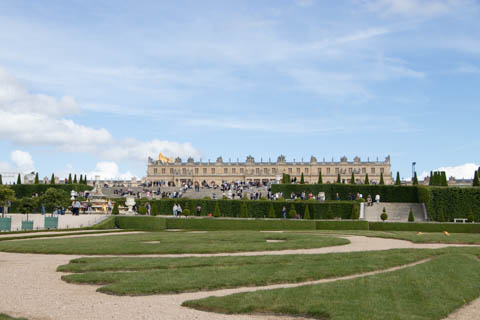
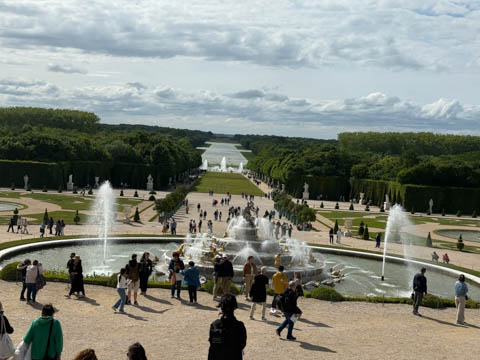
There terrace at the palace level overlooked gardens to both sides and in back.
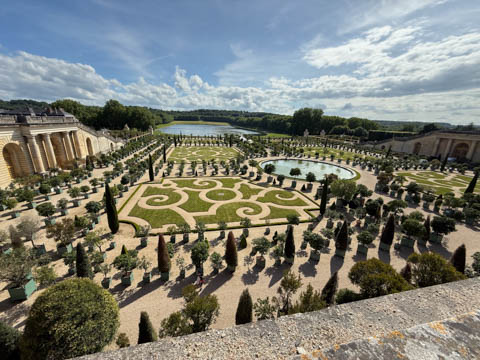
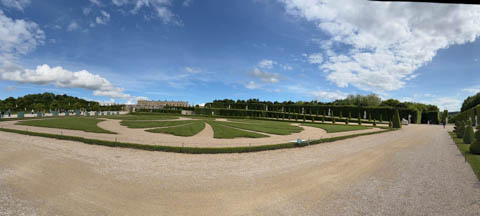
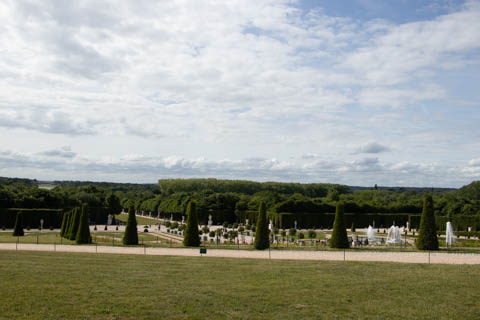
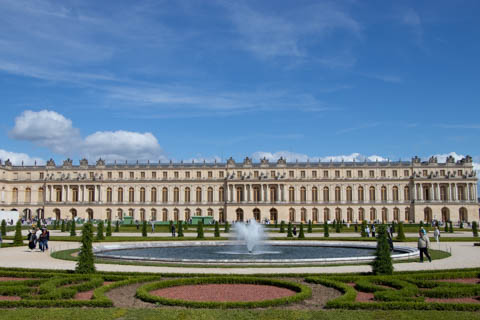
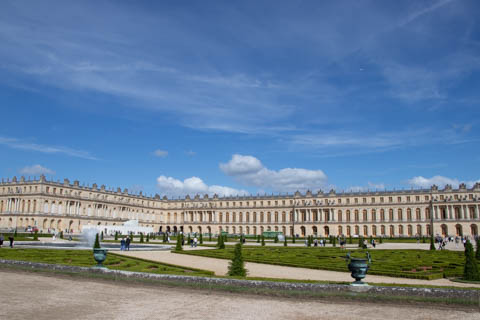
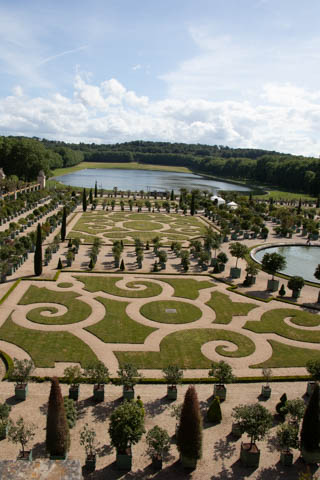
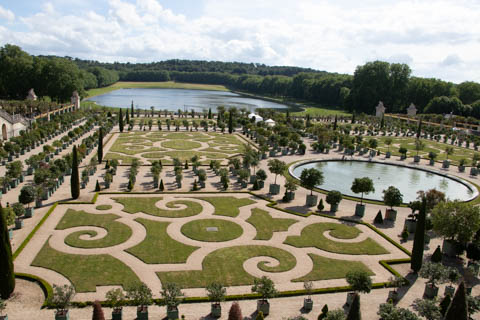
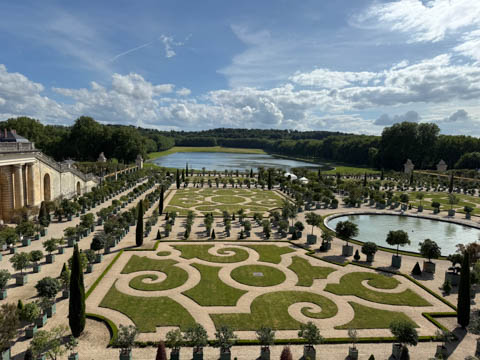
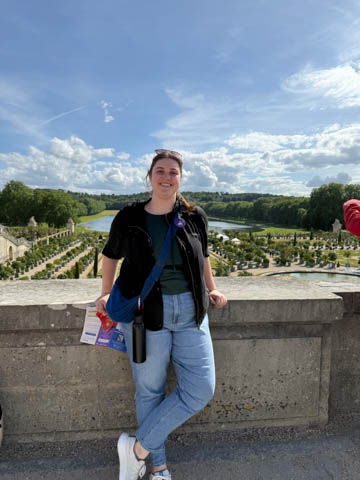
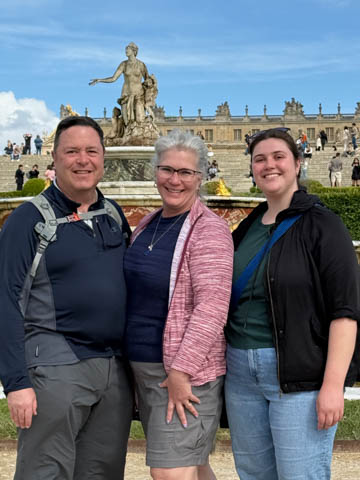
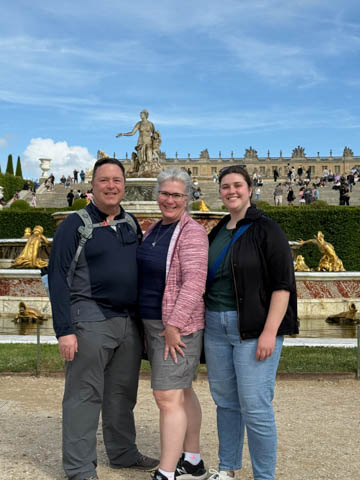
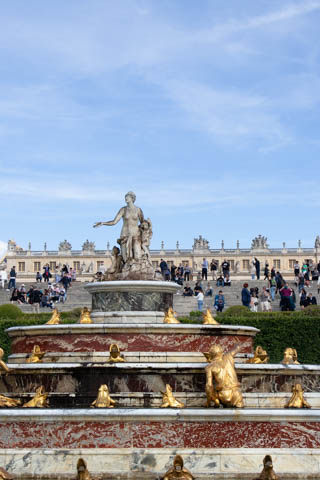
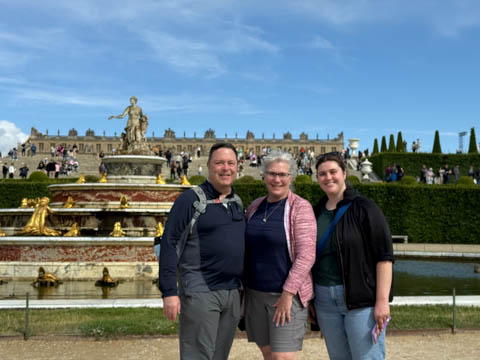
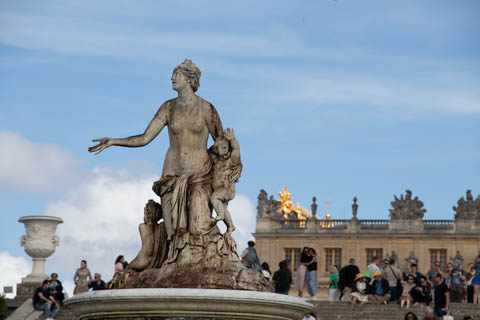
We made our way down the stairs in the middle to Latona's Fountain and Parterre
(flowerbed).
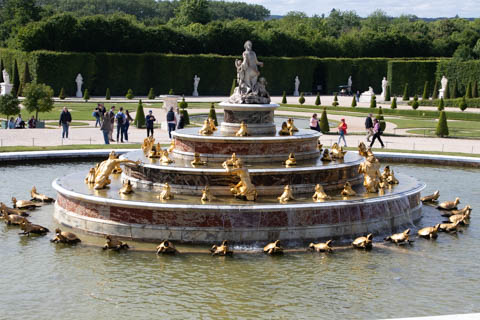
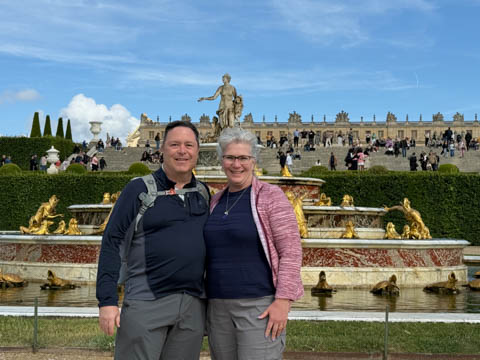
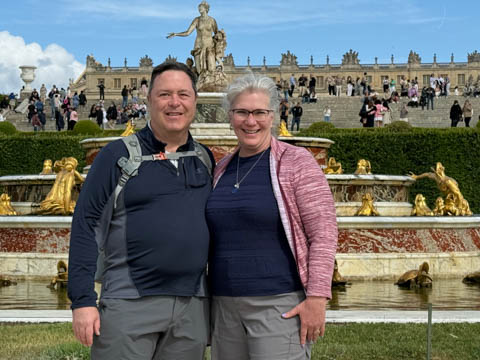
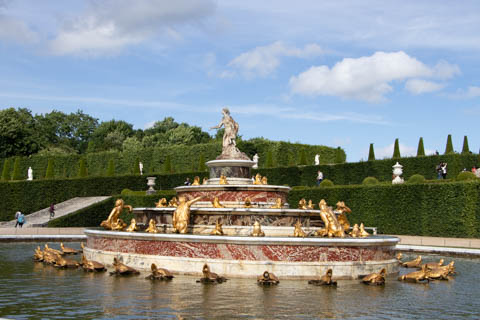
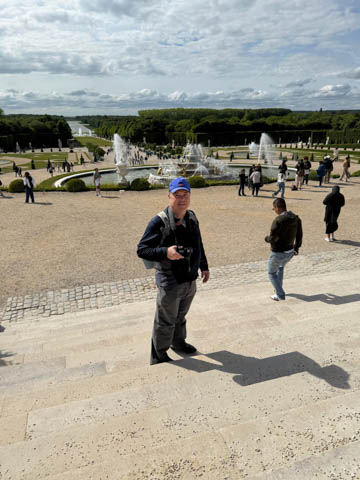
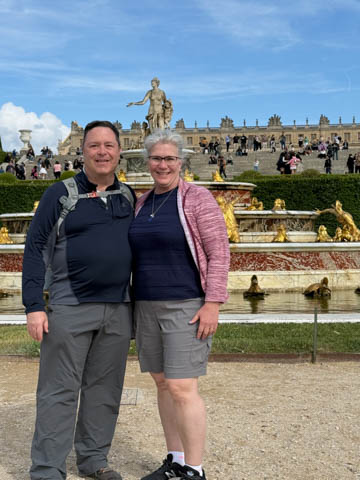
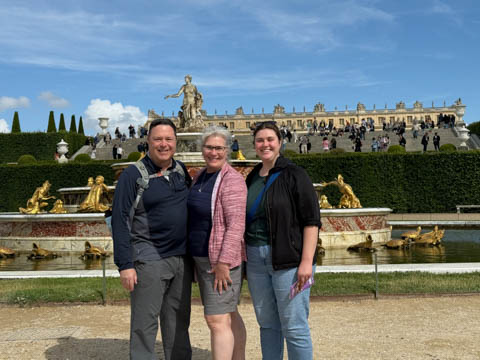
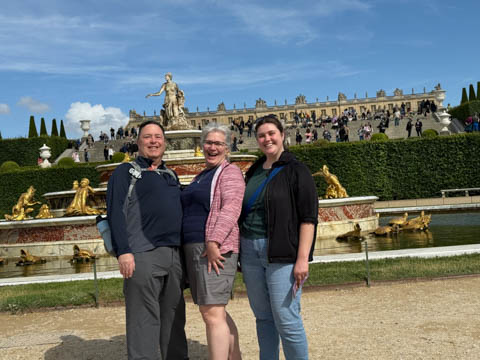
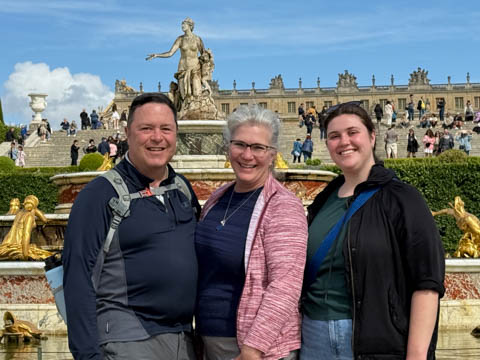
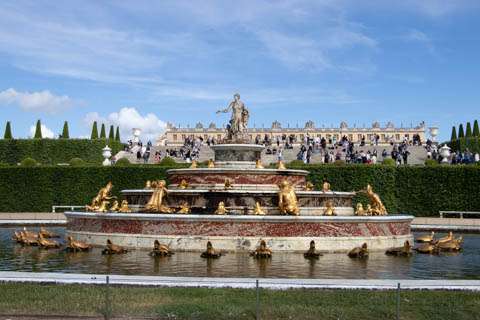
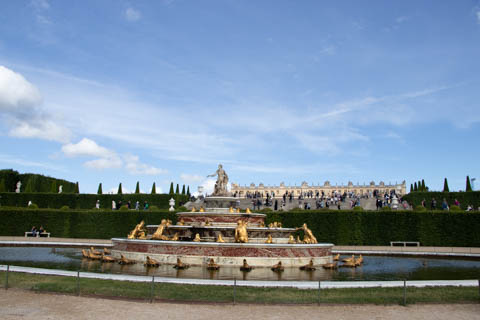
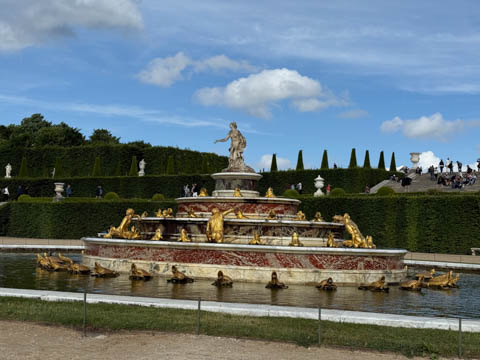
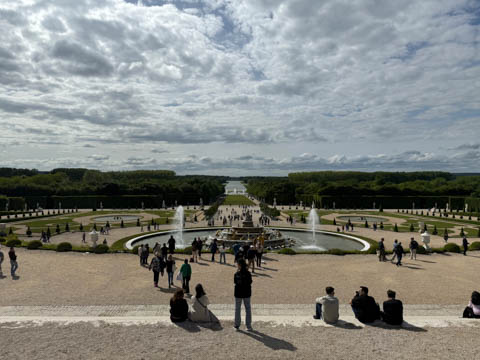
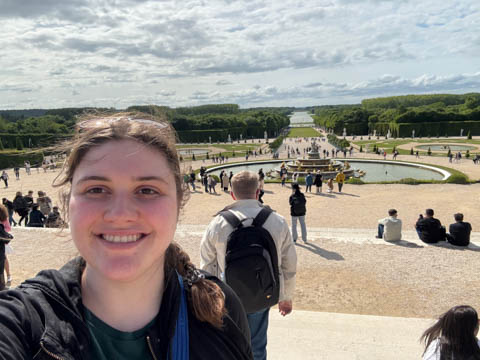
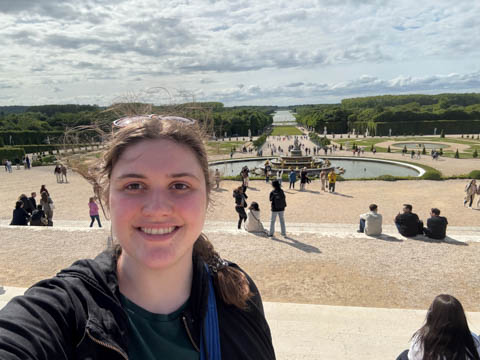
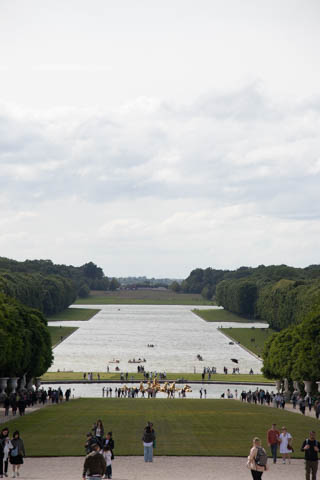
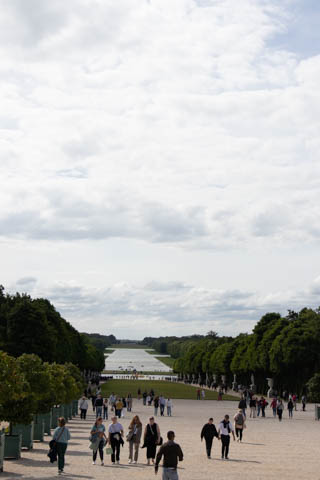
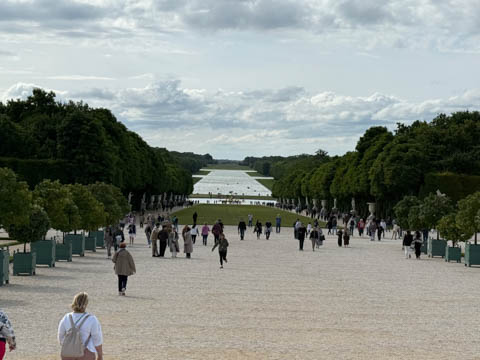
The view continued out to the Grand Canal which stretches for more than a mile
(1.65 km) to merge with the horizon - one of Le Notre's most brilliant landscape
designs
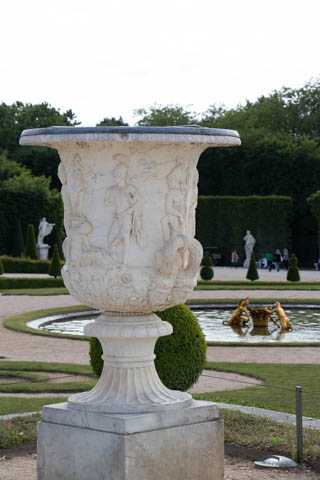
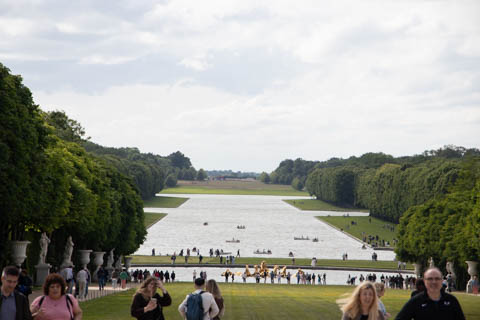
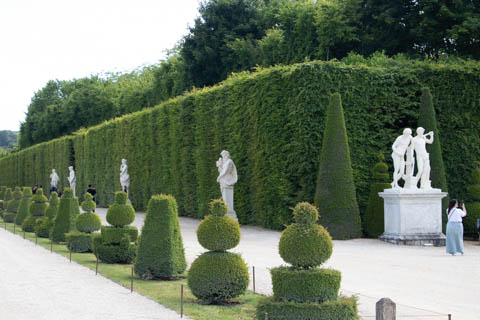
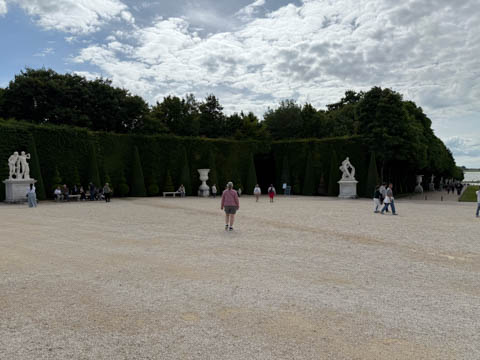
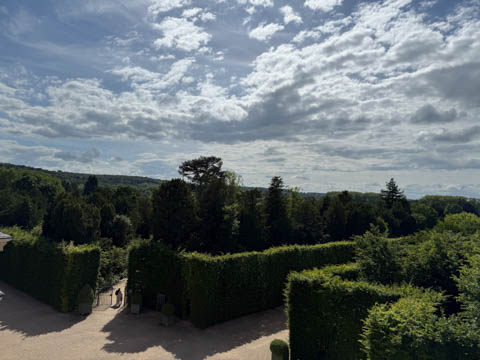
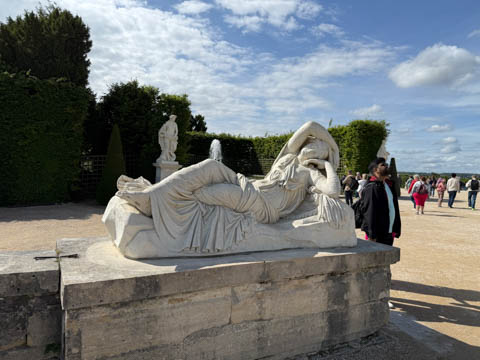
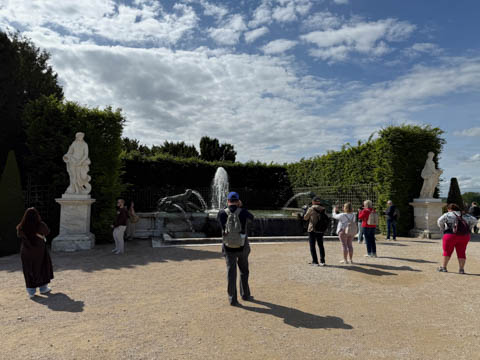
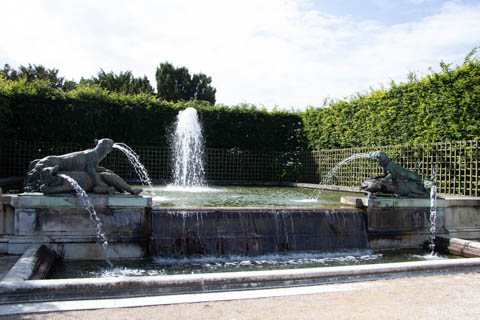
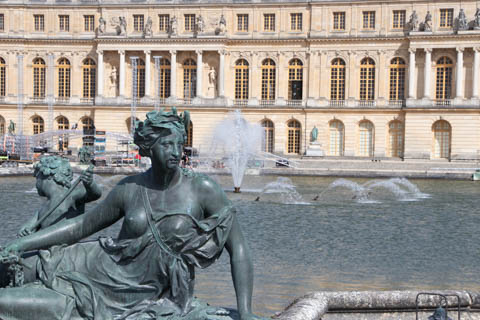
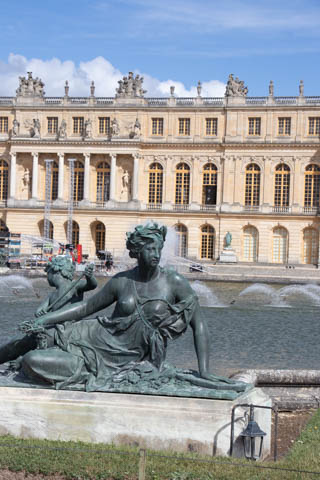
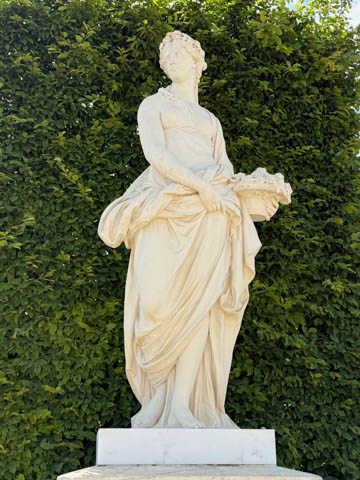
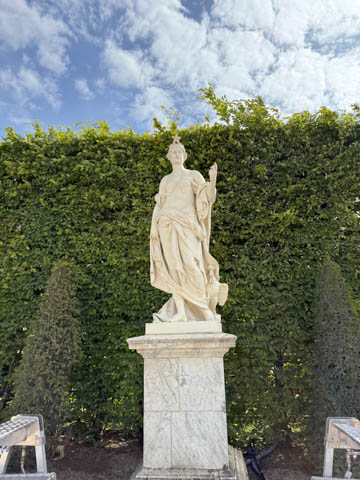
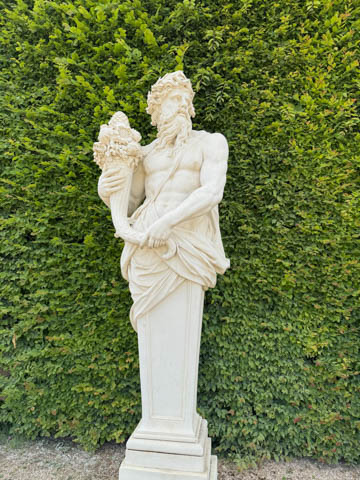
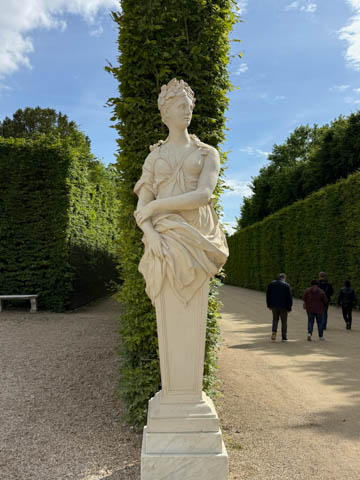
The statues were pretty amazing, although I think we learned they were replicas
as the originals needed to be moved out of the elements for protection.
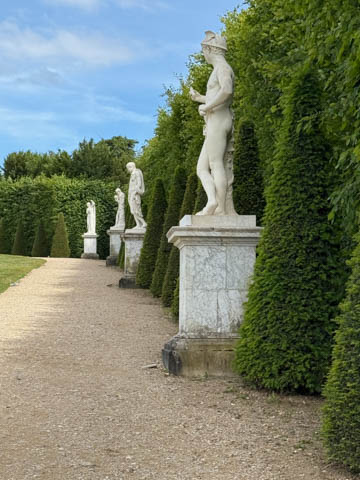
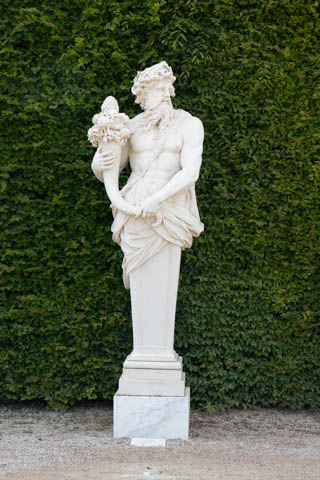
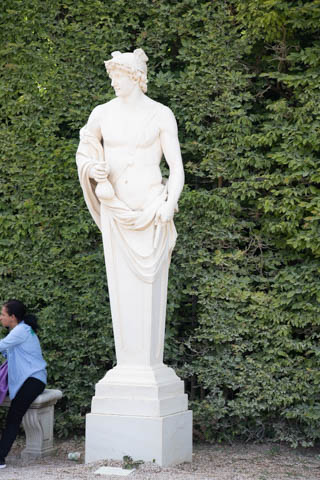
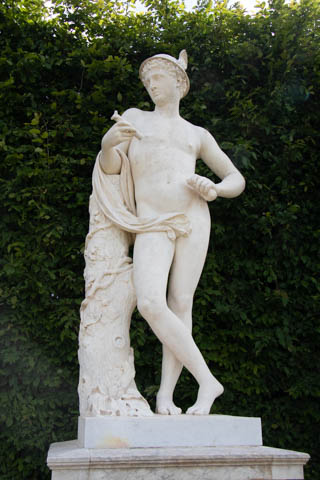
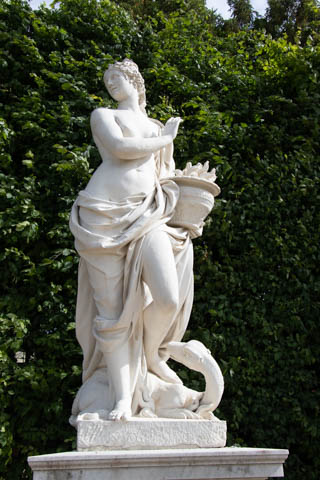
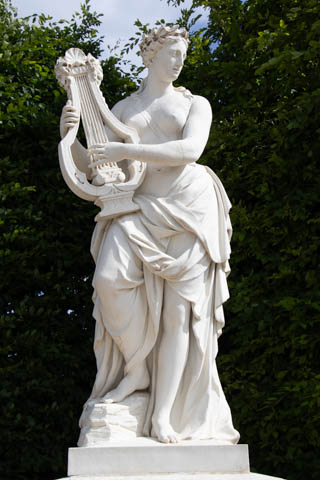
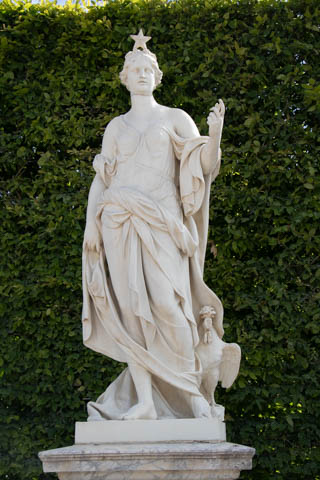
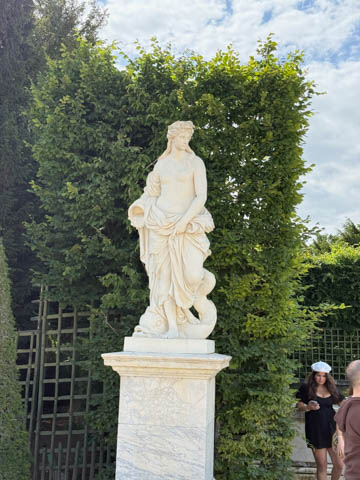
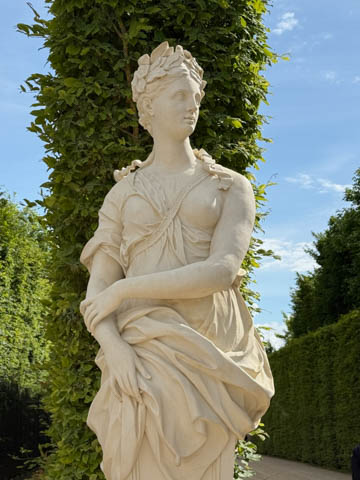
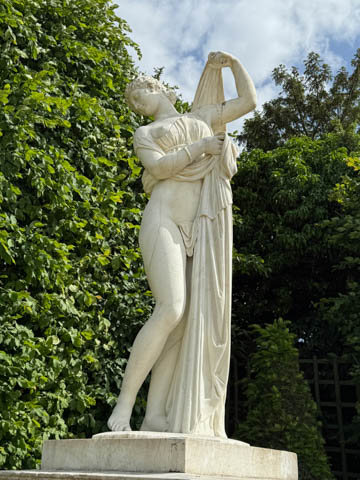
Clearly don't have enough pictures, that we needed to take some more on our way
out.