|
|
Use these navigation links to move between the Year 2024 pages. Specific pages can be accessed at the bottom of this page
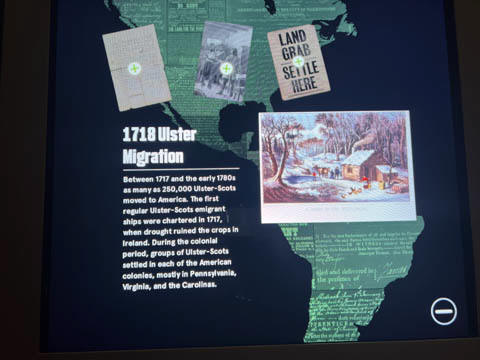
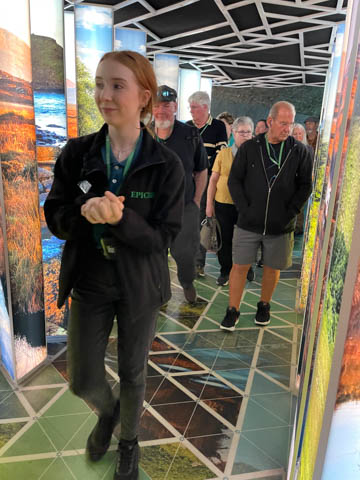
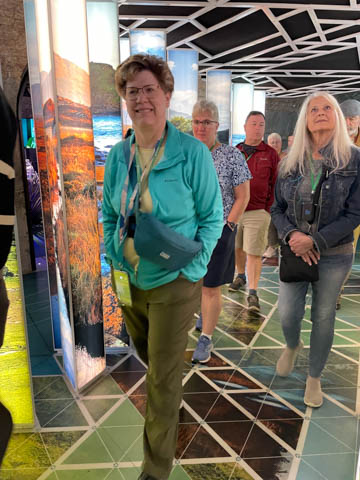
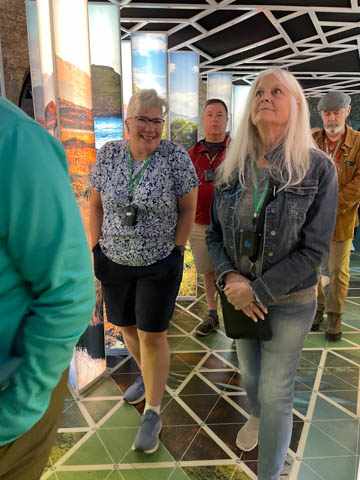
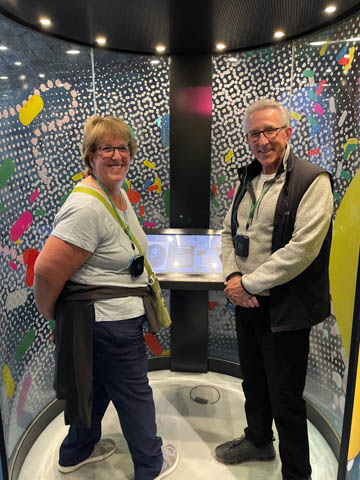
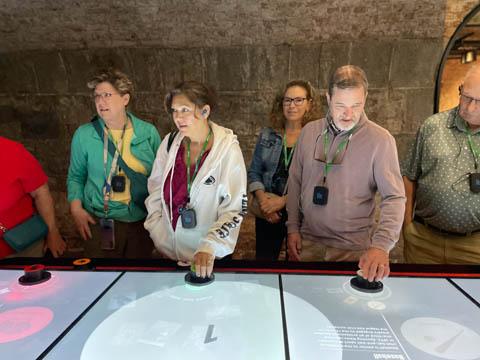
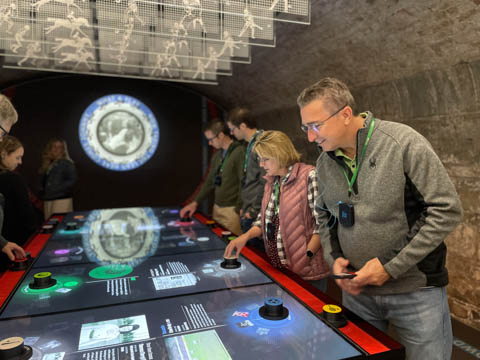
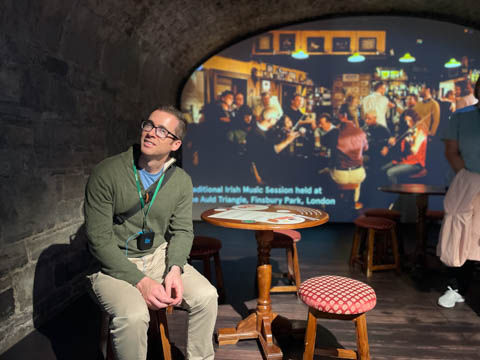
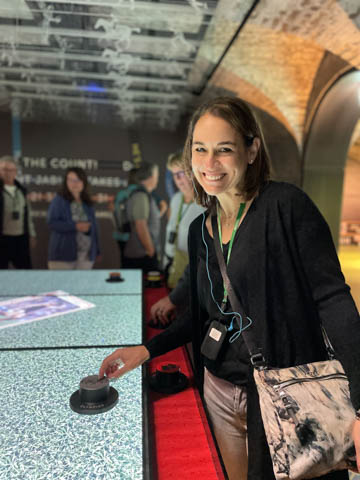
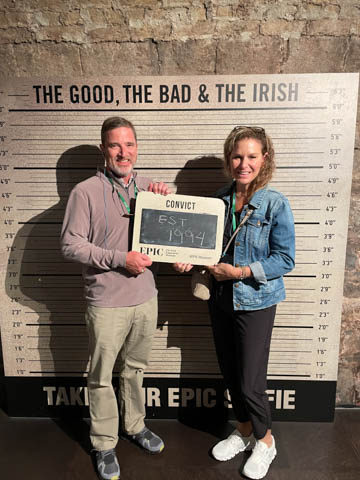
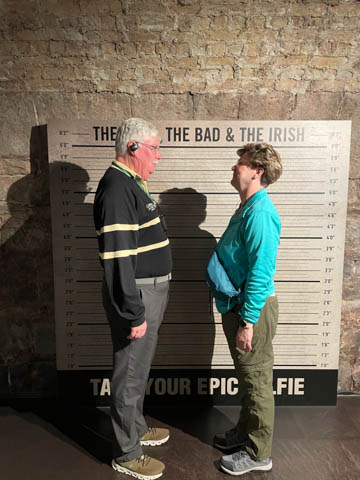
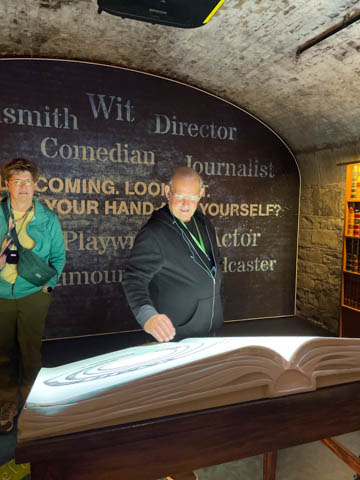
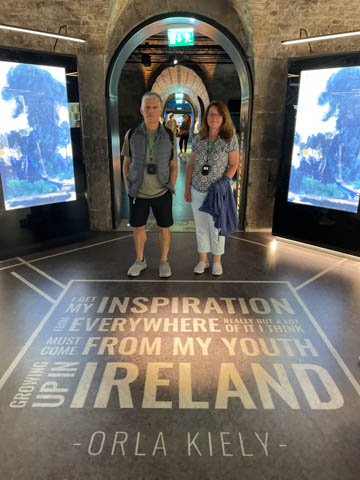
August 2024 (Part 06) Ireland Trip (Day Three): Dublin (Life on the Liffey) Our Disney Adventure began the next morning with a visit to the Epic: the Irish Emigration Museum. This was a great open building right on the River Liffey with a rather new exhibit space. While emigration occurred over centuries, there was obviously a huge spike in the with the Potato Famine 1845-1852. Of the 8 million population at the time, only 4 million remained by the late 1800s with 2-3 million soles lost and 2 million who emigrated, mostly to the USA, Canada, and Briton. By the end of the decade, half of all immigration to the United States was from Ireland. The population continued to decline until 1961, leaving the current population of Ireland at 6 million still less than what is was in the 1800, the only modern country with less people than a hundred years ago. The museum did a great job telling of the impact of this Irish Diaspora on their adopted countries and back in Ireland. There are over 70 million people all around the world who claim Irish heritage or ancestry, providing a significant impact on culture across the world. There was some relevance to our families. One of Steve's great-grandfathers was named Scot and the family had always assumed he and they were Scottish, which was backed up by DNA testing. But, it turned out that Steve's 8th great-grandfather David Scott and his wife Mary were born in County Londonderry, now part of Northern Ireland. As they were protestant (Presbyterian), we assume they were Ulster-Scotts who moved from Scotland to Ireland as part of the Plantation of Ulster in the mid 1600s. He emigrated to Ridgefield, Connecticut between 1705 and 1722. There was a display in one of the exhibits talking about the 1718 Ulster Migration, which stated "between 1717 and the early 1780s as many as 250,000 Ulster-Scotts moved to America. The first regular Ulster-Scott migrant ships were chartered in 1717, when draught ruined the crops in Ireland. During the colonial period, groups of Ulster-Scots settled in much of the American colonies, mostly in Pennsylvania, Virginia, and the Carolinas." A quick online search showed five ships arrived in Boston in 1718, but told an even more interesting story. The Presbyterians sided with and fought for King William in the Williamite War in Ireland (1689-1691), and expected their loyalty to be rewarded. However, they were regarded as more of a threat than even the Catholics, especially because of their numerical superiority over Anglicans in Ulster. They soon found themselves excluded from full access to political and civil power as a result of the Penal Laws that were passed by the Anglican-dominated Irish Parliament and with the extension of the Test Act to Ireland in 1704. Henceforth, those wishing to hold public office would have to produce evidence that they had taken communion in the Church of Ireland; this effectively disbarred Presbyterians from public appointments. Furthermore, marriages conducted by Presbyterian ministers were not considered valid and children born of such marriages were regarded as illegitimate. As a result entire congregations, led by their ministers, emigrated to America, most coming from along the River Foyle (centered on the city of Londonderry) and the River Bann (centered on Coleraine). The initial five ships carries at least 100 families and between 500 to 1000 people, and were followed by more over the ensuing years. Things got marginally better in the colonies, as the Puritans dominating New England didn't like them and didn't have enough stores set aside for winter to absorb them. The Ulster-Scots were slowly separated and pushed more toward the frontier, which wasn't far at that time, founding some familiar town names like Londonderry, Derry and Colrain. discoverulsterscots.com Meanwhile, Nancy's grandfather was named Byrne and the family had always assumed he and they were Irish. Her great-great-grandfather Mores Byrne appears to have been born and married in Edinburgh, Scotland, then emigrated to Massachusetts between 1815 and 1845. We still assume he was actually Irish, as DNA testing has shown significant Irish heritage and no Scottish. Interestingly, his wife was from France.
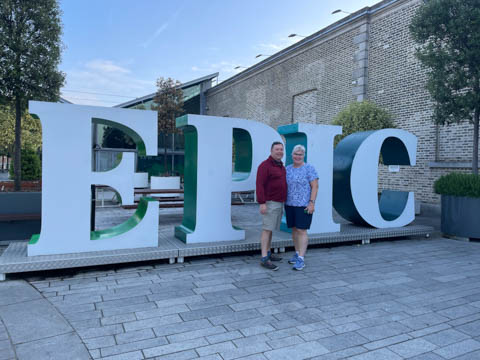
Gabby took everyone's picture outside the museum and started her role a team photographer to capture pictures over the week..
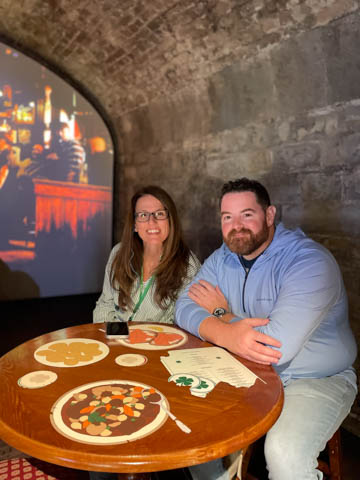
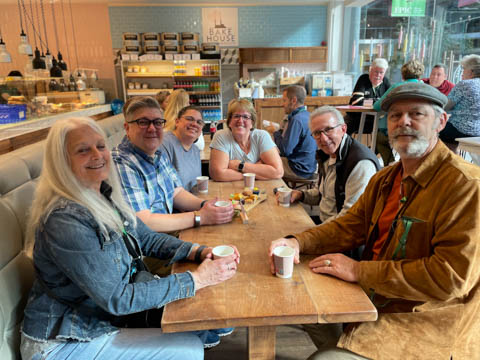
The exhibit hall on the main floor had a number of small businesses, including this small cafe where we were treated to some tea and a selection of tea cakes. Good to have some food before heading to our next stop.
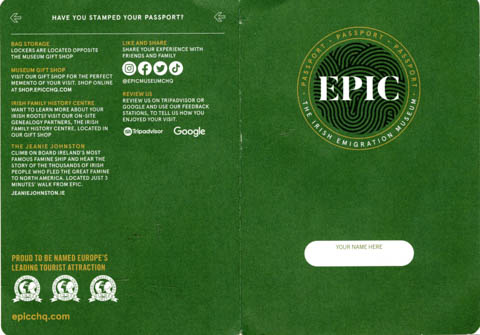
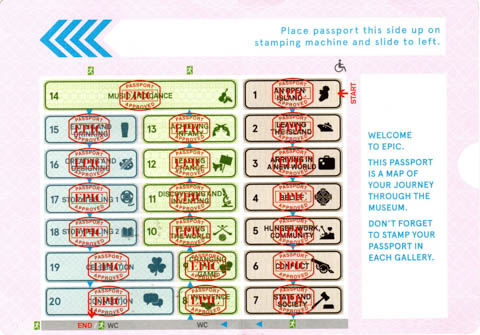
As we left, the guide handed us a passport showing we had visited every stop in the museum.
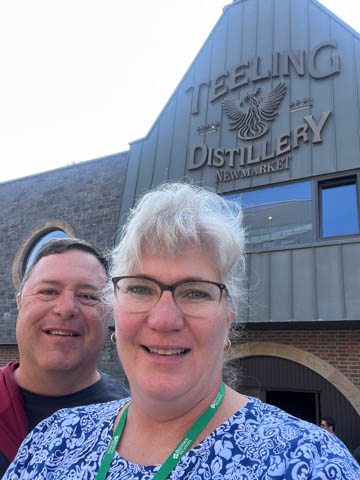
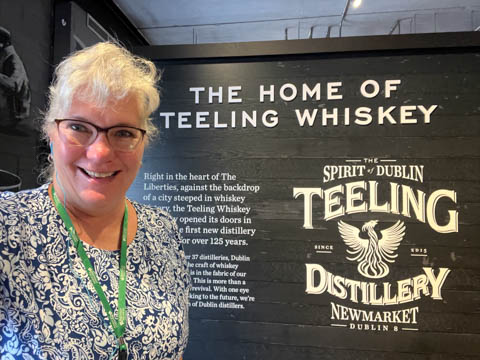
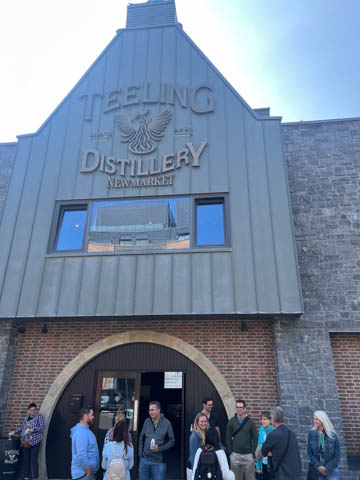
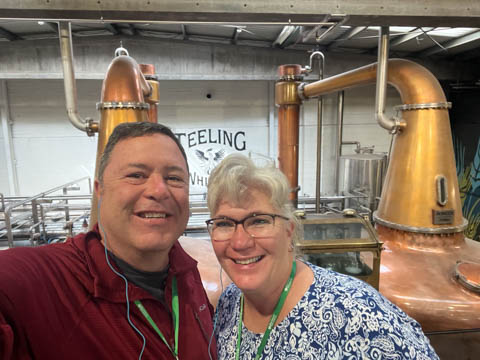
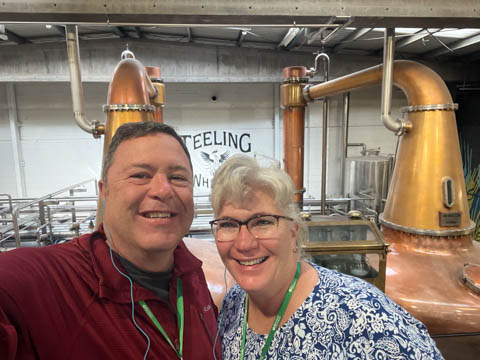
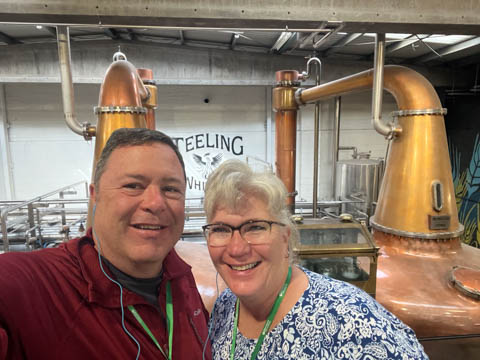
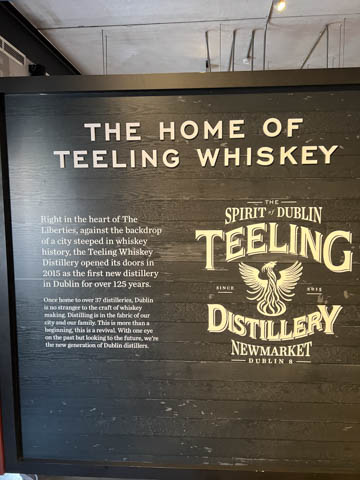
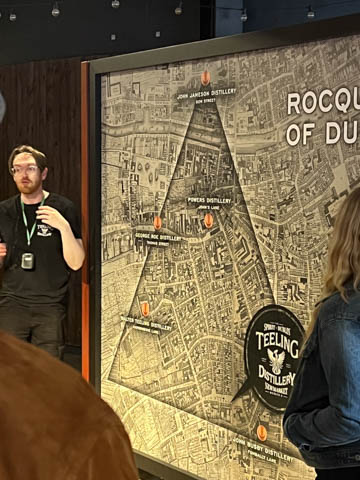
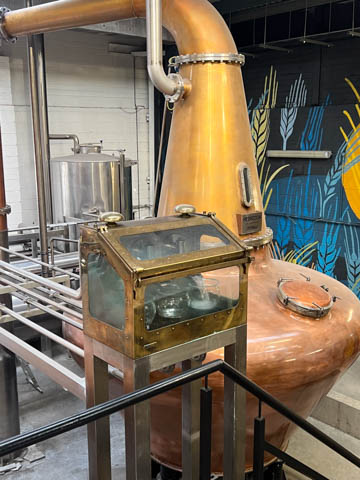
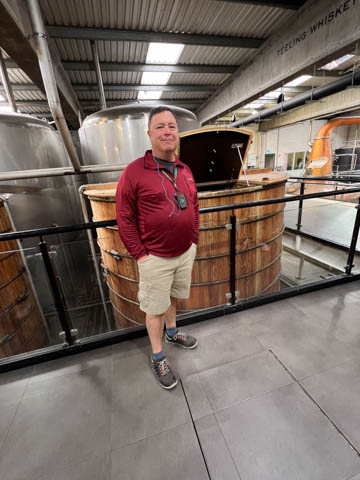
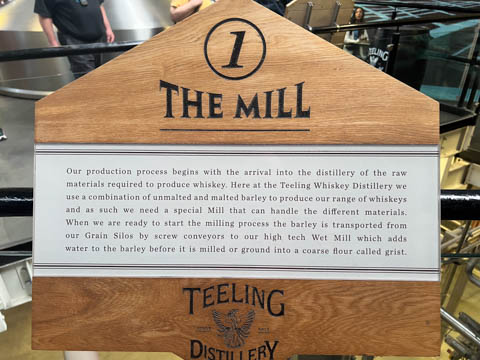
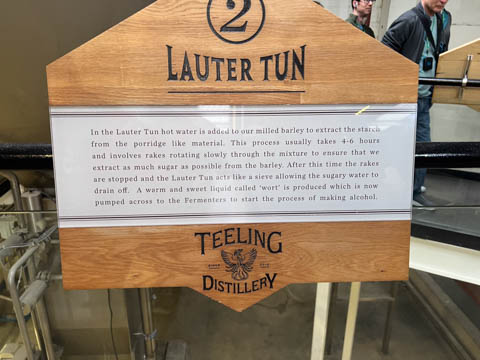
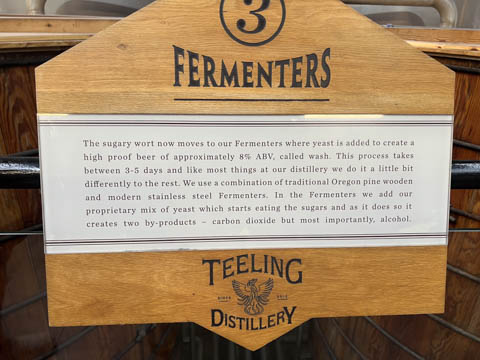
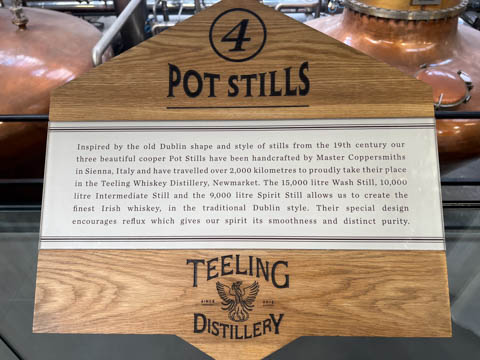
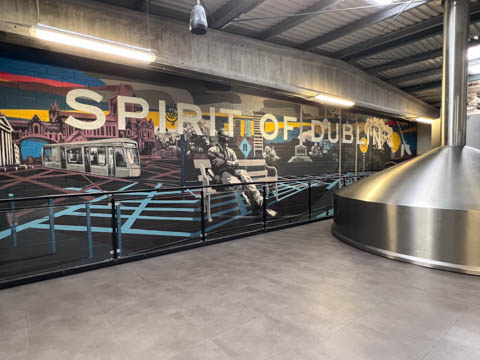
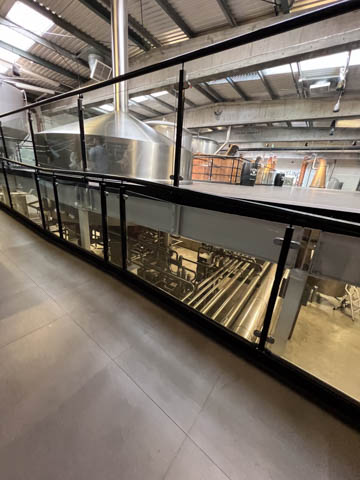
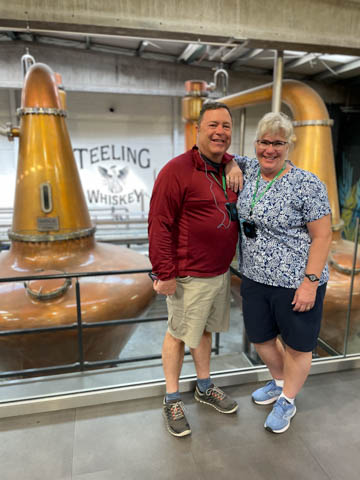
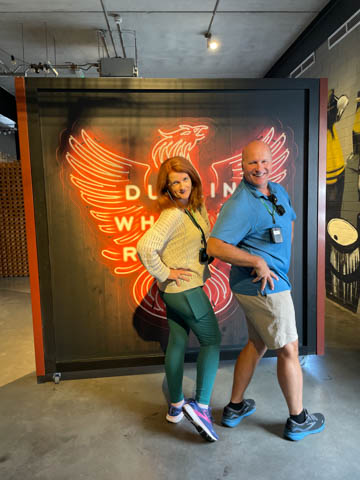
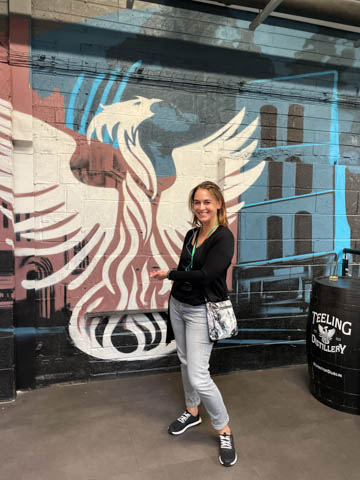
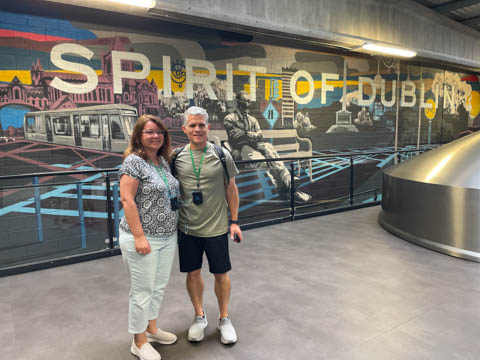
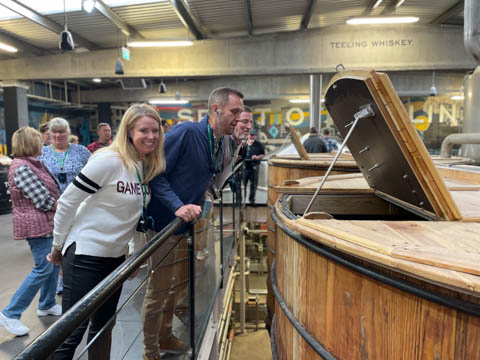
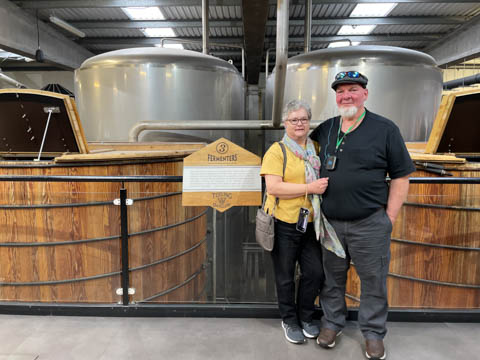
Our next stop was the Teeling Whiskey Distillery where we learned how they make Irish Whiskey and got to have a tasting. There had been a Teeling Distillery in Dublin as far back as 1782. The current Teeling Distillery opened in 2015 as the first new distillery in Dublin in 125 years. For the record, whiskey is distilled from barley mash, while bourbon is distilled from corn, vodka from potatoes, etc. Additionally, Scotch whiskey or Scotch is simply whiskey distilled in Scotland. The tour began with a walk through their distilling process. They distill the whisky three times, reaching an almost pure alcohol which is very clear.
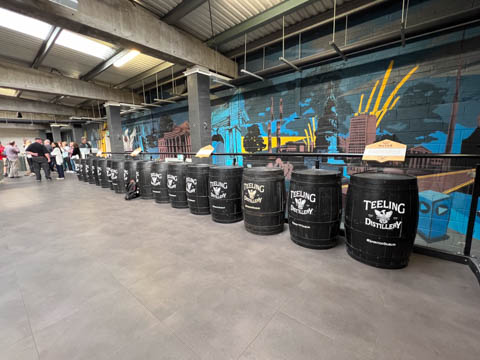
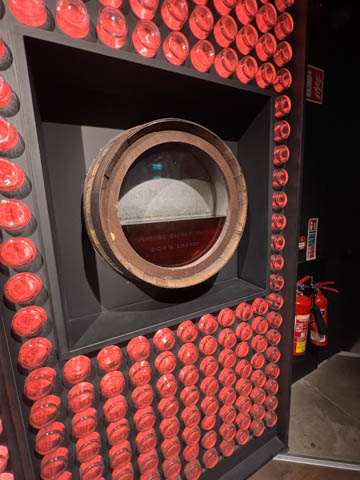
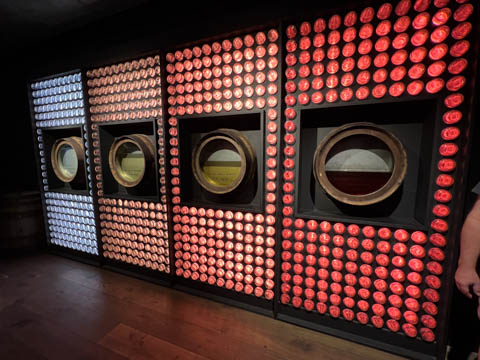
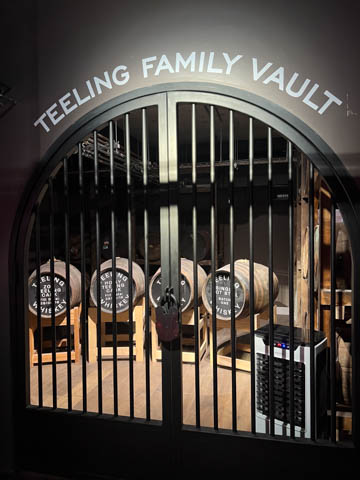
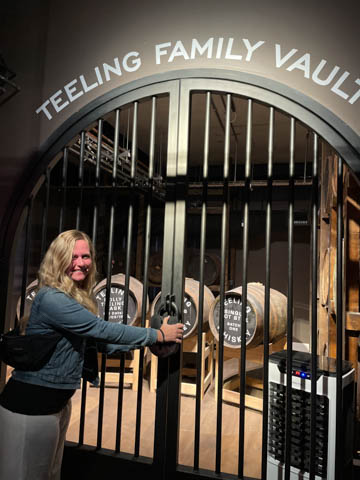
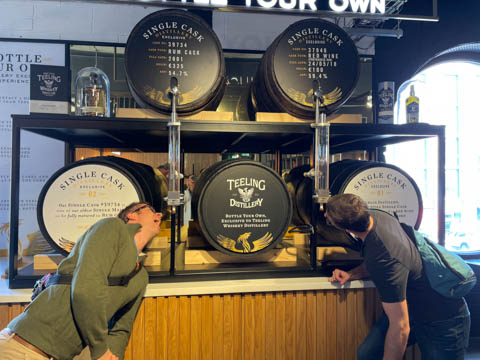
The whiskey is then aged in bourdon or wine barrels, drawing its flavor and color from the barrel. They had a good display showing how the color changes with more aging. They also showed us the family vault, where they set aside barrels for each of the children born to the owners, each of which is now worth a decent amount as an inheritance.
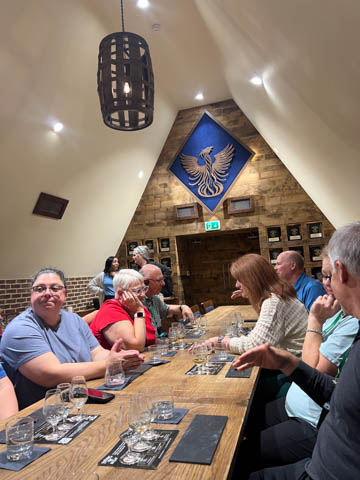
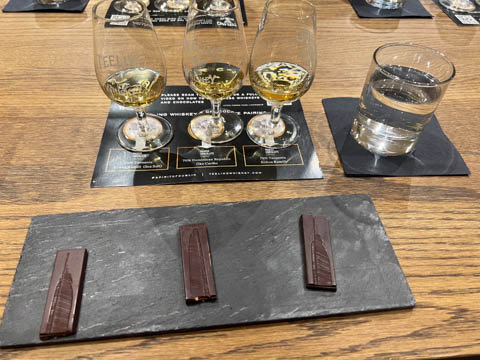
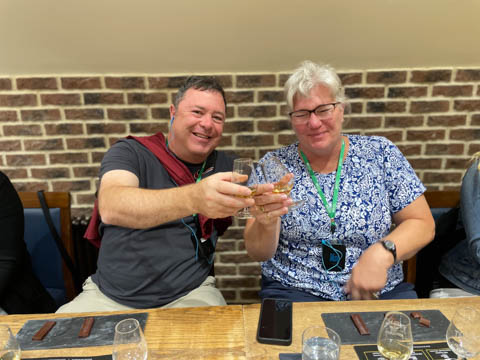
We eventually headed to a private room for a whiskey and chocolate tasting. They served us their the Teeling Small Batch, Teeling Single Grain, and Teeling Single Malt. The Small Batch is initially fully aged in Ex-Bourbon barrels, then married together in Central American Rum casks for up to 12 months. The Single Grain is made from a mash with 95% corn and 5% malted barley that has been column distilled and matured exclusively in American red wine casks.
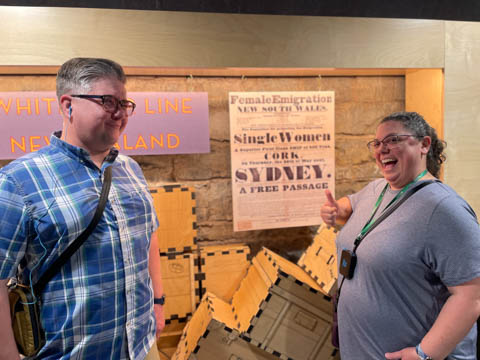
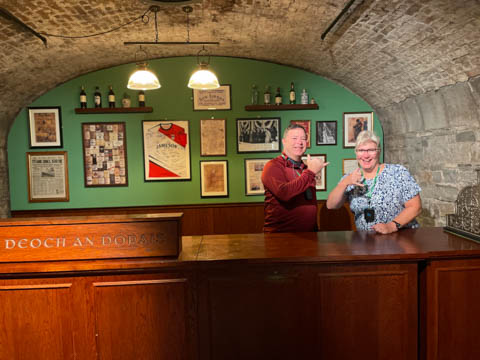
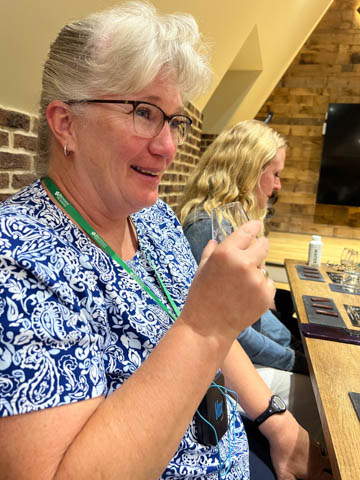
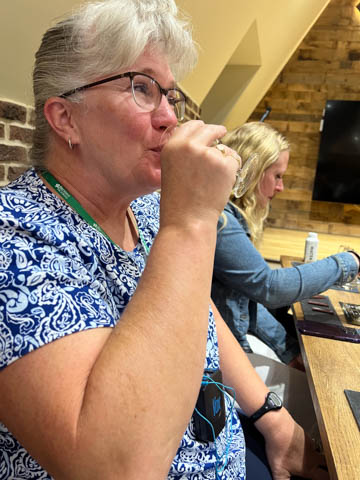
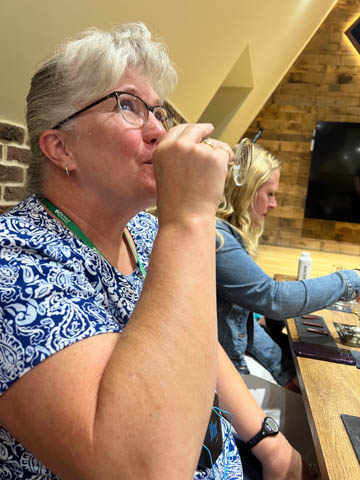
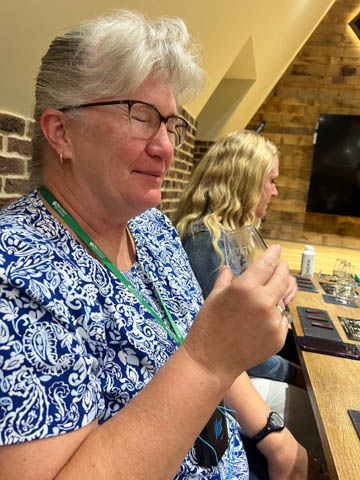
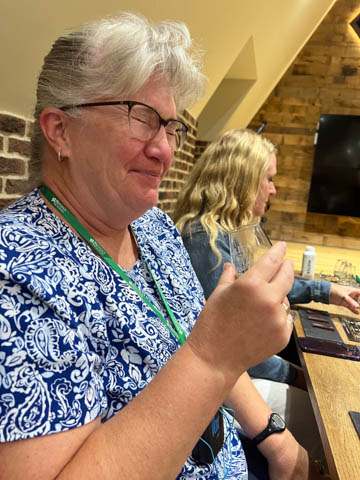
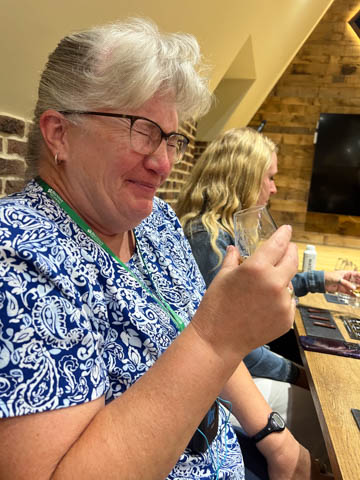
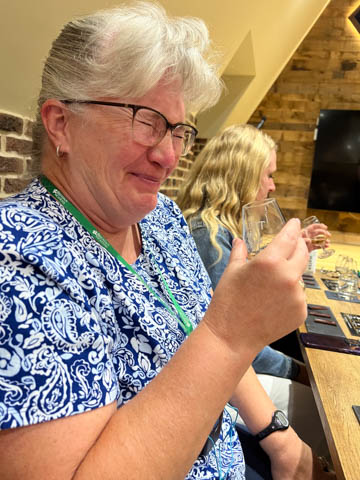
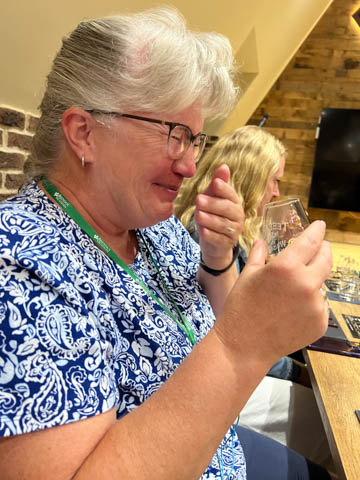
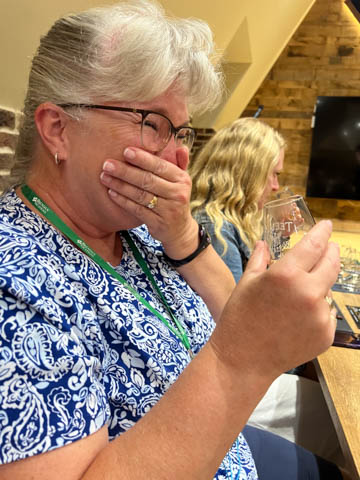
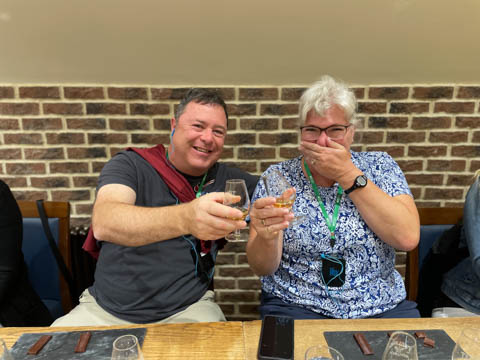
Had to capture the reaction to Nancy's first sip. She calmly pushed the rest of her whisky to Steve, but kept the chocolate.
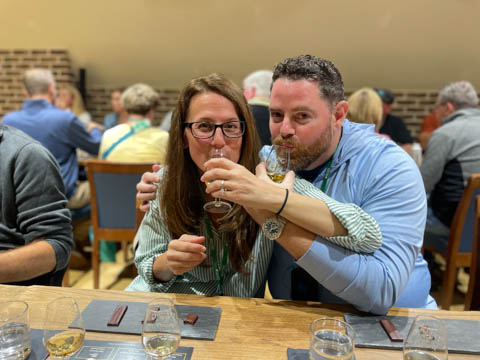
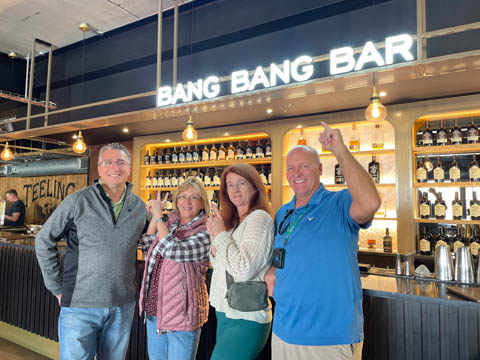
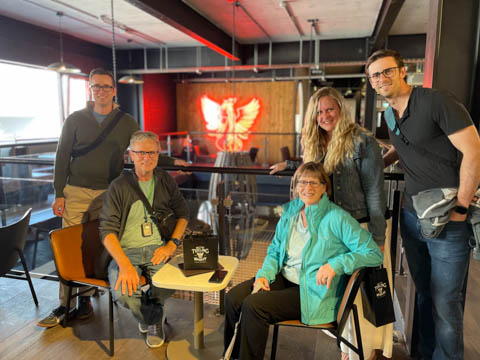
Here are some pictures from Disney which Gabby took.
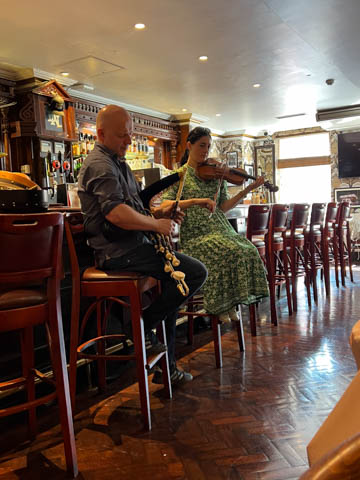
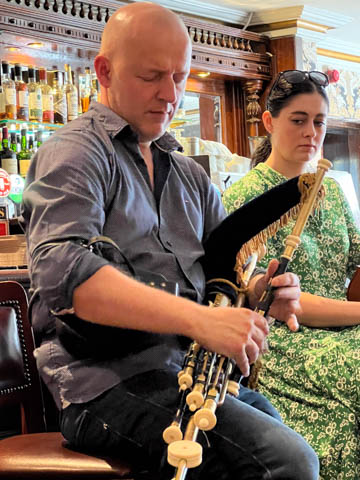
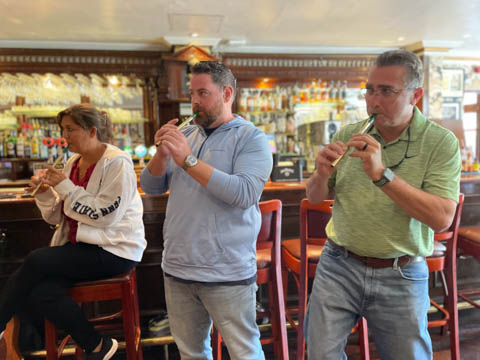
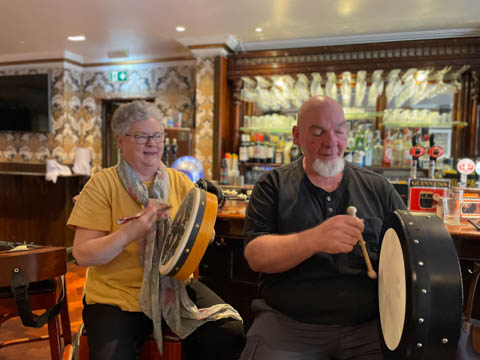
Next was a great lunch at a pub, complete with a private concert featuring a duet of an Irish bagpipe and a fiddle. Both musicians told us about their craft and instruments. We learned that the Irish bagpipe is fed by a bellows pump under an arm and not by squeezing a bag as the Scottish pipes. Although this means the musician can walk or march with the Scottish pipes, but must remain seated with the Irish ones.
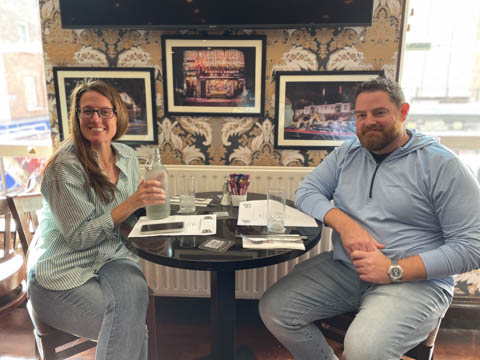
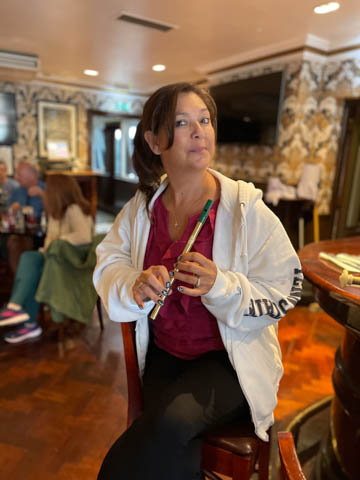
Here are some pictures Gabby took when they brought people from our group up to play a tin whistle and other items they brought with.
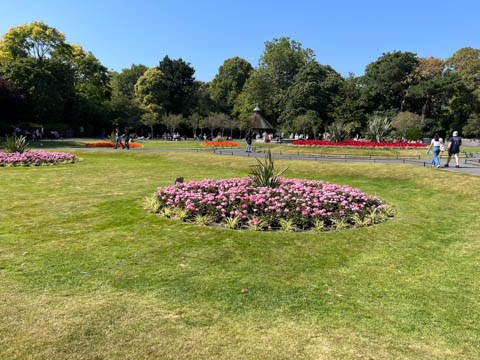
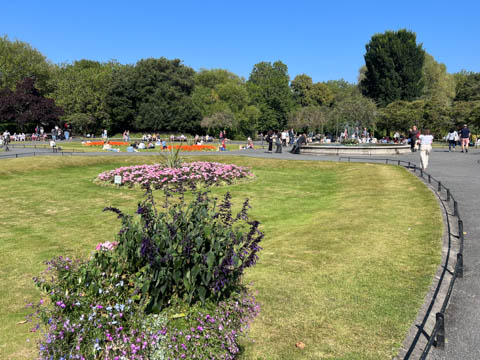
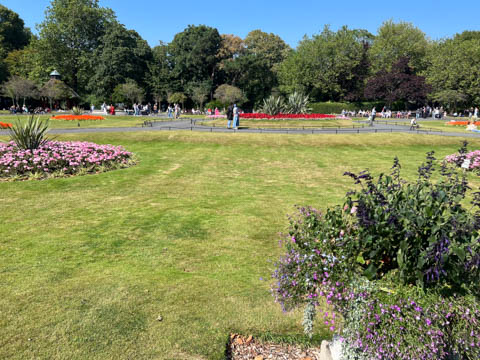
After lunch, we had the rest of the day on our own, so we headed out traveling first through St Stephen's Green.
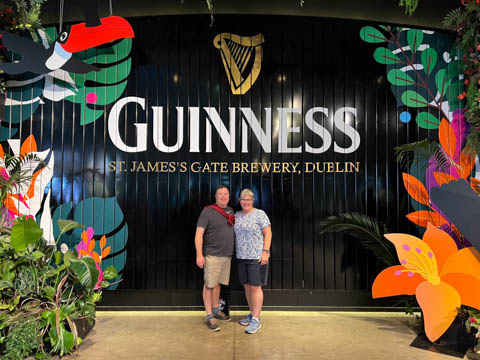
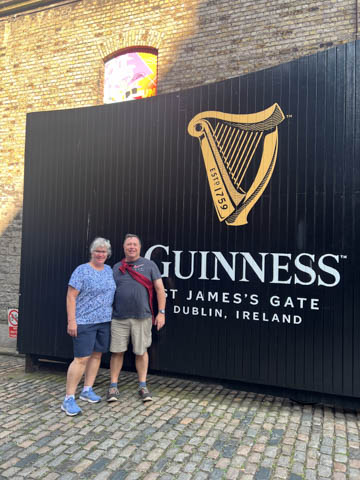
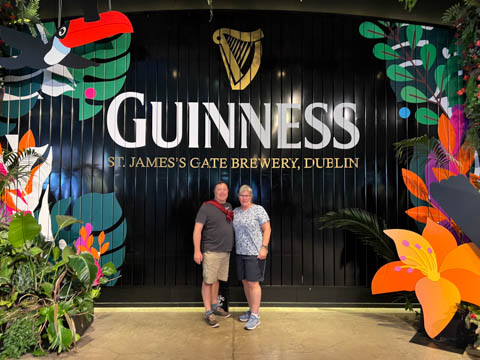
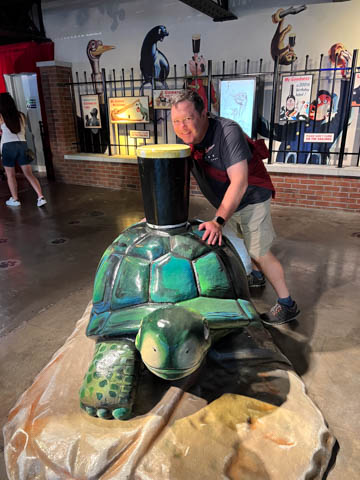
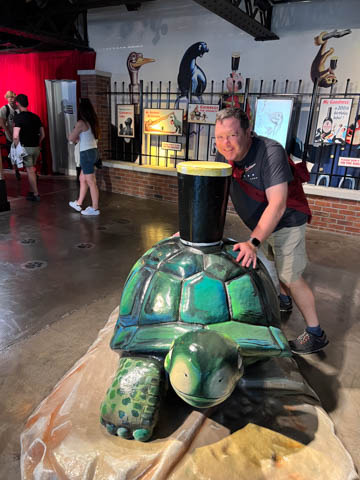
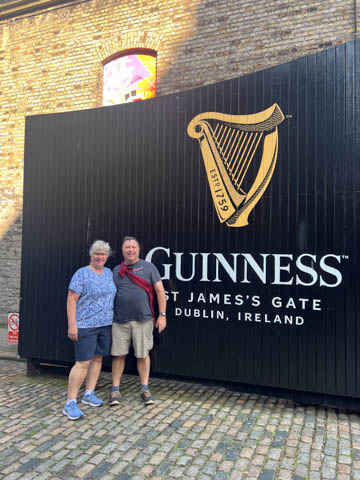
We were headed to the Guinness Storehouse on the west side of town (again near the River Liffey).
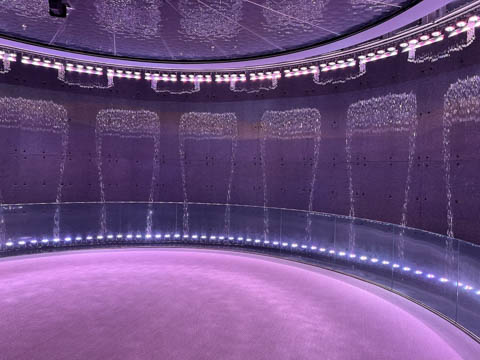
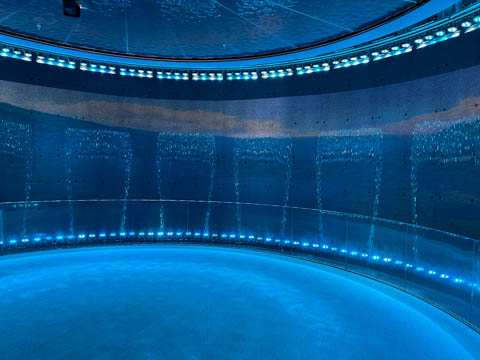
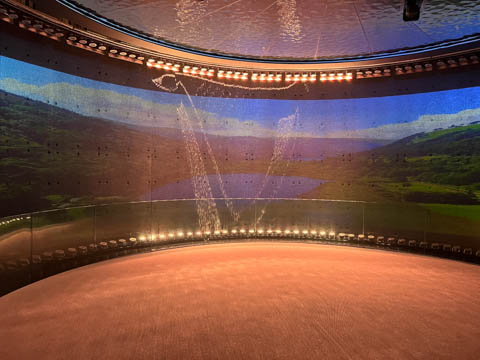
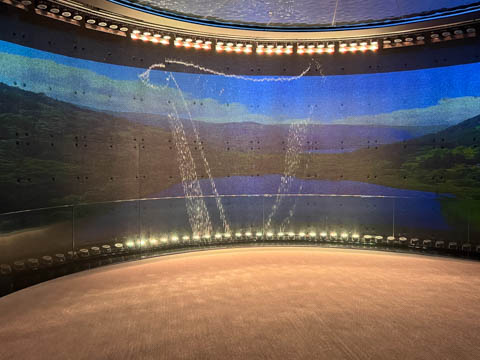
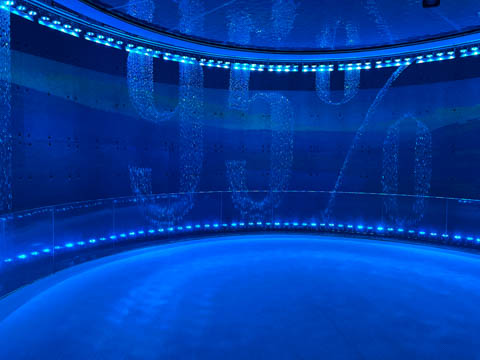
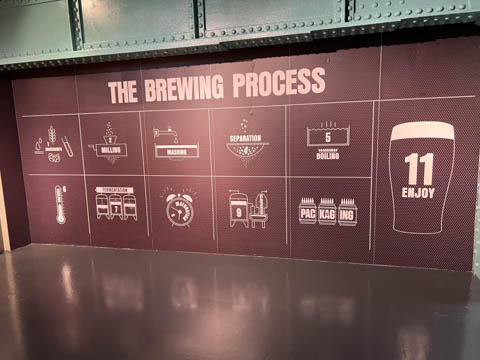
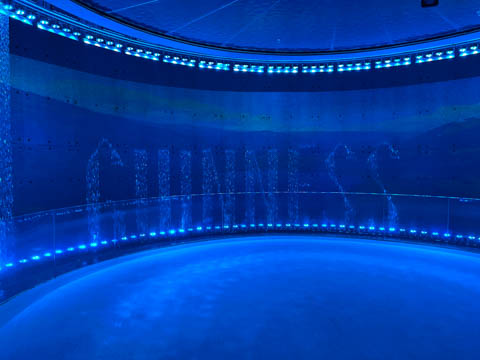
We were fascinated by the water display which was their introduction to the brewing process and the importance of water. They formed a Guinness harp, pint glasses, and words in the waterfall.
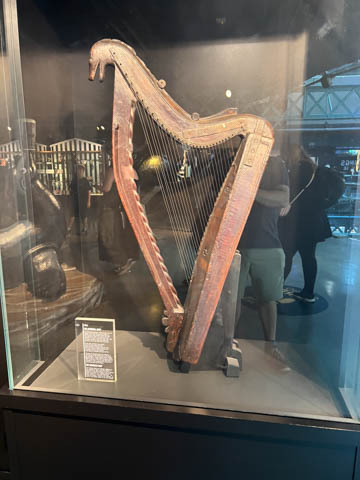
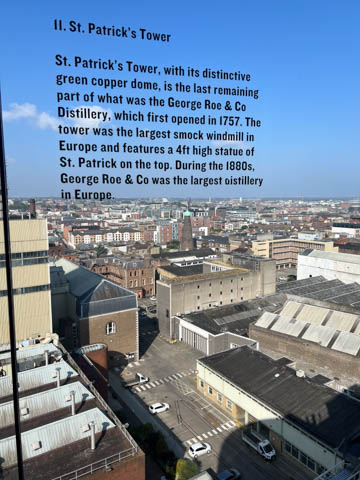
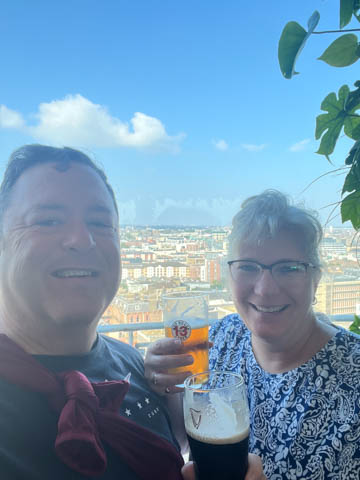
One of the treasures was the ancient Irish harp, similar to the one used to model their logo. As we moved through the storehouse, we moved higher into the building, ending at a couple bars on the roof with wonderful 360 degree views of the city. Time to head out way too soon.
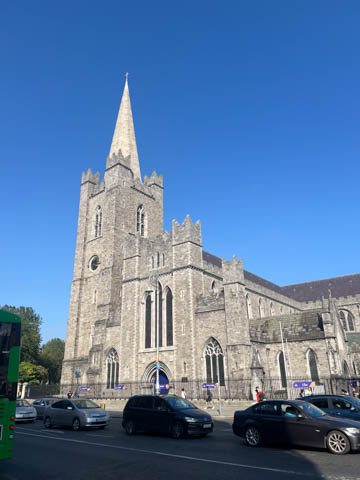
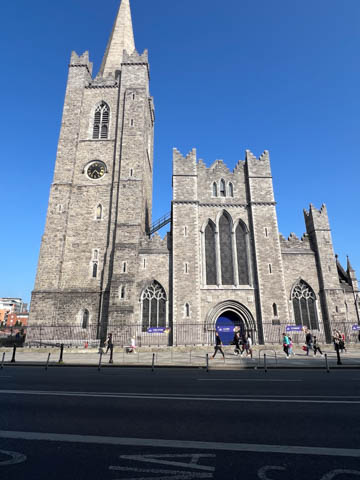
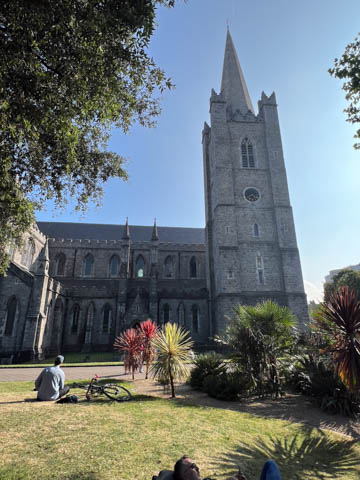
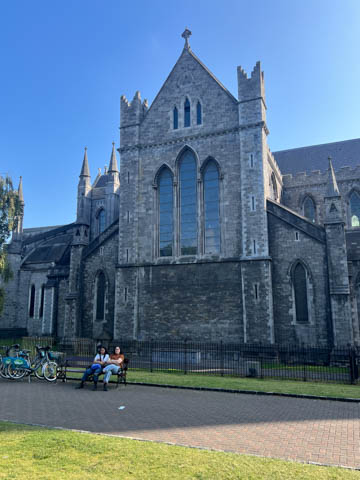
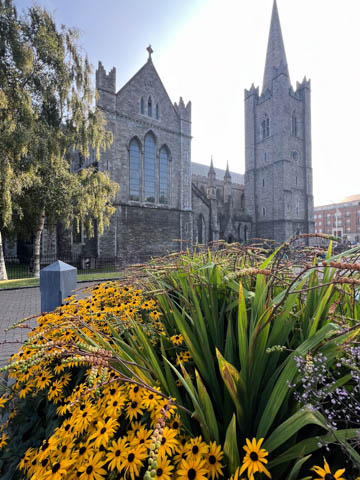
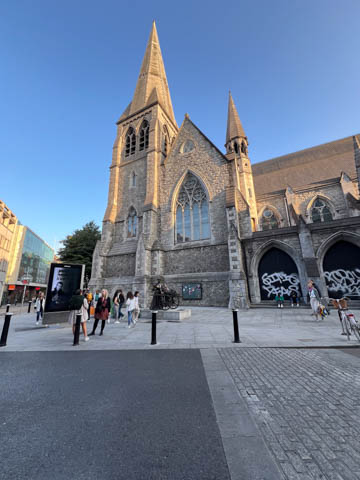
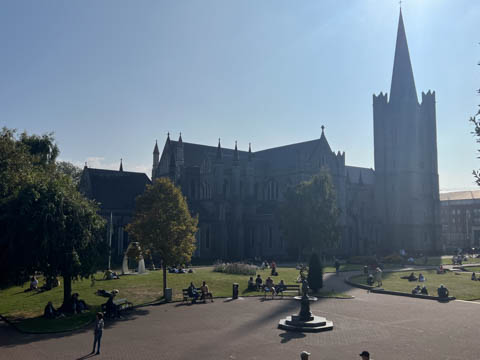
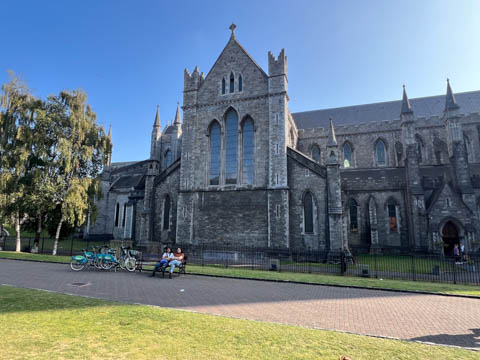
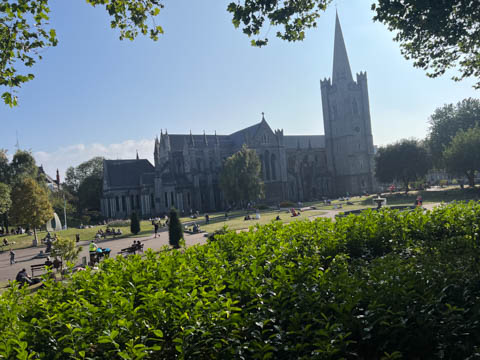
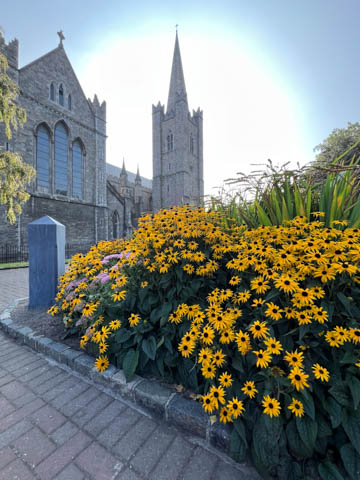
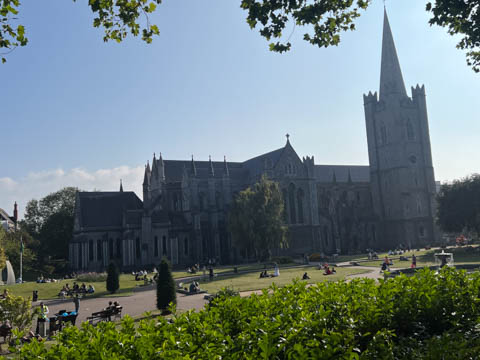
We had to head back a ways east to get to Trinity College, so we took a horse-drawn carriage ride from the waiting hackneys at a stand just outside the brewery, stopping about halfway at St Patrick's catherdral.
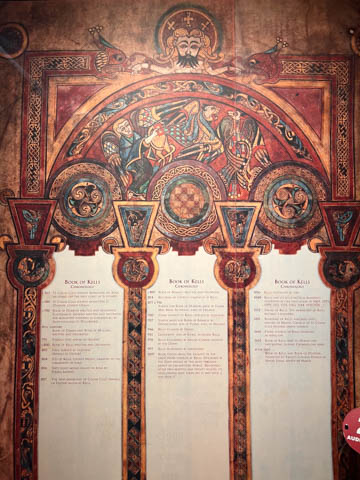
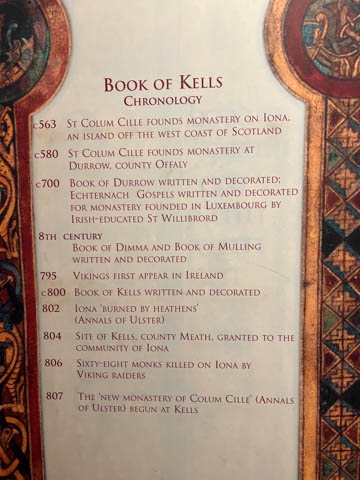
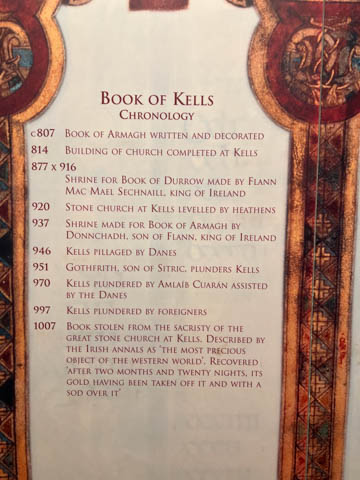
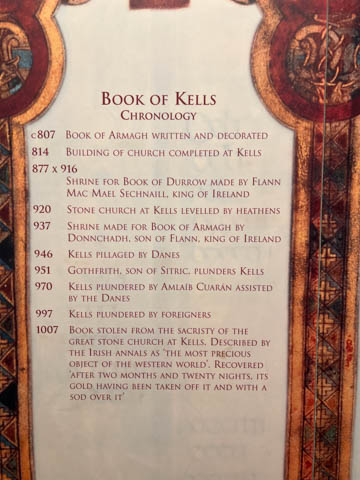
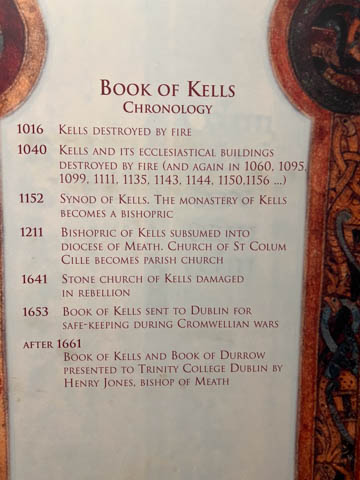
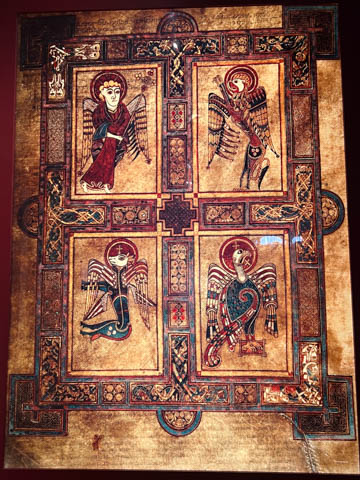
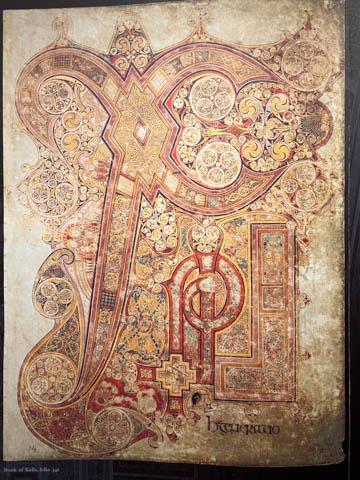
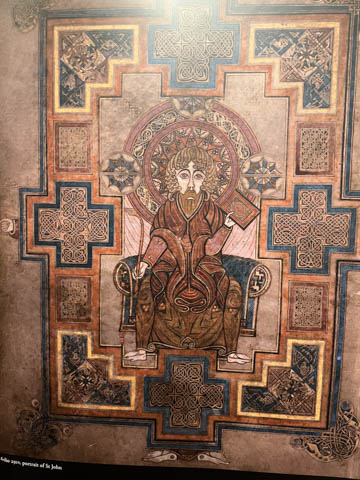
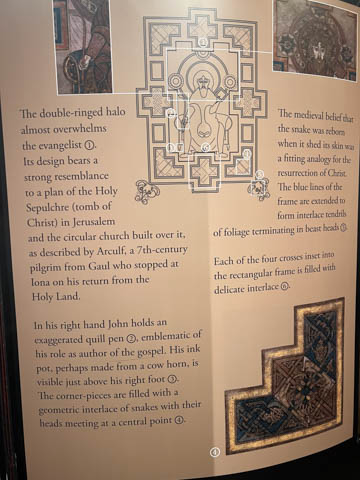
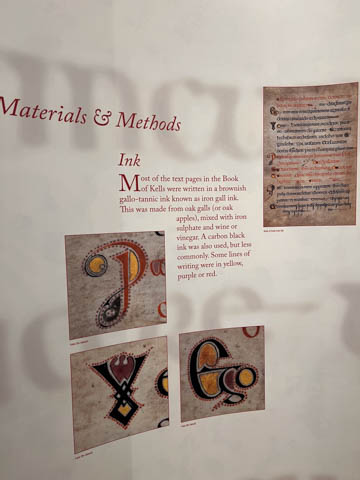
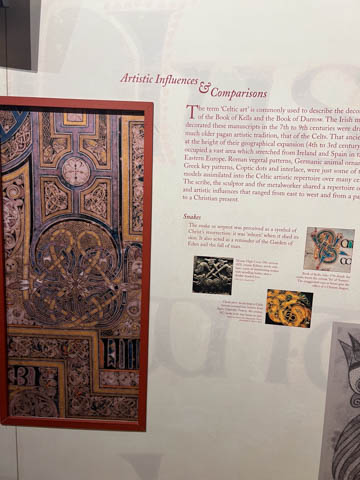
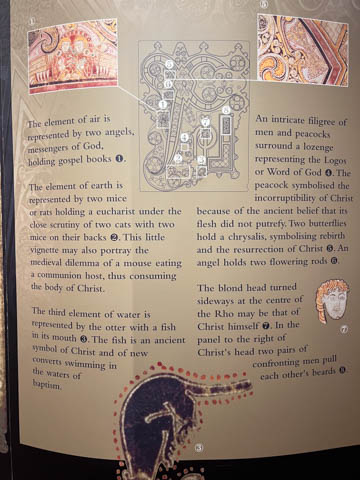
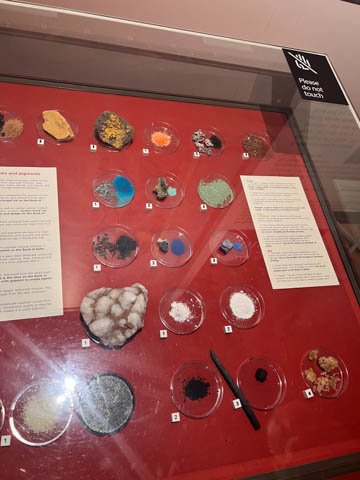
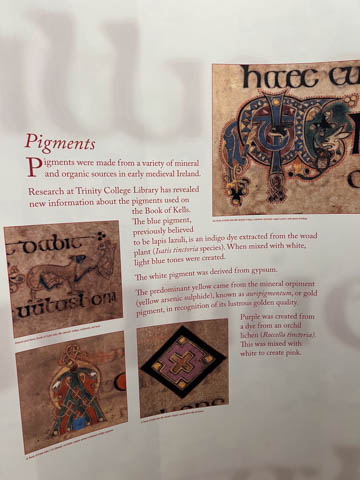
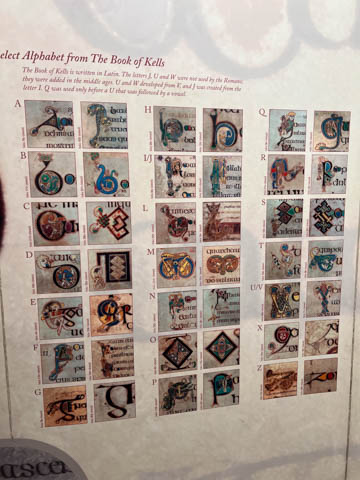
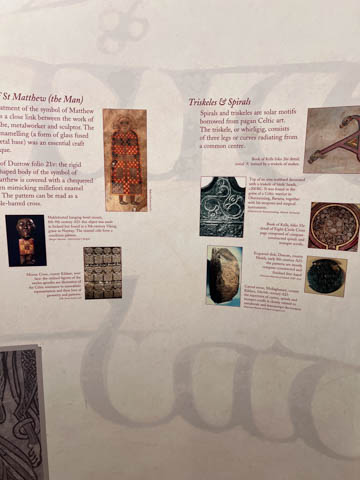
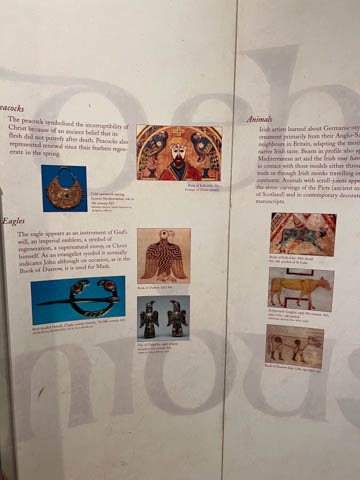
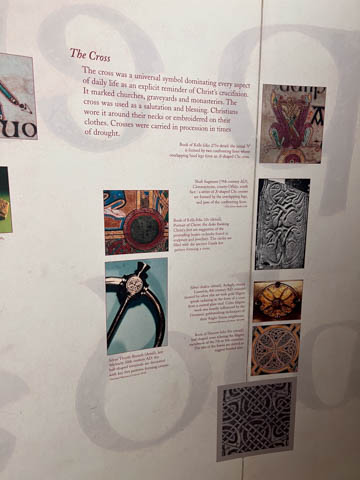
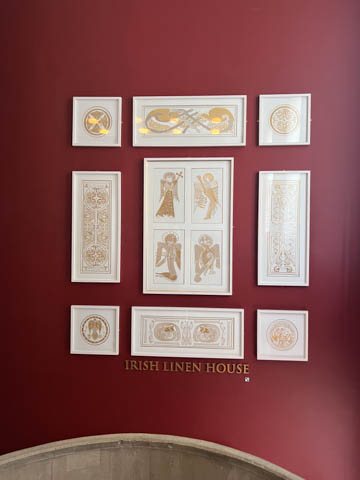
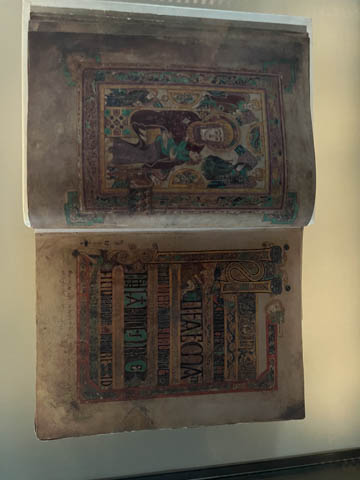
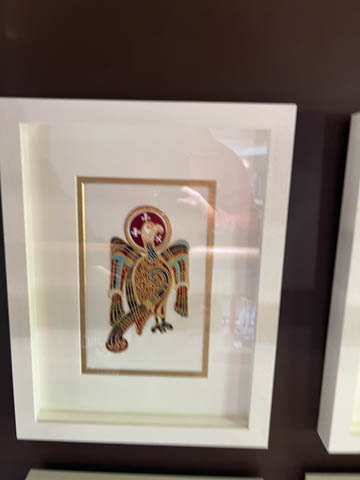
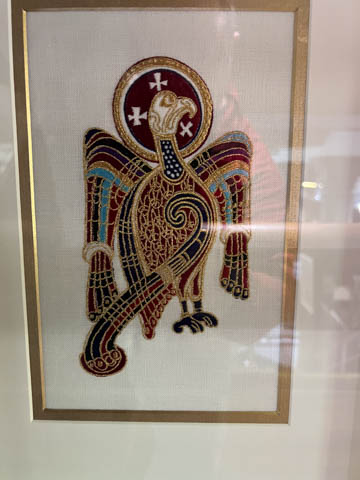
We then headed to Trinity College to see the famous Book of Kells, an elaborately and exactly decorated "illuminated manuscript" often used in the Roman Catholic Church, meaning it is a formally prepared document where the text is decorated with flourishes such as borders and miniature illustrations. It is a Celtic Gospel book written in Latin containing the four Gospels of the New Testament together with various prefatory texts and tables. It was created in a Columban monastery (founded on the island of Iona off Scotland which spread to both Ireland or Scotland) likely created c. 800 AD. The manuscript takes its name from the Abbey of Kells, County Meath in eastern Ireland, which was its home for centuries. It is regarded as a masterwork of Western calligraphy and the pinnacle of Insular illumination. The decoration combines traditional Christian iconography with the ornate swirling motifs typical of Insular art. Figures of humans, animals and mythical beasts, together with Celtic knots and interlacing patterns in vibrant colors, enliven the manuscript's pages. Many of these minor decorative elements are imbued with Christian symbolism and so further emphasize the themes of the major illustrations. The manuscript today comprises 340 leaves or folios; the recto and verso of each leaf total 680 pages. Since 1953, it has been bound in four volumes, 330 mm by 250 mm (13 inches by 9.8 inches). The leaves are high-quality calf vellum. Naturally no pictures are allowed of the actual book, but there was a nice museum before we went in.
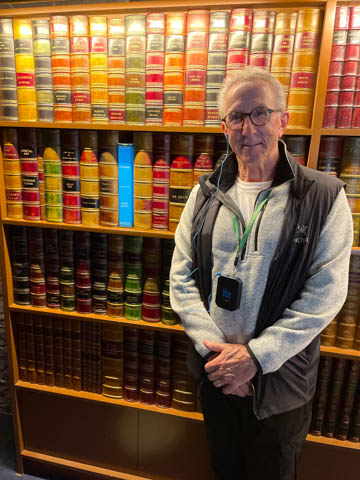
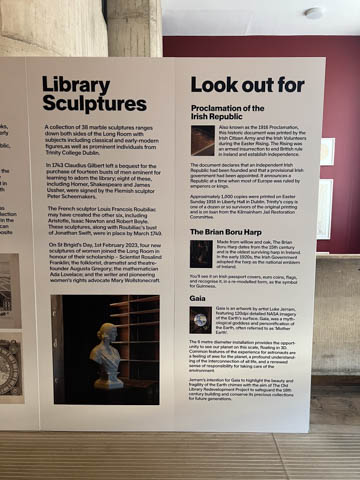
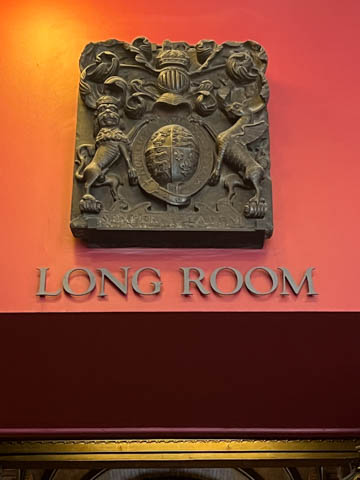
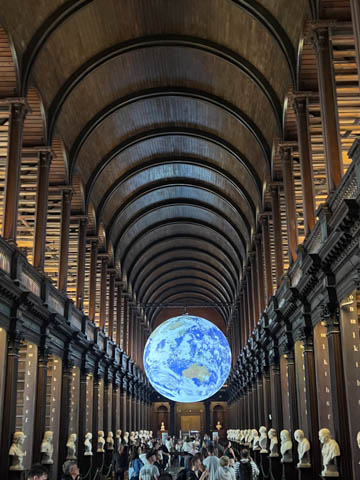
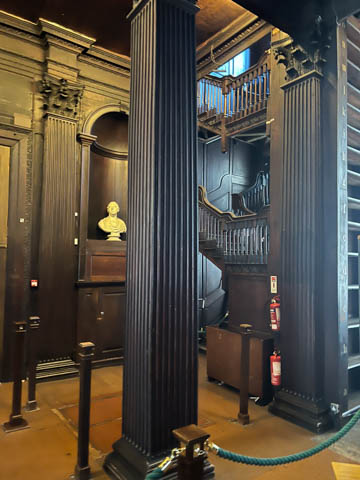
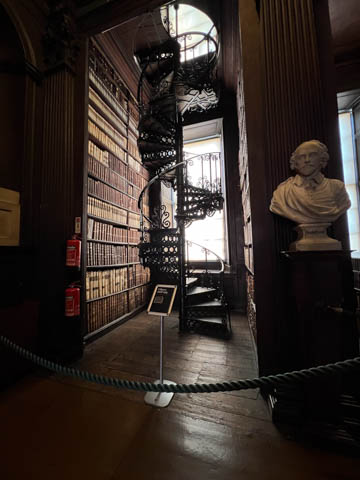
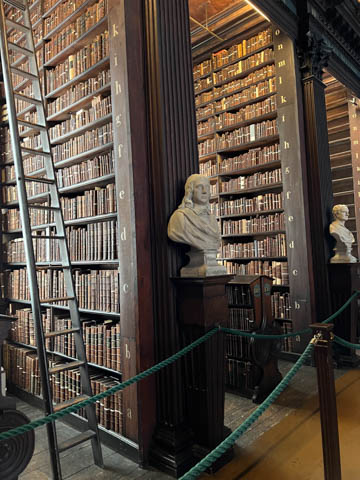
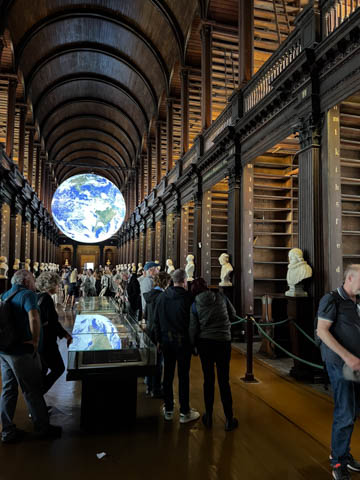
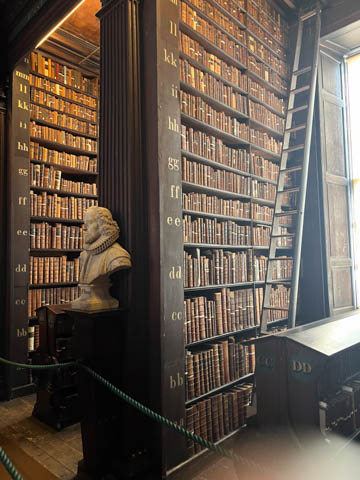
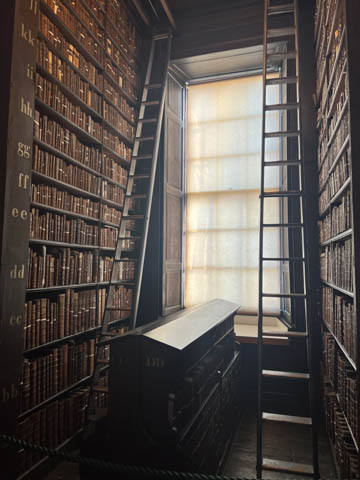
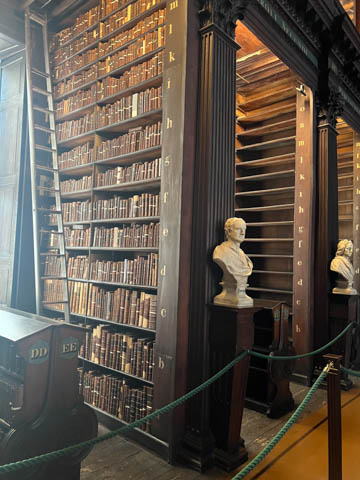
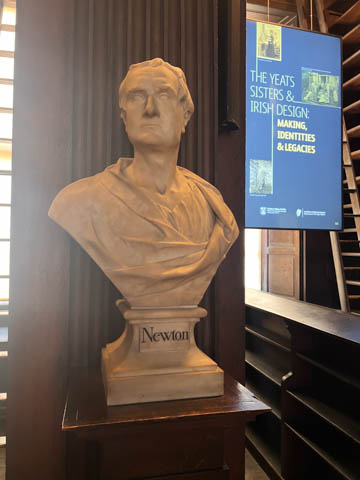
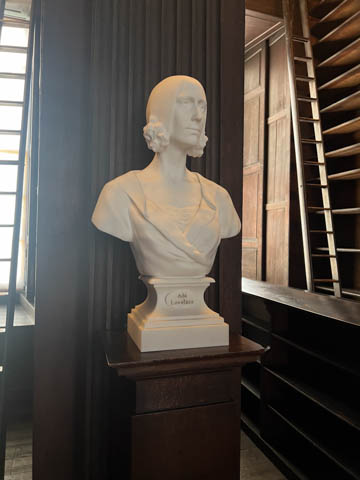
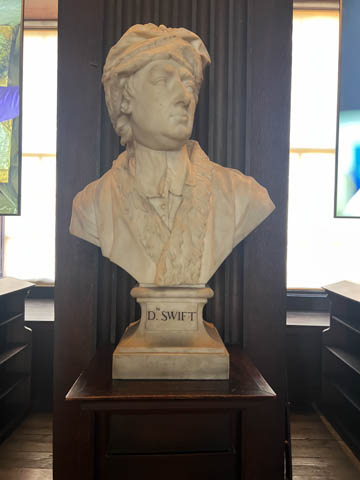
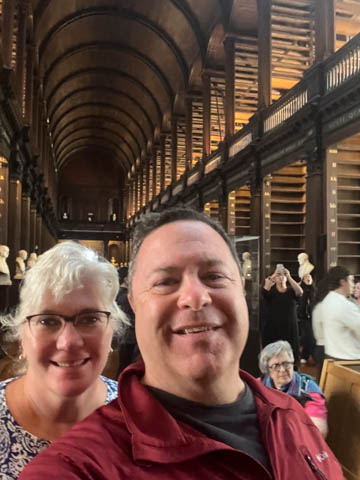
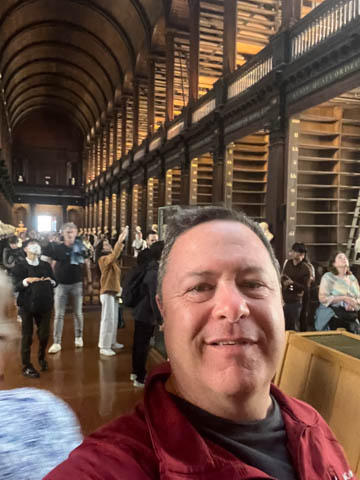
From the Book of Kells, we moved to the famous old library at Trinity College. This is a legal deposit or copyright library, where publishers must provide a copy of their publications, the only Irish library like this in the United Kingdom. Construction of the library began in 1712 and took twenty-years to complete the large building in its original form, which towered over the university and city after its completion in 1732. The Long Room holds 200,000 of the libraries oldest books, or did until many of them were cataloged and removed to allow a renovation. The ceiling was raised in 1860 to add an upper level. The shelves had marble busts of famous authors on the ends, including four women added in 2020.
The big Earth was art added, which we both found distracting.
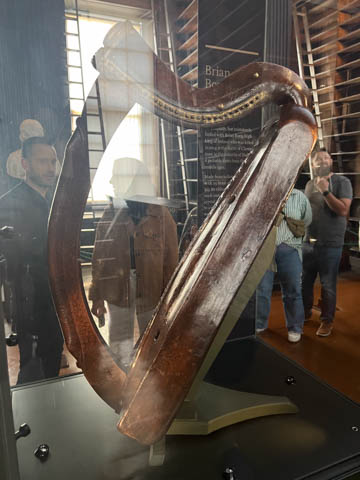
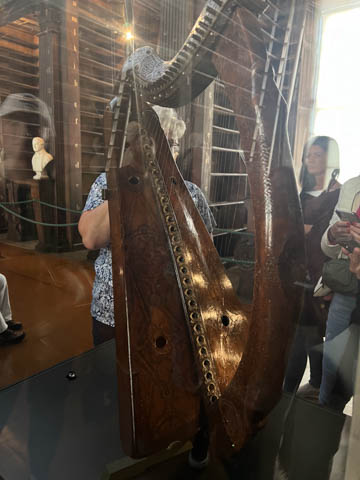
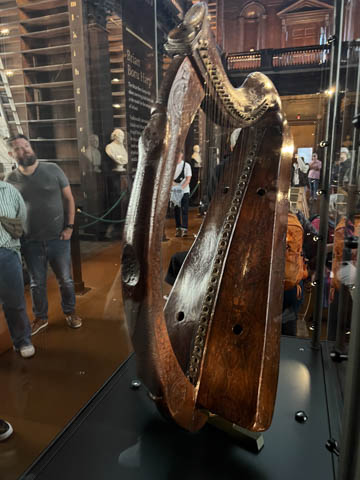
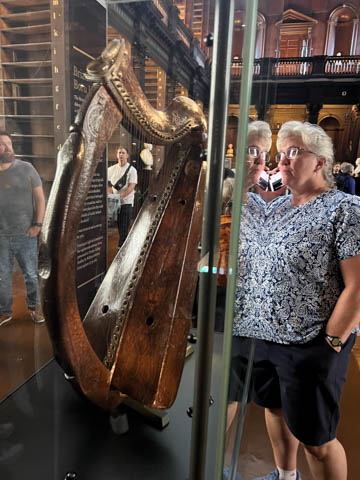
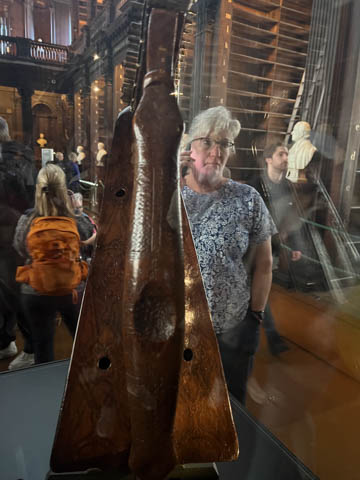
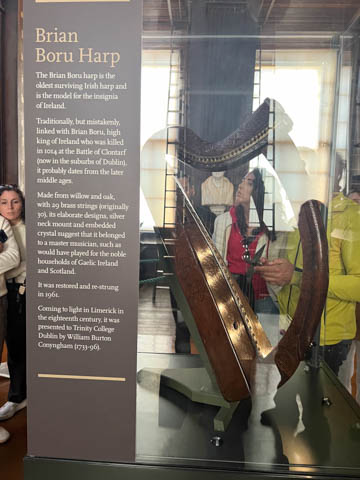
The library is home to the Brian Boru harp, a national symbol of Ireland and the model for the harp on the Irish currency and official emblem, along with the Guinness logo. Interestingly, as Guinness had the logo trademarked in 1876, although they first used it as a logo in 1862. The Republic of Ireland had to approach them about using the logo and agree to use a left facing harp to distinguish it from the right facing logo used by Guinness. It is an early Irish harp or wire-strung cláirseach. It is dated to the 14th or 15th century and is the oldest of three surviving harps from the region. it was reputedly once owned by Brian Boru, High King of Ireland. Although that is unlikely, it was undoubtedly made for an important family in Ireland.
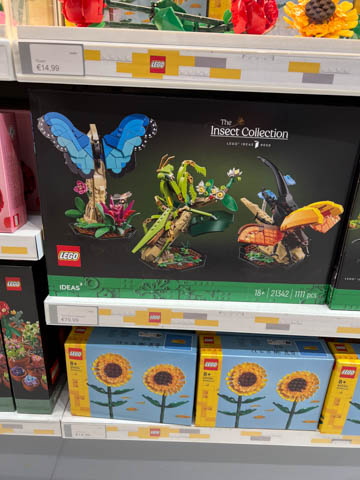
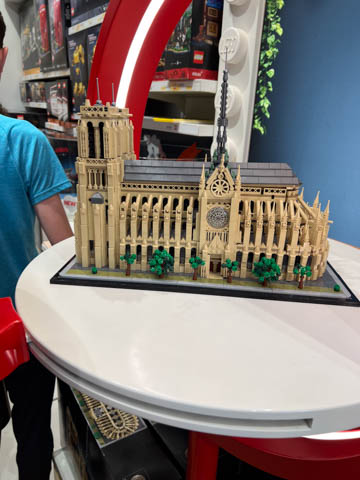
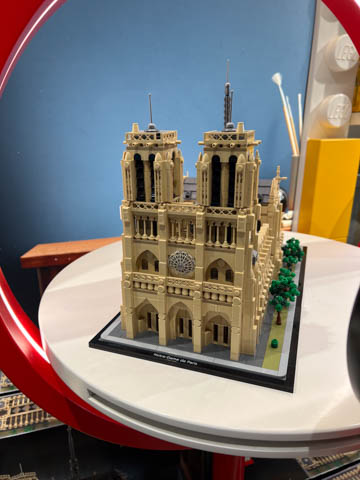
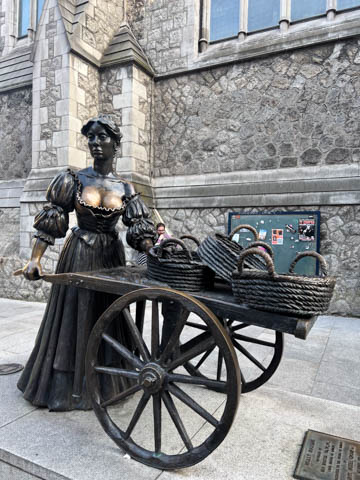
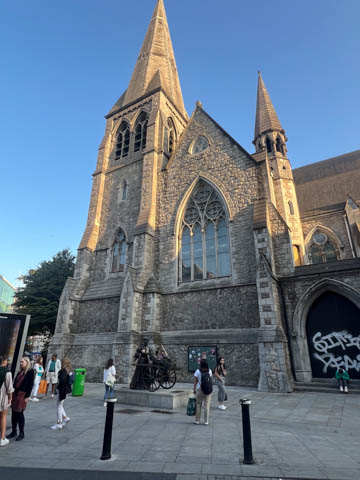
We wandered around a bit from there, stopping at the LEGO store and the Molly Malone statue dedicated to the fictional subject of the famous song: "In Dublin City where the girls they are so pretty, 'Twas there I first met with sweet Molly Malone; She drove a wheel-barrow, thro' streets broad and narrow, Crying "Cockles and mussels, alive, all alive!."
|
|
|