

|
|
Use these navigation links to move between the Year 2025 pages. Specific pages can be accessed at the bottom of this page
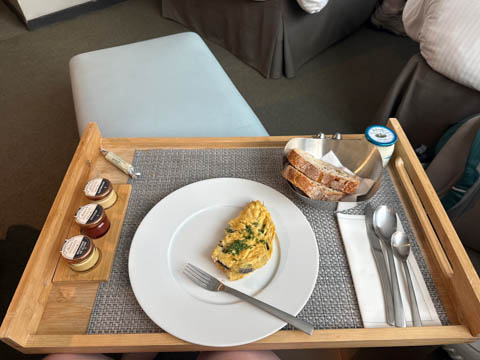
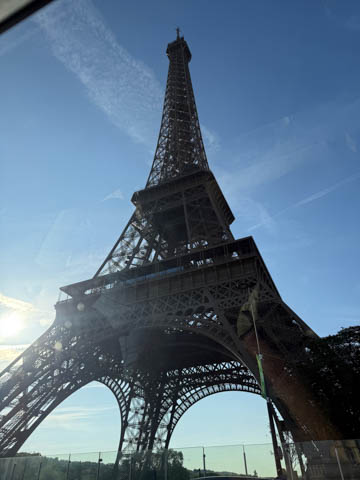
May 2025 (Part 10) France Trip: Day 4: Paris and the Musee du Louvre We set out early the next morning for our first full day in Paris. Well after a room service breakfast fort he girls and a morning view of the Eiffel Tower in the Uber.
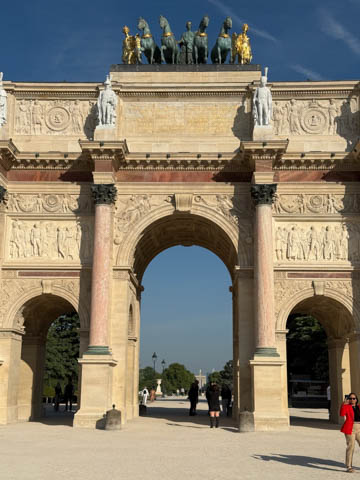
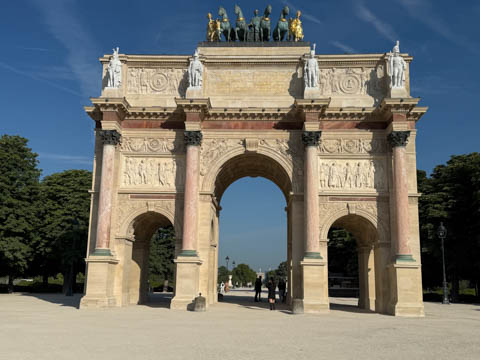
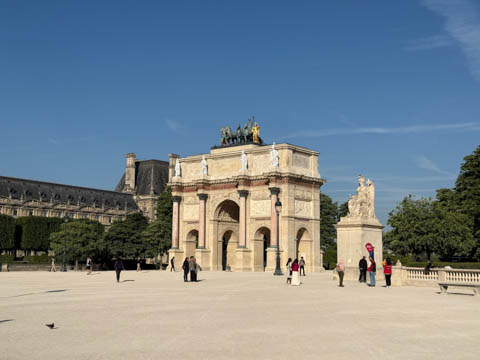
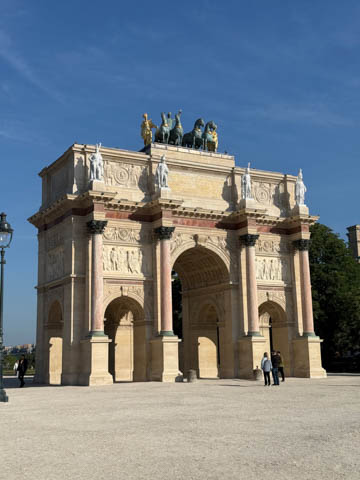
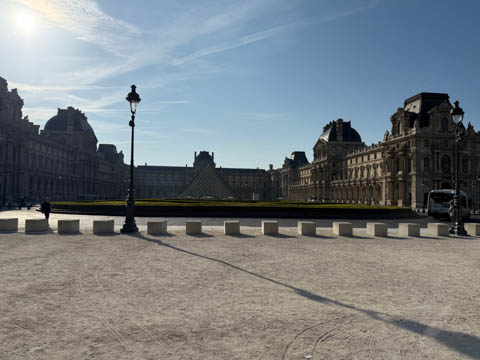
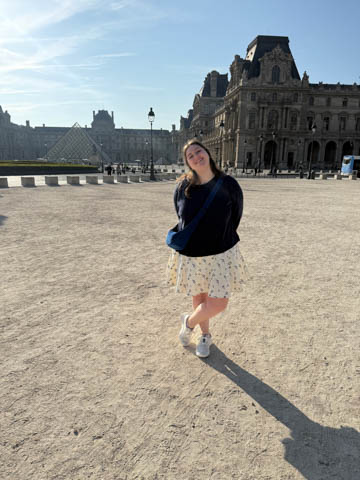
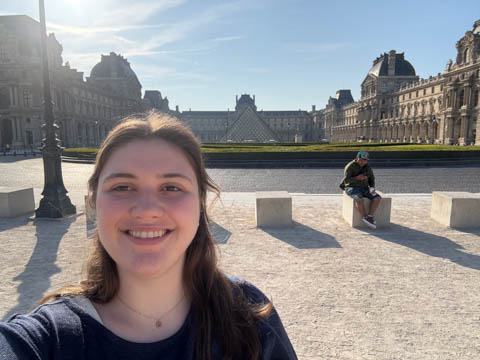
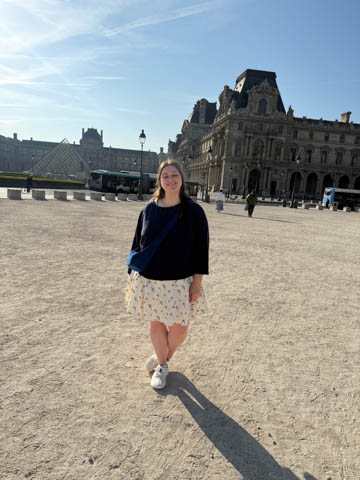
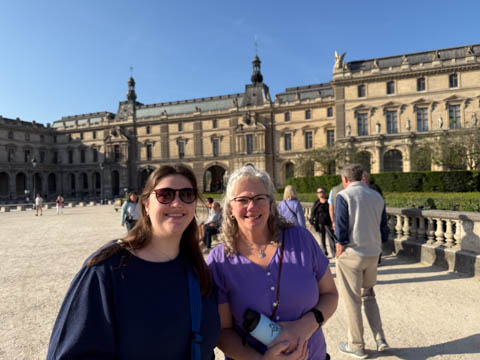
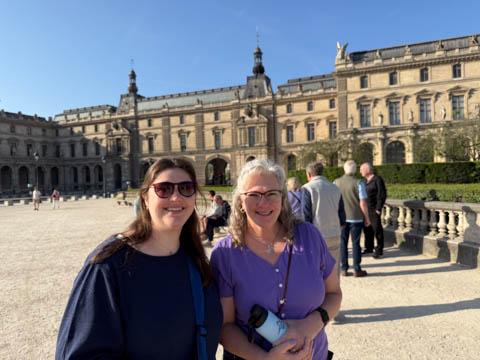
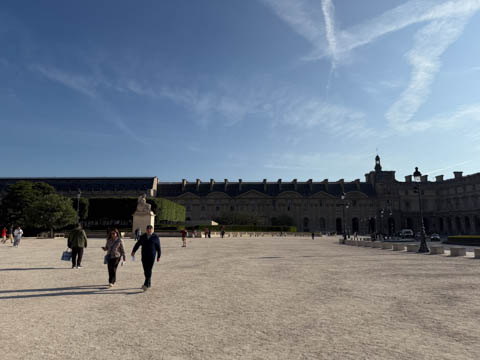
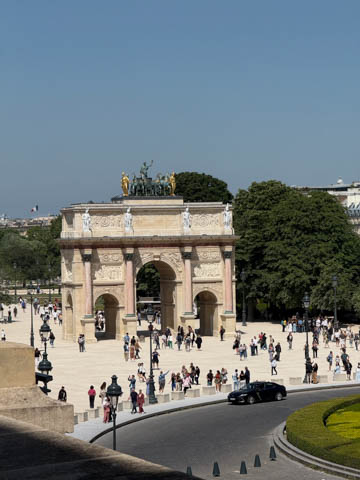
We were headed first to the Louvre, where we had arranged to join a small group tour. We met the guide, Hugo, outside the museum at the Place Du Carrousel, which is simply now a flower garden in the middle of a traffic roundabout. In history, this was the site of the first guillotines during the Revolution, right in front of the royal palace, although they were later relocated to the Place de la Concorde on the other side of the Jardin de Tuileries, known as Place de la Revolution, first on a one-time basis for the execution of Louis XVI in 1793 and then permanently. Of the 2,498 persons guillotined in Paris during the Revolution, 1,119 were executed on the Place de la Concorde, 73 on the Place de la Bastille and 1,306 on the Place de la Nation The meeting spot was in the plaza ear the Arc de Triomphe du Carrousel. This is a Corinthian-style triumphal arch built between 1806 and 1808 to commemorate Napoleon's military victories in the Wars of the Third and Fourth Coalitions. It was designed in the same year as the Arc de Triomphe de l'Étoile, but about half the size. Each of the eight columns is topped by a statue of a soldier which faithfully reproduce the uniforms of the principal corps of Napoleon’s imperial army. Napoleon's diplomatic and military victories are commemorated by bas-reliefs executed in rose marble. The arc served as a gateway of the Tuileries Palace, the Imperial residence which was built on the site of old tile factories (tuileries). The destruction of the Tuileries Palace during the Paris Commune in 1871, allowed an unobstructed view west towards the Arc de Triomphe. The arc was originally surmounted by the Horses of Saint Mark from St Mark's Basilica in Venice, which had been captured in 1798 by Napoleon. In 1815, following the Battle of Waterloo and the Bourbon restoration, France ceded the quadriga to the Austrian Empire which had annexed Venice under the terms of the Congress of Vienna. The Austrians immediately returned the statuary to Venice. The replacement composition depicts Peace riding in a triumphal chariot led by gilded Victories on both sides. The composition commemorates the Restoration of the Bourbons following Napoleon's downfall.
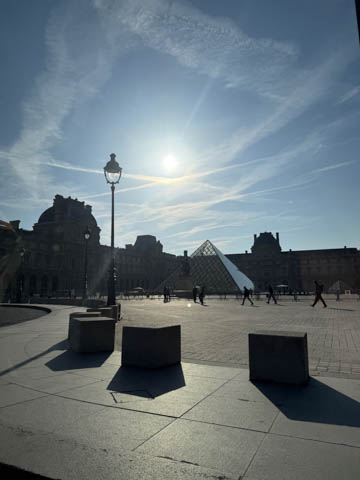
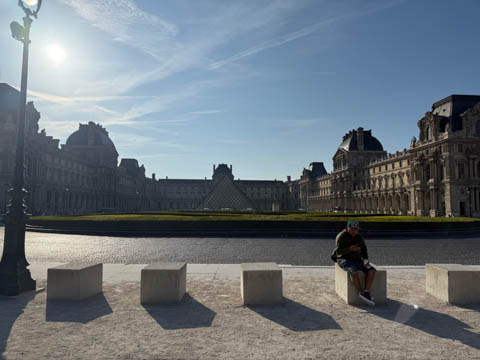
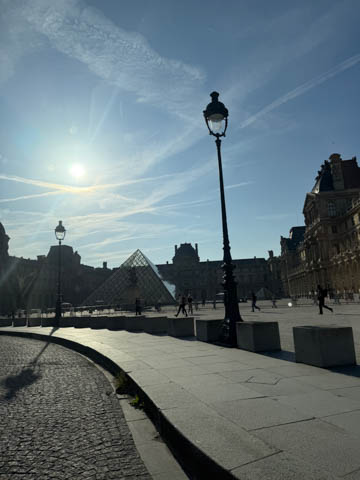
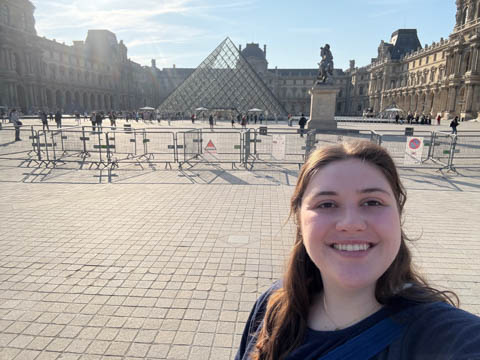
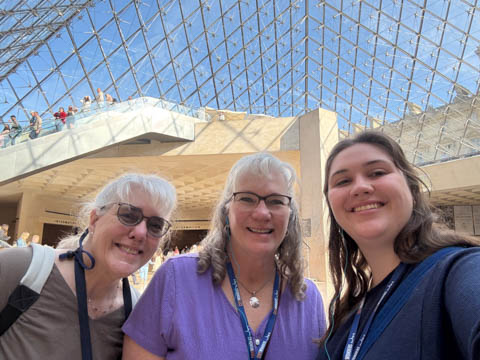
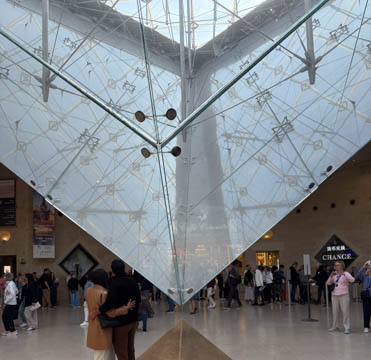
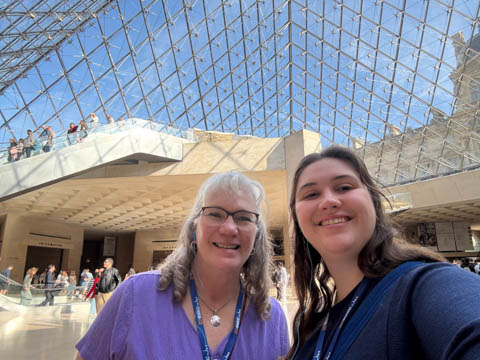
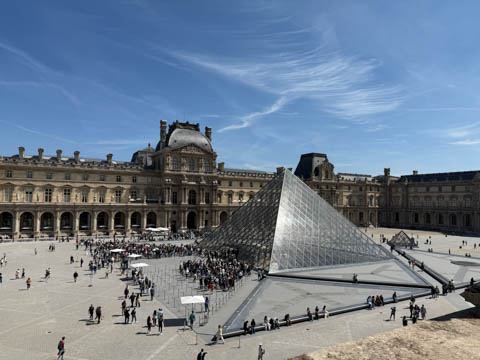
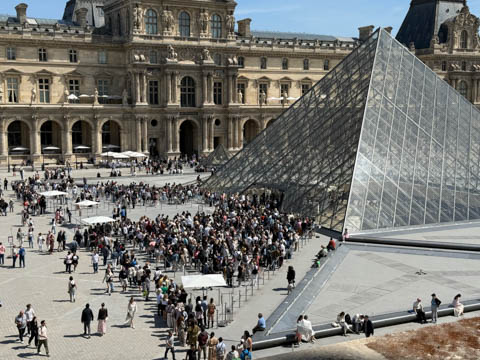
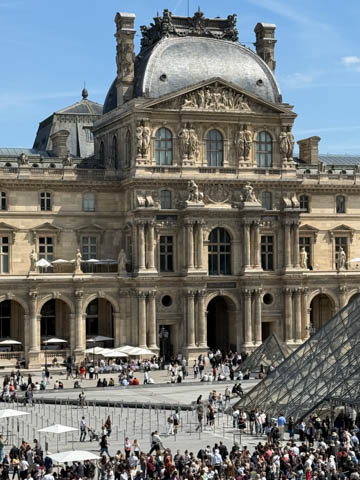
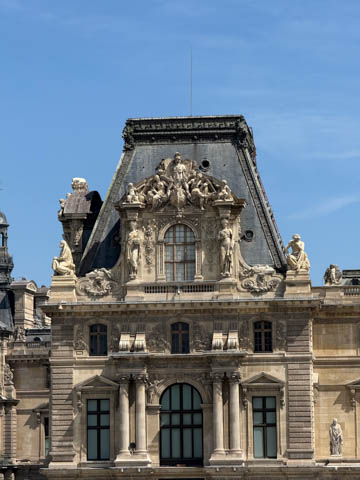
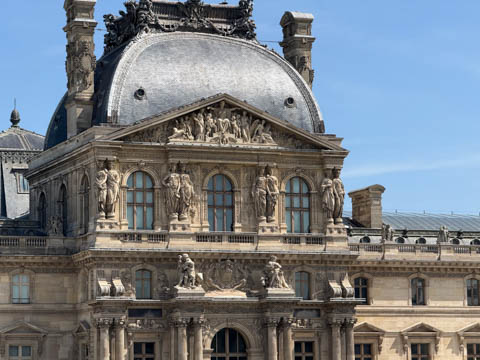
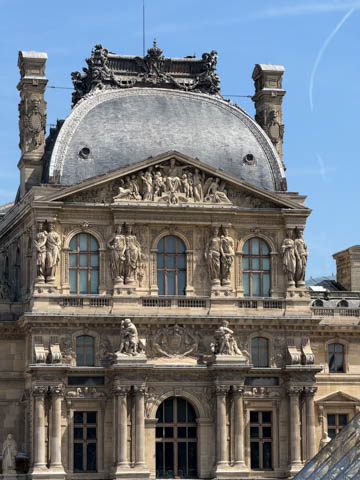
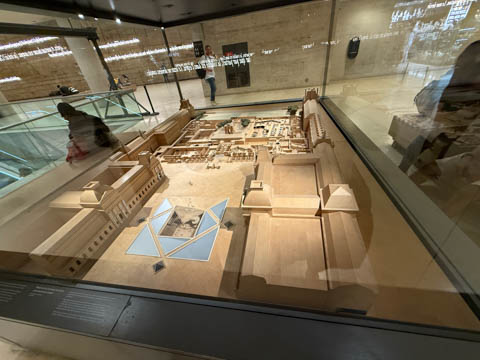
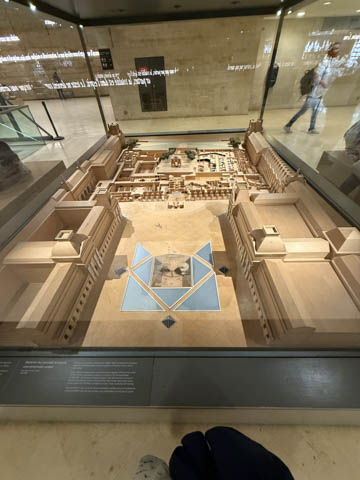
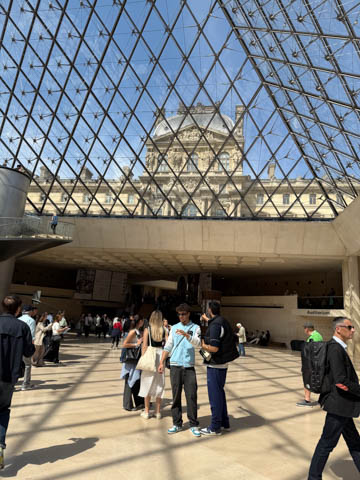
The main courtyard of the Louvre is a famous site with the royal palace framing the courtyard with the I.M. Pei pyramid in the middle. The Louvre is originally a defensive castle, it has served several government-related functions in the past, including intermittently as a royal residence between the 14th and 18th centuries. It more recently housed the Finance Ministry in one wing, but was finally fully converted to a museum during restoration and modernization in the 1980s and 1990s, projects which included the addition of the pyramid.
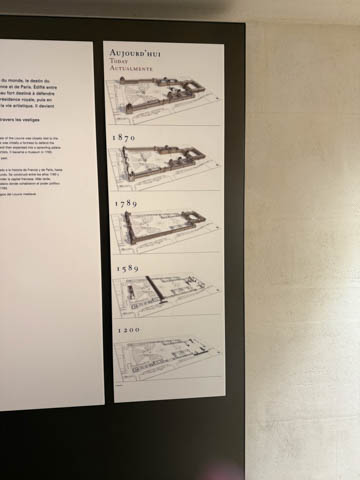
The original defensive castle dates to 1190 when King Philip II of France ordered the construction of a defensive wall all around Paris before he left for the Third Crusade. To protect the city, he opted to build the Louvre as a fortress just outside the wall's junction with the Seine on its right bank, on the road to the Duchy of Normandy that was still controlled by his English rivals. The fortress was completed in 1202 and featured a nearly square outer wall which was four-meters thick and surrounded by a moat while enclosing a cylindrical keep. It was first used as a royal residency in 1364, when Charles V abandoned the Palais de la Cité, which he associated with the insurgency led by Etienne Marcel, and made the Louvre into a royal residence for the first time. The old keep was demolished in 1528 and replaced with galleries enclosing a courtyard to the east of the new Tuileries Palace. Construction continued on and off until the royal court departed for the Chateua de Versailles in 1682, and most construction funds were directed elsewhere. In 1789, King Louis XVI and his court were forced to return from Versailles to Paris and settled into the Tuileries Palace while many courtiers moved into the apartments in the Louvre. Many of these emigrated during the Revolution, and many artists swiftly moved into the vacated apartments. While the Tuileries Palace was the royal residence, the Louvre has long been more associated with the governmental functions and the seat of power, including military functions. There were at least twenty different building campaigns which led to the current building, but much of the original palace remained, making the building itself interesting as a museum.
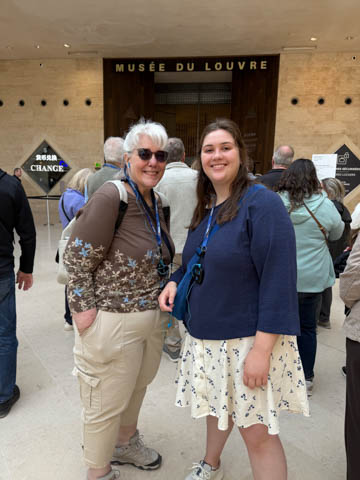
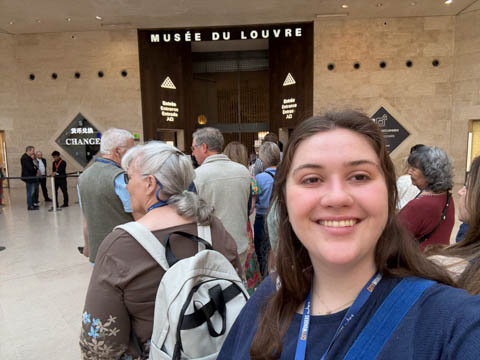
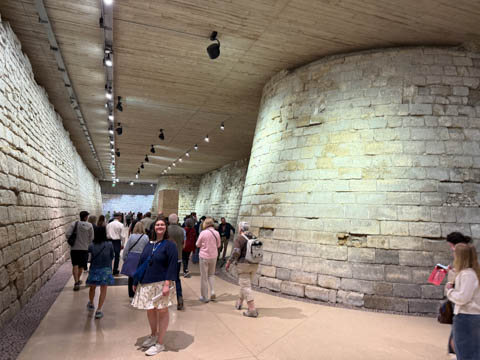
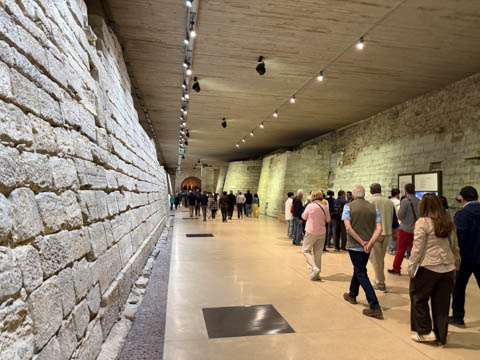
In figuring out what we saw, I attempted to discover our path through the museum using the following website. https://collections.louvre.fr/en/plan We entered the museum of Level -1 through the Sully entrance where there we small alcoves showing videos of the history of the building, then went through Gallery 133 and through what was the castle moat going through the castle ruins.
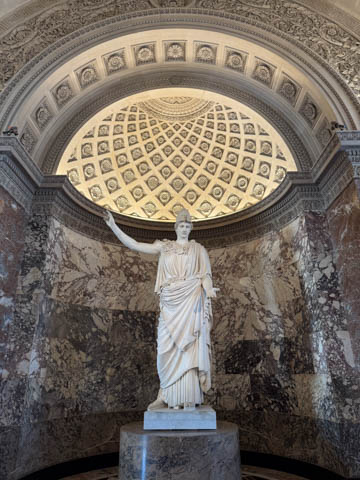
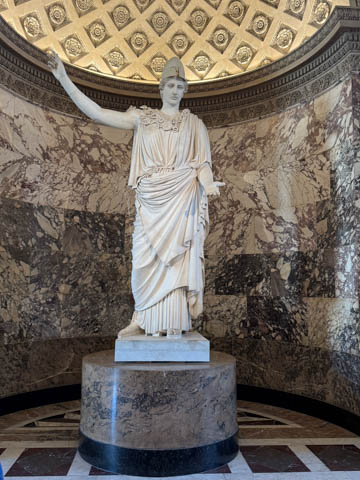
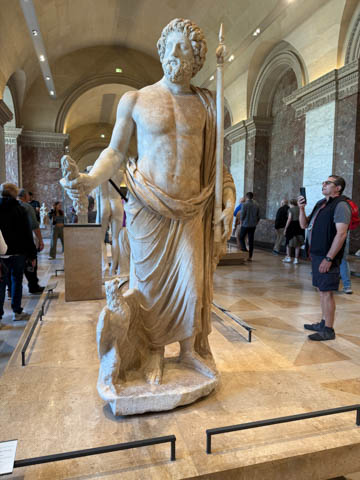
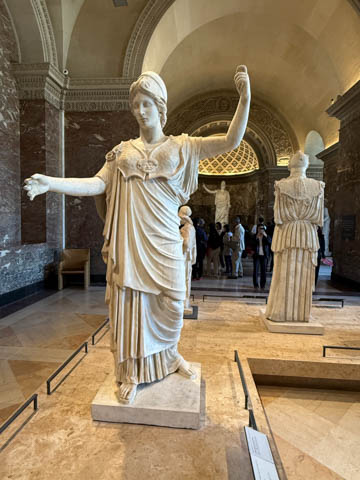
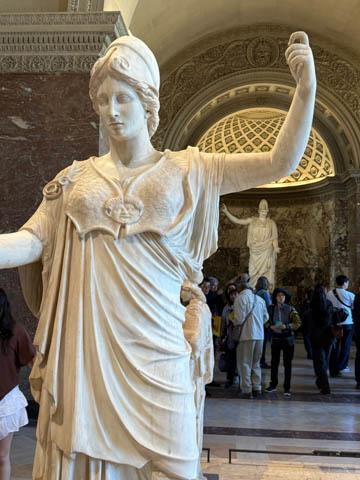
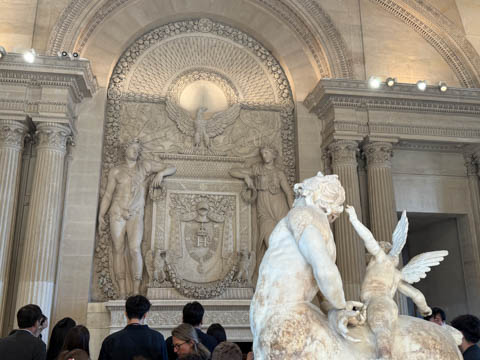
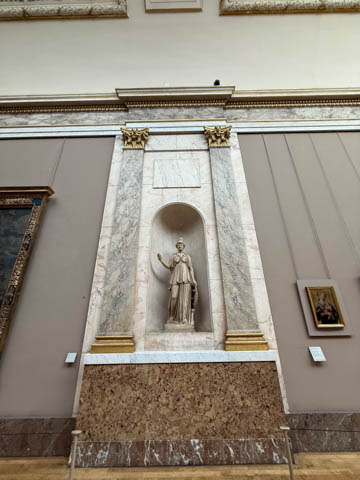
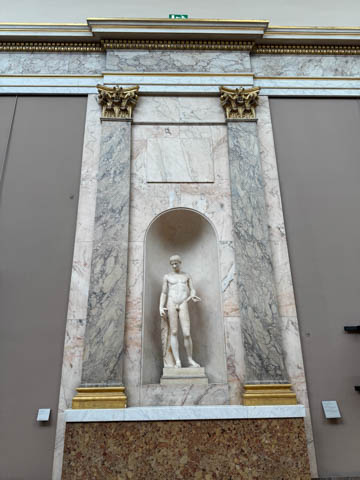
From there, we ascended to Level 0 (Cathy took the elevator) and Roman antiquities in Gallery 344. first up was the large Athena of Valletri, a 1st century Roman copy of a Greek bronze in an alcove. This was found in the ruins of a Roman villa in a vineyard near Velletri in 1797. There were several other amazing statues including this one of Jupiter with an eagle. The statue was incomplete: the head, the two forearms, the attributes and the head of the eagle have been remade in marble while the bottom of the scepter is missing. The statue of Minerva (the Roman equivalent to Athena) was also incomplete: the head does not belong to the body and is the result of a modern assembly. The left arm, the right forearm with part of the sleeve, the left foot, the right toe, the left leg from the knee to the hip have been added. The top of the helmet and the fragments of the aegis have been remade.
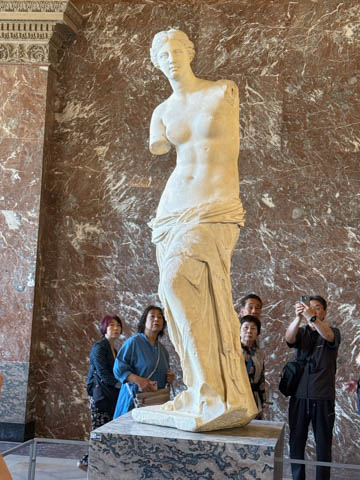
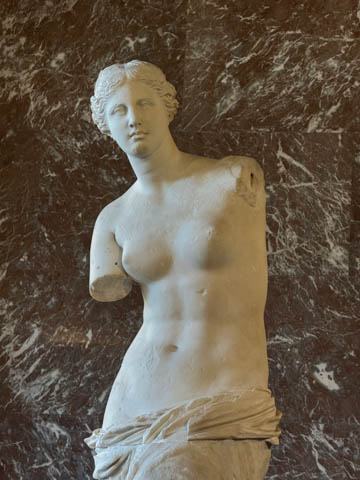
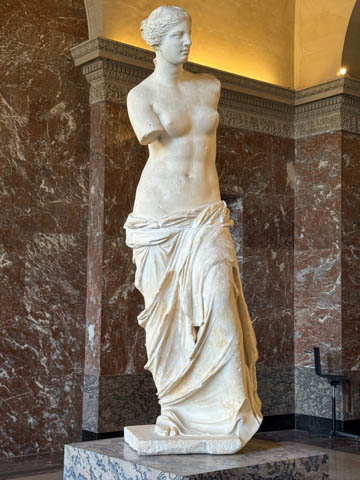
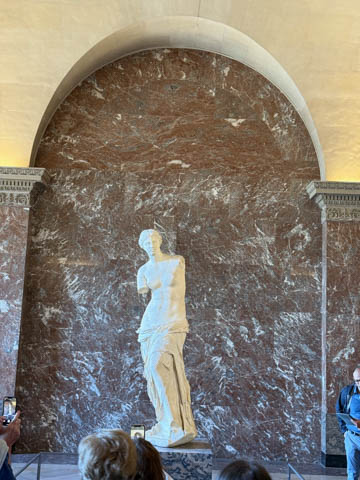
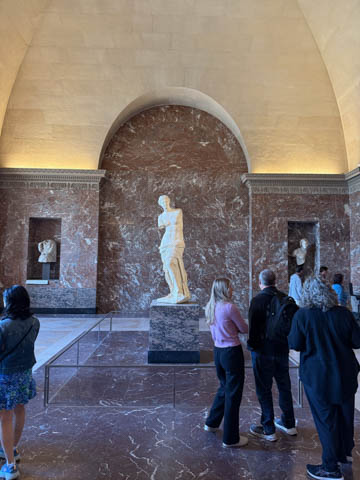
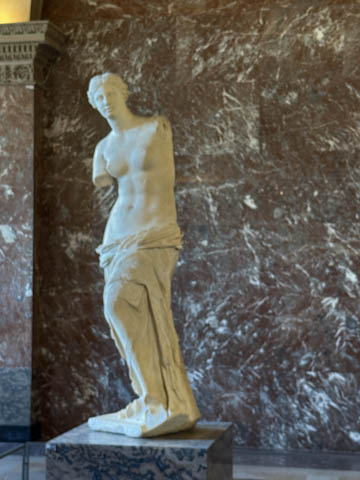
The next gallery held the Venus de Milo, considered one of the three ladies of the Louvre and one of the three masterpieces most visitors seek out. This is an ancient Hellenistic or Greek statue from between 110-160 BC believed to be of the Goddess Aphrodite (the Greek equivalent to the Roman Venus) discovered in 1820 on the island of Milos. It is carved from Parian marble, with less details on the back and left side, implying it was originally displayed with only the right-front more visible. While the body of the Venus is depicted in a realistic style, the head is more idealized. The lips are slightly open, showing teeth, and the eyes and mouth are small. The sculpture has been minimally restored: only the tip of the nose, lower lip, big toe on the right foot, and some of the drapery. Stylistically, the sculpture combines elements of classical and Hellenistic art. Features such as the small, regular eyes and mouth, and the strong brow and nose, are classical in style, while the shape of the torso and the deeply carved drapery are Hellenistic. It is frequently described as "the last great work of antique Greece" and is considered one of the most famous works of ancient Greek sculpture in the world. It is considered "one of the most complex and the most artful. ...[the sculptor] has consciously attempted to give the effect of a 5th-century work", while also using "the inventions of his own time"; "the planes of her body are so large and calm that at first we do not realise the number of angles through which they pass. In architectural terms, she is a baroque composition with classic effect." Interestingly, it is unclear if the sculpture represents Aphrodite. An alternative identification proposed by Reinach is that she represents the sea-goddess Amphitrite, and was originally grouped with a sculpture of Poseidon from Melos, discovered in 1878.
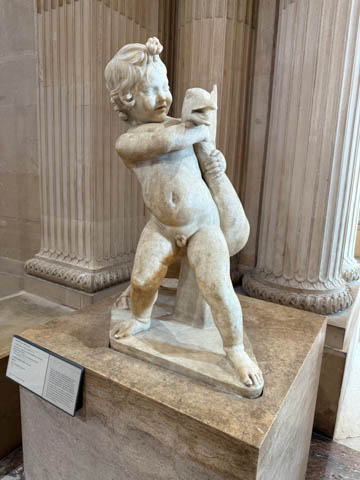
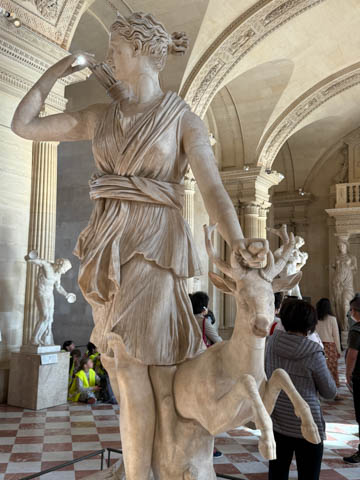
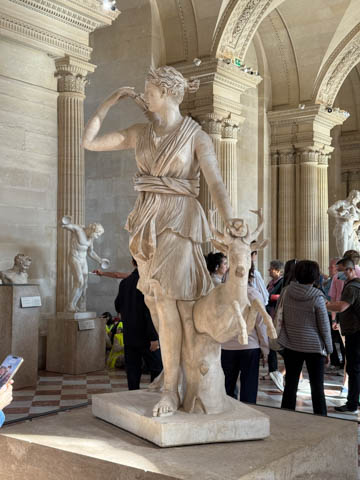
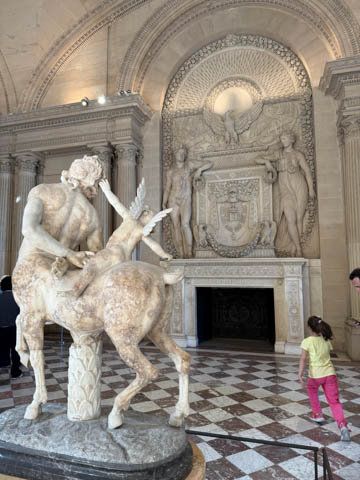
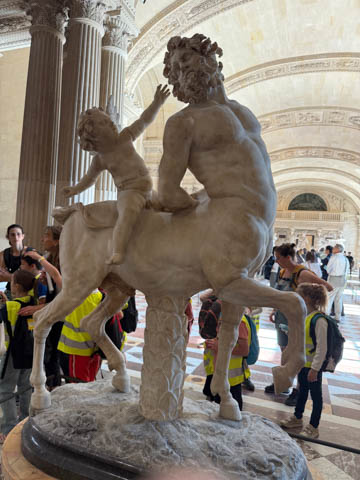
We next went in and back out of Gallery 348. The small "child with goose" statue from the mid-100s AD was fun. In the middle is Diana of Versailles (or Artemis, Goddess of the Hunt) a partially restored Roman copy (1st or 2nd century CE) of a lost Greek bronze from circa 325 BC. The statue was given by Pope Paul IV to Henry II of France in 1556[7] with a subtle but inescapable allusion to the king's mistress, Diane de Poitiers.
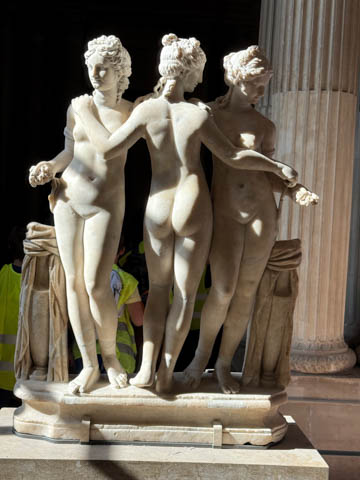
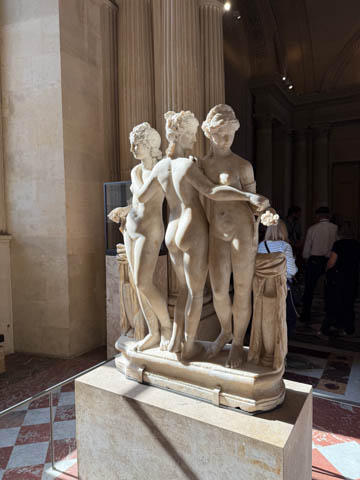
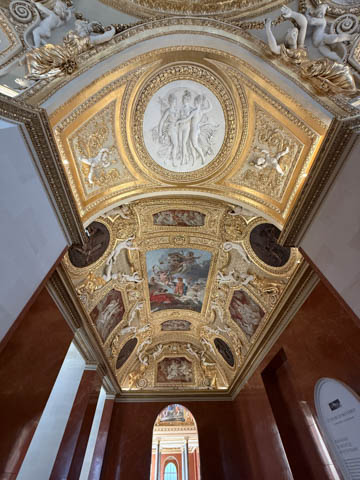
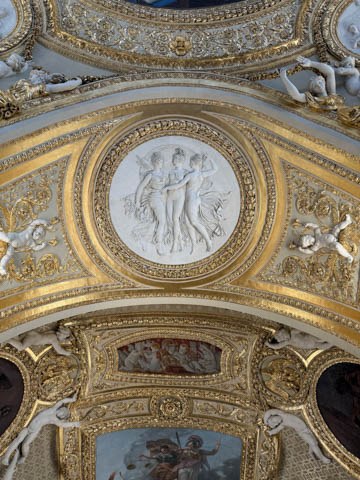
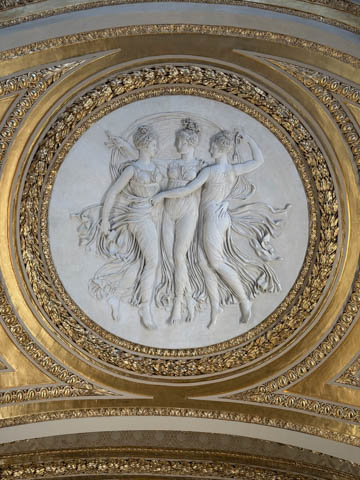
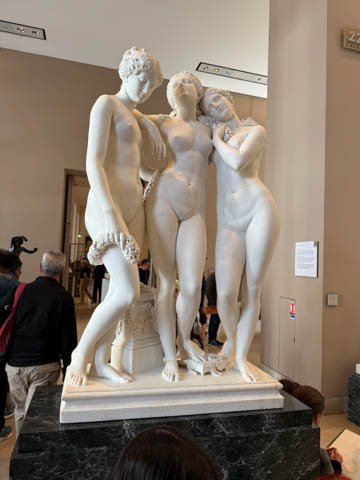
The images are the Three Graces.
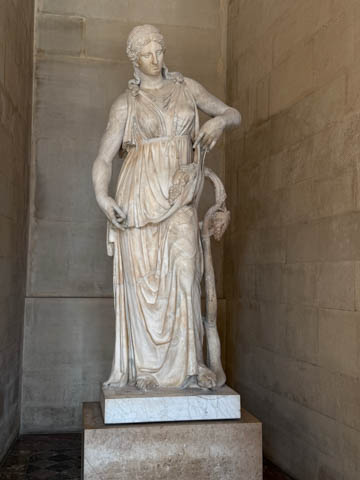
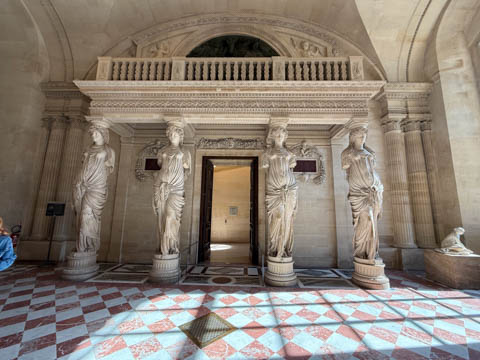
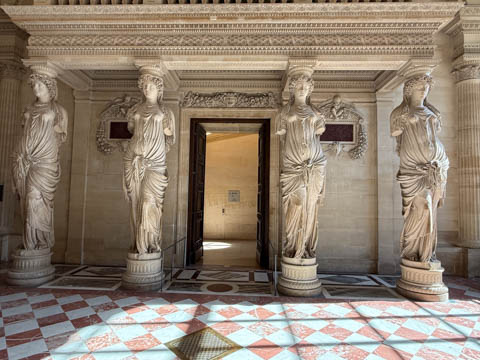
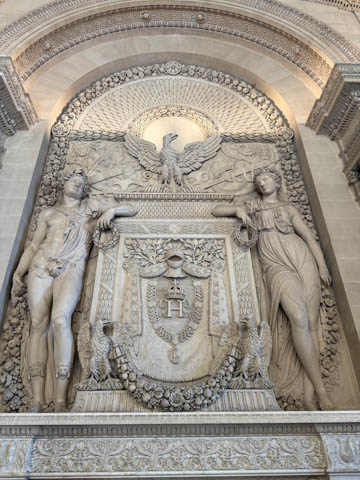
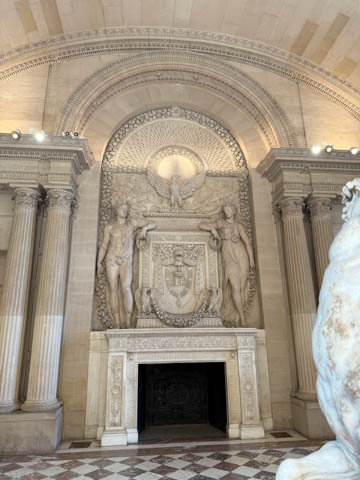
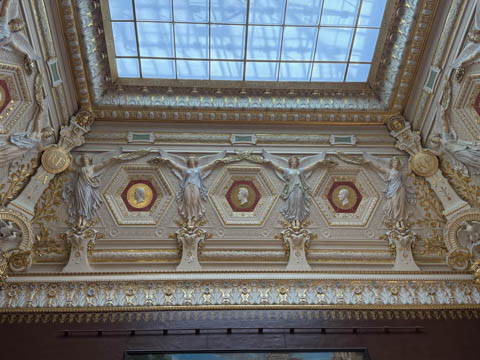
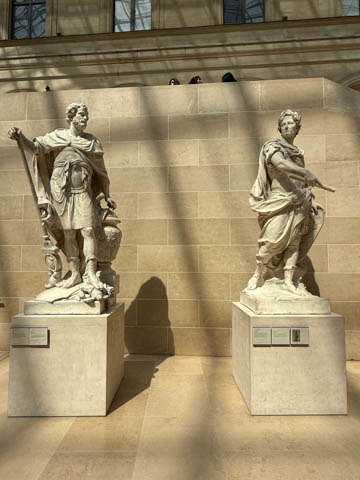
At the end of the hall were four Roman-style statues which were part of the palace, not items displayed with the museum. These dated to King Henri II when the Louvre completed its transition from a medieval fortress into a Renaissance palace. The Salle des Cariatides was originally a splendid ballroom, designed in classical style. It has a musicians’ gallery, supported by four Roman-inspired ‘caryatids’; these sculpted female figures serving as columns were the architect’s way of elevating King Henri II to the status of the Roman emperor Augustus!
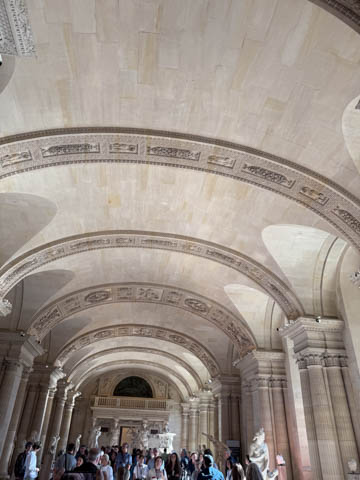
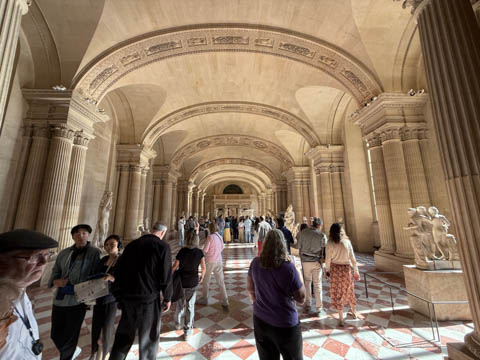
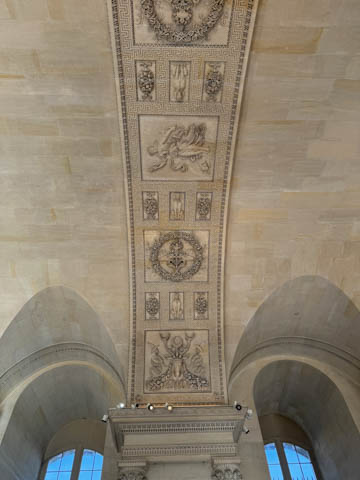
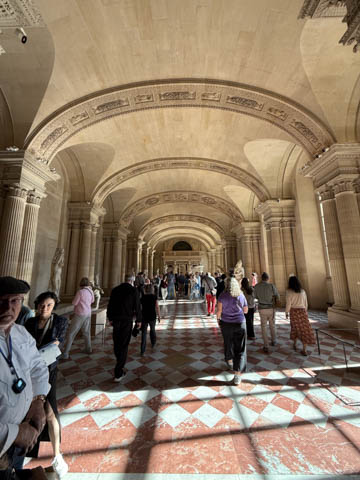
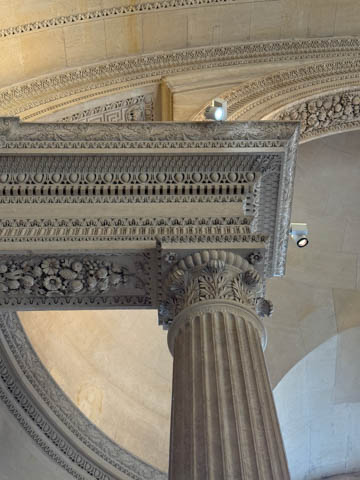
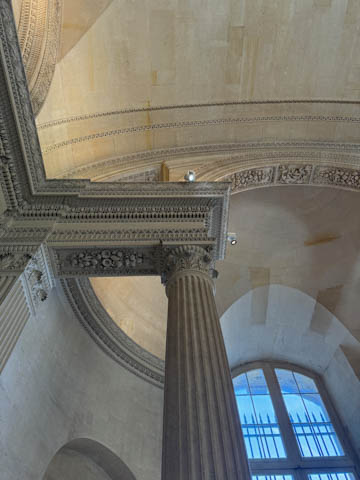
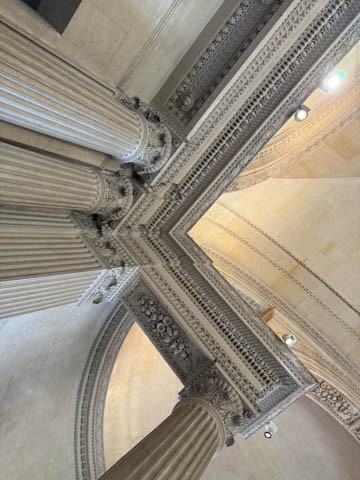
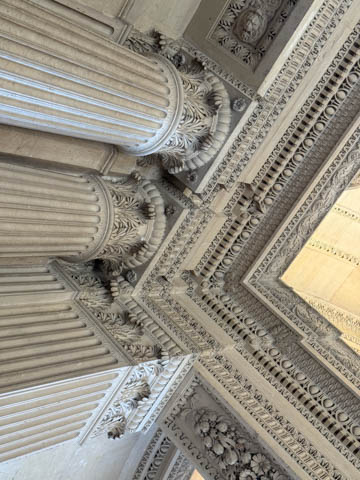
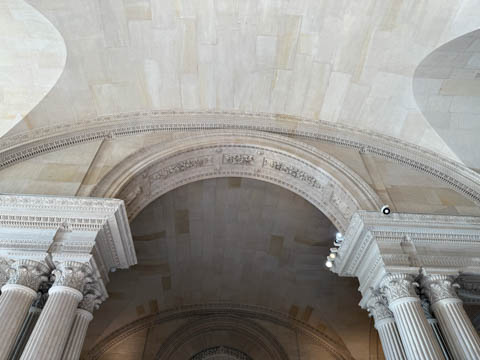
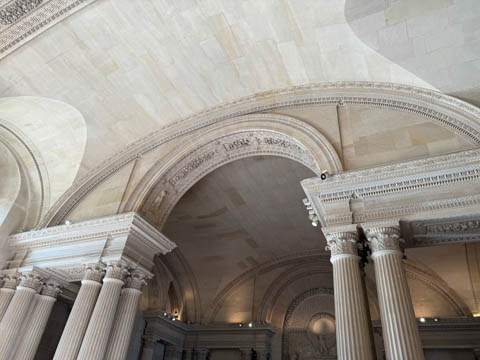
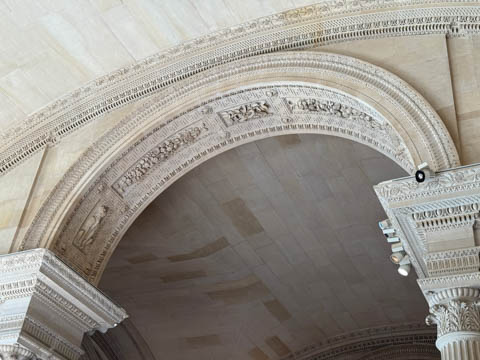
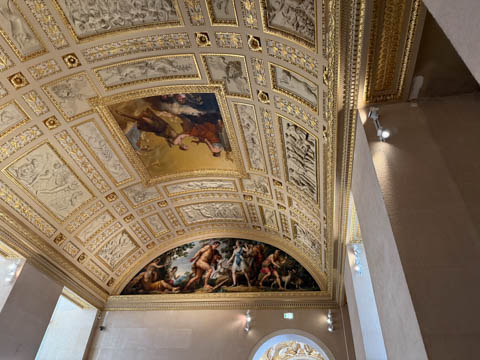
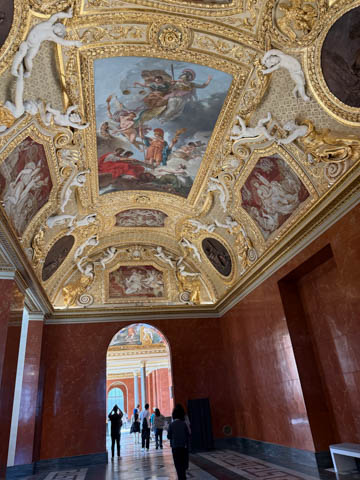
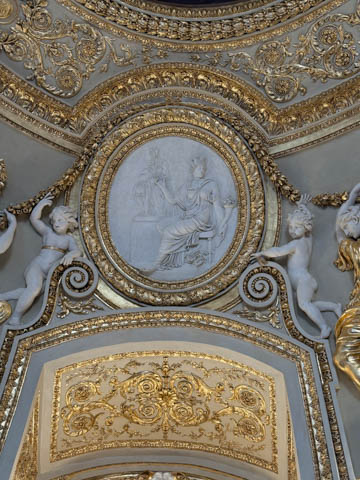
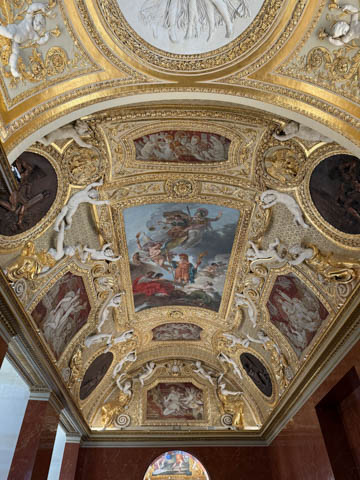
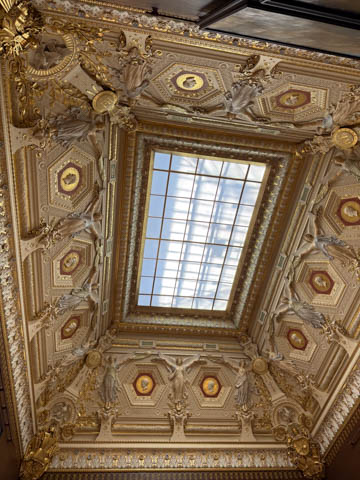
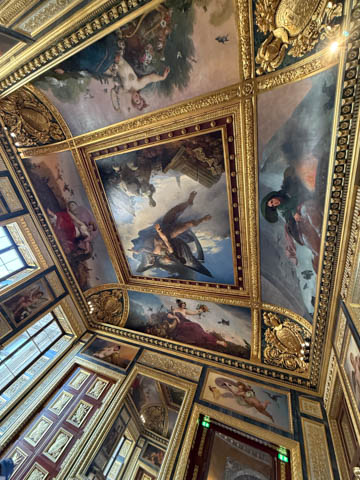
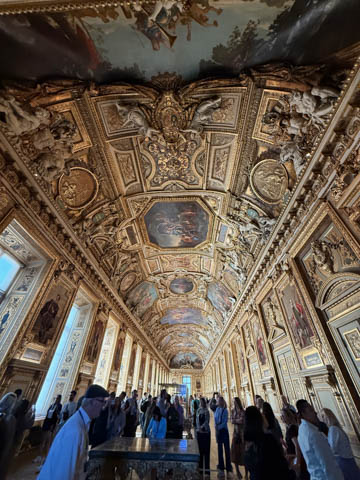
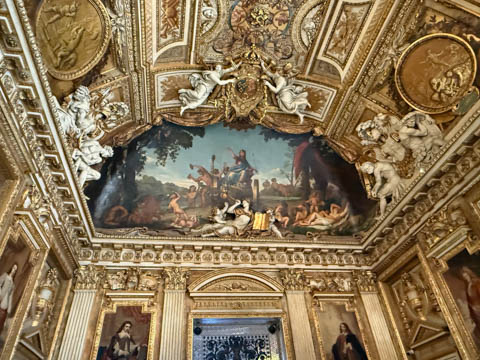
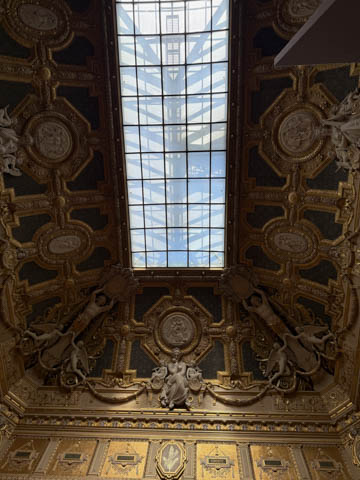
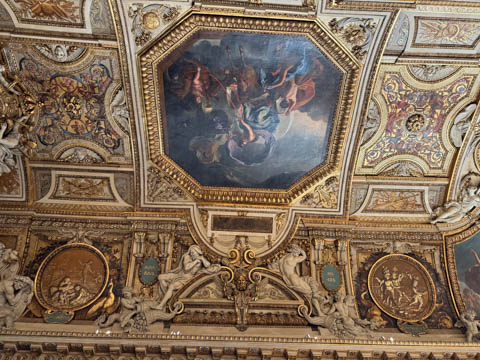
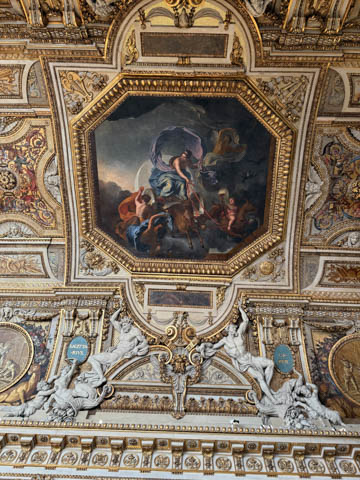
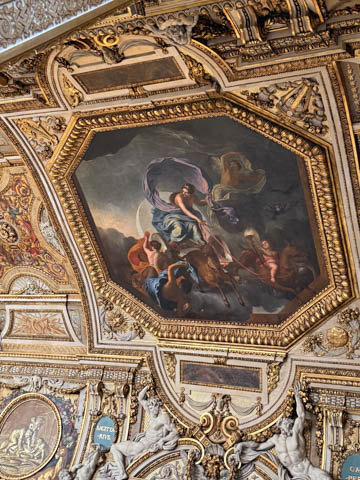
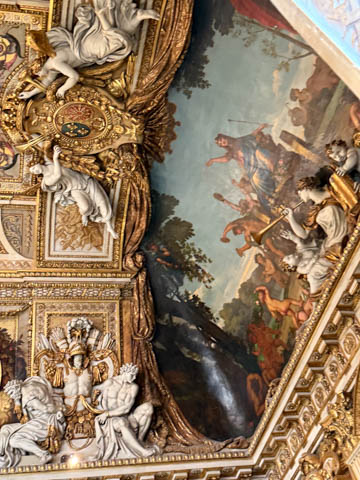
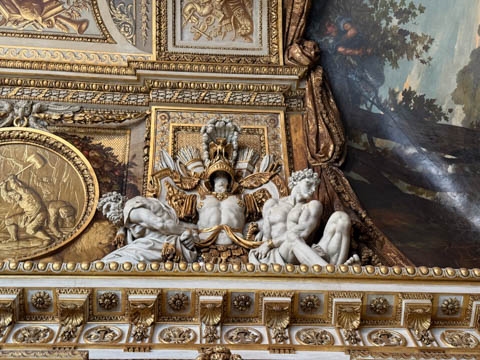
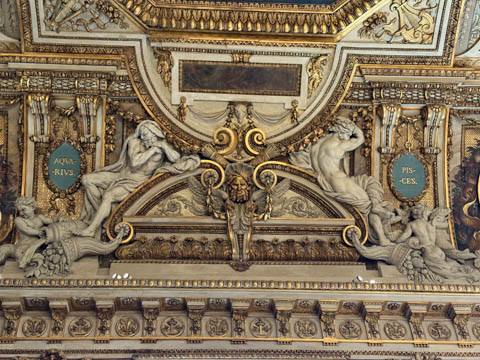
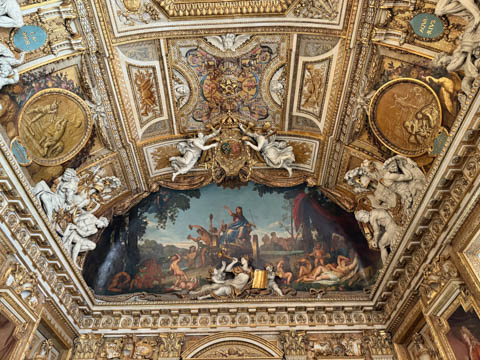
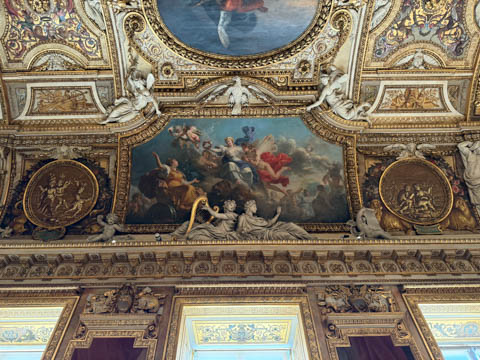
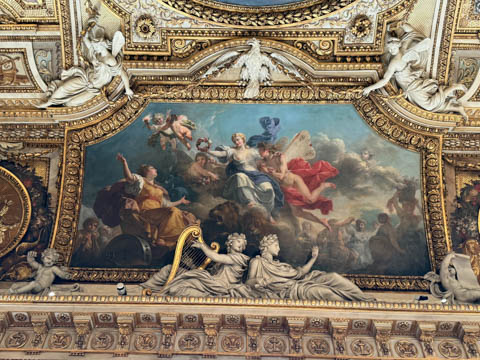
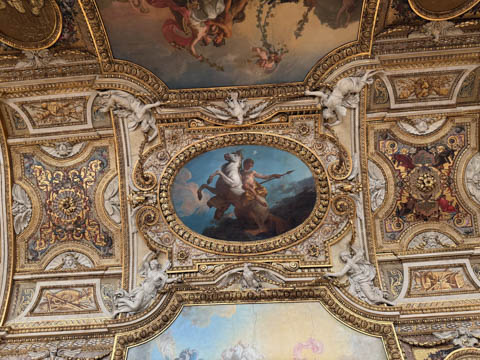
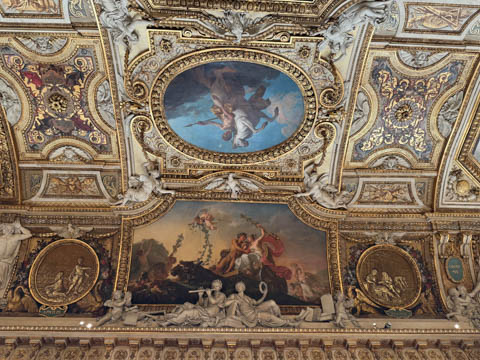
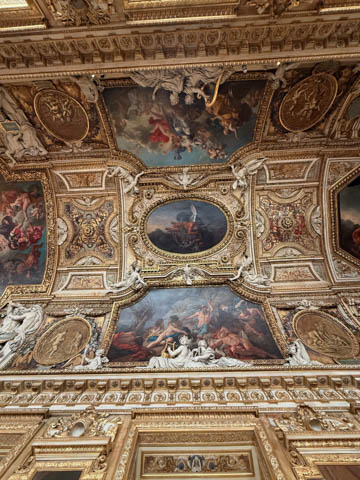
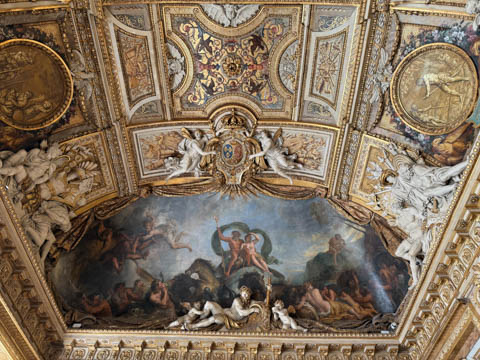
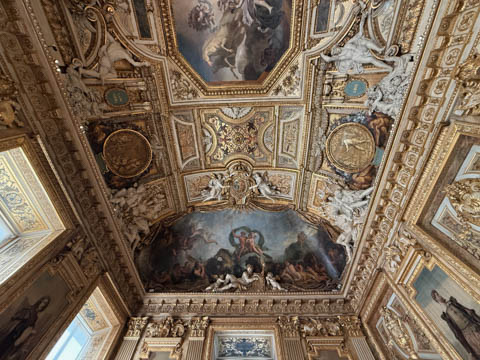
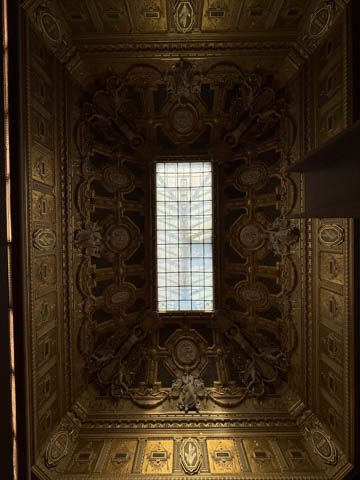
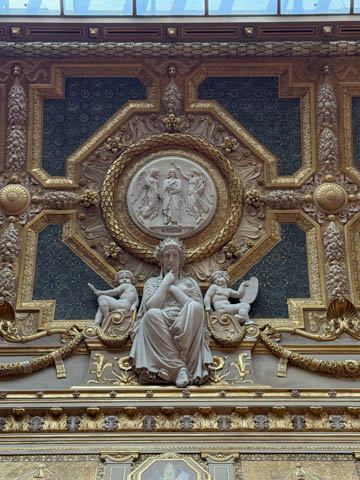
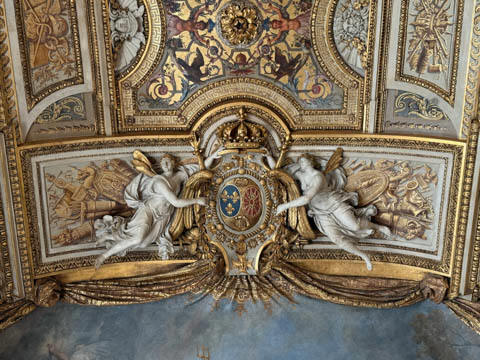
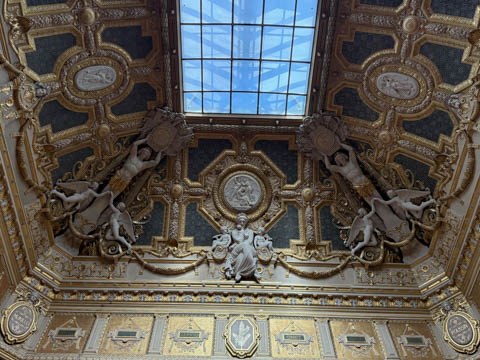
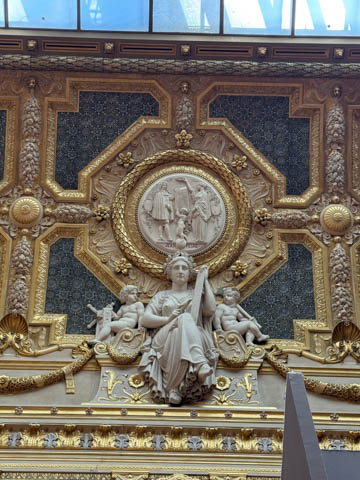
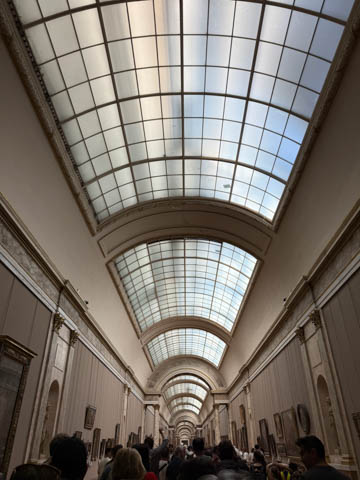
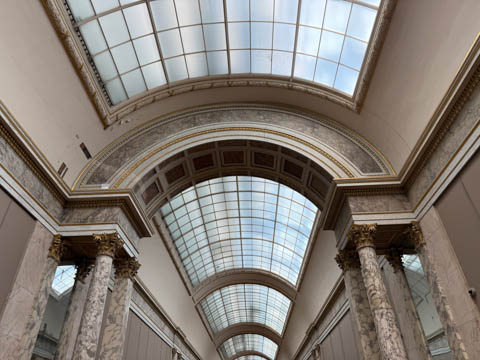
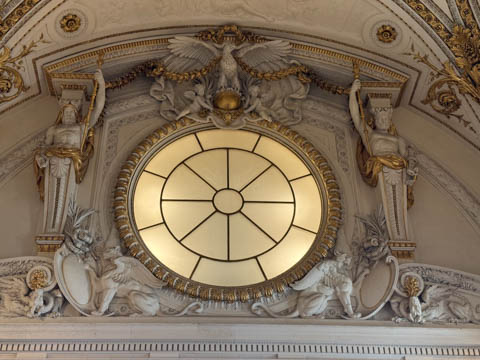
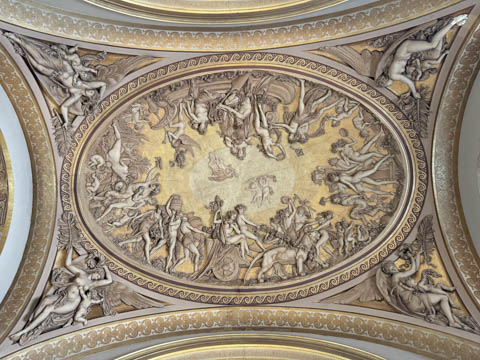
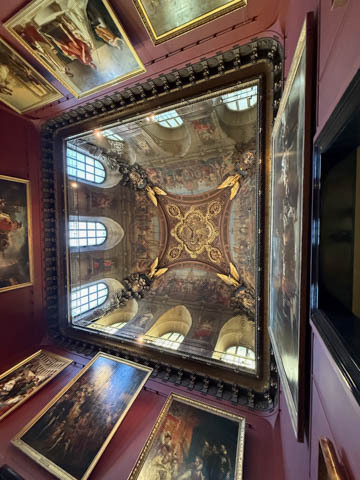
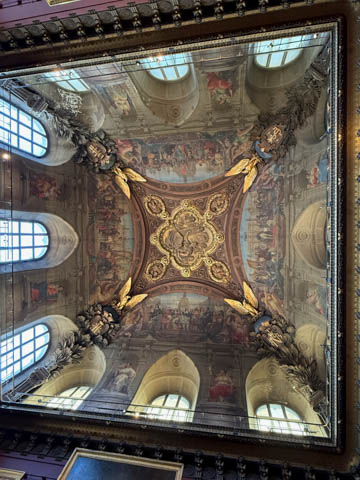
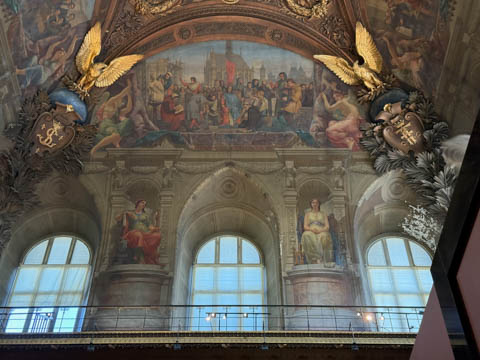
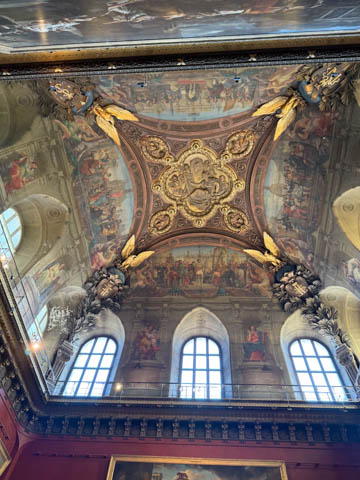
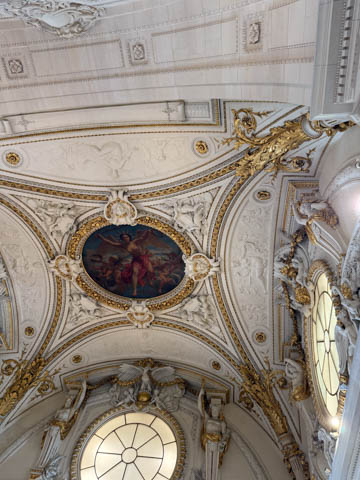
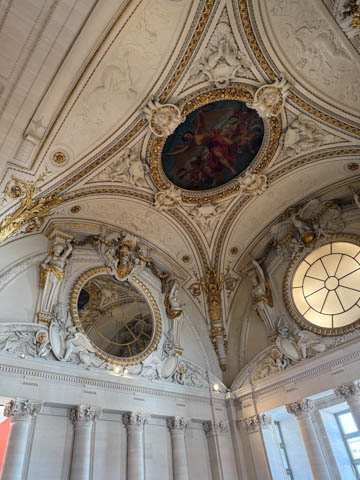
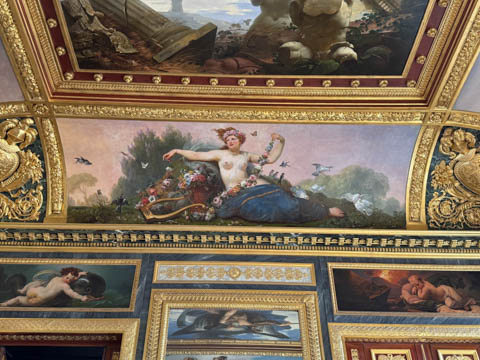
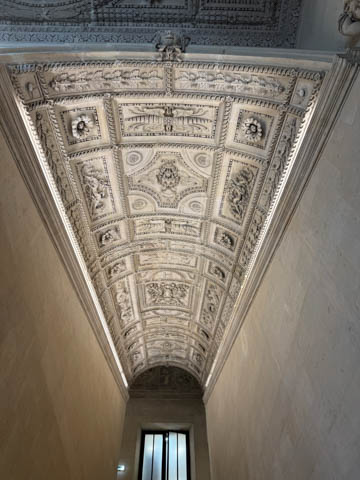
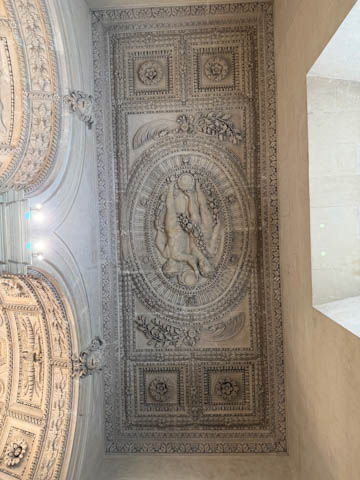
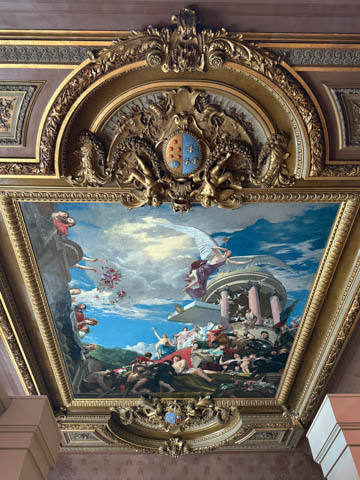
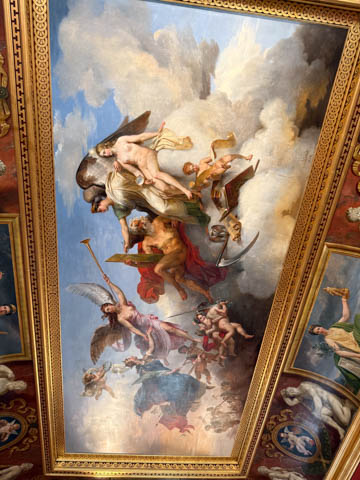
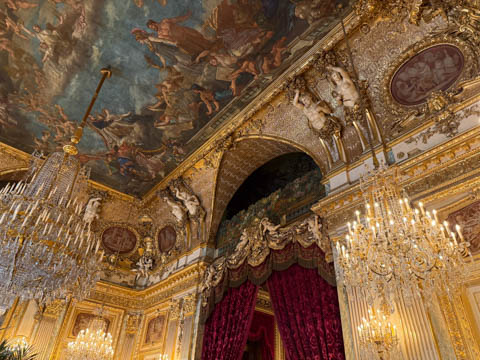
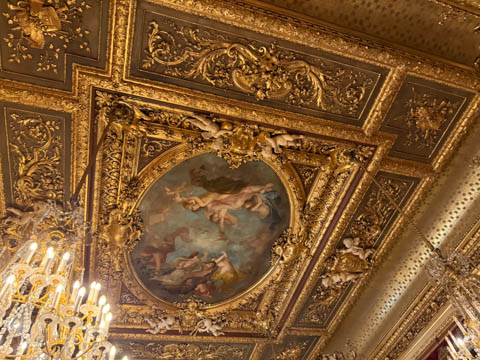
We then doubled back and headed into the Denon Wing through Galleries 347 and 408, which have ornately decorated ceilings.
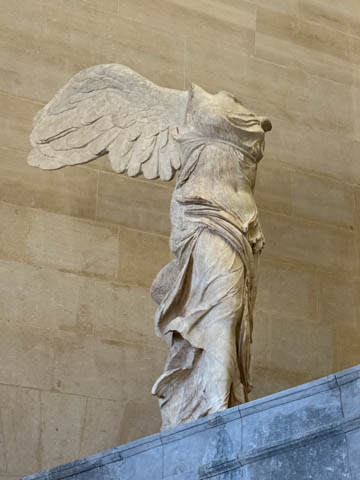
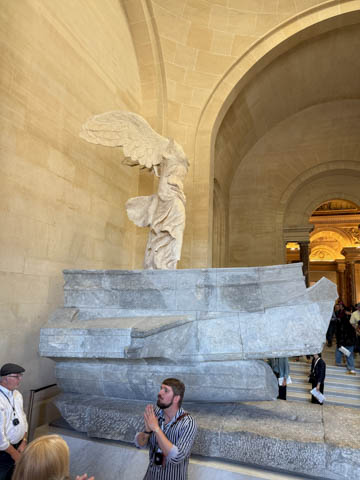
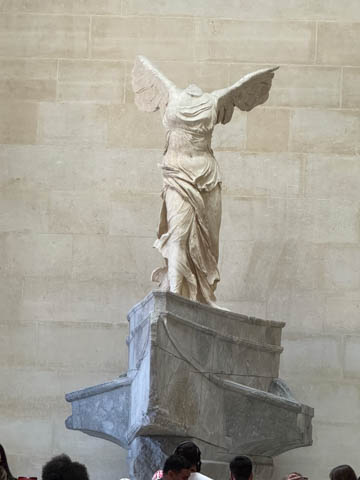
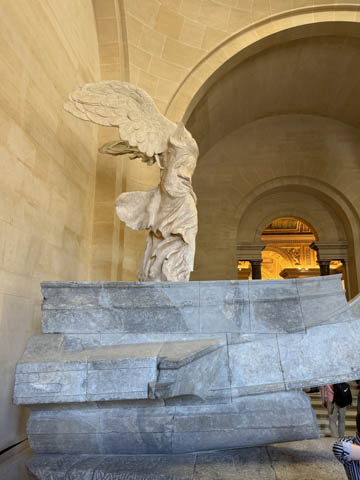
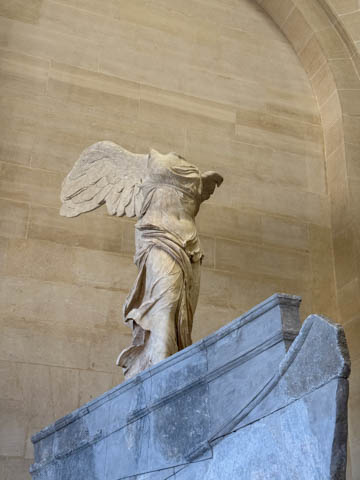
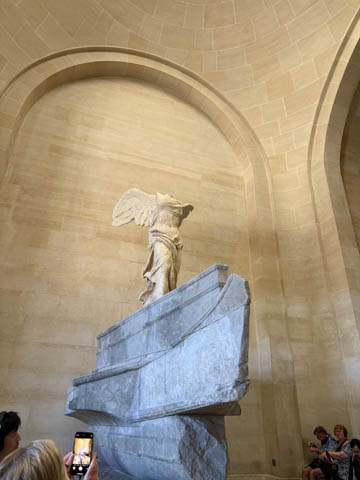
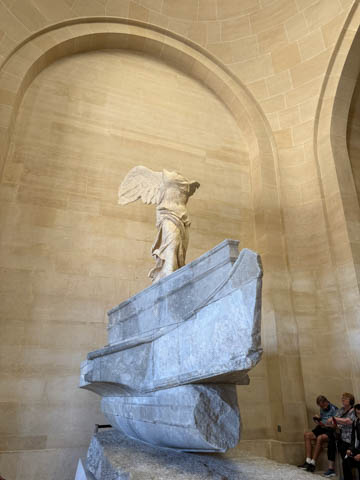
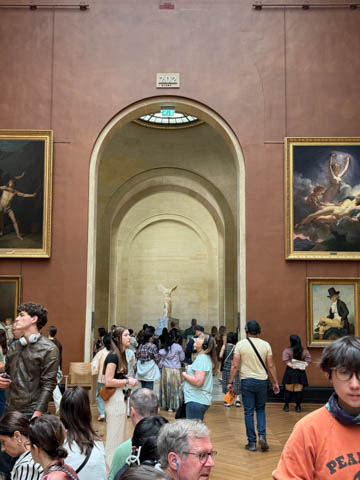
We then reached the stairwell with the Winged Victoire of Samothrace (Winged Victory of Samothrace or Nike of Samothrace) statue at the top. It is a masterpiece of Greek sculpture from the Hellenistic era, dating from the beginning of the 2nd century BC (190 BC). It is composed of a statue representing the goddess Niké (Victory, who is often depicted in antiquity as a winged woman), whose head and arms are missing and its base is in the shape of a ship's bow. The sculpture is one of a small number of major Hellenistic statues surviving in the original, rather than Roman copies. This was originally discovered on the Greek island of Samothrace in the northeastern Aegean Sea in 1863. It was in pieces along with a jumble of about fifteen large grey marble blocks whose form or function was unclear: so was assumed to be a funerary monument. In 1875, archeologists and an architect at the excavation re-examined the blocks left behind and deduced they would form the prow of a ship if reassembled, similar to a depiction of Nike on Macedonian coins called Tetradrachmas from the third century where Nike is depicted blowing into a trumpet that she raises with her right arm. The Greek government considers the Winged Victory, like the Elgin Marbles (figures from the Parthenon now in the English Museum, illegally plundered and wants it repatriated to Greece. The Victory statue, which is about 1.6 times life size, is not cut from a single block of marble, but is composed of six blocks worked separately: the body, the bust with the head, the two arms and the two wings. These blocks were assembled together by metal braces (bronze or iron). This technique, used for a long time by Greek sculptors for the protruding parts of statues, was used in Hellenistic times for the body itself, thus making it possible to use smaller pieces of marble, therefore less rare and less expensive. In the case of Victory, the sculptor optimized this technique by tilting the joint surfaces that connect the wings to the body by 20° forward, which ensured their cantilevered support in the back. The ship is composed of 16 blocks divided into three increasingly wide assizes aft, placed on a rectangular base. The seventeenth block, which remained in Samothrace, completed the void at the back of the upper assembly, just under the statue. Its weight allowed the cantilever of the blocks of the protruding oar boxes to hold on the sides. The baseboard of the statue was embedded in a basin dug on this block. Its contours, fully visible during the 2014 restoration, made it possible to determine the location of the statue very precisely. The base blocks and the sculpture of the statue are not by the same hand. The two parts of the monument were designed together, but produced by two different workshops
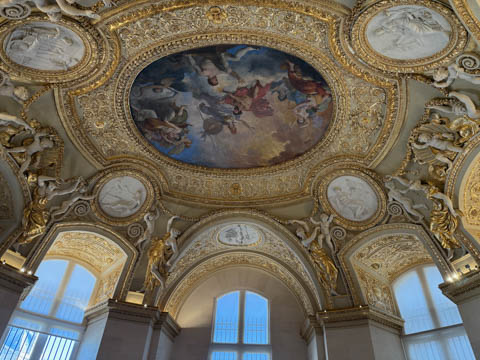
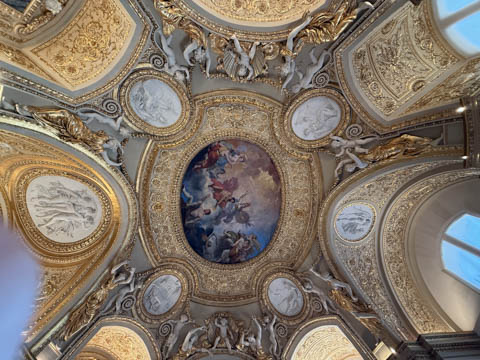
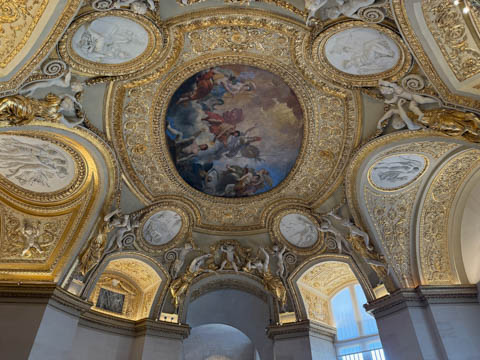
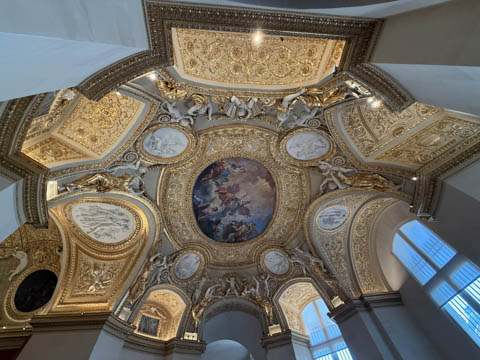
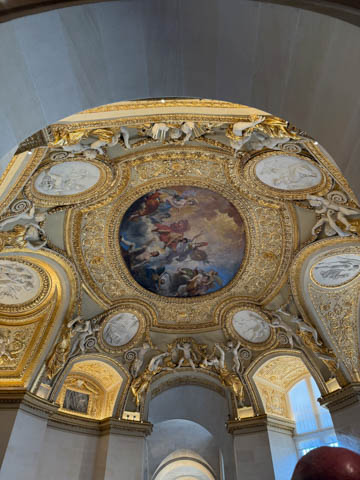
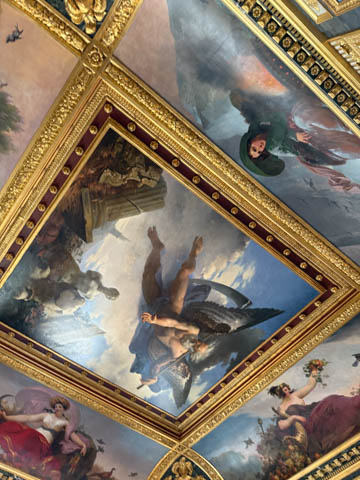
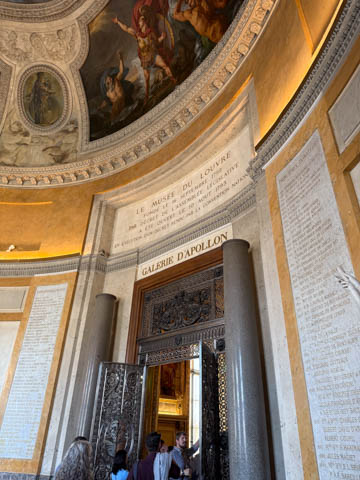
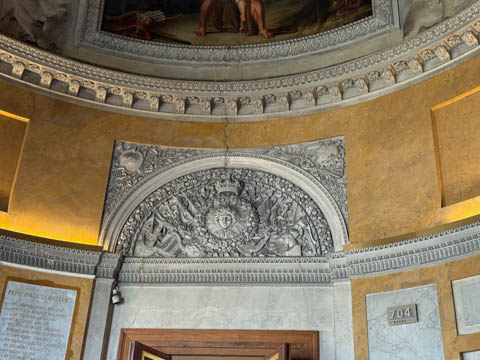
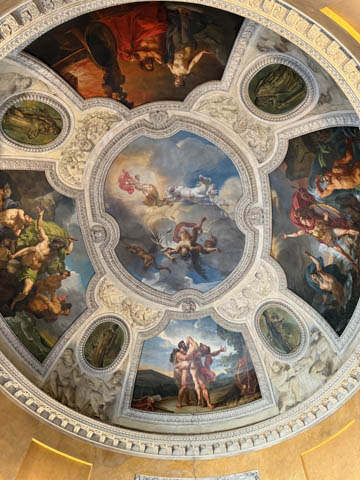
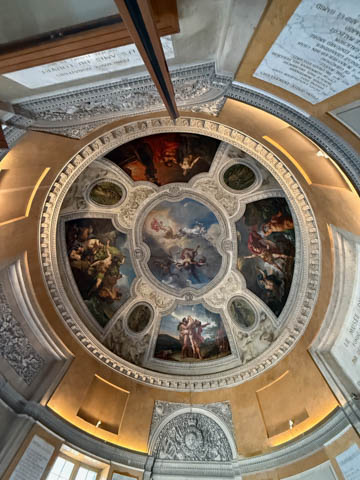
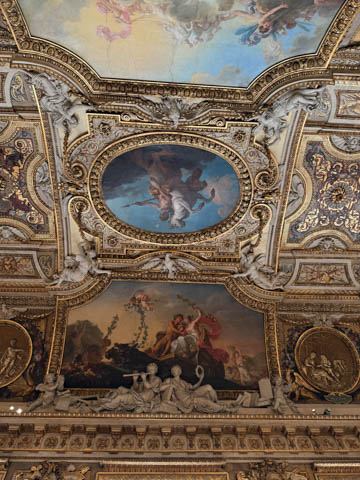
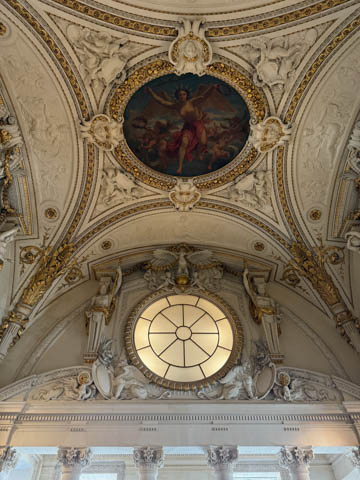
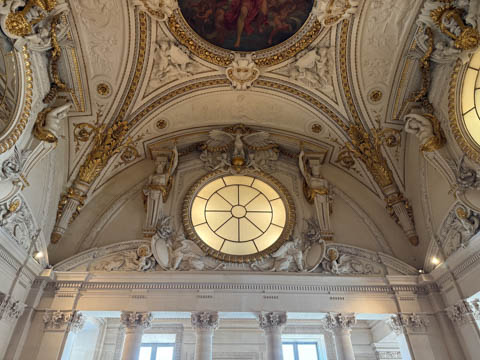
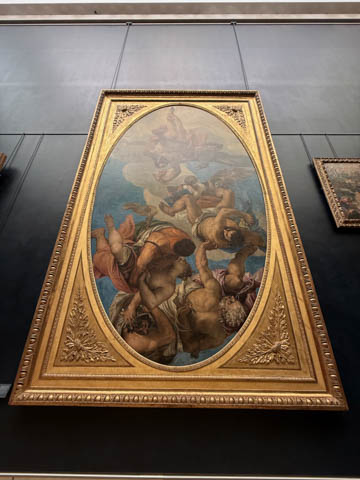
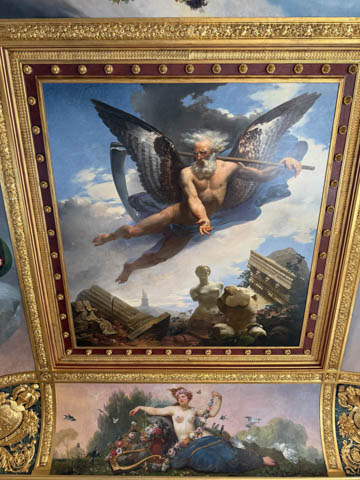
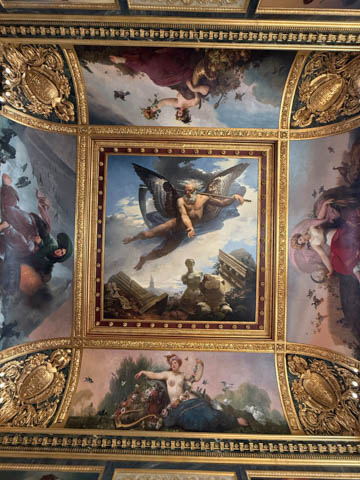
At the top of the stairs at Level 1 we entered Gallery 704: The Rotonde de la Galerie d'Apollon. The painting in the middle of the ceiling is "The Sun. The Fall of Icarus" by Merry-Joseph Blondel.
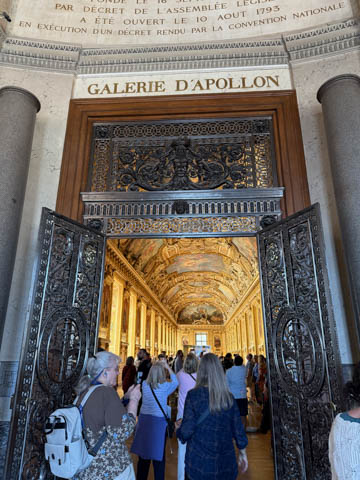
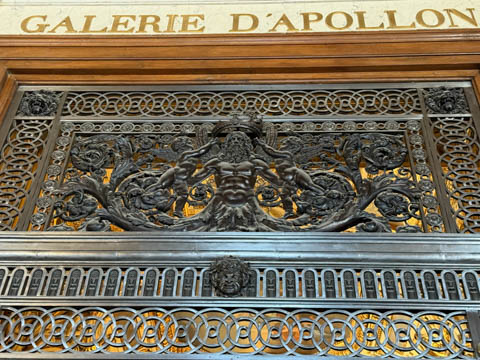
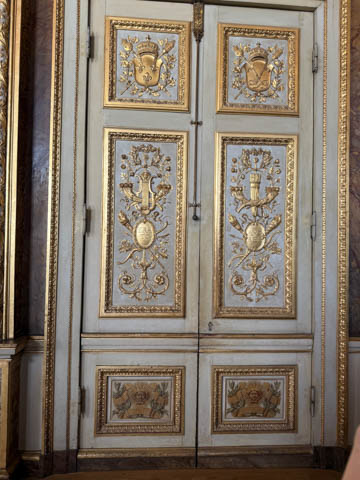
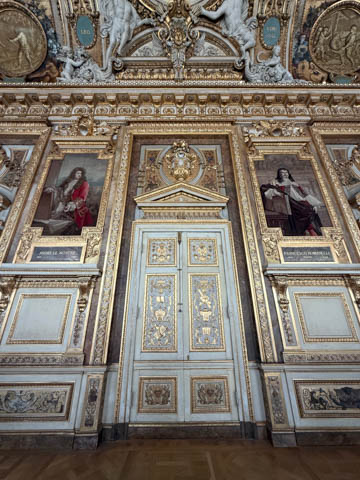
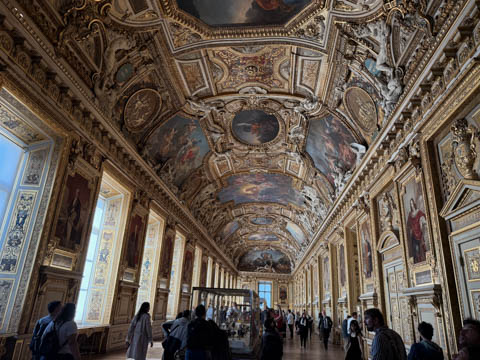
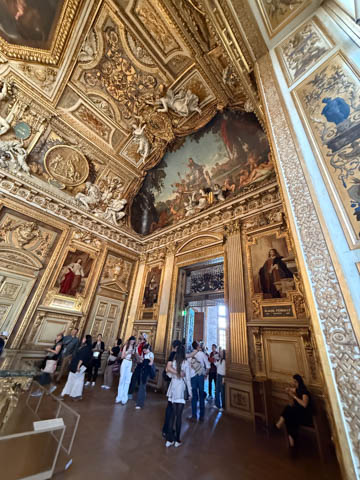
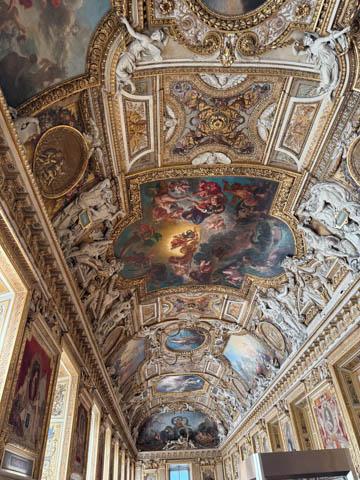
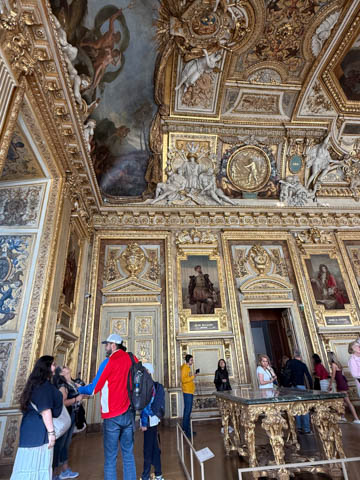
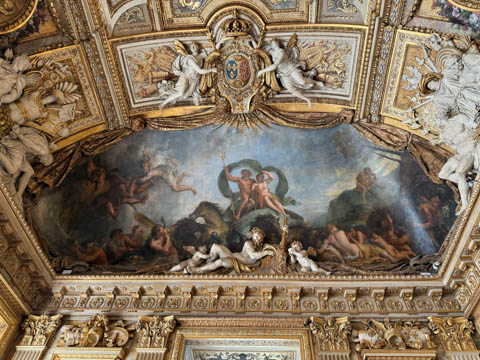
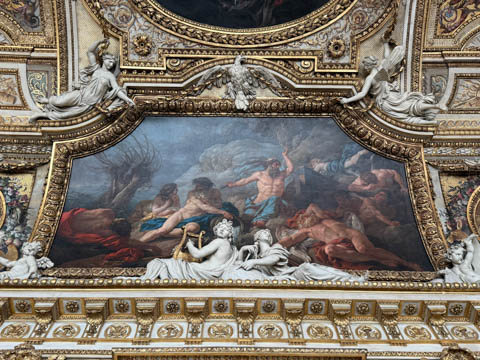
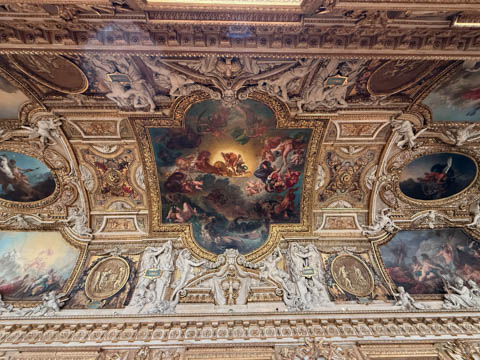
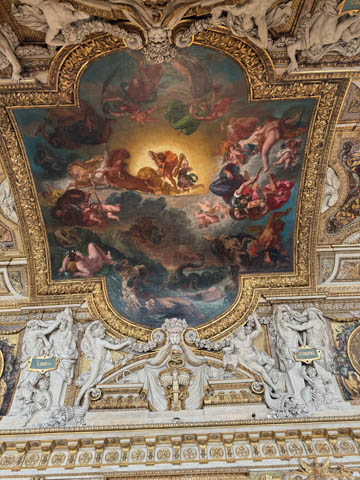
We then entered Salon 705, the Galerie de Apollon (Gallery of Apollo), which is an almost gilded long hall which forms a separate wing known as the Petite Galerie added to the palace by Louis XIV in the 1660s after a fire destroyed an earlier gallery, but it wasn't completed until 1851 under Napoleon Bonaparte. It features a stunning painting of "Apollo Slays the Python" in the center of the ceiling,
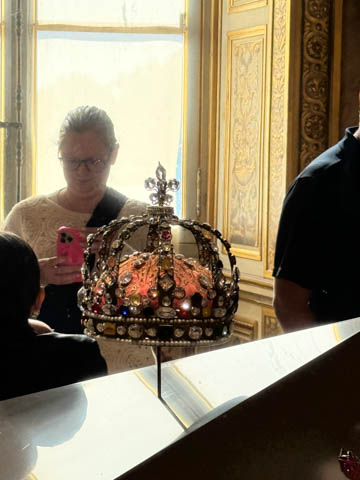
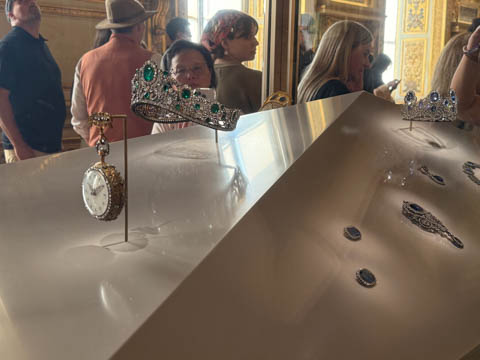
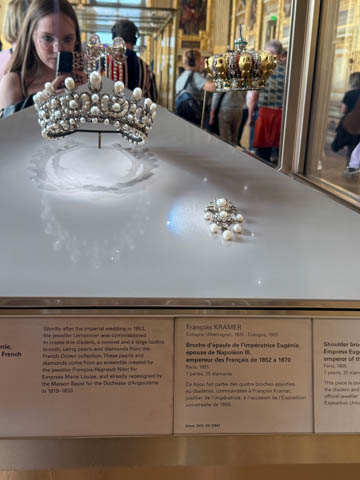
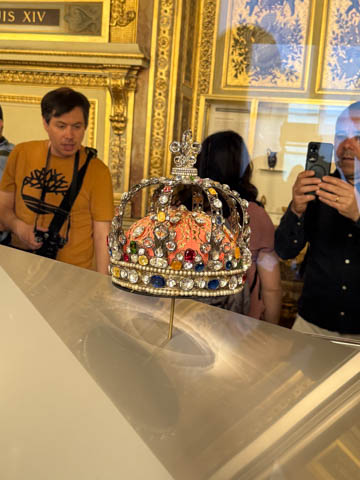
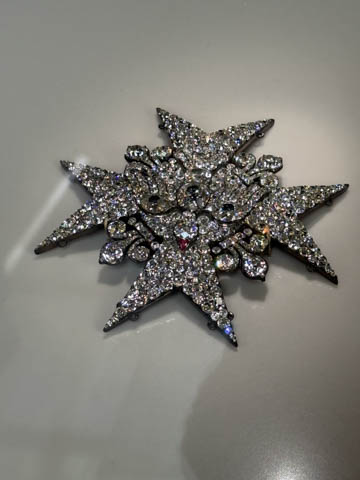
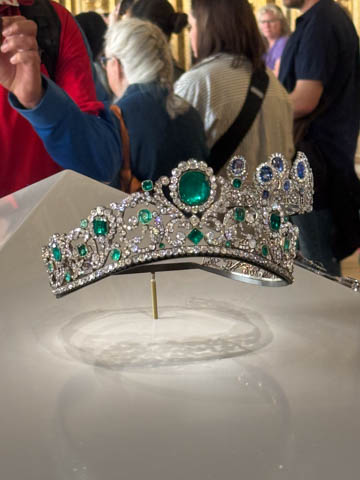
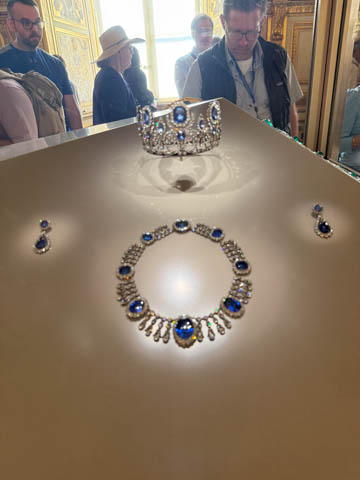
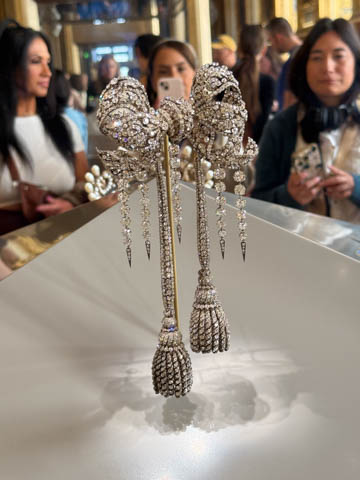
The museum uses the Gallery to display the French crown jewels, including the crowns made for Louis XV and Napoleon along with a 20 carat, 55 carat, and 140 carat diamonds.
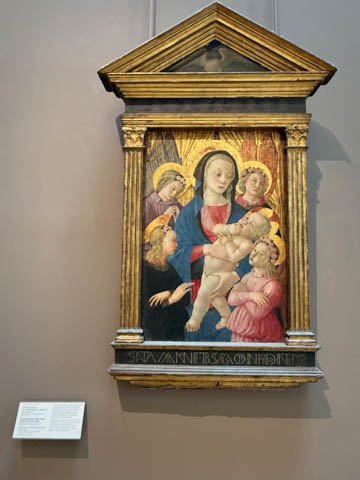
We next headed into Gallery 708, where we saw the The Virgin and Child Surrounded by Four Angels" from Florence in 145-1475. We then went into the Grand Gallery (Salons 710, 712, and 716) which form most of the outer length of the Denon Wing.
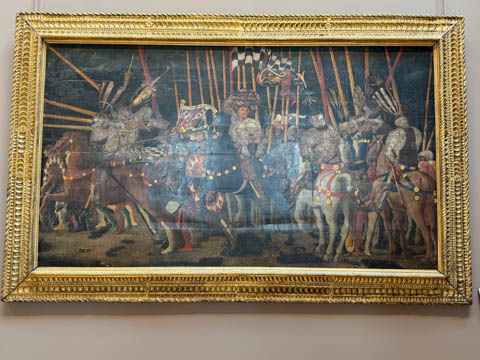
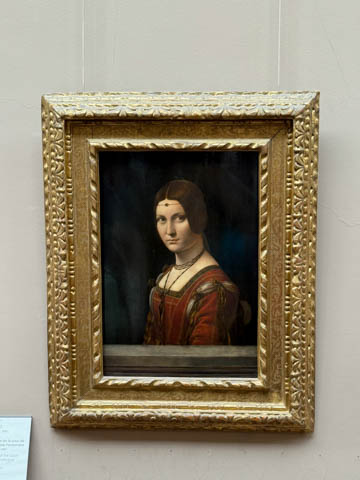
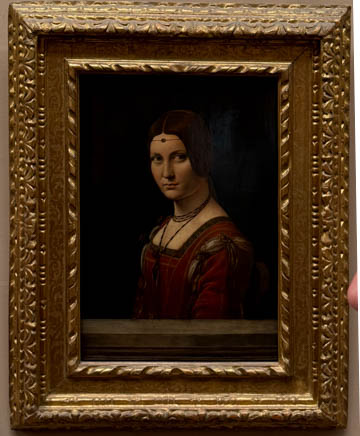
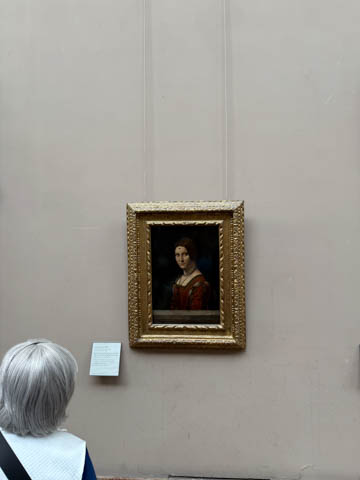
Part of the way down the hall, with absolutely no line, is a small portrait of a woman by Leonardo da Vinci painted between 1490-97. This one is titled "Portrait of a Woman, Wrongly Called La Belle Ferronniere." To the right below is "The Battle of San Romano: the Counterattack of Micheletto Attendolo da Cotignola" by Paolo Uccello.
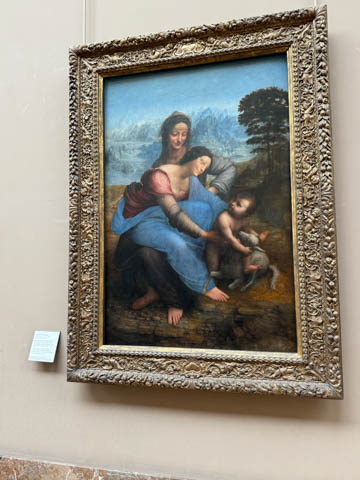
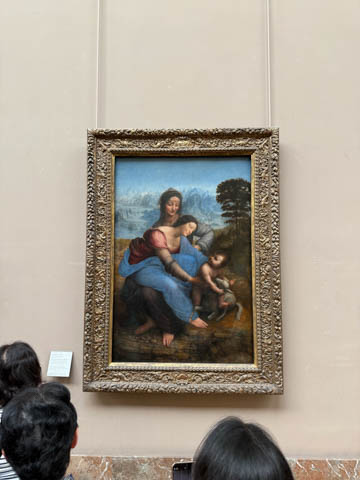
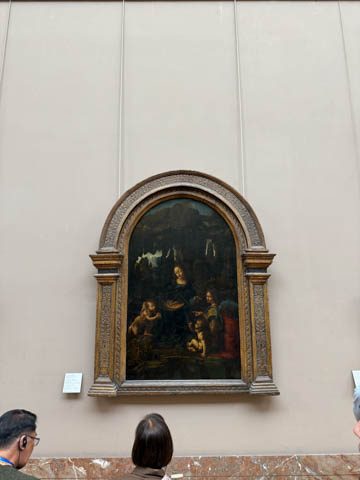
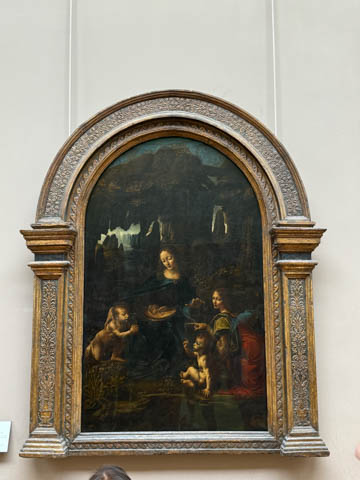
There were two more Leonardo da Vinci paintings nearby: "The The Virgin, the Child Jesus and Saint Anne" and "The Virgin, the Child Jesus, Saint John the Baptist and an angel, known as The Virgin of the Rocks" shown below as the two right-most images.
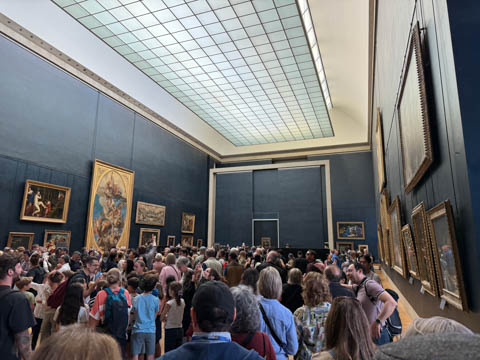
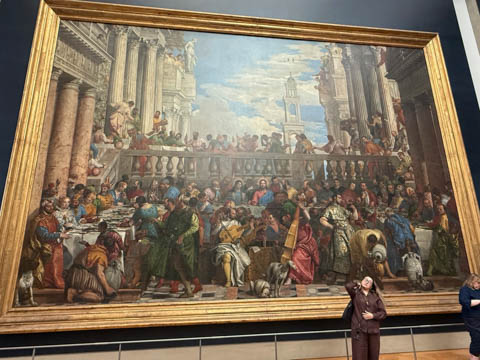
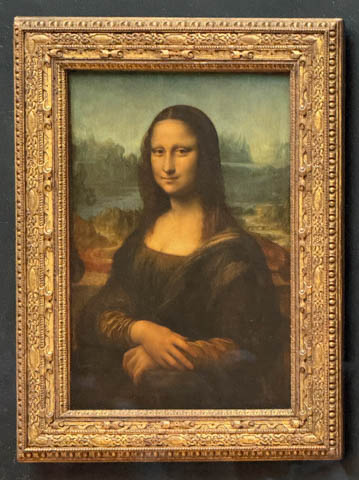
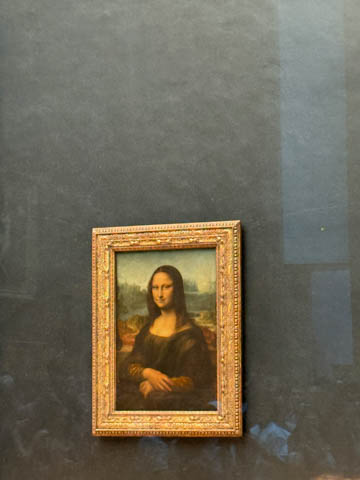
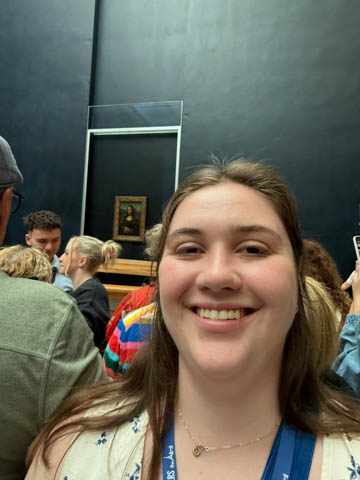
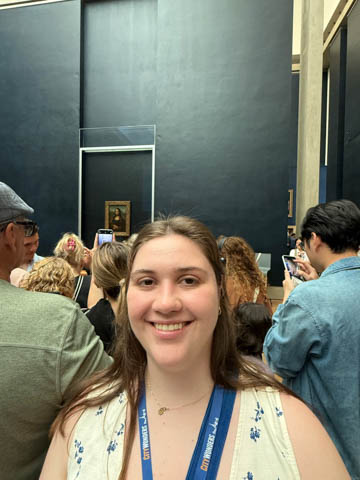
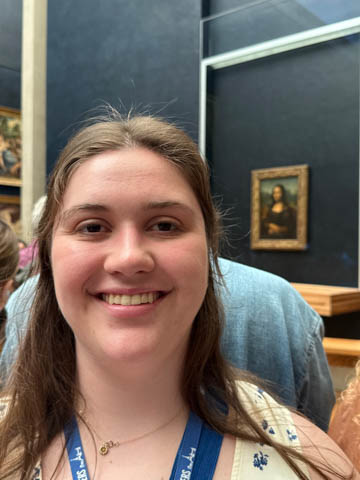
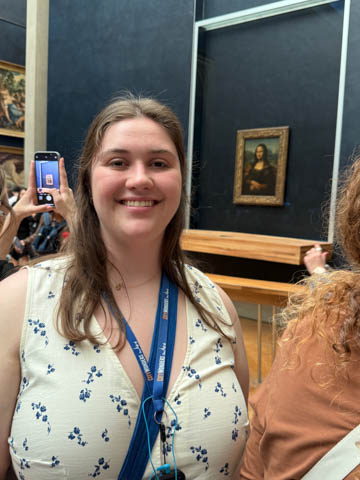
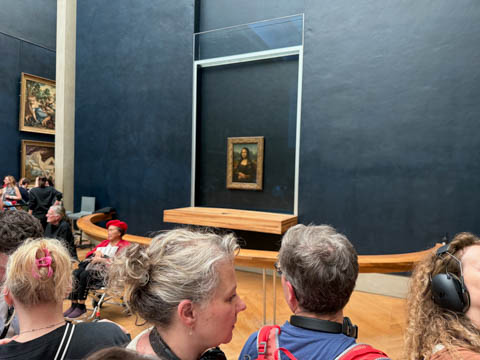
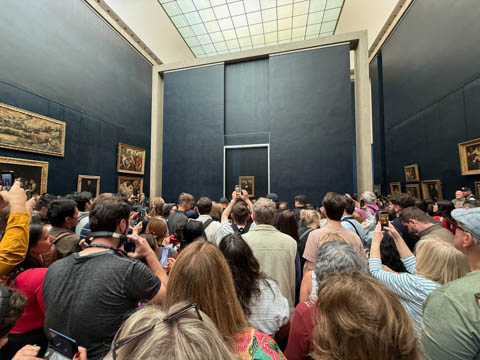
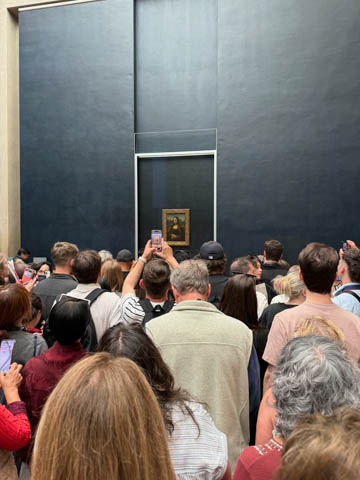
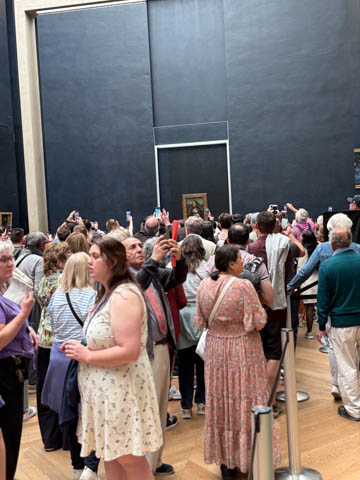
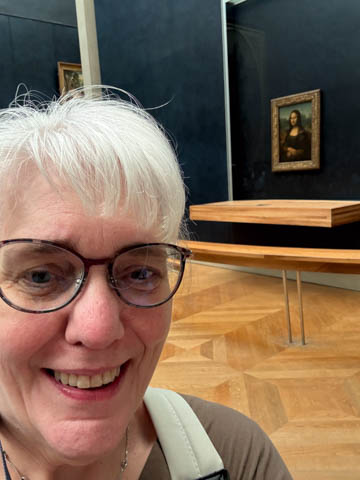
About half-way down, we turned right into Gallery 711 and the crushing crowd trying to view the Mona Lisa. To the right is "The Wedding at Cana" by Caliari.
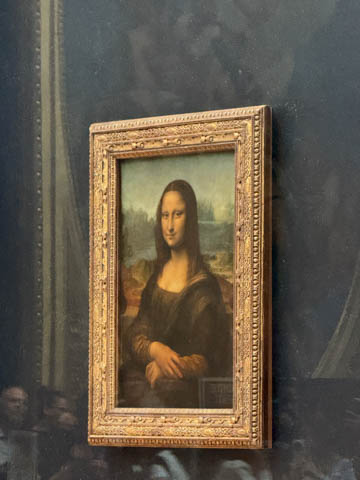
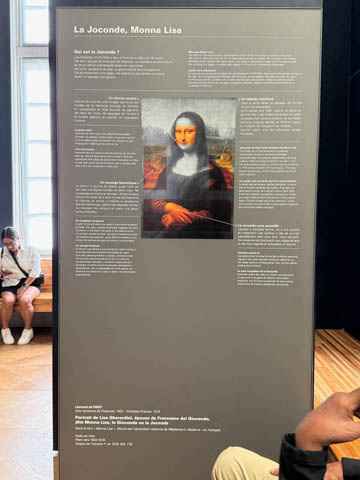
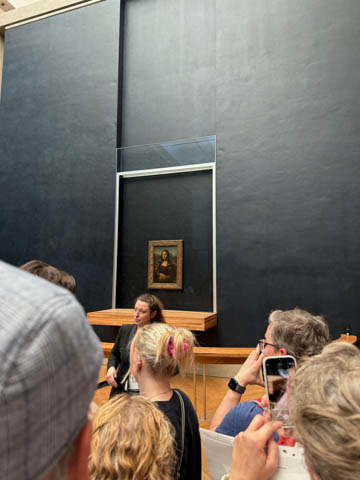
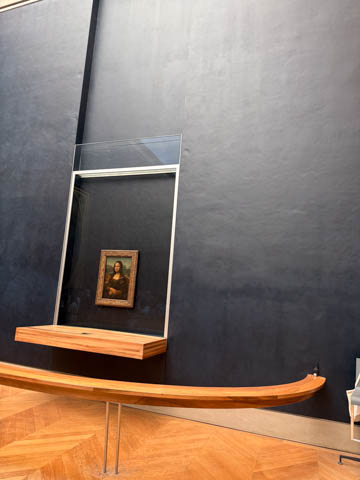
Rather amazed at how this was organized, with a ropes a bit off center to the left forming a funnel that only exited once you got close. We all made it to about the third or fourth row of people, had a bit of a gap, and then gave up to get out. While you could walk by the exit to the right, there was someone there discouraging you from stopping. Still managed to get a picture from the side, which I removed the distortion from in Lightroom. The painting is believed to depict Lisa del Giocondo, an Italian noblewoman from Florence. The term Mona (Monna in Italian) is a polite form of address meaning Ma'am or Madam. She was the wife of Francesco de Giocondo, a wealthy silk merchant. Her elegant, elaborate outfit indicates her social status. Her dress is covered by a large veil of transparent silk. The painting was one of the first Italian portraits to depict the sitter in front of an imaginary landscape. The enigmatic woman is portrayed seated in what appears to be an open loggia (a roofed open gallery) with dark pillar bases on either side. Behind her, a vast landscape recedes to icy mountains, winding paths and a distant bridge, giving only the slightest indications of human presence. Leonardo chose to place the horizon line not at the neck, as he did with Ginevra de' Benci, but on a level with the eyes, thus linking the figure with the landscape and emphasizing the mysterious nature of the painting. The bridge in the background was identified by Silvano Vincenti as the four-arched Romito di Laterina bridge from Etruscan-Roman times near Laterina, Arezzo, over the Arno river. Mona Lisa has no clearly visible eyebrows or eyelashes, although Vasari describes the eyebrows in detail. In 2007, French engineer Pascal Cotte announced that his ultra-high resolution scans of the painting provide evidence that Mona Lisa was originally painted with eyelashes and eyebrows but that these had gradually disappeared over time, perhaps as a result of overcleaning. Leonardo probably painted his sitter's appearance faithfully since her beauty is not seen as being among the best, "even when measured by late quattrocento (15th century) or even twenty-first century standards. Leonardo used a painting technique called sfumato; he applied multiple layers of pigments bound in oil to create to create subtle transitions from shadow to light, bringing his model's gentle smile to life. In the background, a path on the left draws viewer's gaze to mountains bordered by lakes. This wild, majestic landscape suggests the slow formation of the Earth, the battle of the elements and erosion caused by time. Leonardo mastered so called "atmospheric perspective," using different shades of blue to blur the outlines and give the scene a striking depth. Leonardo aimed to bring his portrait to life by depicting Lisa as if she were naturally turning to welcome the viewer. Her upper body is in three-quarter view, but her gently smiling face is frontal. Of Leonardo da Vinci's works, the Mona Lisa is the only portrait whose authenticity has never been seriously questioned. Although he began the painting in 1503, he continued to work and refine the painting repeatedly until likely 1517, when his right hand was paralytic, which may indicate why he left the Mona Lisa unfinished. The lower part of the landscape is evidently incomplete; the forms are barely sketched. Leonardo brought the painting with him when he came to France at the invitation of Kin Francis I in 1516. Leonardo never gave the painting to the Giocondo family. King Francis I of France bought the Mona Lisa after Leonardo's death in 1519, and it is now the property of the French Republic. It is now considered the most famous and highest valued painting in the world. Once part of King Francis I of France's collection, the Mona Lisa was among the first artworks to be exhibited in the Louvre, which became a national museum after the French Revolution. Leonardo began to be revered as a genius, and the painting's popularity grew in the mid-19th century when French intelligentsia praised it as mysterious and a representation of the femme fatale. The 1911 theft of the Mona Lisa and its subsequent return was reported worldwide, leading to a massive increase in public recognition of the painting.
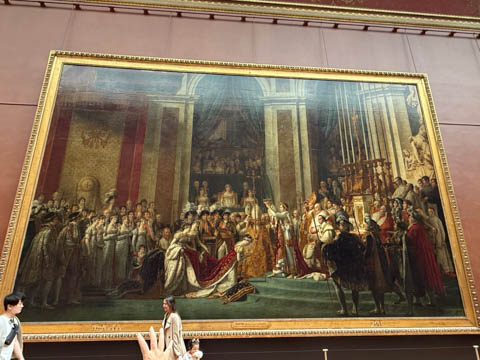
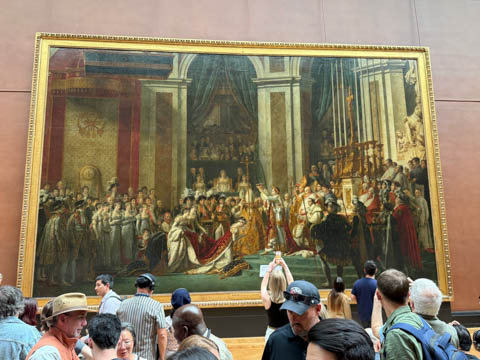
In Salle 702, "The Coronation of Napoleon" (1807) by Jacques-Louis David (the official painter of Napoleon) was enormous, almost 33x20 feet. Our guide pointed out several errors in the painting, namely it depicted people who were not actually present in the Cathedral de Notre Dame at the time like Napoleon's mother and brother, but as a bit of propoganda is was better to show them there (plus Napoleon requested they be represented). Pope Pius VI is shown seated and appearing to direct the ceremony, when in reality Napoleon humiliated him by crowning himself. Additionally, Napoleon is posed as though he is getting ready to crown his wife, Josephine, making him appear more humble.
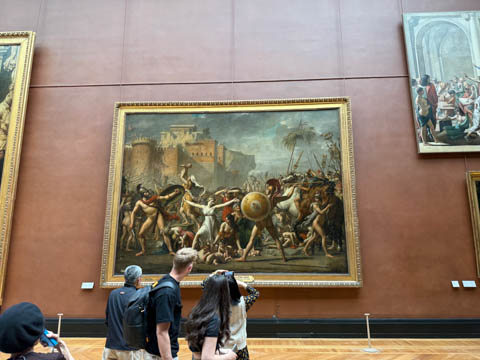
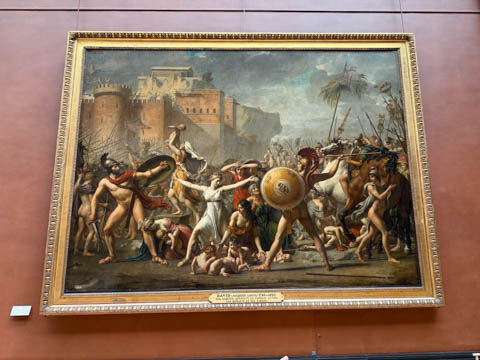
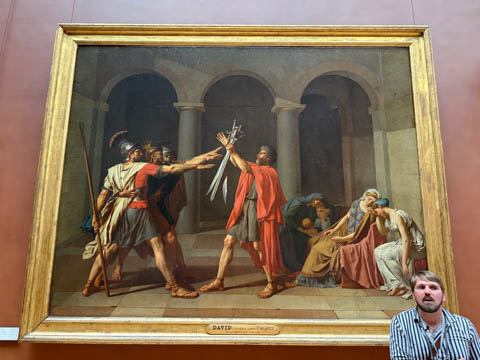
Below are the "Intervention of the Sabine Women" and "The Oath of the Horatii" also by Jacques-Louis David
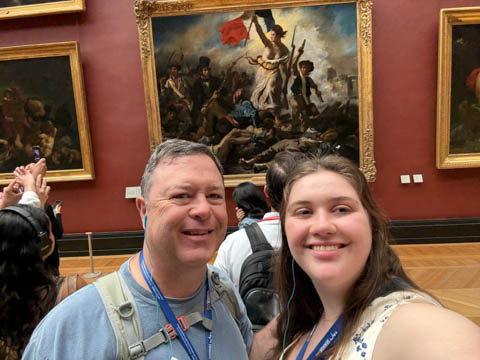
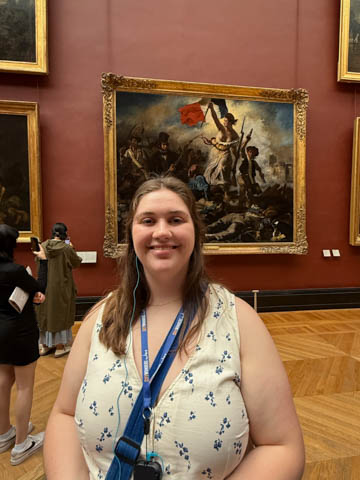
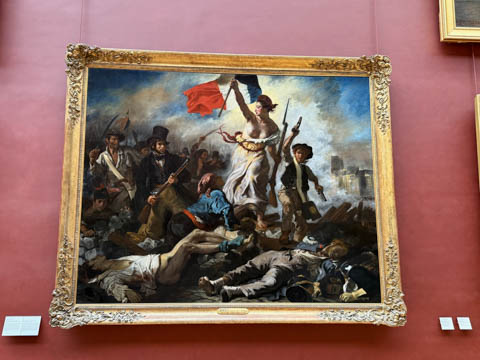
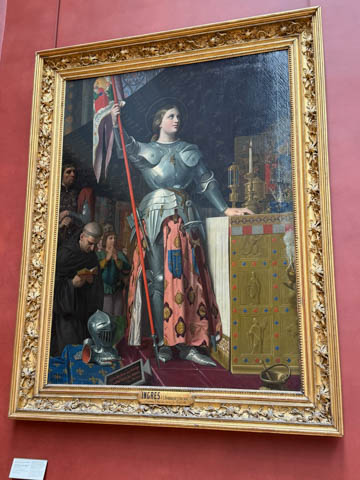
In Salle 700, we stopped to take a picture in from of "July 28, 1830. Liberty Leading the People" by Eugène Delacroix (1830). His most famous painting depicts Parisians breaking through a barricade. The female figure at the top of the composition – part classical goddess, part woman of the people – urges the crowd forward and waves the tricolour flag. She is presented as a symbol of Liberty. Delacroix deliberately used the colours blue, white and red in combination several times in his painting: the French flag, a symbol of the 1789 Revolution then of the Empire, was banned when the Monarchy returned to power between 1815 and 1830. This famous allegorical/historical painting, often referenced in art and advertising, stands as a symbol of liberty and freedom fights. The room also had the painting "Joan of Arc at the Coronation of Charles VII" (1854) by the French Neoclassical artist Jean-Auguste-Dominique Ingres.
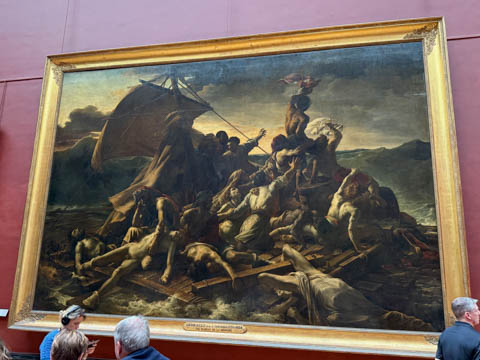
Our guide also discussed the "The Raft of the Medusa" by Theodore Gericault, which has become an icon of French Romanticism. At 16 x 23 ft, it is an over-life-size painting that depicts a moment from the aftermath of the wreck of the French naval frigate Méduse, which ran aground off the coast of today's Mauritania on 2 July 1816. On 5 July 1816, at least 150 people were set adrift on a hurriedly constructed raft; all but 15 died in the 13 days before their rescue, and those who survived endured starvation and dehydration and practiced cannibalism (one custom of the sea). The event became an international scandal, in part because its cause was widely attributed to the incompetence of the French captain.
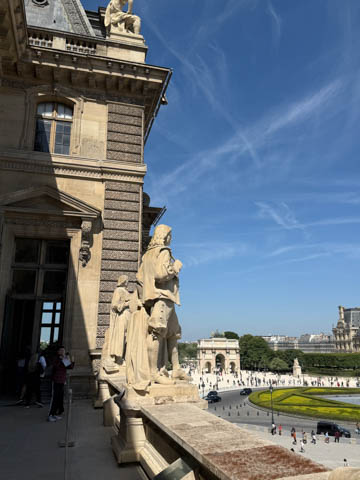
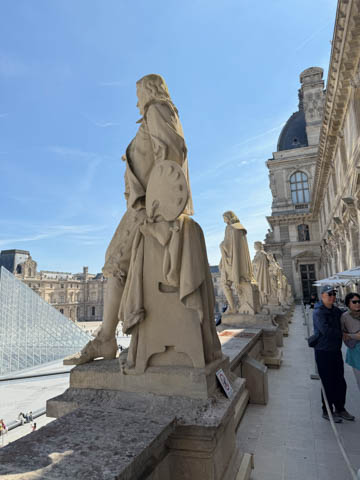
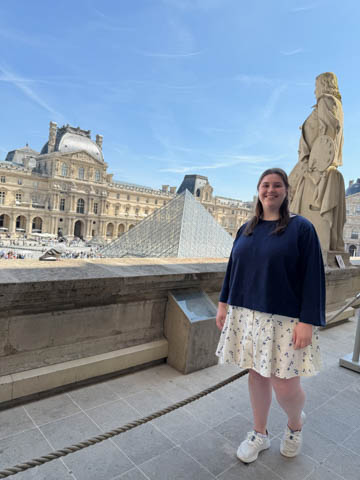
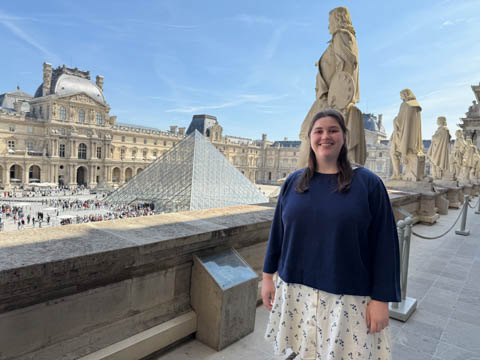
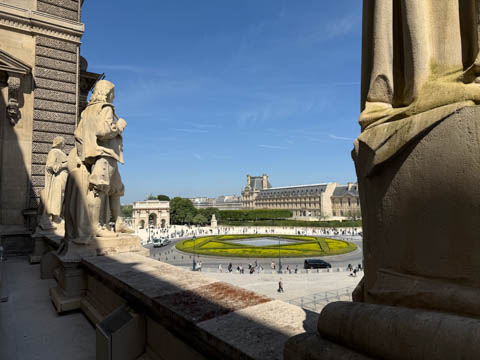
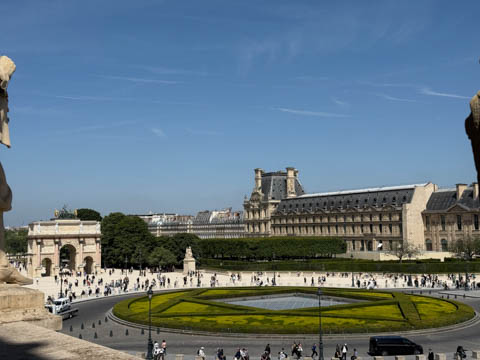
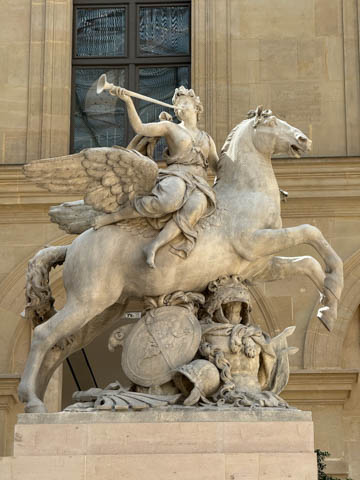
Our tour was over then, and we headed to a nearby cafe in the museum, eating lunch on one of the balconies lined with statues which overlooked the main square in front of the museum.
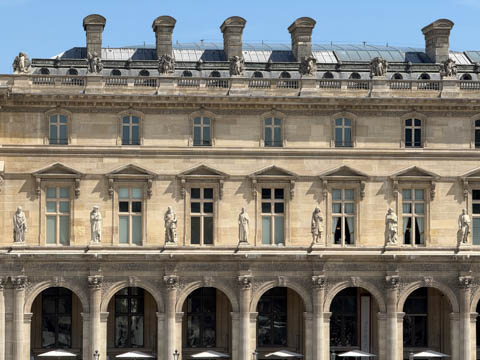
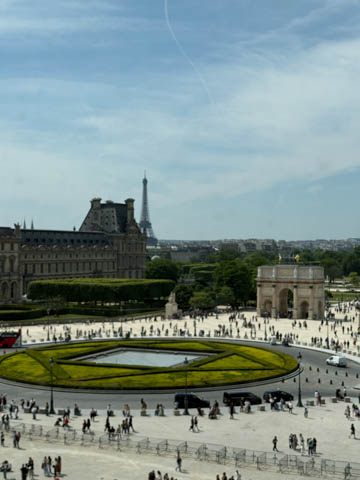
The Richelieu Wing on the other side had a similar balcony lined with statues overlooking the square.
Interesting view of the Place Du Carrousel from this elevated position, which allowed a view of the pattern which wasn't visible from street level.
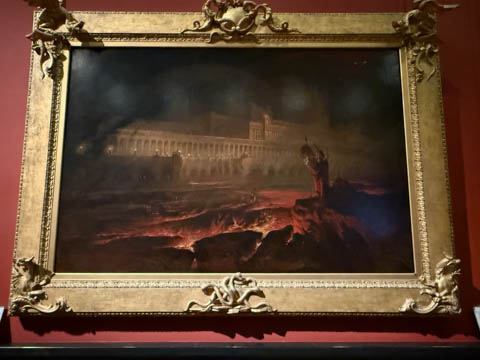
It looks like Steve and Alexa headed back into the Denon Wing to go through a couple galleries (712, 713, 714, and 715) at the end which we didn't get through with the tour. In the middle below is Pandemonium (1841), by John Martin. Oil on canvas, 123 x 185 cm. which is based on John Milton's "Paradise Lost", where Pandemonium is the capital of Hell.
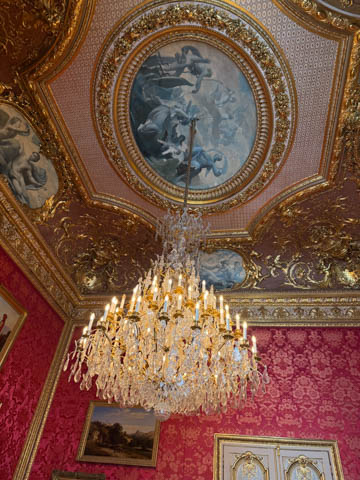
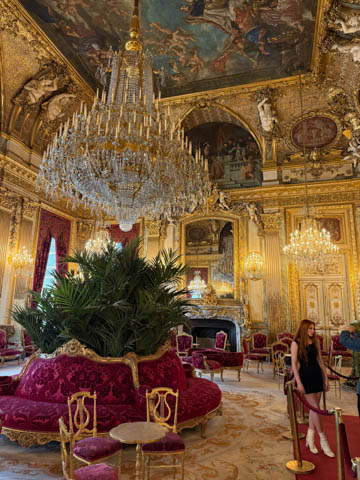
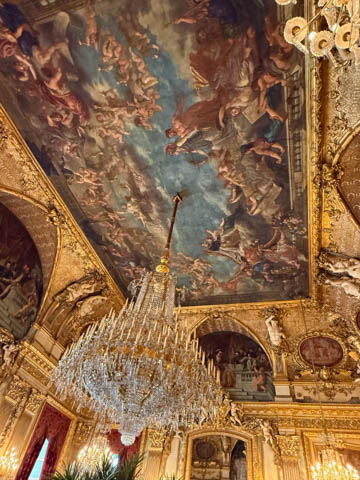
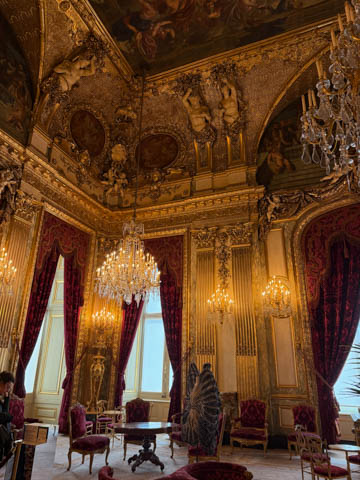
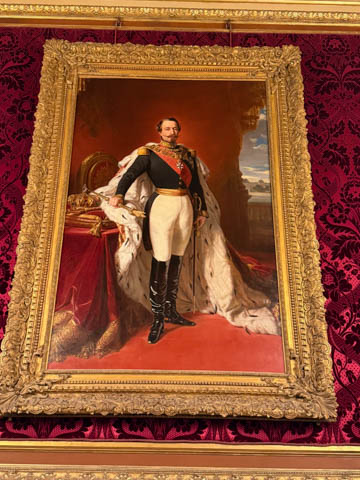
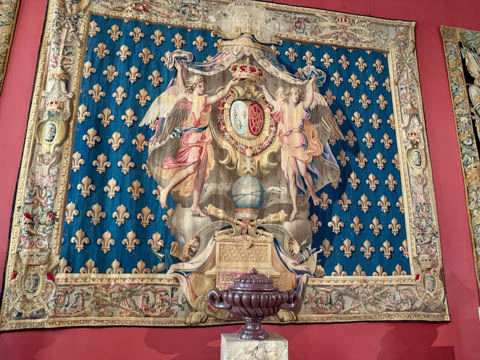
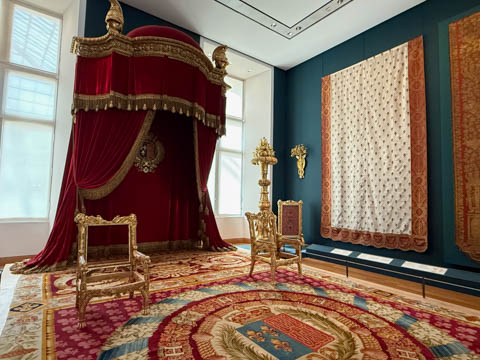
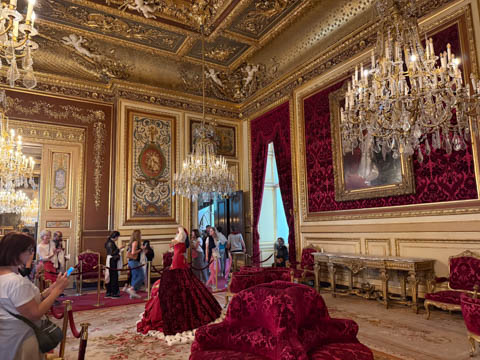
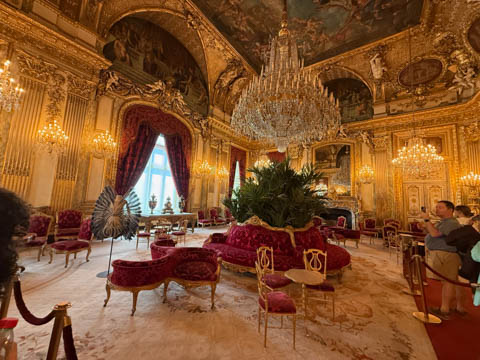
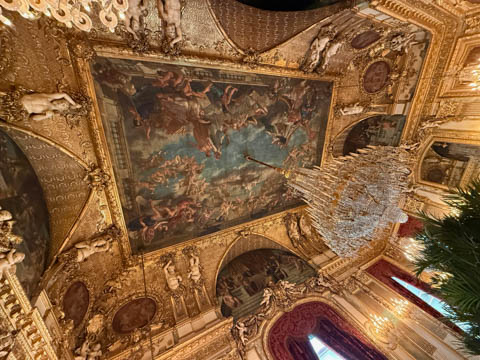
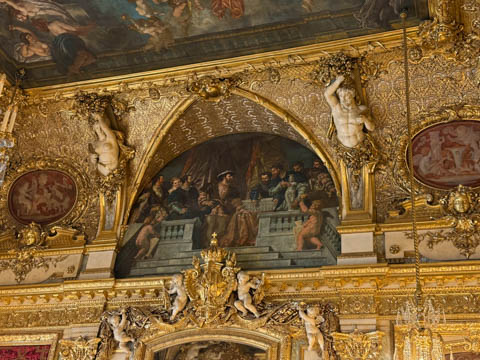
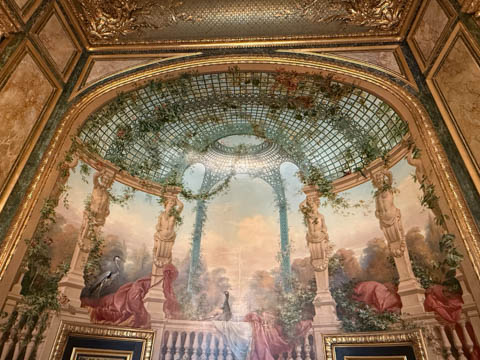
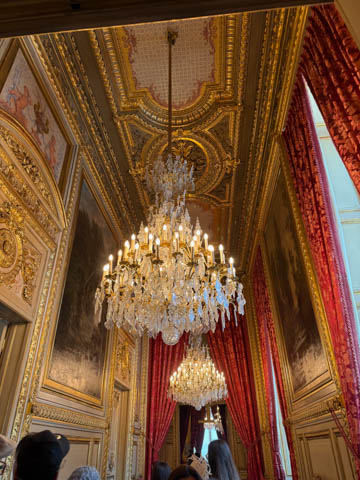
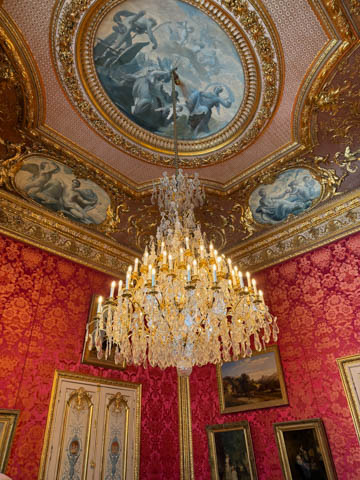
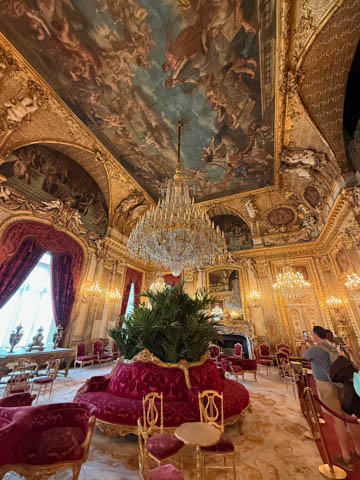
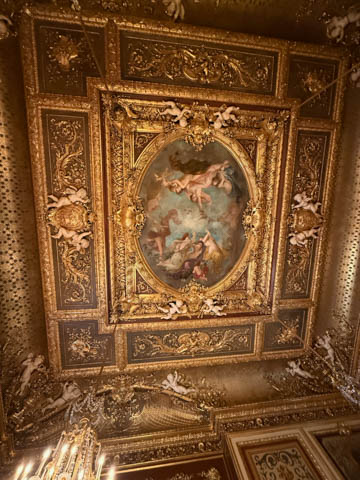
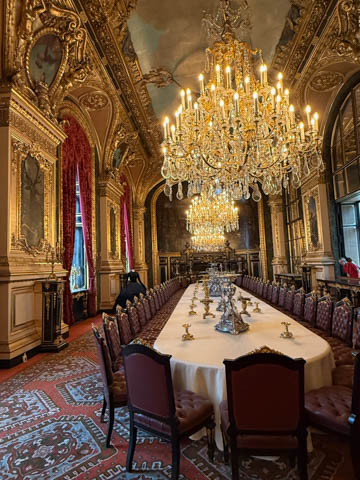
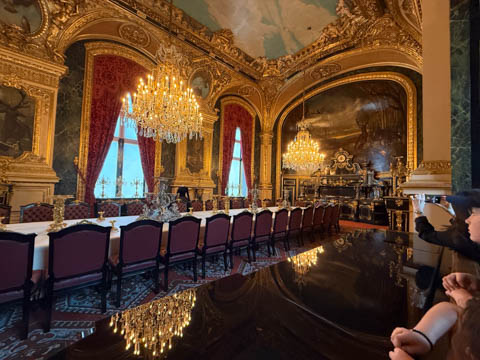
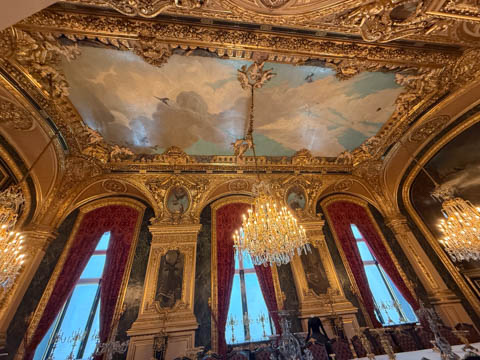
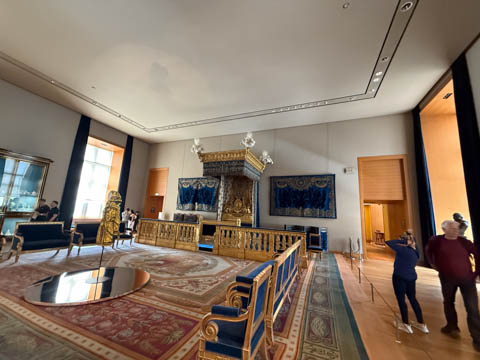
We then made our way through the Sully Wing and into the Richelieu Wing along the first floor to tour the apartments belonging to Napoleon III (Gallery 544).
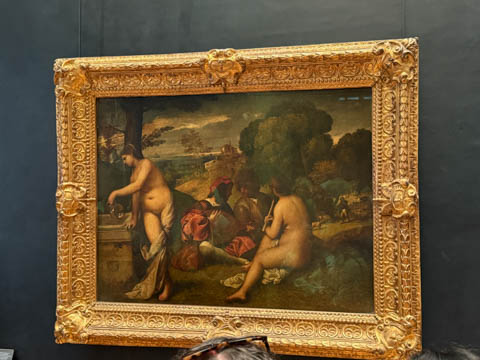
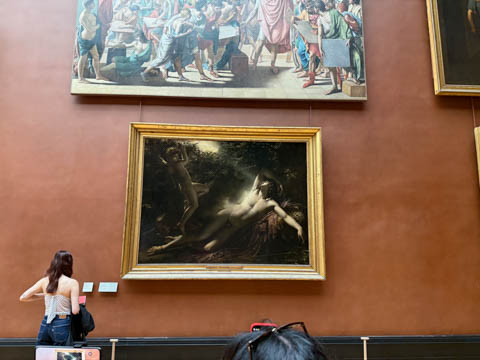
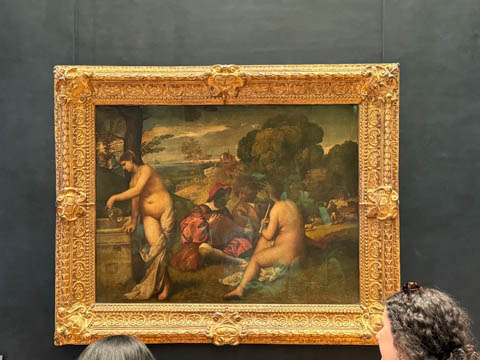
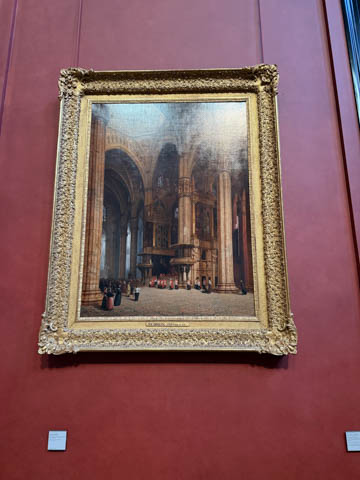
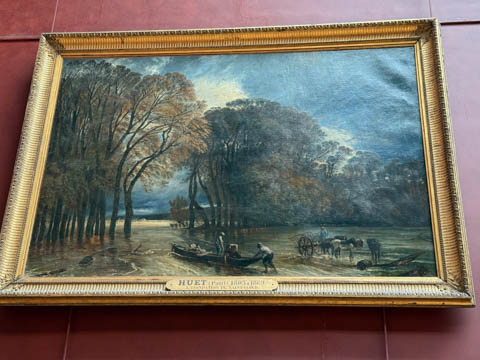
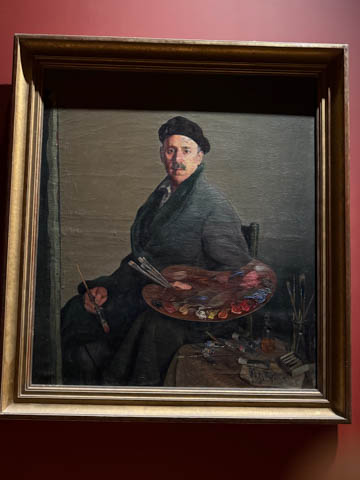
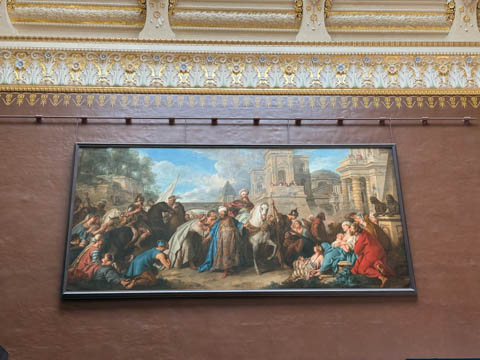
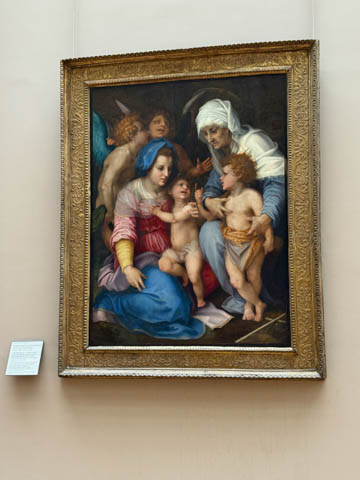
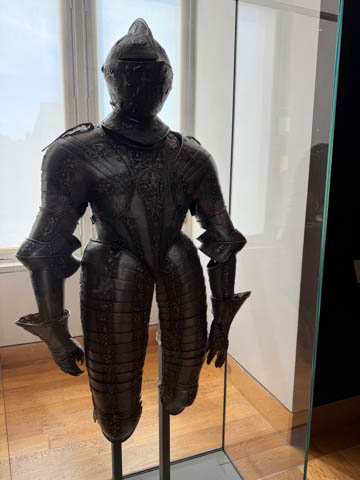
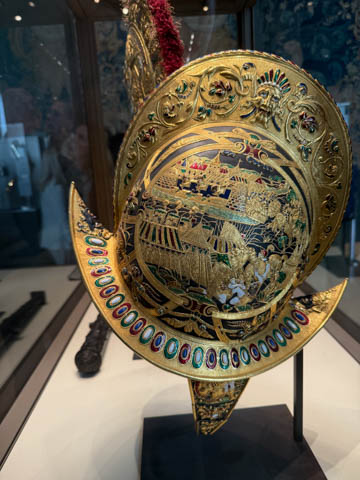
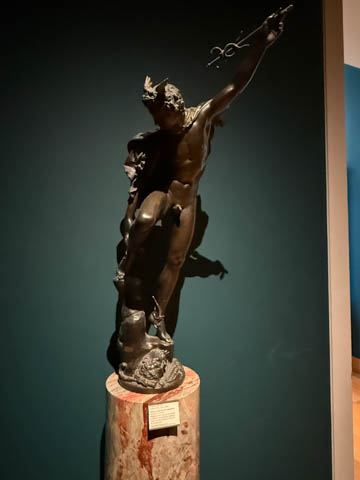
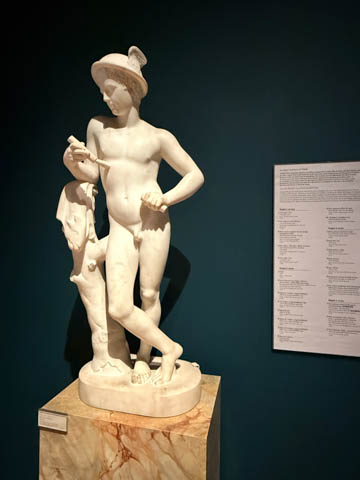
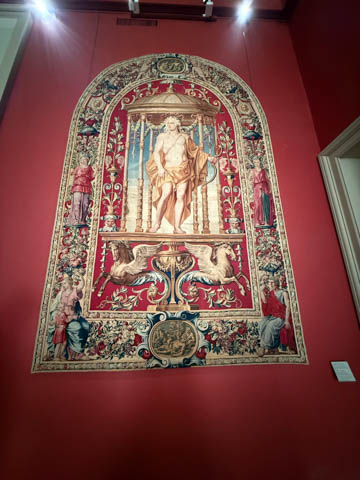
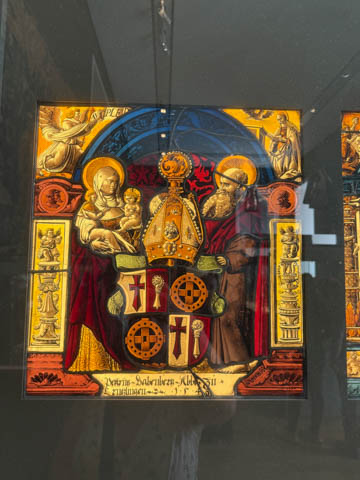
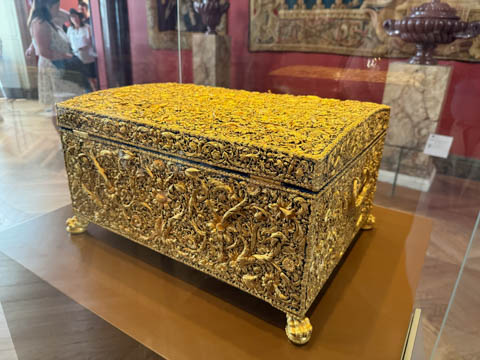
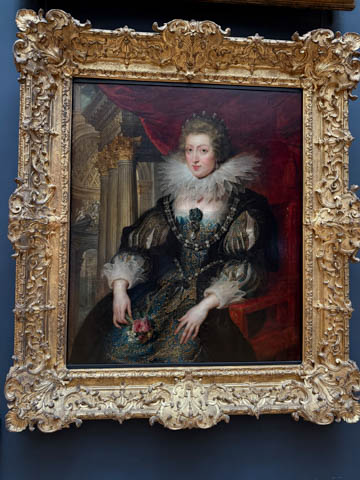
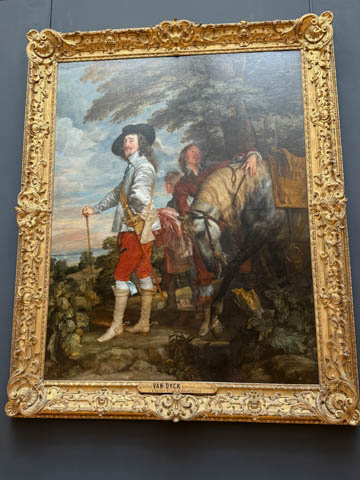
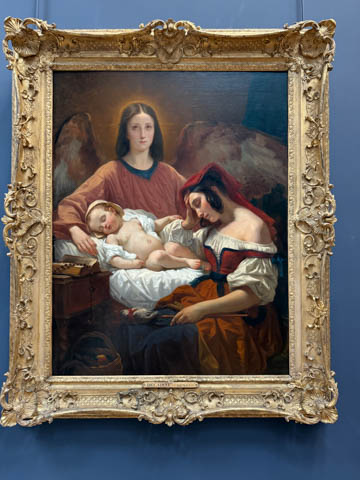
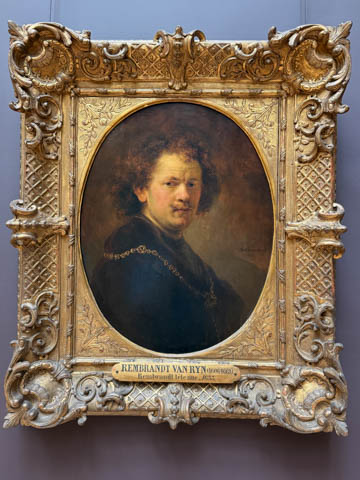
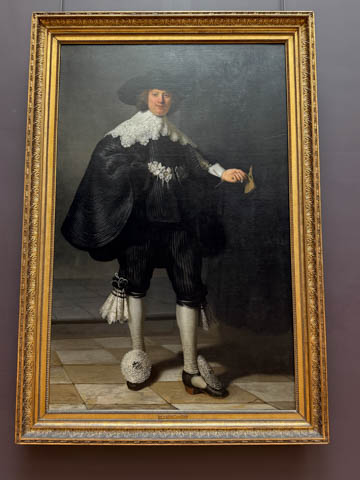
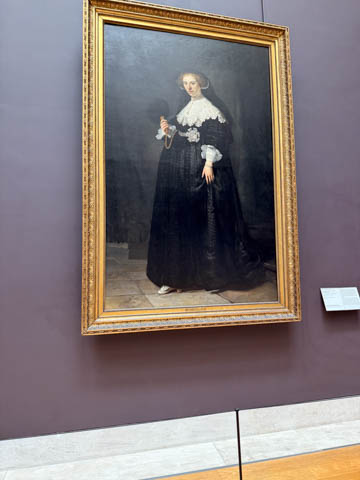
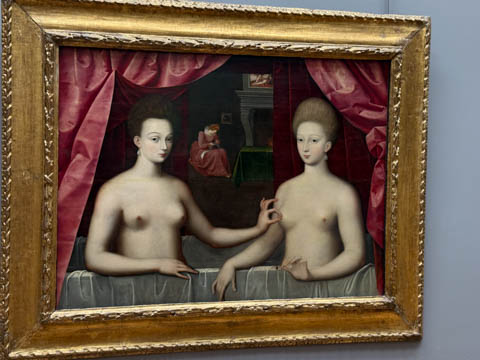
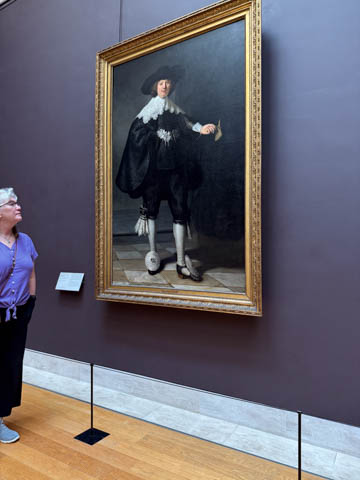
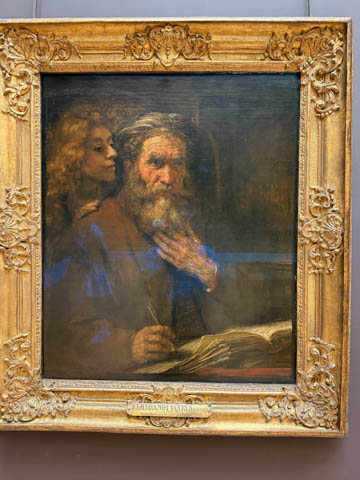
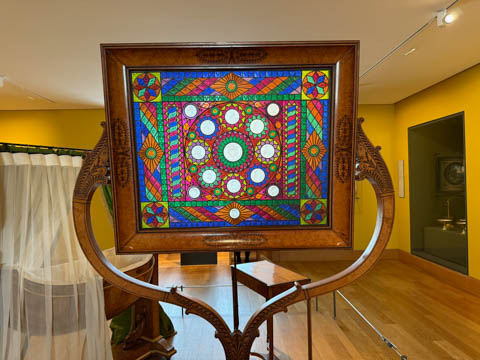
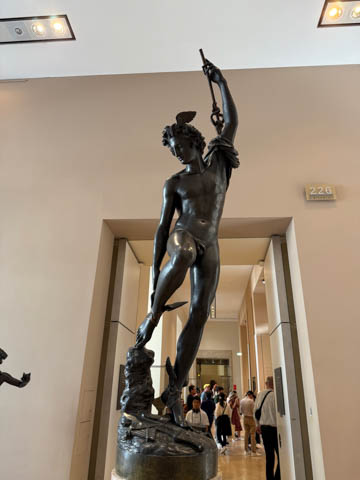
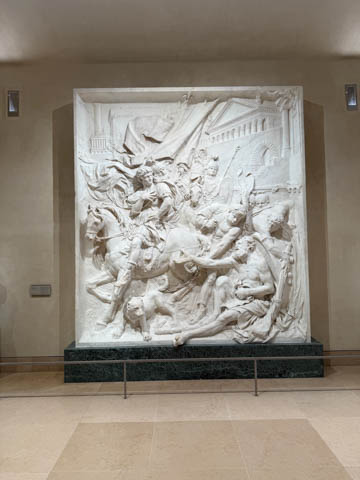
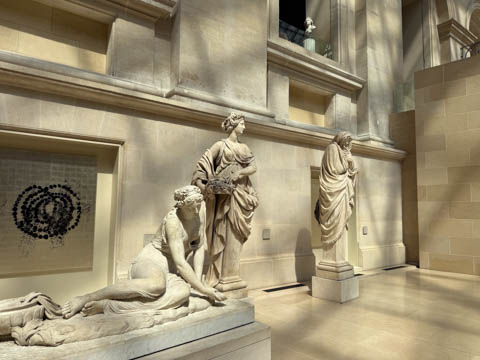
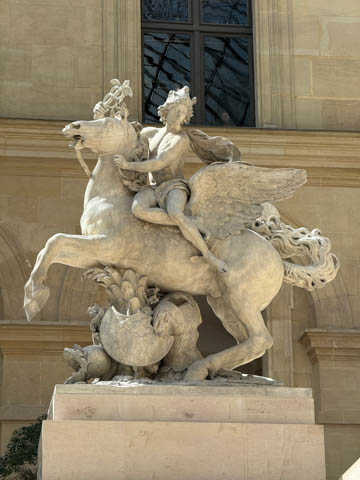
We wandered around the museum for several more hours, leaving only after almost nine hours. Here are some images of other pieces that caught our eye.
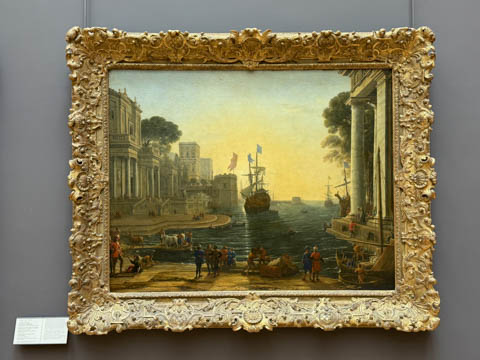
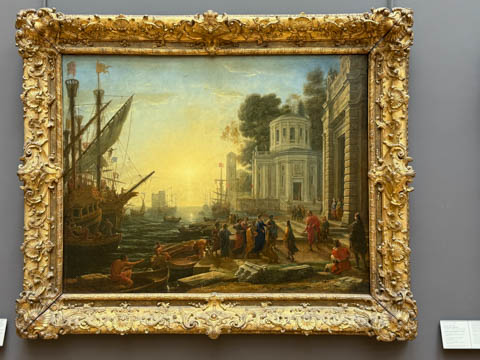
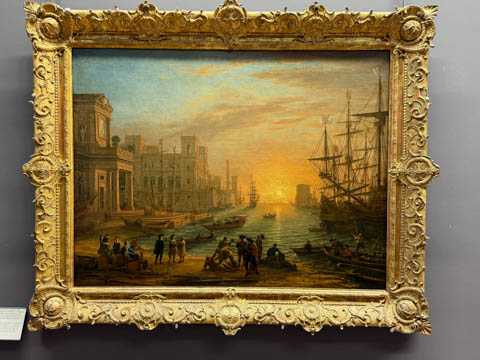
Several seaport paintings from by Claude Galles in Salle 827: first is "Ulysses hands Chryseis Over to Her Father" (1644), second is "Cleopatra's Landing at Tarsus" (1642); last is "Seaport at Sunset" (1639).
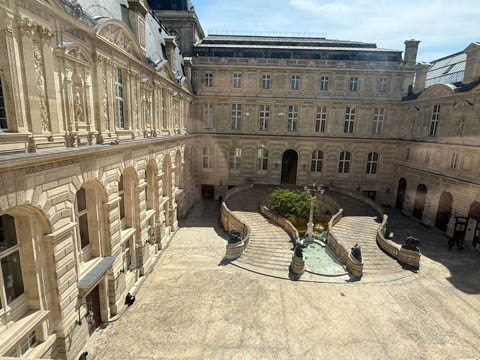
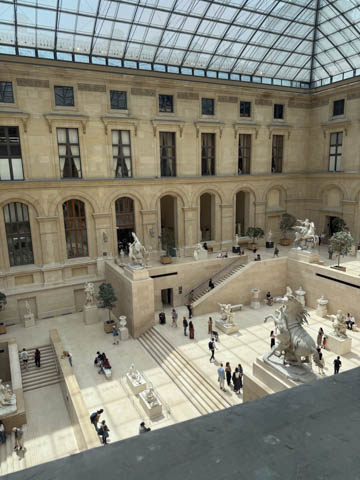
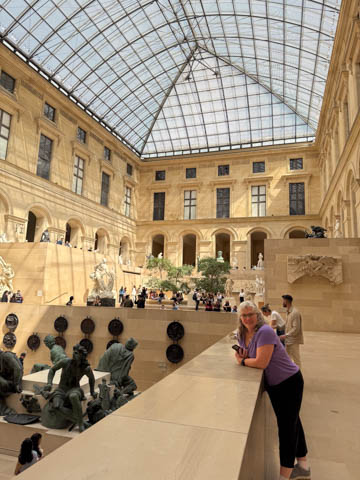
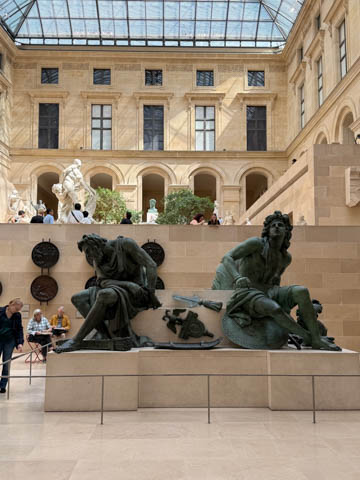
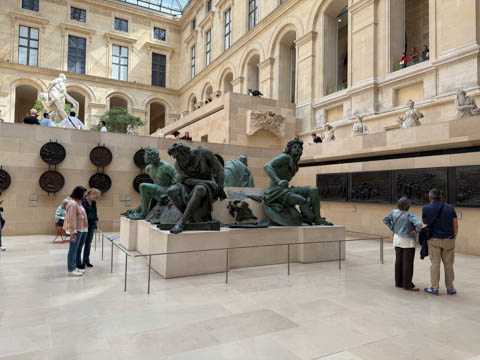
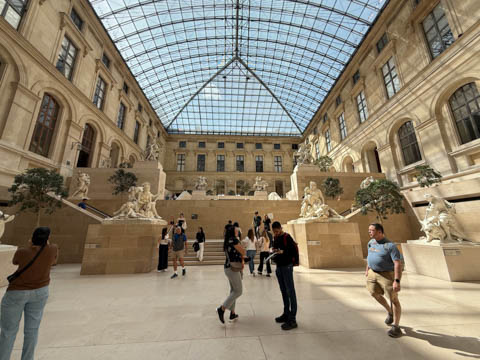
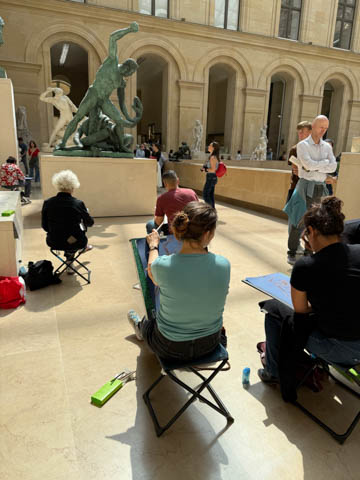
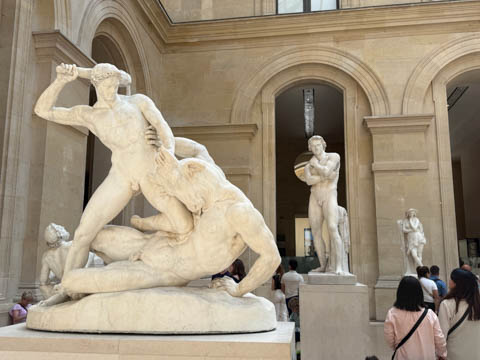
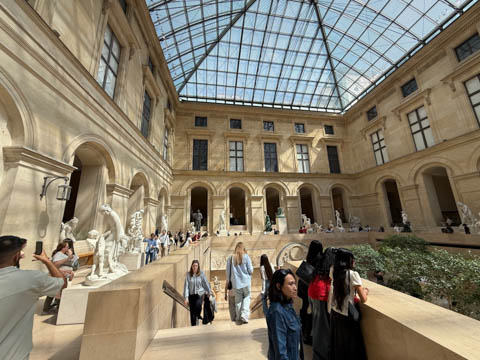
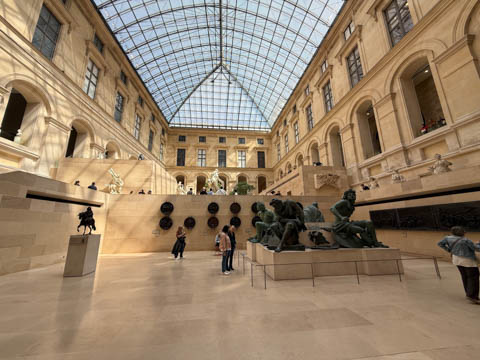
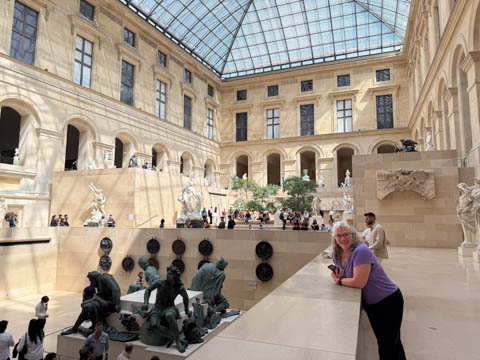
We then made out way downstairs to Level 0 and -1 which is a an open air atrium in the middle of the building holding some amazing statues.
Finally time to head out.
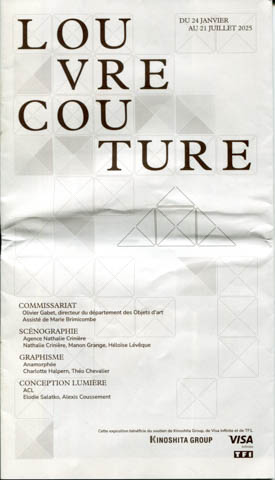
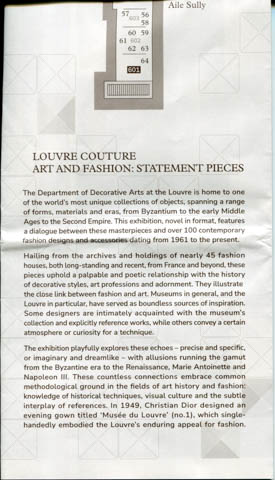
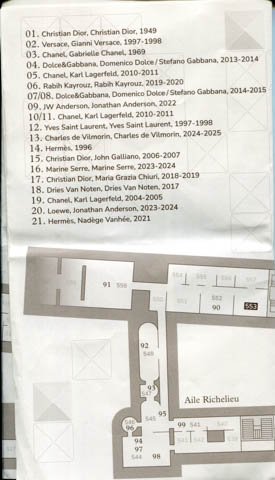
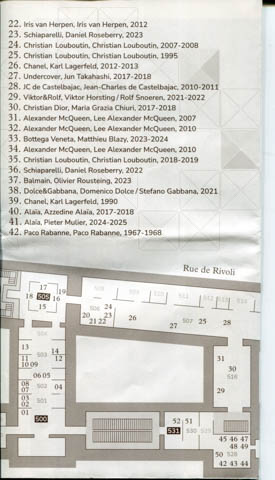
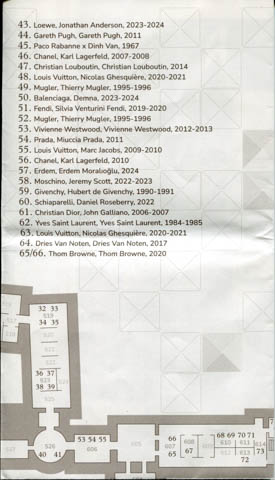
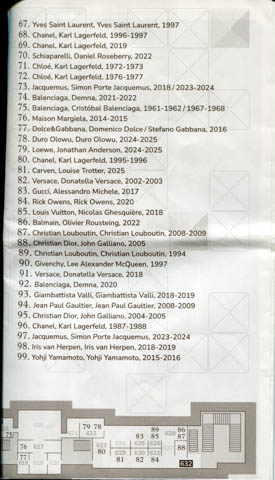
The museum had an art-and-fashion exhibit in progress.
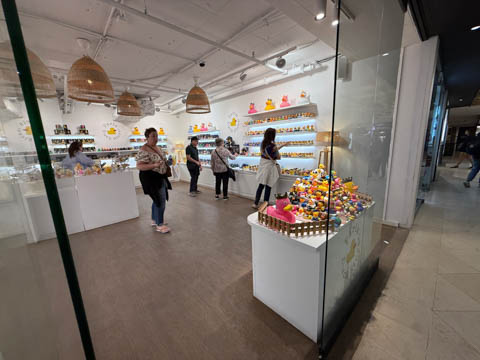
Found a rubber duck store in the attached mall which Cathy had to visit.
|
|
|