

|
|
Use these navigation links to move between the Year 2025 pages. Specific pages can be accessed at the bottom of this page
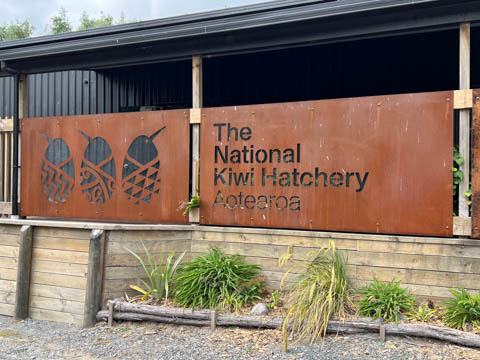
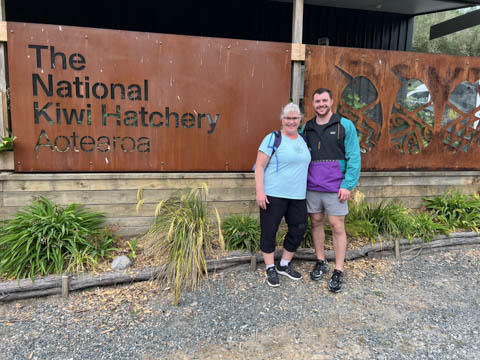
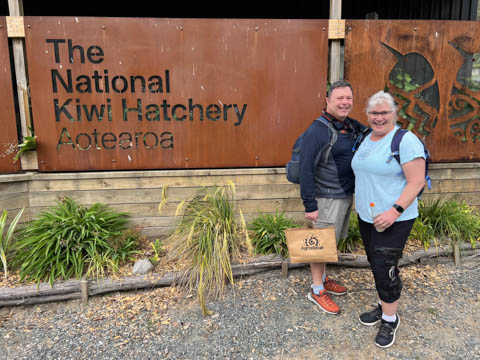
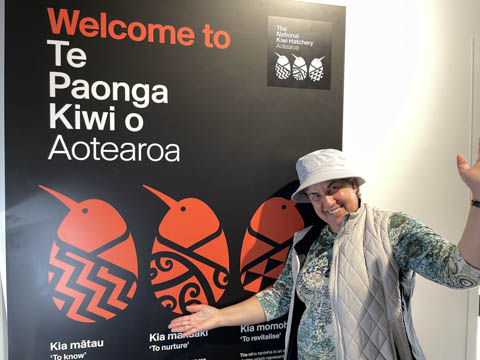
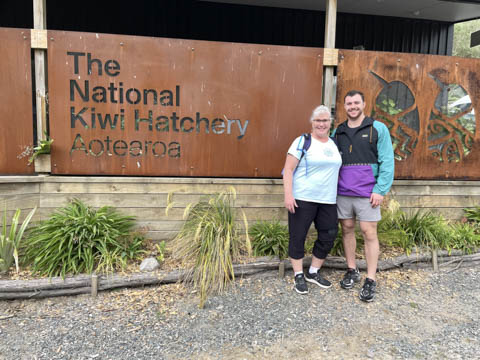
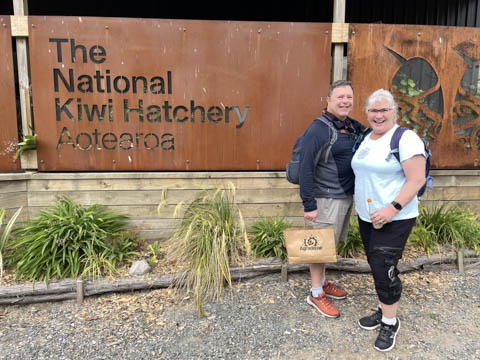
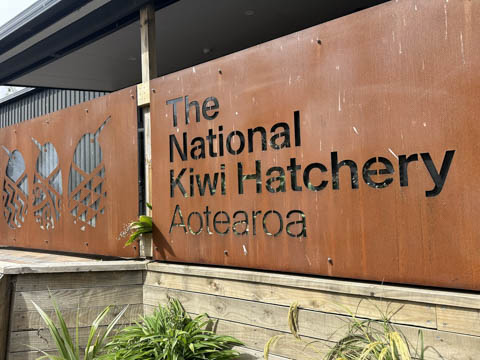
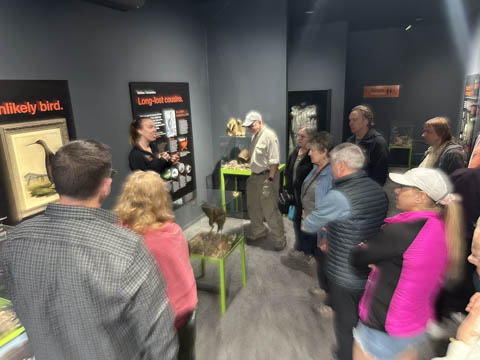
January 2025 (Part 06) New Zealand Trip - Day Five: Rotorua Adventures By Disney - Day Four: Save the Kiwis! Our first stop for the day was at the National Kiwi Hatchery, which is touted as New Zealand's leading location for kiwi husbandry, egg incubation, and chick reading since 2008, helping conserve these national icons. As kiwi's are nocturnal, the hatchery managed the lights to be nighttime inside so the birds would be awake when their human keepers were. This allowed us to see them, but also meant we weren't allowed to take pictures inside.
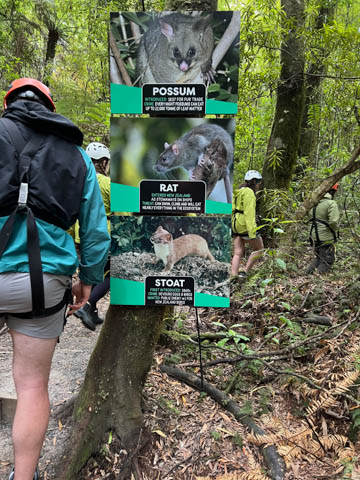
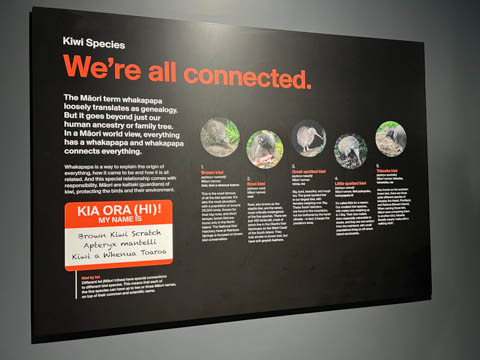
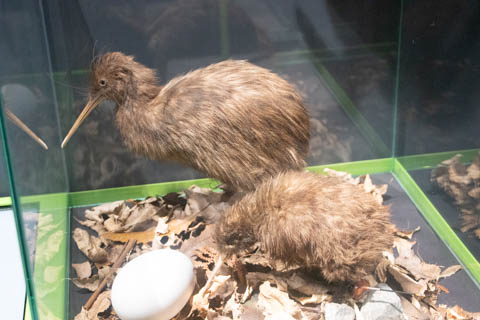
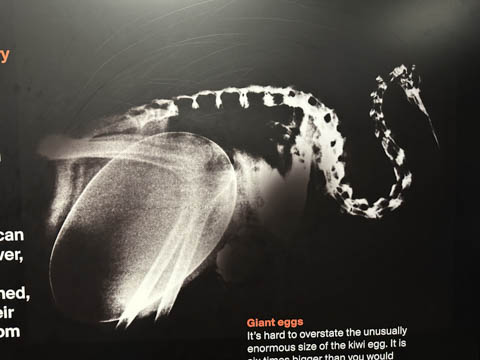
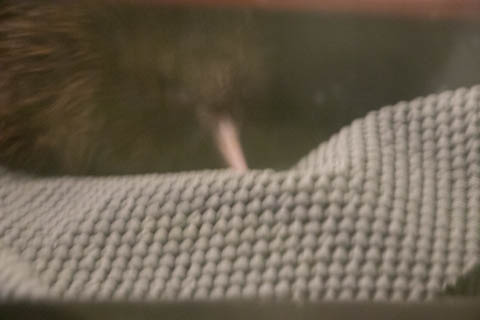
The Maori leadership wore robes made from kiwi feathers, which led to their nickname as Kiwis. As three native things are called kiwis (birds, people, and fruit), they always use "fruit" when they refer to kiwi fruit to ensure things aren't even more confusing (the fruit was named as it reminded someone of the small, brown, hairy Kiwi bird). They revered the kiwi (the bird) as a keeper of the forest, considering them taonga or a sacred treasure. The small bird is flightless, with only vestigial wings which are almost impossible to see under their fair-like feathers. The birds mate for life, living up to twenty years. Unfortunately, they are endangered, both due to habitat loss, the introduction of mammal and other predators, and their own difficulty reproducing. Their eggs are the largest compared to their body size of any bird (up to 20% of the female's weight). Only a small percentage of the eggs survive to hatching, and only a small percentage of the chicks survive to adulthood in the wild (as low as 5-10%). To help, they have created several sanctuaries to help find eggs (based on tracking devices which show the males staying in the same place for a several days or more) and bring them into a hatchery where they can be incubated and raised by foster birds. They have also created sanctuary areas where they trap or poison predators (rats, stoats, possums) and provide protection from dogs and cats to ensure a safer environment. As an extra challenge, each kiwi claims a large territory, making it hard to protect many birds in a reasonable area. There a five species of kiwi (little spotted kiwi, great spotted kiwi, rowi, tokoeka, and brown kiwi) and all are endemic to New Zealand, mostly preferring lowland and coastland forests across both islands. As we couldn't take pictures inside, here is a diorama showing what they look like.
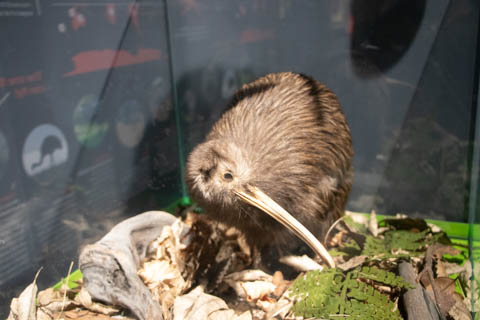
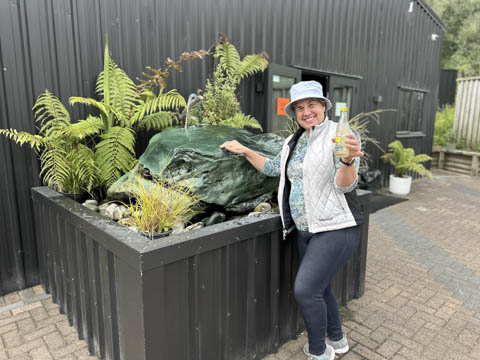
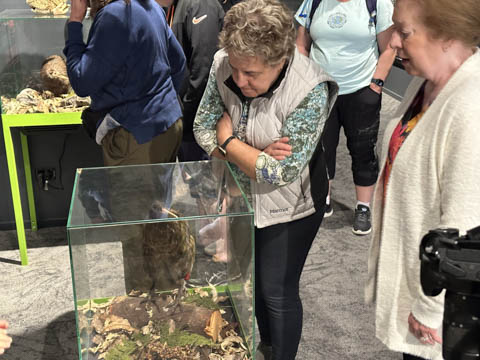
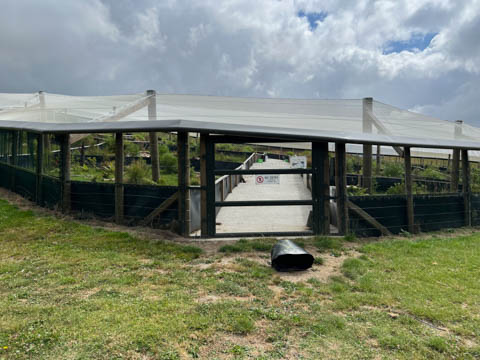
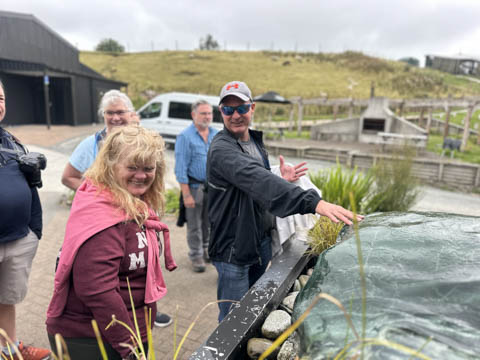
Here are a couple pictures from one of the outdoor habitats where we could sort of get an image.
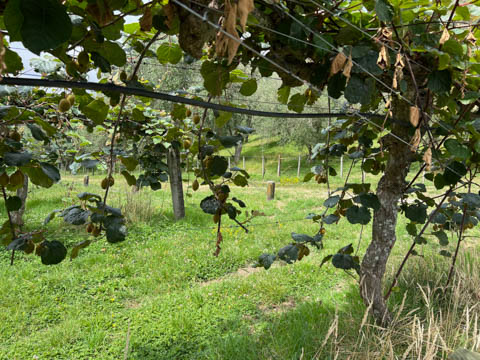
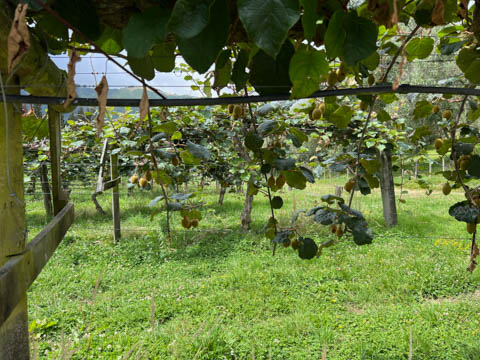
There was a kiwi fruit orchard next to the parking lot. Looked enough like grape vines that none of us noticed it until a guide pointed it out.
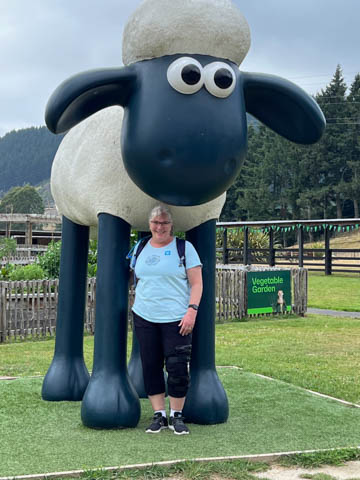
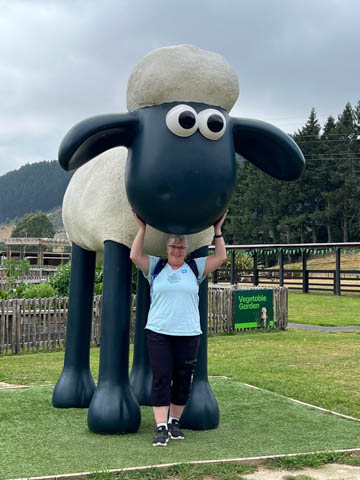
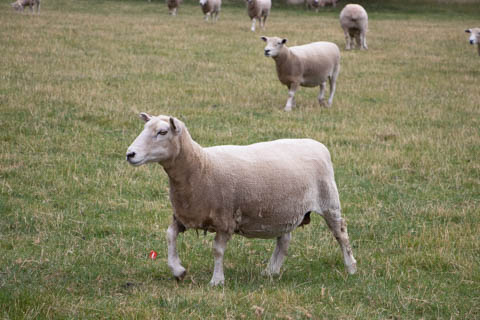
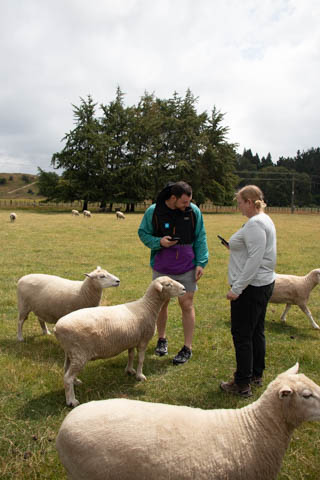
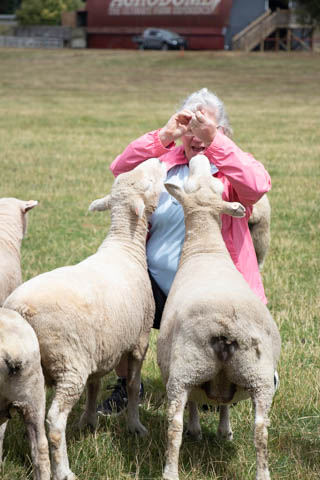
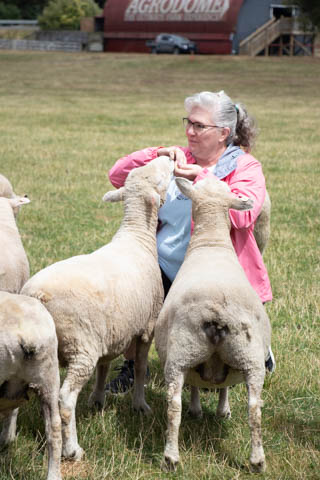
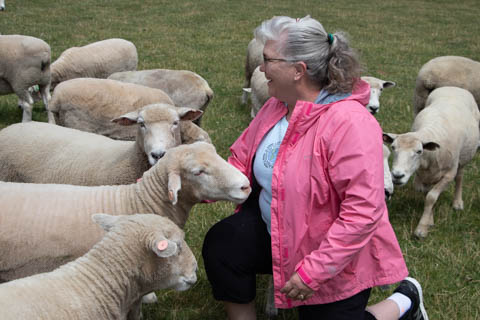
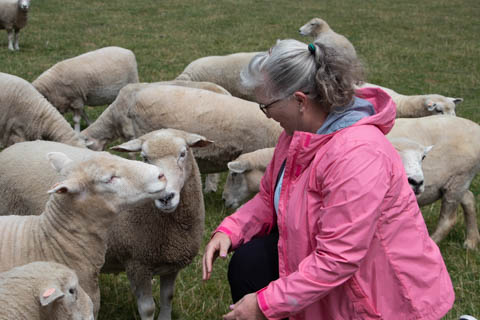
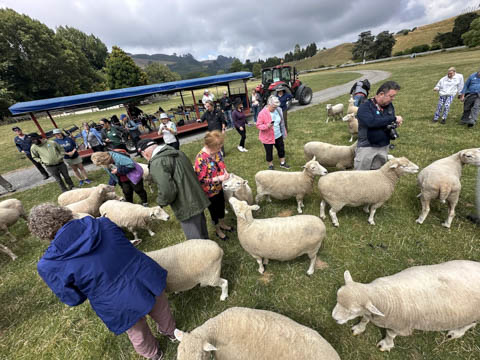
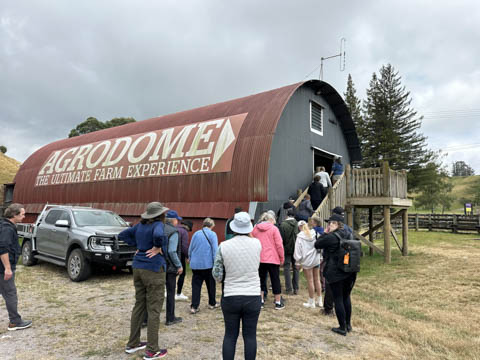
Our next stop was around the bend at the Agrodome, a sheep farm set up to provide tours. It had 350 acres of farmland for different pastures or paddocks. Apparently any visitor must visit a sheep farm and eat a lot of lamb during their stay. There are more sheep than people in New Zealand, with approximately 5 sheep for every person.
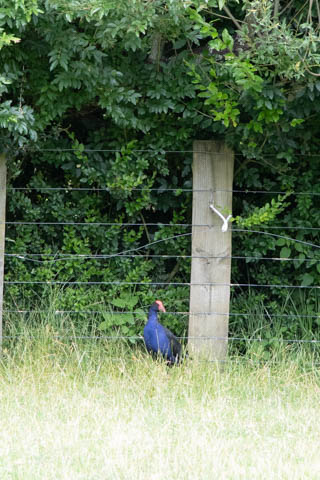
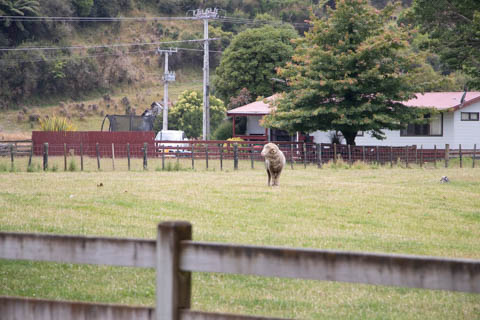
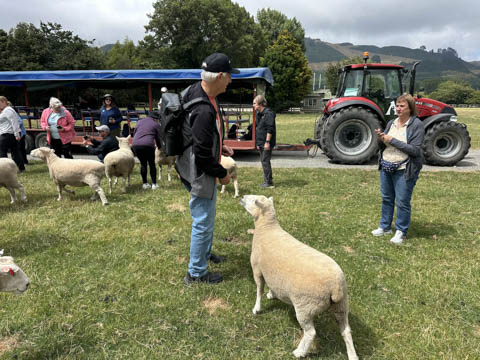
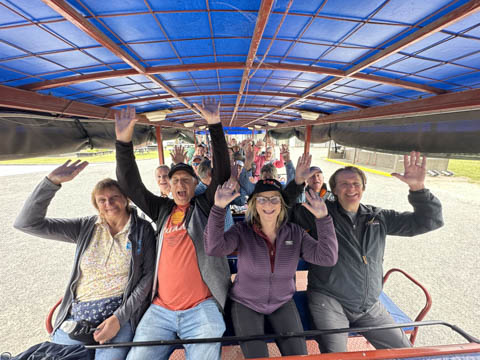
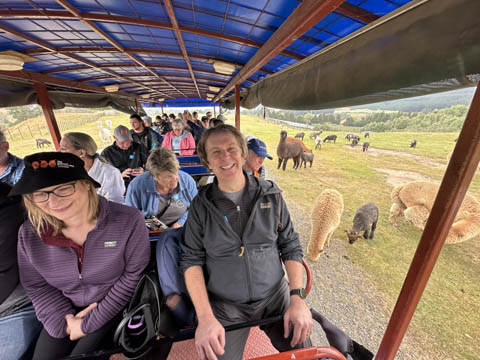
We boarded a small train pulled by a tractor and headed out toward a couple pastures. There was a big ram isolated in the first pasture. There was also an interesting looking duck that was eyeing us.
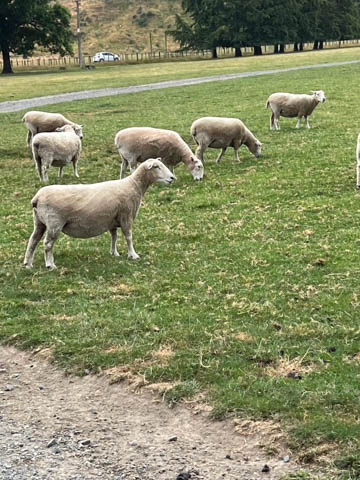
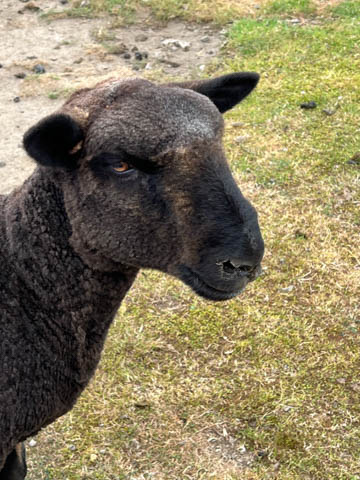
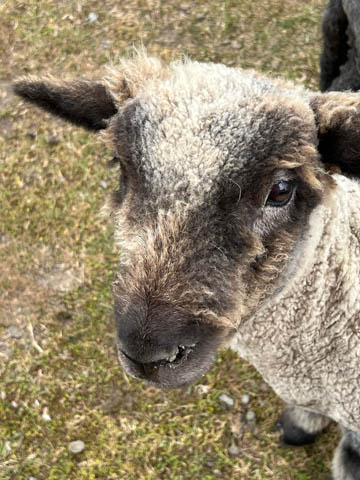
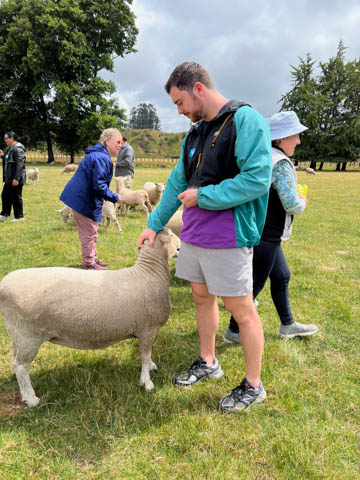
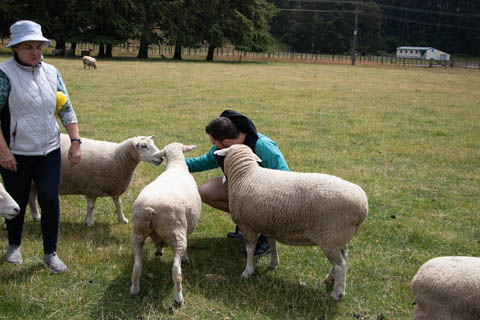
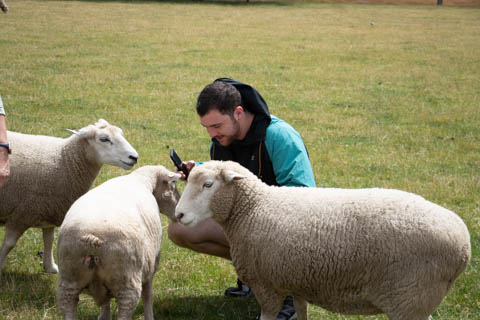
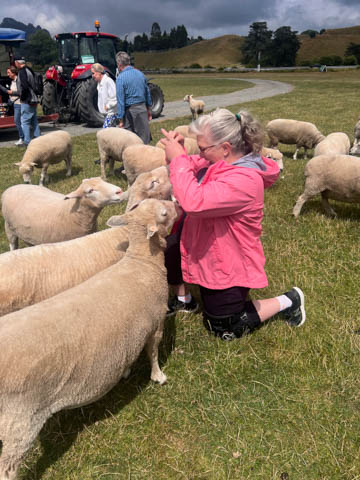
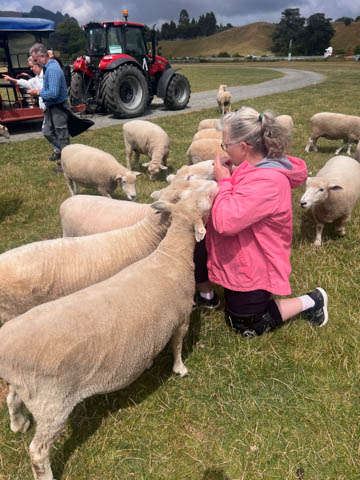
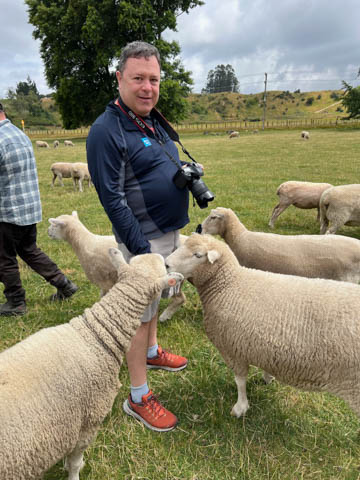
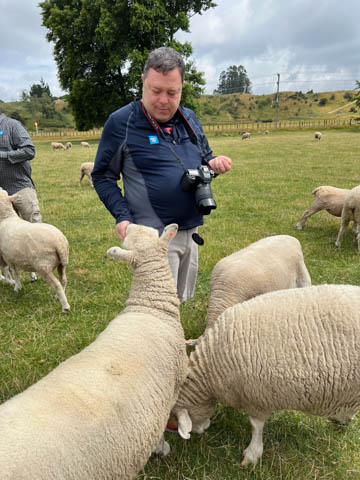
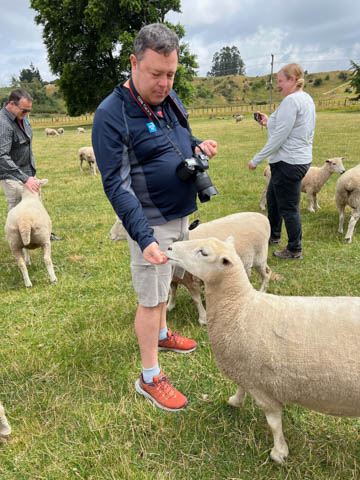
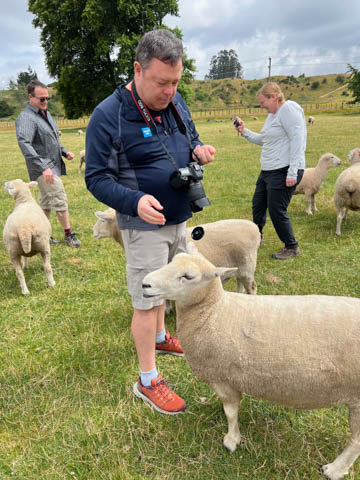
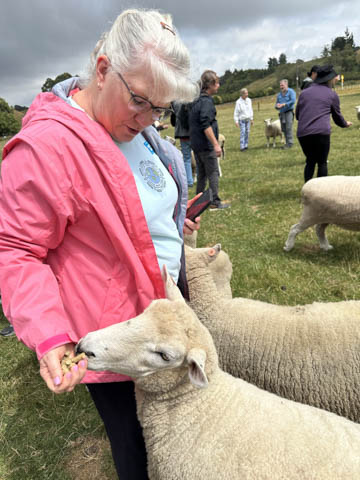
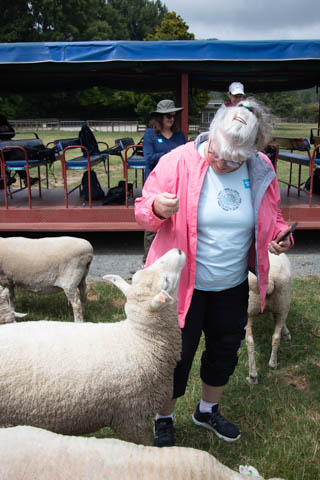
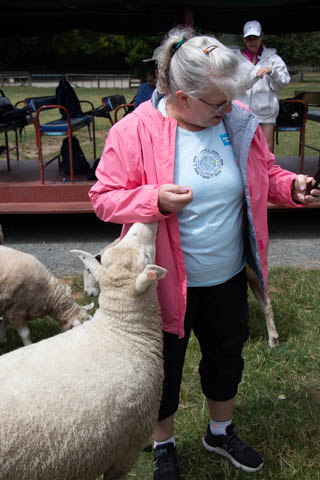
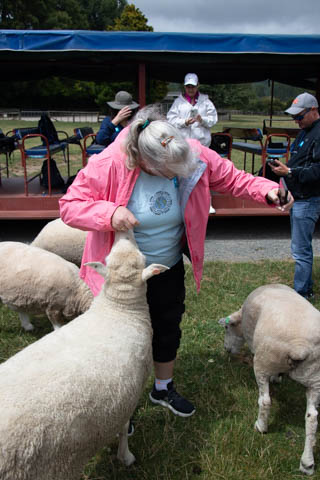
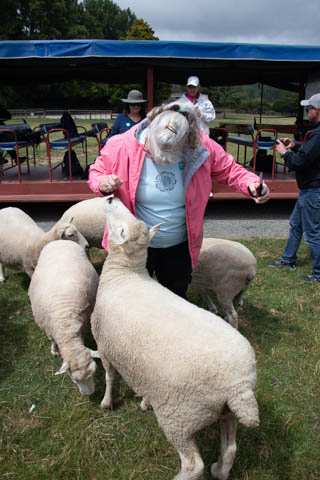
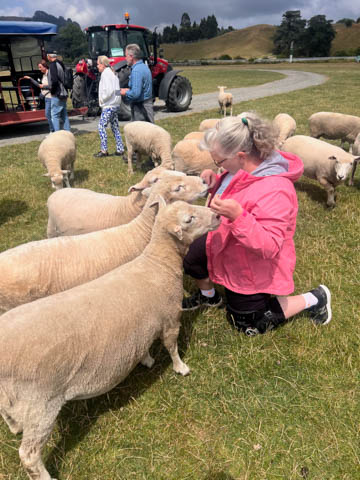
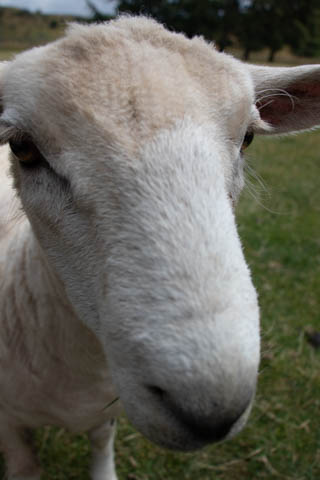
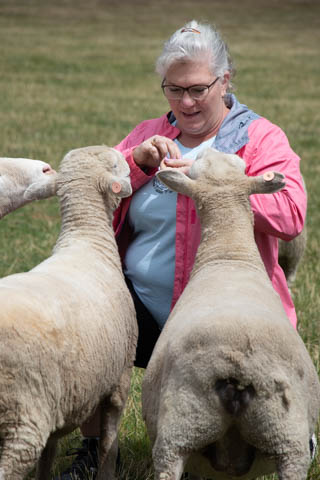
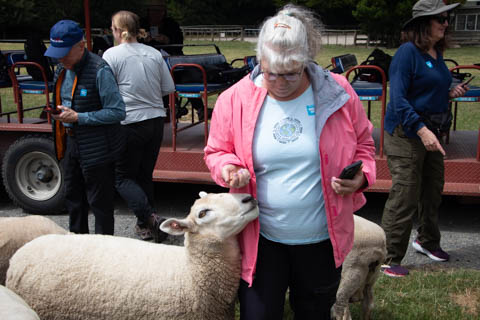
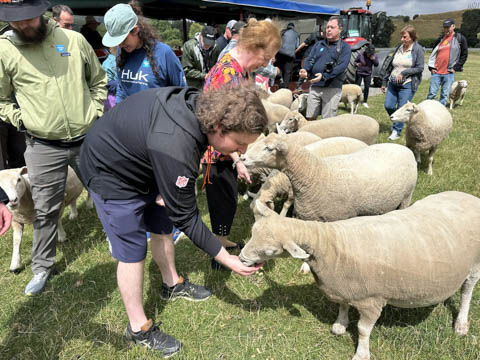
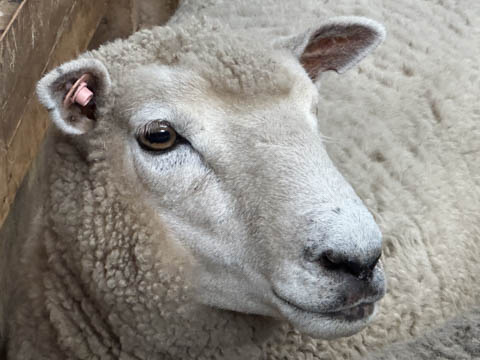
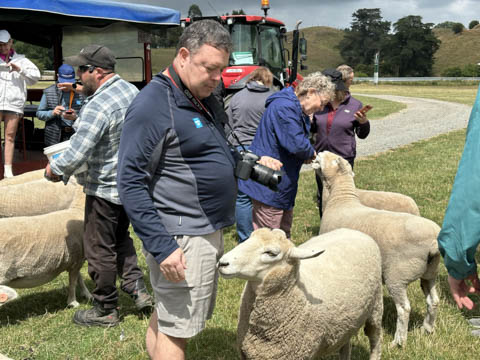
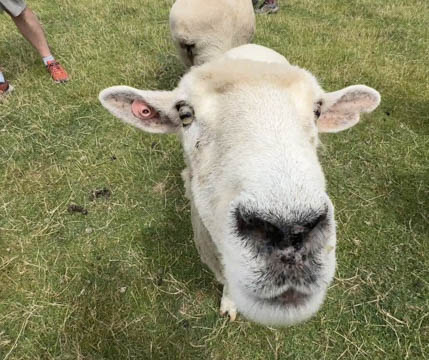
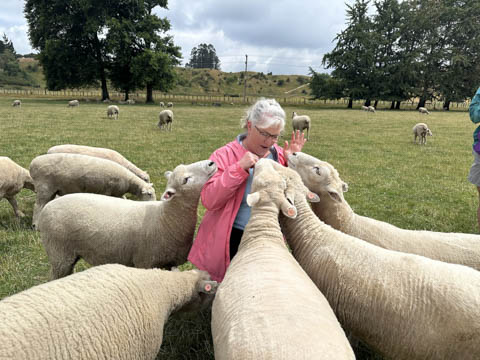
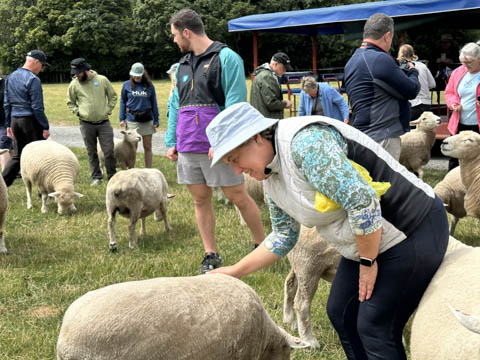
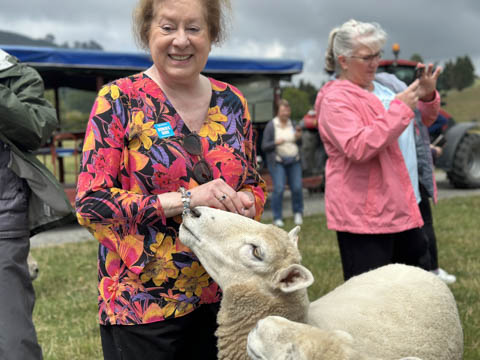
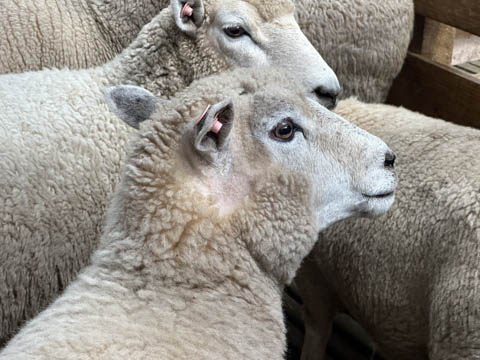
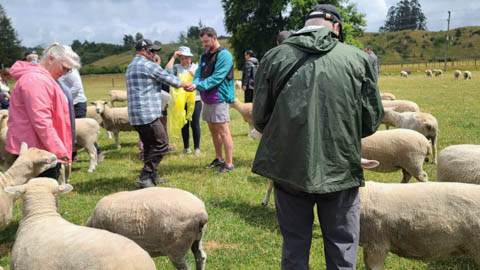
A number of sheep started headed toward the trucks once we entered a pasture. There were also a number of cute lambs in the herd.
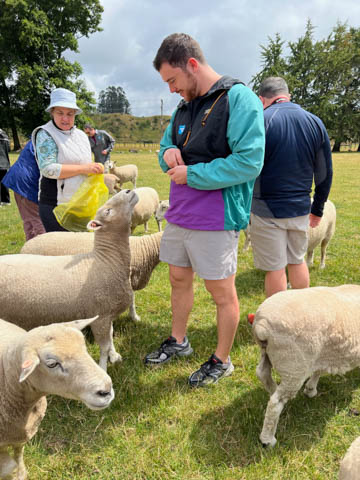
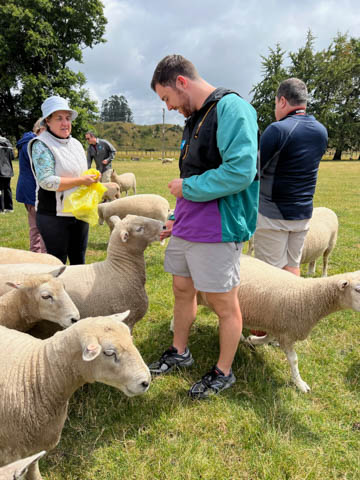
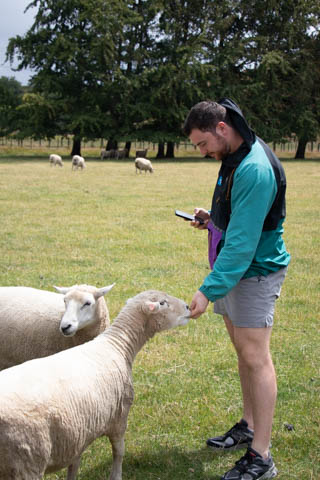
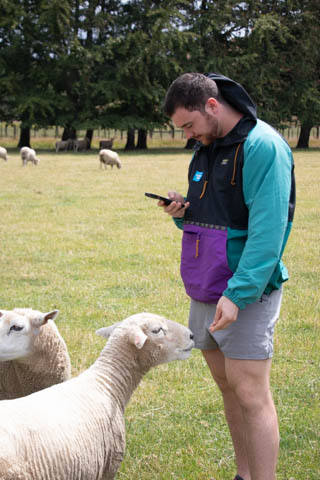
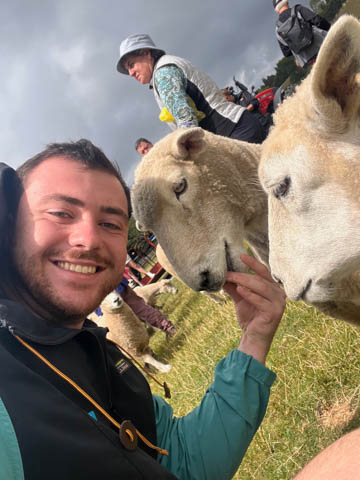
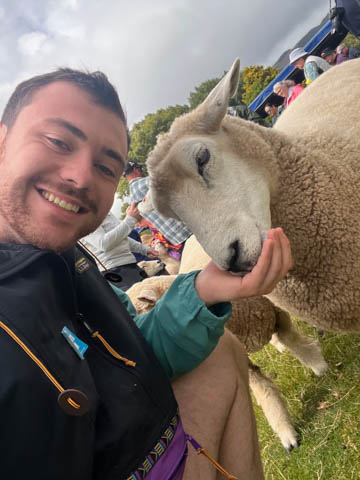
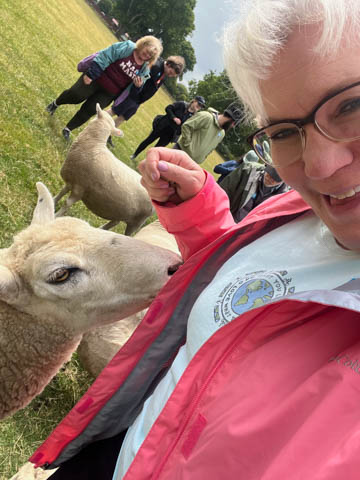
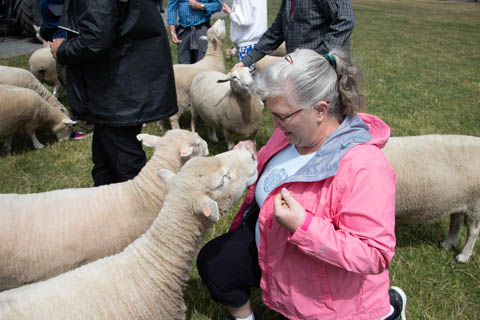
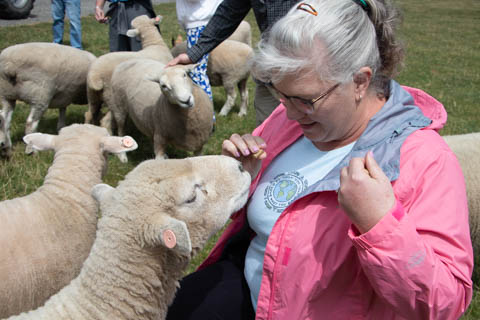
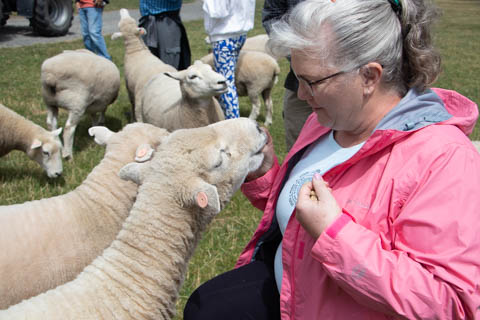
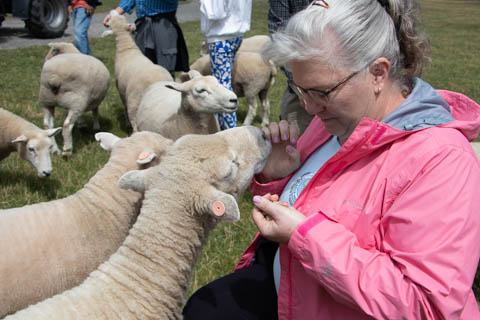
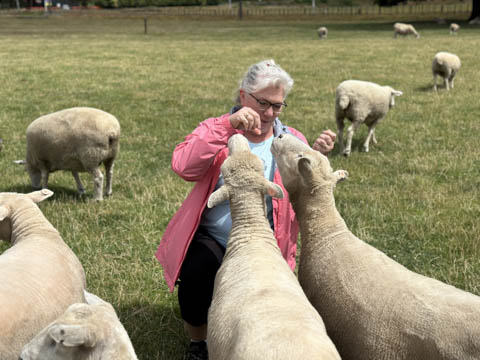
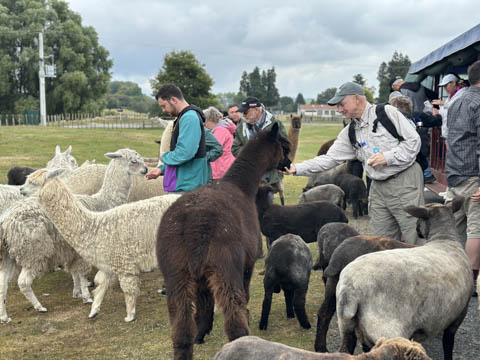
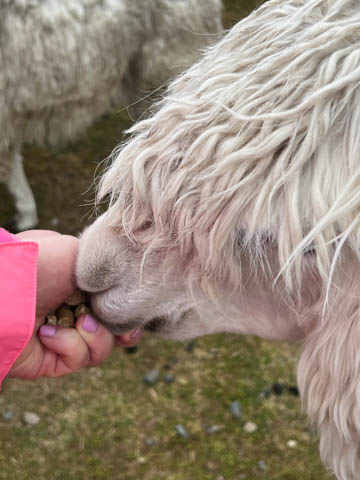
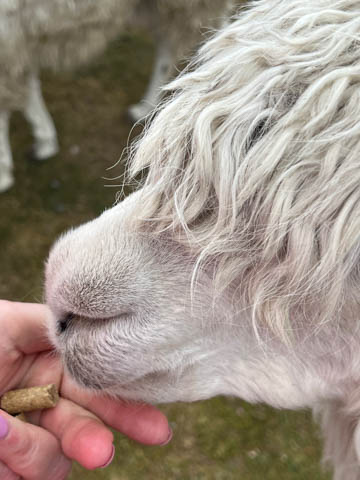
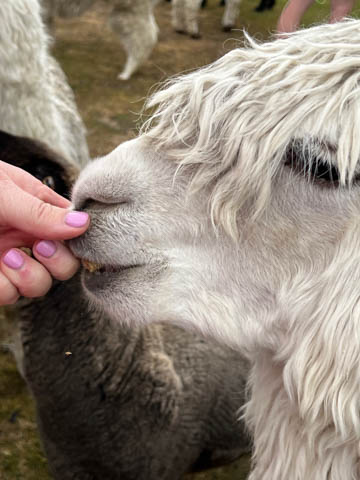
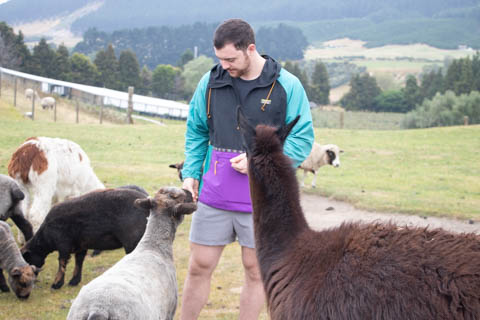
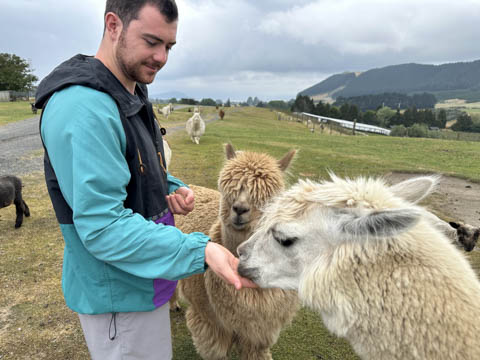
The driver/guide talked about the animals and gave each of us some food pellets to feed them.
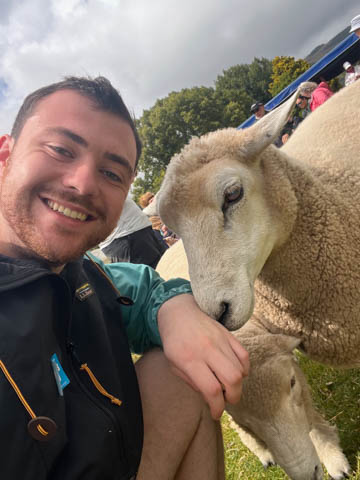
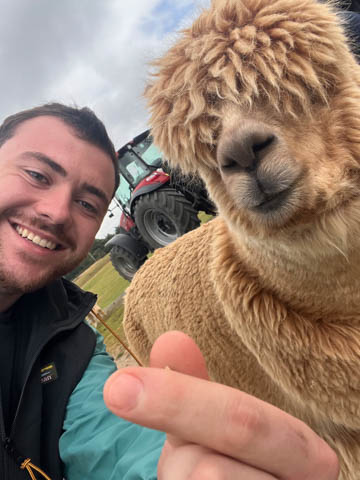
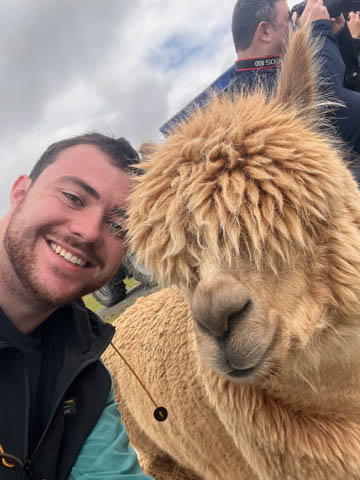
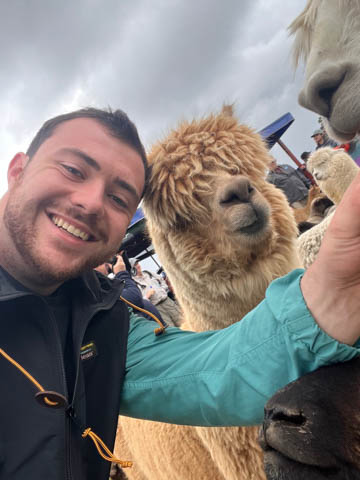
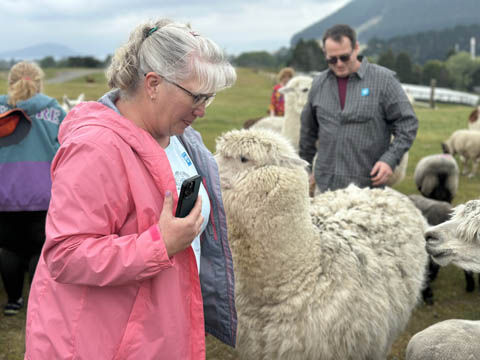
Here are the selfies Andy was taking above
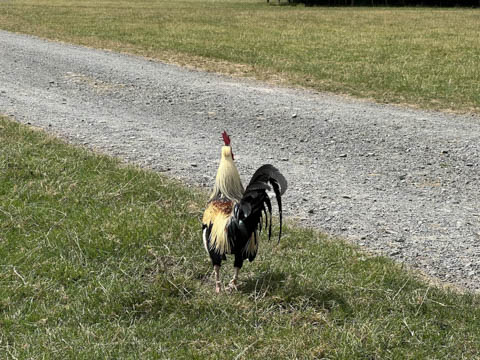
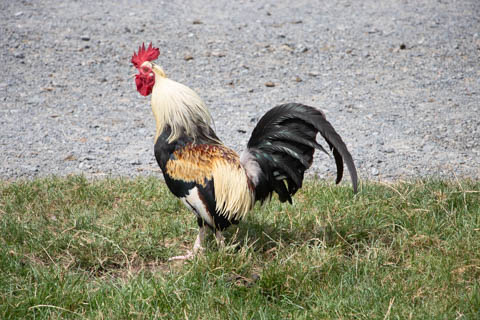
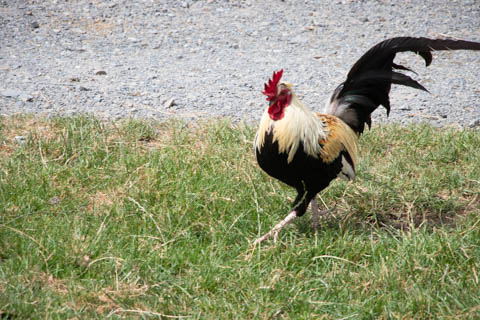
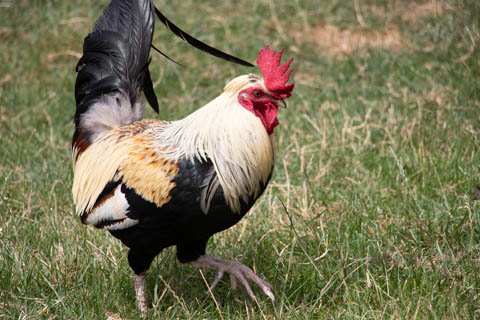
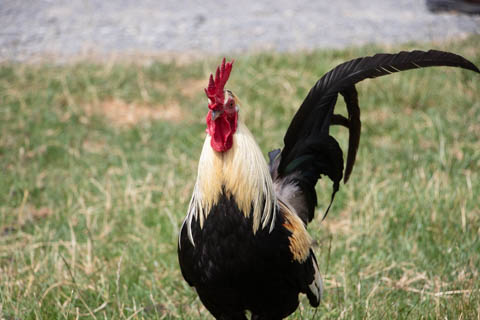
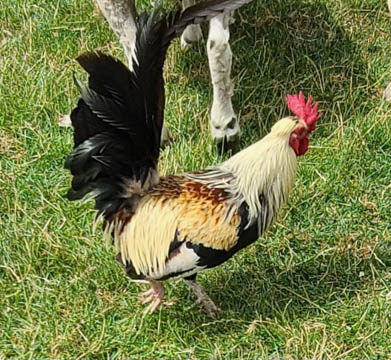
A number of chickens also showed up, including a rooster strutting his stuff.
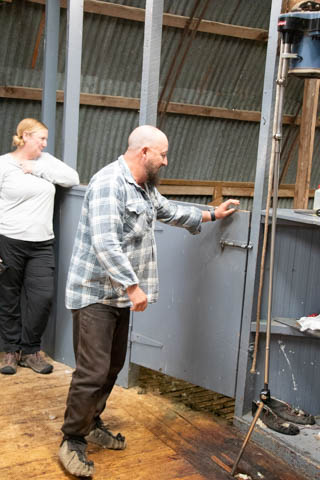
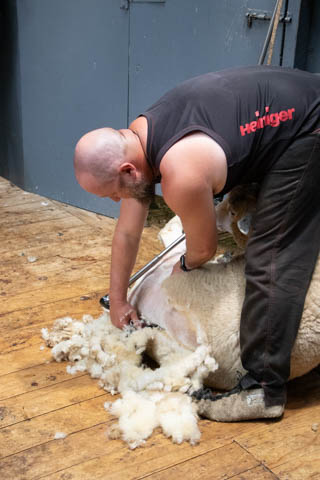
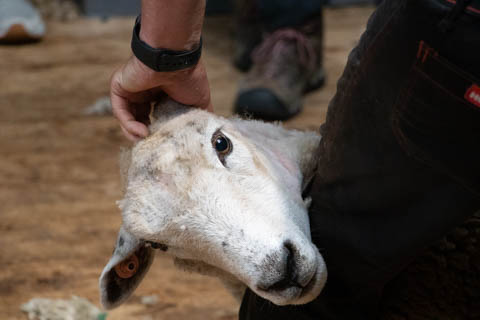
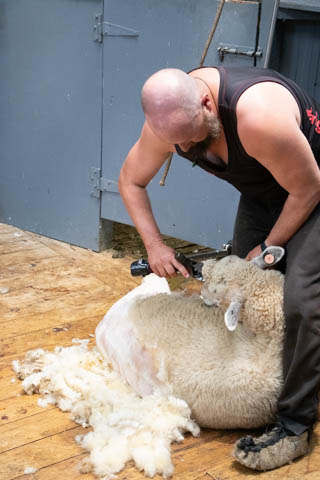
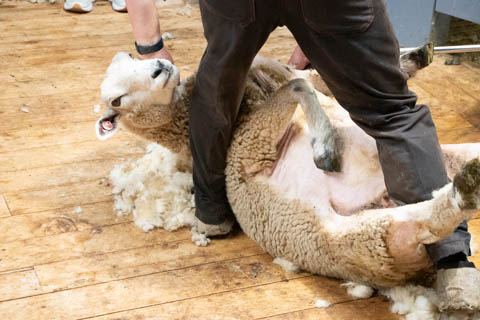
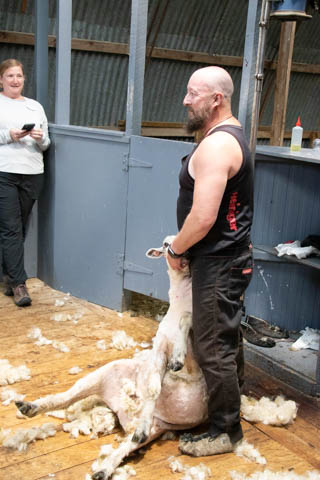
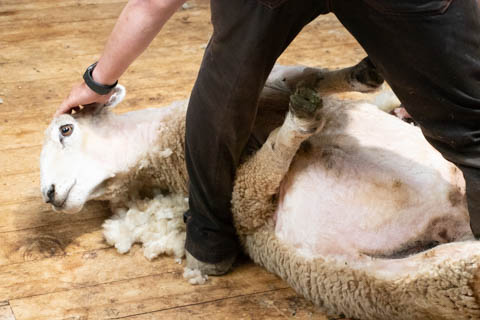
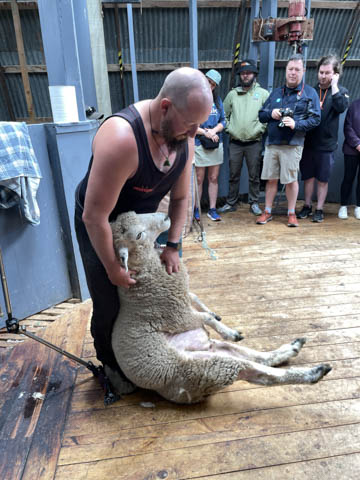
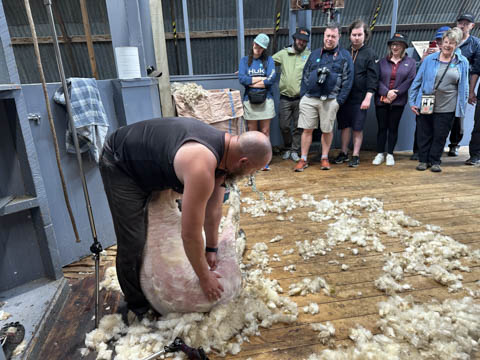
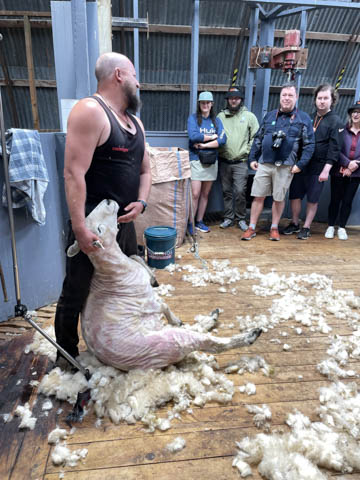
We then made our way to a nearby barn and headed to the sheering loft.
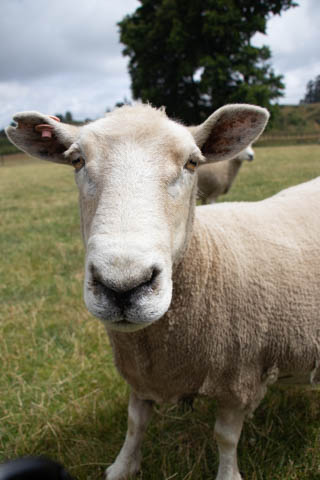
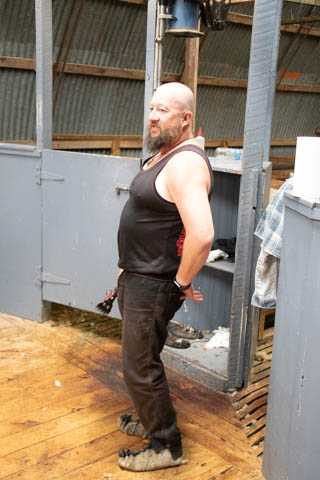
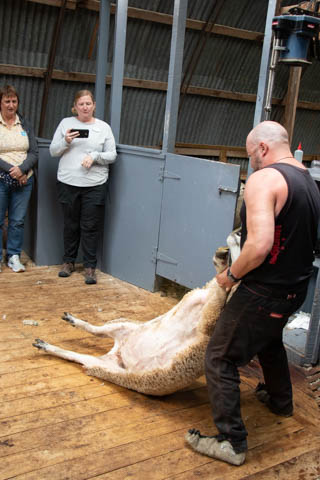
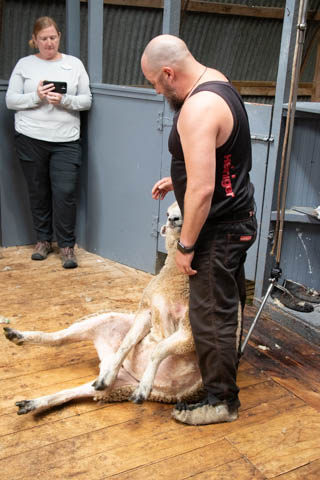
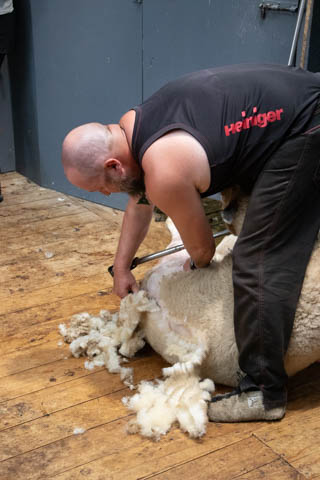
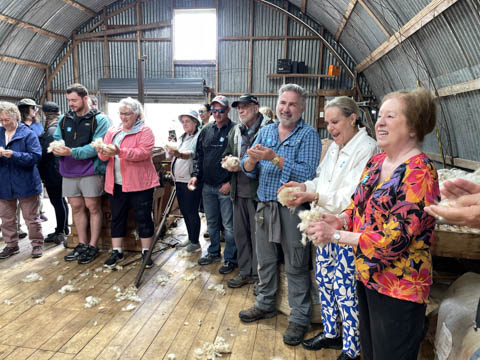
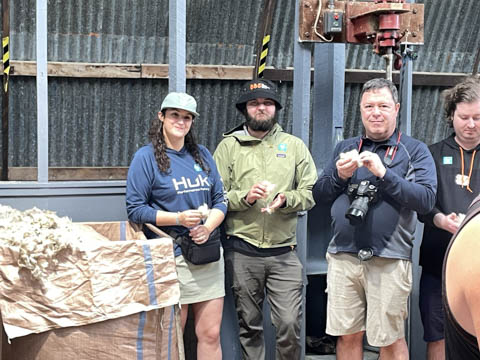
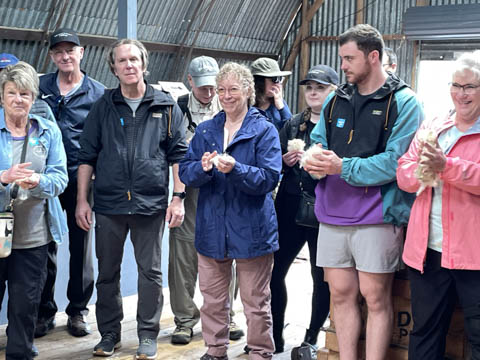
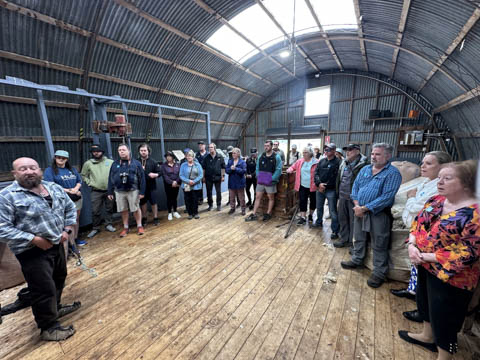
There, our guide Sean put on some different shoes made from felt. They would not slip if the floor got wet while preventing him from stepping on and hurting any sheep. He took about two minutes to sheer the sheep, then laughed saying the record is just over thirty seconds set at a recent competition.
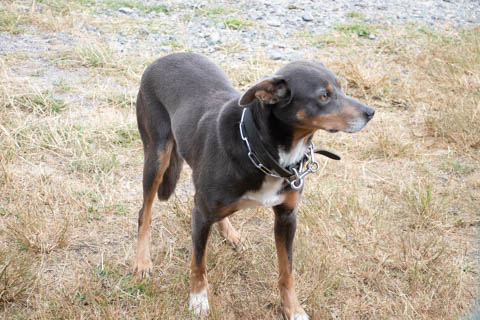
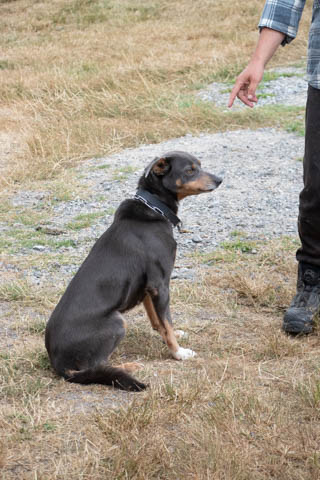
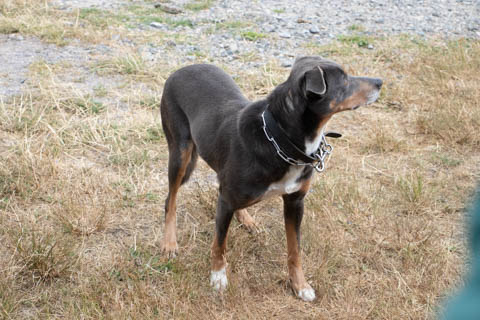
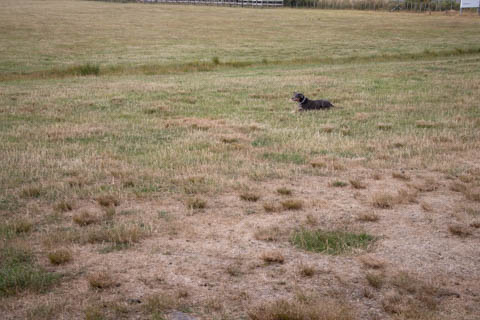
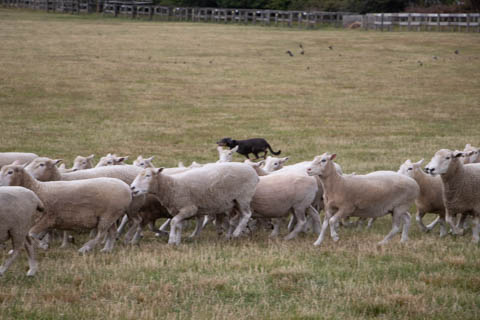
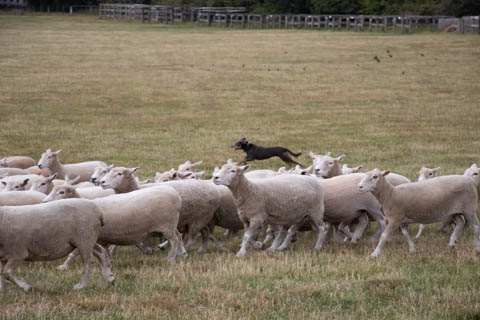
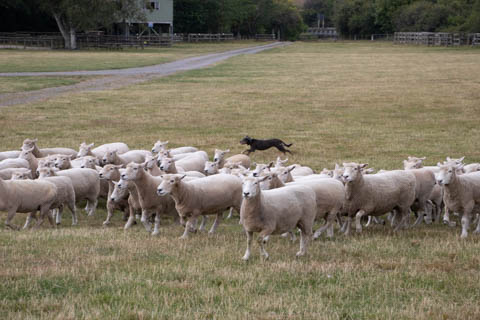
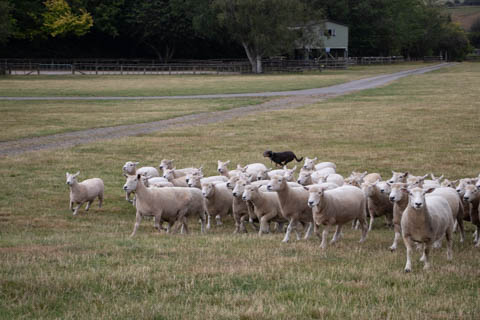
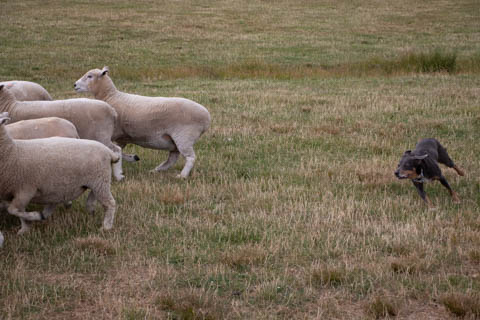
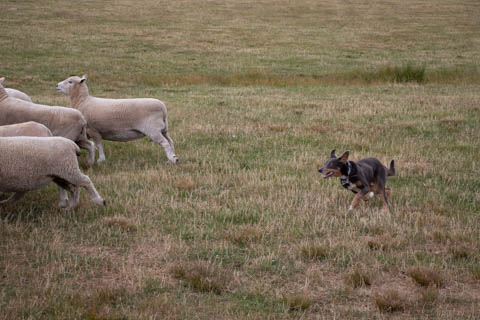
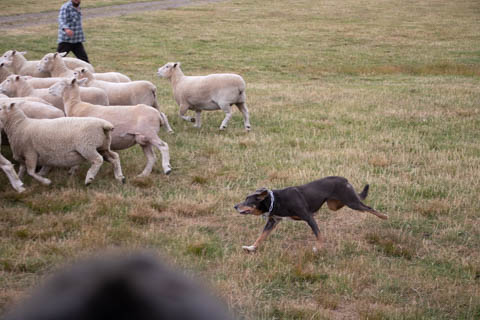
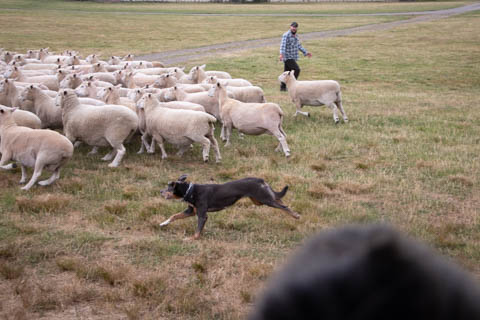
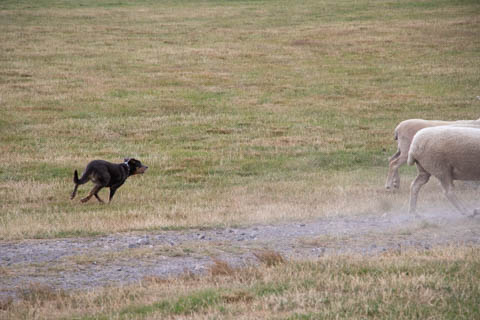
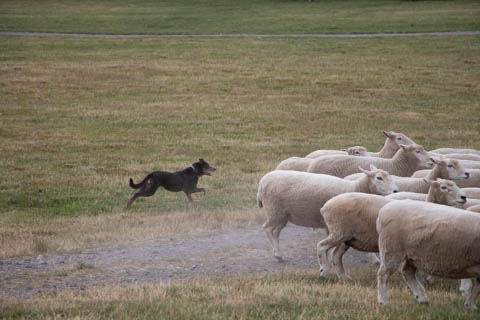
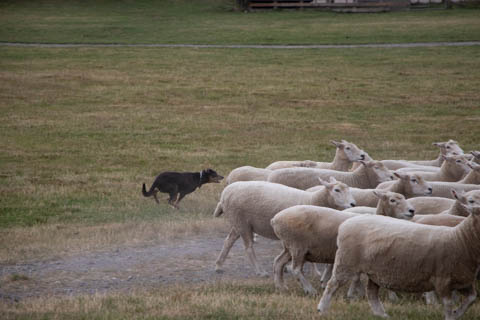
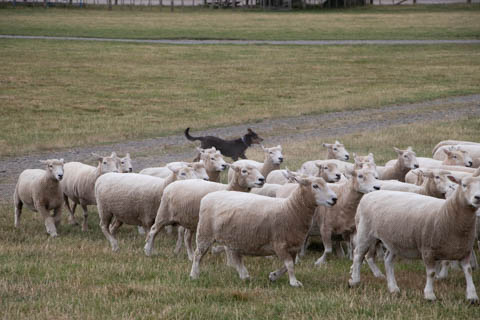
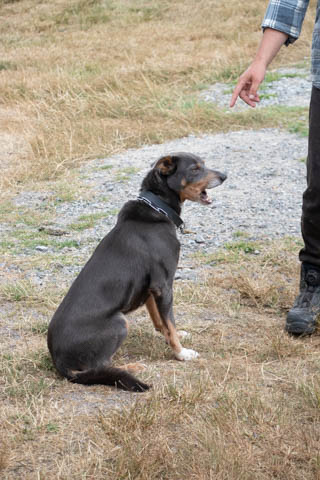
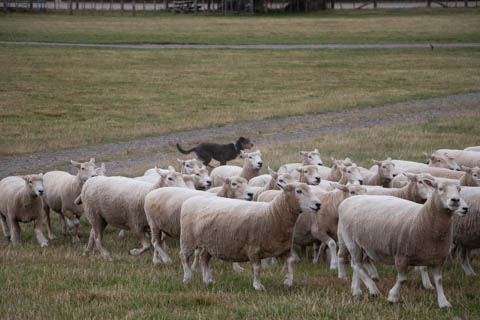
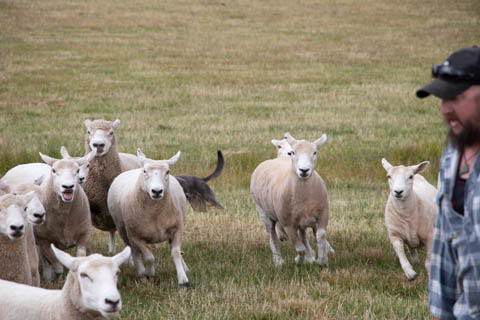
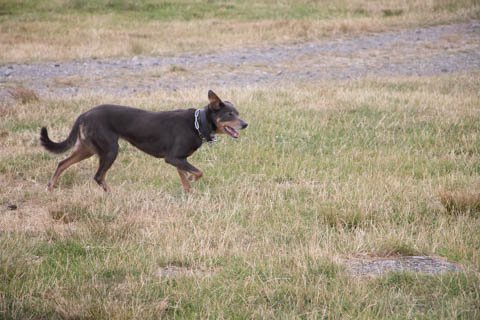
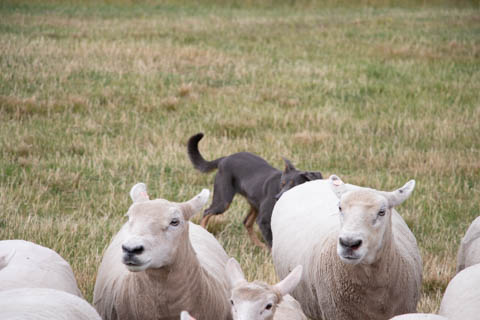
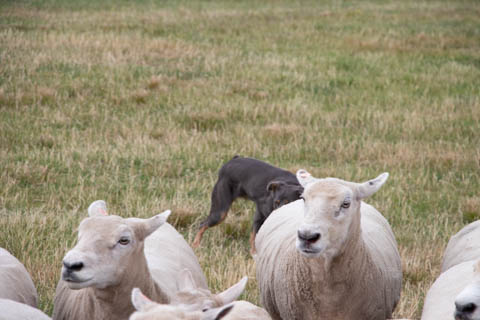
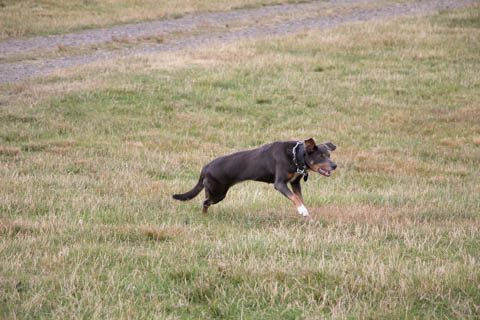
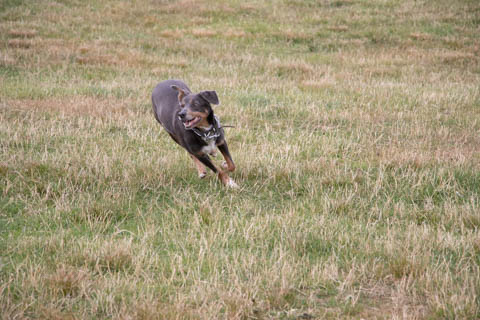
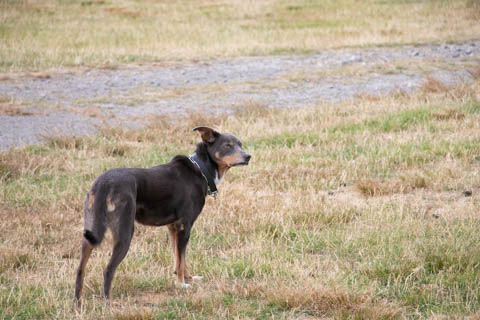
Once back outside, Sean introduced us to his dog, Paige, then put her to work herding. She was pretty excited.
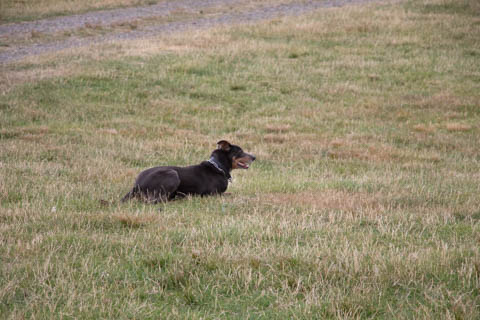
And they're back. Tongue hanging out and all. Eager to go again, which was her next task.
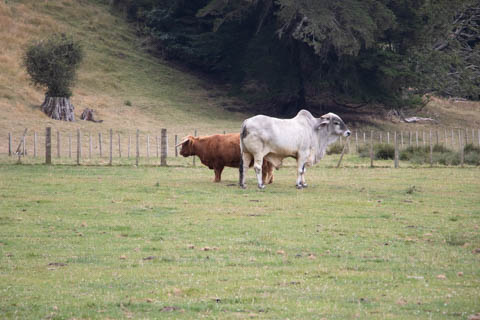
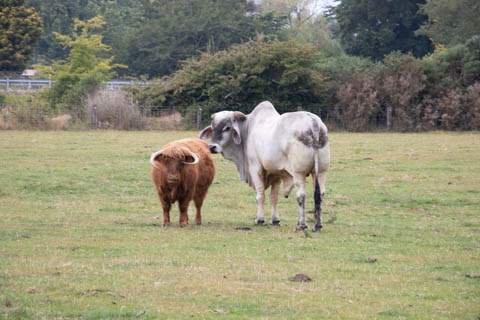
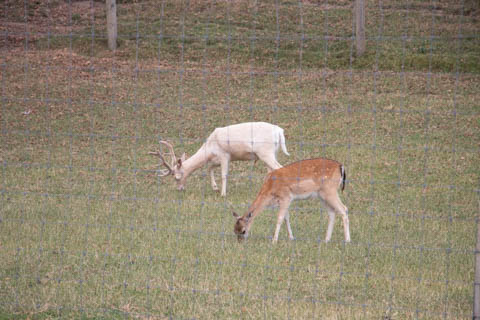
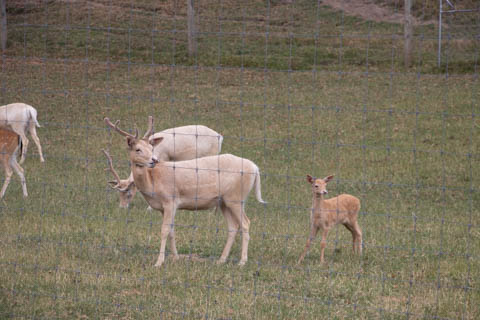
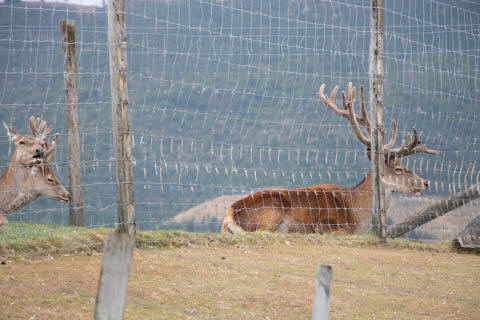
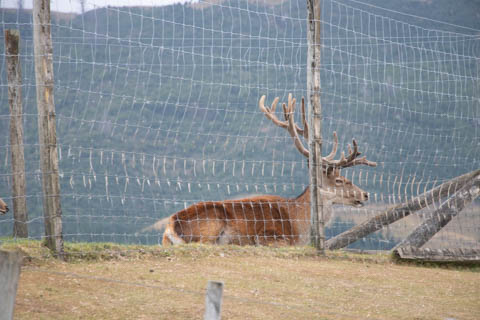
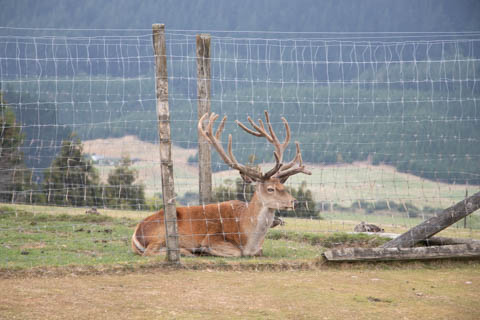
We reluctantly loaded back up and headed on. The next area had a Highland cow (both bull and cow have horns) along with a Brahman cow. We also learned that some New Zealanders also raised deer as there was a small herd there also.
They also had a cool reindeer.
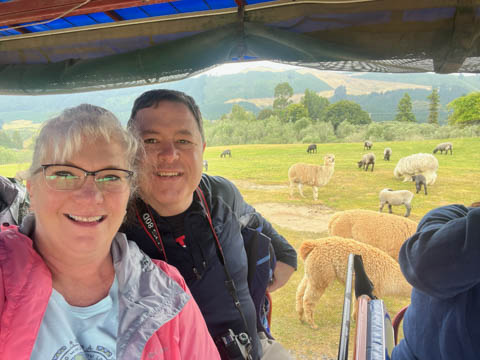
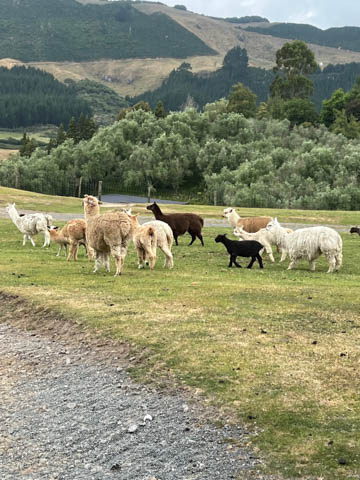
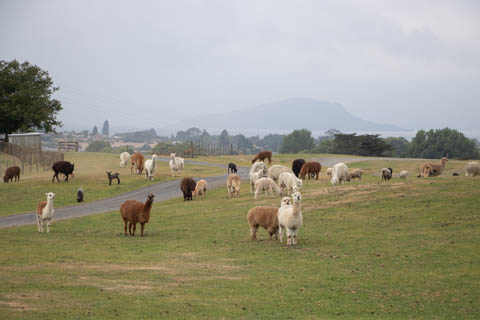
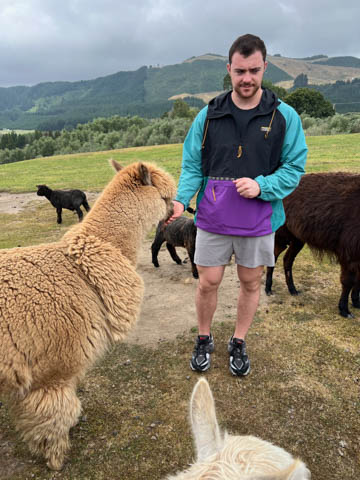
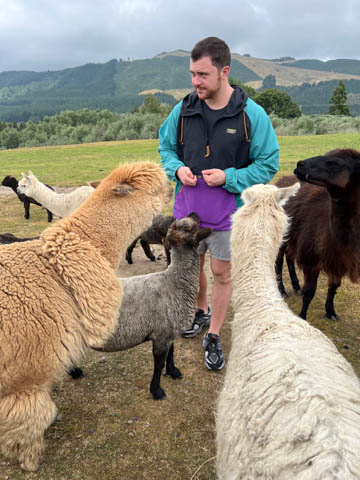
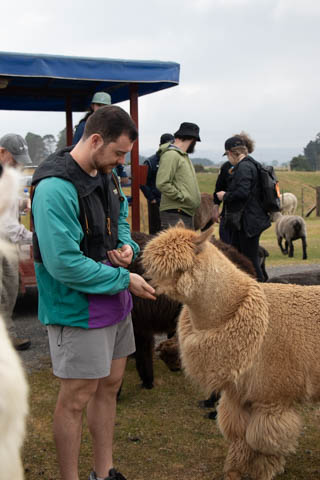
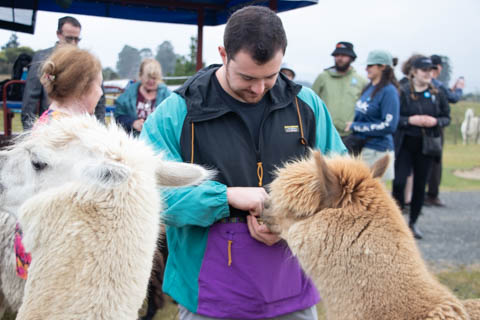
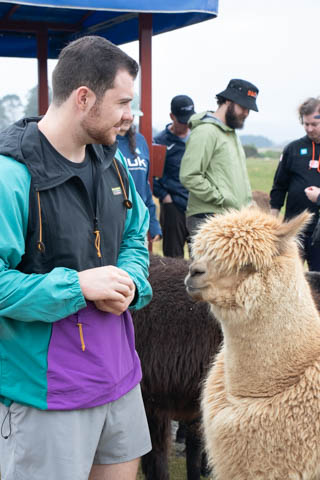
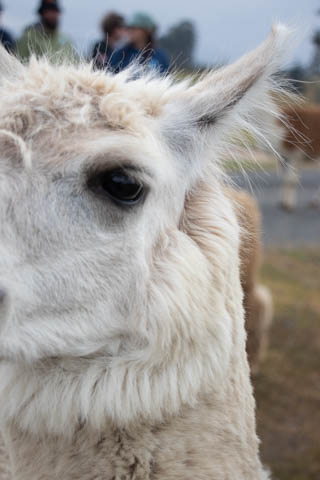
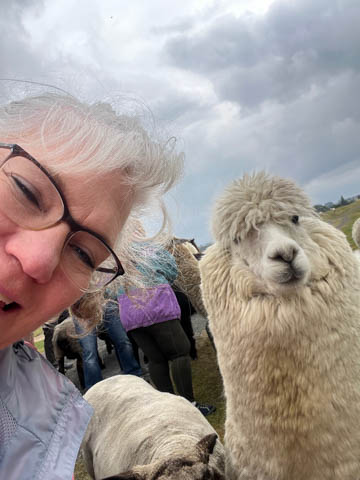
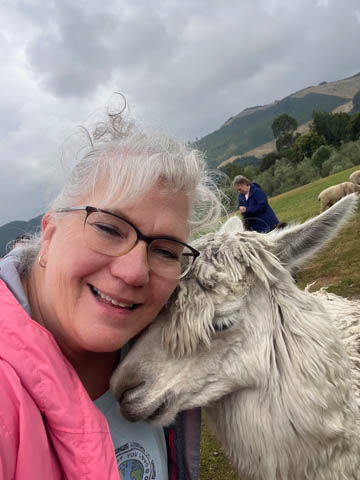
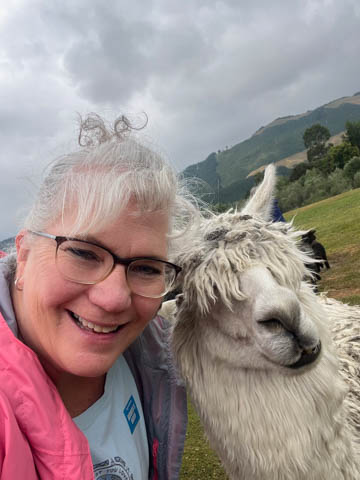
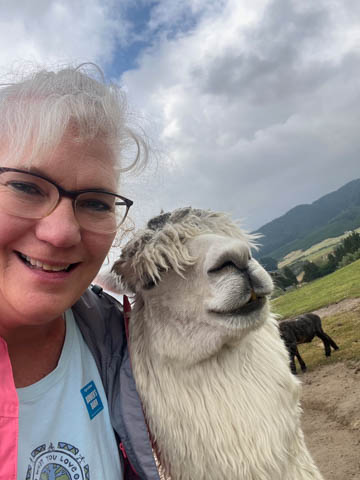
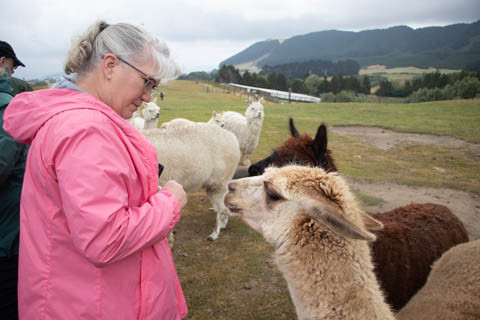
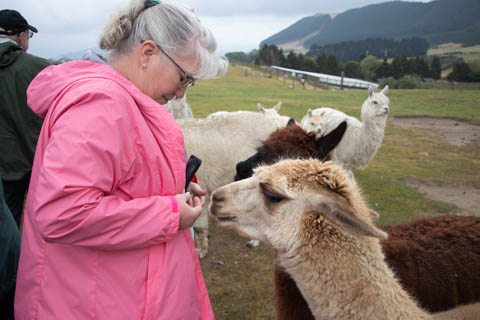
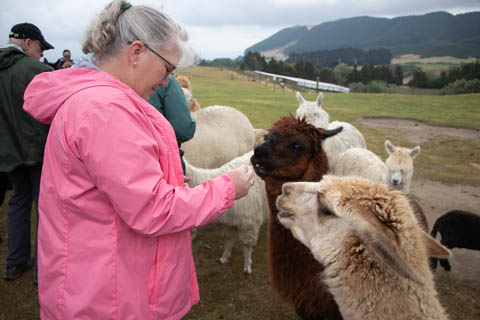
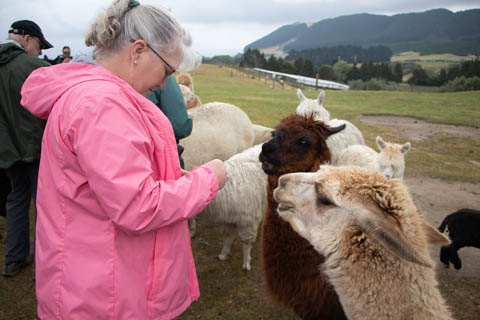
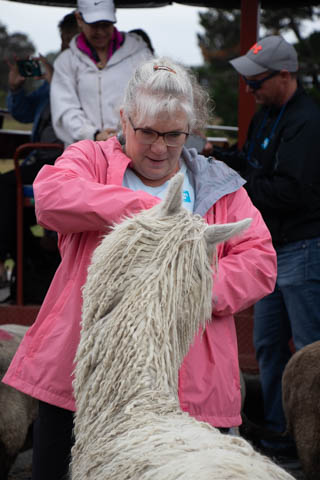
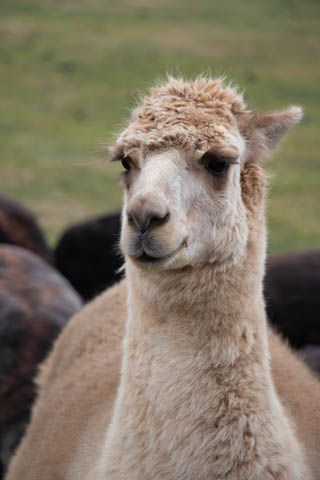
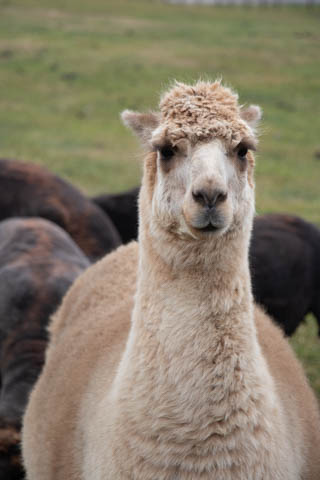
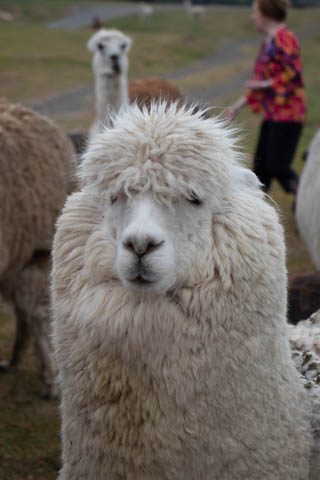
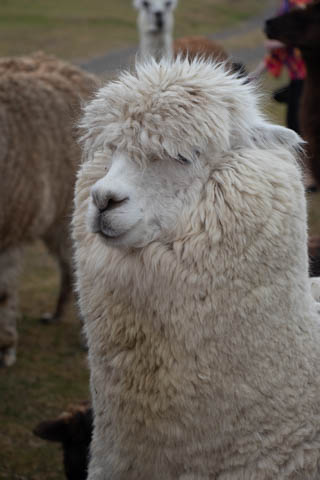
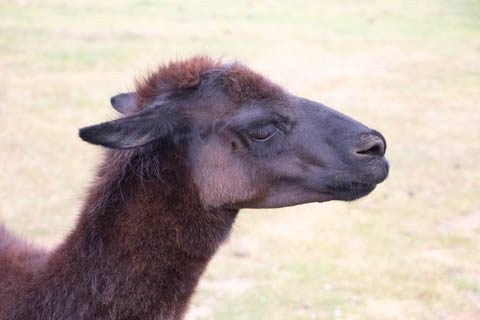
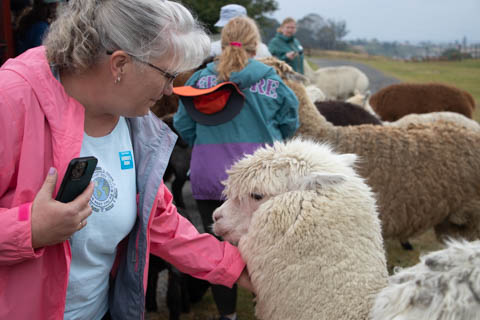
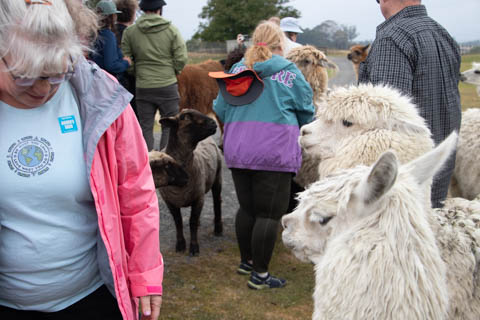
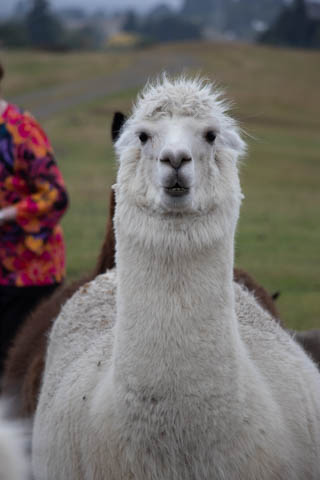
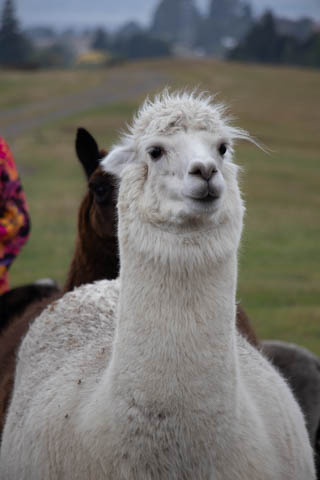
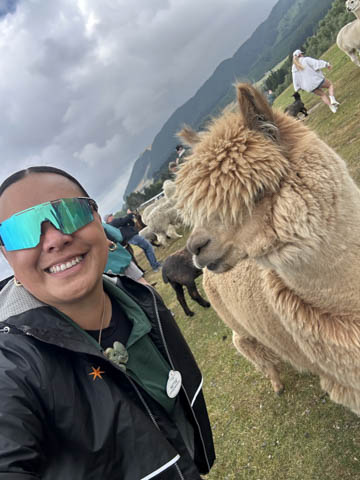
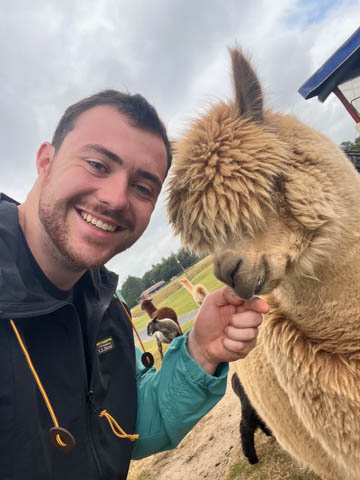
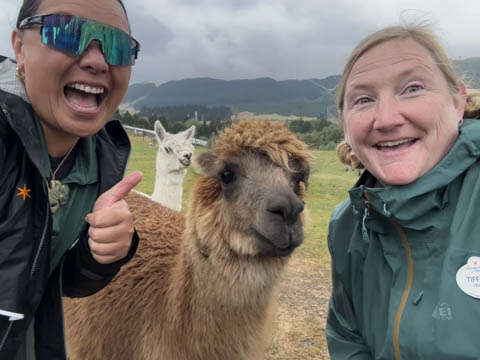
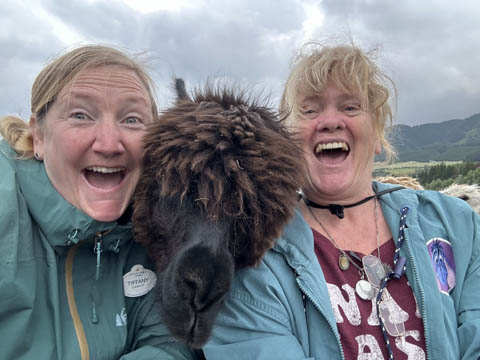
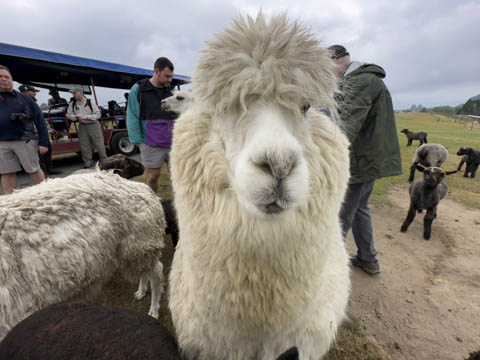
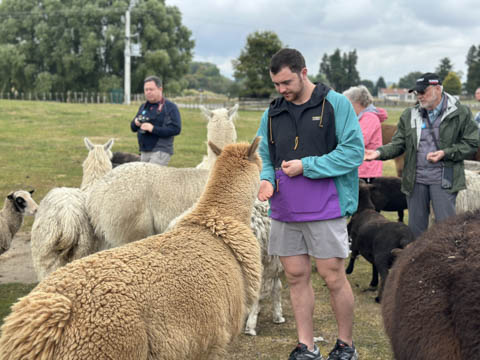
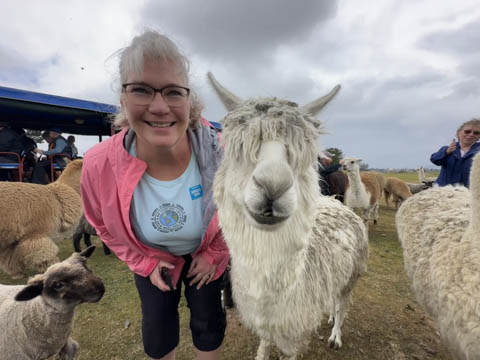
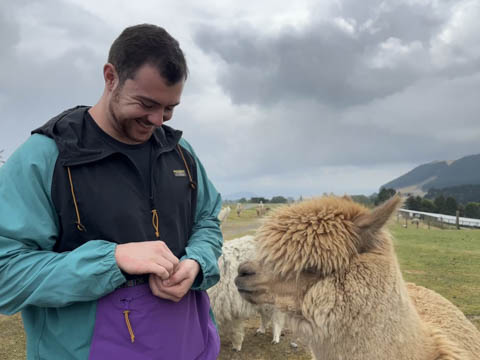
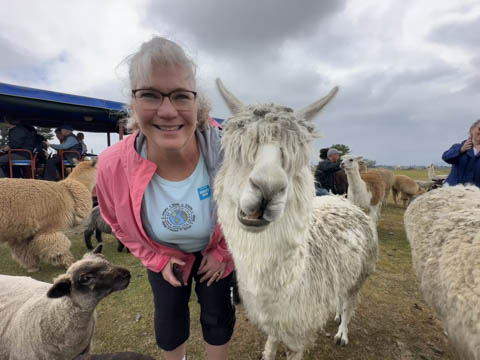
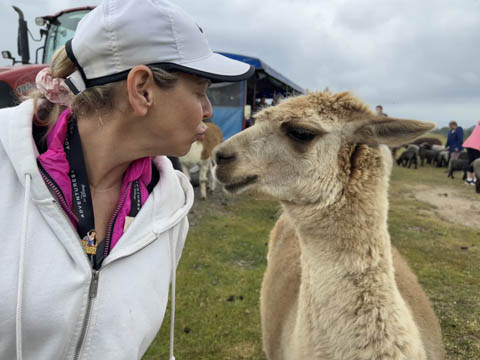
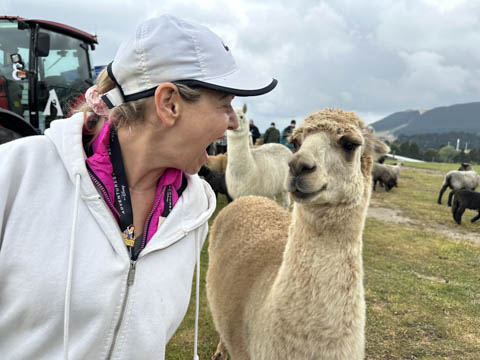
The next pasture had alpacas and llamas, which we learned could be distinguished as the alpacas has shorter necks.
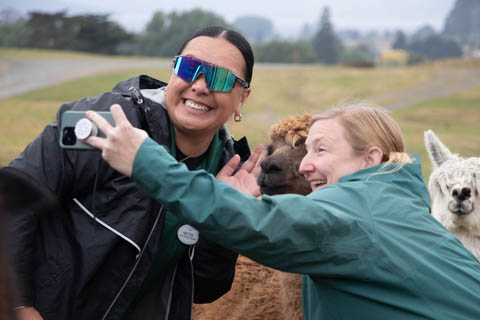
Even Andy had to take a couple selfies.
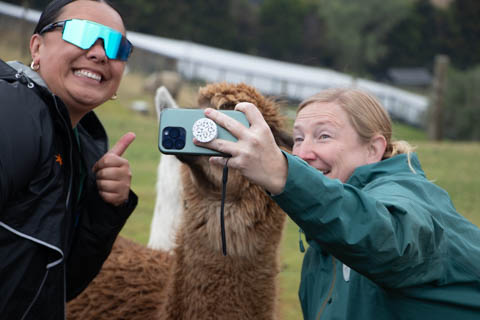
As Steve was one of the last to re-board, he had to capture a picture of our two guides trying to get a selfie (after they were done taking pictures of almost everyone else).
The ride ended at the "historic" Bowen House for a private lunch.
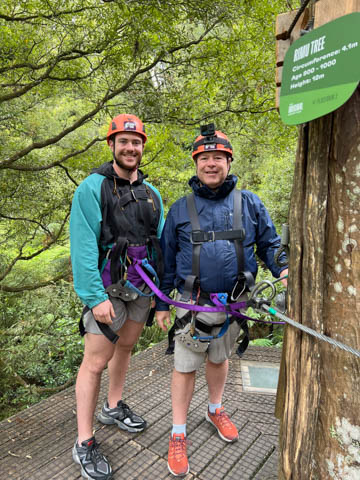
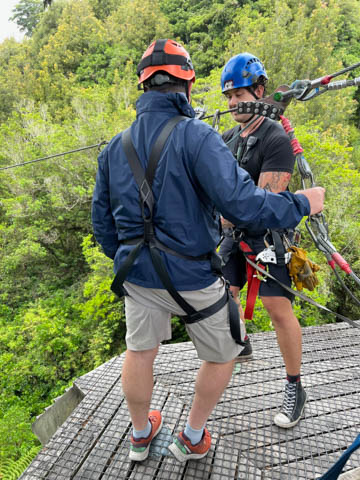
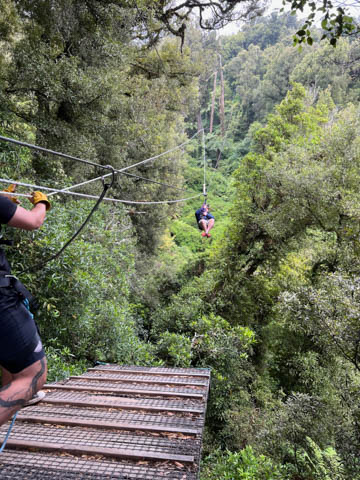
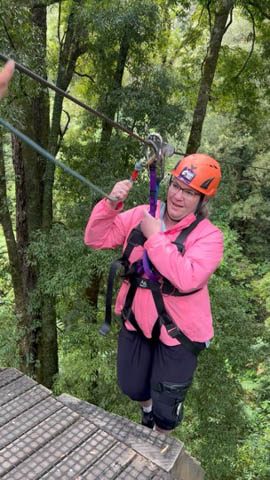
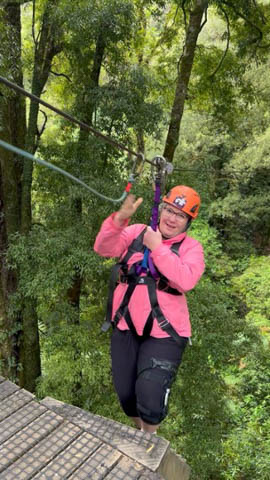
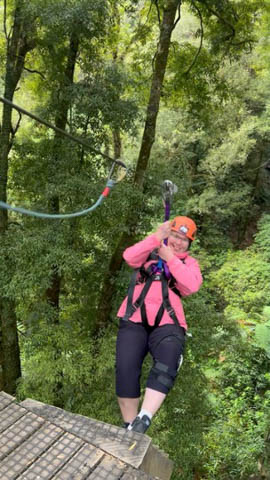
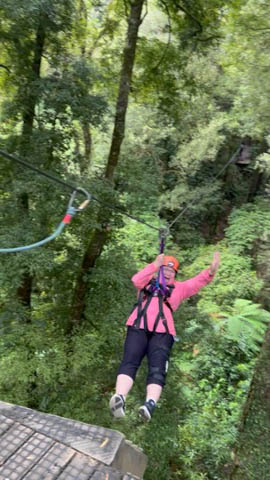
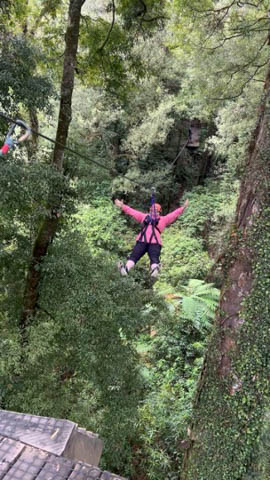
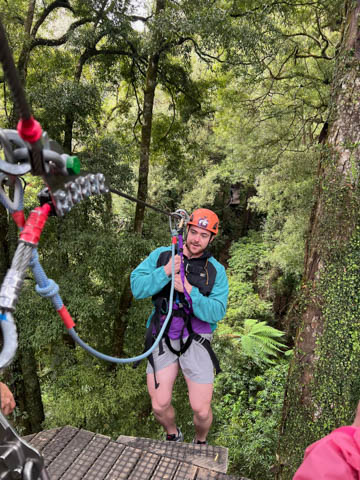
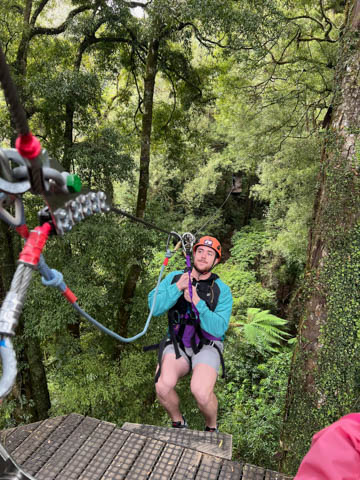
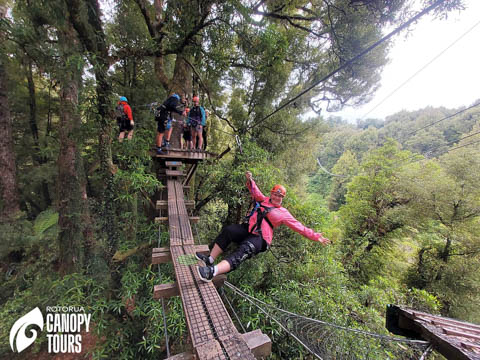
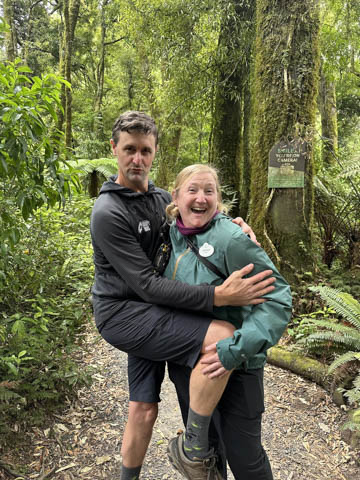
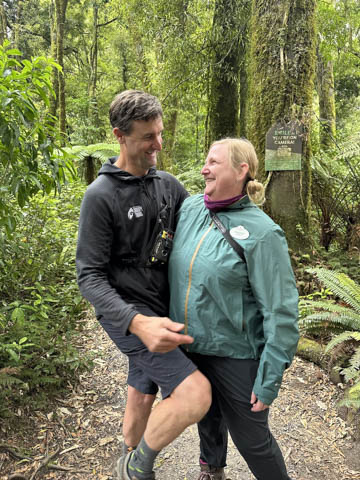
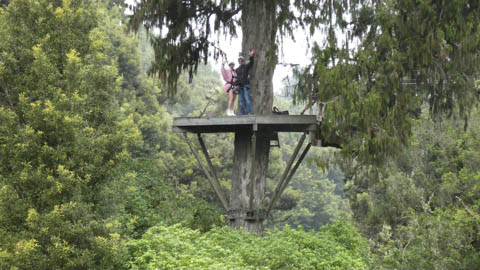
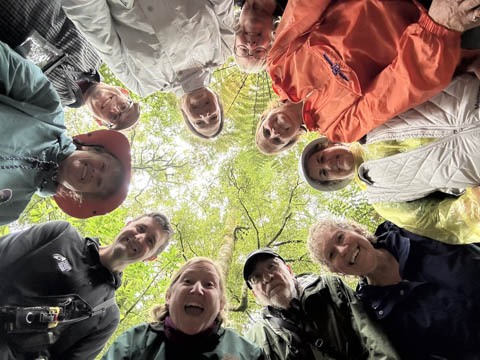
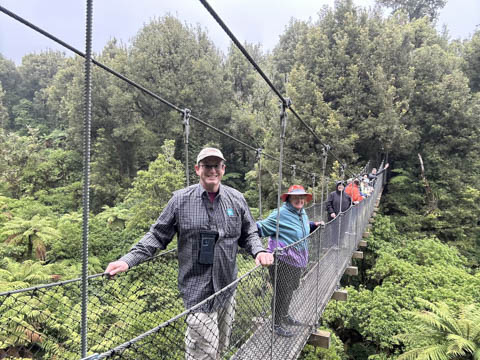
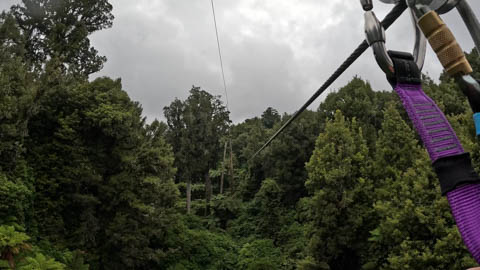
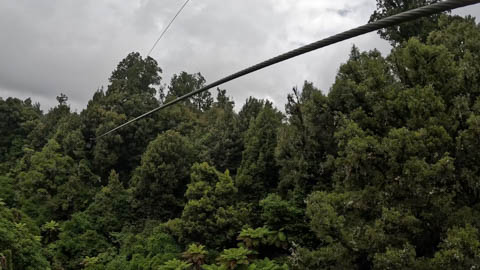
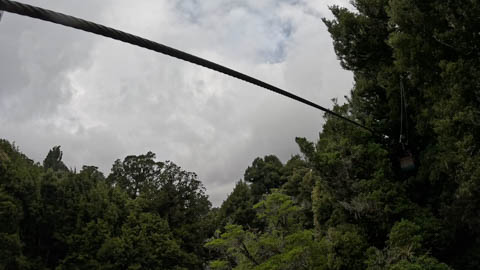
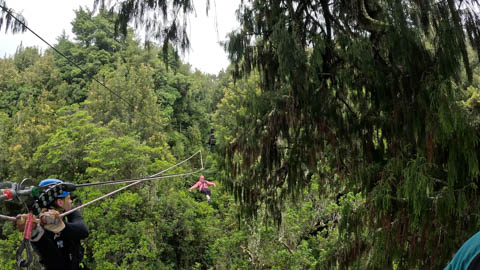
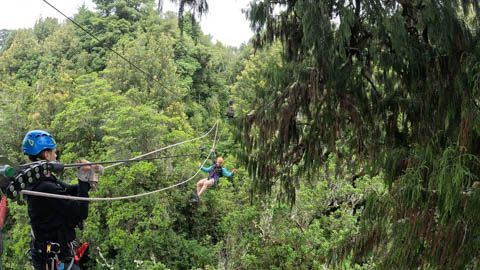
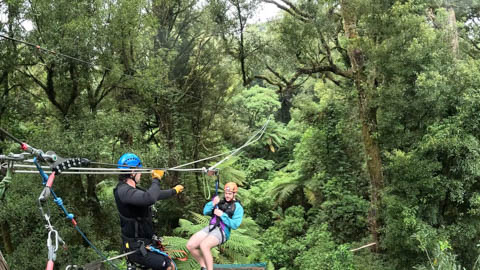
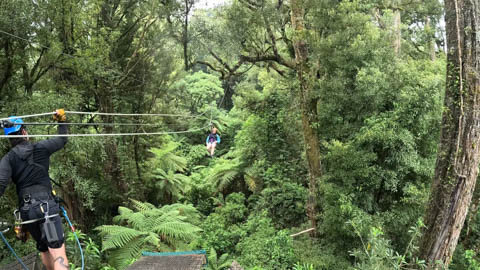
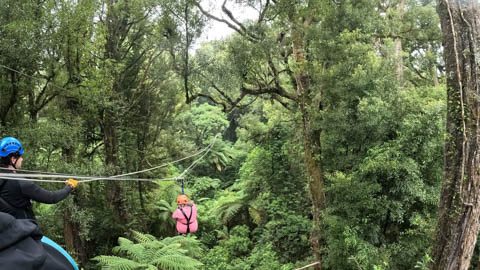
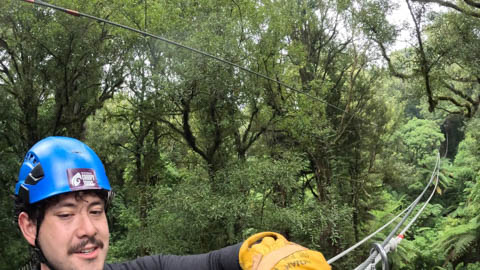
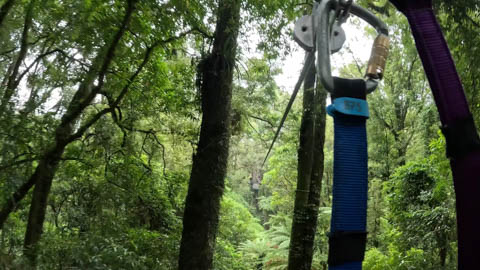
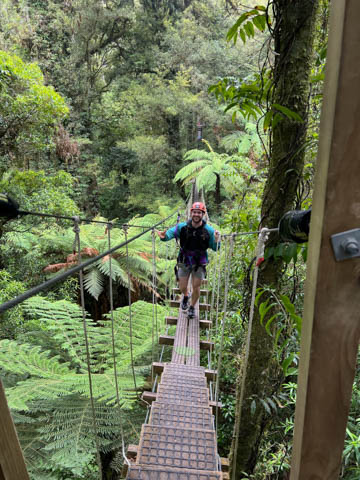
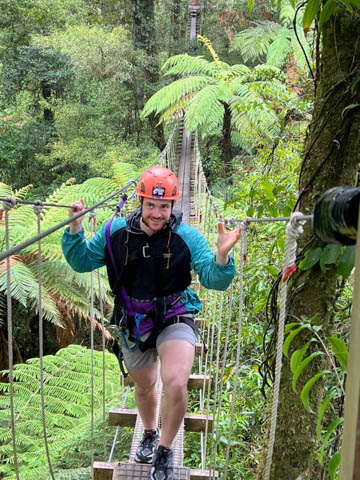
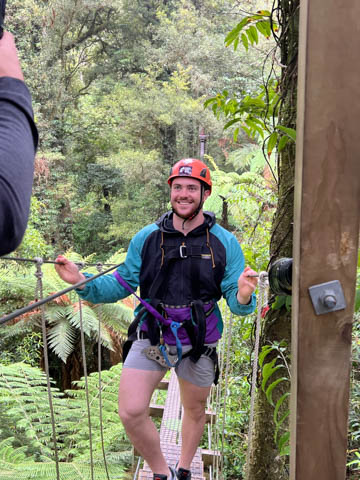
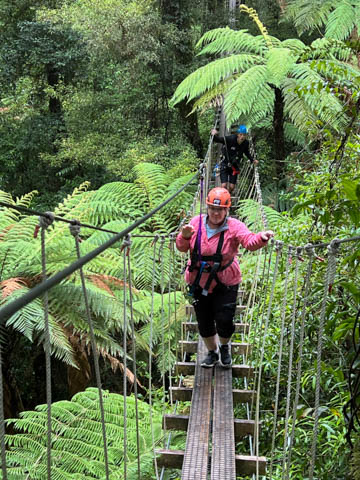
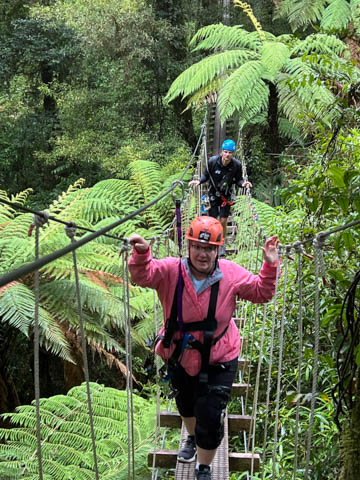
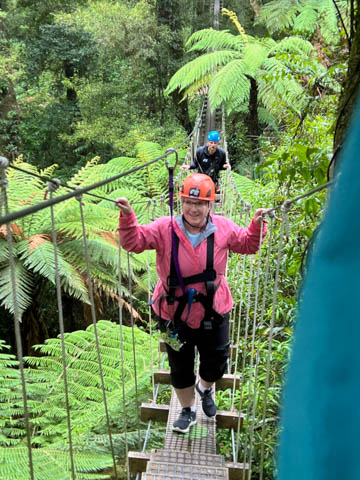
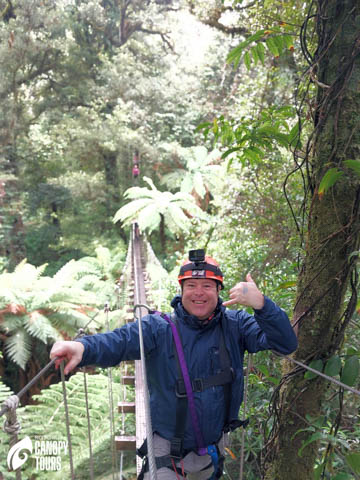
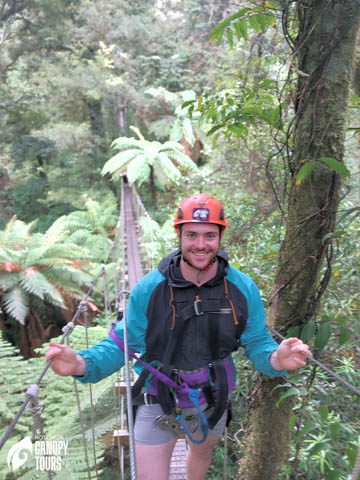
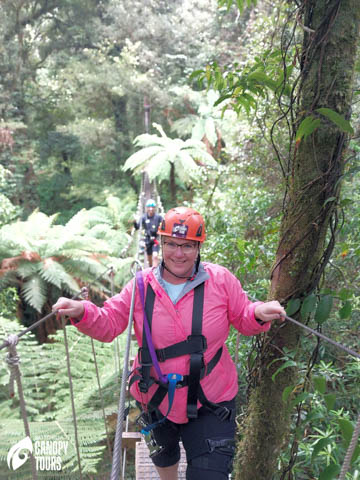
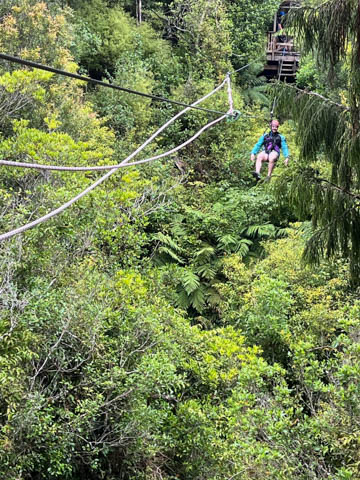
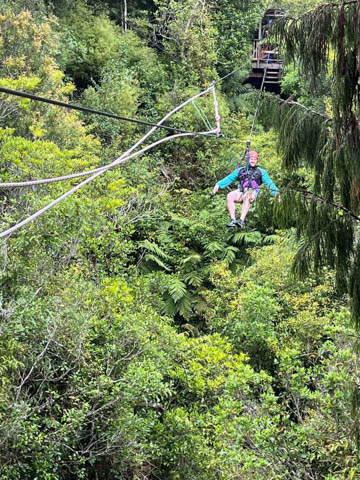
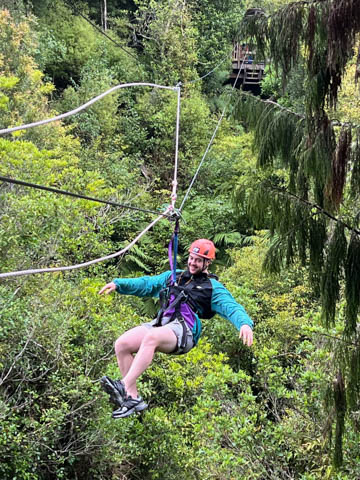
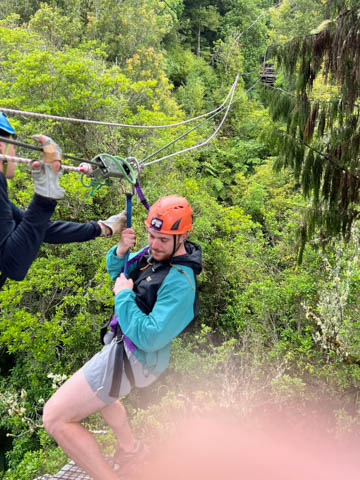
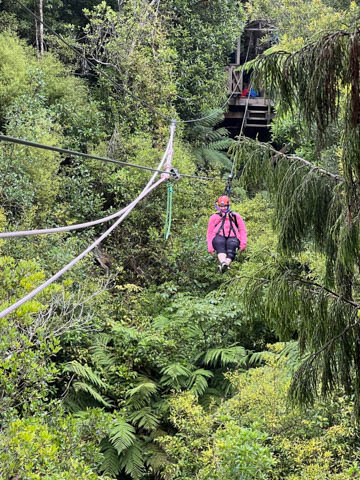
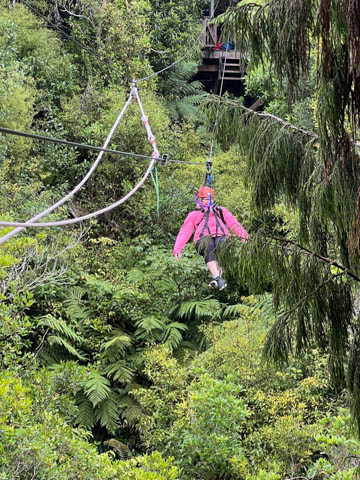
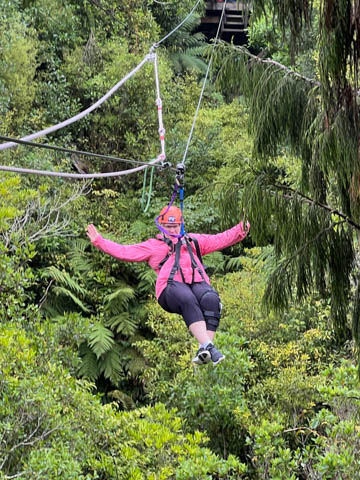
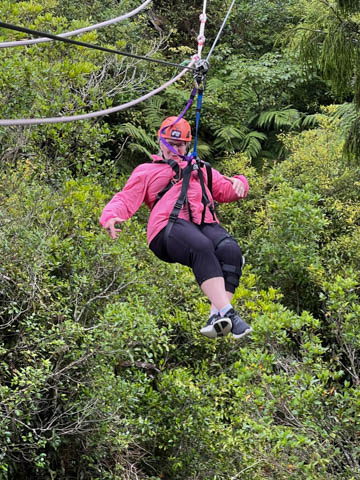
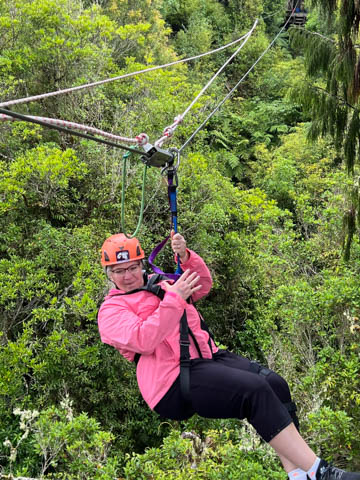
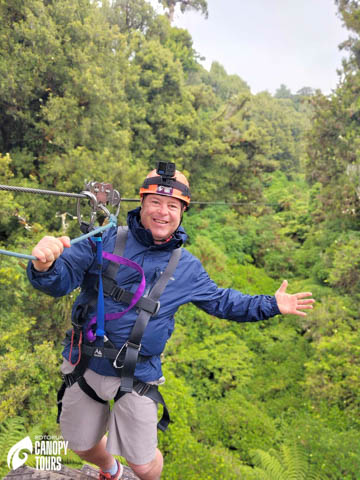
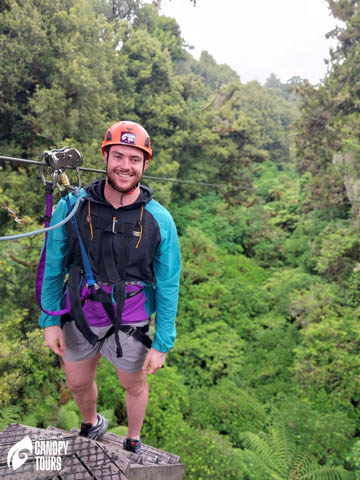
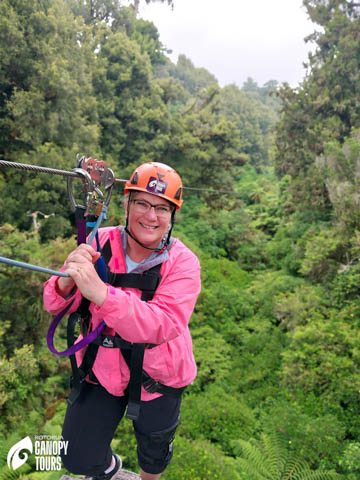
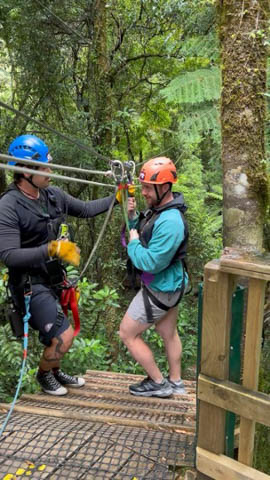
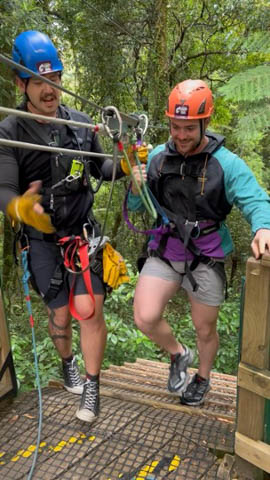
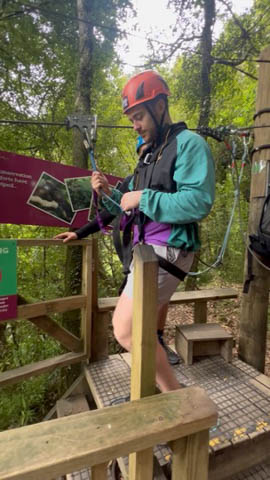
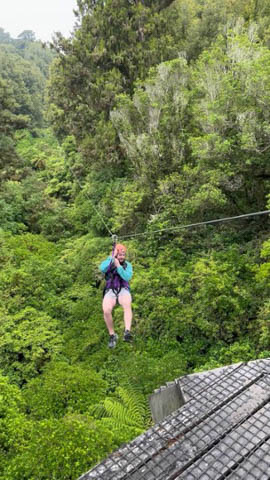
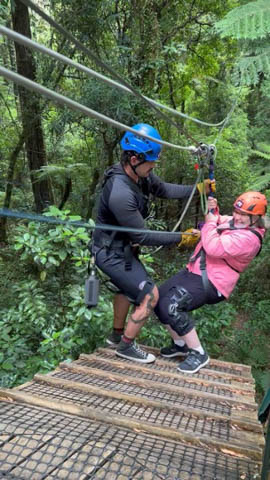
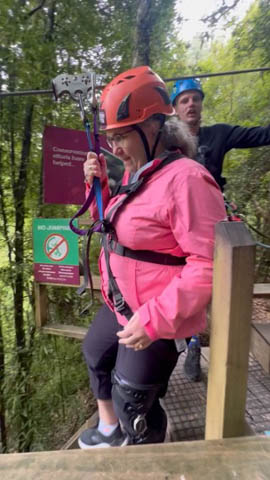
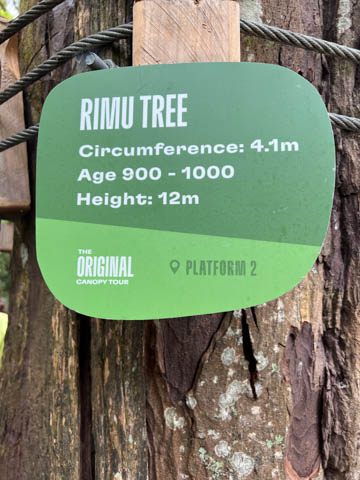
From there, our group split up with most of us headed to go zip-lining. Those who didn't want to zip-line, went on a nature walk through the 1,00 year-old forest. The zip-lining was awesome, with six zip-lines through the canopy and over several deep ravines. Here are some images of us crossing the first of two suspension bridges. This one was at the beginning and led to the first zip-line.
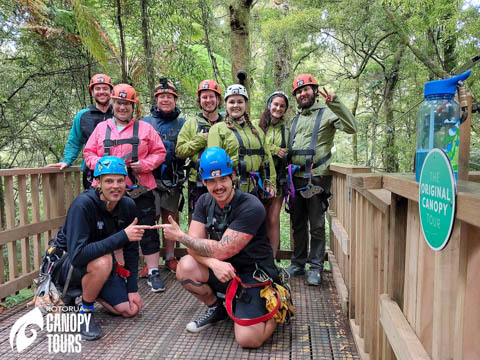
The guides took a picture of all of us as we got to the end of the bridge.
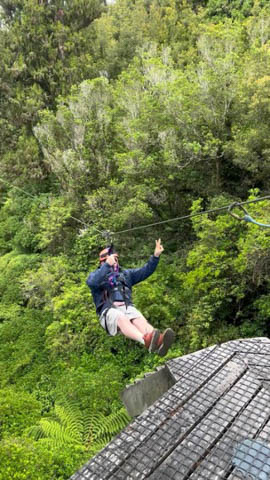
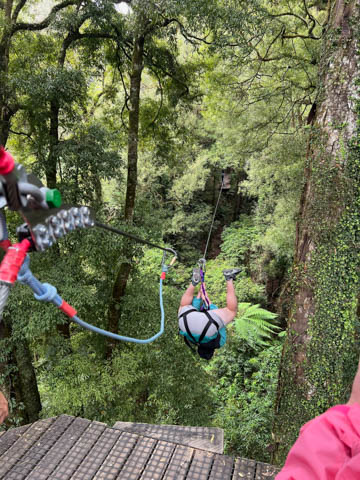
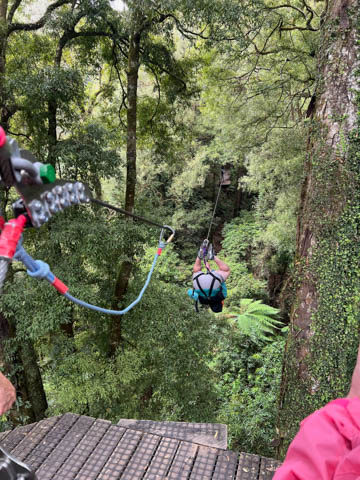
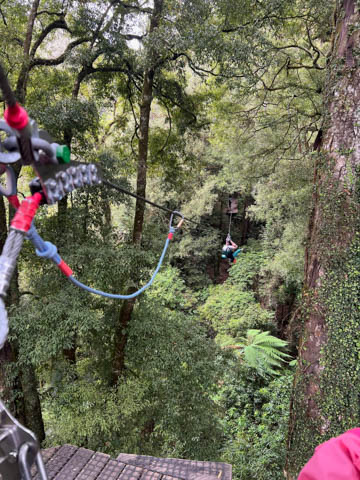
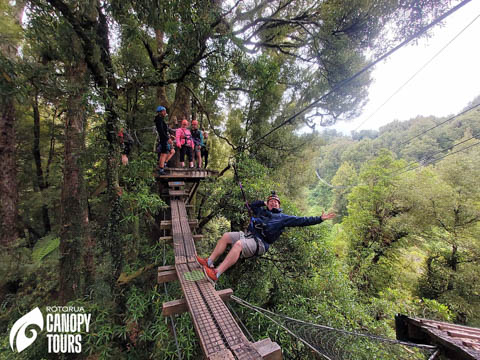
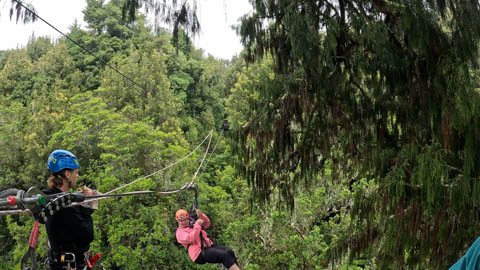
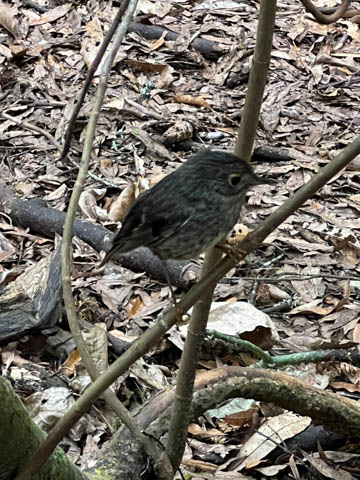
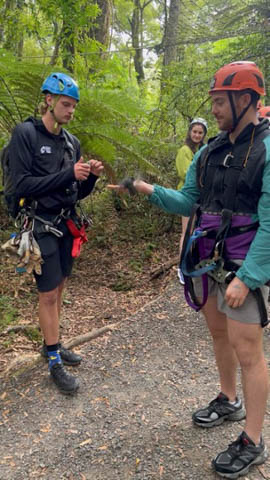
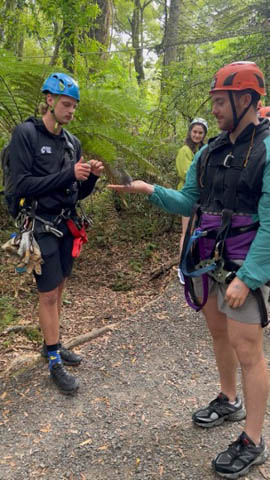
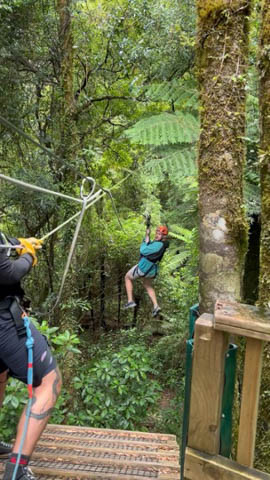
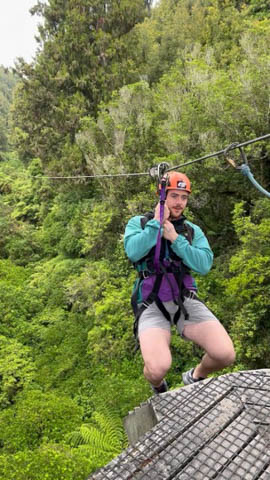
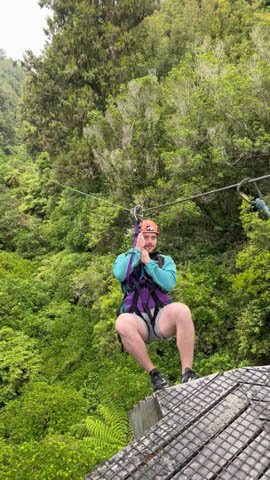
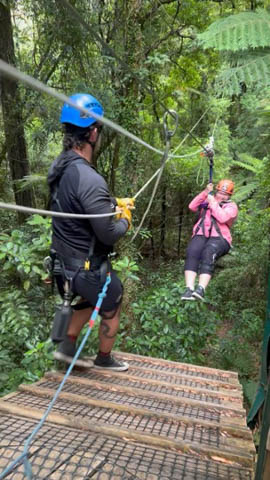
Here are Andy and Nancy on one of the zip-lines, along with a fun bird who decided to check us out.
This little fantail apparently hung around a lot and had learned to take food out of people's hands. It was lightening quick and so light weight that you could easily miss it had come and gone, even when viewing the movie in slow motion.
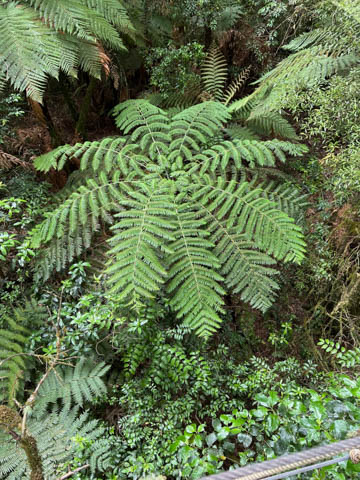
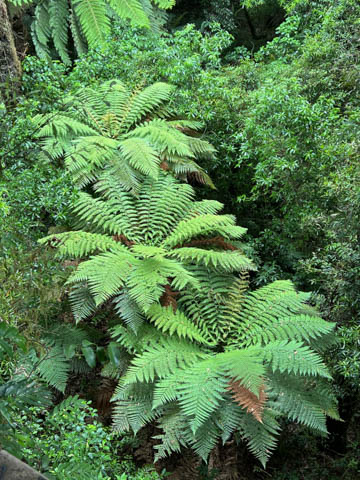
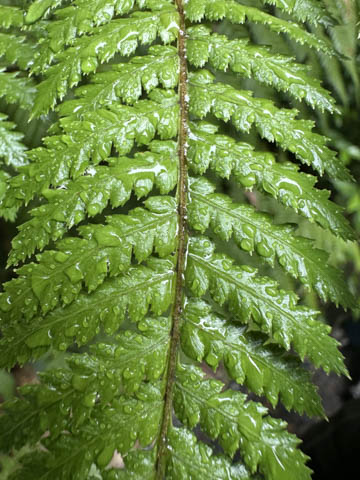
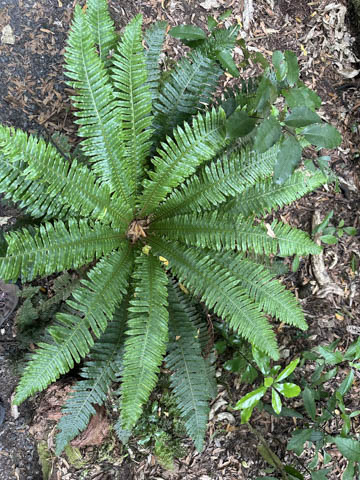
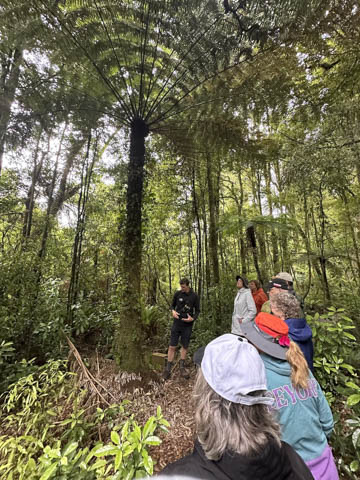
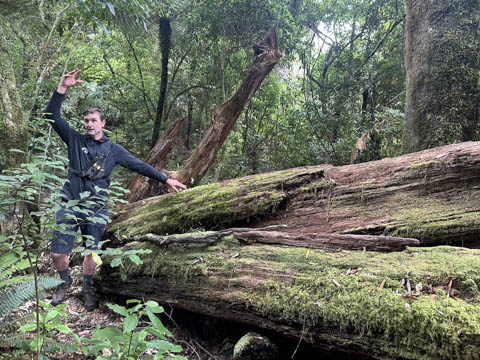
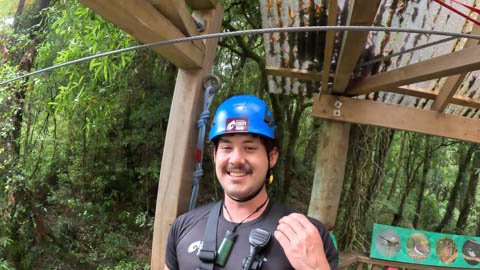
Our guides, Mac (blond hair) and Sam (dark hair) also talked about conservation and some of the surrounding nature. Their company had received special permission to build in the nature preserve. There was an advantage to having them there though, as they provided some paths which gave easier access to the traps to remove the invasive predators from the area to protect the Kiwi. They also pointed out several significant tree and shrub species. Here is the silver fern, native to New Zealand and recognizable by the silver color of the underside of the fronds. It is a symbol commonly associated with both the land and people of New Zealand, appearing on the uniform of the All Blacks rugby team. They also pointed out a palm tree species which they claimed to have evolved with the Moa, growing a bit taller to stay ahead of the evolving height of the moa, which could reach 12 feet tall.
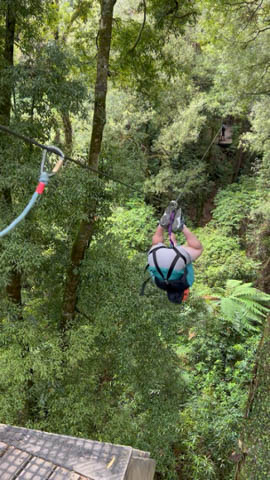
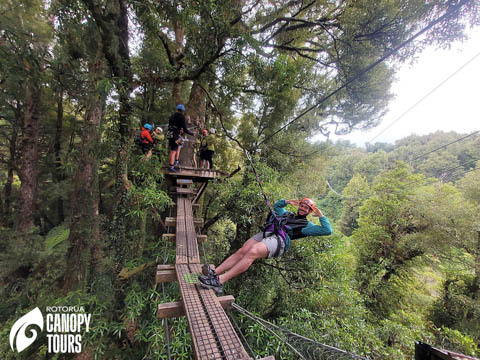
On the last zip, they had us take off backwards. Here is Nancy.
Both boys took the dare, and flipped upside down. Here is Andy.
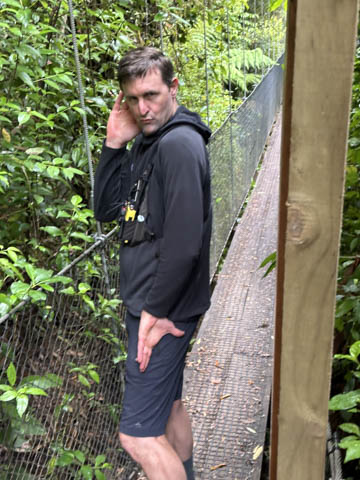
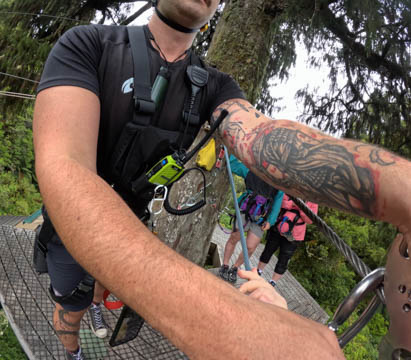
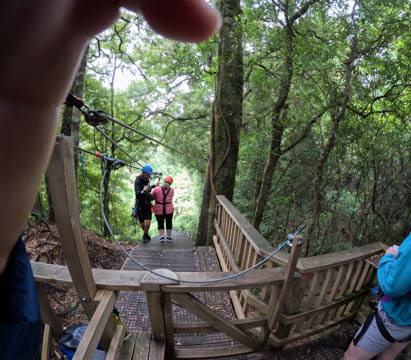
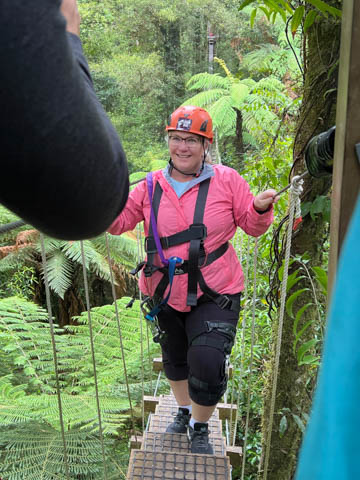
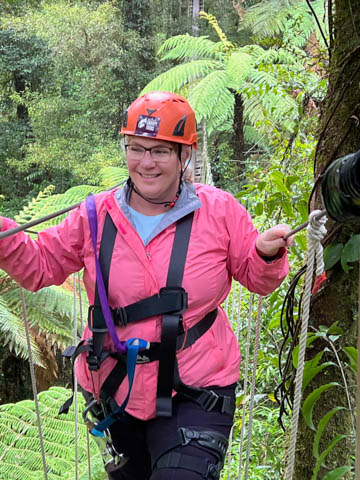
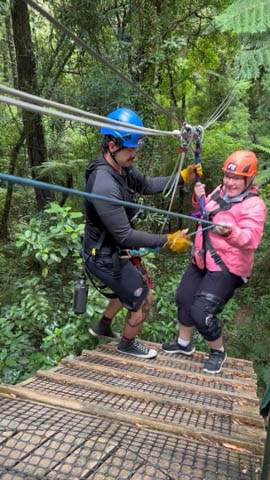
After that zip, we had to cross a small suspension bridge, where we stopped again for pictures at mid-span.
Here are a couple from Nettie or Tiffany.
Here are some more images clipped from the GoPro video.
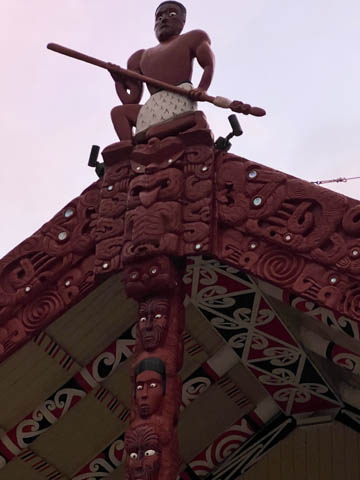
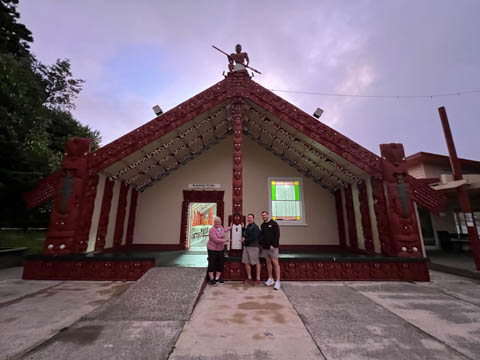
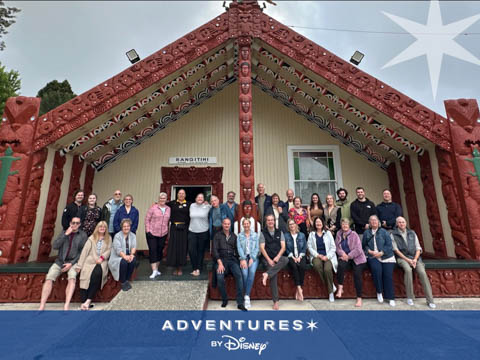
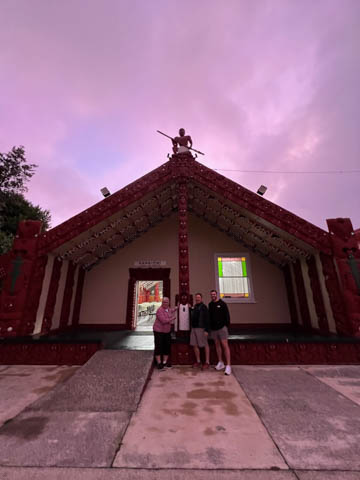
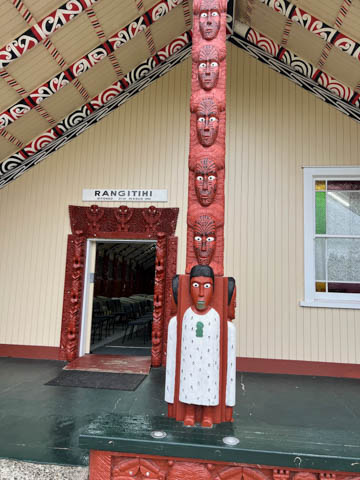
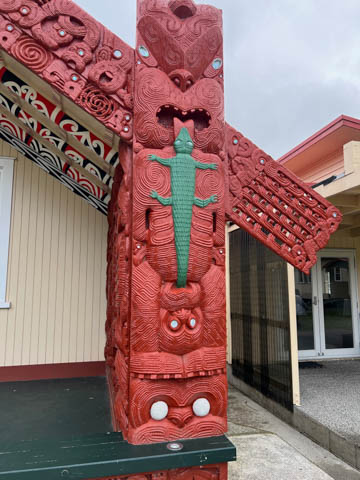
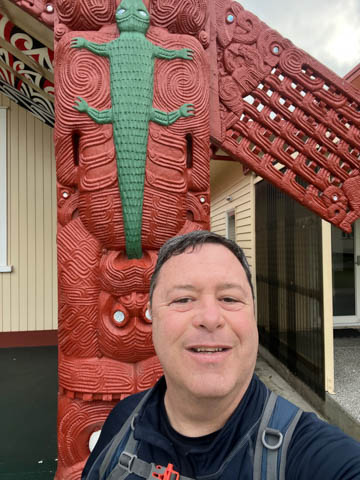
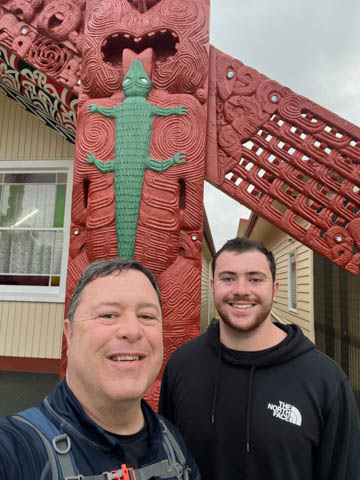
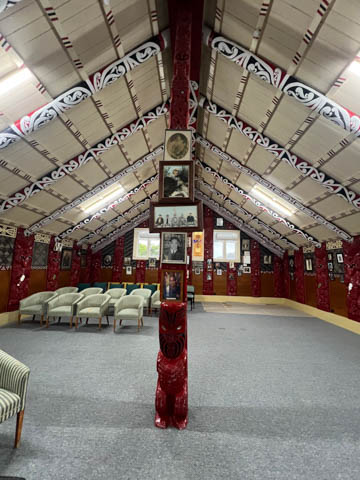
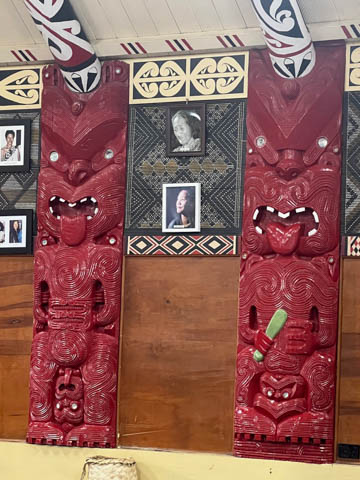
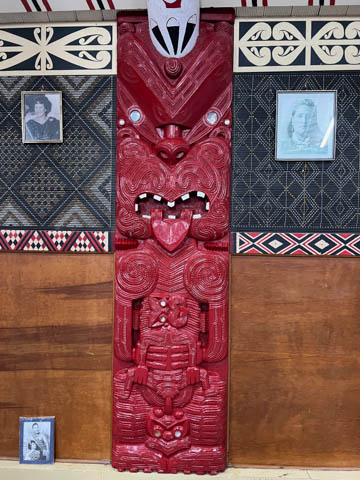
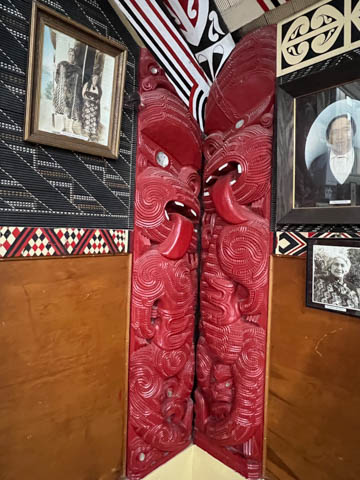
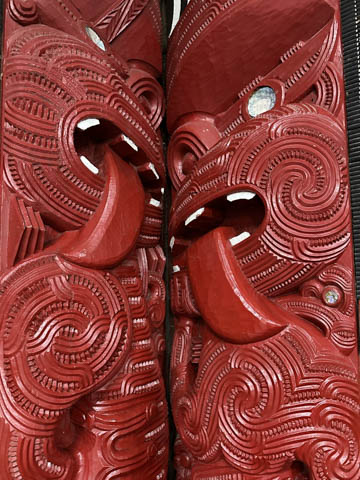
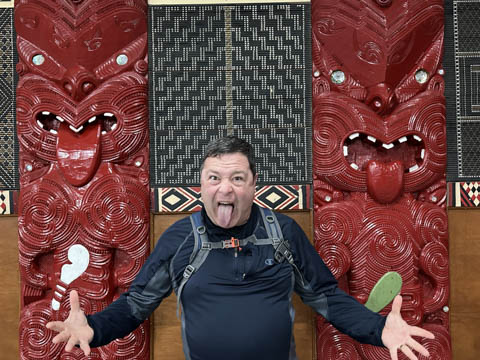
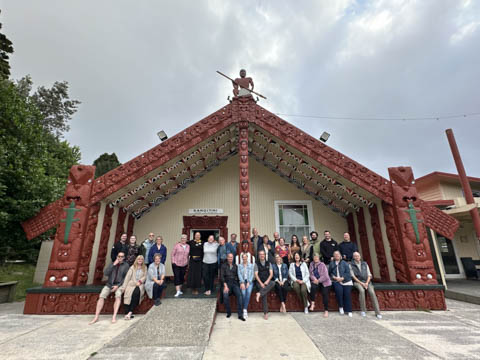
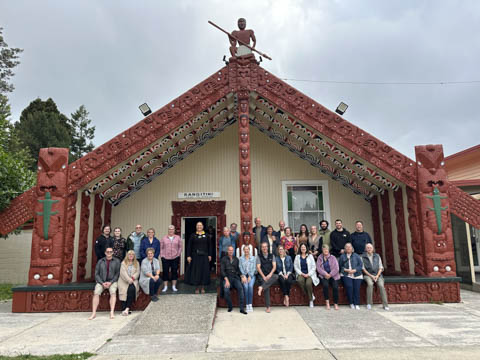
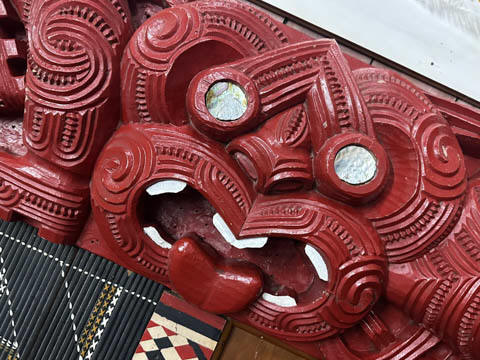
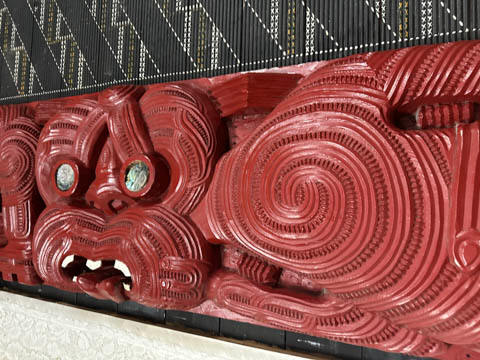
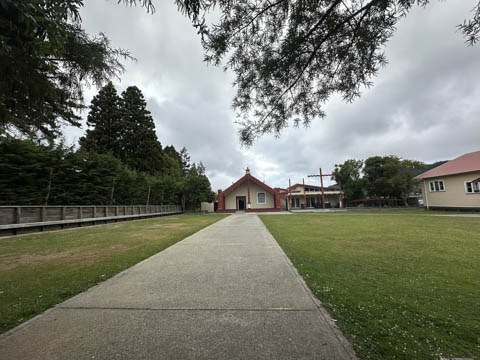
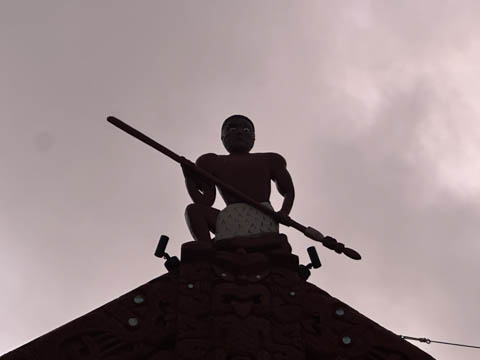
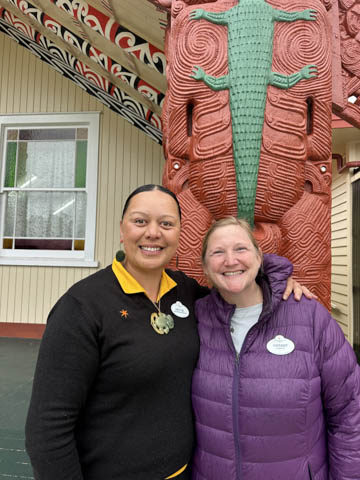
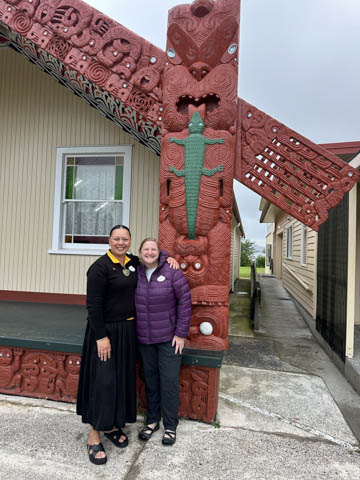
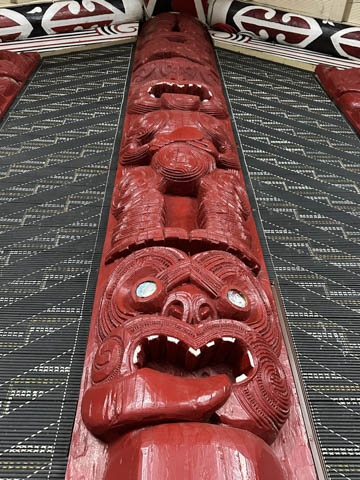
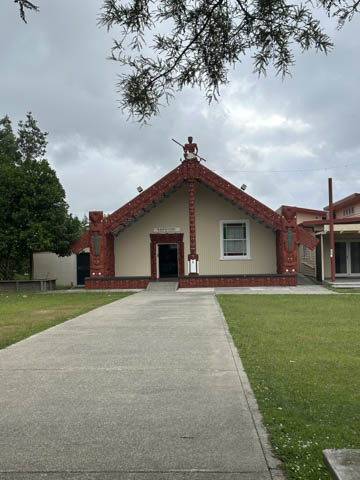
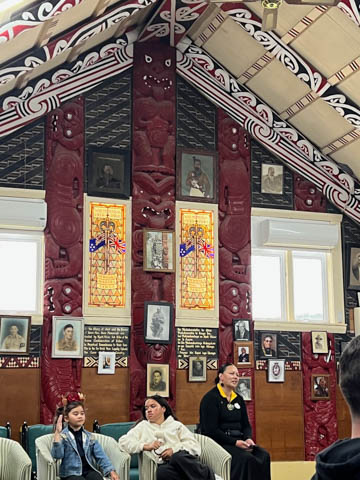
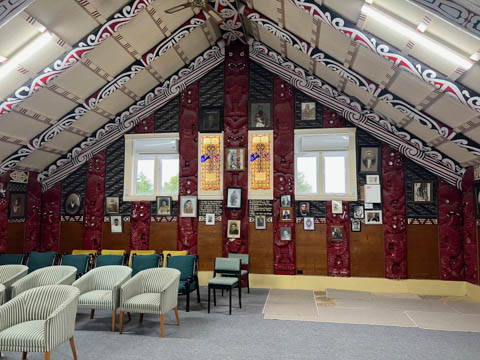
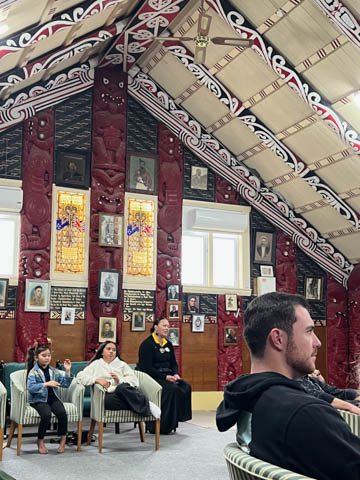
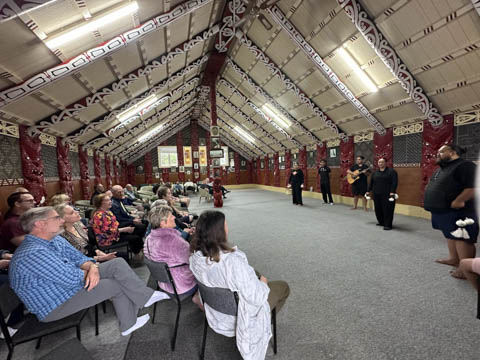
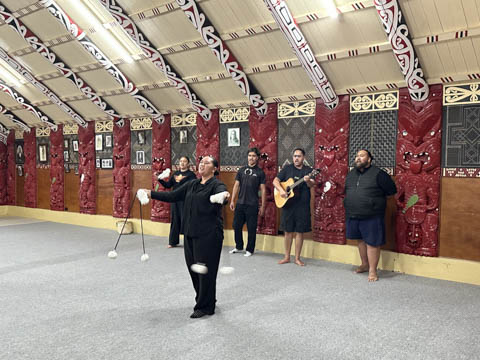
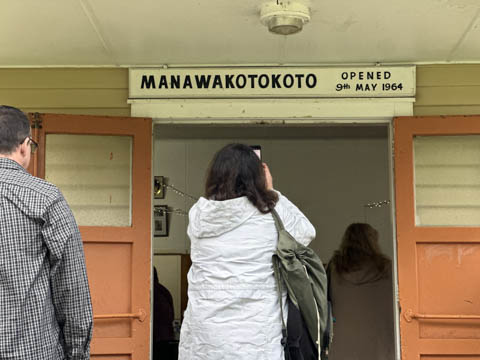
After a short break at the hotel to clean up, we regrouped to head to a Marae, a Maori cultural center or communal house, which is also a sacred place to the Maori. To enter the compound, Nettie showed us how visitors would stop at an entrance arch and announce their intentions, almost as a song. She then showed us how to do the traditional hongi greeting which involved pressing the noses gently together, almost touching foreheads. We then entered the compound and removed our shoes before entering the communal house, which was decorated with a number of intricate carvings both outside and inside.
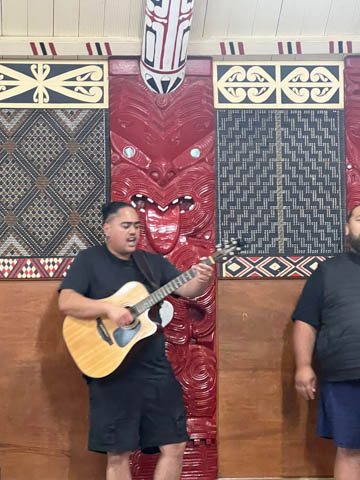
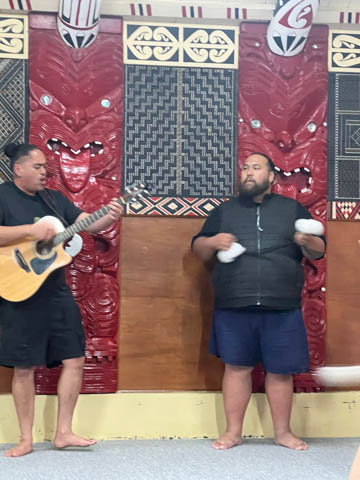
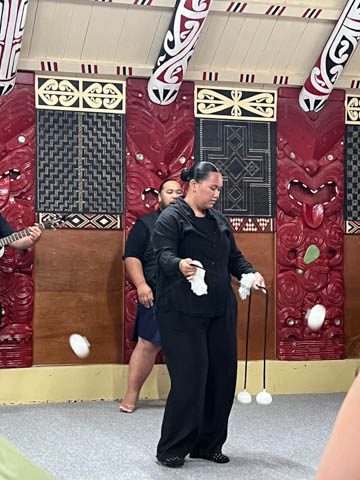
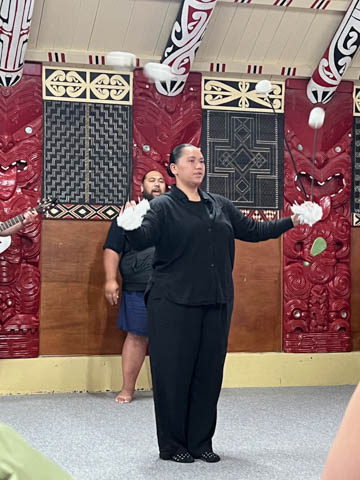
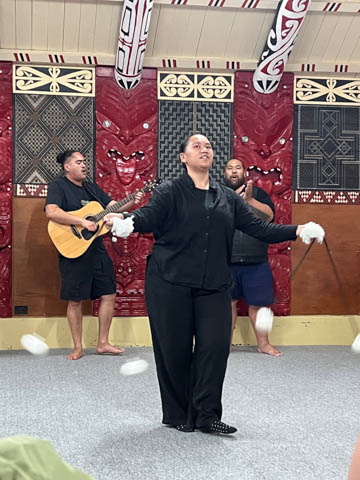
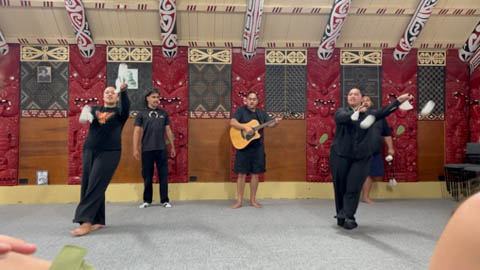
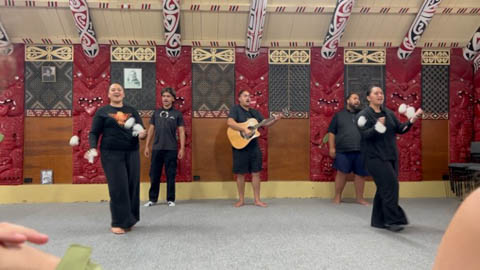
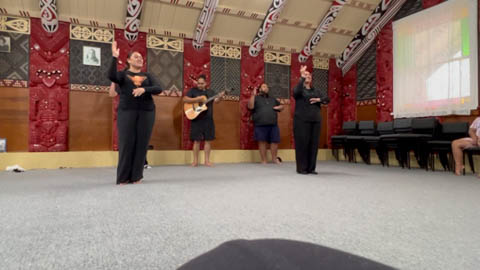
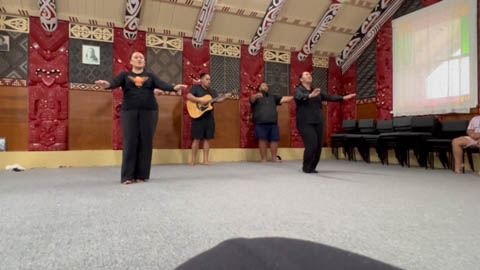
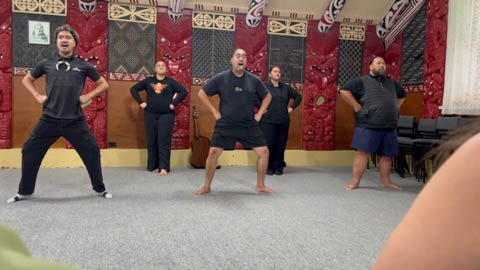
Inside, we were treated to several wonderful performances, highlighting Maori songs and poi-balls, which the women spun and slapped against their body in rhythm to the song.
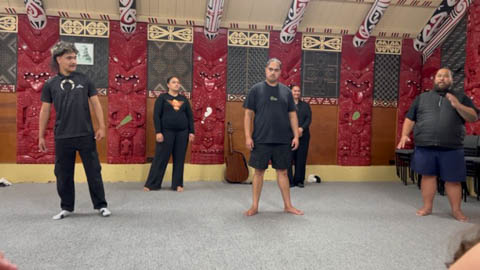
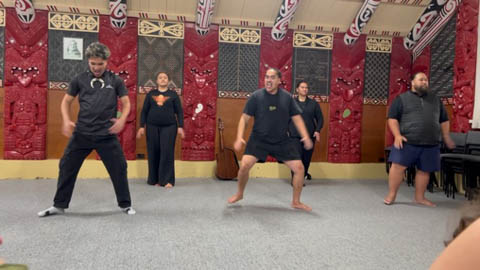
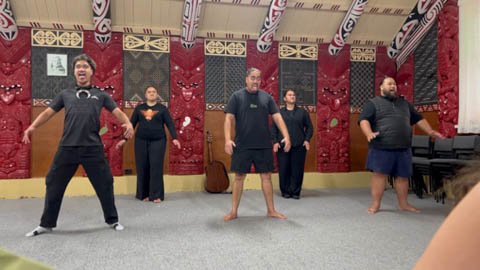
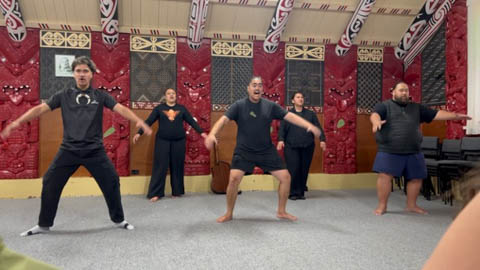
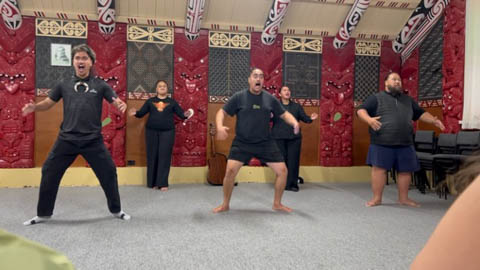
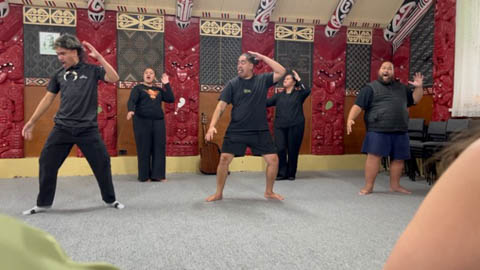
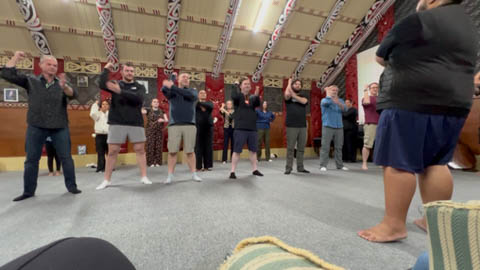
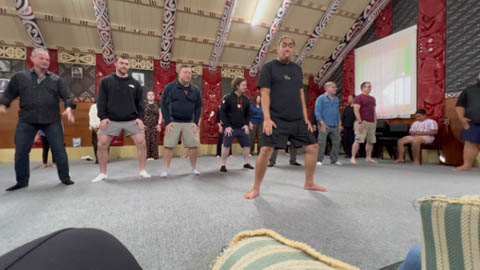
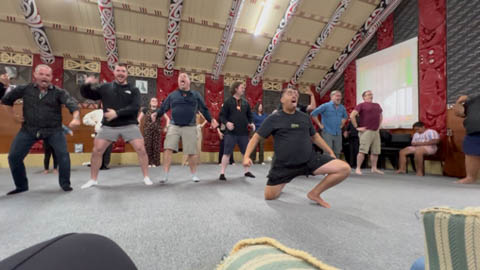
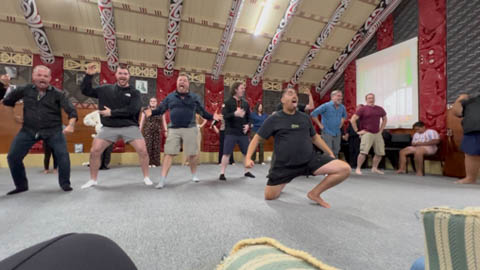
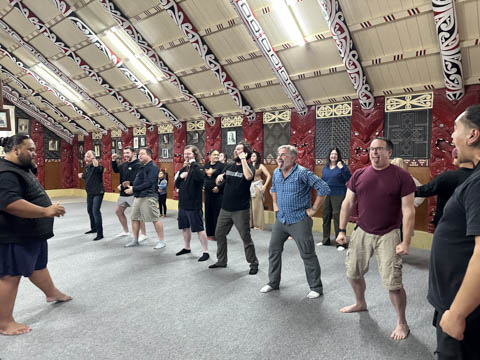
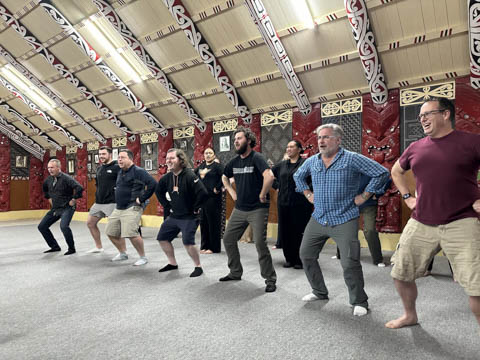
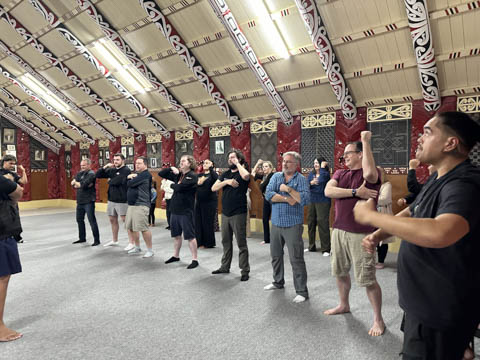
The group also explained and performed the haka dance.
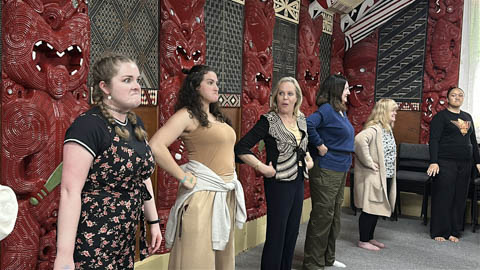
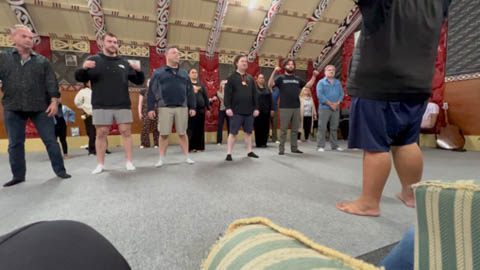
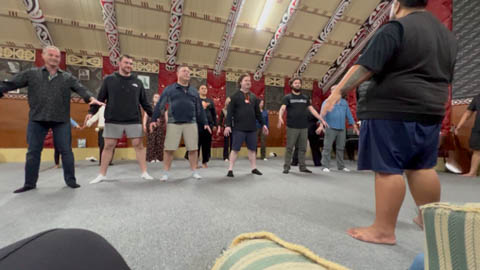
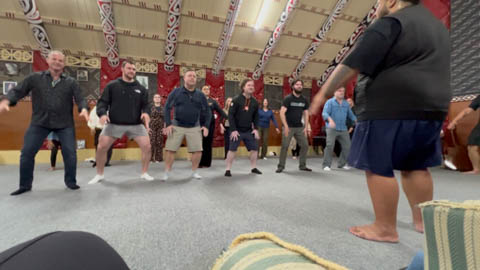
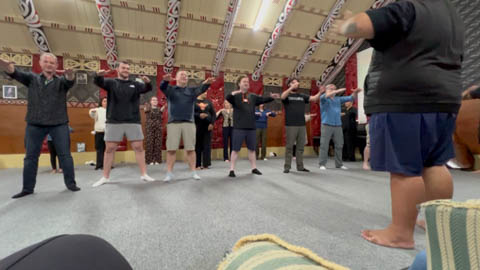
After they were done, they invited willing adventurers, including Steve and Andy, to come up to join them. Each community has their own interpretation of the dance, and we were taught a shortened version of theirs.
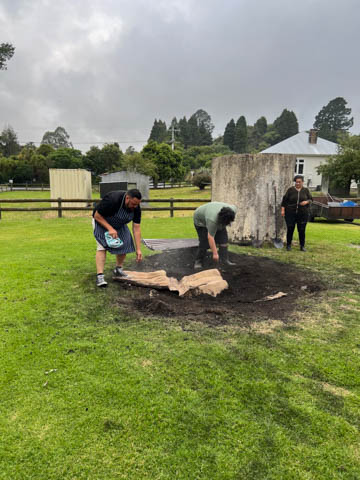
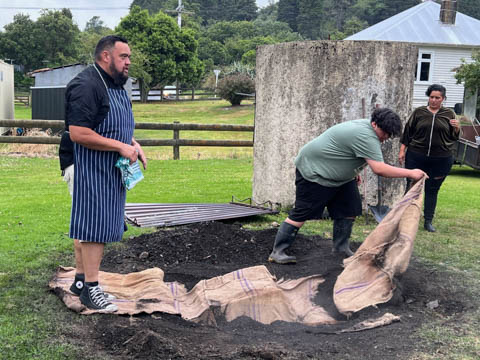
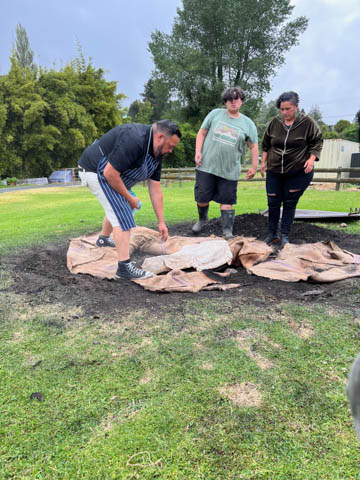
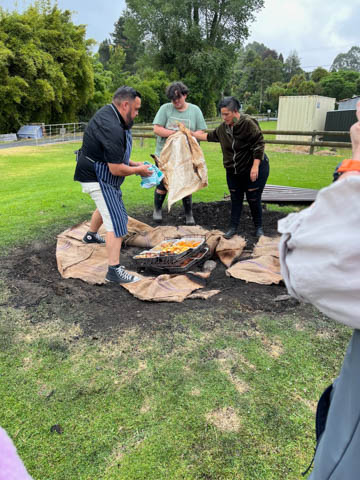
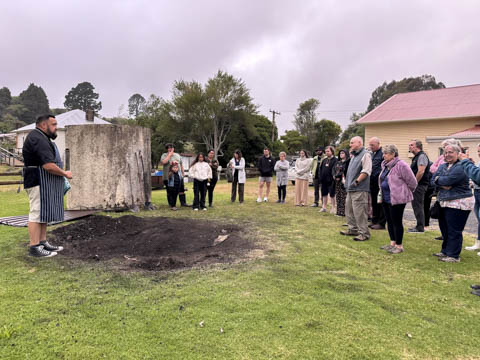
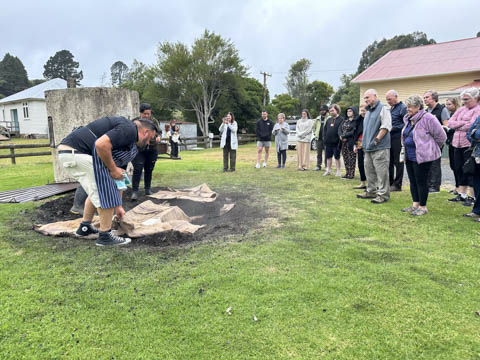
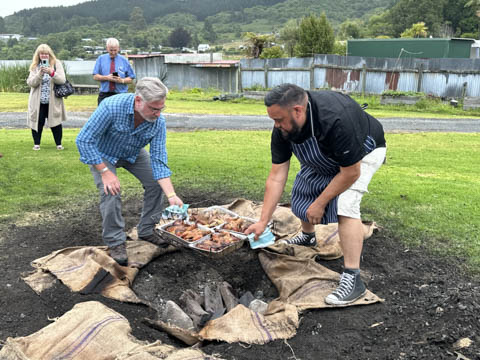
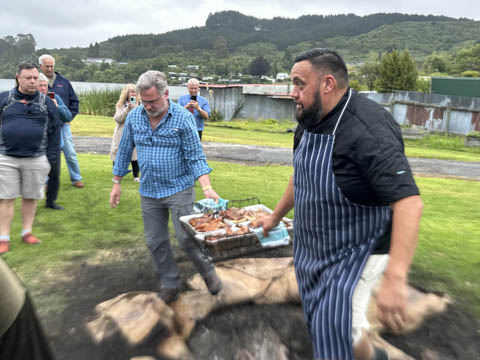
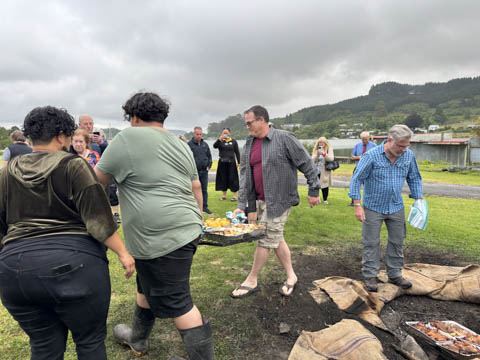
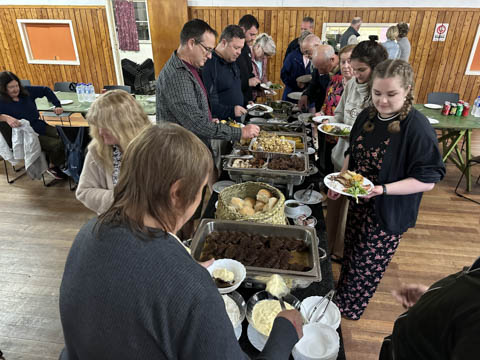
We were also treated to a traditional hangi dinner (which caused confusion with the similar name to the hongi greeting we learned earlier). This is cooked in a covered pit in the ground with hot coals and rocks, similar to a Hawaiian imu and apparently common across Polynesia. They even served some trout caught in the lake that morning.
|
|
|




.jpg)