

|
|
Use these navigation links to move between the Year 2025 pages. Specific pages can be accessed at the bottom of this page
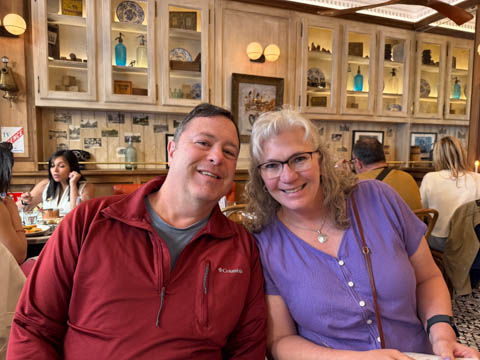
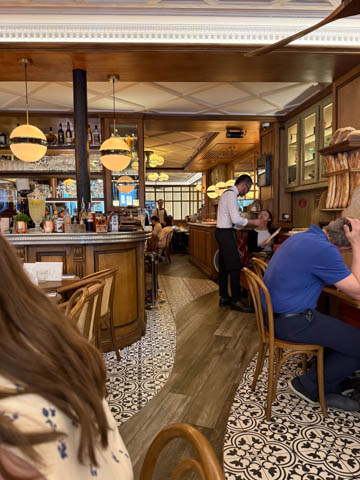
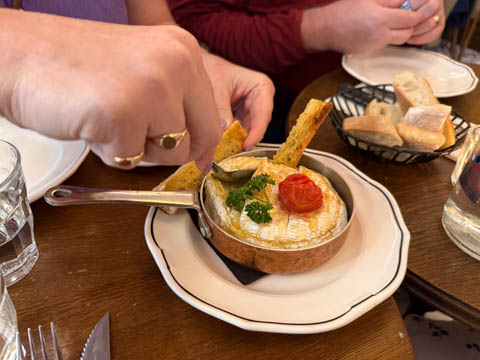
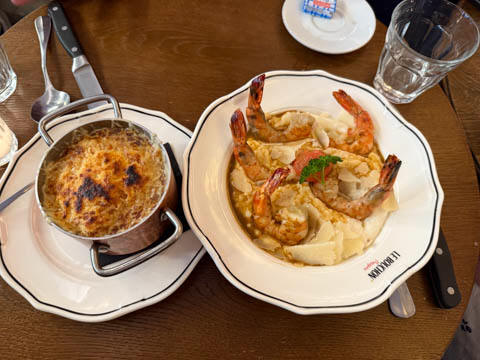
May 2025 (Part 11) France Trip: Day 4: Bus Tour We headed back to the hotel and went to a recommended restaurant around the corner for a wonderful dinner at Le Bouchon Parisian.
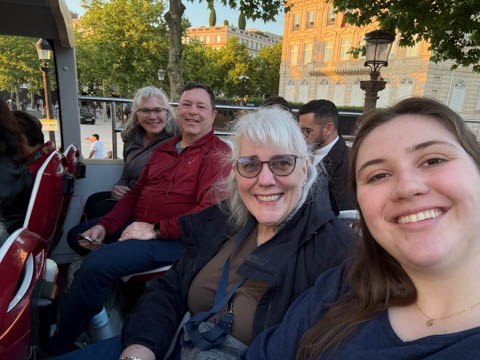
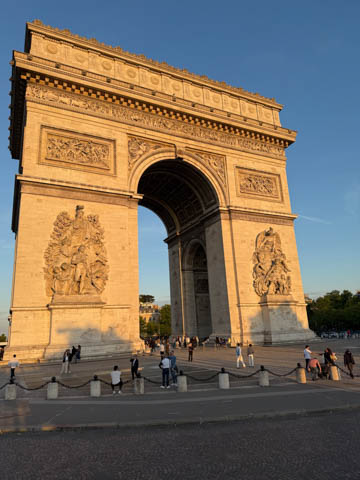
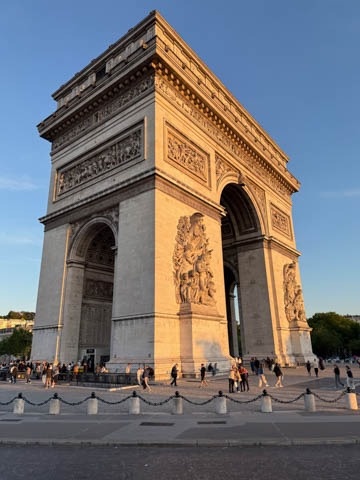
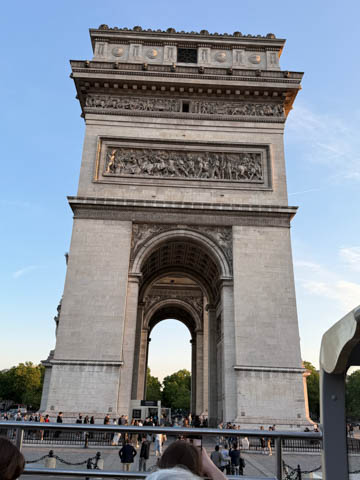
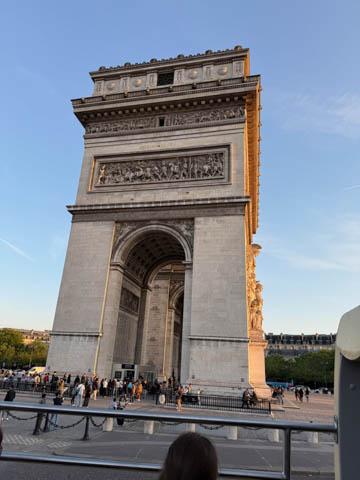
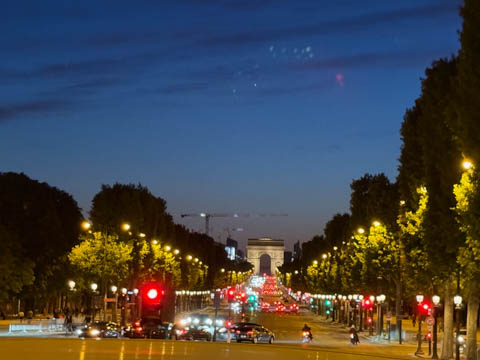
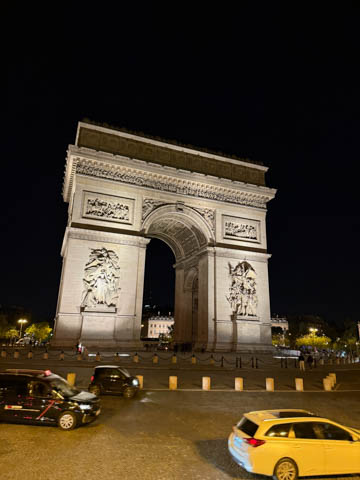
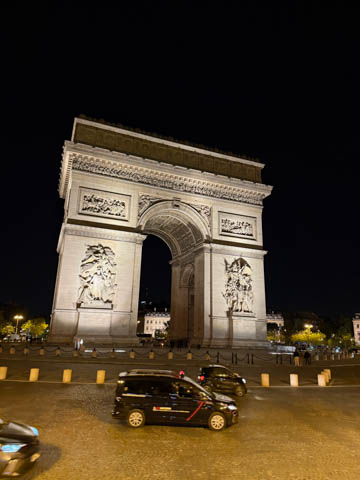
We then took an Uber back near the Arc de Triomphe for an evening bus tour of Paris.
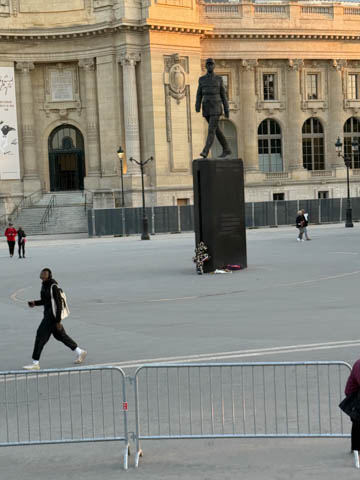
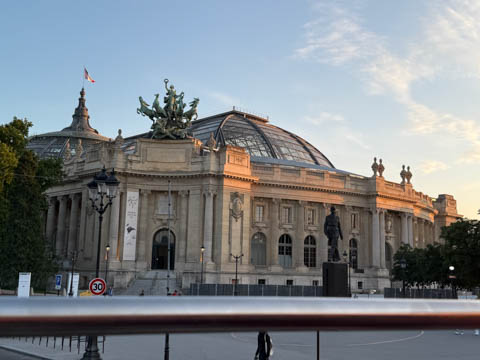
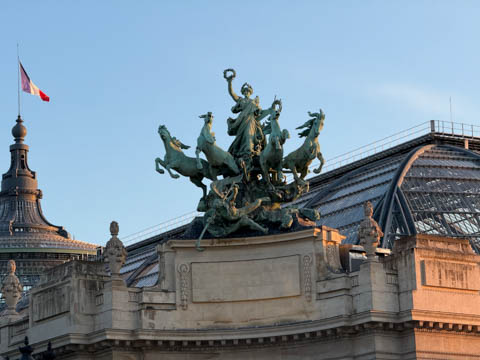
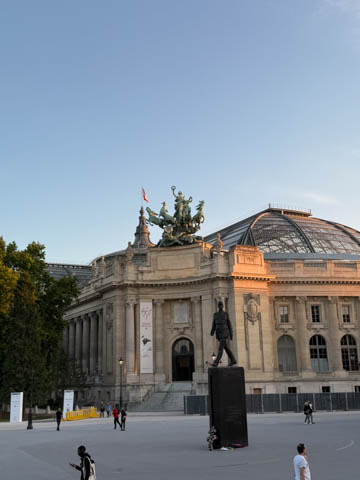
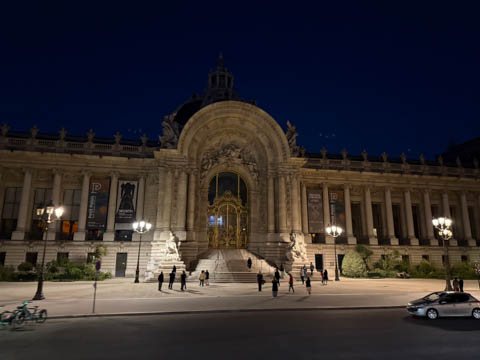
We headed down the Avenue Champs-Elysees. Here is a statue of General Charles de Gaulle in front of the Grand Palace.
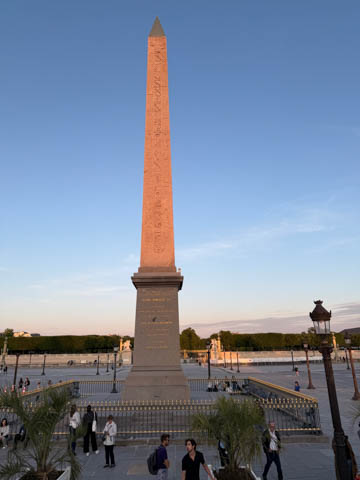
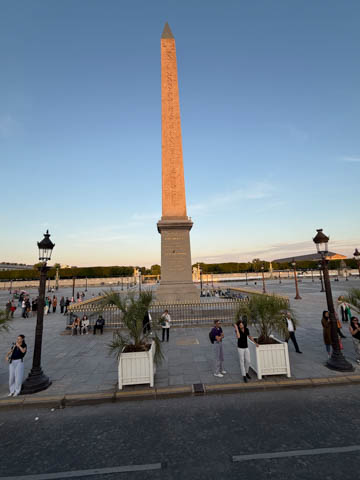
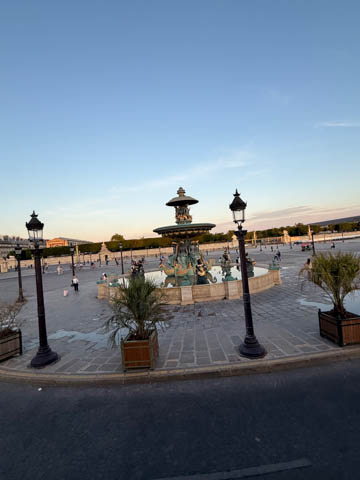
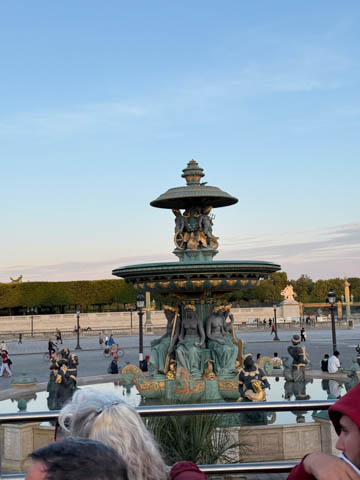
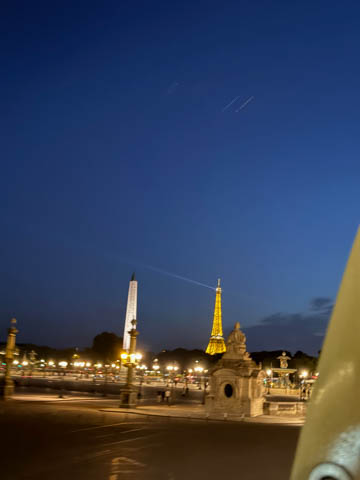
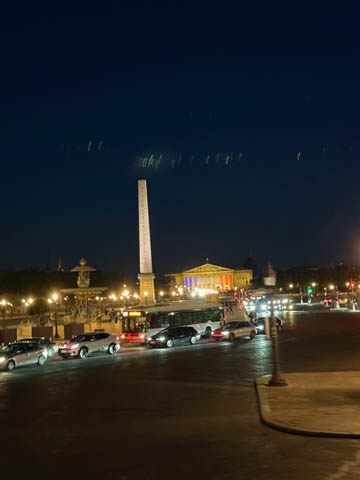
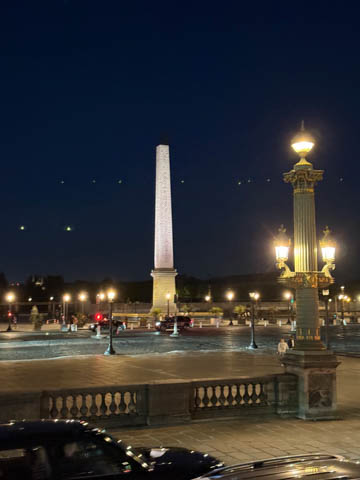
The avenue ended at the Place de la Concorde, with a good view of the Luxor Obelisk, which is over 3000 years old and was a gift to France from Ottoman Egypt..
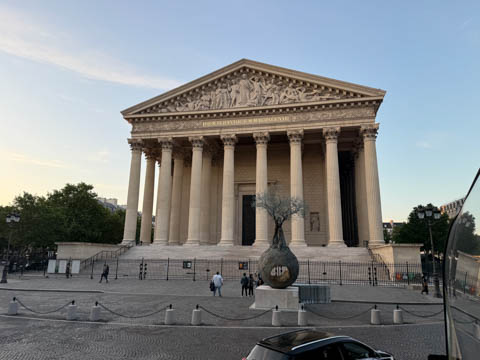
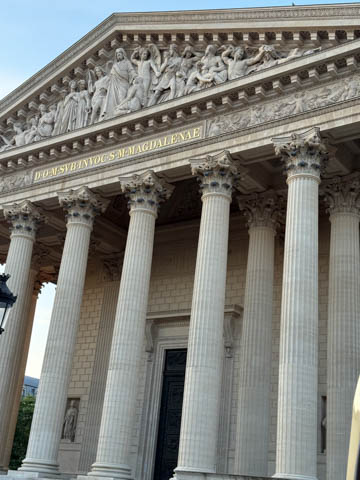
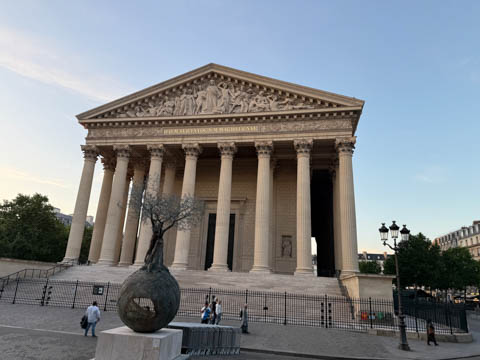
This is the Church of the Madeline (Église de la Madeleine)
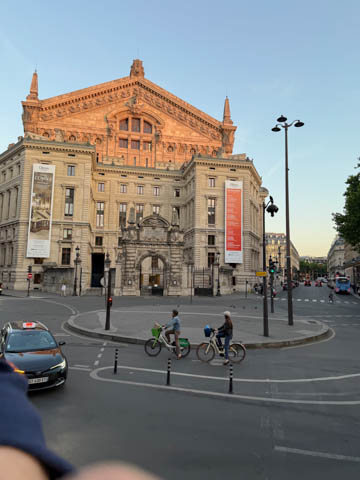
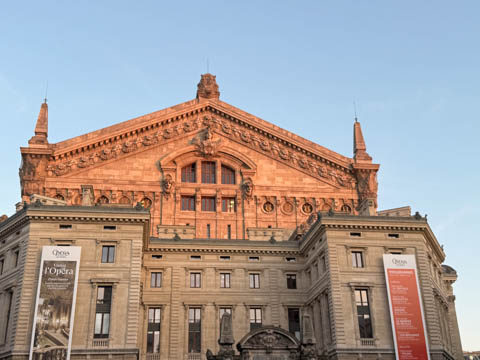
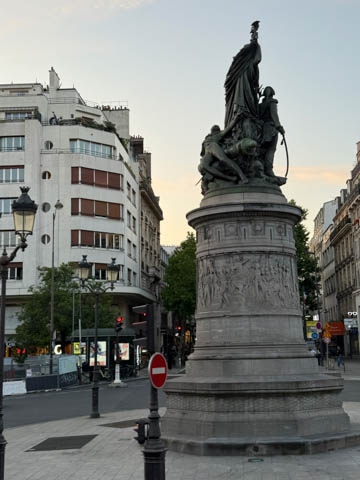
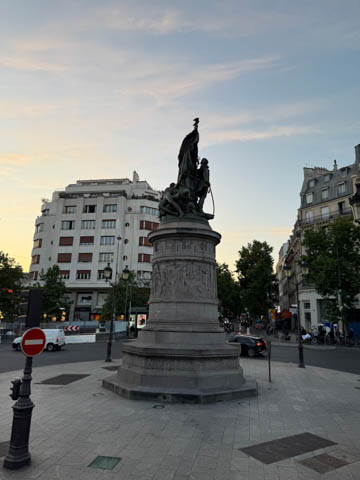
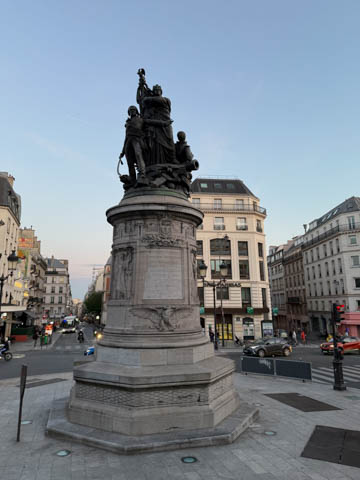
Think this is the Paris Opera House (Palais Garnier - an Italian-style opera house with ceiling painted by Chagall & library museum in 19th-century building) , followed by the Monument to Maréchal Moncey, which lies at the former site of the barrière de Clichy, an ancient portal in the Wall of the Farmers-General, leading to the village of Clichy, outside the wall. The monument comemorates a historic stand in the defense of Paris. In March 1814, at the close of the First French Empire, 800,000 soldiers of various foreign armies marched on Paris. After breaking through the barriers at Belleville and Pantin, they took the hill of Montmartre. Paris was protected in the north from Clichy to Neuilly, by 70,000 men of the garde nationale. In the face of the advancing enemy, the Maréchal de Moncey defended the barrière de Clichy. Moncey amassed 15,000 volunteers, tirailleurs – students from the École polytechnique and the École vétérinaire – and, despite their inexperience, valiantly resisted the Russian contingent until an armistice was declared on 30 March 1814.
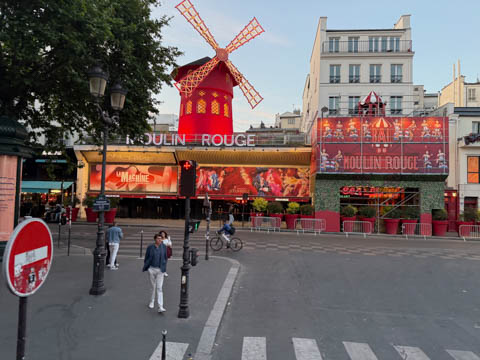
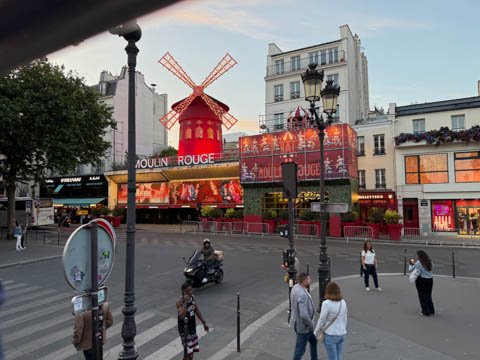
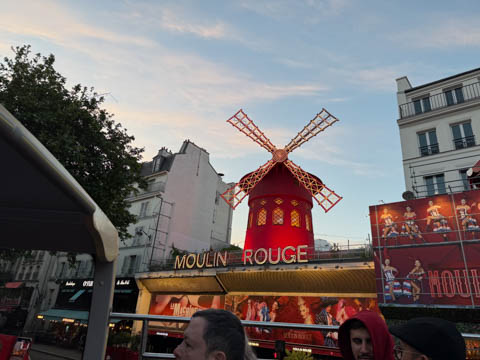
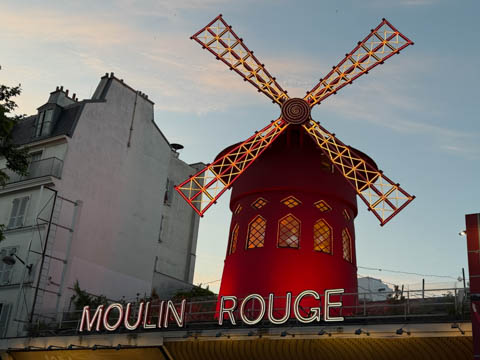
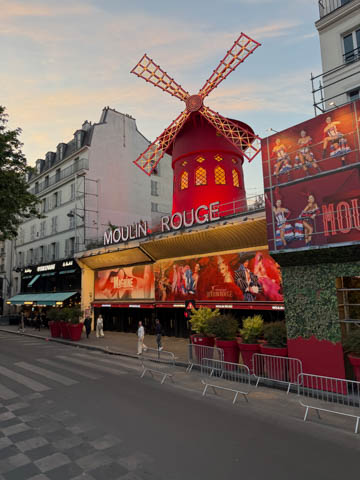
Here is the Moulin Rouge (which means red windmill, as there used to be a number of windmills in Montmarte).
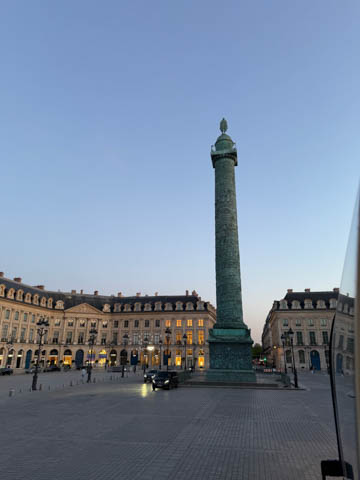
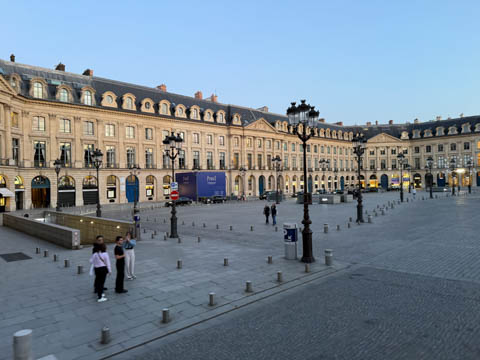
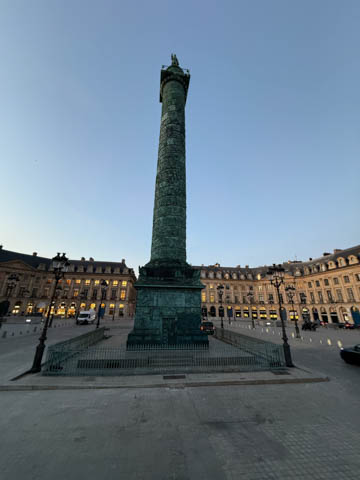
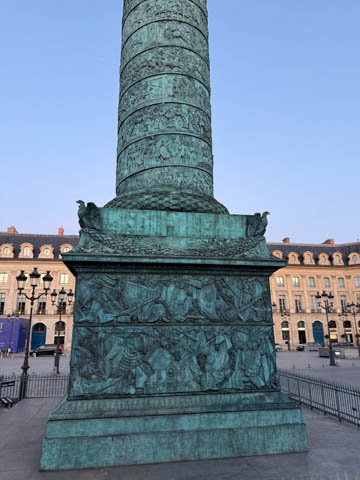
The last image is the Colonne Vendôme, a bronze column standing as a war memorial, with bas-relief carvings topped by a statue of Napoleon. This is located in the Place Vendome, a large square holding the Ministry of Justice along one side next to the Ritz Carlton Hotel.
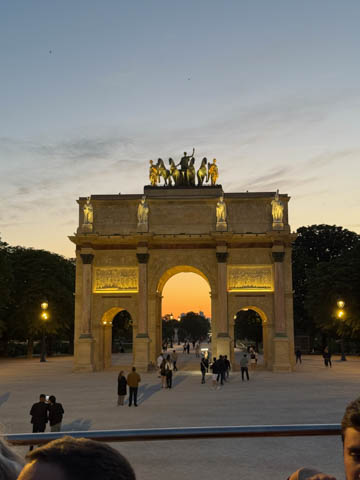
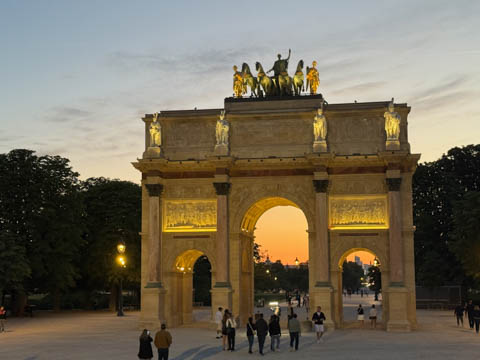
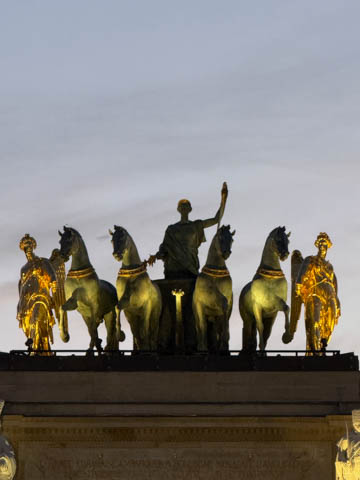
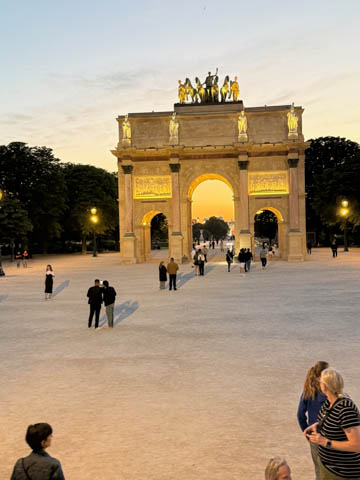
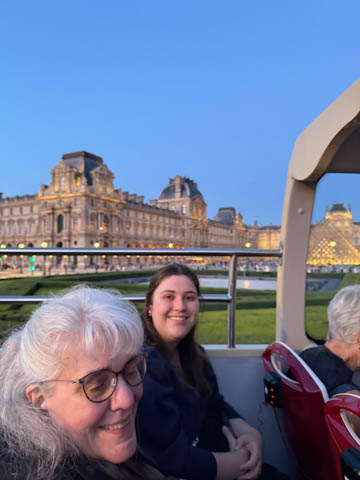
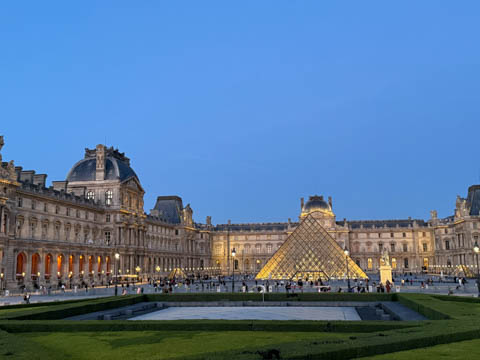
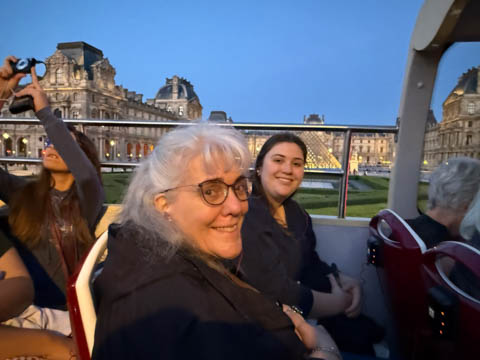
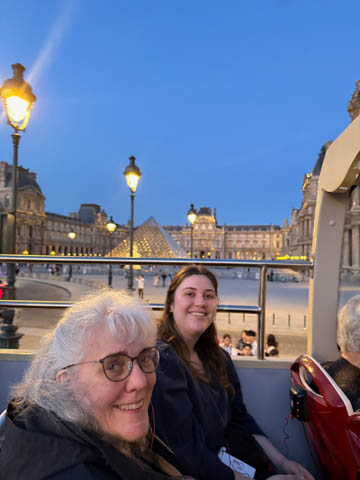
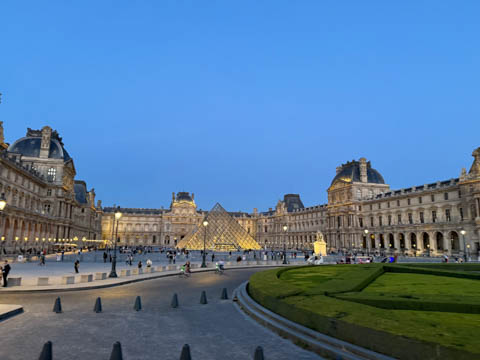
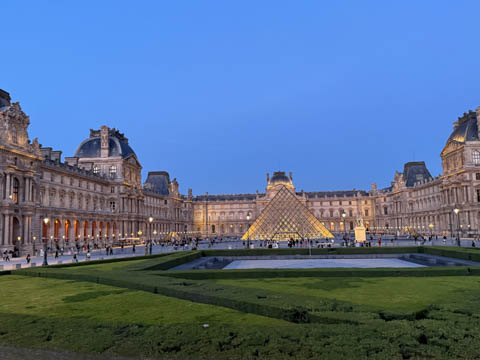
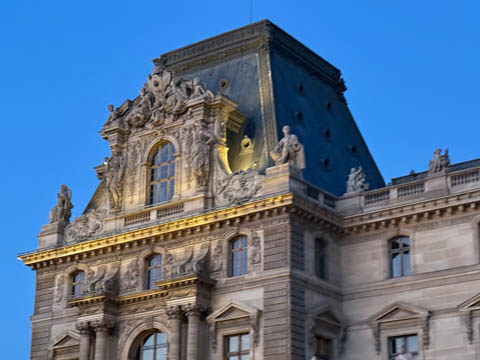
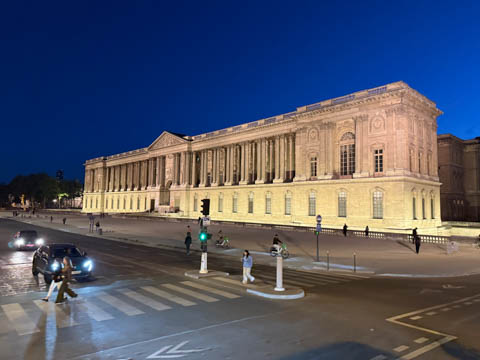
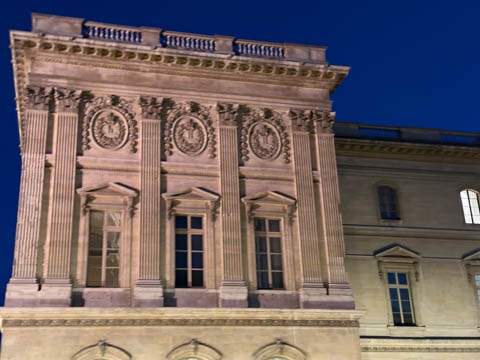
That brought us to the Place du Carrousel in front of the Louvre. Here are the Arc de Triomphe du Carrousel and the Musee Louvre
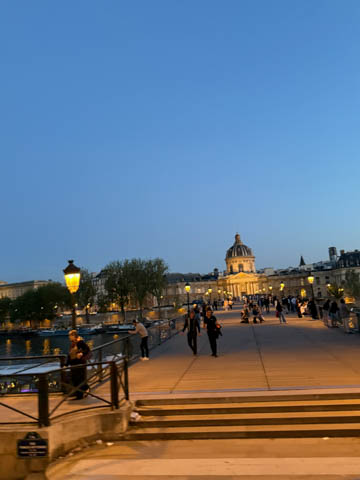
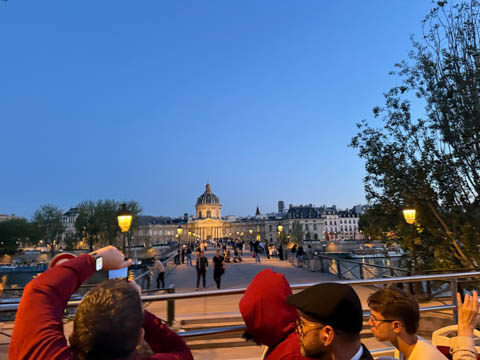
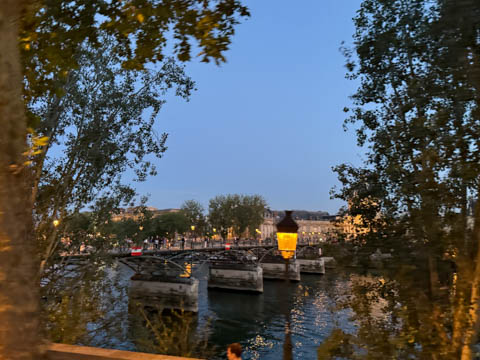
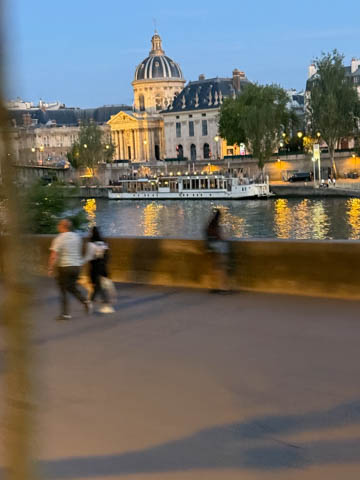
Next to the Louvre along the Seine is the Ponte des Arts bridge with the Institut de France on the other bank. This has a grand baroque style cupola and houses 5 French intellectual academies, including the Academy of Sciences, Fine Arts, and Humanities.
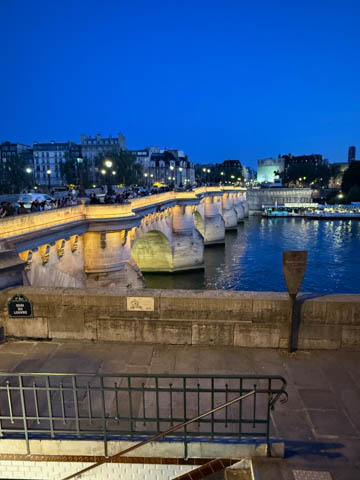
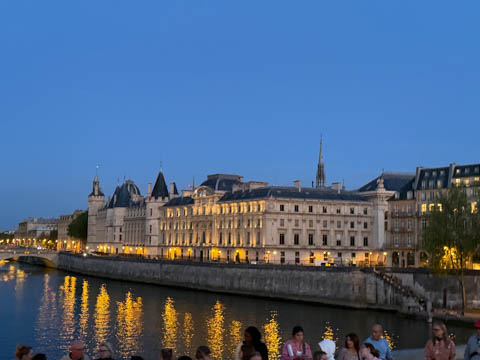
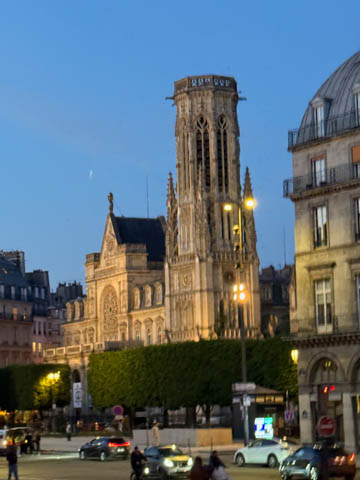
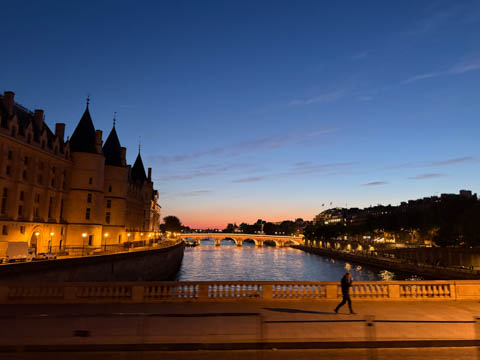
The next bridge up the Seine is Pont Neuf. Named new bridge when built, it is now the oldest bridge across the Seine in Paris and leads to the Ile de la Cite, the island in the middle of the river that was, between 250 and 225 BC, the birthplace of Paris, then known as Lutetia and, during the medieval period, the heart of the city. Looking back , the view is dominated by the Saint-Germain-l'Auxerrois church and its huge spire across from the Louvre, providing a nearby church to the royal residence (to which they naturally rode and never walked). Across the bridge and to the left was the City Palace (Palais de la Cité), the occasional residence of the Kings of France from the early 6th to the 12th century and a permanent one from the late 12th to the 14th century, and has been the center of the French justice system ever since, for which it is also referred to as the Palais de Justice As we entered the Ile de la Cite, we learned it is one of the oldest inhabited areas and the cultural center of France. Archeological excavations have found traces of human habitation on the Île de la Cité from 5000 BC until the beginning of the Iron Age, but no evidence that the Celtic inhabitants, the Parisii, used the island as their capital. Julius Caesar recorded meeting with the leaders of the Parisii and other Celtic tribes on the island in 53 B.C., but no archeological evidence of the Parisii has been found there. However, after the Romans conquered the Parisii in the first century BC, the island was developed quickly. While the forum and largest part of the Roman town, called Lutetia, was on the left bank, a large temple was located on the east end of the island, where the Cathedral of Notre Dame de Paris is found today. The west end of the island was residential, and was the site of the palace of the Roman prefects, or governors. The palace was a Gallo-Roman fortress surrounded by ramparts. In the year 360 AD, the Roman caesar Julian the Apostate was declared Emperor of Rome by his soldiers while he was resident in the city. Beginning in the 6th century, the Merovingian kings used the palace as their residence when they were in Paris. Clovis, the king of the Franks, lived in the palace from 508 until his death in 511. (we heard about Clovis a lot, as the first recognized king of the Franks or King of France. He had his name Latin-ized to "Lovis" when converting to Christianity, which was then normalized to Louis as the "v" was converted to a "u"). The kings who followed him, the Carolingians, moved their capital to the eastern part of their empire, and paid little attention to Paris.
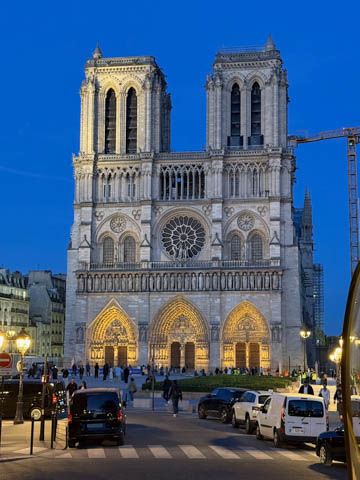
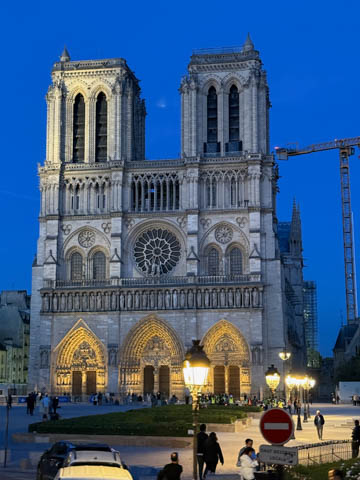
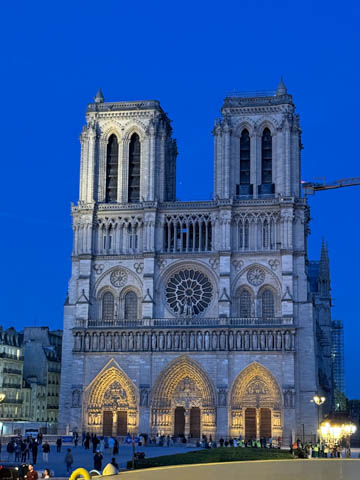
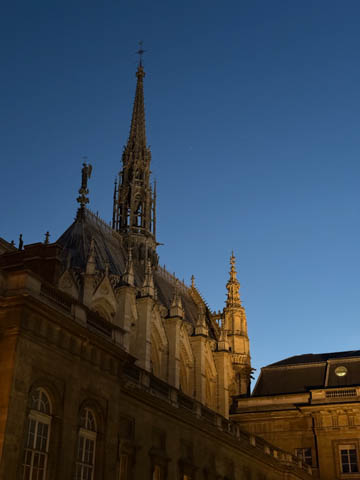
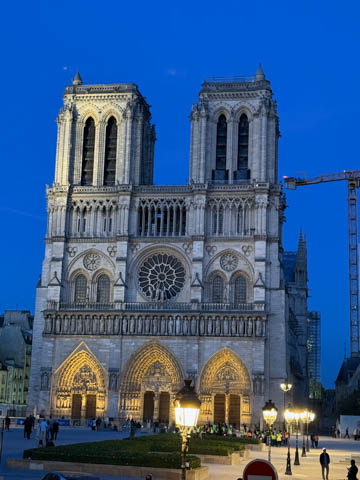
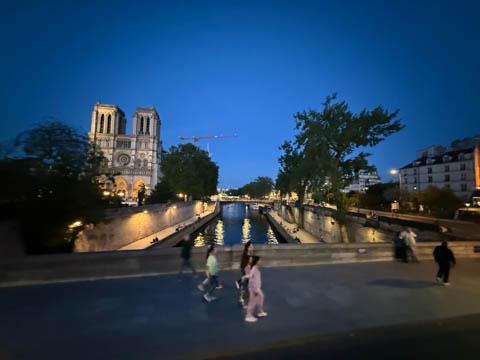
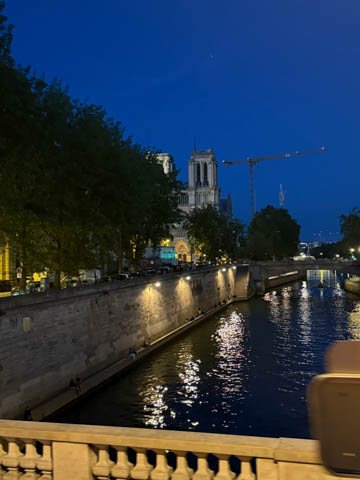
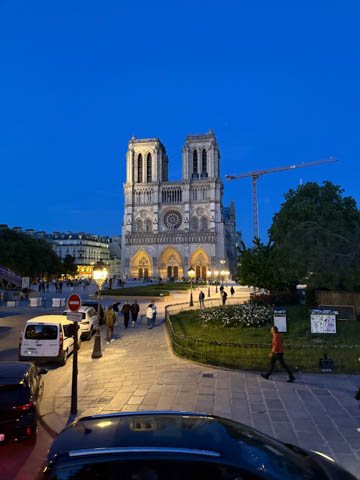
The Ile de la Cite is a religious center too, with both Notre Dame de Paris and Sainte-Chapelle.
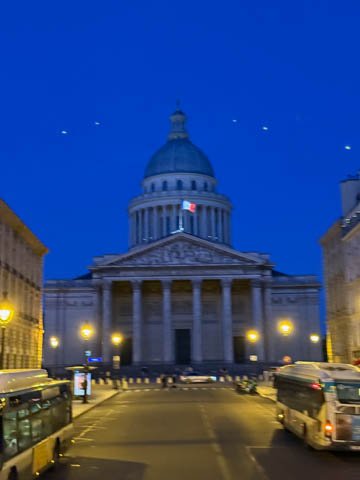
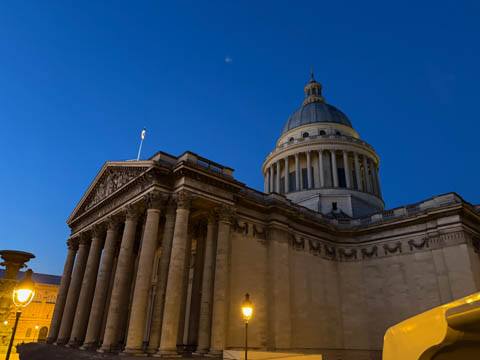
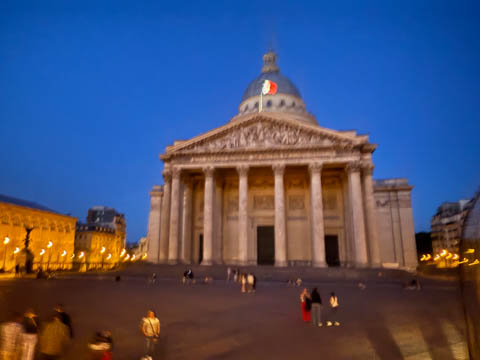
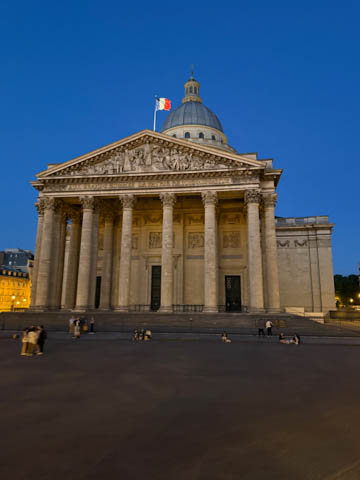
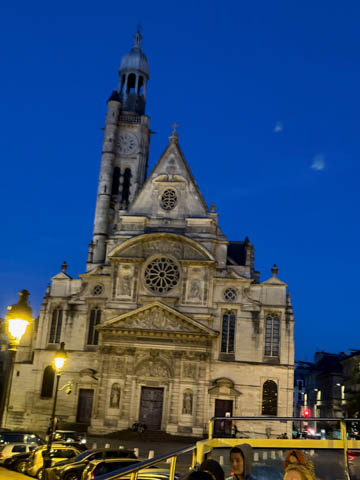
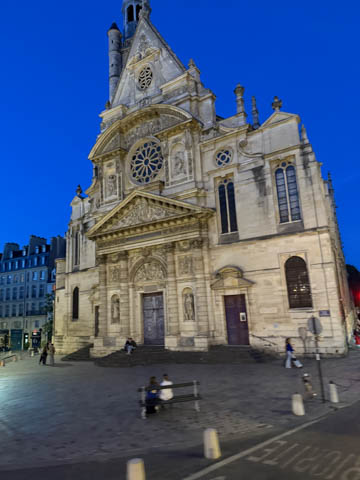
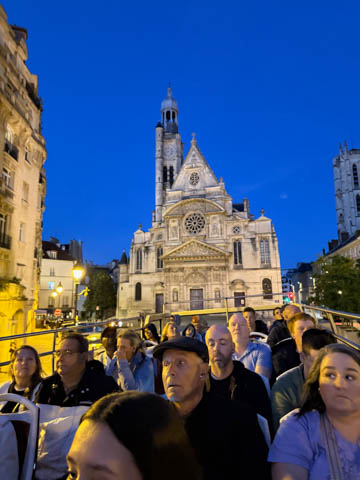
Here are the Pantheon and the Eglise Sant-Etienne-du-Mont which are across the street corner from each other.
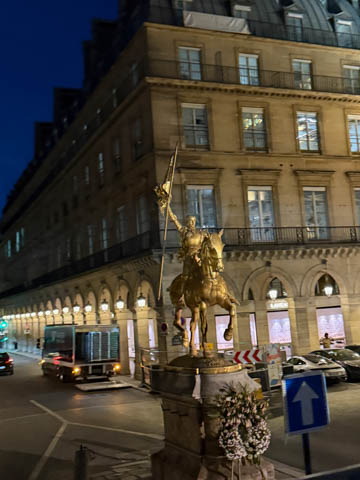
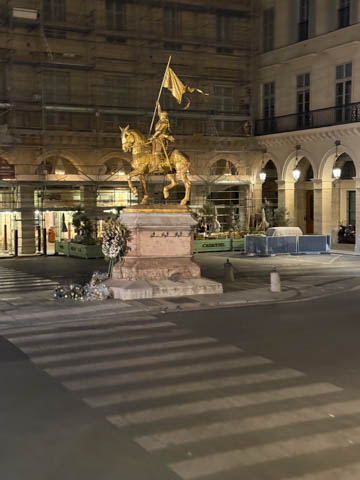
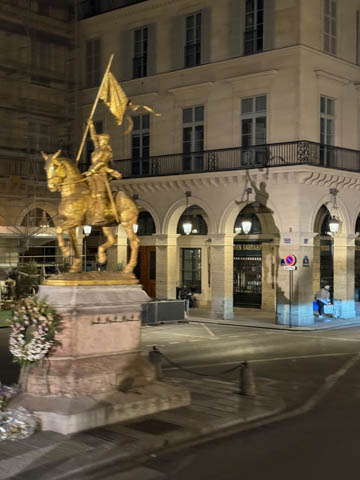
Just north of the Louve at the Place de Pyramids is a golden equestrian statue of Joan of Arc.
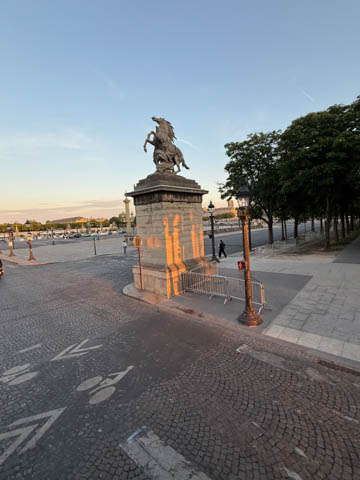
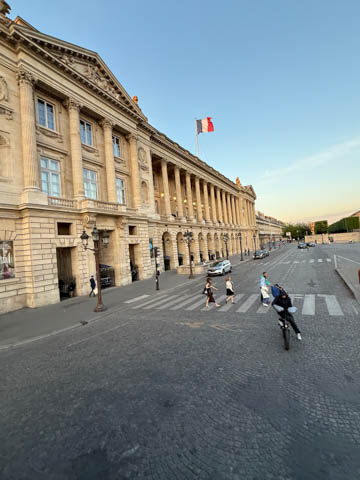
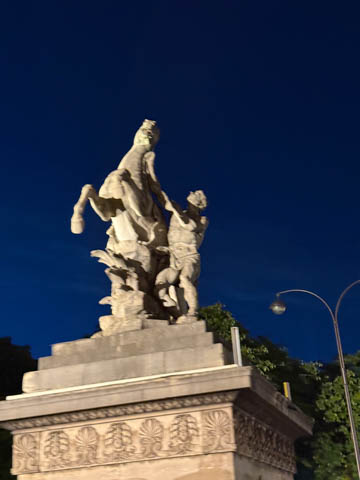
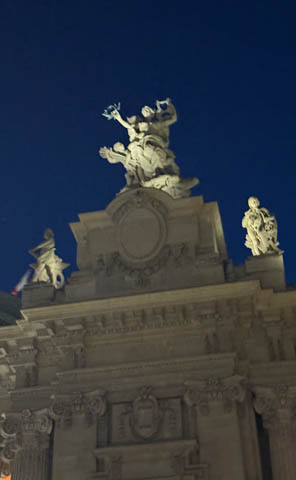
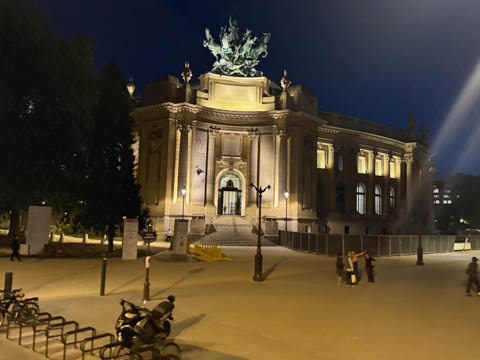
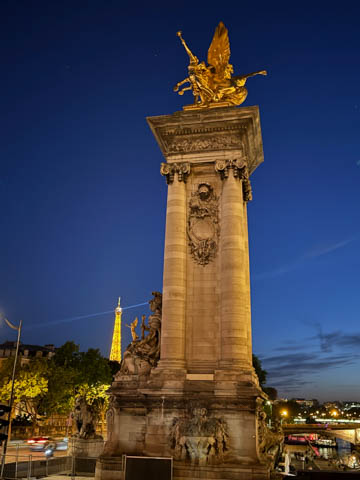
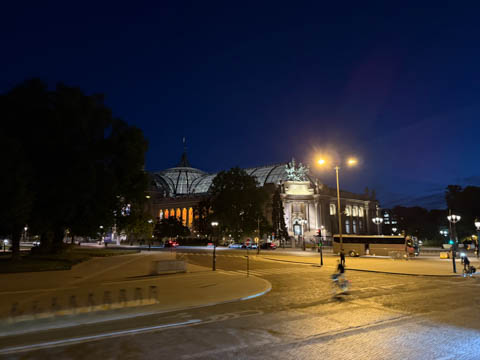
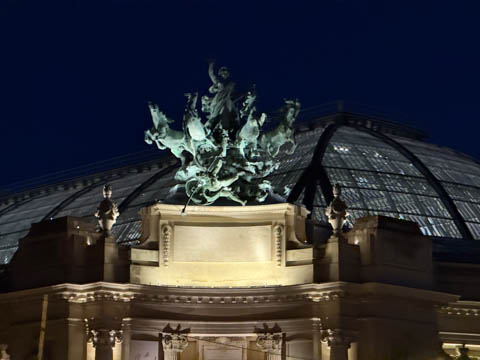
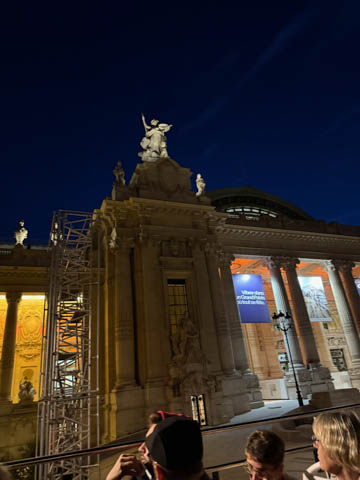
We passed by the Grand Palace again, with the statues on the roof. Here is a column and statue which are on either side of the south end of the Port Alexander III bridge.
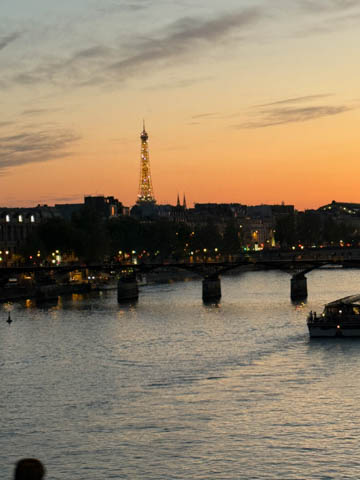
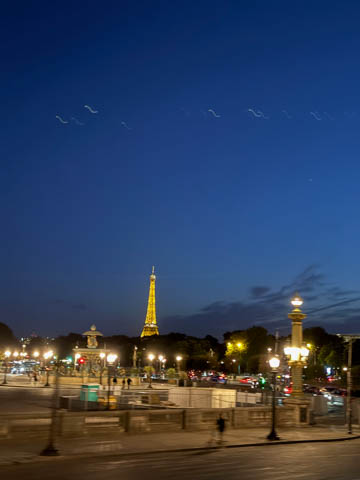
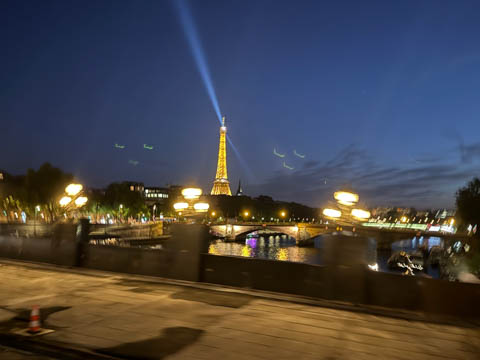
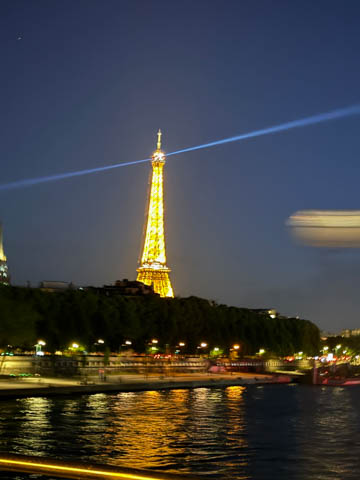
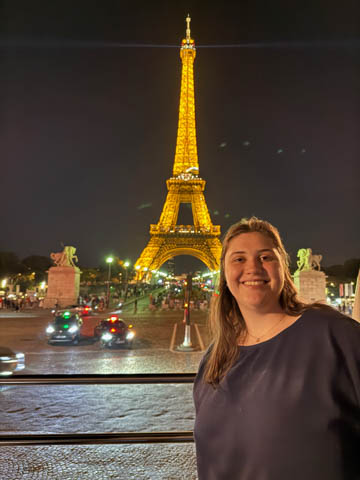
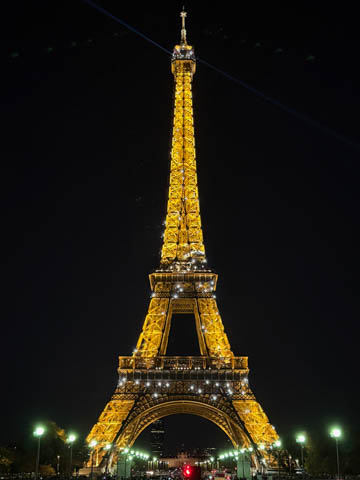
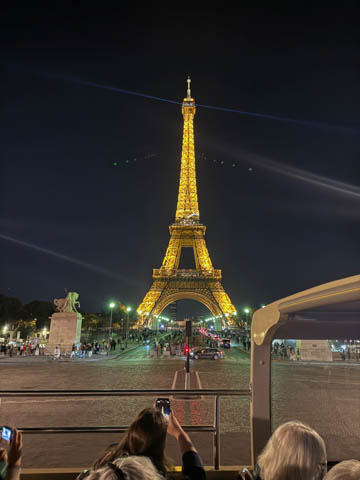
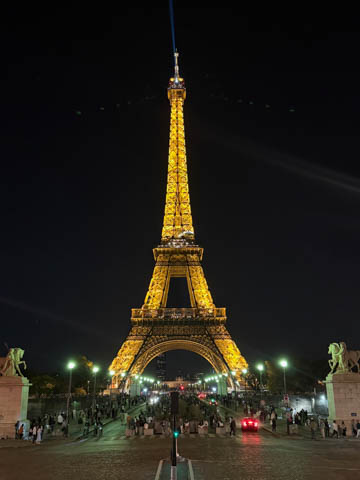
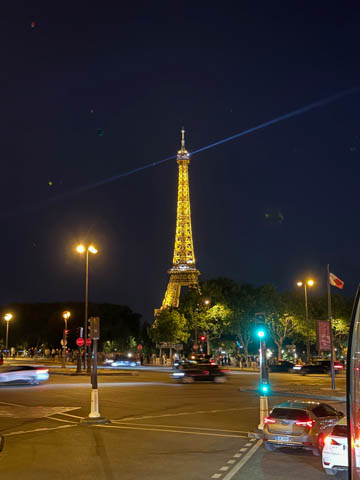
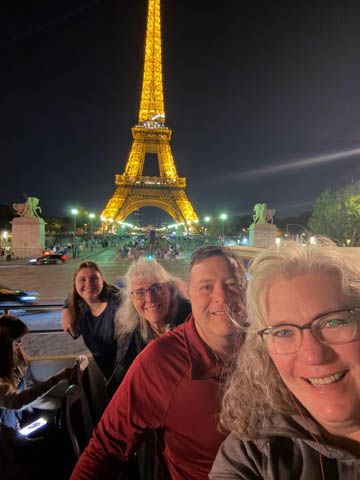
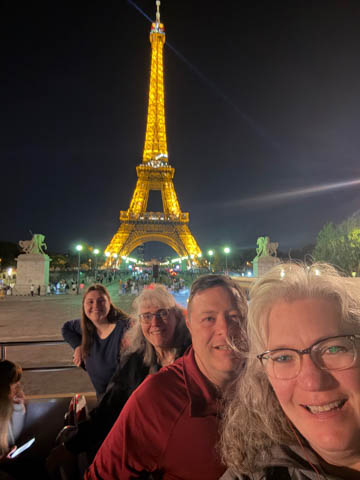
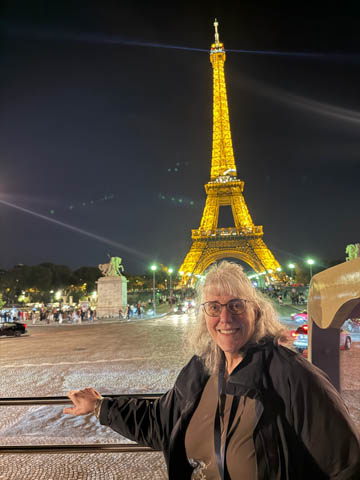
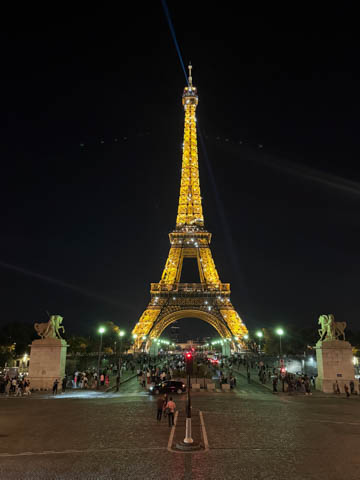
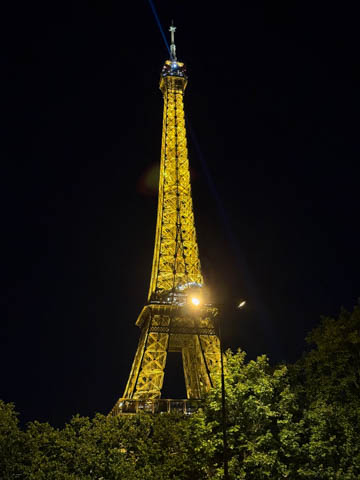
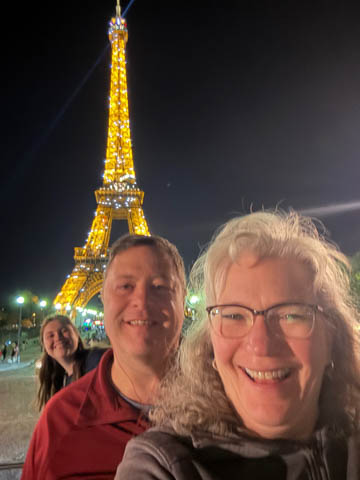
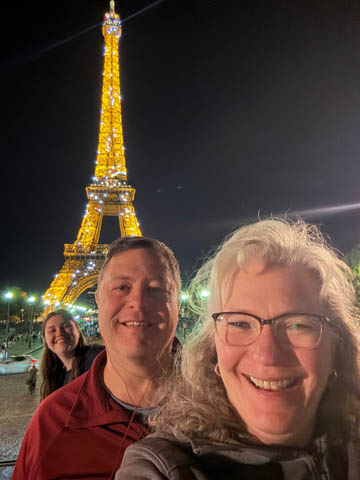
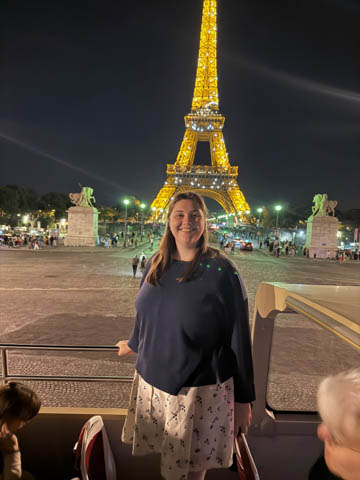
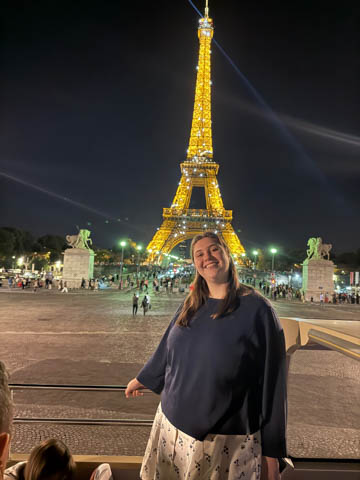
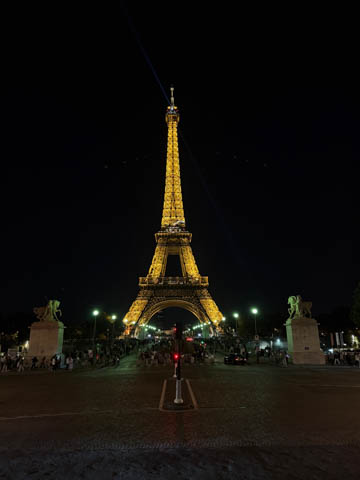
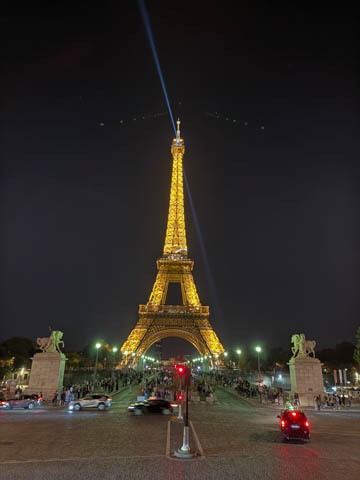
They times the tour pretty well, as we stopped at the Eiffel Tower right on the hour, allowing us to watch the light show from the top of the bus.
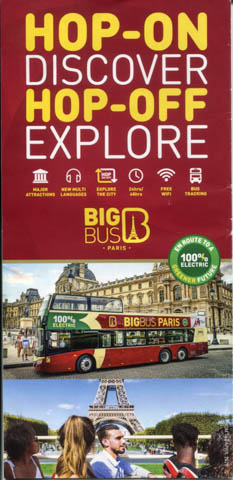
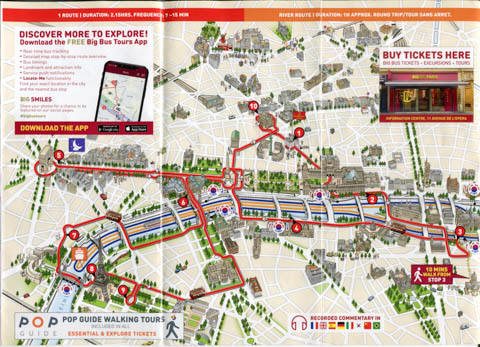
Here is the Big Bus Tour brochure with the route map.
|
|
|