


|
|
Use these navigation links to move between the Year 2023 pages. Specific pages can be accessed at the bottom of this page
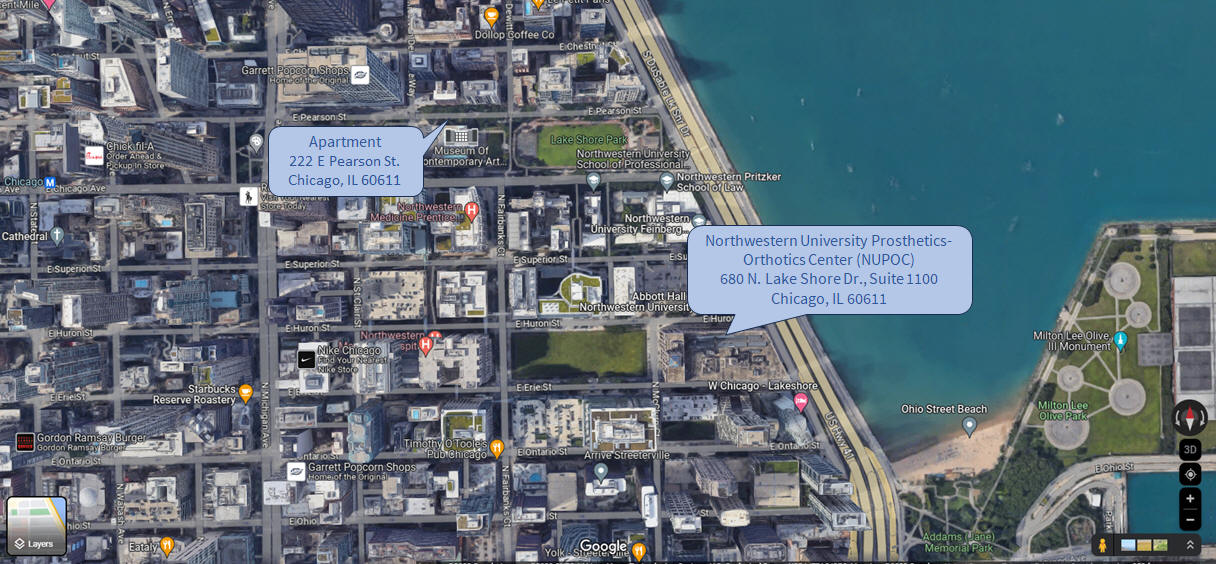
June 2023 (Part 01) Chicago Trip: Chicago River Architecture Tour Since Andy had his housing plans mostly solved, we essentially had a free day on Saturday. So, we headed into the city. First order of business was to run by Northwestern and figure out where the apartment was. It looks like it is only four blocks from his school building, and net door to the Ritz Carlton and Water Tower Place with a park and outdoor gym out front, while both are an easy walk to Navy Pier.
We took an architectural tour along the Chicago River. We had done this years ago, and as we remembered, it was one of the better and more informative tours in the city. Plus it was a simply beautiful day. One planning problem, we thought there was an option to leave from Navy Pier, and so parked there. Oops, that wasn't the same boat tour. We wound up taking an ebike rickshaw to get there, which was a great call.
The tour highlights Chicago's history as a great commercial center, built due to its location near a portage between the Great Lakes and the Mississippi River watersheds. Here cargo can come all the way from the east cost, up the St. Lawrence River, across the Great Lakes, and then up the Chicago River. From there, it was a six mile portage to the Des Plaines River which connects to the Mississippi and there to much of the area east of the Rocky Mountains. In some wet seasons, the portage was passable by a canoe through Mud Lake. The approximately six-mile link had been used by Native Americans for thousands of years during the Pre-Columbian era for travel and trade. In the summer of 1673 members of the Kaskaskia, a tribe of the Illinois Confederation, led French explorers Louis Jolliet and Father Jacques Marquette to the portage, making them the first known Europeans to explore this part of North America. In 1848, the water divide was breached by the Illinois and Michigan (I&M) Canal cutting through the portage. In 1871, the Chicago fire destroyed roughly 3.3 square miles (9 km2) of the city including over 17,000 structures, and left more than 100,000 residents homeless. But Chicago's population continued to grow to 503,000 by 1880 and then doubled to more than a million within the decade. The construction boom accelerated population growth throughout the following decades, and by 1900, less than 30 years after the fire, Chicago was the fifth-largest city in the world. Chicago made noted contributions to urban planning and zoning standards, including new construction styles (such as the Chicago School architecture, the development of the City Beautiful Movement, and the steel-framed skyscraper). This building boom, and regulations favoring innovation, attracted some of the world's best architects and led to a downtown area with a collection of architecturally significant building in close proximity unlike almost any other city in the world. Here is the Wrigley Building (left and center), built in 1924, and the Tribune Tower across the street (a Neo-Gothic skyscraper from 1925).
To the right is the Montgomery Ward complex up the north branch of the river before we turned around near Goose Island.
Afterward, we stopped by Matt's apartment again to see him and the kittens he's "watching."
We then hit Giordano's in Oak Park for dinner. Amazingly, Matt joined us for a piece.
|
|
|




.JPG)
.JPG)
.JPG)
.JPG)
.JPG)
.JPG)
.JPG)
.JPG)
.JPG)
.JPG)
.JPG)
.JPG)
.JPG)
.JPG)
.JPG)
.JPG)
.JPG)
.JPG)
.JPG)
.JPG)
.JPG)
.JPG)
.JPG)
.JPG)
.JPG)
.JPG)
.JPG)