|
|
Use these navigation links to move between the Year 2026 pages. Specific pages can be accessed at the bottom of this page
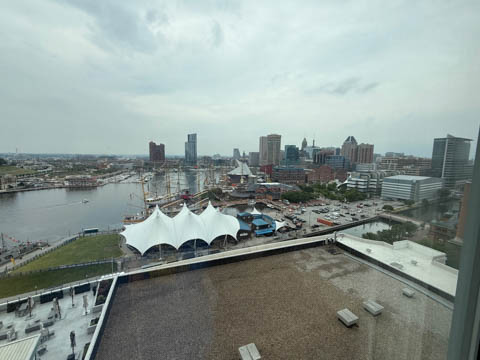
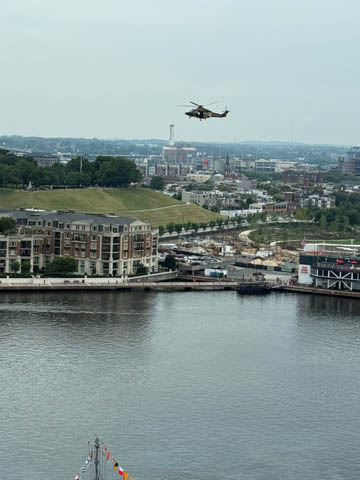
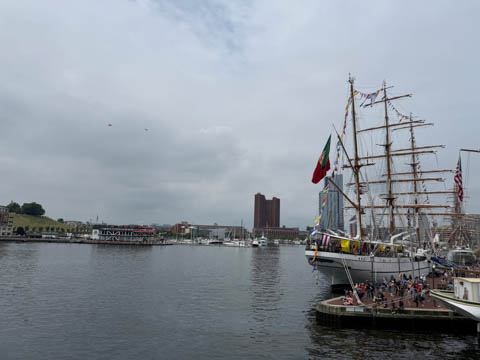
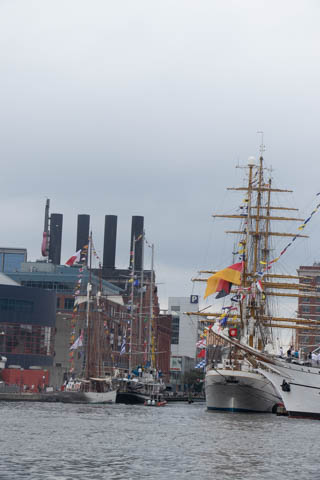
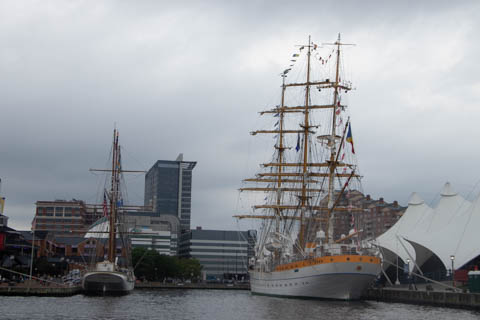
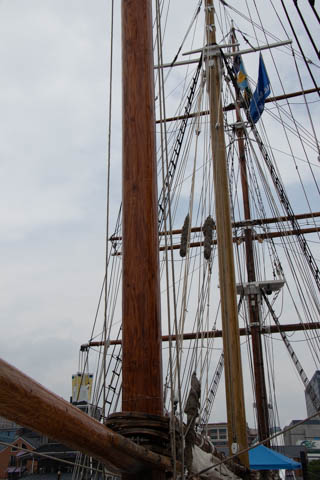
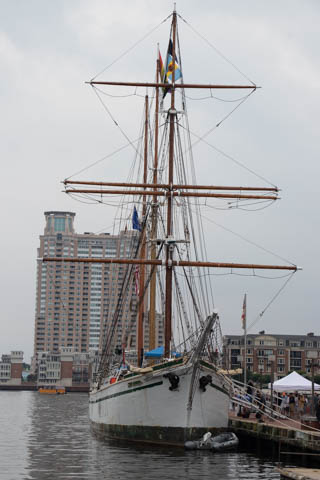
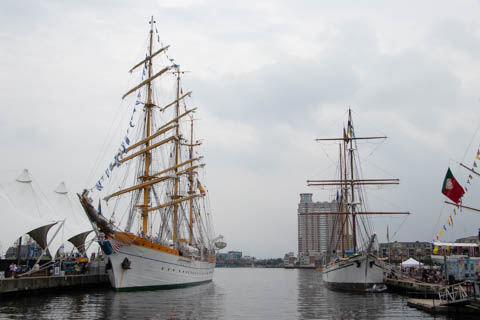
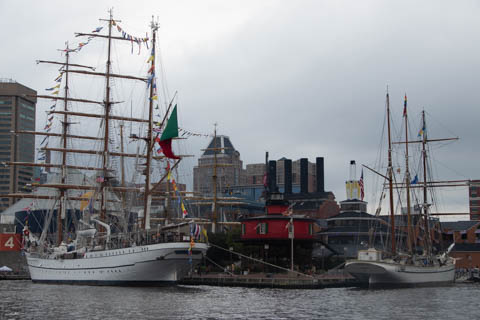
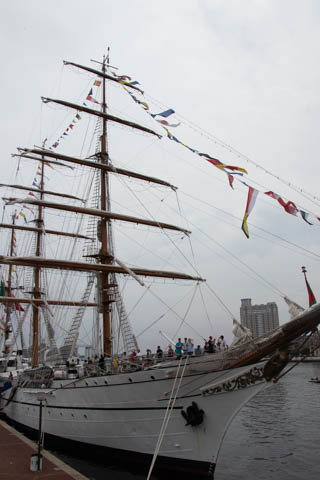
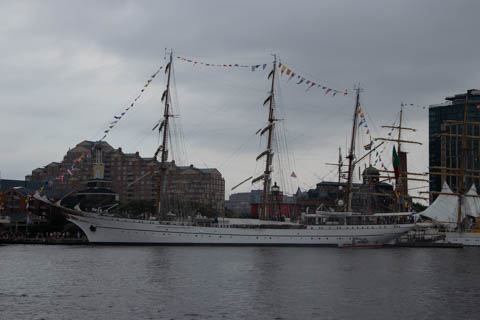
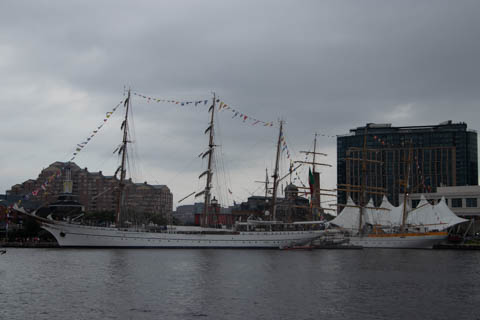
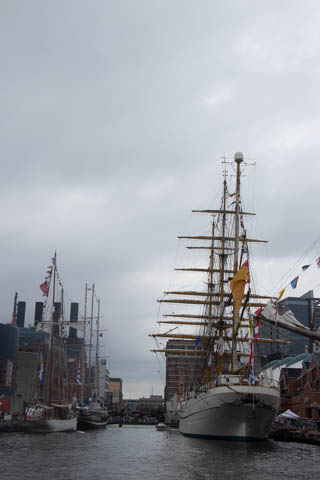
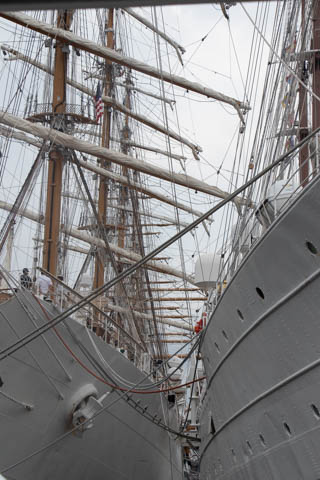
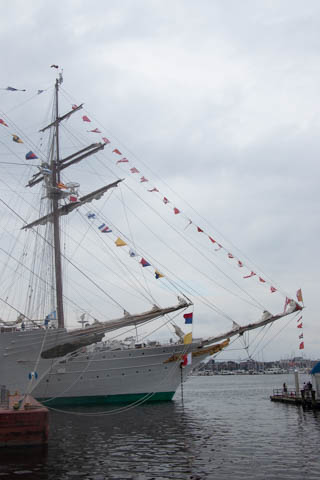
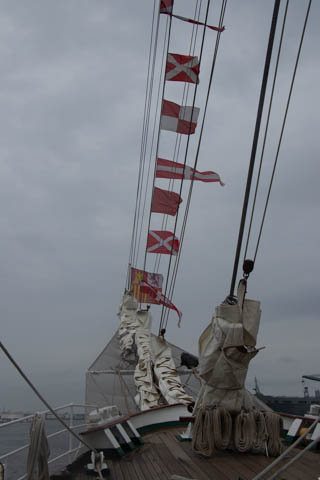
June 2026 (Part 05) Sail 250 Tall Ships and Air Show in Baltimore We planned ahead for this weekend months ago, after Steve saw a note about a gathering of Tall Ships to celebrate the country's sesquicentennial anniversary this summer with an event called Sail250-Maryland. We booked a room at the Marriott and headed up to Baltimore. There were 15 visiting tall ships in the Inner Harbor area, joining the three historic ships already there on permanent display. There was an additional ship out by Fells Point joining the eight historic ships on permanent display there, with three more just across the harbor at Tide Point. There were also two more modern ships from the US Navy on the peninsula. Finally, it was also an Air Show weekend, with the US Navy Blue Angels, British Royal Air Force Red Arrows, French Air Force Patrouille de France, and the US Air Force F-16 Demonstration teams. There were also several music stages and numerous food and other vendors. The Marriott was essentially at the end of the ships in the Inner Harbor, providing a great overview of many of the ships. There were several military aircraft who made loops around the Inner Harbor, providing an interesting contrast between the older ships and the newer machines of war.
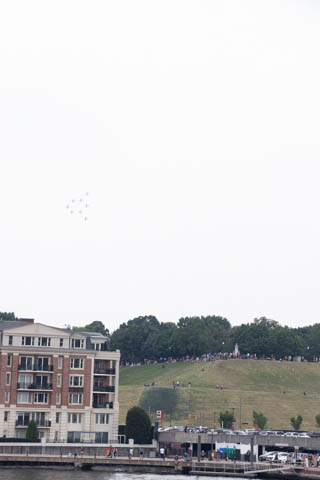
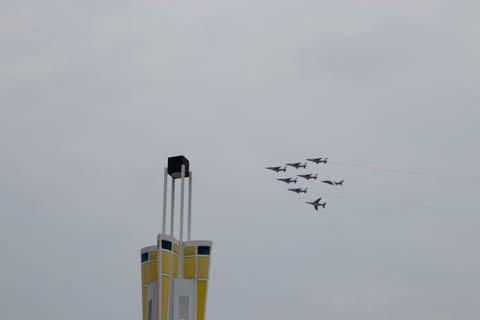
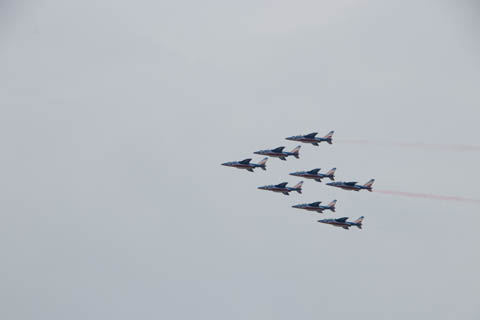
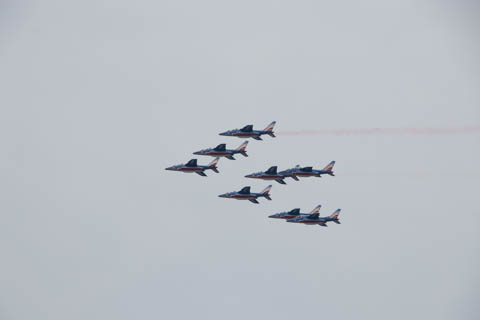
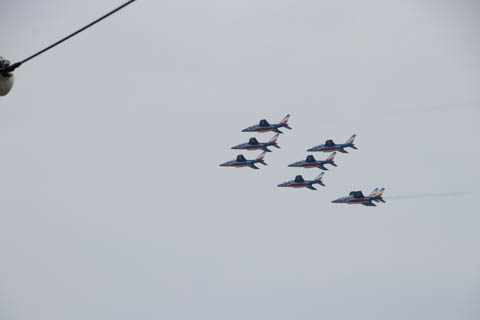
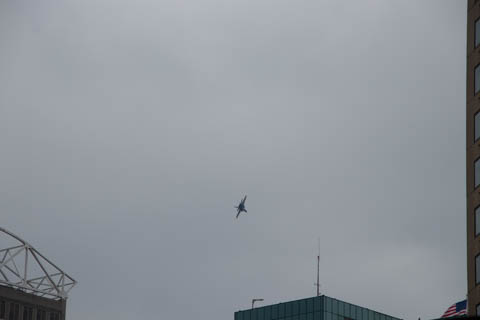
Here are the French Patrouille de France demonstration team over Federal Hill Park, with their twin-engine Dassault-Breguet Alpha jets.
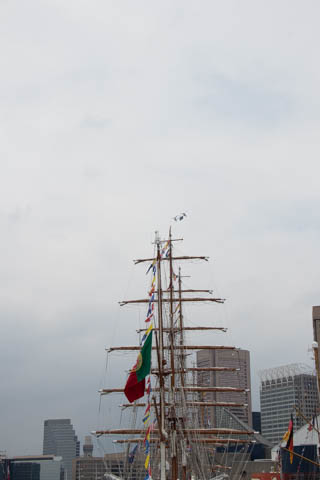
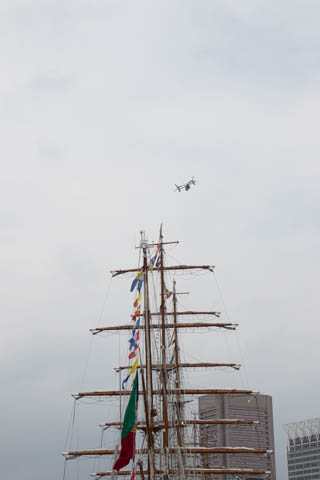
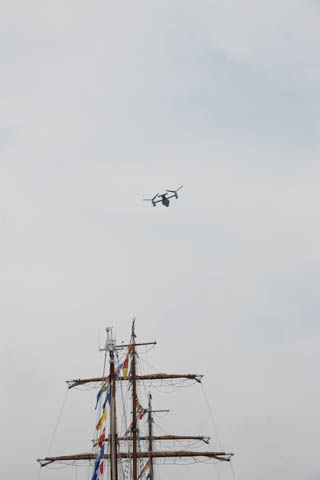
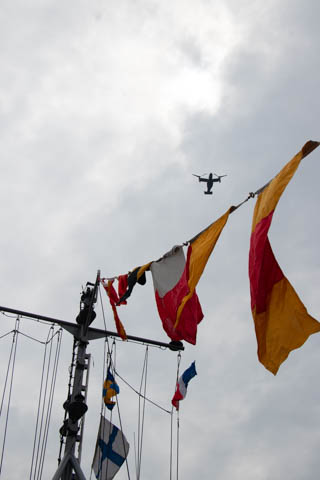
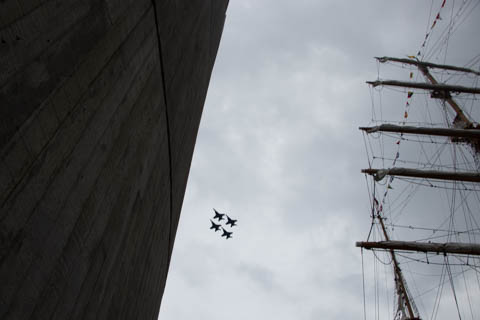
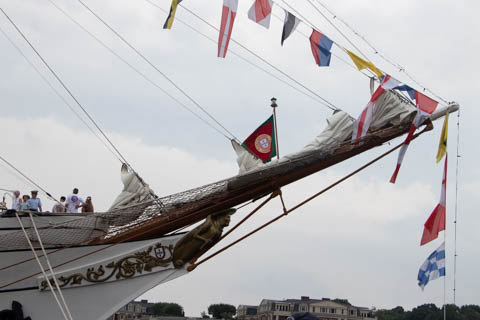
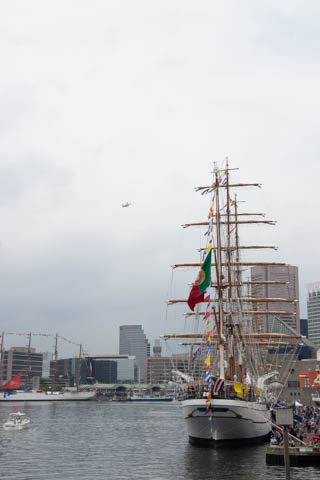
We could certainly hear the air show, although the show was on the other side of Fort McHenry. Several of the passes brought planes over the Inner Harbor. Unfortunately, the sound echoed so much that it was difficult to know when and where they were, never less getting a camera up in time. Here they are over the Portugese NRP Sagres.
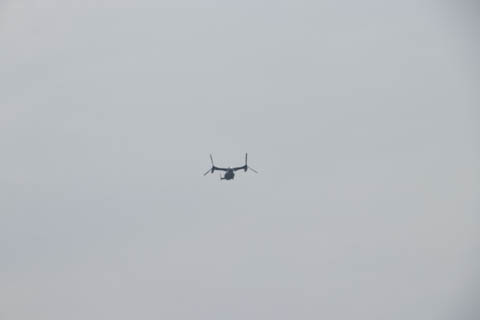
Here are the only images of the Blue Angels we captured.
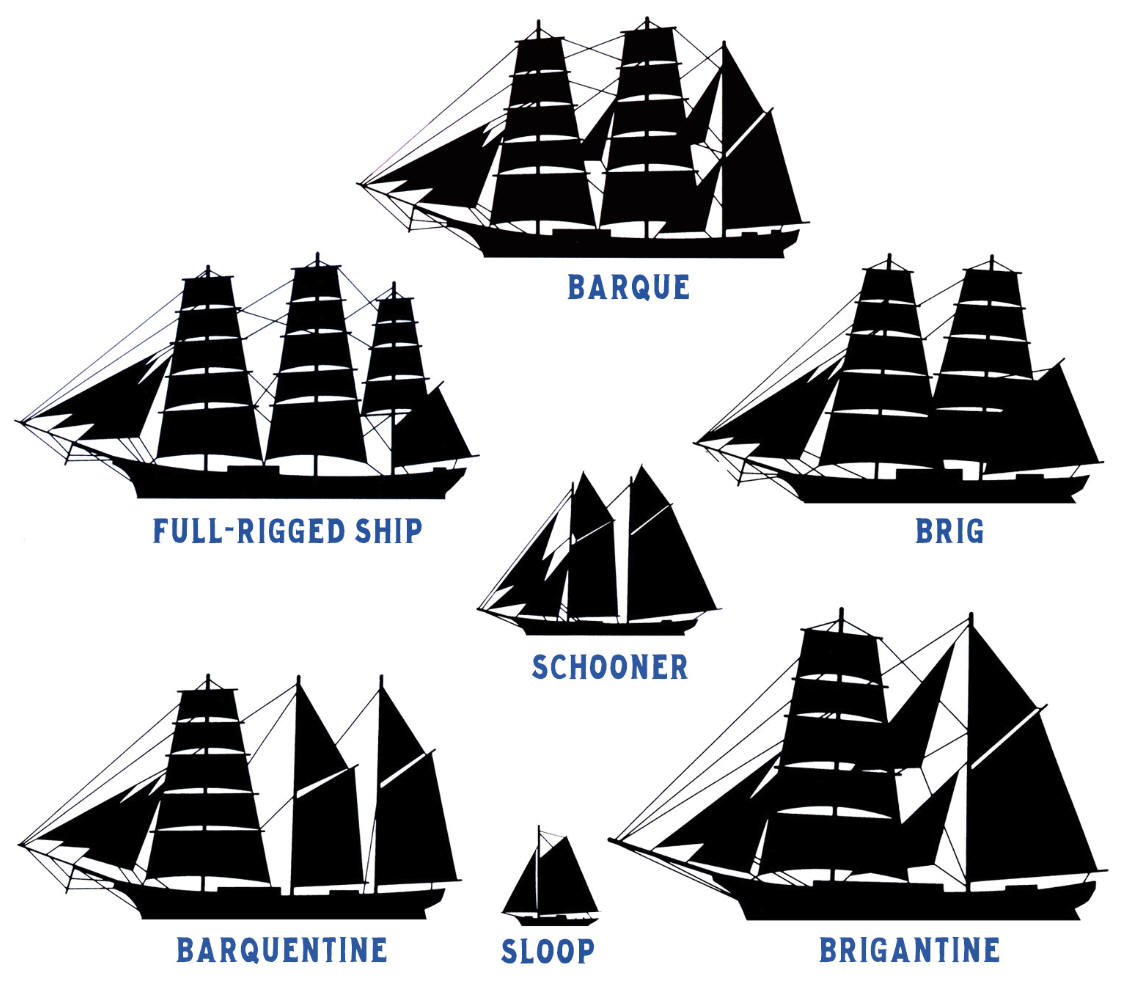
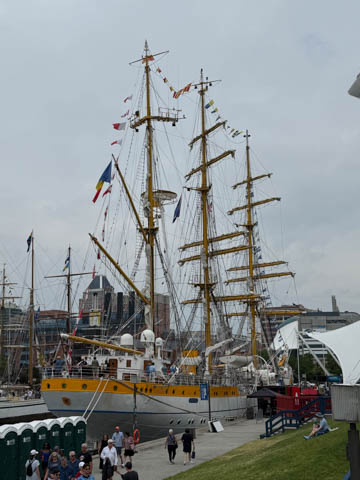
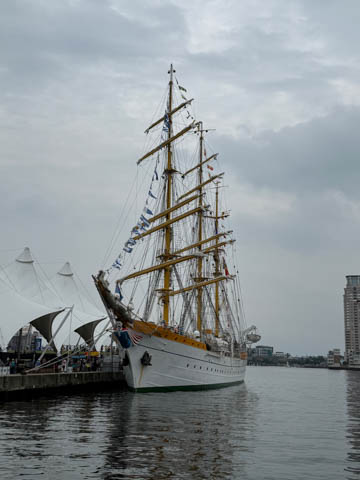
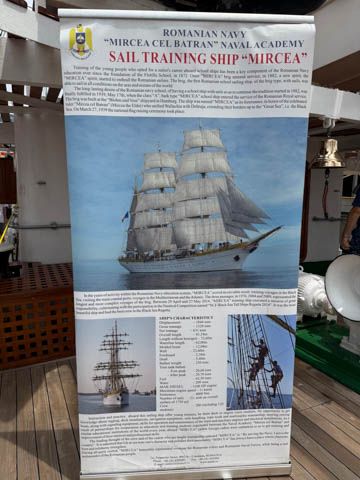
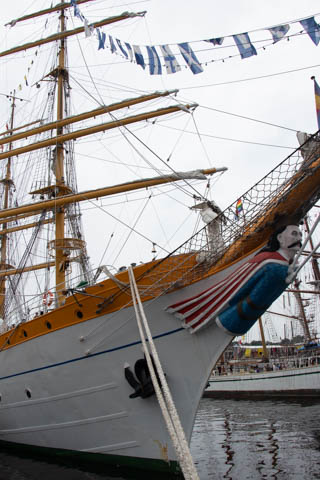
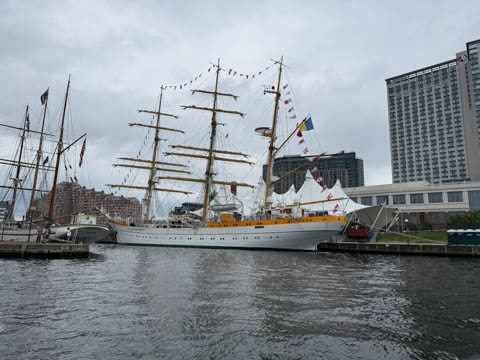
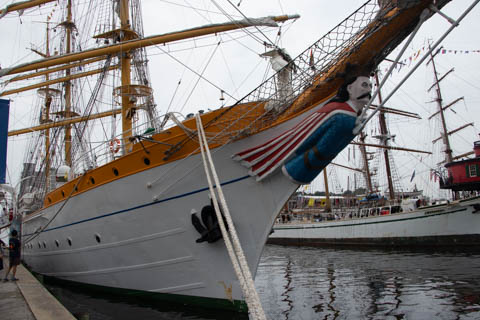
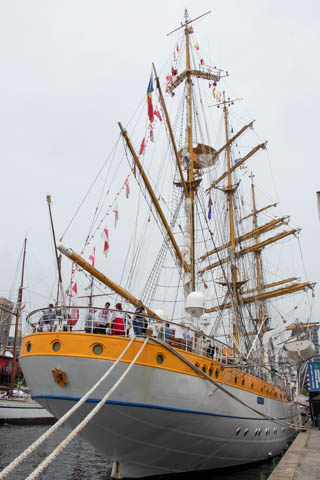
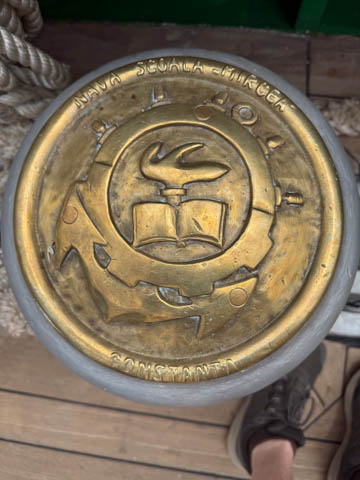
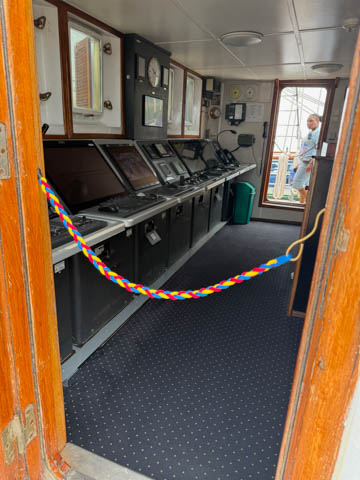
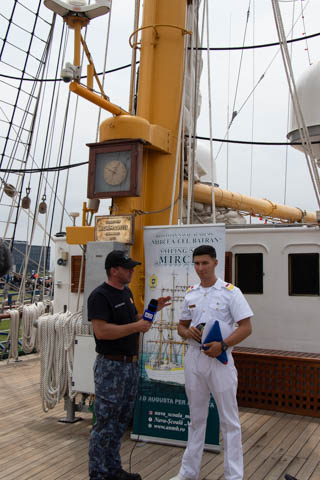
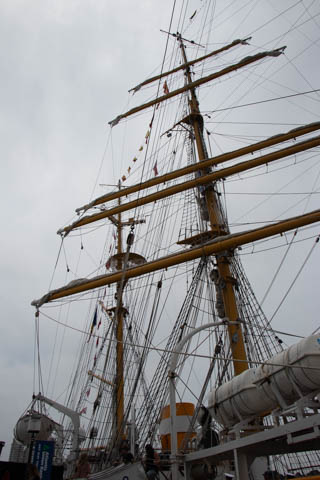
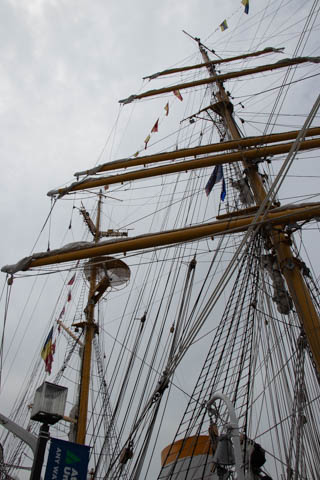
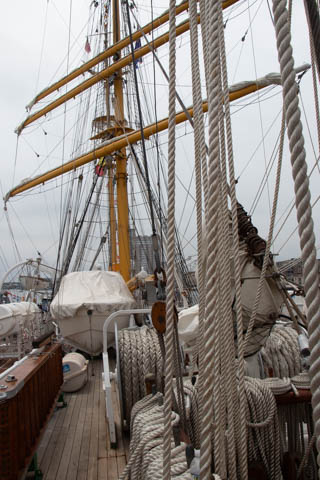
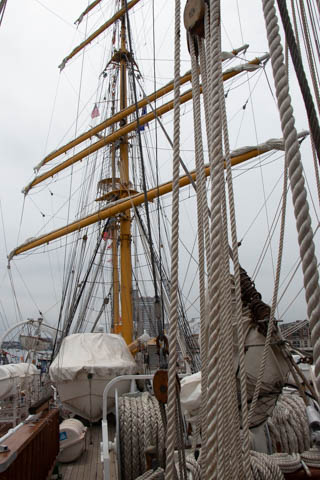
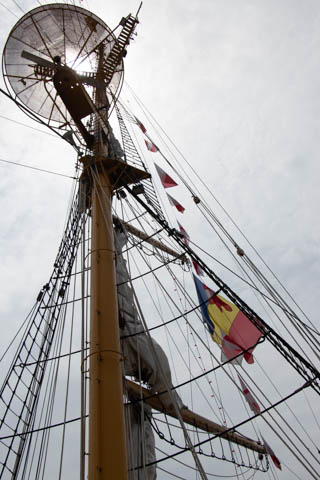
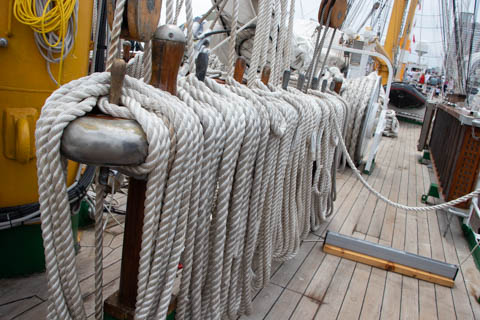
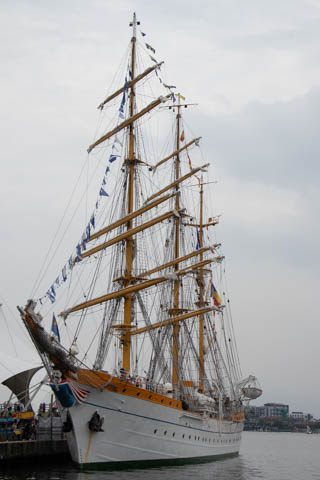
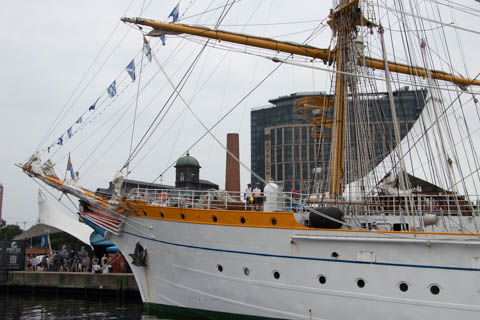
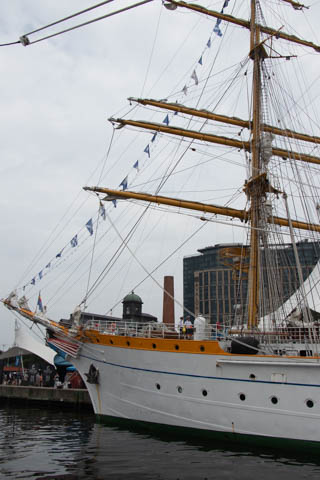
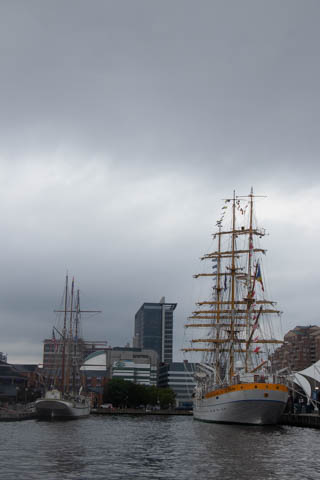
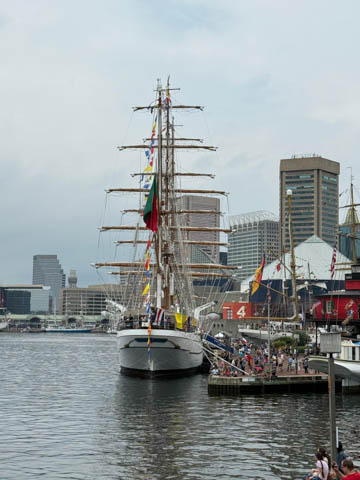
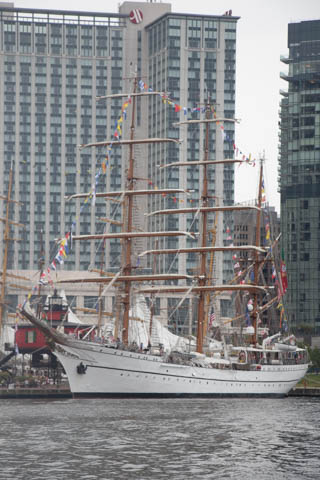
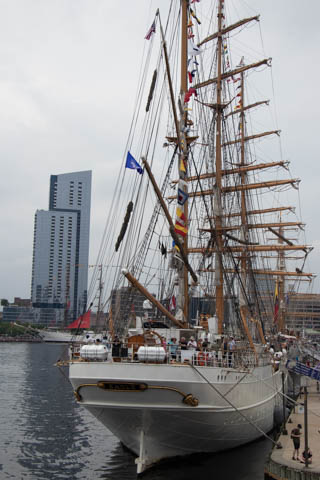
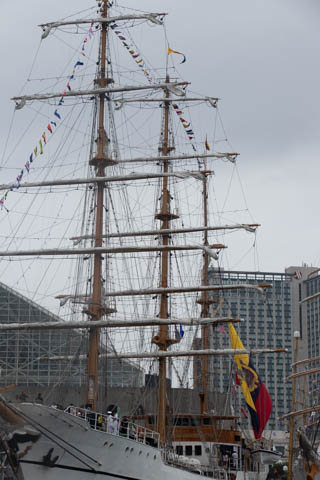
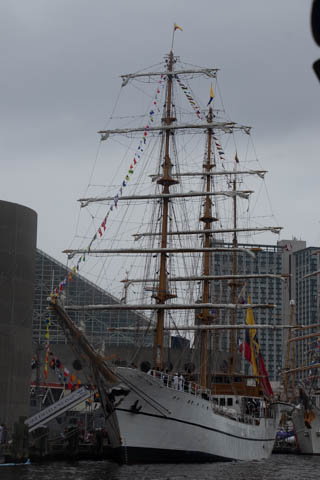
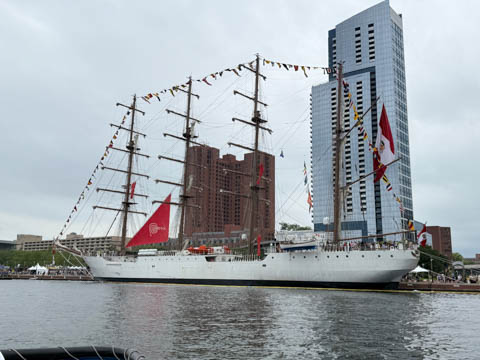
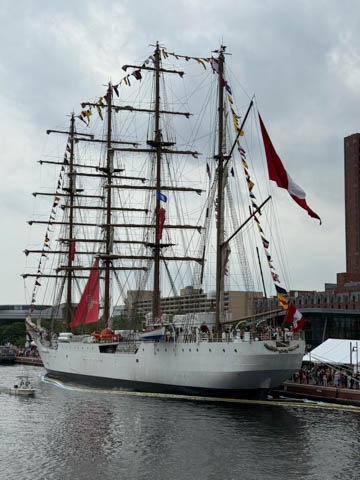
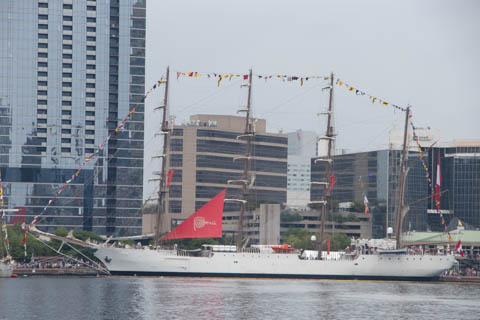
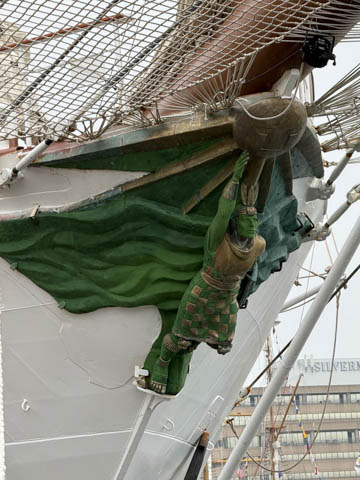
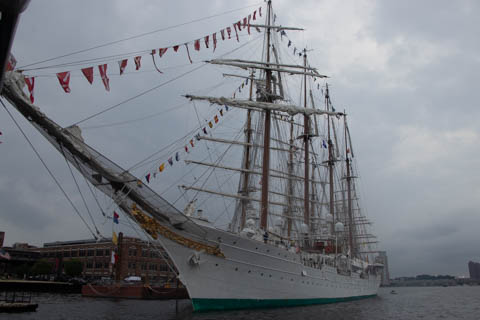
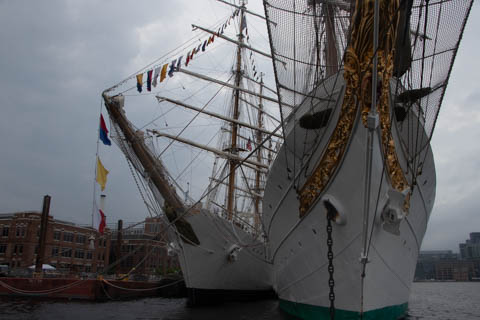
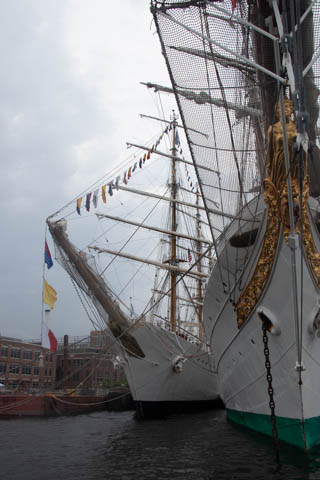
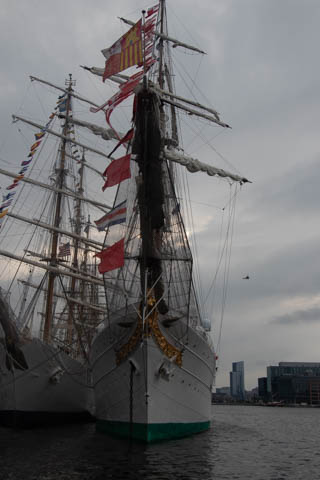
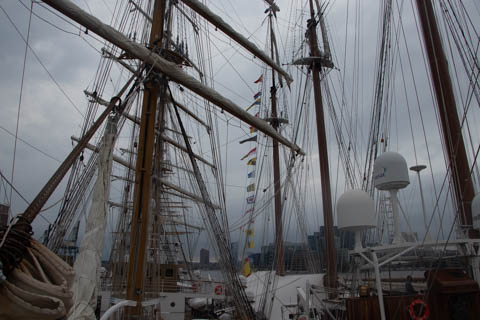
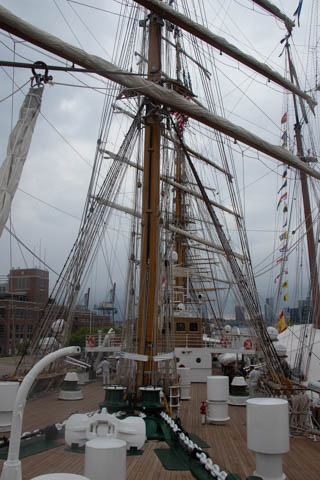
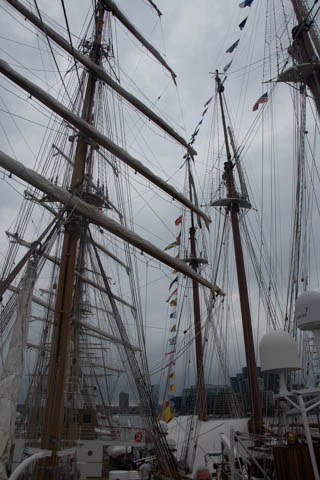
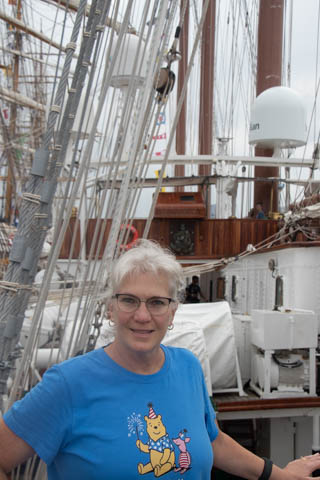
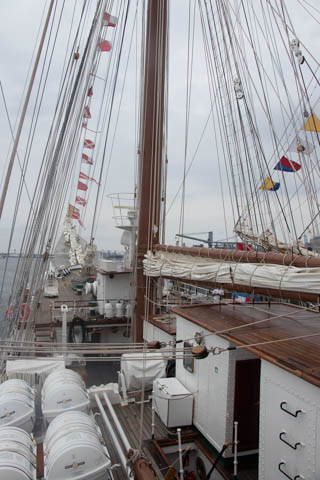
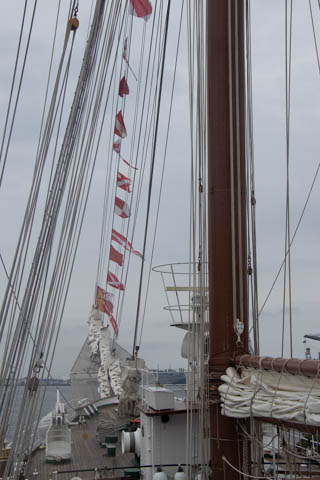
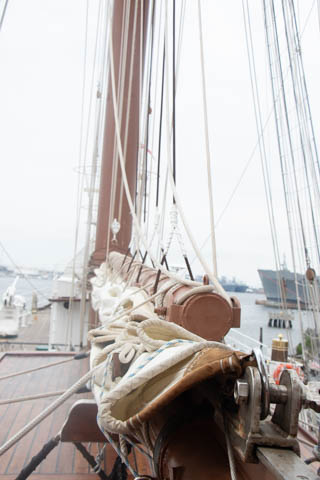
We started our exploration boarding the Romanian Mircea. It looks like they left Constanta, Romania on April 16th and arrived first in Miami on June 13 almost two months later, then made a port call at Norfolk before arriving in Baltimore. As with all of the ships, it planned to head immediately to New York for the celebration on the 4th of July, then head to Boston. One of the crew (several spoke English) commented they sailed most of the crossing, as sailing allowed them to make 15 or more knots, while the motor topped out at about nine knots. "A three-masted barque measuring approximately 820 meters in length, Mircea is homeported in Constanța on the Black Sea. The ship carries 23 sails with a total sail area of 1,750 square meters and has a complement of 80–89 crew members and 120–140 cadets. Built in 1938 in Hamburg, Germany, for the Romanian Navy, Mircea is a sister ship to Eagle (United States), Gorch Fock (Germany), and Sagres (Portugal) (all of which were in Baltimore). It regularly participates in international tall ship events, including previous OpSail celebrations in New York." A barque (or bark) has "three or more masts of which the fore mast, mainmast, and any additional masts are rigged square, and only the aftmost mast (mizzen in three-masted barques) is rigged fore and aft. Sometimes, the mizzen is only partly fore-and-aft rigged, bearing a square-rigged sail above." With a crossing under sail of almost two months, it was clear why every foreign ship was steel-hulled and had modern navigation and safety systems (along with smaller motors retrofitted in the hulls). There were two wooden-hulled ships who arrived, both from ports on the American eastern seaboard: Gazella Primerio from Philadelphia and the Lynx from Nantucket.
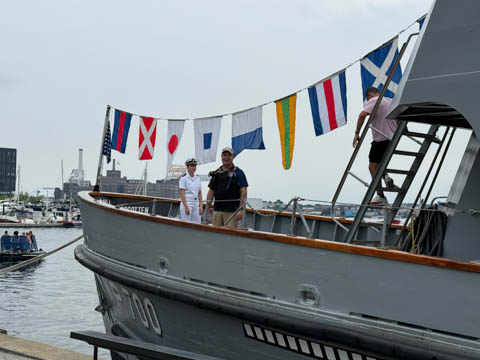
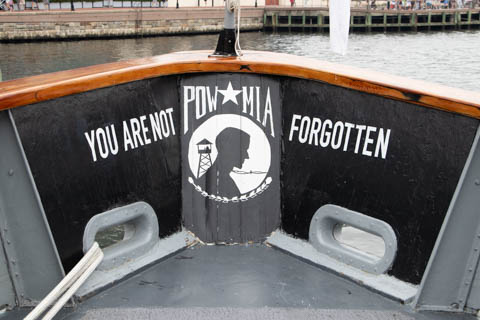
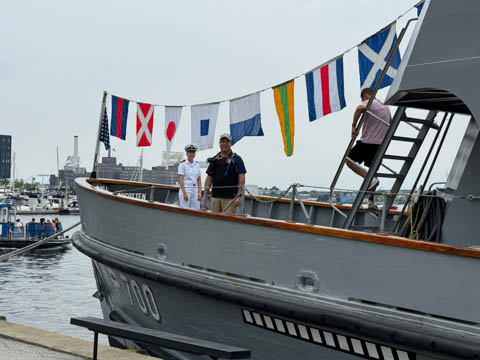
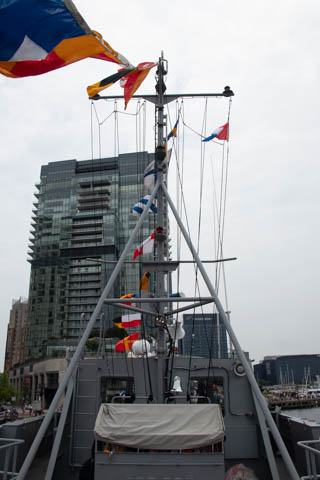
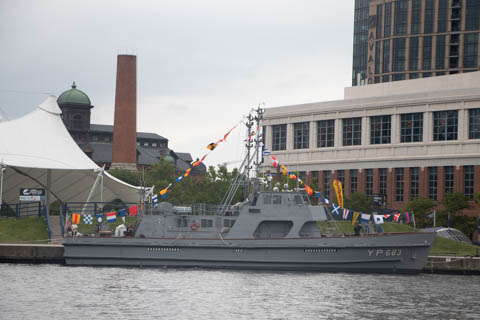
Next to this was a Yard Ship from the US Naval Academy
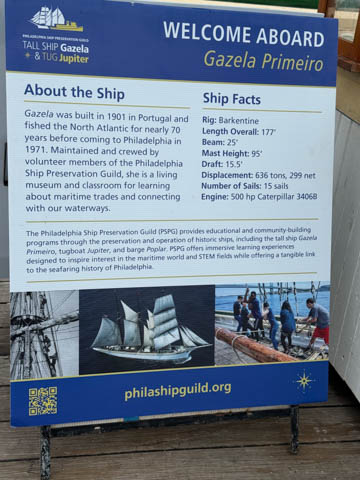
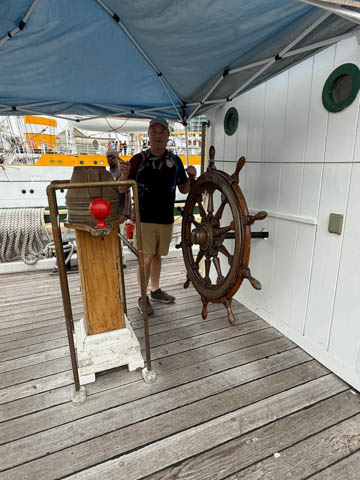
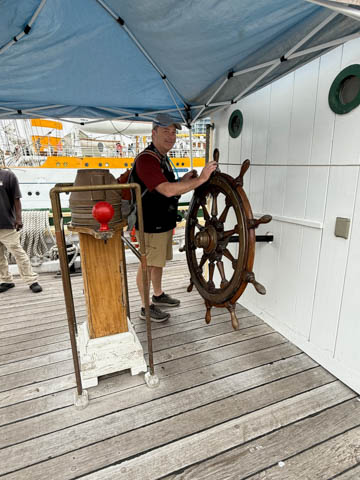
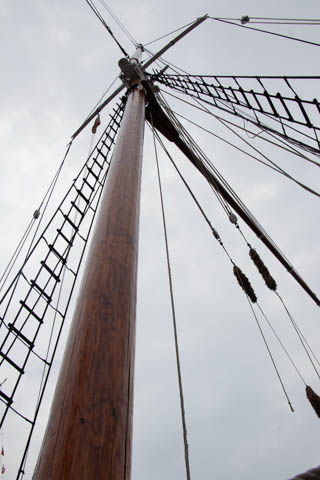
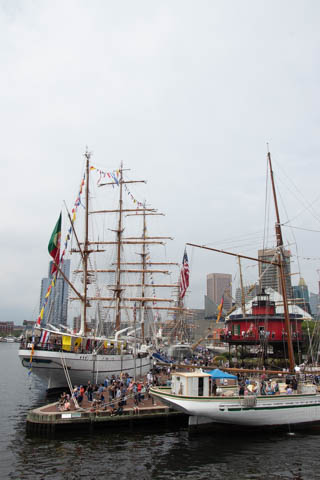
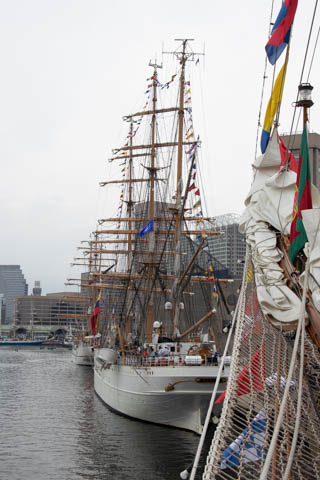
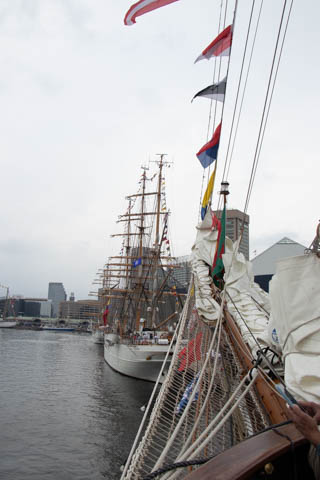
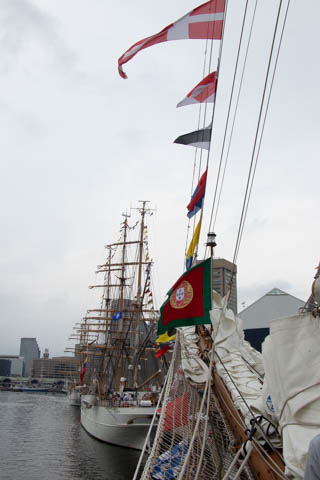
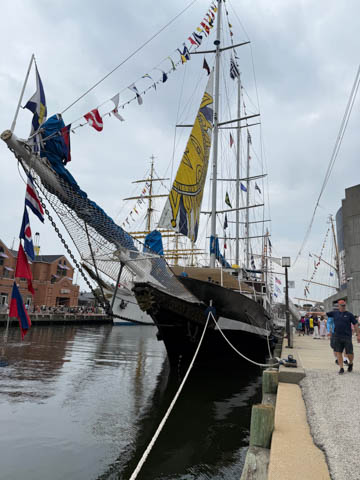
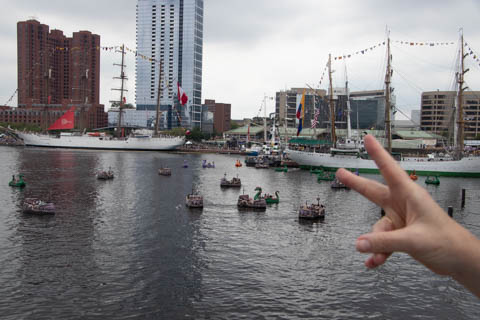
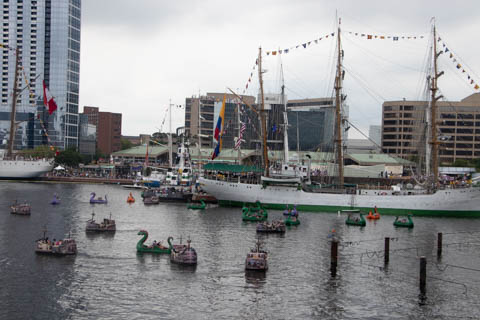
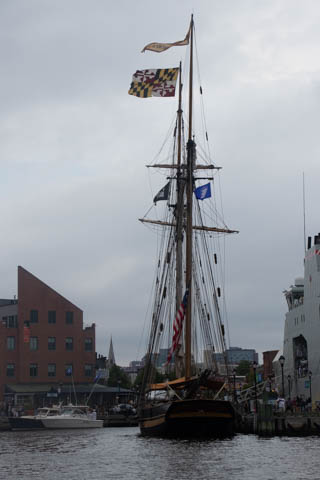
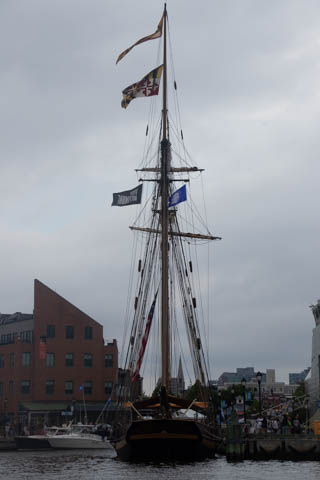
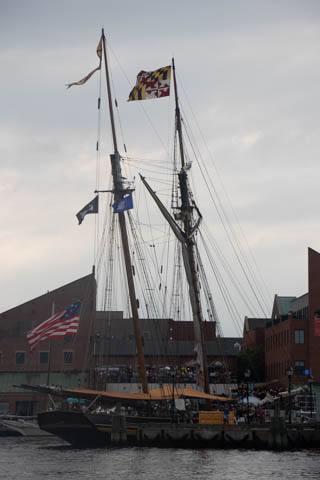
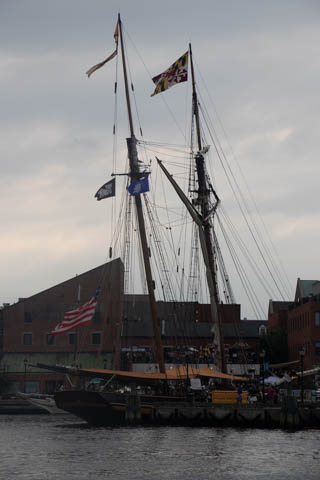
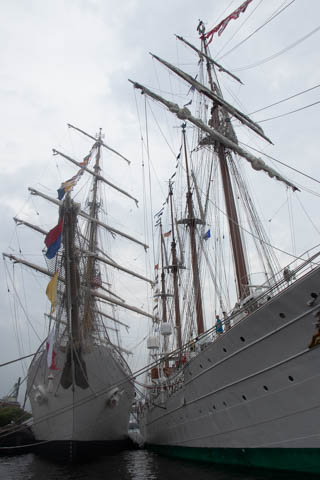
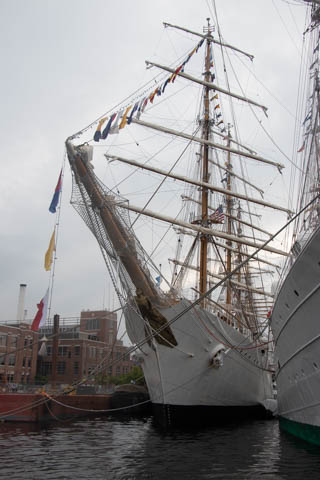
The Gazella Primerio is from Philadelphia. This three-masted barkentine was built in Portugal in 1901 to fish the Grand Banks off Newfoundland, where she served until being bought in 1972 for the Philadelphia Maritime Museum. Ownership was transfer to the Philadelphia Ship Preservation Guild in 1990, which began a restoration program in 2021. This was on the other side of a slip from the Mircea, allowing some fun pictures of both of them.
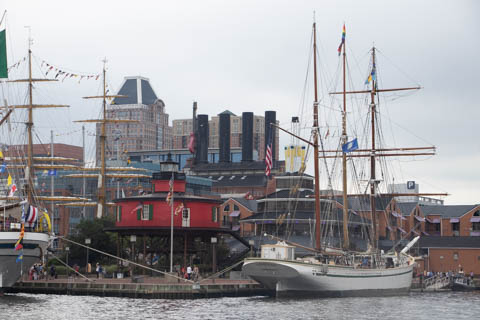
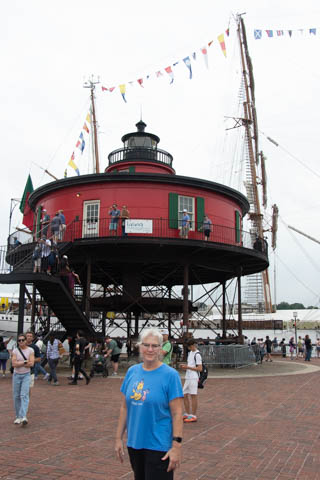
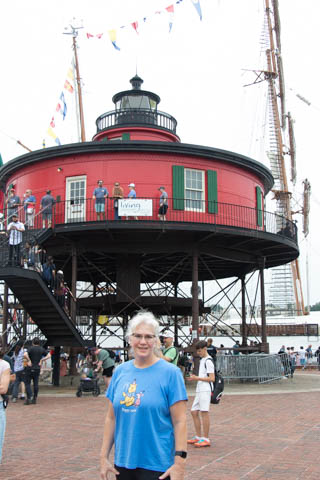
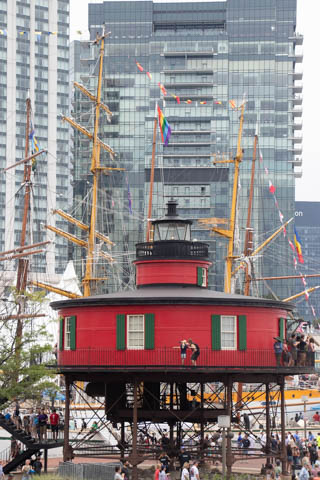
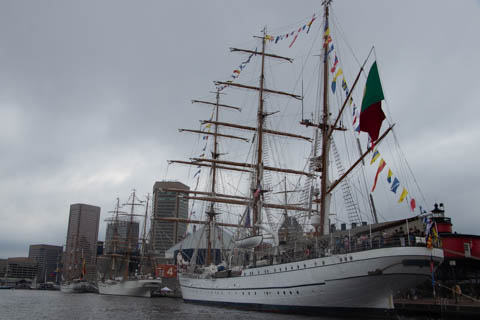
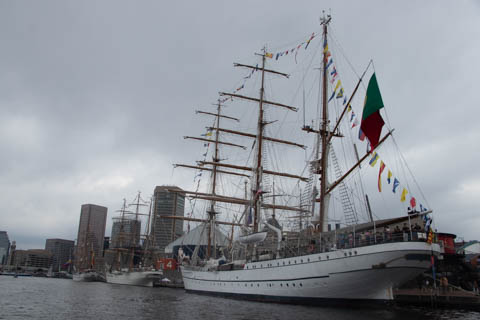
The Gazella and NRP Sagres were moored on the corner of Pier 5, next to the Seven Foot Knoll Lighthouse.
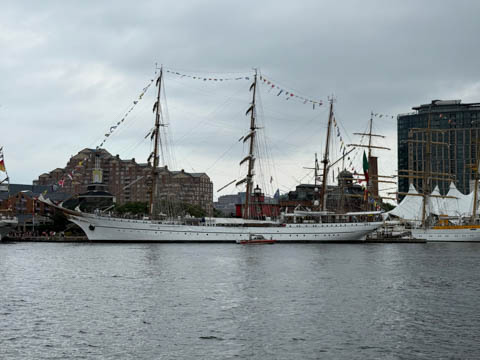
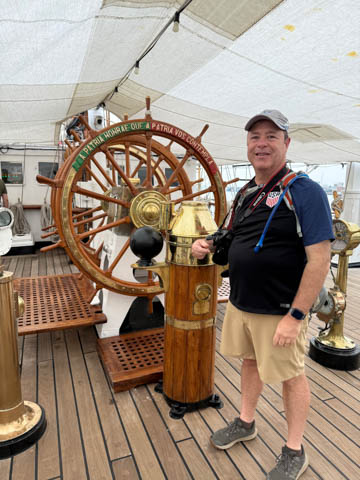
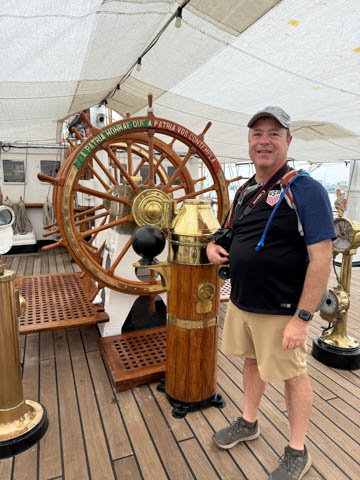
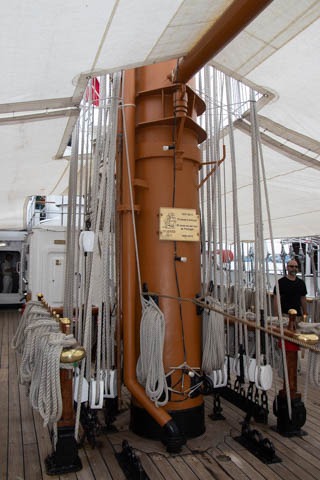
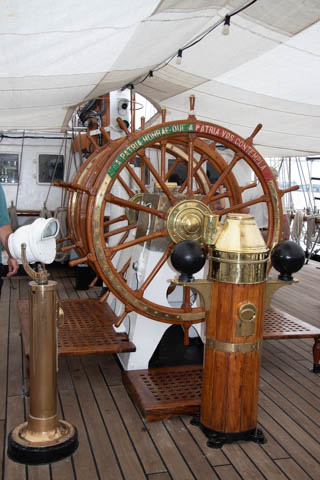
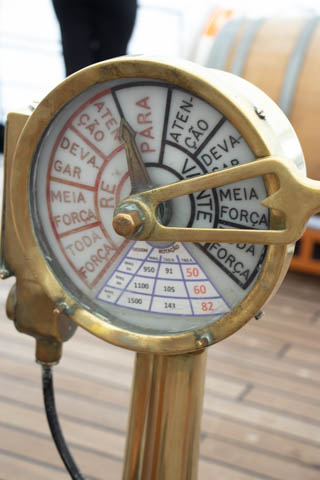
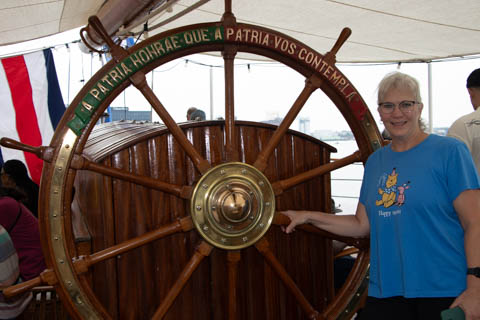
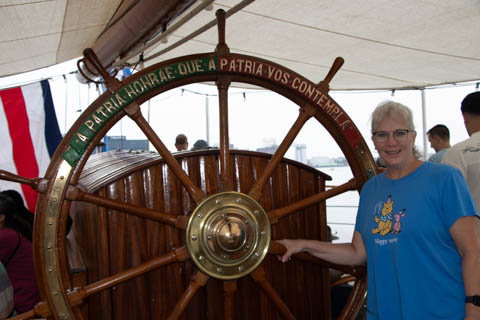
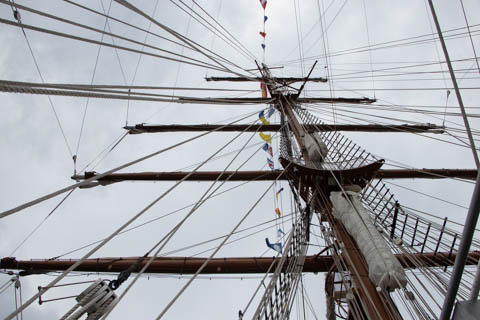
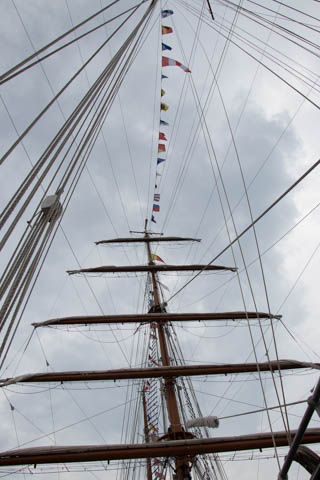
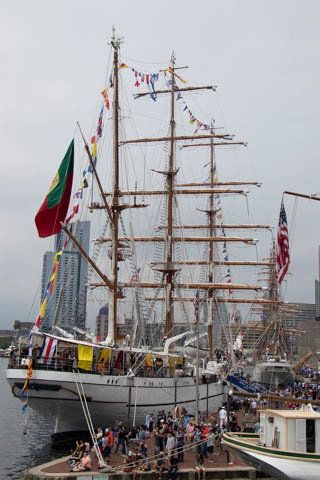
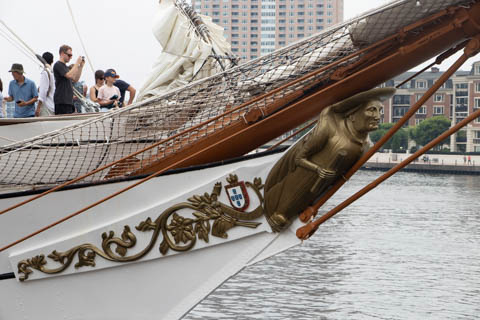
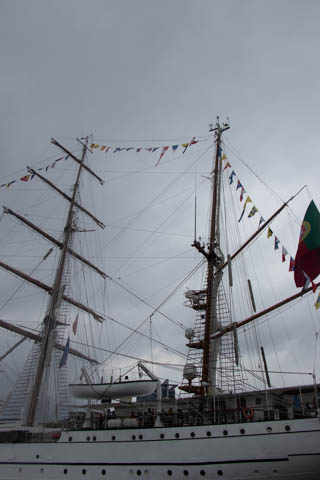
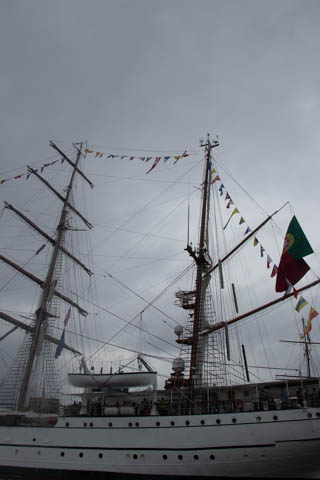
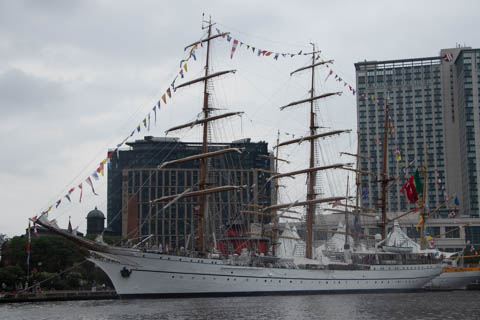
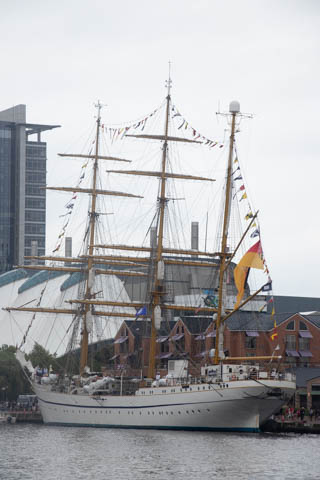
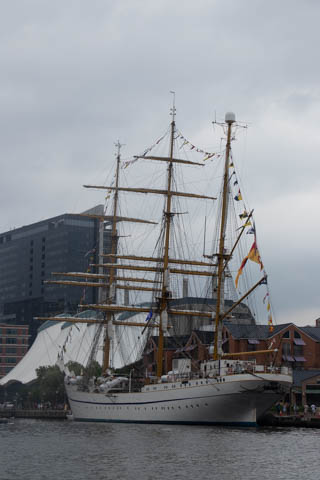
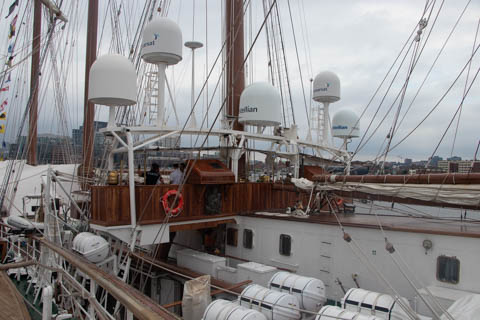
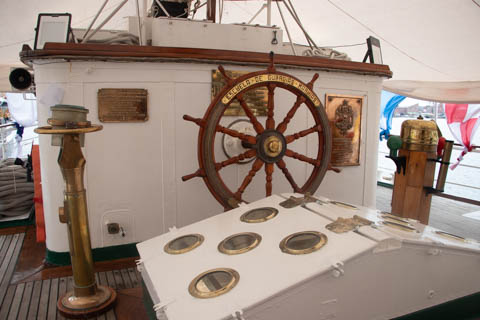
Here is the Portuguese NRP Sagres (Navio da Republica Portuguesa / Holy or Sacred), a school ship for the Portuguese Navy since 1962 which is the third ship with that name. According to Wikipedia, it is "a steel-built three masted barque, with square sails on the fore and main masts and gaff rigging on the mizzen mast. Her main mast rises 42 m (138 ft) above the deck. She carries 22 sails totaling about 2,000 m2 (22,000 sq ft) and can reach a top speed of 17 kn (31 km/h; 20 mph) under sail. She has a sparred length of 89 m (292 ft), a width of 12 m (39 ft), a draught of 5.2 m (17 ft), and a displacement at full load of 1,755 long tons (1,966 short tons). The three-masted ship was launched under the name Albert Leo Schlageter on 30 October 1937 at Blohm & Voss in Hamburg for Nazi Germany's Kriegsmarine. The ship was named after Albert Leo Schlageter, who was executed in 1923 by French forces occupying the Ruhr area. Her first commander was Bernhard Rogge. Schlageter/Sagres is a sister ship of the Gorch Fock (1933, taken by Soviets), the Horst Wessel (USCGC Eagle), the Romanian training vessel Mircea (1938), the never completed Herbert Norkus (after Herbert Norkus), and finally the Gorch Fock II which was built in 1958 by the Germans to have at least one replacement for the ships lost after the war."
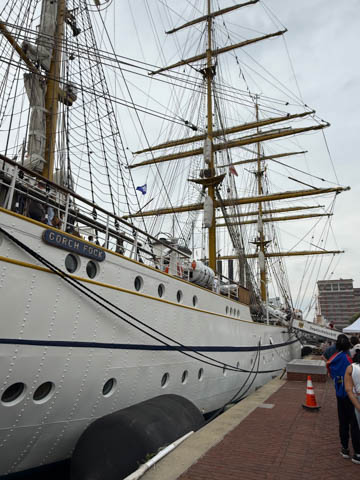
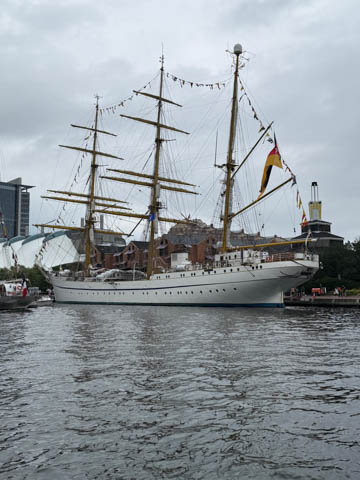
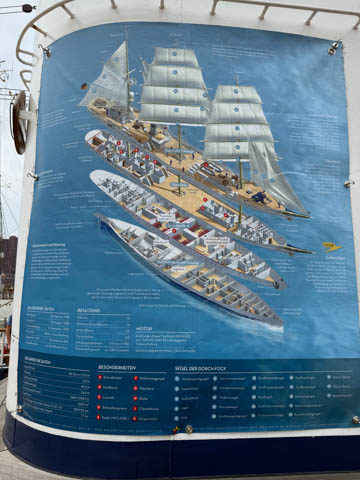
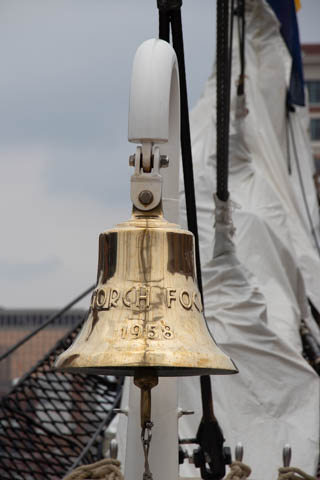
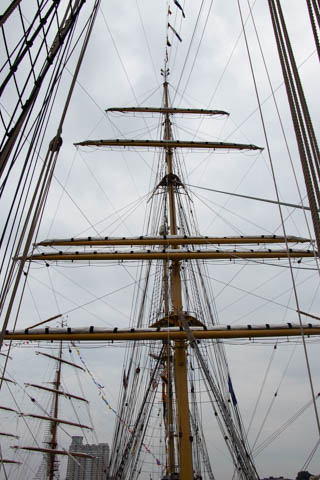
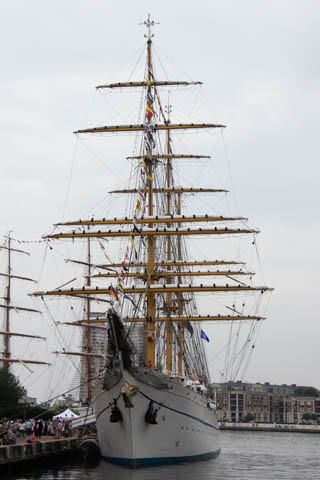
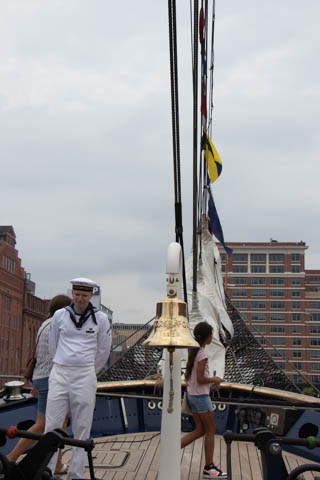
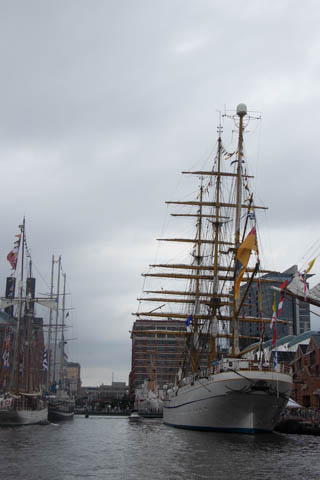
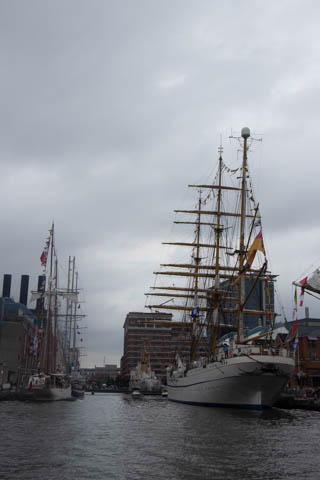
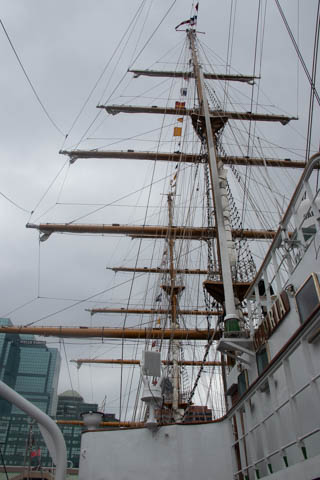
The German Gorch Fock (Die Gorch Fock). This training ship was built in Hamburg in 1958 and extensively restored in 2016 and 2021. It is subordinate to the Naval Academy at Murwik. It is a sister-ship to the Girch Fock I (built in 1933 and now a museum ship in Stralsund), the US Coast Guard Eagle, The Portuguese Sagres, ad the Romanian Mircea. As sixth ship was to be built, but was never completed due to the war. This is a barque, with the front two masts square-rigged and the aft mast is gaff-rigged. Both masts and the hull are made of steel, with more than 400 tons of ballast to provide stability. The ship carries 23 sails with a total area of about 1,800 square meters. The rigging is made of modern synthetic materials. In addition to the sails, the boat has a diesel engine which allows a speed of about 10 knots compared to the sailing speed of up to 18 knots.
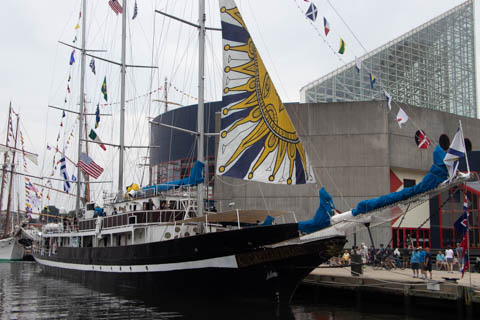
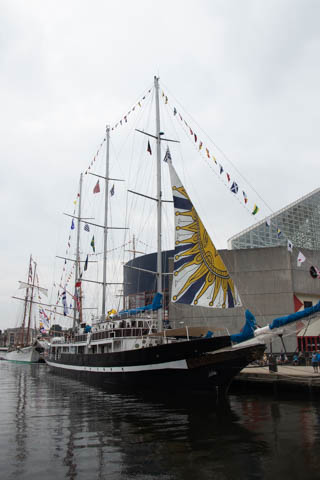
ROU Capitian Miranda
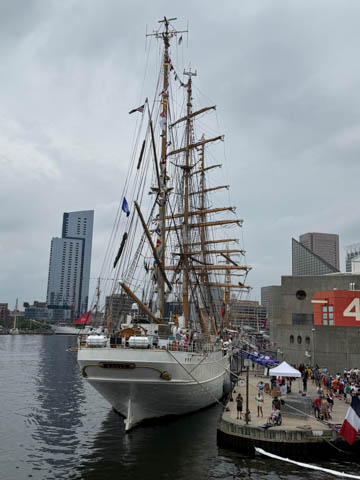
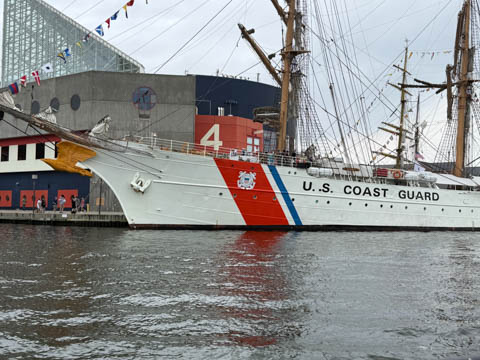
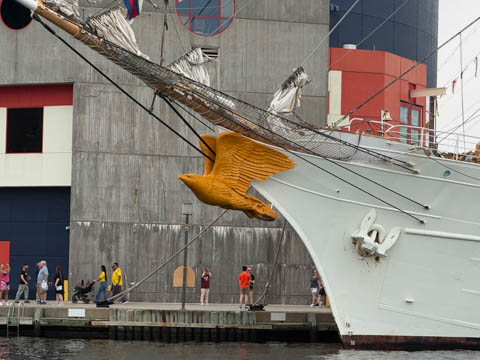
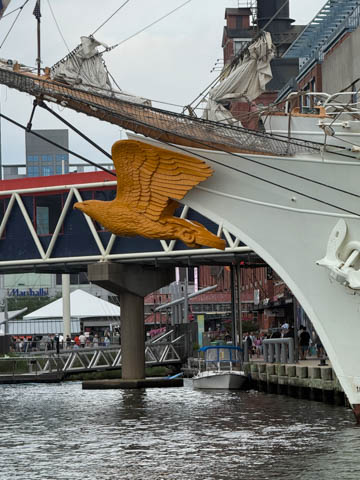
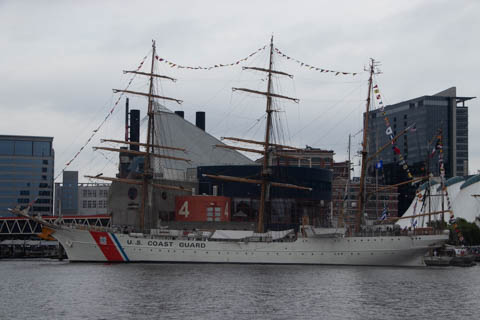
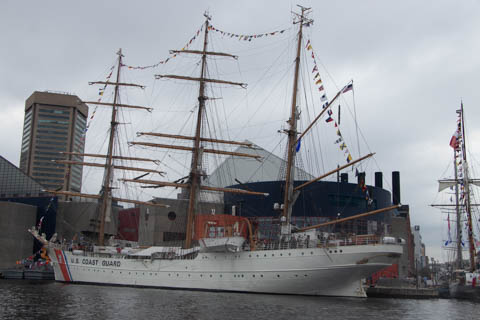
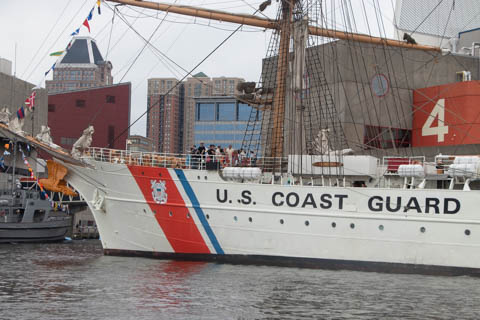
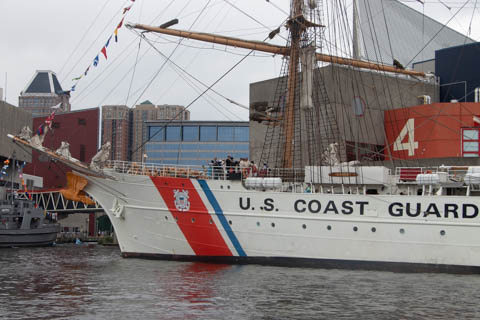
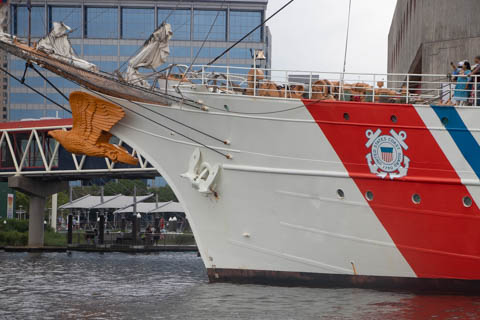
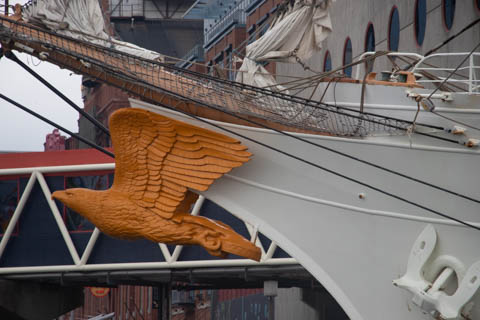
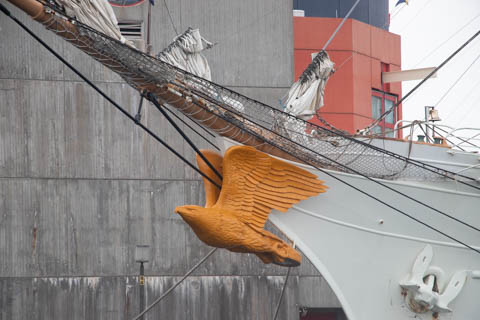
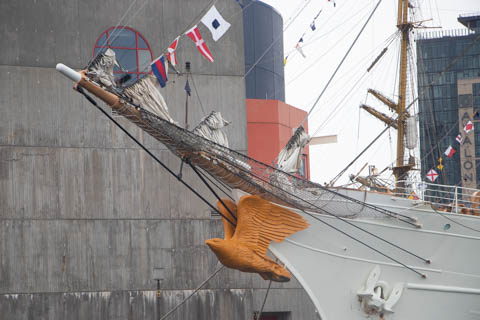
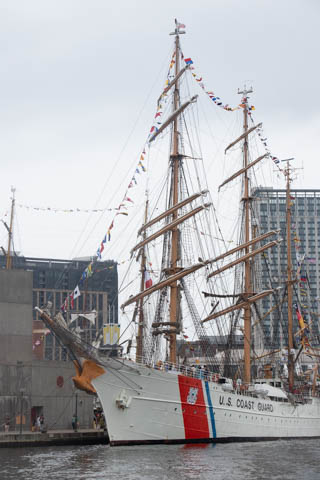
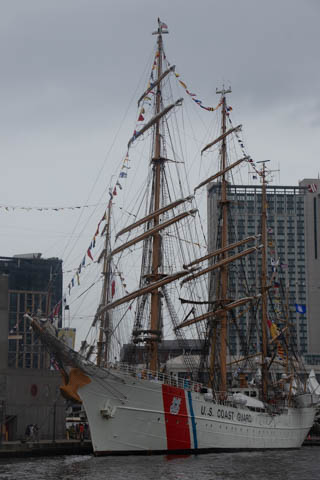
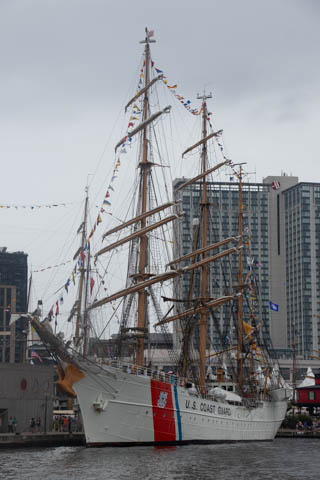
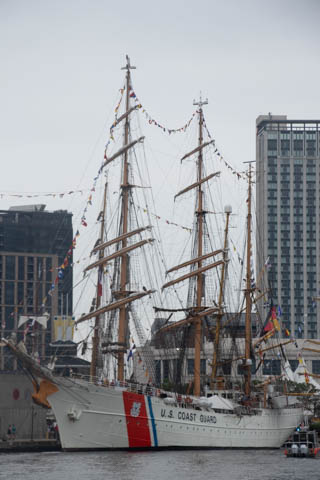
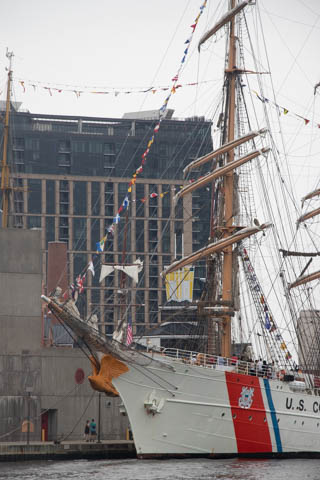
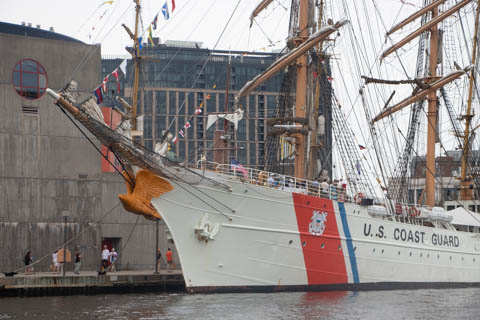
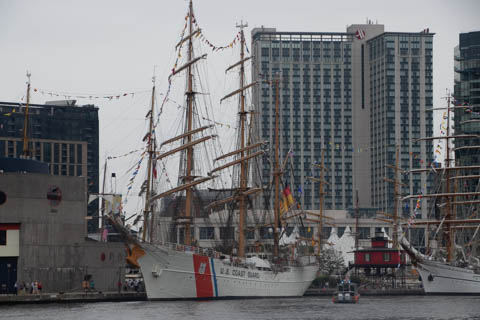
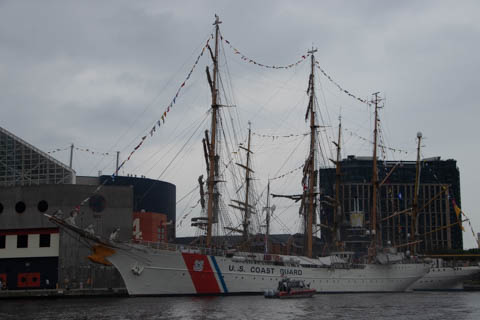
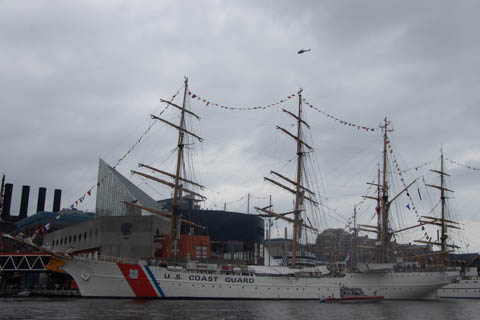
The US Coast Guard Eagle. This had a pretty good line, so we did not board.
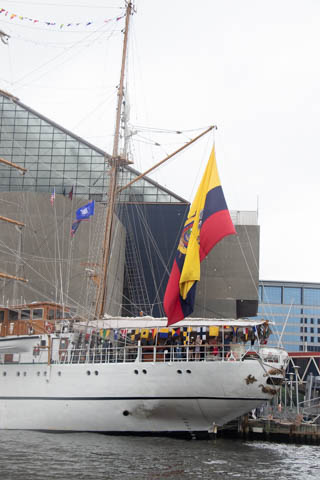
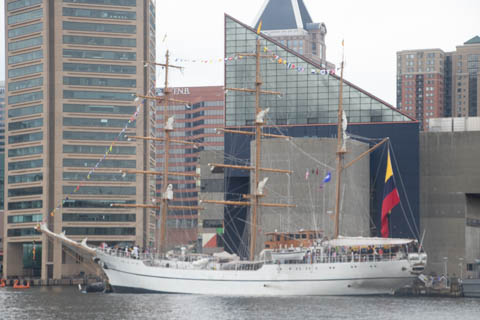
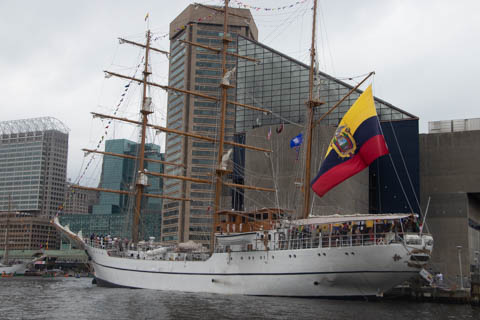
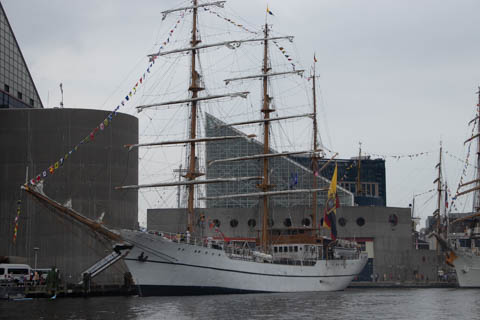
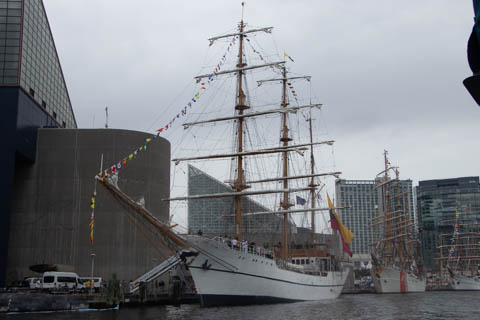
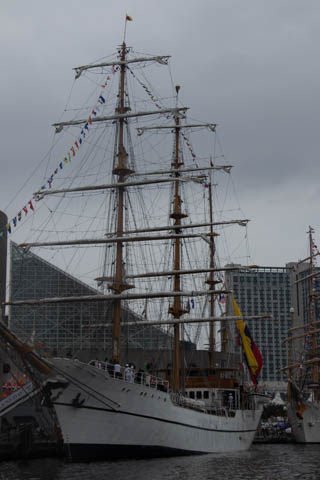
BAE Guayas from Ecuador.
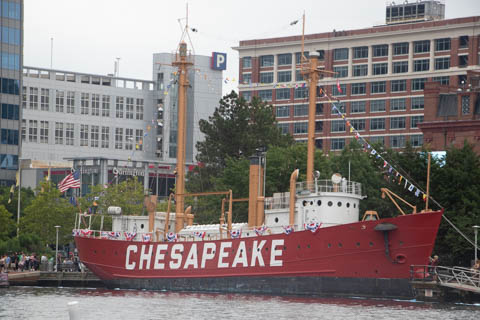
This is one of the historic ships on permanent display, the US lightship Chesapeake (LV-116).
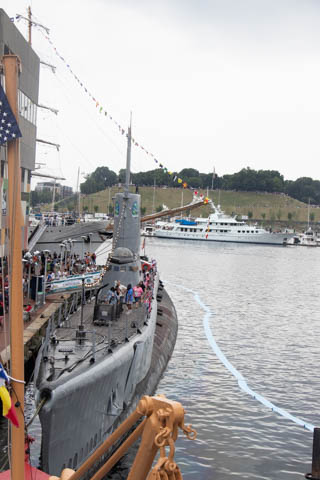
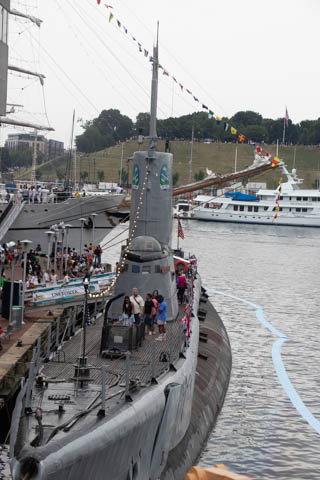
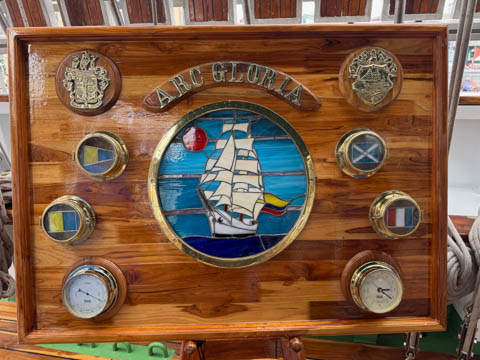
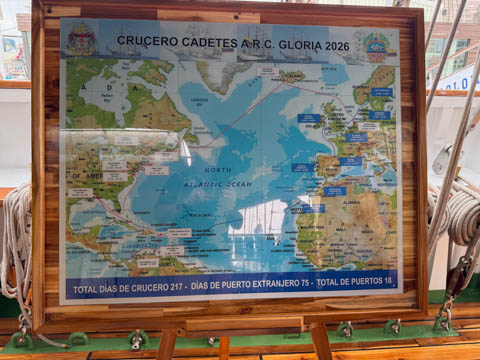
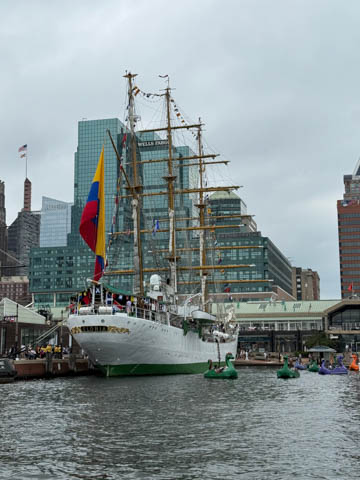
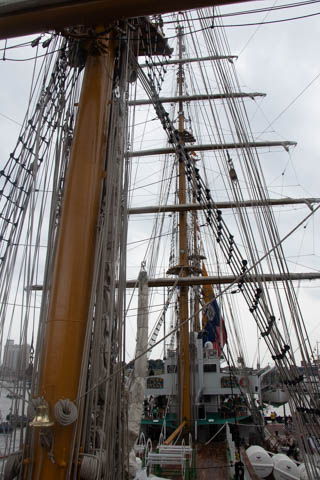
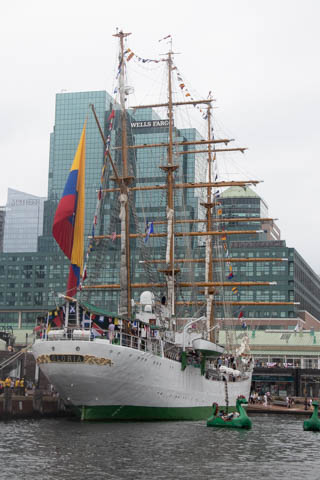
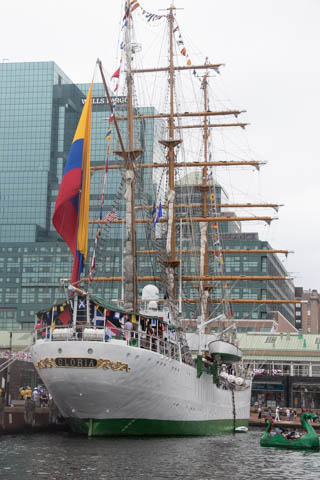
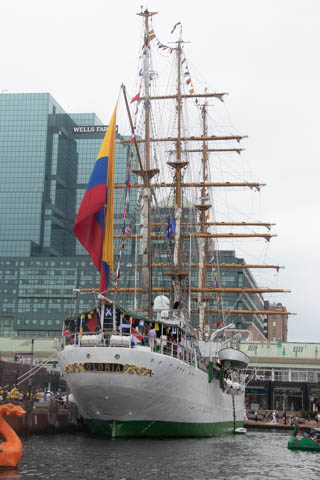
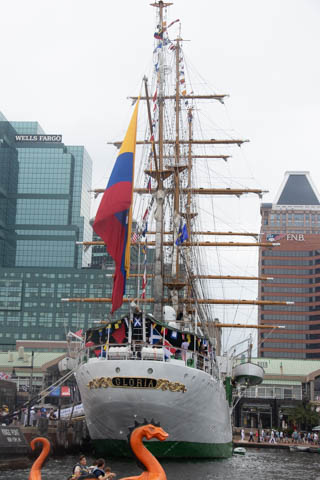
Next to the Chesapeake was the USS Torsk. On the beam was a small area for paddleboats with the Columbian ARC Gloria behind them.
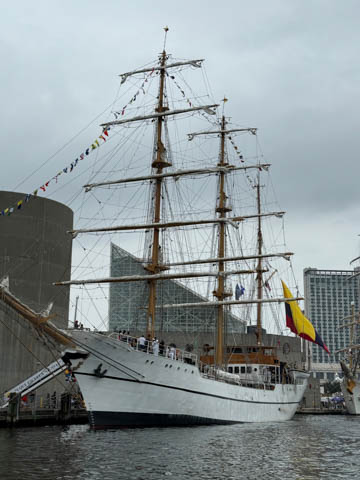
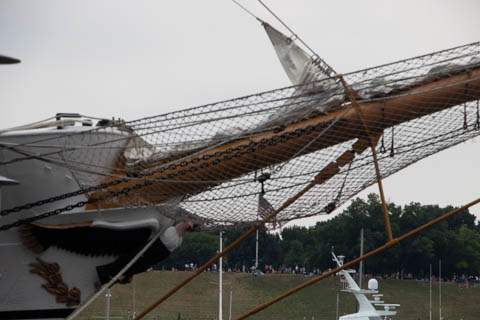
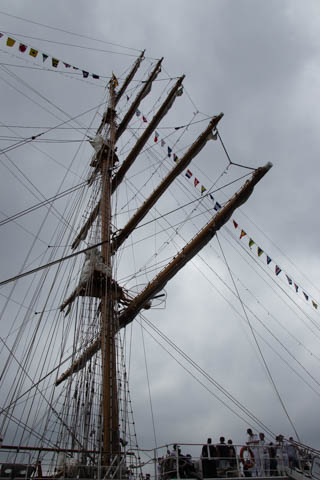
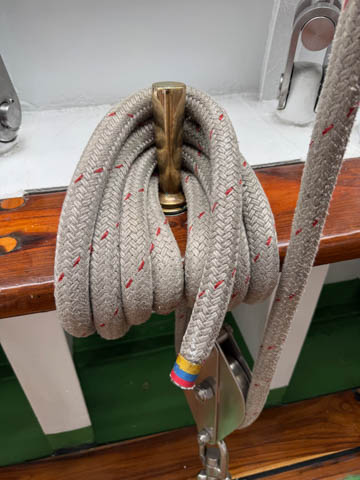
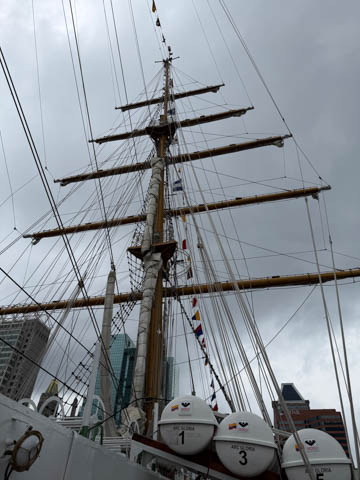
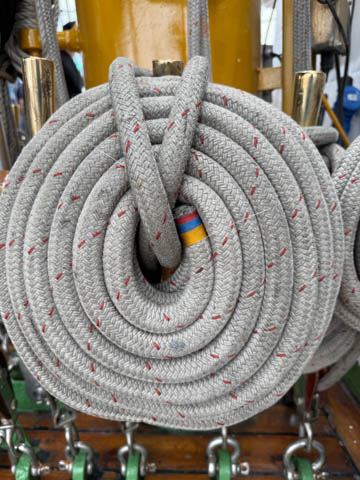
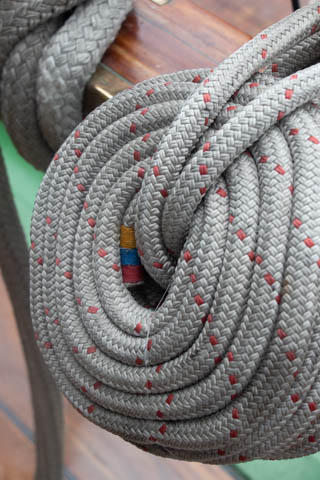
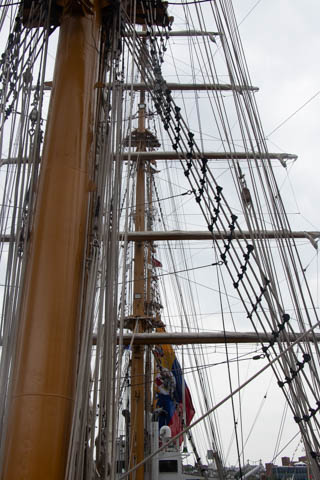
The Columbian ARC Gloria. Absolutely loved the detail of whipping their lines not in solid white or black like almost every other ship, but in the three colors of the Columbian flag.
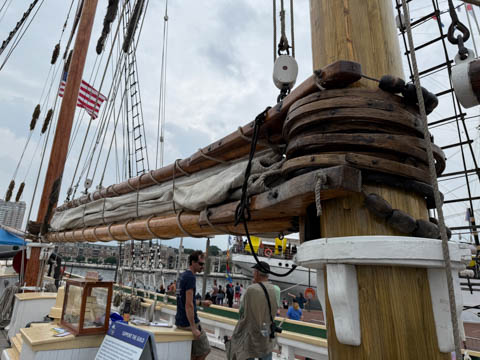
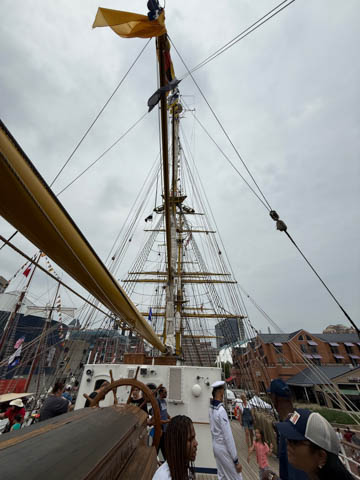
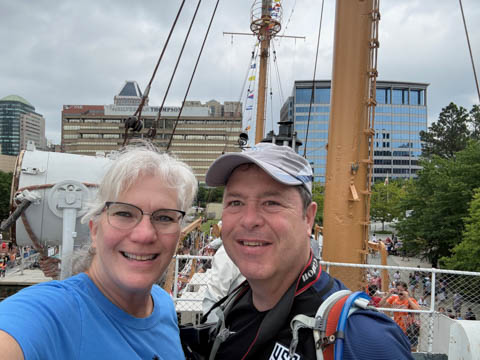
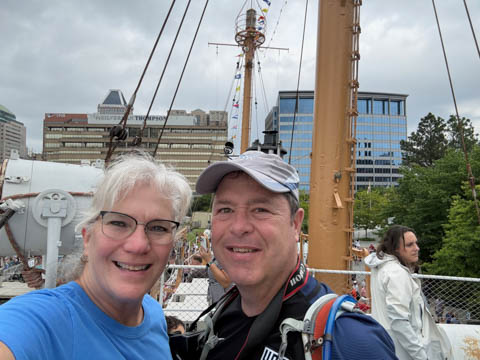
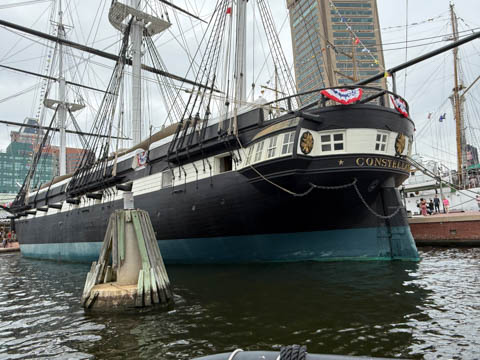
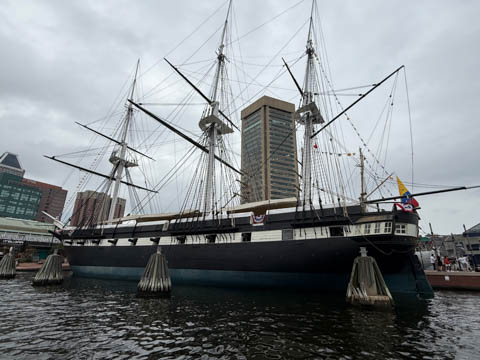
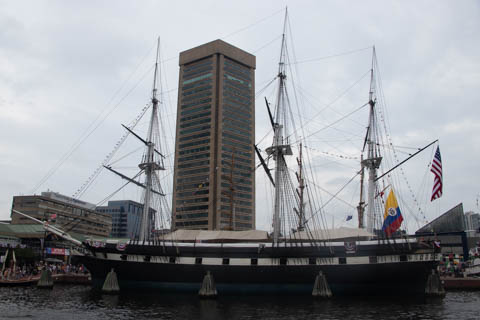
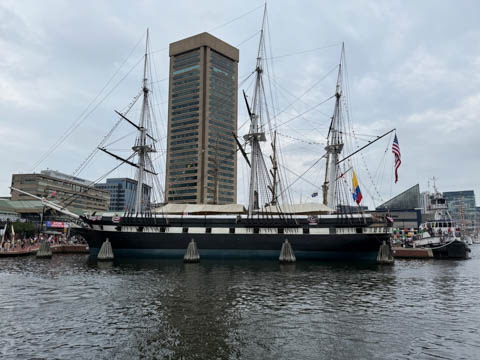
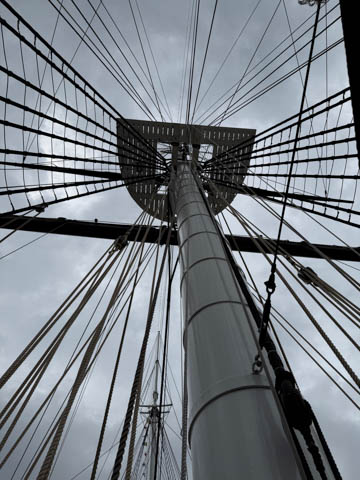
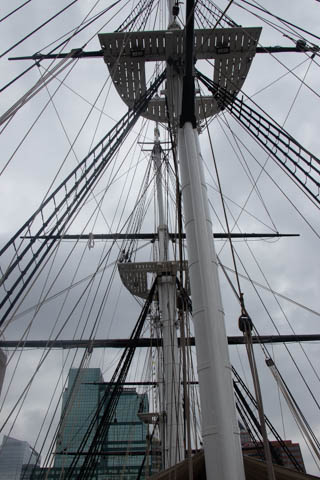
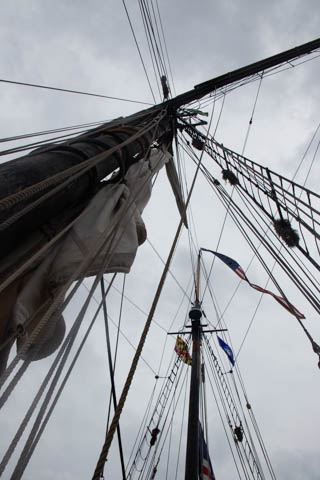
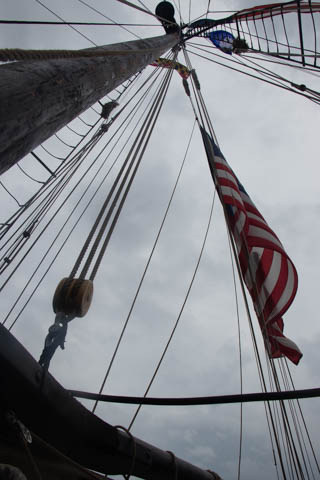
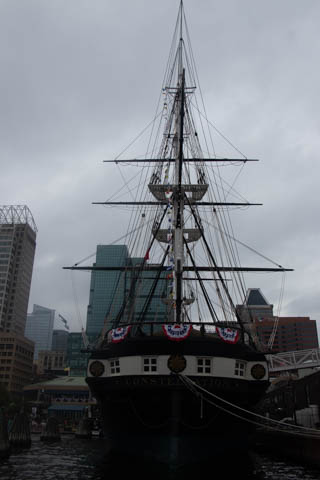
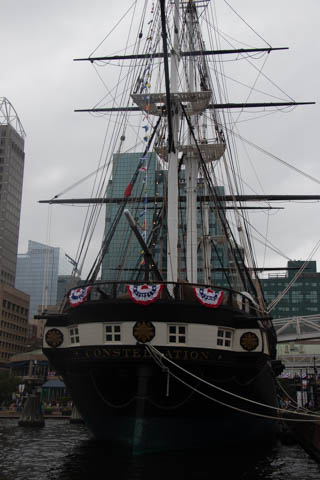
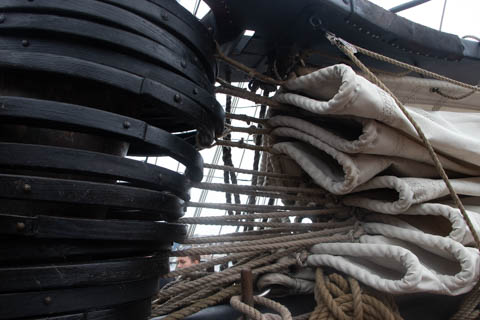
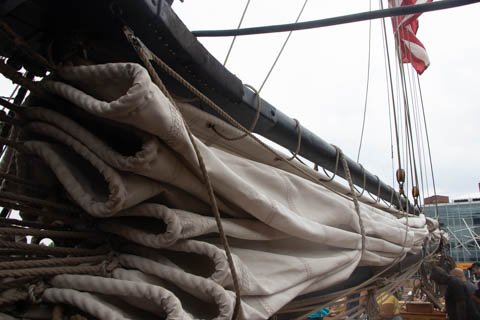
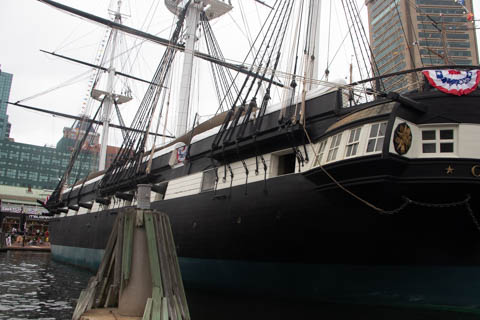
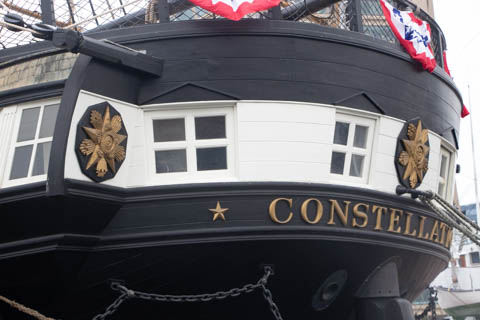
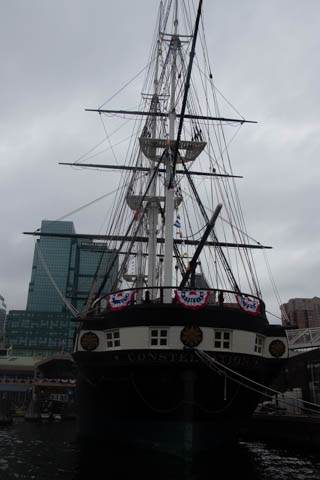
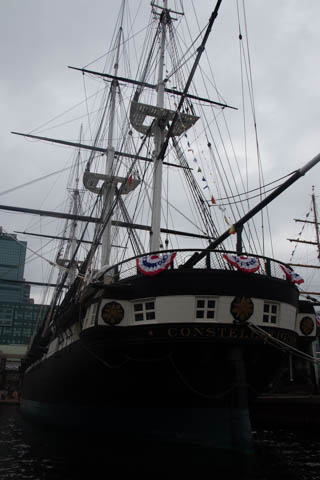
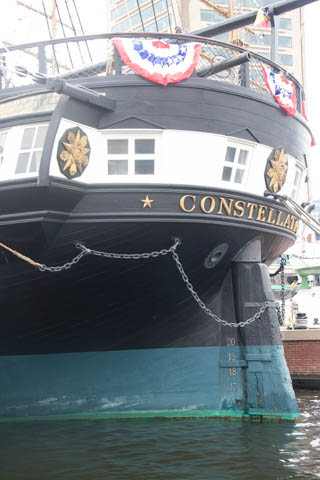
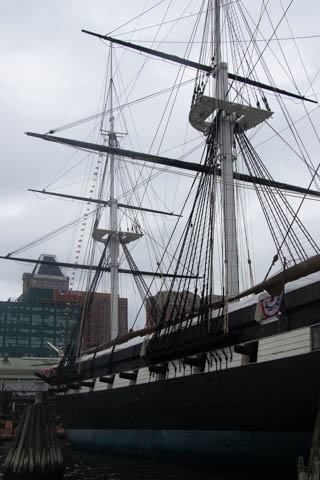
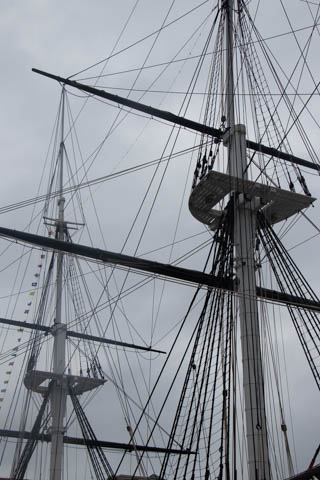
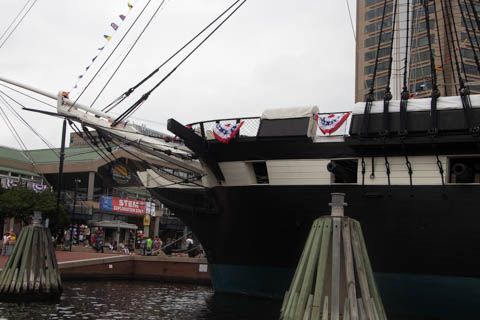
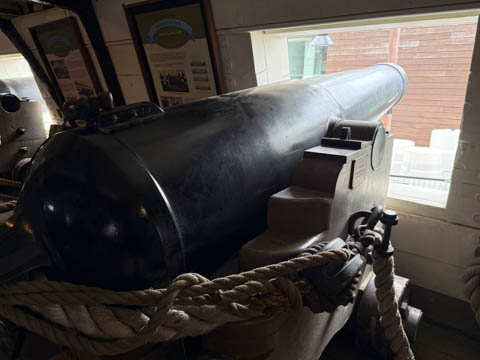
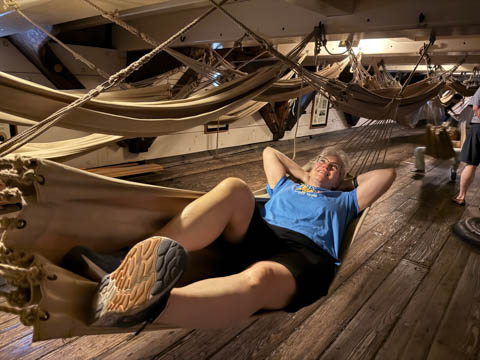
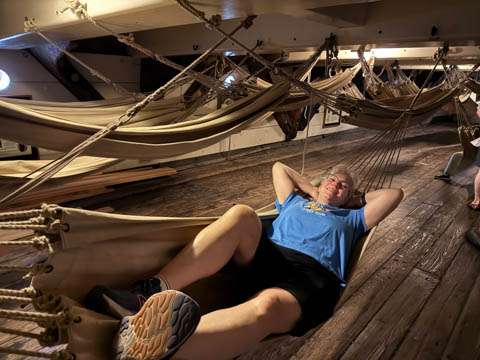
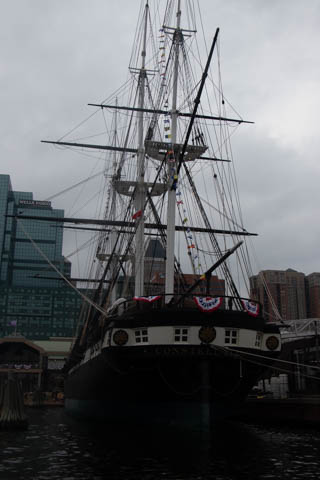
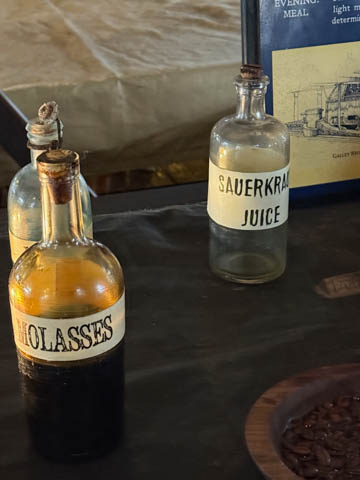
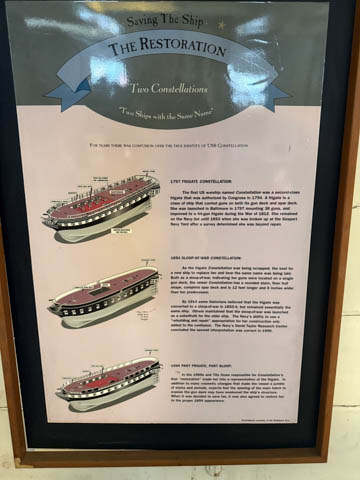
OK, really enjoyed wandering through the USS Constellation, which is permanently moored on the other side of Pier 1. We have been to the Inner Harbor several times over the years and have maybe been on it once many years ago. With free admission this weekend, really happy to be onboard again. This was built in 1854 as the last all-sail warship built by the US Navy and the only surviving Civil War-era vessel still afloat. Built at the Gosport Shipyard in Portsmouth, Virginia between 1853 and 1855, she had a notable and progressive history. She was named for the earlier frigate of the same name which was launched in 1797 and that had been broken up in 1853. This prior namesake was one of the original six frigates authorized with the Naval Act of 1794, and which also included the USS Constitution (which is still in commission and is the world's oldest commissioned naval warship still afloat), the USS President, USS United States, USS Congress, and USS Chesapeake. Constellation was among ten names submitted to President George Washington by Secretary of War Timothy Pickering in March 1795 for the frigates that were to be constructed. These frigates were the young Navy's original capital ships, and so Constellation and her sisters were larger and more heavily armed and built than standard frigates of the period. The Constellation's first duties with the newly formed U.S. Navy were to provide protection for American merchant shipping during the Quasi-War with France and to defeat the Barbary pirates in the First Barbary War. The original USS Constellation was built under the direction of Colonel David Stodder at his naval shipyard on Harris Creek in Baltimore's Fell's Point maritime community. In 1853, Constellation was disassembled at the Gosport Navy Yard in Portsmouth, Virginia. At the same time, the keel was laid for what became known as the sloop-of-war USS Constellation (1854). Throughout the 19th and 20th centuries, the United States Congress, the U.S. Navy, and the City of Baltimore continued to identify the ship as the 1854 rebuild of the 1797 ship. In the latter half of the 20th century, however, researchers discovered compelling evidence that the sloop-of-war was a wholly different ship, using only a minimal amount of material from the 1797 frigate. There was also a later ship christened USS Constellation, a Kitty Hawk-class aircraft carrier CV-64 that served from 1961 until her decommissioning in 2003. Known as "Connie," she was deployed extensively during the Vietnam War and the Gulf War. A new USS Constellation (FFG-62) is currently under construction as the lead ship of the Navy's new Constellation-class guided-missile frigates. The sloop's primary armament was sixteen 8-inch (203 mm) shell-firing guns and four 32-pounder long guns, though she carried other guns as well, including two Parrott rifle chase guns. Constellation's career as a front-line unit was relatively short; after entering service in 1855, she served with the Mediterranean Squadron until 1858, and in 1859, she was assigned as the flagship of the Africa Squadron, where she served with the African Slave Trade Patrol. During the American Civil War (1861–1865), the ship returned to the Mediterranean to patrol for Confederate vessels. In late 1864, she returned to the United States to be decommissioned, as most of her crews' enlistments had expired. She spent the rest of the war out of service. Constellation was recommissioned in 1871 for use as a training ship, being used for shooting practice and training cruises for midshipmen. She filled this role for twenty-two years, and during this period, she saw a number of other activities, including transporting exhibits for the 1878 Exposition Universelle in Paris and carrying food to Ireland during the 1879 Irish famine. She was reduced to a stationary training hulk in late 1893, being moored in Newport for the next twenty years. The refurnished ship in excellent condition, with public access available to all four decks: spar deck (uppermost, exposed working deck), gun deck (main closed deck with 16 eight-inch shell-firing guns and four 32-pounder long-guns along with the Captain's quarters, officer quarters and the galley), berth deck (hammock slings for the majority of the 325-man crew, crew mess, sick bay, and brig), and the hold. There were a number of re-enactors in period clothing and using period tools. They demonstrated firing the canons, one mate was polishing a sextant, and other showing artifacts. We talked to several of them. One commented that most of the crew who had perished during the ship's service died of malaria during its time fighting against the slave trade along the coast of Africa instead of in combat. He also stated that the Constellation is towed from its berth every year or so to go to dry-dock in the harbor to have it's hull cleaned of barnacles (a real hazard for a wooden ship) and has even sailed to the US Naval Academy at Annapolis down the Chesapeake.
The Indian INS Sudarshini and Peruvian BAP Union were docked next to Harborplace. These were taken from the deck of the USS Constellation. We walked along the wharf, but didn't go on these ships as the lines were pretty long for the two ships closest to Harborplace.
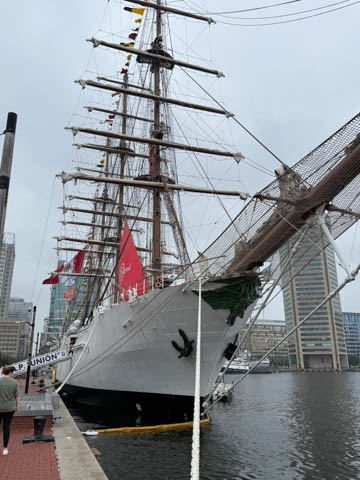
This is the Peruvian BAP Union.
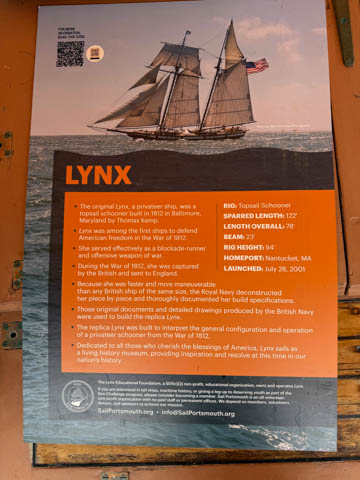
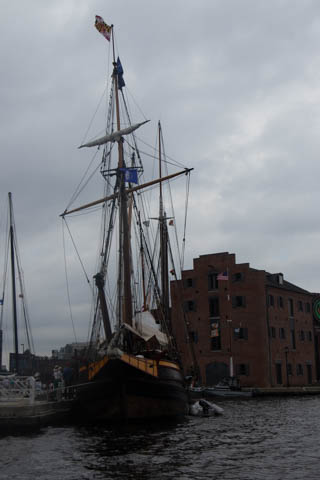
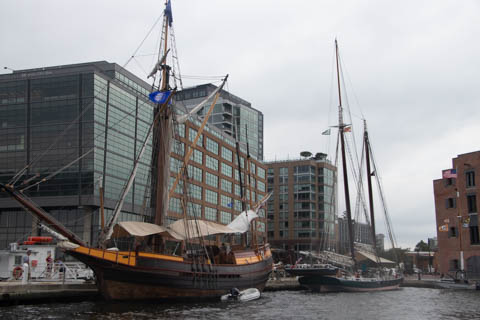
We kept going down the wharf, stopping at the end to see the last ship and get an ice cream. The Lynx from Nantucket was at the end of the row. This is a modern recreation of a Baltimore Schooner privateer originally built in 1812 and captured by the British. It was fast, maneuverable, and stable at sea, outfighting some of the larger and slower British vessels allowing her to run their blockade and even take offensive action. The British sent the original ship back to England and took it apart, meticulously documenting its design, allowing it to be re-built to the same specifications using techniques from the 1800s to help preserve maritime history.
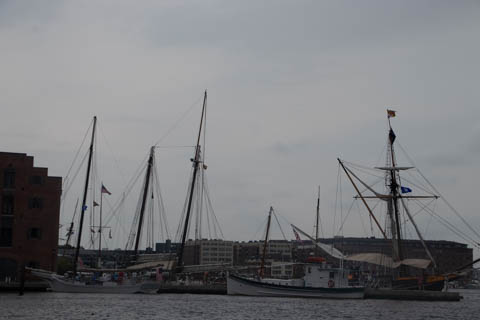
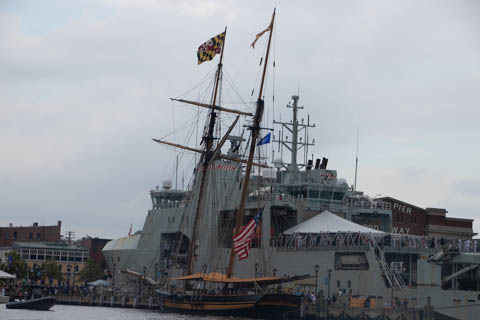
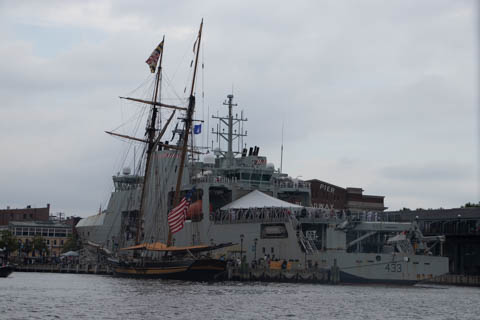
We kept heading around the Inner Harbor to a much less crowded landing for the water trolley rather then going back along Harborplace, taking advantage of a show special one-and-off fair to ride back to East Inner Harbor then Harbor Place, where we transferred to a ride to Fells Point. This provided a great opportunity to see the ships from the harbor-side, and many of the images above were from that trip, especially as it allowed us to pass ships on the Inner Harbor twice while going in and then back out. Along the way, we saw several of the other historic ships on permanent display at Fell's Point along with a modern Canadian ship, the HMS William Hall, a DeWolf-class offshore patrol vessel.
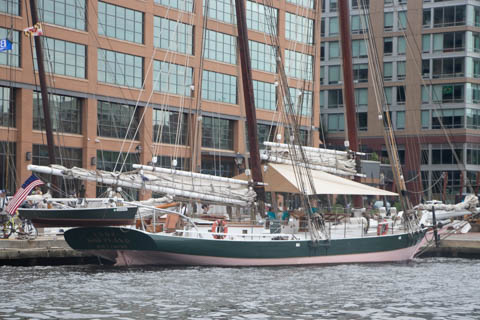
Here are the Farewell and Jolly Dolphin, a 3-sail bateau built by James B. "Mr. Jim" Richardson at his Cambridge, Maryland, boatyard on LeCompte Creek in 1958 modeled on a Chesapeake Bay oyster dredger.
This is the Pride of Baltimore II. This is a modern recreation of an iconic Baltimore Clipper, built in 1988 as part of the Inner Harbor revitalization efforts. It was built just blocks from the shipyard where Chasseur, the original “Pride of Baltimore,” had been built in 1812. Since her commissioning, Pride II has sailed over 275,000 nautical miles and visited more than 200 ports in 40 countries in North, South, and Central America; Europe; and Asia. Each season the vessel visits dozens of ports of call, and welcomes aboard over 100,000 people. It replaced an earlier replica ship, built in 1977 as part of the Inner Harbor revitalization effort, which was tragically lost at sea in 1986 with the captain and three crew members.
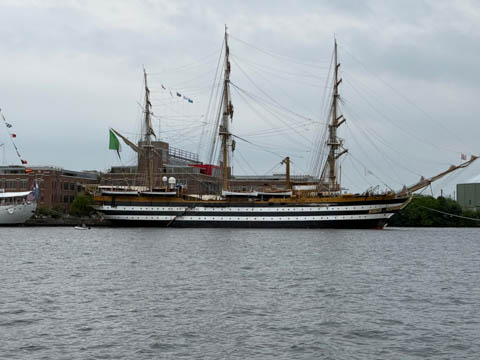
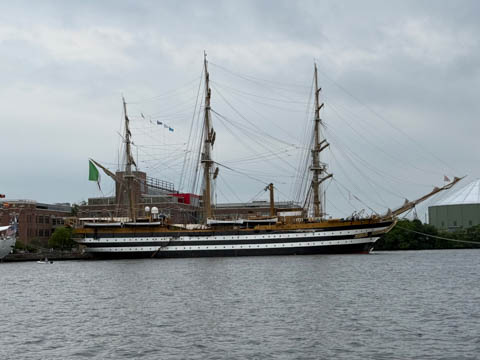
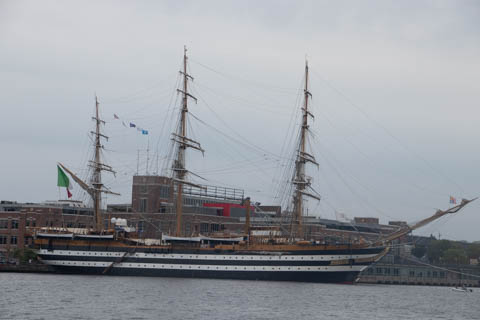
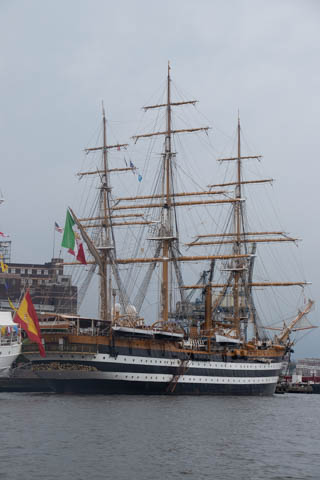
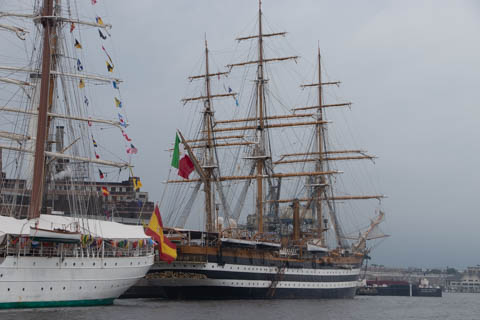
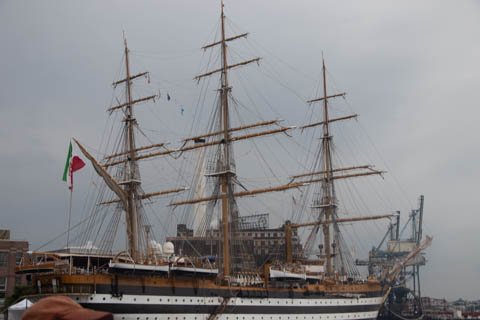
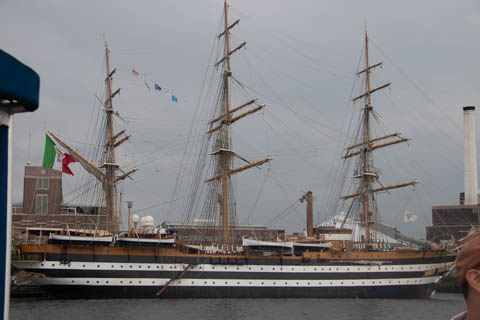
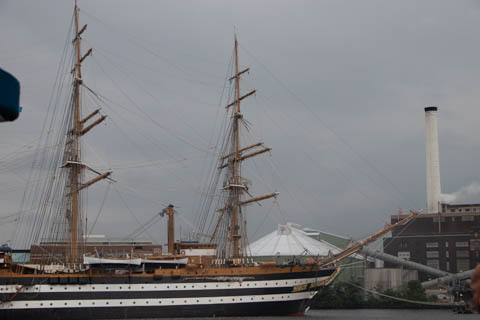
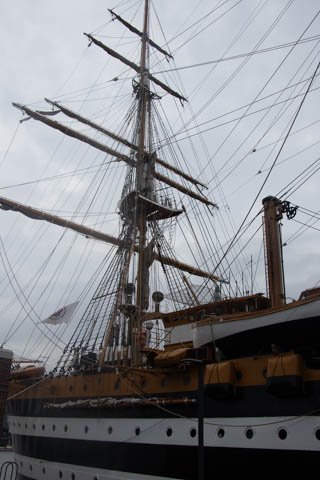
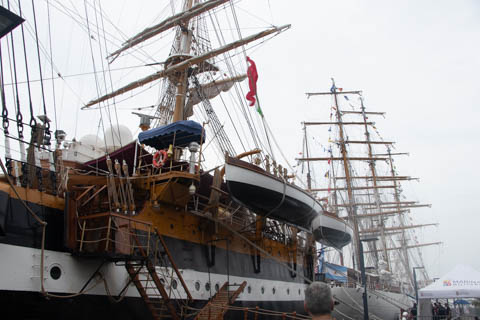
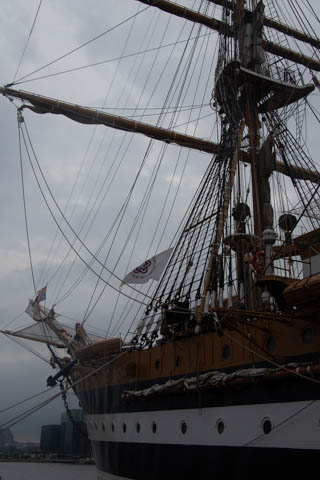
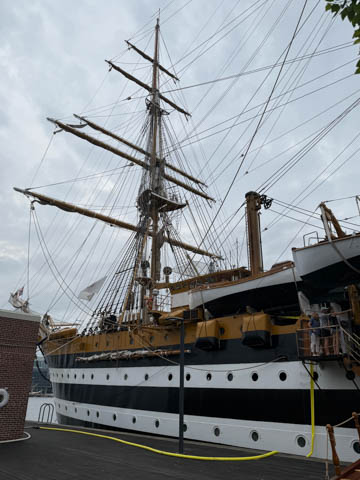
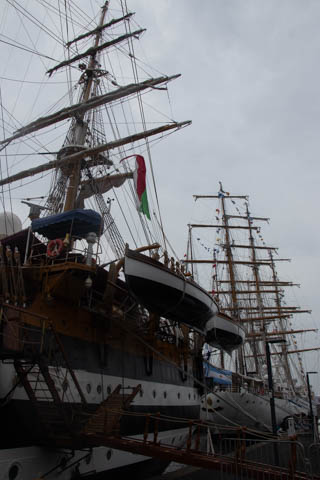
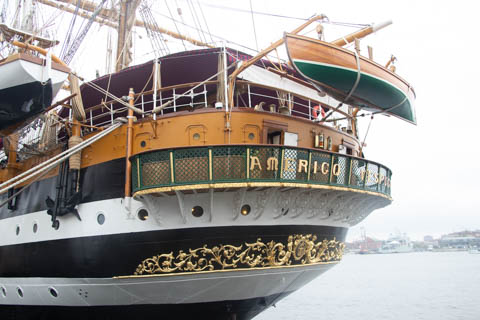
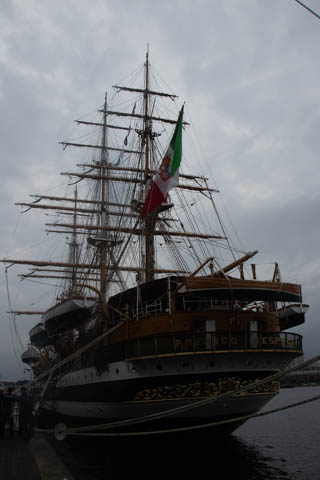
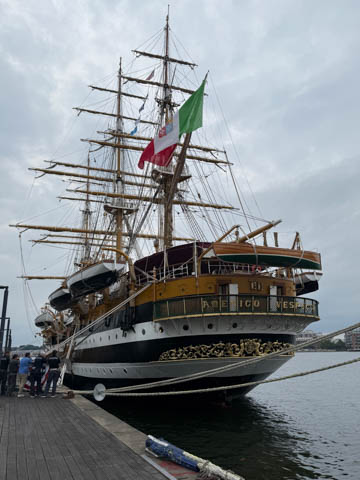
At Fells Point, we transferred to another launch to Locust Point, where three huge ships were moored. The black hull to the right is the Italian Amerigo Vespucci.
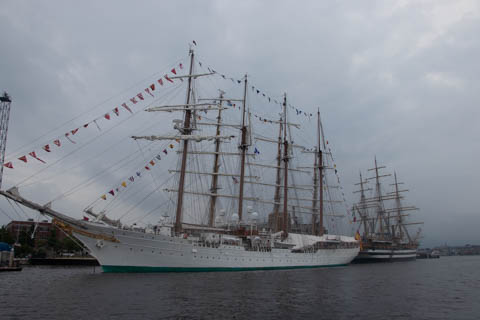
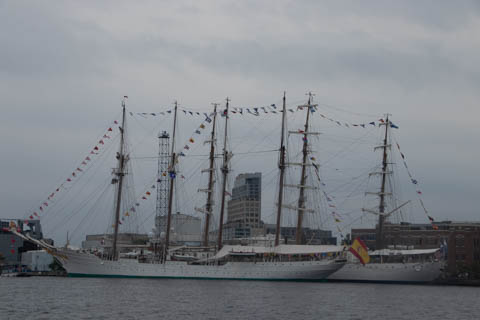
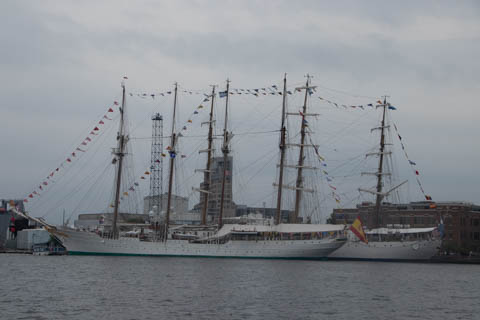
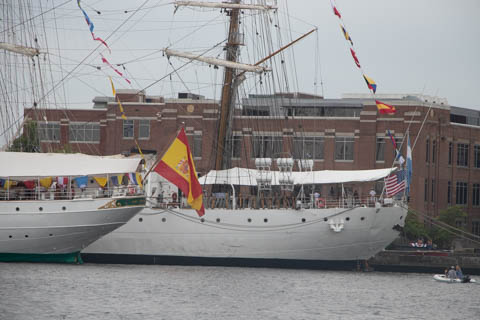
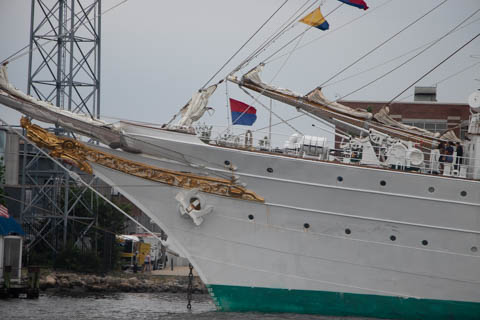
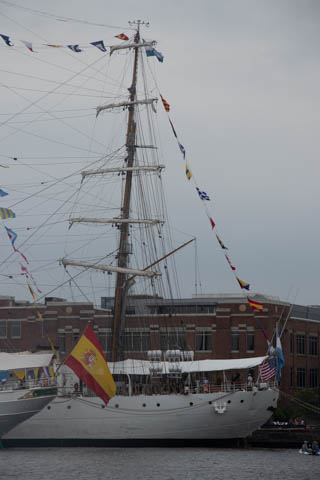
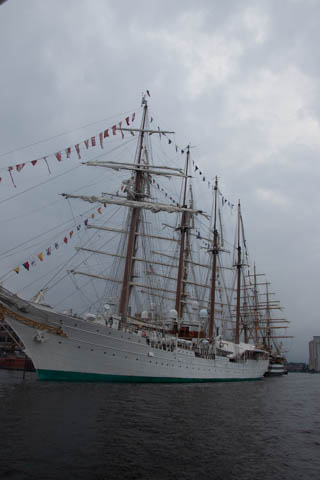
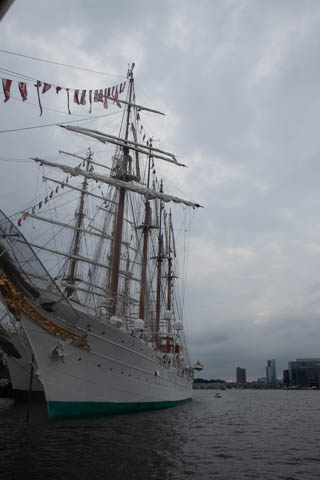
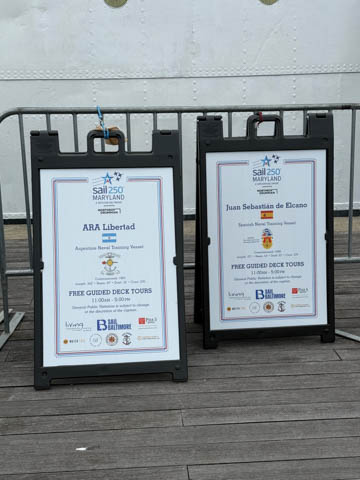
To the left are the Argentinean ARA Libertad (moored inside against the dock) and the Spanish Juan Sebastian de Elcano.
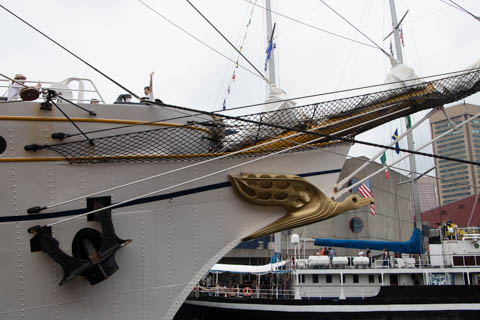
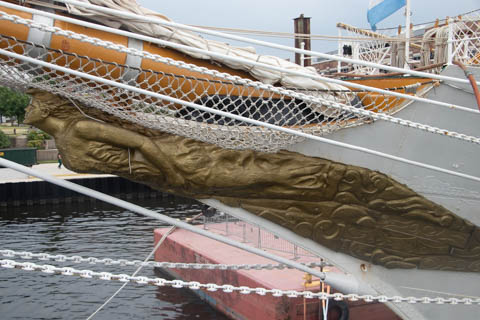
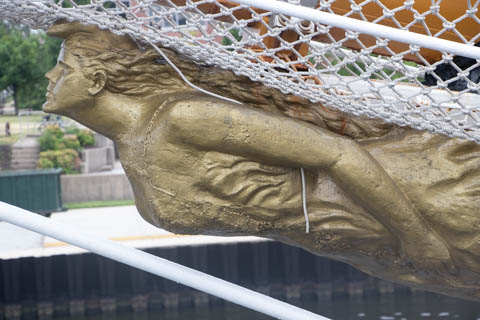
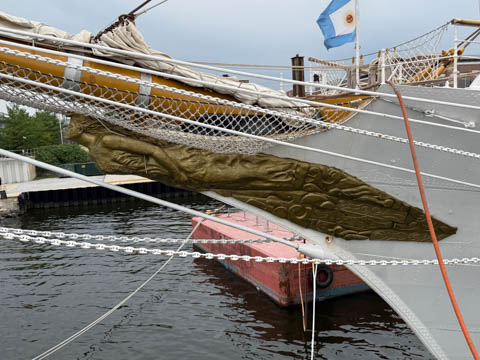
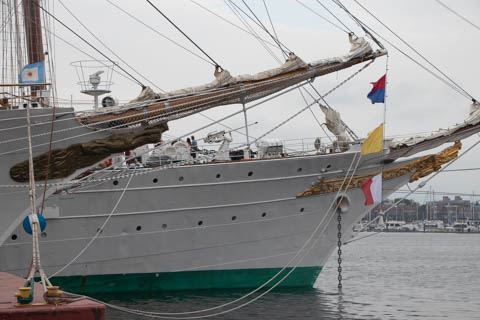
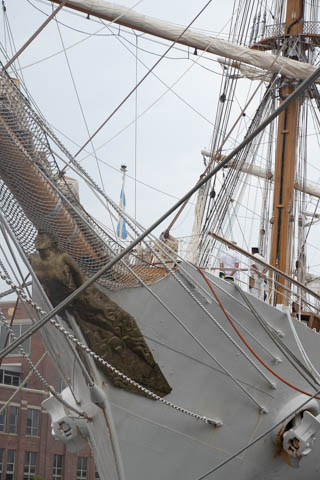
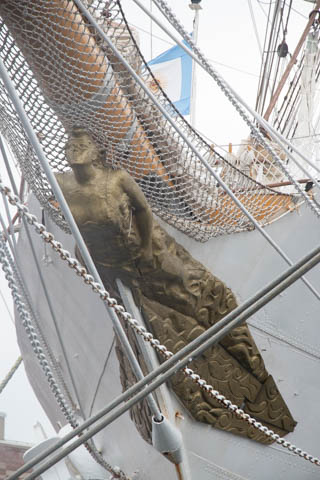
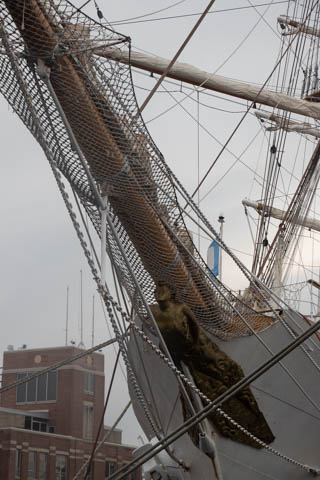
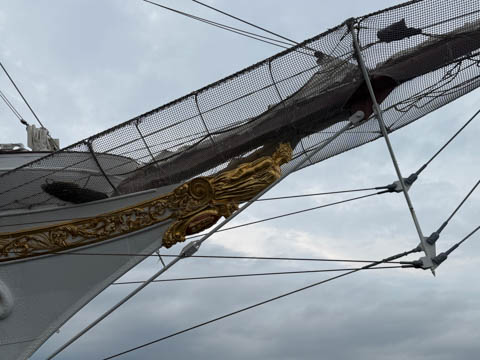
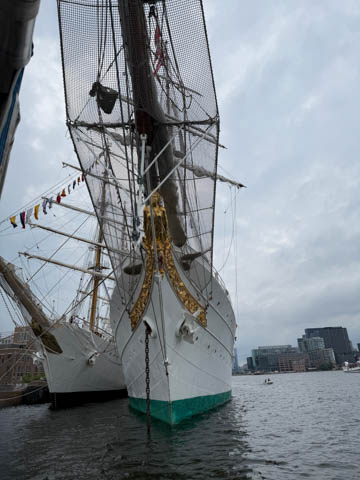
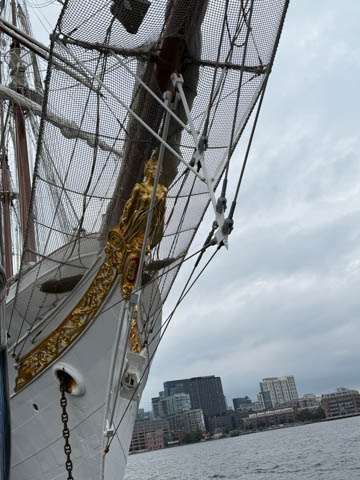
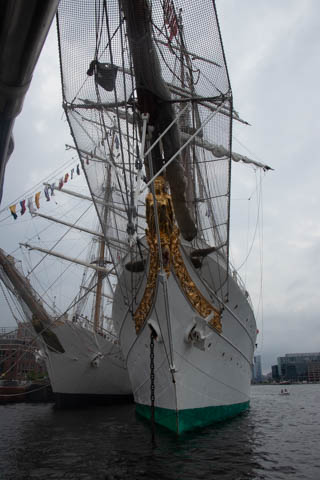
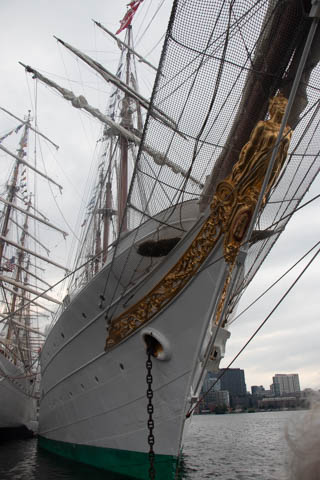
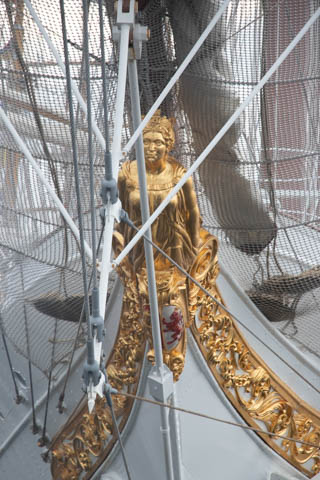
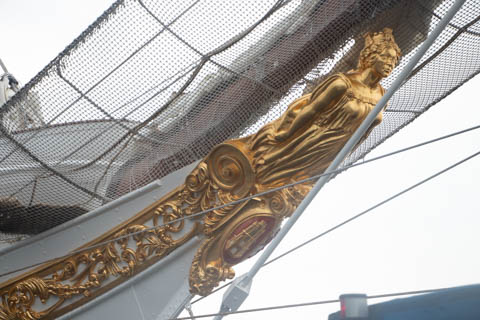
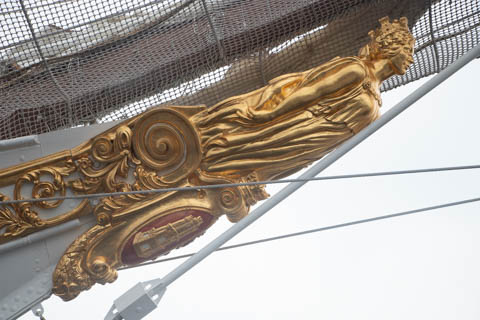
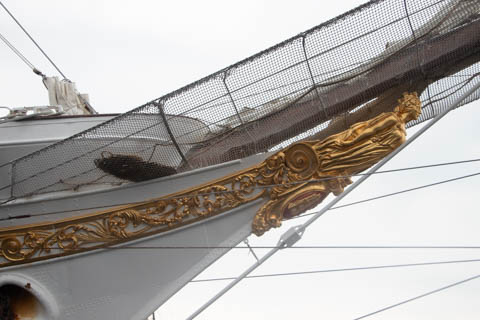
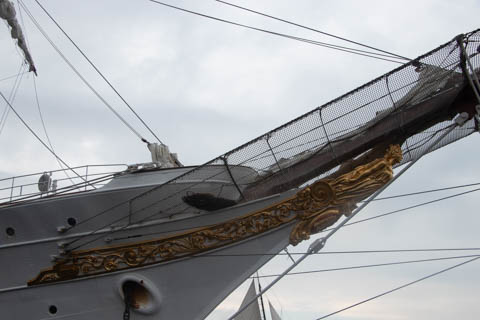
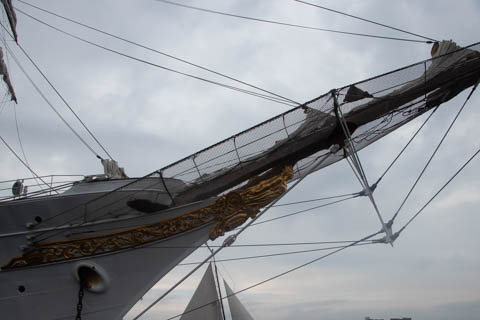
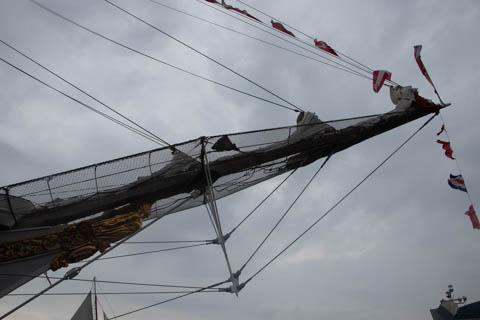
The bowsprit on the ARA Libertad, as with so many ships on the day, was a wonderful golden figure.
As was the bowsprit on the Juan Sebastian de Elcano
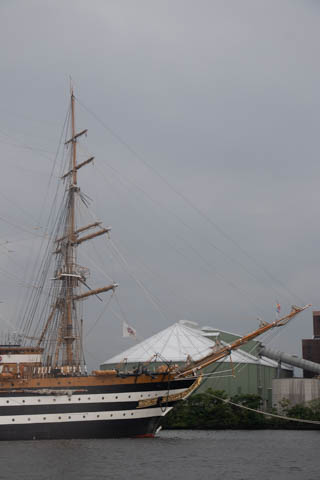
We had assumed that we wouldn't be able to board the ships, as the visiting hours ended at 5 and it was nearly 6. But, both of the white ships from Argentina and Spain were open until 7. Yea! So, we walked past them to gaze at the Amerigo Vespucci first before we boarded.
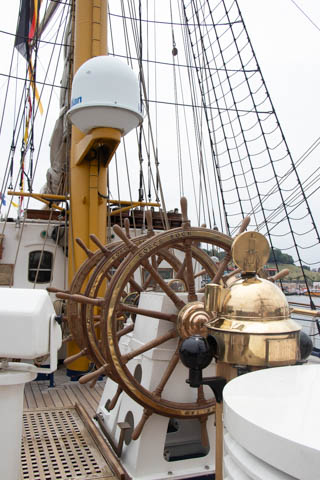
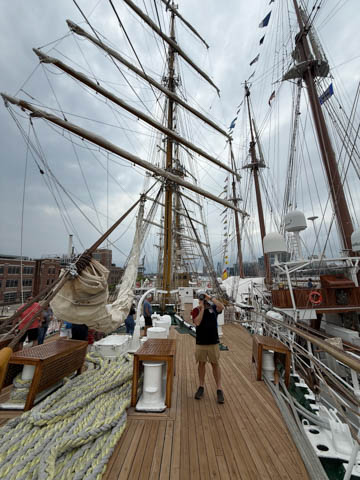
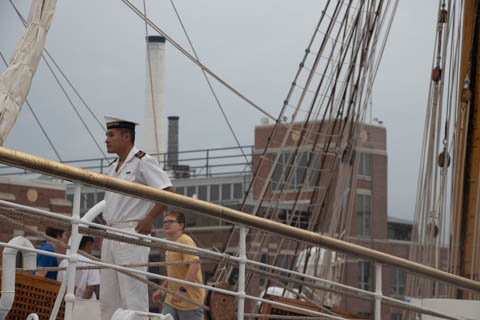
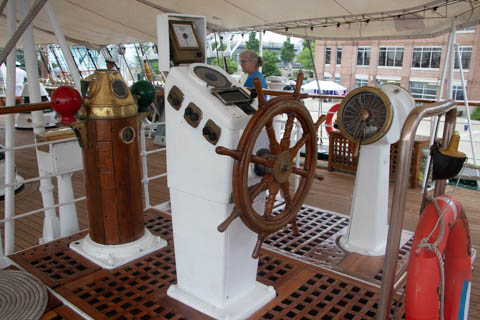
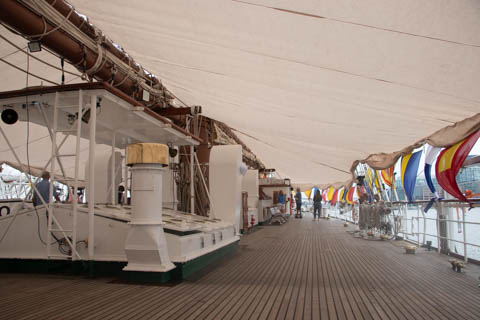
These may have been the nicest ships we boarded all day, both with the upper deck itself and having access to other decks.
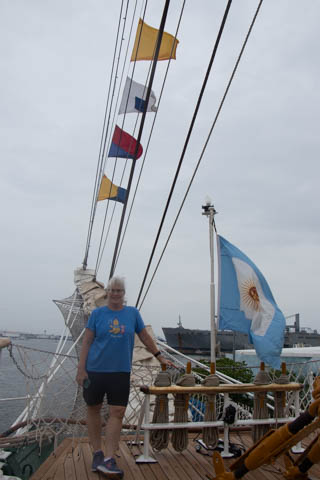
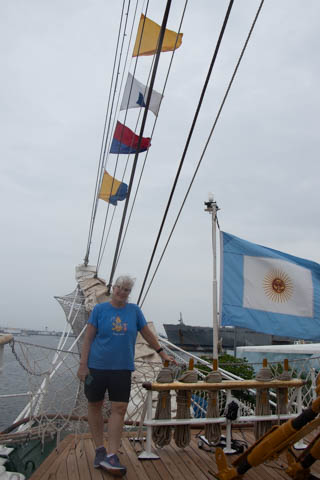
I think this is the Argentinean ARA Libertao.
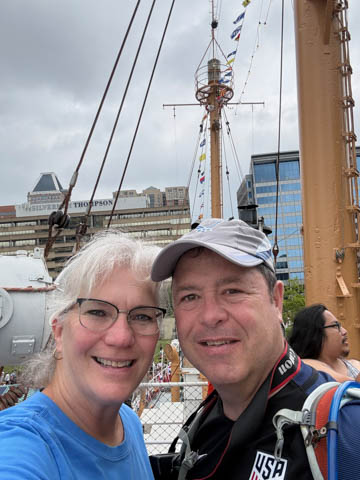
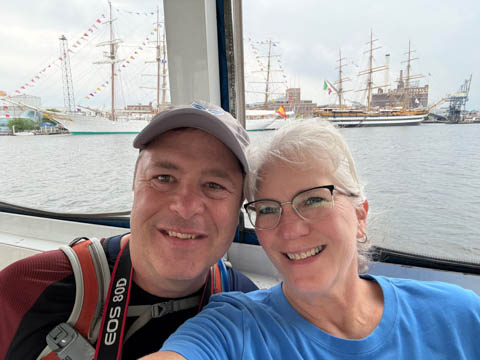
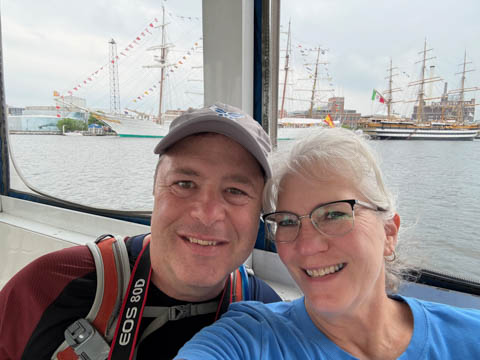
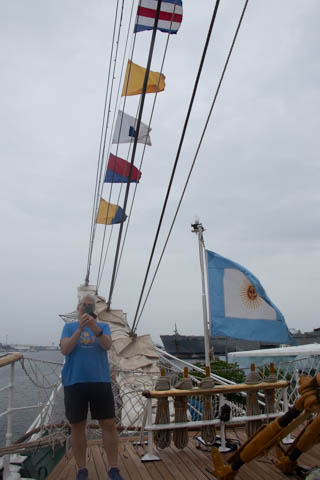
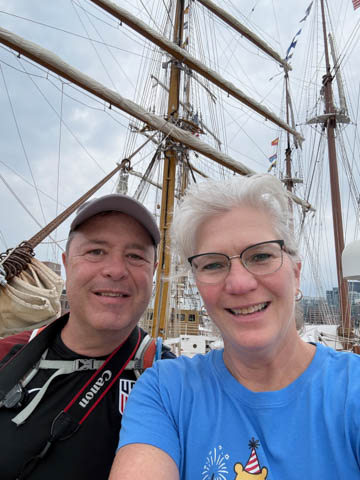
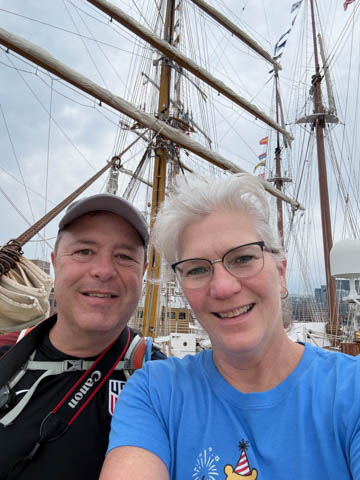
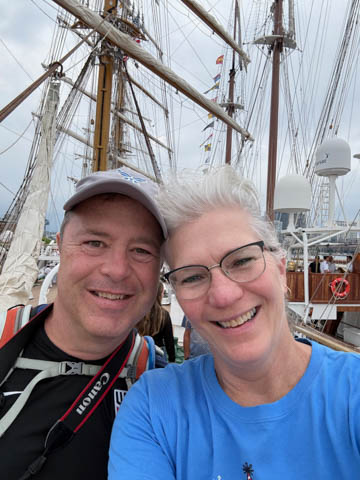
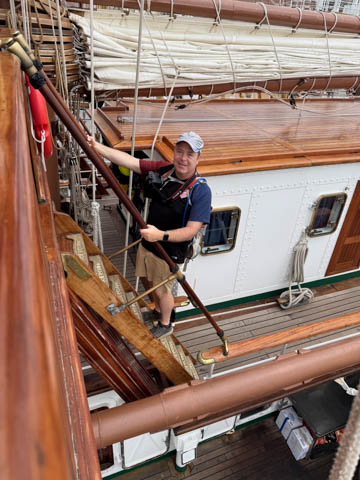
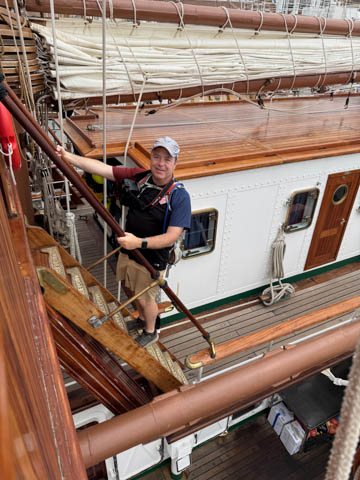
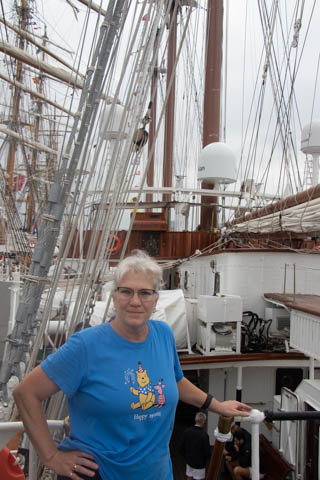
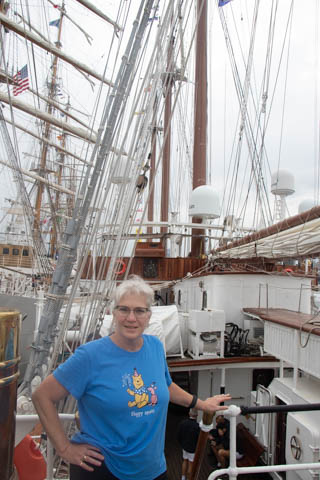
Apparently we had to take pictures if each other taking pictures of the other.
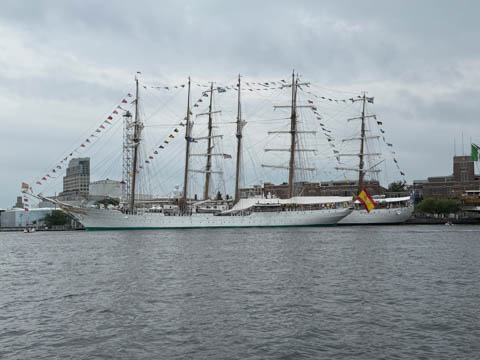
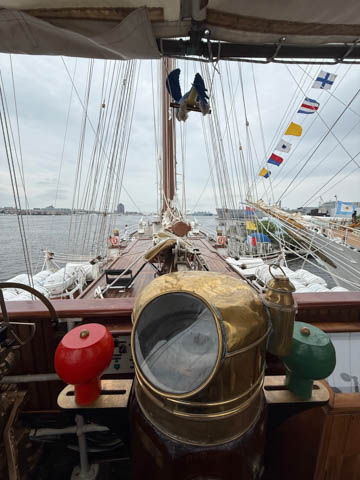
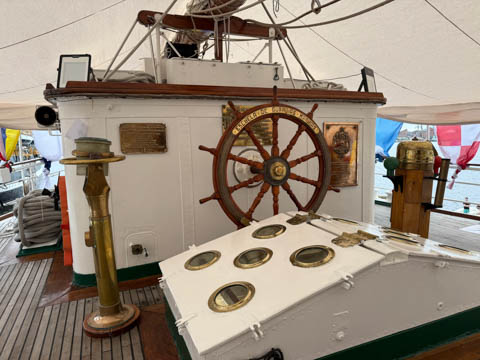
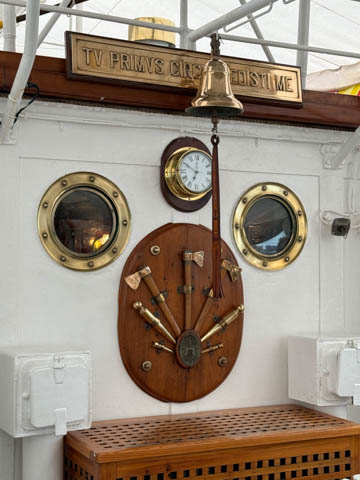
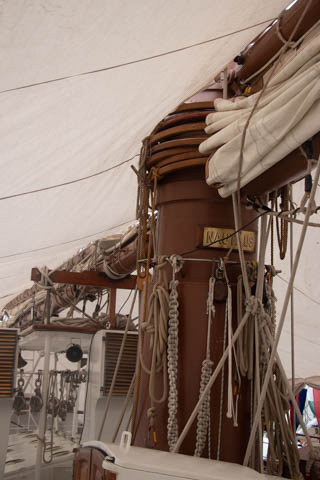
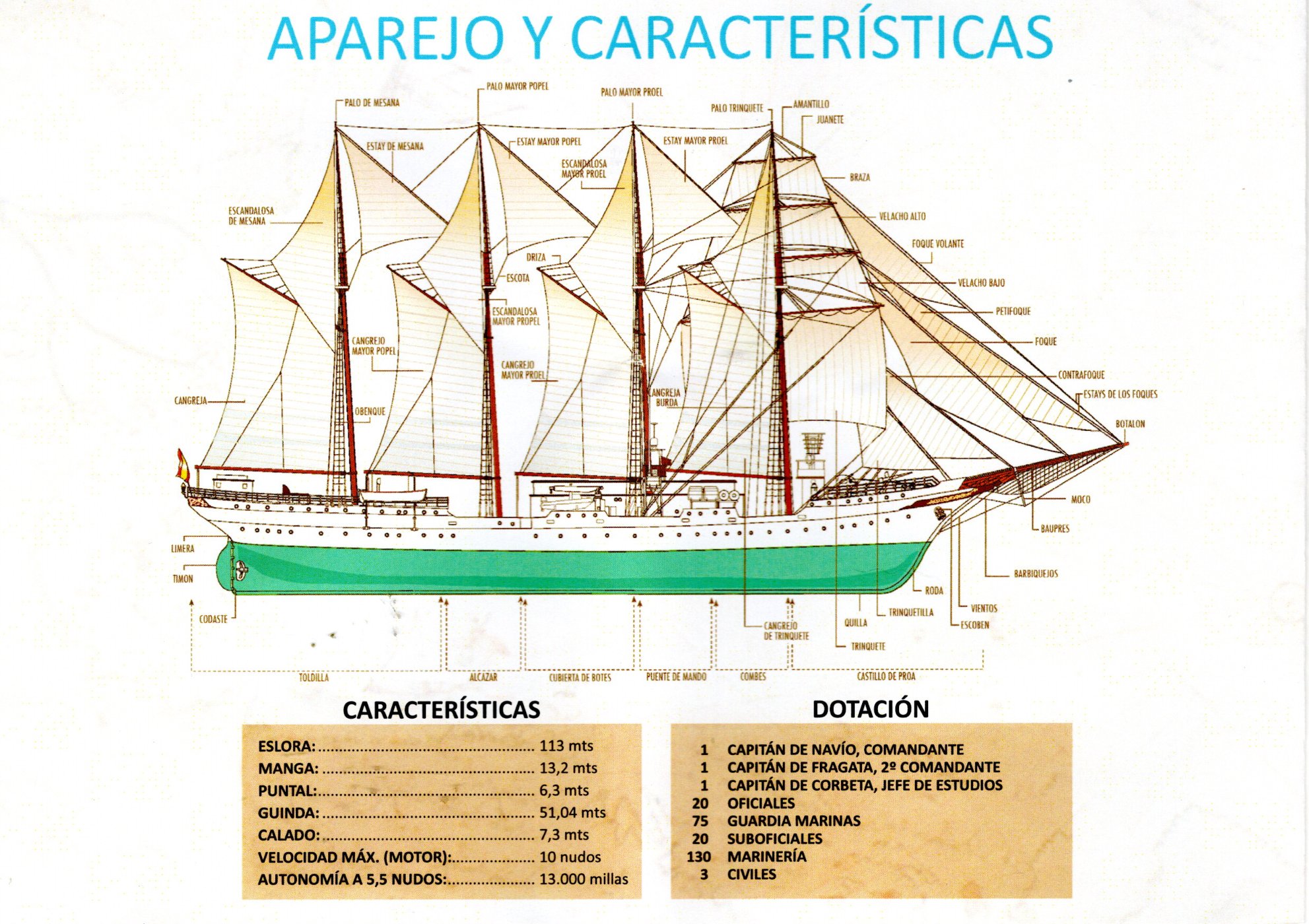
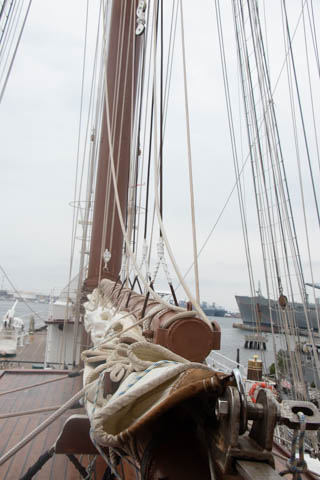
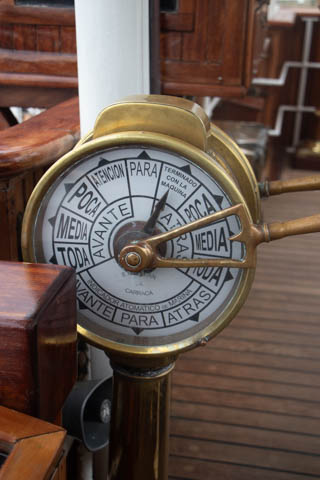
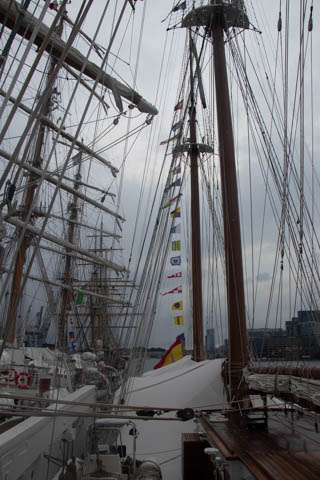
These were on the Spanish training ship Juan Sebastian de Elcano. It was built in Cadiz in 1927 for just over 8 M pesos (or about 49,220 Euros). Most of its cruises are spent at sea, with the ship completing 11 circumnavigations of the globe. It is named after one of Spain's most distinguished mariners, who enlisted as an expert navigator for King Charles I's fleet of five armed ships which left Sanlucar in 1519 under the command of Ferdinand Magellan. Only one of the five ships returned to Spain three years later, under the command of Elcano. Charles I (El Ray Carlos 1) granted Elcano a family coat of arms featuring the globe with the motto Primus Circumdedisti Me (You who first circumnavigated me). The Elcano is a brigantine-schooner with four masts and a square foremast. The ship is a small floating village with about 250 crew, producing water, baking bread, and machine shops to produce or repair parts. Modifications were made in 2022 to improve living conditions.
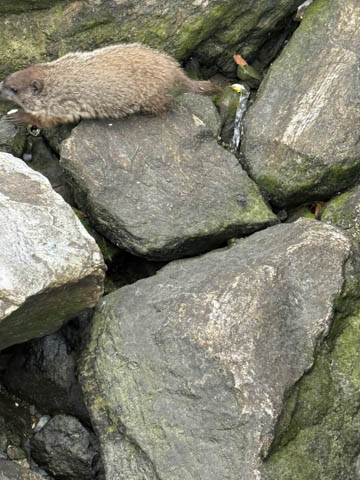
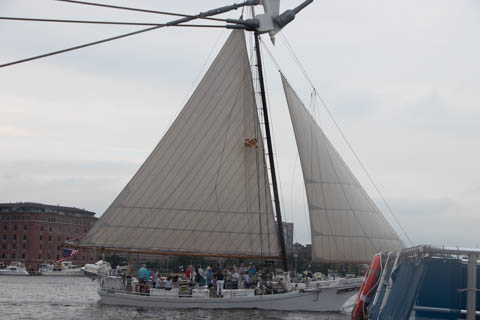
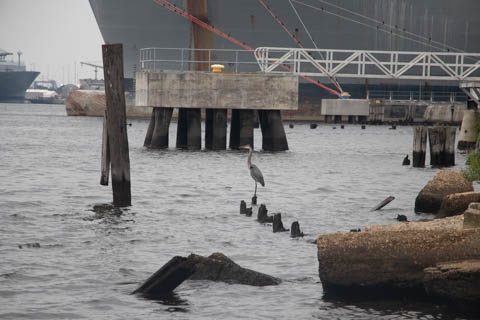
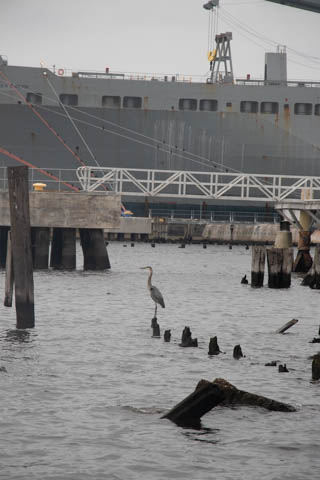
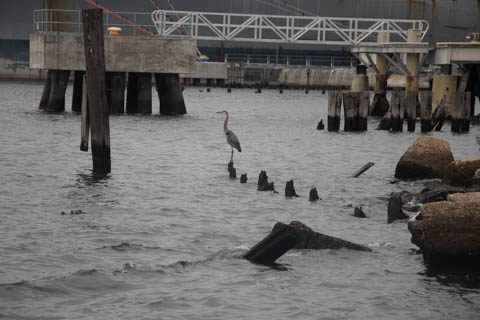
As we waited for the launch back to Fells Point we were distracted by a ground hog running over the rocks, a heron in the distance, and this fun sloop headed by.
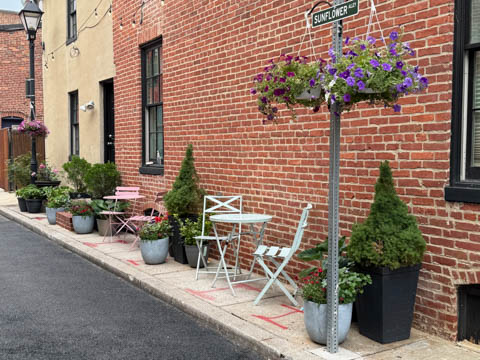
Some nice gardens as we walked back to our hotel, first stopping for dinner.
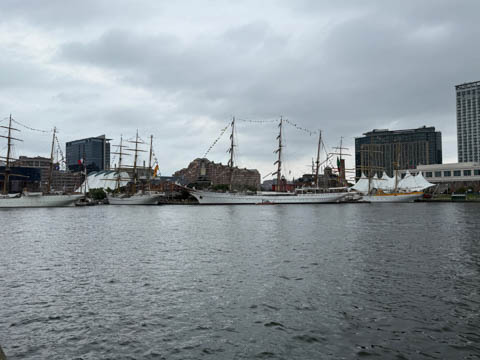
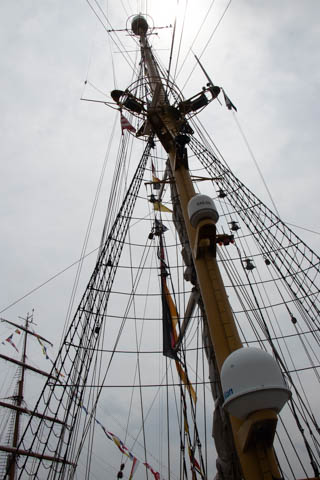
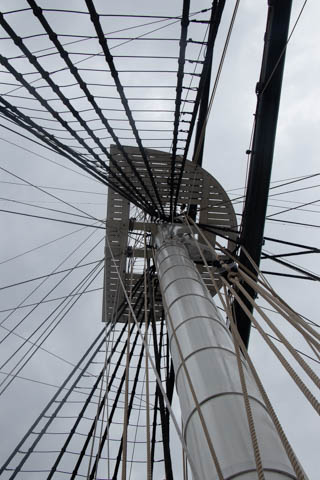
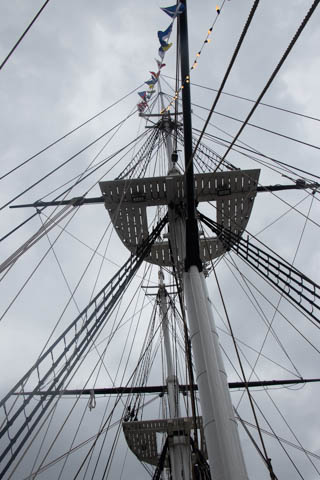
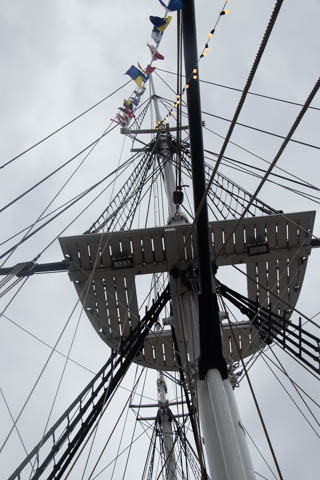
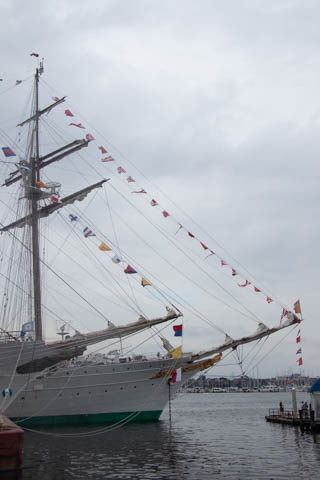
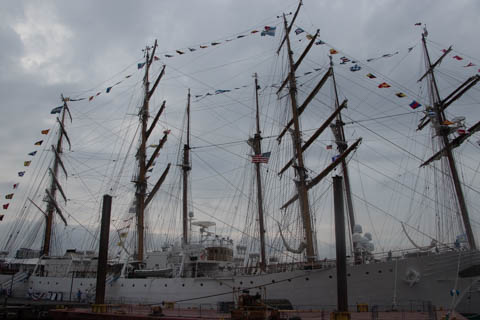
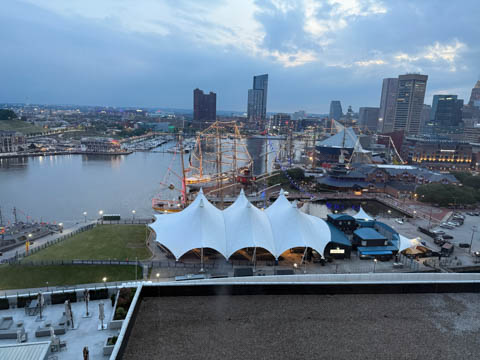
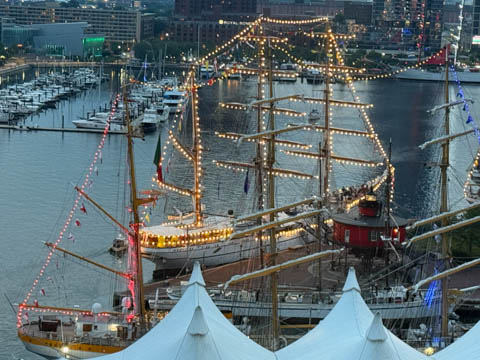
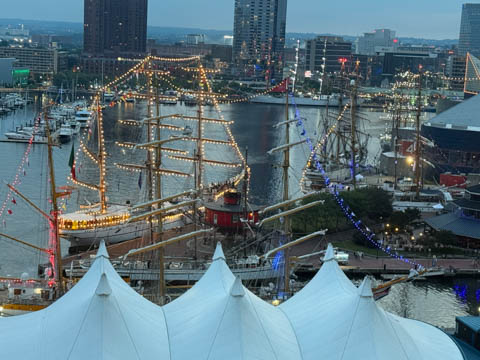
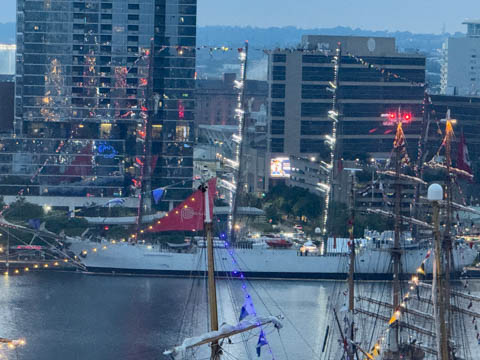
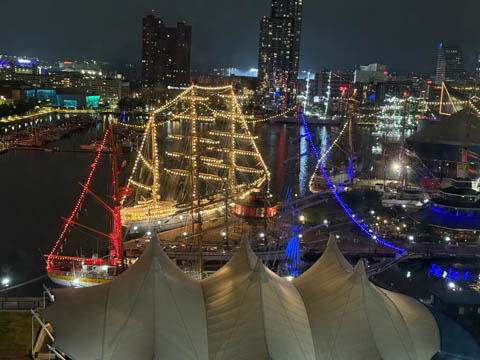
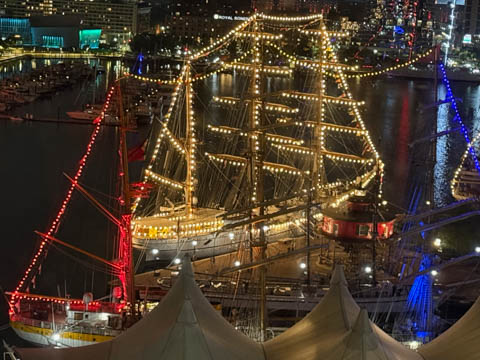
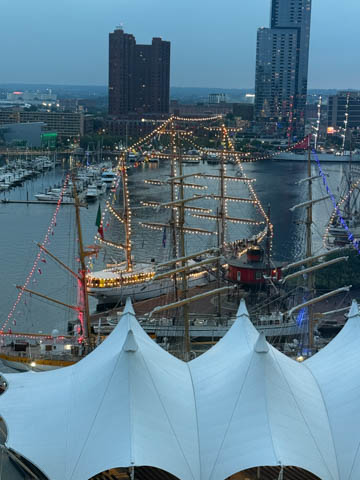
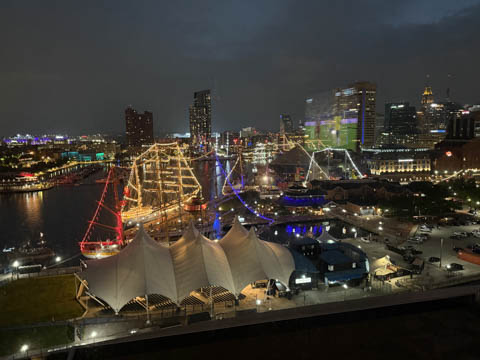
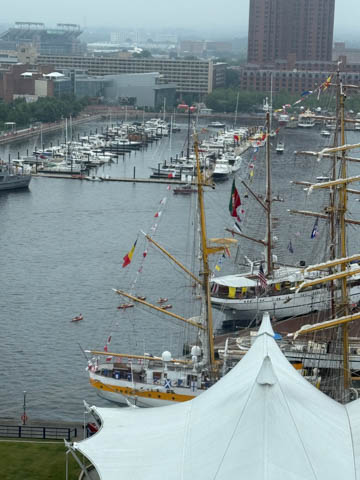
Here is the view from our hotel room. Loved some of the lights strung over the high rigging, especially on the Portuguese three-masted NRP Sagres.
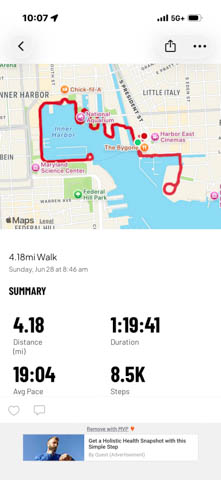
Saw this wonderful American Goldfinch on a walk on Sunday morning. We recreated much of our route from the day before, admiring the ships and taking advantage of the less crowded docks in the morning.
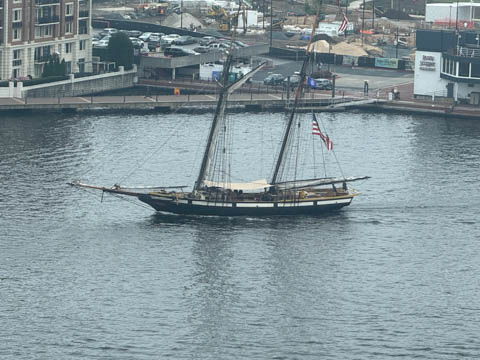
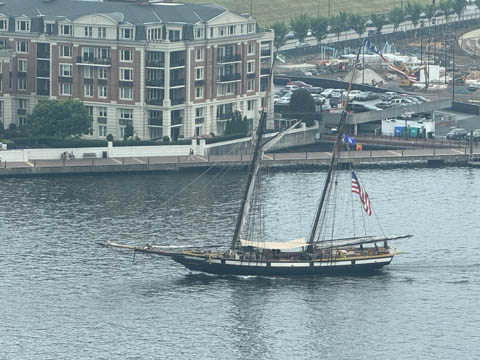
A glimpse of the Baltimore Clipper Lynx departing the harbor Sunday morning.
|
|
|